
Journalist

AJP
-
 Samsung union vote on strike to add memory supply concerns SEOUL, March 08 (AJP) - Unionized workers at Samsung Electronics on Monday begin a 10-day vote on whether to launch a strike, raising fresh concerns over chip supply at a time of surging demand for artificial-intelligence memory. The ballot, which runs from March 9 to 18, could pave the way for a joint protest next month and a full-scale strike from May 21 to June 7 if a majority of union members approve the action. The vote follows a breakdown in wage negotiations after the National Labor Relations Commission suspended mediation between Samsung and its three major labor unions — the Samsung Electronics Labor Union (SELU), the National Samsung Electronics Union and Samsung Electronics Co. Union. Together the unions represent more than 90,000 employees, roughly 70 percent of Samsung Electronics’ 129,000 workforce, making the vote one of the most consequential labor actions in the company’s history. Union leaders say the strike authorization vote is necessary to secure legal rights for industrial action. “We aim to secure the legal right to strike by mid-March,” said Choi Seung-ho, chairman of SELU and head of the unions’ joint negotiation committee, during a livestream last week. “We expect the vote to pass and plan to take a long-term approach to negotiations.” The dispute centers on the company’s excess profit incentive (OPI) scheme, which the unions want to reform. Labor groups are demanding the removal of the current ceiling on OPI payouts — capped at 50 percent of annual salary — arguing the limit prevents workers from benefiting fully during strong profit cycles. Samsung rejected the proposal, saying removing the cap could create compensation disparities between divisions. The company instead offered to maintain the existing limit while allowing employees to choose between operating profit or economic value added as the basis for calculating incentives. Management also proposed special payouts if certain targets are met, including an additional 100 percent OPI bonus for memory-chip employees if operating profit surpasses 100 trillion won ($75 billion). Union members say the plan still falls short, pointing to rival SK hynix’s performance bonuses — reportedly reaching 2,964 percent of base salary in some cases — as evidence Samsung employees are being under-rewarded. Union leaders have also stirred controversy after warning that employees who refuse to participate in strike actions could face consequences. During a livestream announcement, union officials said they would monitor offices and keep records of workers who continue working during a strike, suggesting such employees could face disadvantages in future negotiations. If approved, the strike would mark Samsung Electronics’ second major labor stoppage, following the company’s first strike in July 2024 that lasted about a month. While production disruption during the earlier strike proved limited, analysts say the stakes may be higher this time. Union membership has expanded significantly since 2024, particularly within the semiconductor division that generates the bulk of Samsung’s profits. Industry observers warn that labor disruptions could affect the production ramp of next-generation HBM chips, a critical component for AI accelerators produced by Nvidia. Samsung recently began mass production of HBM4, intended for Nvidia’s next-generation AI platform known as Vera Rubin. The chips typically require four to five months of wafer processing followed by up to two months of packaging, meaning production will be in full swing during the proposed May strike window. “Semiconductor manufacturing is highly automated, so a strike may not immediately halt production,” an industry official said. “But even the perception of instability can worry customers and investors.” The labor dispute comes at a sensitive time for Samsung’s semiconductor business. The company has been trying to regain ground in the fast-growing HBM market after losing early momentum to SK hynix, which has secured key supply contracts with Nvidia. SK hynix controlled roughly 53 percent of the HBM market in the third quarter of 2025, compared with about 35 percent for Samsung. Any disruption to Samsung’s memory production schedule could strengthen SK hynix’s advantage in the AI chip supply chain. The possibility of a strike also adds to broader uncertainty facing Samsung Electronics as geopolitical tensions rise. The company has significant exposure to global consumer markets, including the Middle East, where escalating conflict between the United States, Israel and Iran threatens to dampen economic sentiment. Samsung remains the leading smartphone vendor in the region, with roughly 34 percent market share as of the third quarter of 2025, while the Middle East also represents a major market for its home appliance business. 2026-03-08 14:11:59
 -
 Korean Banks See Rush Into ETFs as Market Volatility Spurs Dip Buying Geopolitical tensions in the Middle East have fueled volatility in South Korea’s stock market, prompting even typically conservative bank customers to look at investment products. As more investors try to buy after sharp declines in hopes of a rebound, bank counters and private-banking centers have seen a rise in inquiries about funds and exchange-traded funds, or ETFs. On March 8, the financial industry said demand for investment consultations and product sign-ups has noticeably increased at banks as swings in the Kospi have grown. Customers who had focused on safer assets such as savings deposits are increasingly viewing market sell-offs as a chance to buy at lower prices, banks said. Branch visits have climbed particularly among older customers who are less comfortable using mobile apps. Some branches have seen customers arrive with cash ranging from tens of millions of won to, in some cases, hundreds of millions of won to ask about signing up for products, reflecting demand for in-person advice during a steep downturn. At the four major banks — KB Kookmin, Shinhan, Hana and Woori — ETFs sold in trust form totaled 7.3351 trillion won in January and 8.2819 trillion won in February, for a combined 16.8450 trillion won, according to the industry. The figures marked record highs for two straight months. Sales in January and February last year were under 1.5 trillion won, meaning the total rose more than tenfold in a year. This month, the Kospi fell sharply for two consecutive days on March 3 and 4 amid the Middle East situation, but banks still sold 1.2279 trillion won of ETFs over that period. Banks attribute much of the increase to a surge in demand from middle-aged and older customers. Younger investors who are used to trading stocks tend to buy and sell ETFs through brokerage apps, while older, wealthier clients often prefer to select products with help from private bankers and purchase them through banks, industry officials said. The rush has also created bottlenecks online. For some fund products and ETF-linked trust products, non-face-to-face sign-ups require a video call to explain investment risks, and heavy demand has led to waits of 30 minutes to more than an hour in many cases. A private-banking official at one bank said, “High-net-worth clients at banks used to focus on tax strategies or stable asset allocation, but recently there has been a clear move to look for investment opportunities that take advantage of market volatility.” The official added, “Some customers often move funds in the hundreds of millions of won to sign up for investment products.” Banks cautioned, however, that investors should avoid overextending themselves while uncertainty remains high. A banking industry official said inquiries have surged, but “given concerns about short-term volatility, decisions should fully consider investment goals and risk tolerance.”* This article has been translated by AI. 2026-03-08 14:03:49
 -
 Korean Bank Overdraft Loans Jump 1.3 Trillion Won in Five Days as Demand Deposits Fall 8.6 Trillion Volatility tied to the Iran situation has prompted some South Korean retail investors to treat the market swings as a buying opportunity, tapping bank credit lines to invest in stocks. Overdraft-style personal credit balances at major banks have surged in a short period while deposits have fallen, suggesting money is moving quickly into the market. As of March 5, personal overdraft loan balances at the five major banks — KB, Shinhan, Hana, Woori and NH NongHyup — totaled 40.7227 trillion won, according to the financial industry on Saturday. That figure reflects outstanding amounts actually used and rose 1.2979 trillion won in five days from the end of February (39.4249 trillion won). Adjusted for business days (March 3-5), the increase was effectively nearly 1.3 trillion won in three days. The balance is the largest for an end-of-month level since December 2022 (42.0546 trillion won). While the data cover only five days, the increase of 1.2979 trillion won is the biggest monthly-scale jump since November 2020 (+2.1263 trillion won). In the second half of 2020, ultra-low interest rates aimed at cushioning the COVID-19 shock fueled heavy borrowing for home purchases and stock investing. In the second half of last year, overdraft balances also climbed into the 40 trillion won range, reaching 40.0837 trillion won at the end of November, amid strong markets and spillover effects from tighter mortgage rules. After year-end and early-year bonuses helped bring balances back into the 39 trillion won range, overdraft borrowing has risen again following two days of sharp stock declines on March 3-4 linked to the Iran situation. At some banks, overdraft balances jumped by nearly 200 billion won in five days, an unusual move. Most of the funds are believed to have moved to brokerage firms. The surge in overdraft-led credit lending contrasts with mortgages, which have been flat or declining amid regulations and weak housing transactions. As of March 5, mortgage balances at the five banks stood at 610.1417 trillion won, down 579.4 billion won from the end of February (610.7211 trillion won). By contrast, total credit loans — general unsecured loans plus overdraft lines — rose 1.3945 trillion won in five days to 105.0765 trillion won. If that pace holds through month-end, it would be the largest increase since July 2021 (+1.8637 trillion won). Deposits have also seen sizable outflows. Time deposits at the five banks totaled 944.1025 trillion won as of March 5, down 2.7872 trillion won from the end of last month. Demand deposits, often viewed as idle cash awaiting investment, fell 8.5993 trillion won over the same period, to 676.2610 trillion won from 684.8604 trillion won. A commercial bank official said deposit rates have generally been rising along with market rates, yet deposits are still shrinking. The official said it is too early to draw firm conclusions but added that credit lending could increase further and more funds could continue flowing into stocks depending on developments in the Middle East and market conditions at home and abroad.* This article has been translated by AI. 2026-03-08 14:03:18
 -
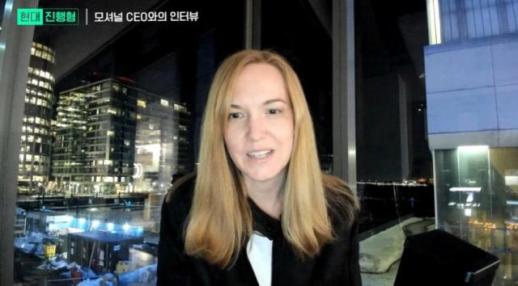 Hyundai JV Motional remains on track to put driverless taxi on roads this year SEOUL, March 08 (AJP) -Motional, the autonomous driving joint venture of Hyundai Motor Group, said it remains on track to launch its fully driverless robotaxi service in Las Vegas in the second half of 2026, reaffirming the commercialization timeline it first outlined in January. Laura Major, chief executive of Motional, reiterated the plan during an appearance on Hyundai Motor Group’s official podcast channel, Hyundai Now, where she outlined the company’s technological direction and commercialization strategy for autonomous mobility. Major said the company recently redesigned its autonomous driving system architecture around a generative artificial intelligence-based large driving model (LDM), describing the shift as a key milestone in the development of autonomous driving technology. “The decision to redesign Motional’s autonomous driving system architecture around AI and transition to a large driving model marked an important turning point,” Major said, adding that the move has helped improve driving quality, responsiveness, scalability and operating efficiency despite the technical risks associated with overhauling an existing system. Motional is focusing on building a fully driverless Level 4 robotaxi service, with safety remaining the company’s top priority. Major said the firm applies an end-to-end (E2E) AI approach to general driving scenarios that account for more than 90 percent of real-world road situations, while employing a separate “guardrail” safety framework to handle rare edge cases such as emergencies. “These exceptional scenarios become critical training data that help improve the overall performance of the autonomous driving system,” she said. Motional currently operates research and development hubs across the United States and is conducting intensive testing in Las Vegas and Pittsburgh. Major said the two cities offer contrasting urban environments that help refine the system’s adaptability. Las Vegas features a modern grid-based layout with wide roads, while Pittsburgh presents more complex driving conditions with narrow streets, older infrastructure and intricate intersections. “Testing across these different environments helps us build a general-purpose autonomous driving system that can operate in virtually any city,” she said. The company also highlighted the role of real-world data accumulated through pilot programs with ride-hailing platforms such as Uber and Lyft. Through those trials, Motional has gathered more than 130,000 autonomous ride experiences, generating insights into passenger behavior and in-vehicle interaction — including how riders access trip information, whether they prefer onboard displays or smartphones, and how features such as route changes or mid-ride stops should be integrated into driverless services. Major said improving the passenger experience will be just as critical as advancing the underlying driving technology as the company approaches commercialization. “Our goal is not only to develop autonomous driving technology but also to deliver a seamless and intuitive passenger experience,” she said. Hyundai Motor Group’s Hyundai Now series explores mobility technologies and industry trends, and Major’s appearance marked the first time a senior executive from the group participated directly in the program. Major recently received the SDV Innovator Award from North American automotive magazine MotorTrend for her contributions to software-defined vehicle innovation. 2026-03-08 13:53:05
 -
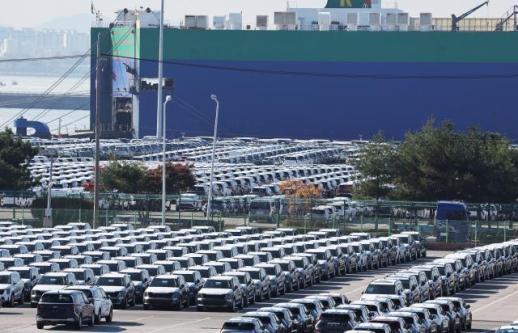 Asian carmakers risk collateral damage from prolonged Iran war: report SEOUL, March 08 (AJP) -Asian automakers, led by Chinese brands but also including Japan’s Toyota Motor Corporation and South Korea’s Hyundai Motor Company, could face the biggest fallout if the war triggered by U.S. and Israeli strikes on Iran turns into a prolonged conflict, according to a report by Bernstein Research. In a recent report, the brokerage said the conflict could hit the global automotive sector through three main channels: collapsing vehicle demand in Iran, disruptions to vehicle shipments across the Gulf region and rising oil prices that weaken global car sales. The report warned that the risks are particularly concentrated in Asia, where automakers have built strong market positions in the Middle East and rely heavily on shipping routes passing through the Strait of Hormuz. Chinese manufacturers are expected to suffer the most immediate impact due to their growing export reliance on the region. According to Bernstein, about 17 percent of China’s passenger-car exports are shipped to the Middle East, with roughly 500,000 vehicles delivered to the region last year. Chinese brands have expanded aggressively in Iran in recent years after Western automakers withdrew under sanctions, with companies such as Chery, Changan and others filling much of the market previously occupied by European and Japanese firms. The brokerage said the Middle East has become a crucial outlet for China’s export-driven auto industry, leaving it vulnerable to geopolitical disruptions. The report also highlighted Iran as the region’s largest automotive market. Total vehicle sales across the Middle East reached roughly 3 million units last year, with Iran accounting for about 38 percent of that total. A collapse in Iranian demand would therefore ripple across the wider regional auto market, Bernstein said. While Chinese manufacturers face the largest direct exposure, the report said established Asian automakers also have significant stakes in the region. As of early March, market share across the Middle East stood at roughly 17 percent for Toyota, 10 percent for Hyundai Motor, and 5 percent for China’s Chery, together representing nearly a third of regional vehicle sales. The Middle East has also become an important export destination for Korean automakers. Hyundai Motor sends roughly 8 percent of its global wholesale shipments — about 317,000 vehicles annually — to the Middle East and Africa, highlighting how geopolitical shocks in the Gulf could ripple through Asian auto supply chains. Bernstein said the most serious long-term risk lies in the potential impact of higher oil prices on global vehicle demand. If the conflict pushes crude prices higher — particularly if shipping traffic through the Strait of Hormuz is disrupted — consumers worldwide may delay car purchases, especially internal-combustion models that still dominate most markets. “The biggest risk for the auto sector is that a prolonged war drives oil prices higher and undermines global economic confidence,” the report said, warning that such a scenario could weaken vehicle demand well beyond the Gulf region. 2026-03-08 13:38:40
 -
 Jang Hang-jun’s ‘The Man Who Lives With the King’ Tops 11 Million Moviegoers 영화 '왕과 사는 남자'가 1100만 관객을 동원했다. 영화 '왕과 사는 남자'는 개봉 33일째인 3월 8일 누적 관객 1100만 명을 넘어섰다. 이는 흥행작 '파묘'(40일), '서울의 봄'(36일), '광해, 왕이 된 남자'(48일)보다 1100만 관객 달성 속도가 빠른 기록이며, '범죄도시4'와 같은 속도다. 5주차에도 관객들의 입소문에 힘입어 흥행을 이어가고 있는 가운데, 6주차에도 기세를 이어갈지 주목된다. 영화 속에서 이홍위(박지훈 분)와 광천골 사람들이 나무 명패에 각자의 이름을 적어 나무에 거는 장면을 바탕으로, 주역들이 나무 명패에 6글자로 적은 흥행 소감도 공개됐다. 장항준 감독은 "왕! 감사합니다!"라고 했고, 유해진은 "당나귀가 왔소!", 박지훈은 "사랑 주신 덕분!", 유지태는 "천만이 현실로", 전미도는 "천번 만번 감사", 김민은 "다 덕분입니다"라고 적으며 관객들에게 감사를 전했다. 이준혁은 "감사한 마음뿐", 안재홍은 "마치 꿈만 같아"라고 밝혔다. 한편 '왕과 사는 남자'는 457년 청령포를 배경으로, 마을의 부흥을 위해 유배지를 자처한 촌장과 왕위에서 쫓겨나 유배된 어린 선왕의 이야기를 그린다. 장항준 감독이 연출했으며 유해진, 박지훈, 유지태, 전미도가 출연했다.* This article has been translated by AI. 2026-03-08 13:00:20
 -
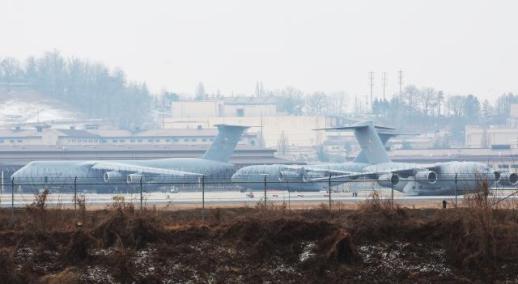 Osan airlift fuels U.S. redeployment speculation amid Iran war SEOUL, March 08 (AJP) - A series of departures by large U.S. military transport aircraft from a key American air base in South Korea has fueled speculation that some U.S. Forces Korea (USFK) air defense assets could be redeployed to the Middle East amid the escalating conflict involving Iran. According to the real-time flight tracking service Flightradar24, multiple U.S. Air Force C-5 and C-17 transport aircraft that arrived at Osan Air Base in Pyeongtaek, south of Seoul, in late February departed the base in early March. Most of the aircraft were tracked heading toward Anchorage, Alaska, a major U.S. military logistics hub. Particular attention has been drawn to the movements of the C-5 Galaxy, a strategic transport aircraft significantly larger than the more commonly seen C-17 Globemaster. At least two C-5 aircraft arrived at Osan in late February and departed on Feb. 28 and March 2, respectively. The aircraft’s final destinations were not publicly listed, though flight data showed journeys lasting more than 14 hours, raising the possibility they were bound either for the U.S. mainland or the Middle East. While C-17 aircraft regularly operate through Osan to transport personnel and equipment, visits by the larger C-5 are considered relatively uncommon. The activity has prompted speculation that the aircraft may have transported Patriot air defense components. U.S. Forces Korea is known to have recently moved several Patriot missile batteries from other bases in South Korea to Osan. If confirmed, the movement could suggest that some of those air defense assets have already been loaded onto transport aircraft and relocated outside the peninsula. Flight tracking data shows that C-17 aircraft departed Osan intensively between March 3 and March 7, with at least six confirmed flights heading to Anchorage. Some security watchers speculate the increased air traffic could also be linked to preparations for the annual South Korea–U.S. joint military exercise Freedom Shield, which begins March 9. Others note that if the conflict with Iran becomes prolonged, the temporary redeployment of certain U.S. assets stationed in South Korea could become increasingly likely. A similar precedent occurred last year, when two Patriot missile batteries stationed with USFK were temporarily deployed to the Middle East in June last year during a major U.S. military operation targeting Iranian nuclear facilities. The systems returned to South Korea in October. Any redeployment of air defense systems from the peninsula has raised concerns about potential impacts on deterrence against North Korea, though experts say any such move would likely be carefully calibrated. U.S. Forces Korea declined to comment on the aircraft movements. “For operational security reasons, we do not comment on the movement, relocation or potential repositioning of specific military capabilities or assets,” USFK said in a statement. “USFK remains focused on maintaining a strong and ready force posture on the Korean Peninsula, and the United States remains firmly committed to the defense of the Republic of Korea.” South Korea’s defense ministry also declined to comment on USFK operations. “It is not appropriate for the government to comment on the operational activities of U.S. Forces Korea,” a ministry official said, adding that Seoul and Washington continue close consultations to maintain a firm combined defense posture and ensure stability on the Korean Peninsula and in the region. Foreign Minister Cho Hyun said during a parliamentary session on Friday that the United States and South Korea are in close consultation regarding the operation of USFK assets, though he declined to provide details. 2026-03-08 12:50:33
 -
 BTS’ ‘ARIRANG’ tops 4 million Spotify pre-saves ahead of March 20 release Global interest in BTS’ upcoming release is showing up in the numbers. BigHit Music, a HYBE Music Group label, said BTS’ fifth full-length album, ‘ARIRANG,’ surpassed 4 million pre-saves on Spotify on March 7. The album topped 1 million pre-saves within two days of the pre-save launch and continued to climb. With about two weeks left until release, attention is on how high the figure will go. On Spotify’s March 4 ‘Countdown Charts Global,’ ‘ARIRANG’ ranked No. 1 again, holding the top spot for seven straight weeks. The chart tracks pre-save totals for albums and singles ahead of release and is widely used as a gauge of fan anticipation. BTS will release ‘ARIRANG’ at 1 p.m. on March 20 and hold ‘BTS THE COMEBACK LIVE|ARIRANG’ at 8 p.m. the next day in the area around Gwanghwamun Square in Seoul. The event will be livestreamed on Netflix for audiences worldwide. A previously released trailer featured cheers from ARMY, the group’s fandom, heard at past concerts and visuals of the seven members set against Gyeongbokgung Palace. The album includes 14 tracks meant to capture ‘today’s BTS.’ The title track, ‘SWIM,’ centers on pressing forward through life’s waves, expressing a resolve to ride incoming currents at one’s own pace as a form of ‘love for life.’ RM handled most of the lyrics, the label said, adding sincerity to the message. * This article has been translated by AI. 2026-03-08 11:48:17
 -
 Hana Bank, Korea Southern Power to Co-Develop Offshore Wind Projects Hana Bank said Sunday it signed a memorandum of understanding with Korea Southern Power on March 6 to jointly develop offshore wind power projects. The agreement is aimed at building a full-cycle cooperation framework between a private financial institution and a power producer across development, construction and operations in the broader renewable energy sector. Offshore wind projects typically require large upfront investment and long timelines, making the combination of financing and development capabilities a key factor, the bank said. Hana Bank said it plans to pursue what it called a “productive finance” model by taking part in the entire process, including feasibility reviews, deal structuring and arranging financing, drawing on its infrastructure-focused investment banking capabilities. The bank said the effort is intended to help expand renewable energy infrastructure and support carbon neutrality goals. Among Korea Southern Power’s offshore wind projects, Hana Bank is serving as the financial arranger for the Yawol Offshore Wind Power Complex in Yeonggwang County, South Jeolla Province, and the Dadaepo Offshore Wind Power Complex in Saha District, Busan. The company said the projects are expected to be used as power infrastructure for the Honam and Yeongnam regions, respectively, and to support regional balance and local economic activity. The two sides said they will gradually detail their cooperation through efforts including financial and development collaboration on offshore wind and other renewable projects; jointly identifying and reviewing new power generation projects; sharing infrastructure finance market trends and preparing response strategies; and supporting stronger financial capabilities among project stakeholders. “Going forward, we will continue to accelerate productive finance and take the lead in expanding Korea’s eco-friendly and renewable energy infrastructure,” said Lee Byeong-sik, executive vice president of Hana Bank’s IB Group.* This article has been translated by AI. 2026-03-08 11:12:00
 -
 Shinhan Financial says stable home prices could narrow wealth gap and lift spending, births Rising real estate prices are entrenching wealth inequality, but stabilizing home prices could help revive household spending and improve conditions for marriage and childbirth, according to a new analysis. Shinhan Financial Group's Shinhan Future Strategy Research Institute on 8 released a report, "What Would Change if Home Prices Stabilize," analyzing how housing price stability affects household finances and the financial market. The report said that in South Korea's asset structure — where about 70% of household assets are concentrated in real estate — higher home prices can widen wealth gaps and raise housing costs, weighing on the broader economy through weaker consumption. As of 2025, the top 20% by net assets held 65% of total net assets, while the bottom 40% held 4.8%, the report said. It added that younger generations' share of the contribution to asset inequality reached 44%, indicating deepening inequality in which parents' real estate holdings shape their children's starting point. The net-asset Gini coefficient — an inequality measure in which values closer to 0 indicate more equal distribution — hit 0.625 last year, the highest since records began, the report said. South Korea's PIR, a price-to-income ratio, stood at 24.1, far higher than in major advanced economies. That implies a median-income household would need more than 24 years to buy a home even if it saved all of its income. Housing costs are also directly affecting consumption, the report said. With 76% of household assets tied up in real estate, about 20% of households were classified as "wealthy but liquidity-constrained," meaning that even if home prices rise, their ability to spend remains limited. If home prices stabilize and housing-cost burdens ease, the biggest rebound in consumption is expected among young and middle-aged groups, the report said. It pointed to ages 25 to 39 as showing the sharpest consumption pullback linked to rising home prices, suggesting the strongest potential for a rebound. It also said more stable housing costs could lower barriers for young people to marry and have children and increase spending on education, self-development and investments for job changes. The report also projected changes in financial-market demand. If the burden of buying a home eases, demand could rise among young people and newlyweds for early asset-building products such as savings plans to build seed money, youth individual savings accounts (ISA) and installment funds. Shinhan Future Strategy Research Institute said, "Easing the housing-cost burden can bring positive changes across household life, including a recovery in consumption and improved conditions for marriage and childbirth." 2026-03-08 10:54:00