
Journalist

AJP
-
 Lee stresses China's 'constructive role' for North Korea's denuclearization SEOUL, October 30 (AJP) - President Lee Jae-myung has stressed China's "constructive role" in maintaining peace and security on the Korean Peninsula, Beijing's Xinhua News Agency reported on Thursday. Lee said South Korea "urgently needs China's constructive role in order to achieve a substantive solution" for nuclear issues on the Korean Peninsula, in a written interview with the state-run news agency coinciding with Chinese President Xi Jinping's first visit to South Korea in about 11 years to attend the Asia-Pacific Economic Cooperation (APEC) summit in the country's historic city of Gyeongju this week. Lee also said that he "will work with China to strengthen strategic communication based on the consensus that peace and stability are in the common interests of both countries, and achieve denuclearization and peace on the peninsula." "South Korea remains committed to cooperation among APEC member economies and promoting the implementation of various collaborative projects. This aims to achieve shared prosperity and development, transforming APEC into an effective and substantive platform for cooperation," he added. Xi, who wrapped up his meeting with U.S. President Donald Trump in Busan earlier in the day, during which the two resolved most disputed issues including cutting U.S. tariffs on Chinese goods and lifting restrictions on exports of Chinese rare earths, is scheduled to sit down for talks with Lee on Saturday. * This article, published by Aju Business Daily, was translated by AI and edited by AJP. 2025-10-30 16:32:48
 -
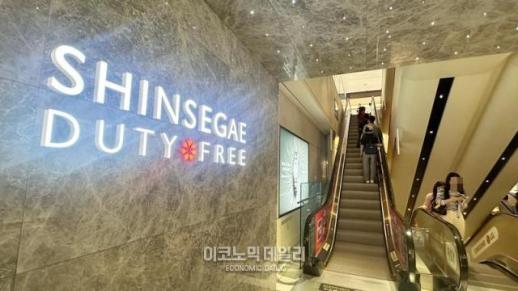 Shinsegae Duty Free follows Shilla in retreat from Incheon airport as losses mount SEOUL, October 30 (AJP) - Another of South Korea’s leading duty-free operators is retreating from Incheon International Airport, as mounting rental costs and sluggish traveler spending continue to erode profits in what was once one of the world’s most lucrative retail hubs. Following Shilla Duty Free’s withdrawal last month, Shinsegae Duty Free said Thursday it will return part of its concession rights at the Incheon airport, citing heavy financial losses and an increasingly unpredictable business environment. According to a filing with the Financial Supervisory Service, the company’s board approved a plan to end operations in the DF2 zone, which includes shops selling cosmetics, perfumes, liquor and tobacco. Operations there are set to cease on April 28 of next year, after a mandatory six-month transition period stipulated in its contract with the airport. “The duty-free market faces continued uncertainty — including high exchange rates, a slowing economy, and changes in traveler spending,” Shinsegae Duty Free said in a statement. “Losses have reached a level that makes ongoing operation unsustainable.” The move underscores deep structural challenges facing South Korea’s duty-free industry, which has struggled to recover from the pandemic-era collapse in international tourism and the more recent decline in Chinese traveler spending — once the backbone of airport retail sales. Shinsegae Duty Free secured its Incheon lease in 2023 under a formula based on average customer spending, but falling sales and a weaker won inflated rent payments, pushing operations into the red. The company follows Shilla Duty Free, which last month gave up its DF1 concession, also citing unsustainable losses. Shilla reportedly incurred a penalty of around 190 billion won ($137 million) for the early termination. Shinsegae said it will now focus on improving profitability at its flagship Myeongdong store and continue operating in the DF4 zone, which sells fashion and accessories, at the airport. * This article, published by Economic Daily, was translated by AI and edited by AJP. 2025-10-30 15:54:45
 -
 Hyundai Motor's Q3 profit dips 29% on U.S. tariff shock; shares hold firm on trade deal SEOUL, October 30 (AJP) - Hyundai Motor reported a sharp retreat in third-quarter operating profit Thursday as the spike in U.S. auto tariffs wiped more than $1 billion from the automaker’s bottom line, but reiterated that its EV and expansion strategy in the U.S. remains intact regardless of setbacks. South Korea’s largest automaker — and the world’s No. 3 as of March — said operating profit fell 29.6 percent on quarter and 29.2 percent on year to 2.54 trillion won ($1.78 billion). Revenue climbed to 46.72 trillion won, the highest for any third quarter, down 3.2 percent from the previous quarter but up 8.8 percent from a year earlier. The operating margin slumped to a three-year low of 5.4 percent. The company attributed the earnings shock to Washington’s hike of U.S. auto tariffs to 25 percent, a rate that remained in place for Korean exports even as the U.S. lowered duties on Japanese and European cars to 15 percent under separate bilateral agreements. Investors, however, looked past the weak results after Seoul and Washington reached an overnight deal to cut Korean auto tariffs to 15 percent as part of a broader $350 billion investment package from Korean companies. Hyundai Motor shares traded 2.8 percent higher at 265,250 won as of 2:45 p.m. in Seoul. Global shipments stayed resilient, with Hyundai cars selling 1,038,353 units in July-September period, up 2.6 percent from a year earlier but down 28,000 units from the previous quarter. SUVs accounted for the largest share with 659,000 units sold, followed by 327,000 passenger cars and 52,000 commercial vehicles. Eco-friendly models remained a key growth driver. Hyundai sold 252,000 eco-friendly vehicles, including 76,000 electric vehicles (EVs) and 161,000 hybrid electric vehicles (HEVs). While EV demand softened globally, sales in North America surged 90.3 percent as the company moved aggressively to clear remaining inventory after U.S. President Donald Trump scrapped federal EV subsidies. Fuel-cell electric vehicle (FCEV) sales also rose sharply to 4,000 units, driven by the launch of The All-New NEXO, up from 1,000 units in the second quarter. Hyundai also broke ground on Korea’s first hydrogen fuel-cell plant in Ulsan the same day, signaling its intention to accelerate growth in the FCEV segment. Despite the tariff relief, the company predicted sales setback in the U.S. in the fourth quarter due to the end of federal subsidy. To bridge the EV gap, Hyundai is rolling out hybrid version of Palisade SUV in North America. “The Palisade has always been one of our most profitable models,” Hyundai said. “With the tariff agreement lowering reciprocal rates to 15 percent, we expect even higher operating margins.” EV demand remains robust in Europe, supported by strict environmental regulations, generous subsidies, and the region’s planned 2035 ban on internal combustion engines, will likely offset the losses. The auto giant affirmed it will maintain on track in long-term EV pivot strategy, the company said in a conference call. The EV roadmap with battery partners LG Energy Solution and SK on including joint-venture plants also remains intact. 2025-10-30 15:29:49
 -
 PHOTOS: What to know about ancient gold crown among lavish gifts to Trump in Gyeongju SEOUL, October 30 (AJP) - A glittery gold-plated replica of an ancient crown was among the lavish gifts showered to U.S. President Donald Trump during his visit to South Korea for the Asia-Pacific Economic Cooperation (APEC) summit in the southeastern city of Gyeongju this week. The eye-catching replica, symbolizing the summit's venue, once the capital of the ancient kingdom of Silla that flourished for over 1,000 years, was specially crafted by veteran artisan Kim Jin-bae in the historic city, North Gyeongsang Province. The original crown, along with many artifacts and relics, was unearthed long ago from Cheonmachong, a tomb in the province believed to be the burial site of kings, queens and other high-ranking nobles. The crown, weighing roughly 1.3 kilograms and standing 32.5 cm tall, features three leaf-shaped vertical ornaments and two deer antler-shaped decorations on its headband. For those who want to learn about the royal crown along with its symbolic power and prestige, a special exhibition on the occasion of the summit is being held until Dec. 14 at the Gyeongju National Museum. Located in Daereungwon, a complex of Silla-era tombs in the province, Cheonmachong measures 47 meters in diameter and 12.7 meters in height, though its occupant remains unknown. Around 11,297 artifacts were unearthed from the tomb in 1973 including Cheonmado, a painting on birch bark depicting a pure-white heavenly horse ascending into the sky, which has been designated as a national treasure. Visitors to the tomb are allowed to look around its restored interior. 2025-10-30 15:25:21
 -
 Chile's President Boric urges deeper partnership with South Korea beyond trade SEOUL, October 30 (AJP) - Chilean President Gabriel Boric on Thursday called for a broader partnership with South Korea that extends beyond trade and investment, emphasizing shared democratic values, culture, and innovation as the foundation for future cooperation. Speaking at the Korea-Chile Business Forum at the Shilla Hotel in Seoul, Boric said he had traveled nearly 35 hours from Santiago to attend, calling the visit a symbol. "Despite the 18,000 kilometers that separate us, we still feel close," the president said. "What unites us is not only trade or investment, but the human acts that shape culture," he said. "The bonds that last between nations are those that go beyond money and bring encounters of spirit." He reflected on the parallels between South Korea and Chile's democratic transitions in the late 1980s, noting that Chile had closely followed Korea's experience during that time. "You had your democratic elections in 1987, and we held our plebiscite to recover democracy in 1988. Even from afar, we felt connected to your struggle and your example," he said. Boric also spoke about the growing cultural exchange between the two countries, particularly through the spread of Korean pop culture among younger Chileans. "Everywhere I go in Chile, children hand me photos of Korean artists," he said. "It may seem trivial, but I am convinced it is not, because the ties that endure are those that touch people's spirits." The president praised South Korea's rise as a global technology and cultural leader, describing it as an inspiration for Chile's own transformation. "You have shown the world that through education and innovation, a nation can change its destiny," he said. "Chile is beginning to walk that path, especially in innovation and technology, but we still have much to learn." Boric highlighted opportunities for Korean companies to take part in Chile's transition toward clean energy and sustainable industries. He pointed to Chile's leadership in copper production, lithium reserves, and renewable energy development, saying, "We are producing green hydrogen at globally competitive prices, and we are consolidating our position as a digital hub in Latin America. We want Korean companies to participate actively in these new engines of growth." He also underlined Chile's institutional stability and commitment to democracy as a key factor for investors. "Chile is not a perfect country," he said, "but for more than 35 years we have maintained a firm conviction that democracy, institutions, and respect for human rights are the way to build a more equal nation." The Korea-Chile Business Forum was co-hosted by the Korea International Trade Association (KITA), the Chilean Embassy in Seoul, ProChile, and InvestChile. About 200 participants, including government officials and business leaders from both sides, attended the event, held during President Boric's visit to South Korea for the APEC Leaders' Week meetings. KITA Chairman Yoon Jin-sik noted in his opening remarks that the Korea-Chile Free Trade Agreement, which took effect in 2004, was Korea's first FTA and Chile's first with an Asian country. "Over the past 20 years, bilateral trade has more than tripled," Yoon said. "Our cooperation has expanded into lithium, renewable energy, and climate change response. This forum will help deepen our partnership and identify new opportunities for collaboration." Ignacio Fernández, Director General of ProChile, called Korea "a strategic partner of more than six decades" and emphasized Chile's trade network as a gateway to the wider region. "When you trade with Chile, you are not only working with 20 million Chileans," he said. "You are also reaching a platform that connects you to over 600 million Latin Americans." The event included business roundtables on investment and agriculture, where participants discussed cooperation in green energy, food trade, and agricultural technology. KITA also signed memoranda of understanding with ProChile and InvestChile to strengthen cooperation networks and promote joint projects between the two countries. 2025-10-30 15:00:13
 -
 South Korea begins beef exports to UAE Korean beef products at a market in Seoul on Oct. 27, 2025/ Yonhap SEOUL, October 30 (AJP) - South Korea has shipped its first beef exports to the United Arab Emirates. The Ministry of Agriculture, Food and Rural Affairs said Thursday that about 1.5 tons of chilled and frozen Korean beef were shipped to the UAE, marking South Korea’s formal debut in the country’s $1.9 billion halal beef market. A ceremony celebrating the inaugural shipment was held at the National Agricultural Cooperative Federation’s headquarters. South Korea now exports beef to five markets — Hong Kong, Malaysia, Cambodia, Laos, and the UAE. The UAE imports more than 90 percent of its beef consumption, relying heavily on premium suppliers such as Australia and the United States. Demand for Japanese beef has surged in recent years, climbing from 24 tons in 2019 to 879 tons in 2023, highlighting an expanding appetite for high-quality meat across the region — and a potential opening for Korean producers. To promote its product, the agriculture ministry said it will launch marketing initiatives tailored to Middle Eastern consumers, including culinary tours and cooking classes for foreign tourists visiting South Korea next month. The programs will target high-spending travelers and be developed in partnership with the tourism industry. “This first shipment to the UAE is significant as it marks our official entry into the halal market,” said Kang Hyeong-seok, South Korea’s deputy minister of agriculture. “We plan to strengthen local promotions and continue quarantine negotiations to expand into additional export destinations.” The ministry said it views the UAE deal as part of a broader effort to diversify agricultural exports, boost rural incomes, and elevate the global profile of Korean beef, or hanwoo, which is prized domestically for its marbled texture and rich flavor. * This article, published by Aju Business Daily, was translated by AI and edited by AJP. 2025-10-30 14:45:12
 -
 South Korea's LS Electric to co-develop power systems for UK data centers SEOUL, October 30 (AJP) - South Korea’s LS Electric is accelerating its push into the global data center market, forming new international partnerships to strengthen its foothold in advanced power infrastructure. The company said on Thursday that it had signed a memorandum of understanding with Elecsis, a British manufacturer of low-voltage switchboards, to co-develop power systems tailored for data centers in the United Kingdom. Founded in 2001 and based in Bristol, Elecsis specializes in the design and production of low-voltage switchboards, which are critical for managing electricity in large-scale facilities. The collaboration will combine LS Electric’s expertise in power equipment and testing with the British firm's local engineering and manufacturing capabilities to develop high-capacity, safety-focused switchboard solutions. By partnering with Elecsis, LS Electric aims to tap into Europe’s fast-growing data infrastructure market, using local production and service networks to deliver customized power solutions for clients across the region. The agreement follows a similar partnership earlier this month with Honeywell in the United States to jointly develop next-generation power management systems for North American data centers. The U.K. data center market, projected to reach $15.2 billion this year and expand at an annual rate of more than 13 percent through 2030, has become a major target for infrastructure and technology companies racing to meet the surging power demands of artificial intelligence and cloud computing. * This article, published by Aju Business Daily, was translated by AI and edited by AJP. 2025-10-30 14:15:21
 -
 Lee holds talks with Canadian PM in Gyeongju SEOUL, October 30 (AJP) - President Lee Jae Myung agreed to expand cooperation in the defense and economic sectors with Canadian Prime Minister Mark Carney during their summit on Thursday on the sidelines of the Asia-Pacific Economic Cooperation (APEC) summit in South Korea's historic city of Gyeongju. Hailing the North American country as a "key ally," Lee highlighted the special relationship between the two nations, recalling Canada's military support during the 1950–53 Korean War, during which it dispatched 27,000 troops and suffered nearly 400 casualties. He also praised Canada's pioneering work in artificial intelligence (AI)-related research, saying it would contribute to the advancement of the global community. Highlighting the growing cultural exchanges between the two countries, Lee cited Netflix's hit animation "KPop Demon Hunters," directed by Korean-Canadian filmmaker Maggie Kang, as a successful example. Carney responded by describing South Korea as a crucial partner for Ottawa across defense, commerce, and culture. He also suggested expanding cooperation in trade and defense, marking the 10th anniversary of the free trade agreement between the two countries. The summit, which came about months after the two met at the G7 Summit in Kananaskis, Alberta in June, was also attended by key officials from both countries including Canada's Chief of Staff Marc-André Blanchard and South Korea's national security adviser Wi Sung-lac. * This article, published by Aju Business Daily, was translated by AI and edited by AJP. 2025-10-30 14:10:35
 -
 Hyundai Motor breaks ground on hydrogen fuel cell plant in Ulsan SEOUL, October 30 (AJP) - Hyundai Motor has begun construction of a large-scale hydrogen fuel cell plant in Ulsan, signaling its ambition to lead the global shift toward clean energy. The groundbreaking ceremony took place at Hyundai’s Ulsan complex, where the new facility will rise on the site of a former internal combustion engine transmission plant. The transformation, company officials said, reflects Hyundai’s commitment to making Ulsan a center for next-generation automotive technologies. The three-story plant, covering 95,374 square meters, will serve as Hyundai’s first domestic production base for polymer electrolyte membrane (PEM) electrolysis and hydrogen fuel cells. Once completed in 2027, it will produce up to 30,000 fuel cell systems annually under Hyundai’s hydrogen car brand. Hyundai is investing 930 billion won ($670 million) in the project and plans to expand output. Company officials say the facility will play a crucial role in building South Korea’s hydrogen economy and supporting the nation’s broader industrial transition. “The hydrogen fuel cell plant is a strategic base that reflects our commitment to a hydrogen society,” said Jang Jae-hoon, Hyundai’s vice chairman, during the ceremony. “We aim to supply fuel cells across diverse industries, from shipping to construction equipment, and to accelerate the development of a global hydrogen ecosystem.” Government officials also underscored their support for corporate investment in clean energy. Kim Sung-hwan, South Korea’s minister of climate and environment, said the administration would continue to back innovation in decarbonizing mobility and advancing hydrogen technologies. Hyundai Motor plans to make the new plant a showcase of advanced manufacturing, integrating artificial intelligence and robotics to boost efficiency and safety. A digital monitoring system will be installed to detect hazards in real time and protect workers on the production floor. * This article, published by Aju Business Daily, was translated by AI and edited by AJP. 2025-10-30 13:57:14
 -
 Samsung heiress' recent move to Yongsan reflects South Korean parents' obsession with education SEOUL, October 30 (AJP) - Samsung heiress and Hotel Shilla president Lee Boo-jin has reportedly moved back to her home in Seoul's tony district of Yongsan just north of the Han River. Her recent relocation from Daechi-dong in the capital's upscale district of Gangnam clustered with crammers, to the quieter neighborhood appears to be related with her son's graduation from high school. According to industry sources, Lee lived in Daechi-dong throughout her son's middle and high school years to support his studies and has now returned to the neighborhood traditionally known as an enclave for the conglomerate's family members. The move is seen to reflect South Korean parents' obsessive zeal for their children's education, as another familiar case, since most of them are often willing to make huge sacrifices to give their children an advantage in life. In particular, it has become the norm for wealthy parents including those from family-owned conglomerates known as chaebol, to send their children to private elite schools in the country and to prestigious universities overseas. This looks to be part of a strategy not only for enhancing their academic achievements but also for building networks and preparing them for future opportunities. This trend is evident in many previous cases. For example, Hanwha Group chairman Kim Seung-youn's sons graduated from prestigious schools in the U.S., while SK Group chairman Chey Tae-won's daughters studied in China and the U.S. Scions of LG families also attended certain universities in the U.S., where they built networks and formed special connections among themselves. One business insider said, "Major conglomerates like Samsung view education not only as a course to groom successors but also as an essential part of building business leadership." * This article, published by Economic Daily, was translated by AI and edited by AJP. 2025-10-30 13:35:06