
Journalist

AJP
-
 South Korea secures 6 million barrels of crude oil from UAE to curb soaring fuel prices SEOUL, March 6 (AJP) - South Korea has secured over 6 million barrels of crude oil from the United Arab Emirates (UAE), Cheong Wa Dae said on Friday. "We have consulted with the UAE to secure crude oil, and the good news is that we were able to secure more than 6 million barrels," presidential chief of staff Kang Hoon-sik said during a press briefing on Friday, adding that it will help stabilize oil prices. Fuel prices in South Korea have been rapidly rising amid the escalating conflict in the Middle East shortly after U.S.-led airstrikes on Iran last week, sparking fears of an energy crisis and prompting the government to vow a crackdown on price collusion and other unfair practices. Kang also said that an additional passenger flight carrying South Korean nationals and other travelers stranded in Dubai is set to arrive at Incheon International Airport later in the day, following discussions with the UAE to ensure their safe return. He pledged to continue talks with the UAE to dispatch a chartered flight to bring back those unable to return due to the closure of airports in Dubai. 2026-03-06 16:13:03
 -
 LIG Nex1 Named KRX’s 2025 Award Winner for English-Language Disclosures LIG Nex1 said March 5 it was selected as a “2025 Excellent English-Language Disclosure Company” at an awards ceremony hosted by the Korea Exchange (KRX). The KRX honor recognizes companies that provide high-quality English disclosures quickly and accurately, helping improve capital-market transparency and strengthen trust among global investors. Award recipients receive benefits including a five-year grace period from designation as an unfaithful disclosure company, exemption from annual training and exemption from listing fees. LIG Nex1 said it began issuing English disclosures in 2021, ahead of the phased introduction of mandatory English disclosures, to reduce information gaps between domestic and overseas investors by providing timely and accurate filings. The company said the latest recognition follows its selection as a “2022 Excellent Disclosure Company” for corporate governance report filings and as a “2024 KOSPI Market Excellent Disclosure Company.” “This achievement reflects the results of 10 years of efforts to faithfully meet disclosure obligations since listing on the KOSPI market,” a company official said. “We will continue to prioritize transparent communication with investors at home and abroad to enhance our corporate value in the capital market.”* This article has been translated by AI. 2026-03-06 16:09:20
 -
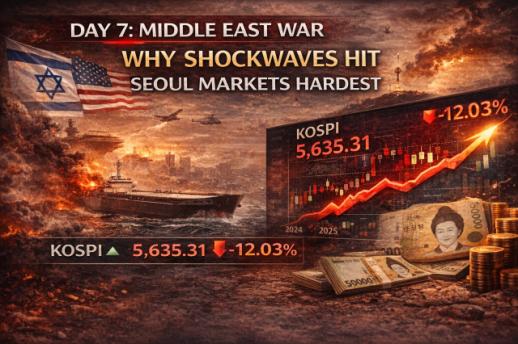 Day 7 Middle East War: Why shockwaves hit Seoul markets hardest As the war triggered by U.S.–Israeli strikes on Iran enters its first week, AJP examines how the conflict began and evolved, the emerging power vacuum in Tehran and its implications for Iran and the Gulf states, and the broader impact on global energy routes, financial markets and the international order. SEOUL, March 06 (AJP) - South Korea’s stock market entered 2026 in a euphoric rally. The benchmark KOSPI surged nearly 50 percent in the first two months of the year, pushing past the 6,300 level after an extraordinary 76 percent gain in 2025, making it one of the world’s strongest equity markets. The mood reversed abruptly when investors returned from a long holiday weekend to the shocking news of U.S.–Israeli strikes on Iran that killed the country’s supreme leader and senior military officials. Within days, the Korean equity market experienced one of the most dramatic swings in its history. The first week of the Middle East war triggered a historic whipsaw in Seoul, sending the KOSPI plunging 12 percent in a single session — the worst crash on record — before rebounding nearly 10 percent the next day as oil prices, the Korean won and foreign investor positioning repriced simultaneously. By the end of the first week of March, the market was still roughly 10 percent lower than before the war began. On Wednesday — the second trading day after the weekend strikes — the KOSPI collapsed 12 percent. The index then surged back the following day in a near mirror-image rebound. The tug-of-war continued through Friday as retail investors and foreign funds battled for control of the market, producing one of the most volatile trading weeks in decades. “This market is not for the faint of heart,” veteran investor Jim Bianco wrote on X. Part of the turbulence reflected timing. Korea’s market had been closed for a three-day holiday from Feb. 28 to March 2, compressing the geopolitical shock into the first two trading sessions of March. But the magnitude of the swings also revealed how quickly risk premiums can be repriced in Korea — a market where oil prices, the currency and foreign investor flows often move together. Hormuz shock ripples across Asia The war’s financial shock spread quickly across Asia, a region heavily dependent on Middle Eastern energy shipments passing through the Strait of Hormuz. Although the strait was not formally closed, Iranian threats against vessels and heightened military tensions effectively slowed shipping traffic and increased the perceived risk of disruption. For global markets, the mere possibility of disruption was enough. Even without a full blockade, the risk feeds into energy costs through multiple channels: higher war-risk insurance premiums, tanker rerouting, delivery delays and rising freight rates. Those costs ultimately raise the landed price of oil and industrial inputs. For Korea, those risks translate directly into market volatility. The country imports about 70.7 percent of its crude oil and roughly 20.4 percent of its liquefied natural gas from the Middle East, leaving it unusually exposed to geopolitical disruptions in the Gulf. When global investors move into risk-off mode, those structural vulnerabilities quickly become an equity story. Energy is priced in dollars. When oil rises while the Korean won weakens, the import bill increases twice — lifting inflation risks and squeezing corporate margins. That dynamic was visible throughout the week. The dollar-won exchange rate climbed from 1,439.8 before the war to 1,480.6 by Thursday, briefly touching 1,506.7, a level widely seen by investors as a psychological stress threshold. Meanwhile Brent crude jumped from $72.48 to $84.31, reaching an intraday high of $86.27. For Korea, oil and foreign exchange tend to reinforce each other. When both move at once, the market typically reprices risk more aggressively than peers with lower energy exposure or weaker FX sensitivity. Foreign selling amplifies the drop Foreign investor flows amplified the volatility. Korea’s equity market has one of the highest foreign participation rates among major markets, meaning global portfolio shifts can move the index rapidly. Foreign investors had already been trimming positions after Korea’s extraordinary rally. Data from the Korea Exchange show foreign investors sold 26.1 trillion won worth of shares in the benchmark market this year as of March 3. The selling was concentrated in the large-cap stocks that had led the rally — particularly Samsung Electronics and SK Hynix, the backbone of the KOSPI. Foreign investors sold 22 trillion won worth of Samsung Electronics shares and 10.5 trillion won of SK Hynix, while also trimming positions in Hyundai Motor and Hyundai Mobis. Retail investors moved aggressively in the opposite direction. Individuals bought 12.8 trillion won of Samsung Electronics and 6.7 trillion won of SK Hynix, absorbing much of the foreign selling pressure. According to Noh Dong-gil, a researcher at Shinhan Securities, foreign investors were not abandoning Korea entirely but were rebalancing their portfolios. “They reduced exposure to semiconductors — the key driver of KOSPI volatility — while adding defensive or policy-related stocks,” he said. “The problem was the scale and speed of the selling, which amplified the market’s decline.” Base case vs. Stress case For strategists, the week’s violent swings reflected a rapid shift between base-case and stress-case geopolitical scenarios. Kim Do-un, a senior analyst at Hana Securities, described the whipsaw as a market briefly pricing in an extreme energy shock. Historically, he said, Middle East crises often create buying opportunities — provided the conflict does not escalate into a prolonged oil shock. “If the conflict doesn’t escalate into an all-out regional war and oil does not move into the $100 to $120 range, then the pullback at these levels can be interpreted as a healthy correction,” Kim said. “What we saw was the market’s center of gravity shifting — at least temporarily — from the base scenario toward the worst-case scenario.” Kim mapped those scenarios into index levels. “If the conflict remains contained within roughly two months and the currency stabilizes, the KOSPI’s lower bound would likely be around 5,600,” he said. “But if Hormuz disruption intensifies, the won breaks above 1,500 again and oil approaches $120, then a move toward 5,000 becomes plausible.” 2026-03-06 16:02:53
 -
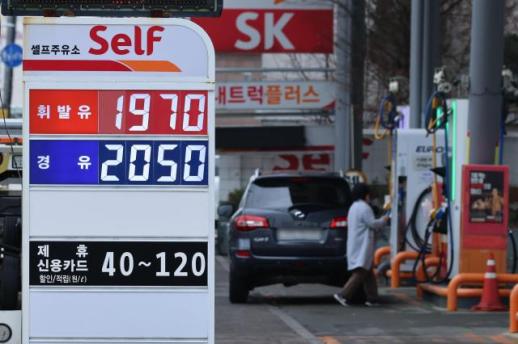 Day 7 Middle East War: Hormuz chokepoint jolts Korean macroeconomy SEOUL, Mar 06 (AJP) - The war in the Middle East is reverberating far beyond the battlefield. For South Korea — one of the world’s most energy-dependent industrial economies — the shock is moving rapidly through the core channels of the macroeconomy: the currency, bond yields, financial markets and ultimately consumer prices. The immediate trigger is the Strait of Hormuz, the narrow maritime corridor off Iran’s coast through which a large share of the world’s seaborne oil passes. Even without a formal closure, the risk of disruption has been enough to push energy prices, freight costs and financial volatility sharply higher. For Seoul, the result has been a swift repricing of risk across markets. The Korean won has been the first pressure point. As of 2 p.m. Friday, the currency was trading around 1,471 per dollar, nearly 3 percent weaker than the Feb. 25 pre-war level of 1,426.69. During Wednesday’s overnight trading, the won briefly slipped past the 1,500 mark, its sharpest intraday drop since the Asian financial crisis. Verbal intervention from the Bank of Korea (BOK) helped stabilize the currency near 1,462, though it weakened again toward 1,480 the following day. Between the New York close on Feb. 26 and March 3, the won fell 3.15 percent, the steepest decline among major currencies. Over the same period, the New Taiwan dollar dropped 1.39 percent, the Japanese yen 1.01 percent and the euro 1.54 percent. Bond markets reacted just as sharply. On March 3, the yield on Korea’s three-year government bond rose 13.9 basis points to 3.18 percent, while the 10-year yield climbed 14.8 basis points to 3.594 percent — a steeper increase than the rise in U.S. Treasury yields that day. The pressure on the currency reflects Korea’s structural exposure to energy shocks and global capital flows. South Korea imports roughly 70 percent of its crude oil from five Middle Eastern suppliers — Saudi Arabia, the UAE, Kuwait, Iraq and Qatar. More critically, around 95 percent of those shipments must pass through the Strait of Hormuz, one of the world’s most important energy chokepoints. Shipping data suggests traffic through the waterway has slowed dramatically since hostilities began. On Monday only two vessels reportedly transited the strait, far below the usual daily average of 50 to 80 tankers. Freight costs have surged as well. The Baltic Dirty Tanker Index, a benchmark for crude transport rates, jumped 54 percent in a week, rising from 1,991 on Feb. 27 to 3,083 on March 5. In global currency markets the won is often treated as a risk-sensitive proxy for trade and energy exposure, meaning geopolitical shocks that push oil prices higher tend to trigger outsized moves in Korea’s exchange rate. The currency shock has been amplified by extreme volatility in equity markets. Over the two sessions from March 3 to March 4, the KOSPI plunged nearly 20 percent, including a 12.06 percent single-day crash — a drop steeper than the declines following the September 11 attacks in 2001 or the dot-com crash in 2000. Foreign investors drove much of the selling. More than 5.17 trillion won ($3.5 billion) in foreign capital exited Korean equities on March 3 alone, accelerating the pressure on the currency. The selling was concentrated in large-cap exporters — particularly semiconductor and automobile stocks that had led the market rally over the past year. Analysts say the move reflects rapid portfolio rebalancing rather than a deterioration in corporate fundamentals. Oil shock threatens inflation and growth The larger concern now lies in the real economy. Energy costs feed directly into inflation, and the recent surge in oil prices could quickly reverse Korea’s disinflation trend. South Korea’s consumer price index rose 2 percent in February, while core inflation excluding food and energy stood at 2.5 percent. At that time, oil prices were relatively stable. That situation has changed quickly. Dubai crude futures have climbed to around $81 per barrel, Brent crude trades near $84, and U.S. WTI remains close to $79, with markets increasingly focused on the possibility of prices exceeding $100 if Hormuz disruptions intensify. Retail fuel prices are already rising. In Seoul, the average gasoline price increased about 8 percent in a week, from 1,749 won per liter on Feb. 28 to roughly 1,889 won. According to estimates from the Hyundai Research Institute, oil prices above $100 per barrel could reduce South Korea’s annual GDP growth by 0.3 percentage points while raising consumer inflation by around 1.1 percentage points. “A 10 percent rise in international oil prices is estimated to lift South Korea’s CPI growth by about 0.22 percentage points,” said Kwon Hee-jin, a researcher at KB Securities. The Bank of Korea has warned that prolonged conflict could amplify those pressures. “If the Middle East conflict is prolonged, international oil and energy prices are likely to rise,” said Yoo Seong-wook, head of the financial statistics department at the central bank. He added that the shock could weaken global economic conditions and indirectly affect Korea’s trade balance by slowing exports, underscoring the close link between oil prices and growth. For now, the central macro variable is the duration of the conflict. Analysts broadly believe a prolonged war is unlikely, as few global powers have an appetite for sustained escalation. “The crux of the matter is that no one wants a protracted war,” said Patrick Han, head of global business at SK Securities. Still, the conflict has already reshaped financial expectations. Han noted that market hopes for an early U.S. interest-rate cut have temporarily evaporated, as rising energy prices risk reigniting inflation pressures. China’s role could also become decisive. “If the Strait of Hormuz remains closed for an extended period, pressure from China — one of Iran’s key economic partners — will intensify,” said Lee Seung-hoon, a researcher at Meritz Securities. Roughly 40 percent of China’s crude imports pass through Hormuz, while Iranian oil accounts for about 13 percent of its total supply. Some analysts also point to the practical limits of military escalation. The Bank of Korea’s London office has estimated that high-intensity combat could last one to two weeks, shorter than earlier projections, due to constraints on ammunition reserves on both sides. U.S. military officials said Iranian missile launches had already fallen sharply by Thursday. Still, significant uncertainty remains. “For the war to end, negotiations must begin, but it is unclear whether such dialogue can even start,” Han said, noting that Iran’s trust in Washington and Jerusalem may have been shattered by the strikes. “The speed with which negotiations begin will ultimately determine how quickly the conflict can end.” Until shipping flows through Hormuz normalize, South Korea’s macro outlook will remain closely tied to developments thousands of kilometers away in the Persian Gulf. 2026-03-06 15:55:36
 -
 Speculation grows as US military assets gather at Osan Air Base SEOUL, March 6 (AJP) - Patriot missile batteries and heavy transport aircraft have been quietly amassing at a U.S. military base in Pyeongtaek, Gyeonggi Province, in what appears to be a consolidation of U.S. air defense assets. According to multiple government sources, Patriot missiles and large U.S. military transport aircraft including C-5s and C-17s have recently been spotted at U.S. Forces Korea (USFK)'s Osan Air Base. Some of the Patriot missiles were reportedly transferred from other U.S. bases. C-17s regularly fly into Osan to transport U.S. equipment and troops, but the presence of the larger C-5 was seen as unusual, the sources said. With concerns growing that the Middle East conflict could become prolonged following U.S.-led airstrikes on Iran last week, the recent movements have fueled speculation that USFK may prepare to deploy some of its military assets overseas in case of contingencies in the region. The Patriot is capable of intercepting incoming missiles at low to medium altitudes, roughly 20 to 40 kilometers above the surface. Together with a Terminal High Altitude Area Defense (THAAD) battery, it forms a core part of USFK's missile defense. Two Patriot batteries were previously deployed to the Middle East during the U.S.' surprise strike on Iranian nuclear facilities last June, under a military operation dubbed "Midnight Hammer," and returned several months later. But some suggest that the recent movements of U.S. military assets may be in preparation for the annual joint exercise between South Korea and the U.S., set to begin next week, rather than a sign of an imminent deployment to the Middle East. For now, both remain uncertain. "It is not appropriate to comment on USFK's operations," said a spokesperson from the Ministry of Defense during a regular press briefing on Friday. He added that USFK's mission is to maintain a strong combined defense posture with South Korea's military to support peace and stability on the Korean Peninsula and in the region, and that the allies will continue to coordinate closely. 2026-03-06 15:38:48
 -
 Sookmyung Women's University researchers identify protein key to maintaining healthy muscle SEOUL, March 06 (AJP) - Professor Yang Young and Dr. Han So-ra from the Department of Biological Sciences and the Research Institute of Women's Health at Sookmyung Women's University have identified that CTRP1, a myokine produced in muscles, plays a critical role in maintaining healthy skeletal muscle. The research team found that CTRP1 regulates mitochondrial homeostasis in immature muscle cells to support normal muscle differentiation. This process induces the formation of muscle fibers favorable for mitochondrial respiration, thereby contributing to the maintenance of healthy muscle tissue. In cases where CTRP1 was absent, the researchers observed muscle damage and reduced muscle strength. These findings align with observations in tissues from patients with muscular diseases, where CTRP1 expression was notably decreased. The study further demonstrated that restoring CTRP1 in deficient cells normalized mitochondrial function and muscle differentiation. The study identifies CTRP1 as a core factor in regulating muscle homeostasis and suggests it as a potential target for gene therapy in muscular diseases. Professor Yang Young stated that the research confirms the possibility of using CTRP1 as a new strategy for regeneration and recovery in the treatment of muscle disorders. The findings were published online in January in Molecular Therapy, the official journal of the American Society of Gene and Cell Therapy and a member of the Cell Press family. (Paper information) Journal: Molecular Therapy (impact factor 12.0, JCR top 2.6 percent) Title: CTRP1 regulates skeletal muscle differentiation through quality control of mitochondrial dynamics and function DOI: https://doi.org/10.1016/j.ymthe.2025.12.063 2026-03-06 15:28:55
 -
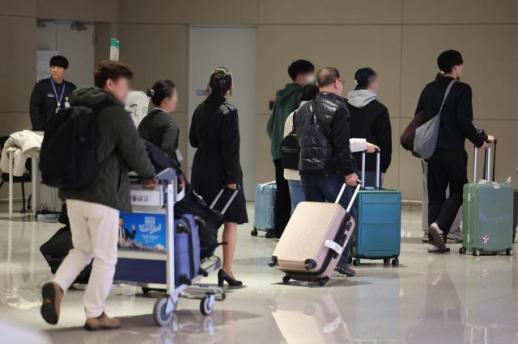 South Koreans return home from Middle East SEOUL, March 06 (AJP) - Korean travelers who departed for the Middle East are returning home one by one as many air routes have been disrupted in the aftermath of Middle East tensions. Additionally, the Dubai-Incheon route, which had been suspended due to the aftermath of Iran's airstrikes, resumed on March 6. The flight took off three hours and ten minutes later than scheduled due to local airport conditions. Korean Air has suspended flights to the Middle East until March 8. Meanwhile, the government is reviewing plans to deploy chartered planes and military transport aircraft to the UAE and other locations as early as this weekend, and is in discussions with UAE authorities for this purpose. According to the Ministry of Foreign Affairs, Foreign Minister Cho Hyun held a phone call with UAE Foreign Minister Abdullah bin Zayed Al Nahyan on the night of March 5 to discuss plans for chartered plane takeoffs and landings to support the return of Korean nationals staying in the region. 2026-03-06 15:01:55
 -
 Winter Paralympics: Intense Strategy in Wheelchair Curling Mixed Doubles SEOUL, March 06 (AJP) - South Korea’s wheelchair curling mixed doubles team of Lee Yong-seok and Baek Hye-jin defeated Britain and Japan in succession to improve to 2–1 in the preliminary round at the 2026 Milan–Cortina Winter Paralympics. After narrowly losing to host Italy in their opening match, Lee and Baek bounced back with a 14–3 victory over Britain in the morning session before overpowering Japan later in the day. Eight teams are competing in the wheelchair curling mixed doubles event. The preliminary round is played in a round-robin format, with the top four teams advancing to the semifinals. The 2026 Milan–Cortina Winter Paralympics opened on Thursday at the Arena di Verona in Italy and will run through March 15. 2026-03-06 15:00:58
 -
 Day 7 Middle East War: Tehran power vacuum rattles Gulf order As the war triggered by U.S.–Israeli strikes on Iran enters its first week, AJP examines how the conflict began and evolved, the emerging power vacuum in Tehran and its implications for Iran and the Gulf states, and the broader impact on global energy routes, financial markets and the international order. SEOUL, March 06 (AJP) - Exactly who is in control in Tehran remains unclear after Supreme Leader Ayatollah Ali Khamenei was killed during the opening hours of the United States’ Operation Epic Fury and Israel’s concurrent Operation Roaring Lion. The conflict ignited on February 28 after U.S. President Donald Trump authorized a massive joint air campaign alongside Israel. Ali Khamenei was killed during the opening salvos of the bombardment. What he removed was more than a leader figurehead, according to Lee Hee-soo, a prominent expert on Islamic culture and Professor Emeritus at Hanyang University. "Khamenei held the status of a spiritual leader for approximately 300 million Shia Muslims worldwide," and the loss was a "spiritual blow" that the West may have underestimated. The uncertainty deepened after U.S. President Donald Trump said Washington should have a say in selecting Iran’s next leader, warning that figures he considers unacceptable could "just end up dead." The sudden removal of Iran’s supreme leader and several senior military officials has left the Islamic Republic navigating a rare leadership vacuum while confronting the most intense military assault on its territory in decades. An interim leadership council composed of President Masoud Pezeshkian, judiciary chief Gholam-Hossein Mohseni-Eje’i and senior cleric Ayatollah Alireza Arafi is temporarily overseeing the state. Meanwhile, Iran’s powerful Assembly of Experts is expected to begin the process of selecting the country’s next supreme leader. Mojtaba Khamenei, the slain leader’s son, is widely viewed as a potential successor, though the succession process—traditionally handled within Iran’s clerical establishment—now faces unprecedented external pressure. Lee called the potential rise of Mojtaba Khamenei as the "final card" for a regime. "In a state of war, the population often unites under a banner of patriotism," he added noting that Iran’s 1,200-year history since the time of Alexander the Great has been a "history of resistance." Decentralized retaliation and power Despite heavy damage to Iran’s military infrastructure, retaliation has continued across multiple fronts. Israeli officials say successive waves of U.S.–Israeli strikes have destroyed roughly 80 percent of Iran’s air defense systems and more than half of its missile launch infrastructure. Yet missile and drone attacks from Iranian forces and allied groups continue to target Israel as well as U.S. installations across the Gulf. Iran’s ability to sustain attacks reflects a contingency strategy developed by the Islamic Revolutionary Guard Corps (IRGC) known as the "Mosaic Defense Doctrine." Under the doctrine, Iran’s military was divided into 31 autonomous regional commands capable of operating independently if central leadership were eliminated. Professor Lee notes that the IRGC is not merely a military wing but a central power pillar controlling approximately 40 percent of the Iranian economy. "The Revolutionary Guard holds political, economic, and information power. This makes a simple regime change extremely difficult," Lee observed. Regional IRGC units appear to be acting with pre-authorized authority to launch missiles and deploy drone swarms. While Iran's high-tech capabilities are degraded, it reportedly maintains a production capacity of over 400 drones per day, including the Shahed drones currently utilized in the Russia-Ukraine conflict. Drawing parallels to the eight-year Iran-Iraq War, Lee warned that asymmetric warfare lacks a clear "end game" and could settle into a permanent state of chaos. Moreover, the weakening of centralized leadership has also activated Iran’s broader regional proxy network, the Axis of Resistance. Hezbollah forces in Lebanon have intensified attacks against northern Israel, triggering heavy Israeli strikes in Beirut. In addition to targeting Israel and U.S. bases, Iranian drones struck neighboring Azerbaijan—marking the first expansion of the conflict into the Caucasus. The Hormuz dilemma and the Beijing channel One of the most immediate global consequences of the conflict has been the disruption of maritime traffic through the Strait of Hormuz. The narrow corridor carries roughly one-fifth of global oil shipments and remains the world’s most critical energy chokepoint. Naval units associated with the IRGC and allied Houthi forces have effectively created a de facto blockade. Professor Lee warned that the risks remain extreme: "The blockade is Iran's life-line and their most potent asymmetric weapon." Based on current tracking data from maritime intelligence firms like Vortexa and Kpler as of Friday, the maritime paralysis has reached critical levels. Roughly 300 oil tankers and 280 dry bulk carriers are currently trapped inside the Persian Gulf. Outside the passage, at least 150 tankers carrying crude and LNG have dropped anchor in the Gulf of Oman. Approximately 3,200 vessels—representing 4 percent of total worldwide shipping tonnage—are currently idle. China can surface a mediating actor in the conflict, Lee said as Beijing purchases approximately 80 percent of Iran’s oil. The upcoming summit between U.S. President Donald Trump and Chinese President Xi Jinping in Beijing on March 31 therefore can service as the true "inflection point," he said, Gulf security under pressure Iran’s retaliation has also sent shockwaves across the Gulf monarchies. Missile and drone attacks during the opening days targeted multiple countries in the Gulf Cooperation Council (GCC), including the United Arab Emirates, Saudi Arabia, Qatar and Oman. Several strikes damaged civilian infrastructure, including airports, shaking the region’s image as a safe global business hub. The United Arab Emirates bore the brunt of early attacks, threatening its reputation as a stable financial center. Oman, traditionally known for its neutral diplomacy and role as a mediator, was also targeted. The attacks are forcing Gulf states to reassess their national security strategies. For decades, Gulf governments assumed that hosting U.S. military bases would guarantee protection, but some are now questioning whether the security benefits still outweigh the risks. A region entering a new strategic era Whether Iran ultimately survives the conflict intact or emerges deeply weakened, the Gulf that emerges from the war will likely be very different. Iran’s attacks on Gulf states have eroded the neutrality and mediation roles those countries once played. At the same time, the leadership vacuum in Tehran and the rise of decentralized proxy warfare are transforming the structure of regional conflict. The war that began as a targeted U.S.–Israeli military campaign is now evolving into a fragmented regional confrontation stretching from the Persian Gulf to the Mediterranean and the Caucasus. The conflict has now expanded to involve 14 countries. The death toll continues to rise, with officials reporting at least 1,230 fatalities in Iran and more than 120 in Lebanon. As the conflict enters its second week, the central question facing the region is no longer simply how Iran will respond to the strikes. It is whether the Middle East’s fragile balance of power—already under strain—can survive the collapse of centralized authority in Tehran. 2026-03-06 14:57:29
 -
 Arko Marks 10 Years of Small Museums Turning Idle Spaces Into Local Arts Hubs The Ministry of Culture, Sports and Tourism and the Arts Council Korea (Arko) held an anniversary event on March 5 at the Artists House in Daehangno, Seoul, to mark the 10th year of the “Small Museum Creation and Operations Support” program, share results and recognize outstanding operations. Launched in 2015, the program converts unused public spaces in areas without museums into cultural venues to expand residents’ access to the arts. Since then, 38 small museums have been established in 34 cities and counties nationwide. The event reviewed the program’s progress and recognized small museums and organizations that have served as local cultural hubs, as well as individual planners, for exemplary work. The top prize went to the Bogugot Small Museum in Gimpo, created by repurposing a civil defense shelter. Judges cited its decade of exhibition and education programs involving a nearby military unit and local residents, reflecting the site’s location in a border area. The award for expanding the value of local resources went to the Sacheon Small Museum in South Gyeongsang Province, built between Samcheonpo Bridge Park and the sea. The award for excellence in local cooperation governance went to the Bupyeong Bae-dari Itda Space Small Museum in Incheon, created by renovating an old inn building. The award for operational sustainability went to the Naju Small Museum, converted from a rice mill. In the individual category, Arko presented citations to planners who designed and ran programs and to a village residents’ representative for contributions to the project. The operations merit award went to Kim Hyeon-ju, director of the Angye Small Museum, and to Lee Myeong-gyu, chairman of the Naju Small Museum (Naju Eupseong Village Management Social Cooperative). The outstanding planner award went to Kim Sin-ae, a planner at Samcheok Small Museum AND (Tantan Village Management Social Cooperative). Arko Chairman Jeong Byeong-guk, who took part in the awards, said the past decade showed how “barren spaces” could be reborn as cultural venues “where art can breathe,” thanks to the dedication of artists, planners and residents. He said Arko would continue support so that “anyone can encounter art close to everyday life.” More information on the program is available on Arko’s website. * This article has been translated by AI. 2026-03-06 14:57:26