


Latest by
-
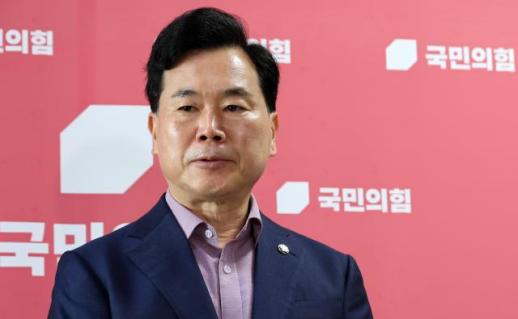 Kim Seung-soo Appointed as New Floor Leader of the People Power Party The People Power Party has appointed Kim Seung-soo, a two-term lawmaker representing Daegu Buk, as its new Floor Leader. Following a general meeting of lawmakers, Kim will be officially appointed and will collaborate with Floor Leader Jeong Jeom-sik to develop legislative strategies and engage in negotiations with the opposition. Jeong introduced Kim to reporters at the National Assembly, stating, "Kim has extensive experience bridging central and local government, having worked with the Blue House and Daegu City Hall. He has also served as the secretary of the Culture, Sports and Tourism Committee and has been involved in legislation to promote the tourism industry." Kim expressed his concerns about the challenges facing the party, saying, "I worry whether I can fulfill my duties given my limited capabilities, especially in such difficult times. However, I accepted this role as a responsibility entrusted to me by our supporters during these challenging circumstances." He added, "I will work to restore trust in our party and strengthen unity and cohesion within it. Through these efforts, I will do my utmost to prevent the destruction of constitutional order and the drift toward dictatorship under the Lee Jae-myung administration, thereby safeguarding the constitutional order of a free Republic of Korea." Following Kim's appointment as Floor Leader, Jeong is expected to announce the appointments of other leadership positions within the party. Meanwhile, Kim began his schedule by accompanying Jeong during a visit to meet with Han Byeong-do, the Floor Leader of the Democratic Party.* This article has been translated by AI. 2026-06-11 12:54:00
 -
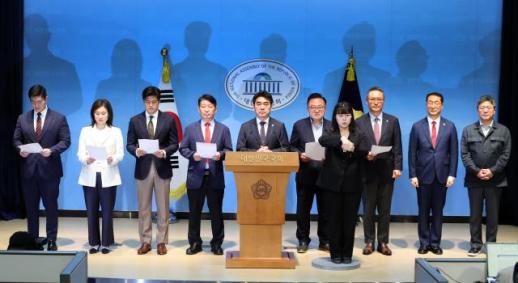 Ruling Party's Young Members Call for Resignation of Leader Jang Dong-hyuk The young faction of the People Power Party, known as 'Alternative and Future,' called for the resignation of leader Jang Dong-hyuk on June 11. They also expressed opposition to his proposal for nationwide re-elections. At a press conference held at the National Assembly, the faction's secretary, Lee Seong-kwon, stated, "The People Power Party suffered a major defeat in the June 3 local elections. The public has called for a change in the party leadership through this election," urging Jang to step down. Alternative and Future warned Jang not to taint the issue of voters' rights with unfounded allegations of electoral fraud. Lee emphasized, "We are clearly against nationwide re-elections. It is unacceptable for the leader of a conservative party to undermine the demands of citizens who gathered to protect the integrity of the elections with conspiracy theories of electoral fraud." Earlier that day, the faction held a breakfast meeting to discuss evaluations and analyses of the local election results. Members expressed a consensus that the People Power Party faced a significant defeat and that Jang should take responsibility. Following the press conference, lawmaker Kwon Young-jin told reporters, "After internal discussions during the breakfast meeting, we concluded that for conservatism to be reborn and for the People Power Party to re-emerge as a governing party, a change in leadership is necessary." Lawmaker Woo Jae-jun also stated as he entered the meeting, "The practical term of the current leadership has ended. It is appropriate for Jang to resign to allow the next leadership time to prepare for the 2028 general elections." Lawmaker Song Seok-jun added, "We must not ignore the public sentiment reflected in the local elections and the thoughts of lawmakers during the recent selection process for the floor leader. Jang must make a wise decision based on a comprehensive view of the situation." Within the People Power Party, interpretations of the local election results vary. Some believe the party performed well by winning the Seoul mayoral election, while others argue that losing 12 out of 16 regional governorships constitutes a major defeat. Those calling for Jang's resignation contend that he played no role in the victory of the Seoul mayoral election. Supporters of Jang's leadership argue that the party should focus its efforts on investigations and special probes related to the shortage of ballots. They also assert that Jang's two-year term, elected by party members, should be respected. In this context, lawmaker Ko Dong-jin, a businessman, remarked, "While it is important for a company to follow the values pursued by its shareholders, what is even more important than shareholders is the customer. The same applies to politics. Of course, party members are very important, but the voices of the public and the sovereign are even more crucial." Meanwhile, Alternative and Future expressed the need to convene a general meeting of lawmakers to gather consensus on issues such as Jang's future and the call for nationwide re-elections. They plan to formally request the meeting with floor leader Jeong Jeom-sik later that day.* This article has been translated by AI. 2026-06-11 12:39:00
 -
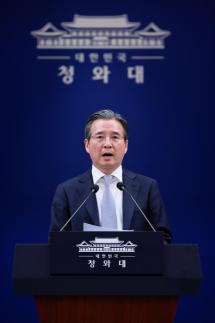 Kim Yong-beom Unveils 'Project Trinity' to Establish AI Data Centers Outside Seoul Kim Yong-beom, head of the Presidential Policy Office, revealed on June 11 his vision for 'Project Trinity,' which aims to integrate semiconductors, data centers, and physical AI into a circular structure to position South Korea as a key hub in the AI supply chain.Kim emphasized the need to establish data centers in non-capital regions, such as Honam, as part of a strategy to alleviate concentration in the Seoul metropolitan area.While accompanying President Lee Jae-myung on his first European trip since taking office, Kim stated on Facebook, "Historically, the global AI supply chain has operated with the U.S. designing software and models, Taiwan producing advanced semiconductors, and China handling large-scale manufacturing. However, all three pillars are now facing disruptions."He added, "Big tech companies are seeking solutions to these challenges and are looking for new bases of operation."Kim noted that South Korea is uniquely positioned with its combination of semiconductor production, power infrastructure, and advanced manufacturing capabilities. He argued that if these elements align, South Korea could become a central player in the entire AI supply chain, rather than just a supplier of components.He explained, "The strategic value in the AI era comes from providing the foundational infrastructure that enables models to operate. Semiconductors make data centers possible, data centers power physical AI, and physical AI generates new data."Kim suggested that once this cycle begins, industries will not grow independently but will accelerate together like a flywheel, proposing 'Project Trinity' as a framework for creating a national flywheel.He highlighted the connection between memory semiconductor supply and AI data centers, stating, "AI data centers should be located in non-capital regions where there is excess power or proximity to power generation facilities."Kim explained that establishing large consumers near power generation sites would reduce the burden on transmission networks by utilizing local power, allowing the power used by households and industries in the capital region to operate separately. He emphasized that the demand from large AI data centers would serve as a catalyst for attracting investment in local power generation and transmission.He also pointed out that the establishment of AI data centers in non-capital regions could serve as a strategy for balanced regional development.Kim stated, "Construction and engineering firms responsible for design and construction, cooling and power management equipment, operations and maintenance, and network equipment suppliers will cluster around the data centers. Once these companies settle in the region, data centers will not just be facilities that consume power but will become hubs for local industry and tax revenue."He reiterated that the more data centers are established outside the capital, the more it will alleviate concentration in the Seoul area and foster advanced industrial foundations in those regions.Kim's remarks are interpreted as being linked to President Lee's announcement during a press conference on June 8, marking his first anniversary in office, where he stated that he would soon unveil a large-scale investment project aimed at a significant transformation in growth strategy.The 'non-capital region AI data centers' mentioned by Kim are believed to potentially include the semiconductor plant proposal by Samsung Electronics in Gwangju, which the government is currently promoting. SK Hynix is also expected to announce investment plans in Honam soon.Kim described physical AI as the 'second semiconductor' that will drive South Korea's economic growth, asserting that the country's strength lies not only in its ability to manufacture robots but also in having industrial sites where these robots can be deployed and trained on a large scale.He added, "Automobile factories, semiconductor lines, shipyards, logistics centers, and advanced manufacturing facilities all serve as strong proving grounds and test beds for physical AI. Reliable motors, actuators, sensors, and control systems are likely to become key components in the era of physical AI."* This article has been translated by AI. 2026-06-11 12:36:00
 -
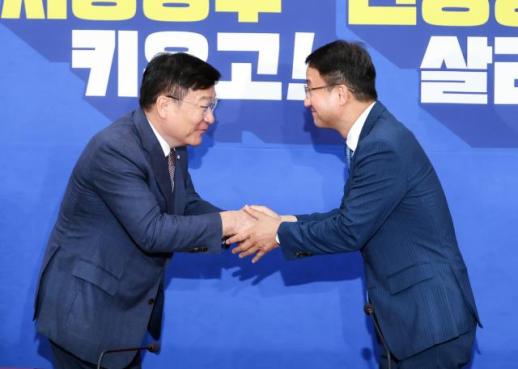 Han Byeong-do and Jeong Jeom-sik Call for Investigation into Election Commission Issues Jeong Jeom-sik, the newly elected floor leader of the People Power Party, met with Han Byeong-do, the floor leader of the Democratic Party, for the first time on June 10. Jeong expressed agreement with Han, stating, "If there are responsibilities to be assigned to the Election Commission, we should address them, and any necessary reforms should be implemented swiftly." However, he noted differences regarding the formation of the assembly for the second half of the term. During their meeting on June 11 at the National Assembly, Jeong emphasized the need for continued agreement on the introduction of a national investigation and urged for the assembly to be formed quickly for the Prime Minister's confirmation hearing and other matters. He stated, "If the major ruling party, the Democratic Party, makes concessions, it could be possible within one or two days." Jeong further remarked, "The National Assembly should be a place for dialogue and compromise," pointing out that the public is aware of the breakdown in communication and the unilateral actions taken by the majority party. This comment is interpreted as Jeong's request for the position of chair of the Legislative and Judiciary Committee. Earlier that day, during a Supreme Council meeting, he argued that offering the chair position to the second-largest party in the assembly formation for the second half of the term would be a positive step in response to public sentiment following the June 3 local elections. In response, Han stated, "The national investigation into the Election Commission's inadequate management is a pressing issue," and called for both parties to work together to ensure accountability and prevent recurrence, aiming for a National Assembly that is perceived as effective by the public. He added, "There have been many instances in the past where the formation of the assembly took a long time," urging both parties to expedite the process to address the Election Commission issues and restore public livelihoods, so that the National Assembly can be evaluated positively by the public. However, given Han's previous statements indicating he would not concede the chair position to the People Power Party, challenges in negotiations are anticipated. Meanwhile, during the National Assembly's plenary session that day, requests for a national investigation into the shortage of ballots submitted by each party were reported. Both parties agree on the necessity of a national investigation, and detailed negotiations regarding its scope and methods are expected to commence. The two floor leaders are scheduled to meet with National Assembly Speaker Chung Sye-kyun later in the afternoon to discuss current issues.* This article has been translated by AI. 2026-06-11 12:36:00
 -
 Coupang Fined Record $467 Million for Data Breaches and Security Failures The Personal Information Protection Commission (PIPC) has imposed a record fine of 624.68 billion won (approximately $467 million) on Coupang, determining that the company’s failure to uphold basic data protection obligations led to the breaches. The commission found multiple violations, including unauthorized data collection, obstruction of investigations, and failure to properly dispose of personal information, surpassing the previous record set by SK Telecom. During a briefing on June 11, PIPC Chairperson Song Kyung-hee stated, "This incident was not due to sophisticated hacking but rather a result of inadequate management of basic safety protocols, such as the management of authentication signing keys and access controls. We have issued a penalty in accordance with the law and principles, regardless of whether the company is domestic or international." The decision followed over 13 hours of deliberation during a full commission meeting held the previous day, which began at 10 a.m. and concluded around 11:30 p.m. Coupang representatives attended the meeting to present their views and engage in a question-and-answer session with the commissioners. The investigation began on November 20, 2025, when Coupang reported a data breach following customer complaints about a hacker's extortion email. The PIPC immediately launched an investigation, forming a joint task force with the Korea Internet & Security Agency (KISA) due to the platform's significance to the public. Coupang later confirmed a much larger scale of data breaches than initially reported, leading to a second notification on November 29. In February 2026, the company reported a third breach involving approximately 165,000 additional user accounts. Investigators found that the hacker was a former Coupang employee who had left the company at the end of the previous year. The hacker exploited a signing key from an alternative authentication system developed during their employment to repeatedly access user information from April to November 2025, extracting data from approximately 33.22 million users and at least 4.33 million non-member delivery information subjects, totaling around 37.55 million individuals. The PIPC deemed Coupang's failure to implement adequate safety measures as a serious issue. The company allowed the authentication signing key to be viewed in plaintext and failed to revoke or change access to the key after the employee's departure. During the attack, there were 148 million abnormal access attempts and a sudden spike in traffic, which went undetected, indicating a failure in access control. The PIPC noted, "The inability to even recognize the attack signifies that access control was not functioning properly." The commission also criticized Coupang's inadequate response after the breach. The company failed to notify affected parties within the legal timeframe of 72 hours after recognizing the additional data breaches and did not inform non-member delivery information subjects despite multiple requests from the PIPC. Furthermore, some personal data of former members was retained against internal regulations, leading to actual breaches. The company also deleted web access logs after a preservation order was issued, complicating the investigation. The PIPC plans to file charges for obstruction of the investigation. Additionally, the PIPC found that Coupang had collected user activity records from approximately 11.17 million users on third-party websites and apps without consent while operating its 'Coupang Partners' program. The commission stated that the company lacked legal grounds for collecting personal online activity records for targeted advertising and failed to manage so-called 'kidnapping ads' properly, resulting in an additional fine of 201.16 billion won (approximately $150 million). Coupang expressed regret over the PIPC's decision, stating, "The proactive measures taken to prevent secondary damage related to the data breach and explanations based on clear facts were not adequately reflected in the PIPC's decision. We hope that the facts will be clarified through legal procedures after receiving the official resolution." The company also asserted that Coupang Partners operates legally based on the same partnership model as global companies.* This article has been translated by AI. 2026-06-11 12:33:00
 -
 Pearl Abyss' 'Crimson Desert' Surpasses 6 Million Sales Worldwide Pearl Abyss' open-world action-adventure game, 'Crimson Desert,' has surpassed 6 million copies in global sales. On June 11, Pearl Abyss announced the milestone via its official social media channels, expressing gratitude to players for experiencing the world in their own ways. 'Crimson Desert' sold 2 million copies on its first day and exceeded 5 million within a month of its release. It achieved the 6 million mark just 83 days after launch, setting an unprecedented sales record in the history of Korean console gaming. User engagement has remained stable since the game's release. Forbes noted that 'Crimson Desert' has maintained a high user retention rate, contrasting with the typical rapid decline in sales seen in single-player open-world games. Pearl Abyss has also revealed plans for a Q3 update and downloadable content (DLC) development, aiming to sustain long-term success through continuous content expansion. Jin-young Heo, CEO of Pearl Abyss, stated, "Despite being a new intellectual property (IP), 'Crimson Desert' has achieved significant success in the global market. We sincerely thank players worldwide and will continue to pursue new challenges to provide enjoyable and high-quality experiences." 2026-06-11 12:18:00
 -
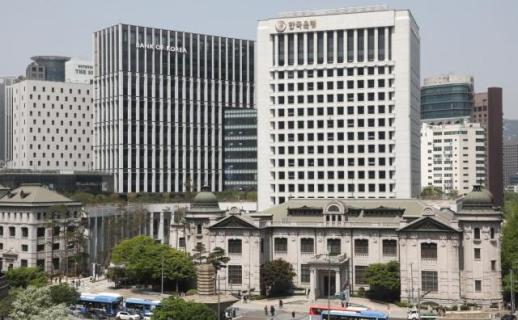 Bank of Korea Extends Foreign Currency Liquidity Measures Until Year-End The Bank of Korea has decided to extend its foreign currency liquidity supply measures until the end of the year in response to the surge in the won-dollar exchange rate. This move aims to support banks in securing foreign currency amid ongoing instability in the foreign exchange market and to alleviate upward pressure on the exchange rate. On June 11, the Bank's Monetary Policy Committee held an emergency meeting and voted to extend the interest payment on excess reserves of foreign currency deposits for an additional six months until the end of this year. Initially set to be a temporary measure from January to June, the extension was deemed necessary as the won-dollar exchange rate recently surpassed 1,500 won, increasing volatility in the foreign exchange market. Foreign currency reserves refer to the mandatory reserves that financial institutions must hold when dealing with foreign currency deposits. The Bank of Korea supports banks in securing foreign currency liquidity more stably by paying interest on reserves that exceed the mandatory amount. The interest rate applied to excess reserves will remain aligned with the target range of the U.S. Federal Reserve's policy rate. Meanwhile, foreign exchange authorities are intensifying inspections against market disruption activities. Starting from the previous day, the Bank of Korea and the Financial Supervisory Service have begun foreign exchange inspections targeting banks engaged in foreign exchange operations. The inspections will primarily focus on foreign banks, with both written and on-site checks to assess speculative trading and potential market disruption activities.* This article has been translated by AI. 2026-06-11 12:18:00
 -
 Government Expands Energy Cashback Program for Households in Second Half of 2026 The government plans to relax the criteria for its household energy cashback program and increase the support amount starting in the second half of 2026. This initiative is a response to the ongoing resource security crisis and energy supply instability caused by the prolonged conflict in the Middle East. On June 11, the Ministry of Climate, Energy, and Environment announced the expansion of the 'household energy cashback' system to address these challenges. The program encourages public participation in energy conservation efforts. Under the current system, households that reduce their electricity usage by more than 3% compared to the average consumption over the same period in the previous two years receive a cashback of 30 to 100 won per kilowatt-hour, which is deducted from their electricity bill. From July to December this year, the key changes include lowering the reduction threshold from 3% to 1% and increasing the cashback amount. The government plans to provide additional support of 20 to 30 won per kilowatt-hour based on the reduction rate, allowing for a maximum cashback of 120 won per kilowatt-hour. In response to recent energy supply uncertainties, the government has intensified demand management efforts. In April, it raised the alert level for oil resource security from 'caution' to 'warning' and upgraded the natural gas alert from 'interest' to 'caution.' Park Deok-yeol, Director of Hydrogen and Thermal Industry Policy at the Ministry of Climate, stated, "Energy conservation is the most economical and effective means of securing energy. We expect that this expanded support will encourage more citizens to participate in energy-saving efforts and reduce their electricity costs."* This article has been translated by AI. 2026-06-11 12:06:00
 -
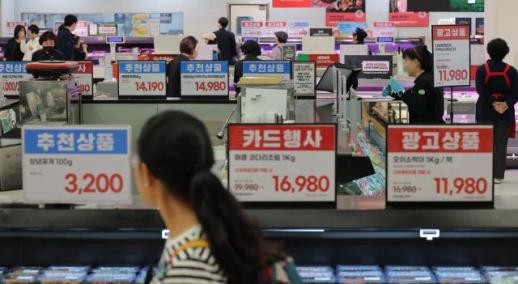 South Korea Faces Economic Crisis Amid Rising Inequality South Korea's economy has entered a phase of "complex polarization," characterized by simultaneous increases in both asset and income inequality. This trend is rapidly weakening the economic status of young people and those without homes, raising concerns that it could diminish productivity and consumer spending, ultimately harming growth potential. According to a report released by the Bank of Korea on June 11, titled "BOK Issue Note: The Reality and Impact of Household Polarization in Our Economy," the Gini coefficient for net assets rose from 0.584 in 2017 to 0.625 in 2025, marking the highest level since the relevant statistics began in 2012. A Gini coefficient closer to 1 indicates greater inequality. The Bank of Korea identified rising real estate prices as a primary cause of the widening asset gap. The surge in housing prices during the COVID-19 pandemic significantly increased the disparity between those who own property and those who do not, while also institutionalizing intergenerational asset inequality, as property ownership is largely concentrated among older individuals. Notably, the number of young people classified as "HENRY" (High Earners, Not Rich Yet) is increasing rapidly. The proportion of high-asset, high-income individuals aged 20 to 34 fell from about 27% in 2017 to approximately 20% in 2025. Even those earning middle to upper-middle incomes are finding it increasingly difficult to ascend to the upper asset tiers, indicating a weakening of the asset formation ladder. Income inequality is also widening again. After showing improvement due to government redistribution policies, the income Gini coefficient experienced a slight uptick in 2024, and market income, excluding policy effects, deteriorated even further. While wages in the IT sector surged due to performance-based bonuses, wage growth in other industries has remained limited, solidifying a "K-shaped" recovery. The spread of artificial intelligence (AI) is seen as a potential exacerbating factor for income polarization. Wage disparities, which previously manifested mainly between regular and irregular employment, are now becoming more pronounced across different industries. Additionally, a Bank of Korea survey indicated that individuals in lower income brackets perceive a higher likelihood of their jobs being replaced by AI. The economic costs of this complex polarization are significant. The Bank of Korea's analysis of a panel of 120 countries found that a 1 percentage point increase in the asset share of the top 10% leads to a 0.16% decrease in total factor productivity. In South Korea, the share of net assets held by the top 10% rose rapidly from 43.0% in 2022 to 46.1% in 2025. This asset structure, heavily reliant on real estate, combined with an aging population, contributes to a phenomenon known as "asset lock-in," further exacerbating productivity declines. The negative impact on domestic consumption is also evident. The proportion of housing expenses for individuals in their 20s and 30s is rising quickly, and the burden of saving for homeownership is reducing discretionary spending capacity. In contrast, older individuals, who have seen their asset values increase due to real estate ownership, struggle to increase consumption due to lower incomes. This trend is reflected in the rising share of young people in the lowest income bracket, which increased from 7.9% in 2020 to 15.2% in 2025. The Bank of Korea believes that existing redistribution policies focused solely on income support are insufficient to address these issues. It calls for policies that diversify asset formation pathways for young people and those without homes, such as investments in the stock market. Furthermore, it emphasizes the need for bold investments in key non-IT industries like shipbuilding, defense, and nuclear power, as well as revitalizing the ecosystem of core industries like semiconductors to ensure that the benefits of growth are distributed throughout the economy. A Bank of Korea official stated, "Our IT sector has a high proportion of imported goods, so even if it grows, a significant portion of the revenue flows out. It is crucial to build a domestic ecosystem. Additionally, industries like shipbuilding, defense, and nuclear power require substantial initial fixed investments, so government policy funding should play a catalytic role."* This article has been translated by AI. 2026-06-11 12:03:00
 -
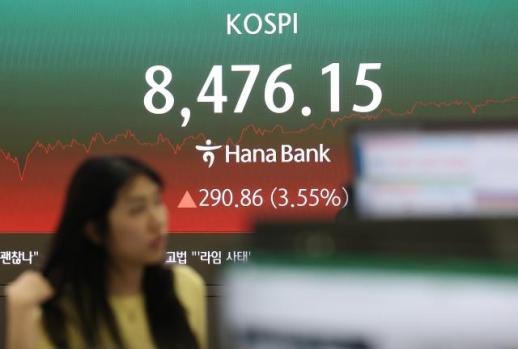 KOSPI Rally Drives Surge in Household Debt; May Bank Lending Rises by 6.9 Trillion Won Last month, as the KOSPI soared, demand for stock investments led to a significant increase in household loans from banks. According to the Bank of Korea's report on financial market trends released on June 11, the balance of household loans from deposit banks, including policy mortgage loans, reached 1,181.8 trillion won at the end of May, an increase of 6.9 trillion won from the previous month. Household loans rose sharply, particularly in other loans, compared to an increase of 2.1 trillion won in the previous month. The balance of credit loans and other loans stood at 240.2 trillion won. After a decline of 600 billion won in April, this category saw a surge of 3.7 trillion won in May, marking the largest increase since April 2021, when it rose by 11.8 trillion won. This surge is attributed to a combination of significant individual stock investments and seasonal funding needs during the traditional family month. Park Min-cheol, head of the Bank of Korea's market management team, stated, "While there is typically an increase in funding needs during the family month, this year's rise in May is largely driven by substantial demand for personal stock investment funds." He added, "In May, foreign investors engaged in large-scale selling for profit-taking and portfolio rebalancing, but individual investors absorbed a significant portion of this selling. It appears that leverage investments using margin loans and bank loans have also increased during this process. However, while investment is a personal decision, it is important to note that if stock prices decline in the future, forced selling could increase market volatility." Mortgage loans rose by 3.2 trillion won to 940.8 trillion won. While the demand for jeonse loans continued to decline, housing transactions in the mid-to-low price range in the metropolitan area increased, along with a rise in demand for interim payments on previously sold properties. Jeonse loans fell by 600 billion won in May, following decreases of 400 billion won in March and 600 billion won in April. Corporate funding needs also grew. Last month, the balance of corporate loans from banks increased by 10.6 trillion won to 1,408.3 trillion won. Loans to large corporations rose by 5.2 trillion won to 317.1 trillion won, while loans to small and medium-sized enterprises increased by 5.4 trillion won to 1,091.2 trillion won. The increase in large corporate loans was driven by ongoing lending activities from banks and the need for working capital to repay corporate bonds, expanding from a previous increase of 5 trillion won. Small and medium-sized enterprise loans continued to grow as banks maintained a trend of expanding corporate credit for productive finance. Corporate bond issuance faced challenges due to rising interest rates, leading to a net repayment of 1.1 trillion won as companies turned to bank loans and other alternative funding sources. Commercial paper and short-term bonds also shifted from a net issuance of 4.9 trillion won last month to a net repayment of 2.1 trillion won. Looking ahead, the flow of household loans is expected to change in response to government real estate policies and stock market trends. Park noted, "After the end of the capital gains tax exemption, the government may introduce measures, and there is uncertainty regarding the direction of the housing market. The stock market is also likely to see significant volatility in other loans depending on market conditions."* This article has been translated by AI. 2026-06-11 12:03:00