
Journalist

Abe Kwak
-
 Cockpit feud poses stumbling block in final-leg race toward Dec. 17 Korean Air-Asiana merger SEOUL, May 12 (AJP) - Korean Air and Asiana Airlines are entering the final-leg race toward their Dec. 17 integration deadline, but a growing feud over cockpit hierarchy poses as a major stumbling block to a smooth merger. The Korean Air Pilots’ Union held a closed-door meeting in Seoul on Tuesday, bringing together about 200 members to discuss how pilot seniority should be managed after the merger, according to union officials. “This meeting was not convened to call for a strike,” a KAL pilot told AJP before entering the meeting. “But the seniority issue is not only part of the buildup toward a possible strike, but also one of the most fundamental reasons behind it.” Although the two airlines have cleared major regulatory hurdles for their business combination, several structural issues remain unresolved. One of the most sensitive is the seniority system, which affects pilots’ order of promotion, pay structure and career progression. According to the Korean Air pilots’ union, it held 12 rounds of renewed talks with management over about five months from last October, but the negotiations eventually broke down. The union argues that Korean Air’s existing seniority system should be maintained after the integration. Management, however, is understood to support establishing a new standard for the combined airline. The main point of contention is the criteria for promotion from first officer to captain. Korean Air first officers must meet requirements under the company’s Flight Operations Administration Manual, or FOAM, before becoming eligible for captain upgrade screening. These include five years after appointment as a first officer, 2,500 to 3,000 flight hours after joining the company and at least 350 landings. Korean Air also requires at least 1,000 flight hours at the hiring stage for first officers, while its probationary and training periods are known to be relatively longer. By contrast, Asiana Airlines is said to require around 300 flight hours for first officer recruitment and to have a shorter probationary period. The Korean Air pilots’ union argues that because the two carriers have operated under different recruitment, training and promotion standards, simply merging seniority based on entry dates or military discharge dates could push back the promotion order of existing Korean Air first officers. Asiana pilots, however, have disputed the union’s claims, saying the concerns are overstated. They argue that among some 800 Asiana first officers, only three to four have yet to meet requirements such as the required number of landings, and that those pilots are already undergoing the necessary procedures before promotion. Asiana pilots say the seniority issue should not be treated merely as a post-merger personnel placement matter, but as a question of how to fairly recognize the career histories and flight experience of pilots from both airlines. The Korean Air pilots’ union passed a strike vote at its regular general meeting last month, with 57.6 percent of all members voting in favor of industrial action. Since then, the union has been discussing possible response scenarios, including a strike. However, a full-scale strike remains difficult under the current essential services agreement, as the aviation industry is classified as an essential public service. Even during a strike, airlines are required to maintain a certain level of operations. The key issue is how the number of essential workers is calculated. Pilots do not work on a fixed daily schedule, but rotate between flights, rest periods, standby duty, training and other assignments. Under the current method, if the required workforce is calculated based on the airline’s entire monthly flight schedule, the figure may include not only pilots actively operating flights but also those on legally required rest, standby duty or post-long-haul rest. The union argues that this significantly reduces the number of pilots who can take part in industrial action, weakening the practical impact of a strike. If the essential workforce is instead calculated based on actual daily flight operations, the number of pilots required to maintain minimum operations would be lower, allowing more pilots to join a strike and increasing the union’s leverage. With Korean Air and Asiana Airlines seeking to complete their integration as early as the end of this year, tensions between the unions and management are expected to intensify. The Korean Air pilots’ union is expected to seek the right to take industrial action through a labor relations commission mediation process. Before that, however, it appears to be pushing for revisions to the essential services agreement as part of efforts to make any potential strike more effective. 2026-05-12 17:12:39
 -
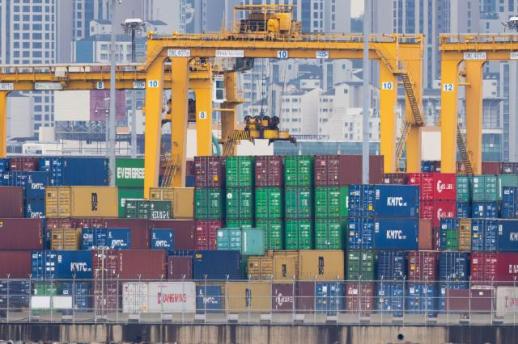 South Korea outpaces peers in Q1 growth; structural risks persist SEOUL, May 12 (AJP) — The South Korean economy was the best performer among major economies in the first quarter of this year, benefiting from a base effect from a contraction in the fourth quarter of last year and chip boom. South Korea's real gross domestic product (GDP) increased by 1.7 percent in the first quarter from the previous quarter - the highest growth rate among the 22 countries that have released first-quarter flash estimates as of Monday. This outperforms countries that have historically recorded higher growth, such as Indonesia (1.37 percent) and China (1.3 percent) - the only countries that saw growth exceeding 1 percent in the first quarter other than South Korea so far. Most other major advanced economies remained in the 0 percent range. The United States grew 0.5 percent while Japan expanded 0.1 percent. Major European economies including Portugal, the Netherlands and Italy also recorded zero or marginal growth of around 0.1 percent. The primary driver of the growth was a surge in semiconductor exports. Rapidly increasing production and exports of memory chips, fueled by expanding AI investment and demand for High Bandwidth Memory (HBM), led to a 5.1 percent increase in total exports compared to the previous quarter. The semiconductor boom also translated into facility investment and production normalization. As investments in semiconductor equipment and electronic devices increased to meet the expansion of AI servers and data centers, facility investment grew in the high 4 percent range compared to the previous quarter. The rapid growth in the first quarter, however, may be a "base effect" from the previous quarter's contraction. South Korea’s growth rate in the fourth quarter of last year was minus 0.2 percent, ranking as the second lowest among G20 member nations after Mexico (-0.8 percent). When growth in the previous quarter is negative, the following quarter's growth rate can appear significantly high simply through the normalization of production, exports, and investment. South Korea saw a 2.1 percent rebound in the third quarter of 2020, followed by a -3.0 percent contraction in the second quarter of that year due to the COVID-19 pandemic. The risk that growth could slow again depending on the semiconductor cycle also remains a concern. According to the central bank, semiconductors accounted for more than half of the manufacturing sector's contribution to growth, at approximately 55 percent. Without the semiconductor manufacturing sector, the first-quarter growth rate of 1.7 percent could have been cut by more than half. Above all, forecasts are emerging that the prolonged blockade of the Strait of Hormuz due to the conflict between the U.S. and Iran could significantly slow South Korea's economic growth. French investment bank Natixis recently slashed its real GDP growth forecast for South Korea from 1.8 percent to 1.0 percent, while British research firm Capital Economics lowered its outlook from 2.0 percent to 1.6 percent. 2026-05-12 17:04:51
 -
 Crimson Desert hit propels Pearl Abyss Q1 profit 26-fold SEOUL, May 12 (AJP) - South Korean game developer Pearl Abyss reported that its first-quarter operating profit surged nearly 26-fold from a year earlier, propelled by the runaway success of action-adventure title Crimson Desert, which has reshaped the studio's financial trajectory since its March 20 launch. According to regulatory filings released Tuesday, operating profit on a consolidated basis came in at 212.1 billion won ($142.4 million), a whopping 2,597.4 percent jump from the same period last year. Revenue climbed 419.6 percent to 328.5 billion won, while net profit ballooned more than 315-fold to 158 billion won. The figures were restated on a continuing-operations basis after Pearl Abyss divested its entire stake in Iceland-based affiliate Fenris Creation, formerly known as CCP Games. Overseas markets accounted for 94 percent of quarterly sales, with North America and Europe alone making up 81 percent, Asia 13 percent and the domestic market just 6 percent. By franchise, Crimson Desert generated 266.5 billion won and the long-running Black Desert series added 61.6 billion won, with console and PC each delivering half of Crimson Desert's revenue. Skipping its customary earnings conference call, Pearl Abyss issued forward guidance for the first time, projecting second-quarter revenue of 271.3 billion to 324.7 billion won and operating profit of 129.6 billion to 176.7 billion won. For the full year, the company expects revenue of 879 billion to 975.4 billion won and operating profit of 487.6 billion to 572.6 billion won. "Crimson Desert is expected to soften from the previous quarter given the front-loaded nature of package game sales, but steady demand is anticipated through continued patches and updates," the company Pearl Abyss said, citing planned tweaks to difficulty, controls, boss rematches and pet content. The studio is now channeling Crimson Desert's core development team into "DokeV," its next title — a brightly styled collection-based open-world adventure dubbed "K-Pokemon" by Korean media and allegedly targeting 2028 release — after Crimson Desert sold 2 million copies on its first day and crossed 5 million by April 15. Shares of Pearl Abyss ended at 52,800 won per stock on KOSDAQ, 1.12 percent lower than the previous session, as the results came out after market closure. 2026-05-12 17:01:45
 -
 Seoul opens Korean War memorial garden honoring wartime support from allies SEOUL, May 12 (AJP) - A memorial garden dedicated to soldiers who died in the Korean War was unveiled at Gwanghwamun Square in central Seoul at a ceremony on Tuesday. The ceremony was attended by war veterans and ambassadors from 22 countries that sent troops and provided support during the 1950–53 Korean War. According to the Seoul Metropolitan Government, the "Garden of Gratitude" consists of a ground-level space with rifle-shaped installations symbolizing the sacrifices made during the war to defend freedom and peace, along with an underground exhibition hall called "Freedom Hall," where visitors can learn about the history of the war through videos and other historical records. They can also interact with multimedia displays. 2026-05-12 17:00:53
 -
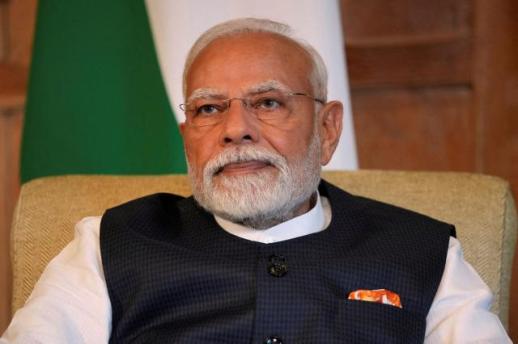 India enters austerity drive as oil, gold imports strain forex reserves SEOUL, May 12 (AJP) — India’s 1.5 billion people are being asked to travel less, farm more efficiently and, most notably, cut back on gold purchases, underscoring the severity of the blow the three-month-long Middle East energy shock is dealing to Asia’s fastest-growing major economy. In a national address on Sunday, Prime Minister Narendra Modi urged citizens to avoid buying gold for the next year, reduce unnecessary overseas travel and curb energy consumption as the government attempts to contain rising dollar demand amid deepening geopolitical turmoil in the Middle East. “Patriotism is not only about the willingness to sacrifice one’s life on the border,” Modi said in a speech in Hyderabad. “In these times, it is about living responsibly and fulfilling our duties to the nation in our daily lives.” The appeal marked one of Modi’s broadest public austerity campaigns since the Covid-19 pandemic, with the government also encouraging remote work arrangements, greater use of public transportation, carpooling and electric vehicles, while calling on farmers to reduce fertilizer consumption and energy use. Markets increasingly view the measures not as a simple conservation campaign, but as a broader macroeconomic stabilization effort aimed at containing foreign exchange pressures caused by soaring crude oil prices and rising imports. The vulnerability stems from India’s structural dependence on imported energy and gold, both priced in U.S. dollars. As the world’s third-largest crude oil importer after the United States and China, India imported about $123 billion worth of crude oil during the 2025 - 2026 fiscal year, making energy the single largest contributor to the country’s import bill. Gold ranked second, with imports reaching approximately $72 billion during the same period, reflecting India’s position as one of the world’s largest gold-consuming nations. The dual surge in oil and gold demand is intensifying pressure on the current account and the rupee at a time when geopolitical tensions are pushing global energy prices sharply higher. Following the collapse of negotiations surrounding the U.S.-Iran conflict and concerns over the security of the Strait of Hormuz, Brent crude prices climbed above $100 per barrel, heightening fears over inflation and widening external imbalances across Asia’s energy-importing economies. The challenge is particularly acute for India because gold functions not merely as a luxury product, but as a quasi-financial asset deeply embedded in household savings, rural wealth preservation, weddings and inheritance practices. When geopolitical uncertainty and inflation fears intensify, Indian households historically increase gold purchases as a safe-haven store of value, further boosting dollar demand and worsening pressure on the rupee. India’s foreign exchange reserves are already showing signs of strain. According to the Reserve Bank of India, reserves stood at $690.69 billion as of May 1, down sharply from $728.5 billion before the escalation of the Iran conflict in late February. While the absolute reserve level remains among the world’s largest, the pace of depletion has unsettled markets. Reserves fell by roughly $37.4 billion in March and another $7.8 billion in April as the central bank reportedly intervened aggressively to support the rupee through dollar-selling operations conducted via state-run banks. The rupee has lost around 10 percent of its value over the past year, with roughly half of that decline occurring since the outbreak of the Iran conflict and the escalation of regional tensions. The International Monetary Fund projects India’s current account deficit could widen to around $84 billion in 2026, reinforcing concerns that sustained energy shocks may further weaken external balances. India has faced similar external vulnerabilities before. During the 2013 “Taper Tantrum,” when emerging markets were rattled by signals of U.S. monetary tightening, New Delhi stabilized markets by sharply raising gold import duties and imposing restrictions on imports to protect the rupee and conserve reserves. Yet the current policy direction also exposes a paradox at the heart of India’s financial strategy. While the government is urging households to cut gold purchases, the central bank itself has steadily expanded its own gold holdings as part of a broader effort to diversify away from dollar-denominated reserve assets amid growing geopolitical fragmentation. India currently holds roughly 880 tons of gold reserves, ranking seventh globally. Gold’s share of the RBI’s foreign exchange reserves rose from 13.9 percent last September to 16.7 percent at the end of March this year. The RBI has also repatriated more than 100 tons of gold from overseas vaults back to domestic storage over the past year, moves widely viewed as part of a broader effort to strengthen sovereign financial resilience in an increasingly uncertain geopolitical environment. India now finds itself operating within a uniquely contradictory structure in which households are buying gold as protection against instability while the central bank simultaneously accumulates gold as a strategic reserve asset. But with private gold imports continuing to drain foreign exchange reserves and widen current account pressures, analysts expect New Delhi’s campaign to curb discretionary imports and conserve dollar reserves to intensify in the months ahead. 2026-05-12 16:43:38
 -
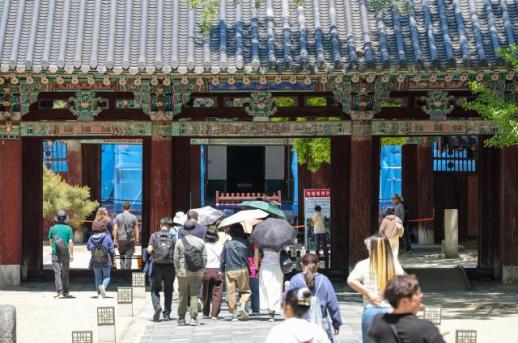 Following the tracks, following the taste: Jeonju in cinematic experience *Editors’ Note: This is part of AJP’s photo essay series exploring railway journeys across South Korea in search of local food and regional culture. This installment travels to Jeonju during the Jeonju International Film Festival, where cinema, traditional streets and local cuisine came together beneath the spring sky. SEOUL, May 12 (AJP) - The 27th edition of the Jeonju International Film Festival transformed Jeonju into more than a destination for cinema. Under the slogan “Beyond the Frame,” the city itself became part of the festival experience, where audiences moved naturally between movie theaters, narrow alleys, cafes and traditional neighborhoods. Held from April 29 to May 8, the festival filled the streets around Jeonju Film Street and the Gaeksa district with visitors carrying tickets and festival badges as they moved between screenings. Local restaurants and cafes welcomed festivalgoers with special discounts, while announcements for upcoming films echoed through the busy streets alongside the steady footsteps of audiences heading toward their next screenings. About two hours from Seoul by train, Jeonju revealed itself not only as a city of film, but also as a place where traces of tradition remain woven into everyday life. Beneath clear spring skies, the tiled rooftops of Jeonju Hanok Village stretched across the cityscape. Small workshops, cafes and souvenir shops lined the narrow alleyways beneath traditional hanok eaves, while stone walls and wooden storefronts gave the village a slower rhythm distinct from the busy festival streets nearby. Foreign visitors blended naturally into the scenery. Travelers dressed in hanbok paused to take photographs along the alleys, while others browsed shops selling handmade crafts and local souvenirs. English, Japanese and Chinese voices drifted through the streets as banners for the film festival hung between rows of traditional rooftops, quietly merging contemporary culture with the city’s historic atmosphere. Jeonju also revealed itself through food. Restaurants near Nambu Market filled with visitors searching for local specialties including Kongnamul-gukbap and blood sausage soup. Served in the traditional “toryeom” style — where hot broth is repeatedly poured over rice and bean sprouts — kongnamul-gukbap offered a warm and comforting meal after hours spent walking between theaters and alleyways. Mul-jjajang, prepared with seafood and vegetables in a thick red sauce, presented a distinctly different style from the more familiar black bean noodles commonly found elsewhere in Korea. The dish, known for its spicy and savory flavor, reflected another layer of Jeonju’s local food culture. Visitors also sampled Moju, a sweet local drink simmered with herbs, alongside blood sausage filled with seasoned pork blood, reflecting Jeonju’s long-standing culinary traditions. People may arrive in Jeonju for cinema, but what often remains afterward are the quiet landscapes beyond the screen — the alleys, rooftops and meals remembered slowly, one step at a time. 2026-05-12 16:42:54
 -
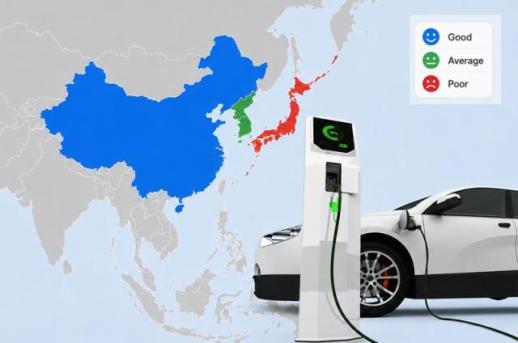 EV chasm redraws East Asia's auto map SEOUL, May 12 (AJP) - A widening electric-vehicle demand divide across Asia is reshaping the region's automotive hierarchy, pushing Japanese automakers into retreat while opening once-impenetrable markets to Chinese exporters. Caught between the two forces, South Korea's battery makers are pivoting aggressively toward energy storage systems and lower-cost chemistries to weather the global EV slowdown. The clearest sign of Japan's retreat came on April 23, when Honda Motor announced it would end vehicle sales in South Korea by the end of 2026, closing out a 23-year presence in one of Asia's fiercest automotive battlegrounds. Honda sold just 1,951 vehicles in Korea last year, down 85 percent from its 2008 peak of 12,356 units. "It is regrettable to end business in Korea, but we will faithfully respond to consumers so they do not feel uneasy," said Lee Ji-hong. Nissan Motor exited the Korean market in 2020, leaving only Toyota Motor and its luxury brand Lexus still selling passenger cars in the country. The pressure extends well beyond Korea. Nissan has halted plans for a $500 million EV production project at its Canton, Mississippi plant, originally announced in 2022, while Honda has indefinitely frozen a 15 billion Canadian-dollar ($10.9 billion) EV and battery complex in Ontario that had been scheduled to begin production in 2028. The fallout is reverberating through Korea's battery industry. SK on had agreed in March 2025 to supply 99 gigawatt-hours of high-nickel batteries for four next-generation Nissan EV models in a deal industry sources estimate at around 15 trillion won ($10.8 billion). The volume is now expected to be redirected to revised Nissan lineups, though final contract terms remain uncertain. Honda's Ontario freeze has also forced Posco Future M to revisit a planned cathode joint venture in Canada, while the LG Energy Solution-Honda battery joint venture in Ohio is shifting output plans from pure EV batteries toward hybrid and energy-storage applications. For Japan's automakers themselves, the outlook has darkened sharply. Honda forecast a fiscal 2025 net loss of between 420 billion yen and 690 billion yen, potentially marking its first annual loss since listing publicly in 1957. Nissan projects a 550 billion yen annual loss, while Toyota — still the world's largest automaker with 11.3 million vehicle sales in 2025 — faces an estimated $9.1 billion in U.S. tariff-related costs for the fiscal year ending March 2026. As Japanese firms retrench, Chinese manufacturers are moving into the vacuum at unprecedented speed. Chinese-built EVs, including Tesla vehicles exported from Shanghai, accounted for 33.9 percent of newly registered EVs in South Korea during the first quarter of 2026, up from just 4.7 percent in 2022, according to the Korea Automobile & Mobility Industry Association. Domestic Korean brands' share fell to 57.2 percent from 75 percent over the same period. BYD has led the Chinese advance. After launching passenger vehicle deliveries in Korea in April 2025, the Shenzhen-based automaker surpassed 10,000 cumulative sales within 11 months — the fastest pace ever achieved by an imported brand in Korea. BYD sold 5,991 vehicles in the first four months of 2026, ranking fourth among imported brands behind Tesla, BMW and Mercedes-Benz. China's domestic EV market, however, is beginning to show signs of fatigue. New-energy vehicle wholesale sales rose 28.2 percent in 2025 to 16.49 million units, accounting for nearly half of all vehicle sales in China. But BYD's monthly sales fell year-on-year for an eighth consecutive month in April as Beijing scaled back trade-in subsidies and prepared to reinstate purchase taxes. The company compensated by accelerating exports, shipping a record 134,000 vehicles overseas in April alone, up 70.9 percent from a year earlier. Beyond the China-Japan-Korea triangle, EV demand is broadening rapidly across emerging Asia. India's electric passenger vehicle sales surged 87.4 percent in fiscal 2026 to 233,246 units, while total EV sales across two-, three-, four-wheelers and commercial vehicles reached 2.45 million units, according to Jato Dynamics. Tata Motors continues to dominate India's electric passenger vehicle market with more than 36 percent share as of April. Southeast Asia is moving even faster on EV penetration. Battery-electric vehicles accounted for roughly 26 percent of new car sales in Vietnam through August 2025, driven overwhelmingly by local automaker VinFast and its VF 3 mini-SUV. Thailand reported EV penetration of around 20 percent in the first 10 months of 2025, dominated by Chinese brands including BYD and Great Wall Motor. In Singapore, EVs already account for more than 40 percent of new car sales. For Korea's battery trio — LG Energy Solution, Samsung SDI and SK on — the strategic response has been a rapid shift away from pure EV dependence. All three are accelerating lithium iron phosphate battery production for grid-scale energy storage projects in North America, where changes to federal tax-credit policies have prompted automakers to slow EV investment and delay orders. LG Energy Solution targets more than 60 gigawatt-hours of global ESS capacity this year, including over 50 gigawatt-hours in North America. SK On has already secured a 7.2 gigawatt-hour ESS supply agreement with Flatiron Energy Development. "Demand for ESS is growing more sharply than ever before, and this is the crucial opportunity for the success of portfolio rebalancing," said Kim Dong-myung in his New Year address. The pivot may offer Korean battery makers a bridge through the EV slowdown, but competition remains intense. Chinese suppliers led by CATL and BYD continue to dominate global LFP battery and cathode material supply chains, leaving Korean firms racing to secure production scale and defend their North American foothold before the next phase of the EV transition takes shape. As Asia's automotive landscape fractures between retreating Japanese incumbents, surging Chinese exports and rapidly expanding emerging-market demand, Korea's battery industry — long viewed as the region's strongest electrification advantage — is entering its most consequential test yet. 2026-05-12 16:42:23
 -
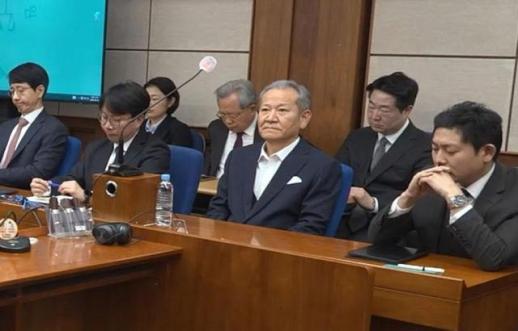 Appeals court increases ex-interior minister's sentence to 9 years over martial law involvement SEOUL, May 12 (AJP) - Former Interior and Safety Minister Lee Sang-min received a nine-year prison sentence on Tuesday after an appeals court increased his initial seven-year term for his involvement in disgraced former President Yoon Suk Yeol's botched martial law debacle in 2024. In a trial broadcast nationwide, the Seoul High Court ruled that he was guilty of aiding Yoon's Dec. 3 declaration of martial law, by instructing police and fire agencies to cut off power and water to media outlets on Yoon's orders. It also found him guilty of perjury for denying his involvement in the debacle during Yoon's impeachment trial in February last year. The appellate court said Lee "appears to have been aware of the illegality of the martial law declaration," criticizing him for "having consistently taken a stance of ignoring and evading legal responsibility." It said the initial sentence at the lower court was too lenient, given the severity of his offenses. Prosecutors had earlier sought a 15-year sentence. 2026-05-12 16:31:13
 -
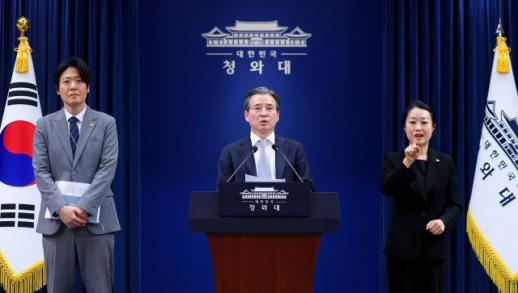 Policy chief floats 'AI dividend' concept amid AI boom in Korea SEOUL, May 12 (AJP) - South Korea's top presidential policy aide floated the idea of a national "AI dividend" on Tuesday, proposing that part of the massive profits and tax windfall expected from the artificial intelligence and semiconductor boom be structurally shared with the broader public. Kim Yong-beom, policy chief to President Lee Jae Myung, argued in a social media post that the emerging AI boom was not created solely by individual firms, but by decades of national investment and collective economic development. "The AI bonanza was not generated by certain companies alone," Kim wrote. "If strategic advantages in the AI infrastructure supply chain create a structural boom and unprecedented excess tax revenue, how to use that money wisely becomes a question society must deliberate." He said the profits generated from industries built on "the foundations the people have cultivated over the past half century" should be shared with the public through institutional mechanisms. Kim warned that South Korea had squandered a similar opportunity during the semiconductor supercycle of 2021 and 2022, when large excess tax revenues were spent without long-term planning. "The scale of this cycle could be incomparable to the previous one," he said. "Allowing it to pass in the same way would mean wasting a once-in-a-generation historic opportunity." As a possible framework, Kim referenced Norway's sovereign wealth model, under which oil profits have been accumulated in a state-run fund since the 1990s and later used to support welfare and long-term fiscal stability. "In Korea's case, I would tentatively call it a 'national dividend,'" he said. Kim suggested the proceeds could be used for youth startup funding, rural basic-income programs, support for artists, expanded pension schemes or education and retraining programs designed for the AI transition era. He stressed that the final structure should emerge through broad public debate and social consensus. "If excess tax revenue never materializes, the idea of a national dividend could remain unrealistic," he said. "But letting those excess profits simply dissipate without any guiding principles could be even more irresponsible." Kim argued that the defining challenge of the AI era would not simply be generating economic growth, but managing how extraordinary profits become increasingly concentrated among dominant companies and higher-income groups. He said using part of those gains to cushion the social costs of AI-driven economic transformation should not merely be viewed as redistribution, but as a way to preserve long-term economic and social stability. Kim also suggested that if Korea successfully develops an institutional model for redistributing AI-era windfalls, it could eventually become a global reference point as governments worldwide grapple with the economic disruptions caused by artificial intelligence. "Korea could become the first country to return excess profits from the AI era back to human life," he said. "The model we begin debating and building now could later become an international standard." His remarks come as policymakers and economists globally intensify discussions over how AI-driven productivity gains may accelerate wealth concentration while reshaping labor markets and industrial structures. Kim also cited comments by Demis Hassabis, who recently argued for the need to develop new economic frameworks suited to the AI era. Earlier this month, Kim projected that Korea could post historically large tax revenues in 2026 and 2027 if the semiconductor and AI infrastructure boom extends through next year. 2026-05-12 16:12:13
 -
 Anthropic to open office in southern Seoul as it expands Asia presence SEOUL, May 12 (AJP) - American artificial intelligence (AI) company Anthropic is expected to open its office in South Korea in the first half of this year. According to industry watchers, the developer of the AI assistant Claude reportedly met with South Korean government officials recently to discuss its plans. The development comes after Anthropic earlier told foreign media outlets including Reuters that it planned to open an office in southern Seoul. In July last year, the San Francisco-based company established a local entity under the name of "Anthropic LLC," laying the groundwork for its entry into the South Korean market, and listed several Seoul-based job postings on its website. Anthropic earlier opened an office in India in February this year, after establishing its presence in Japan in October last year. 2026-05-12 16:07:17