
Journalist

Abe Kwak
-
 South Korea Establishes Arctic Route Committee to Boost Development The South Korean government is set to accelerate its Arctic route development initiative with the establishment of a new Arctic Route Committee under the Prime Minister's office, which will also focus on training professionals in related fields. On May 7, the Ministry of Oceans and Fisheries announced that three key bills—"Sustainable Coastal Fisheries Development Act," "Special Act on Promoting the Use of the Arctic Route and Supporting Related Industries," and amendments to the "Shipping Act"—passed the National Assembly. The Arctic route initiative is a major policy project for the ministry, which has already laid the groundwork by launching the Arctic Route Promotion Headquarters. The passage of the Arctic Route Special Act enables the formation of the Arctic Route Committee, which will facilitate the establishment of a basic plan, professional training, and financial support across government agencies. Additionally, the new legislation aims to reorganize the administrative framework for coastal fisheries, mandating reporting on fishing locations and catch data by species. It also establishes the basis for issuing catch certificates. The name of the state-subsidized route, which covers all operational losses, will change to "Public Route." The revised Shipping Act allows public institutions to manage these routes, enhancing safety through specialized oversight. The ministry plans to delegate some routes to public entities next year, with a full transfer expected by 2028. Minister of Oceans and Fisheries Hwang Jong-woo stated, "We will work diligently on the subordinate regulations and ensure the smooth implementation of the laws that have passed the National Assembly."* This article has been translated by AI. 2026-05-07 23:29:33
 -
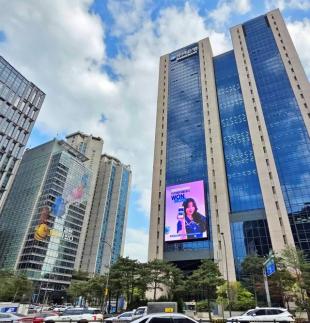 Woori Bank Selected to Manage $886 Billion National Pension Fund's Foreign Assets Woori Bank has been selected as the preferred negotiator to manage the National Pension Service's (NPS) $886 billion in foreign assets. This decision, announced on May 7, reinforces Woori Bank's status as a leader in foreign exchange management after successfully holding the custody since August 2021. The NPS plans to finalize the contract with Woori Bank in June. If negotiations fail, they will engage with the next preferred candidate. The initial contract period is three years, with the possibility of extending it for up to two additional years based on annual evaluations.Woori Bank and KB Kookmin Bank competed for the bid, with selection criteria including financial stability, operational capability, foreign currency management experience, service quality, and risk management. Woori Bank's experience since 2021 gave it a competitive edge in the selection process.This marks the first selection of a foreign currency custody bank for the NPS in five years. As the designated bank, Woori Bank will oversee various functions, including domestic and international foreign exchange transactions, account management for foreign currency, short-term fund limits, remittances, and foreign exchange trading. As of late February, the NPS's total fund reserves stood at 1,610 trillion won, with 55% allocated to foreign assets. Managing the NPS's foreign exchange transactions will enhance Woori Bank's industry standing and generate fee income.* This article has been translated by AI. 2026-05-07 23:27:57
 -
 Police Reapply for Arrest Warrant for Bang Si-hyuk After Prosecutor Rejection Police have refiled an arrest warrant for Bang Si-hyuk, chairman of HYBE, who is accused of deceiving investors into selling shares ahead of the company's IPO. This comes just six days after prosecutors rejected the initial warrant, citing insufficient justification for detention. According to reports on May 7, the Seoul Metropolitan Police's Financial Crime Investigation Unit submitted the warrant application on April 30, targeting Bang for fraudulent trading under the Capital Markets Act. The police initially filed the warrant on April 21, but the Southern District Prosecutors' Office returned it on April 24, requesting further investigation. Prosecutors stated they found a lack of compelling reasons for detention at that time. Following this, police reinforced their case by highlighting concerns about potential flight, evidence destruction, and recidivism risks. Bang is accused of misleading existing investors and venture capitalists by claiming there were no plans for an IPO during the 2019 listing process, subsequently persuading them to transfer shares to a private equity fund he was connected to. Police suspect he received about 190 billion won from this arrangement, totaling illicit gains of approximately 260 billion won. Current capital market laws prohibit obtaining financial benefits through false information or fraudulent schemes during investment transactions. If the illicit gains exceed 5 billion won, penalties can include life imprisonment or a prison term of five years or more. The police began their investigation based on internal tips, conducting searches and summons since last year. They raided the Korea Exchange and HYBE in June and July 2022 and placed a travel ban on Bang upon his return from the U.S. in August. He was interrogated five times from September to November 2022. Additionally, police have secured pre-indictment asset preservation measures on Bang's HYBE shares, valued at approximately 156.8 billion won. During the initial warrant application, police cited the severity of the case, noting that the amount involved exceeded 100 billion won, as well as evidence suggesting Bang replaced his mobile phone shortly before the investigation. If prosecutors proceed with the refiled warrant, a pre-arrest hearing may be held in court.* This article has been translated by AI. 2026-05-07 23:25:57
 -
 Nikkei Hits Record High with 3,320-Point Surge Japan's stock market recorded its largest single-day gain on the first trading day after the Golden Week holiday. The Nikkei 225 index closed on May 7 at 62,833.84, up 3,320.72 points (5.58%), setting a new record. During trading, it briefly surpassed 63,000 for the first time. This increase exceeded the previous record gain of 3,217 points following the 'Black Monday' crash in August 2024. However, the percentage increase did not rank among the top 20 in history due to the high index level. The surge was attributed to a rally in U.S. tech stocks and optimism that tensions between the U.S. and Iran might ease. AI and semiconductor stocks drove the market higher, with SoftBank Group hitting its upper price limit. Kioxia Holdings saw a massive influx of buy orders, closing at 43,410, up 7,000 points (19.22%), boosting its market cap to 23.7 trillion yen, making it the sixth largest on the Tokyo Stock Exchange. The occurrence of stop-go trading for stocks exceeding 1 trillion yen in market cap is unusual. Advantest and Tokyo Electron also performed strongly, with Tokyo Electron reaching a new high adjusted for stock splits. Analysts noted that positive news accumulated during the holiday period contributed to the market's performance. The Nasdaq and Philadelphia Semiconductor Indexes reached new highs, and AMD reported first-quarter profits nearly double those of the previous year. Kioxia's joint venture with SanDisk also reported strong results, prompting a nearly 30% stock price increase. Goldman Sachs raised its 2028 operating profit forecast for Samsung Electronics to 494 trillion won, significantly higher than the 2025 forecast for Toyota Motor Corporation. FOMO Grows Amid AI and Semiconductor Rally Investor anxiety about missing out on the AI and semiconductor rally intensified. Takayuki Ishibashi, a vice president at Goldman Sachs, stated, "There is a strong fear of not holding AI and semiconductor stocks." The market is seeing a trend where rising stocks continue to climb. Increased buying linked to index futures and trend-following foreign funds contributed to the rapid rise, as investors who had sold call options for hedging prior to the holiday began to buy back, accepting losses. Easing oil prices due to reduced Middle East tensions also alleviated inflation concerns, creating a favorable environment for growth stocks. The upward trend was not limited to large tech stocks. The TOPIX index rose 111.76 points (3.00%) to close at 3,840.49, while the JPX-Nikkei 400 gained 1,079.04 points (3.18%) to finish at 35,060.73. Trading volume on the Tokyo Stock Exchange's Prime Market reached 10.84 trillion yen, the highest since the market's inception in 2022. Approximately 75% of stocks rose, totaling 1,190 gainers. However, some domestic stocks, including trading companies and pharmaceuticals, faced selling pressure, and INPEX declined as oil prices stabilized. Nintendo experienced selling pressure due to concerns over rising memory semiconductor costs. However, signs of market overheating are evident. The NT ratio, which divides the Nikkei index by the TOPIX, reached a historic high of 16.3, indicating an unprecedented concentration of large-cap stocks in the market. The deviation from the average over the past 25 trading days also exceeded the typical 5% threshold considered 'overheated.' Nomura Securities noted that past trends suggest the Nikkei's rise may not be sustainable. Hideyuki Ishiguro, chief strategist at Nomura Asset Management, remarked, "A market concentrated in specific stocks is unlikely to last long." Takatoshi Itoshima, a strategist at Pictet Japan, expressed hope for a rebound in cyclical stocks like automobiles and banks, which are more influential on the TOPIX, as geopolitical risks recede. For the Nikkei to maintain its momentum beyond AI and semiconductor stocks, broader buying interest is essential.* This article has been translated by AI. 2026-05-07 23:23:48
 -
 Court Upholds Ruling Against Regulatory Sanction on MBC The Seoul High Court has upheld a lower court's ruling that deemed the Korea Communications Commission's (KCC) sanctions against MBC for citing a News Tapa interview as unjust. On May 7, the court ruled in favor of MBC in its lawsuit against the KCC, mirroring the earlier decision. This case stems from a 2021 interview where Kim Man-bae, a major shareholder of Hwacheon Daeyu Asset Management, claimed that Yoon Seok-yeol, then head of the Supreme Prosecutors' Office, had intervened in the investigation of Busan Savings Bank. News Tapa reported this in March 2022, and MBC later cited it in its radio program. The KCC issued a warning sanction, stating the report lacked verification, which could negatively impact MBC's license renewal process. MBC rejected the sanction and filed a lawsuit in February 2024, winning in the first instance. The KCC appealed, but the appellate court upheld the initial ruling.* This article has been translated by AI. 2026-05-07 23:22:15
 -
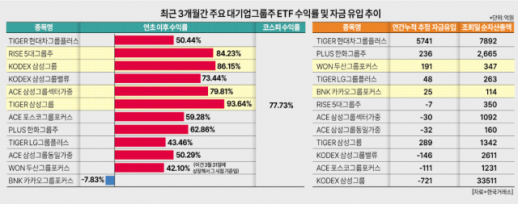 Samsung Leads ETF Market with 93% Returns, LG and Hyundai Lag Behind In the ongoing rally toward the "dream 7000-point" mark, Samsung Group has solidified its dominance in the domestic exchange-traded fund (ETF) market, achieving over 93% returns since the beginning of the year. In contrast, major companies like Hyundai and LG have underperformed, contributing to a growing disparity in returns. According to the Korea Exchange, as of May 7, ETFs tracking major conglomerates (excluding bonds) have shown that Samsung-related products dominate the top returns. The standout performer is the 'TIGER Samsung Group' ETF, which has achieved a remarkable 93.64% return. Following closely are 'KODEX Samsung Group' at 86.15% and 'RISE 5 Major Groups' at 84.23%, which has a high concentration of semiconductor stocks like Samsung Electronics and SK Hynix. The 'ACE Samsung Group Sector Weighted' ETF also recorded a solid 79.81% return. This surge in ETF performance is largely attributed to Samsung Electronics' significant rise, driven by the AI semiconductor supercycle. The KOSPI index has increased by 77.73% during the same period, but Samsung-related ETFs have outperformed by 10-15 percentage points, with Samsung Electronics soaring by 126.44%. In contrast, the returns for the other five major groups have lagged behind the KOSPI. The 'TIGER LG Group Plus' ETF showed the weakest performance at 43.46%, followed by 'TIGER Hyundai Group Plus' at 50.44% and 'ACE POSCO Group Focus' at 59.28%. Even the 'PLUS Hanwha Group' ETF, which benefited from strong shipbuilding and defense sectors, could only manage 62.86%, falling short of the KOSPI's gains. Among other large corporate groups, the disparity in returns is even more pronounced. The 'WON Doosan Group Focus,' launched on March 31, has achieved a 42.10% return, exceeding the KOSPI's 41.93%. However, the 'BNK Kakao Group Focus' has reported a -7.83% return, the only major group ETF in negative territory. This divergence in returns has led to polarized capital flows. Notably, the 'TIGER Hyundai Group Plus,' which underperformed, attracted a substantial inflow of 574.1 billion won, likely due to investor optimism regarding Hyundai's value-up program and new business ventures in robotics. Conversely, the high-performing 'KODEX Samsung Group' saw an outflow of 72.1 billion won as investors took profits, believing the index had peaked. Kim Seong-no, a researcher at BNK Investment & Securities, noted, "While the expansion of the ETF market has created favorable supply conditions, ongoing macroeconomic uncertainties could amplify stock market volatility. Given the concerns over slowing growth amid the index's rise, investors should be prepared for potential technical corrections due to overheating."* This article has been translated by AI. 2026-05-07 23:20:19
 -
 Indian Ambassador Calls South Korea a Key Partner for India's 2047 Vision Indian Ambassador Goranglal Das described President Lee Jae-myung's recent state visit to India as a pivotal moment for the two nations, reflecting the deep interest both leaders have in strengthening bilateral relations. During a press briefing on May 7 at the Indian Embassy in Yongsan, Das stated, "This visit is the result of the special attention that Prime Minister Narendra Modi and President Lee have given to our relationship." He emphasized Modi's longstanding respect for South Korea, recalling that during his first press conference as Chief Minister of Gujarat 25 years ago, Modi expressed a desire to model Gujarat after South Korea. "This shows how much attention Modi has paid to India-South Korea relations," Das noted. Das also highlighted Lee's commitment to India, mentioning that before becoming president, Lee served as the head of the Korea-India Friendship Association in the National Assembly, underscoring the importance he places on India. The ambassador pointed out that while the two leaders had previously met at the G7 and G20 summits, this state visit allowed for a more in-depth discussion about the future direction of their partnership. "From India's perspective, South Korea is a like-minded democratic nation and a special strategic partner," Das said, emphasizing the importance of collaboration amid geopolitical tensions, supply chain disruptions, energy uncertainties, and the rise of AI. He also noted South Korea's role as a key partner in India's 'Make in India' initiative, citing the successes of Samsung and Hyundai in India as examples of significant technological contributions across various sectors, including defense. Das revealed that India aims to become a developed nation by 2047, the centenary of its independence, and sees South Korea as a crucial partner in achieving this 'Viksit Bharat' vision. Comprehensive Industrial Cooperation from Shipbuilding to AI Das identified key areas for cooperation, including shipbuilding, semiconductors, AI, energy, steel, critical minerals, creative industries, and startups. He explained that India is prioritizing South Korea as it advances its maritime industry under the 'Maritime Amrit Kaal' vision. In semiconductors and AI, he highlighted the potential synergy between India's workforce and data and South Korea's semiconductor leadership. In the energy sector, India aims to achieve 100 gigawatts of nuclear power by 2047 and sees significant collaboration opportunities in green ammonia and green hydrogen supply. Das mentioned that India targets a steel production capacity of 500 million tons by 2047, and South Korea's advanced steel manufacturing technology could aid in India's self-sufficiency. During the state visit, the two leaders reportedly met for over five hours. They also commemorated their ancient ties with a tree planting ceremony, referencing a legend about an Indian princess from Ayodhya who married King Suro of Korea around 2,000 years ago. The planted tree will eventually be moved to a memorial park for the princess in Ayodhya. In the economic sphere, President Lee attended a business summit with around 800 participants, while Modi expanded a planned casual lunch into a working lunch with South Korean business leaders. Achievements in corporate collaboration included the establishment of a steel joint venture between POSCO and India's JSW, as well as Hyundai's cooperation in setting up a greenfield shipyard in India. Additional events included a financial cooperation forum, Bengaluru Space Day, and a venture, startup, employment, and entrepreneurship fair held alongside the summit. Das noted that four political documents were adopted during the visit, covering overall strategic vision as well as agreements in maritime, sustainability, and energy sectors. He quoted Modi, stating that the scope of cooperation has expanded "from chips to ships, talent to technology, and environment to energy." In response to questions, Das discussed expanding opportunities for South Korean companies in India, noting that fewer than 700 South Korean firms currently operate there. He mentioned President Lee's ambition to increase this number tenfold and highlighted discussions about creating a dedicated industrial zone for South Korean SMEs. Regarding energy cooperation, Das explained that both countries rely heavily on hydrocarbons from West Asia, making them vulnerable to supply chain disruptions. He expressed India's goal of becoming a more stable supplier of naphtha to South Korea, emphasizing the need for long-term contracts to enhance predictability. However, he clarified that sourcing and resale issues should be determined by companies, not governments. Das also mentioned interest in attracting significant Korean investments to the Indian stock market, citing examples of major Korean companies listing in India.* This article has been translated by AI. 2026-05-07 23:17:56
 -
 Increase in Noncompliance Cases Among KOSPI Companies Amid Market Boom As the stock market continues to thrive, cases of noncompliance among listed companies have risen this year. While the total number of designations remains similar to last year, the number of KOSPI companies identified has surged by 30%. This increase is attributed to a series of corporate events leading to disclosure reversals and failures during the market's rapid ascent. According to the Korea Exchange, as of June 6, there have been 110 cases of companies designated or warned for noncompliance in both the KOSDAQ and KOSPI markets. This figure is comparable to the 111 cases reported during the same period last year. However, the trends differ by market. The number of KOSPI companies rose from 30 last year to 39 this year, a 30% increase. In contrast, KOSDAQ companies saw a decrease from 81 to 71, a drop of 12.3%. Noncompliance is designated when companies fail to meet disclosure obligations. Common issues include failure to disclose, disclosure reversals, and changes in disclosures. The Korea Exchange first issues a warning before deciding on final designations after a review. Final designations lead to penalties. If a company accumulates 10 or more penalty points, trading is suspended for a day. If points exceed 15 within a year, the company may be designated as a management issue. This is crucial for maintaining market trust and protecting investors. This year, 19 companies were ultimately designated as noncompliant in the KOSPI market. Of these, 15 cases were due to failure to disclose, while there were two each for disclosure reversals and changes. Analysts suggest that the recent market rally has prompted companies to aggressively pursue investments and funding, leading to changes in plans and delays that resulted in disclosure violations. One notable case involved J.R. Global REITs, which was designated for reversing its capital increase plan. Additionally, Daewon Electric Wire faced issues for disclosing its capital increase decision in December, nearly a year after it was made, leading to a designation for failure to disclose in January.* This article has been translated by AI. 2026-05-07 23:16:01
 -
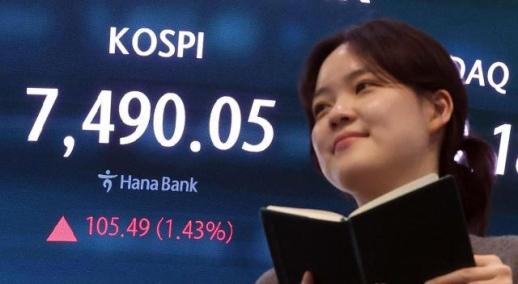 South Korea's Stock Market Surpasses Canada, Ranks Seventh Globally South Korea's stock market has risen to the seventh largest in the world by market capitalization, surpassing Canada. Just ten days after overtaking the UK for eighth place, the KOSPI index has climbed significantly, driven by gains from semiconductor giants Samsung Electronics and SK Hynix. According to Bloomberg, as of June 6, South Korea's market capitalization reached approximately $4.59 trillion, edging past Canada's $4.5 trillion. On April 27, the market capitalization was recorded at $4.04 trillion, allowing South Korea to surpass the UK. Only six countries now have larger market capitalizations than South Korea: the United States ($77.08 trillion), China ($15.27 trillion), Japan ($8.33 trillion), Hong Kong ($7.47 trillion), India ($5.1 trillion), and Taiwan ($4.67 trillion). The KOSPI index has surged 77.7% this year, exceeding last year's impressive growth of 75.5%. This marks the first time since the 1980s that the KOSPI has seen back-to-back years of over 70% growth. The surge in the KOSPI is largely attributed to the semiconductor sector. Since mid-April, Samsung Electronics and SK Hynix have consistently reached record highs, boosting the overall market capitalization. Expectations for further ranking improvements are rising. The KOSPI jumped 5.12% on May 4 and 6.45% on June 6, closing at a new high of 7,490.05. Samsung Electronics rose 2.07% to 271,500 won, while SK Hynix increased by 3.31% to 1,654,000 won. Together, these companies account for 45% of the KOSPI's total market capitalization, valued at 1,587 trillion won and 1,179 trillion won, respectively. Han Ji-young, a researcher at Kiwoom Securities, noted, "The pace of profit improvement is significantly outpacing stock price increases. The consensus for KOSPI's operating profit in 2026 is projected at 124.2%, exceeding the expected stock price growth during the same period." She added that with foreign investors recording net purchases of 6 trillion won since May, the momentum for further gains in the KOSPI, particularly in leading sectors like semiconductors, remains strong.* This article has been translated by AI. 2026-05-07 23:14:11
 -
 Commission Resumes Investigation of Pro-Japanese Assets After 16 Years The Pro-Japanese Asset Investigation Committee has been reestablished to review and decide on matters related to pro-Japanese assets. The new law provides a legal basis for recovering proceeds from the sale of these assets and for rewarding whistleblowers who report pro-Japanese properties.On May 7, the Justice Ministry announced that the Pro-Japanese Asset Confiscation Law passed the National Assembly. This law will take effect six months after its promulgation.The committee will resume its activities after 16 years. The first committee, active from July 2006 to July 2010, successfully recovered approximately 237.3 billion won in pro-Japanese assets before concluding its work.The new law not only reinstates the committee but also clarifies the legal framework for recovering proceeds from sold pro-Japanese assets and introduces reward provisions to encourage reporting.Once the committee resumes its work, recovered assets will primarily support funds for independence activists and their families, contributing to their financial stability and commemorative projects.In related developments, the Justice Ministry confirmed that descendants of pro-Japanese collaborator Im Seon-jun sold eight plots of land in Cheonsong-dong, Yeoju, between 1993 and 2000. On January 14, the ministry filed a lawsuit seeking the return of approximately 53 million won from the descendants.On April 22, the Seoul Western District Court ruled in favor of the state, marking the first successful case following a Supreme Court ruling that deemed claims of expiration by descendants of pro-Japanese collaborators as an abuse of rights.The Justice Ministry has also filed lawsuits for the return of properties belonging to descendants of other collaborators, including 31 plots in Ho-won-dong valued at about 7.8 billion won, 12 plots in Ilsan-dong valued at approximately 2.5 billion won, and two plots in Inchang-dong valued at around 3 billion won. These cases are currently in the first trial stage.Justice Minister Jeong Seong-ho stated, "The enactment of this law represents a national commitment to fully address pro-Japanese collaboration, aiming to recover unjustly accumulated assets and restore historical justice."* This article has been translated by AI. 2026-05-07 23:12:15