
Journalist

Abe Kwak
-
 About 50,000 BTS Fans Crowd Mexico’s National Palace After Presidential Invite BTS, which is scheduled to hold comeback concerts at Mexico City’s GNP Stadium on the 7th, 9th and 10th, met with Mexico President Claudia Sheinbaum. News that BTS had been invited to the National Palace to pay a courtesy call drew an estimated 50,000 fans to the Zocalo plaza outside the palace. According to Yonhap, Sheinbaum appeared with BTS on a palace balcony and greeted the crowd, which erupted in cheers. The BTS members waved back and filmed the packed plaza on their phones, the report said. Leader RM told fans, “Nice to meet you, and thank you so much for inviting us,” adding, “I’m looking forward to tomorrow’s show. Let’s have a fun time. I love you.” V, speaking in Spanish, said, “Mexico fans, I really missed you so much. The energy here is unbelievably amazing,” prompting another roar from the crowd. Earlier, Sheinbaum posted on her official social media: “We welcome BTS, one of the groups most loved by Mexican youth. Their music and values bring Mexico and Korea together.” As the members spoke to fans, Sheinbaum applauded. When V said, “We’ll come back next year,” she replied, “I already said you must come back next year.” BTS’ three-day comeback run in Mexico is sold out. The group is set to continue its global tour in 34 cities across Japan, Europe, Central and South America, and Asia.* This article has been translated by AI. 2026-05-07 15:15:16
 -
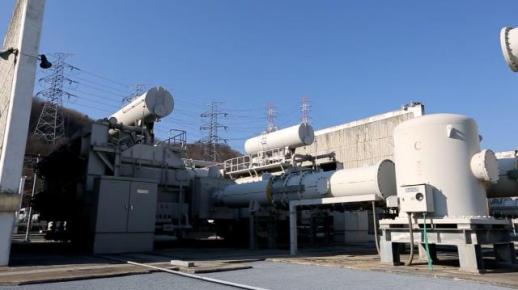 HOT STOCK: Hyosung Heavy takes breather after 50% near-nonstop rally SEOUL, May 07 (AJP) - Hyosung Heavy Industries, a Seoul-based transformer and switchgear maker, has emerged as one of the KOSPI’s standout AI infrastructure plays outside chip behemoths, with its shares soaring more than eightfold from a year earlier. The stock rose as high as 4,742,000 won ($3,267) on Thursday before easing to 4,558,000 won as of 2 p.m. Hyosung Heavy has gained nearly 50 percent in just two weeks from 2,990,000 won on April 16, and more than eightfold from 516,000 won a year ago. Its market capitalization has swelled to 42.49 trillion won, ranking No. 11 on the KOSPI. The rally has been driven largely by expectations for surging power demand from artificial intelligence. Training and operating large language models require data centers that consume far more electricity than conventional facilities, adding pressure to aging grids and prompting utilities to place massive orders for high-voltage transformers, circuit breakers and substation equipment — Hyosung Heavy’s core products. The shortage is most acute in North America, where waiting times for large transformers now range from 2.3 to 2.5 years, according to Wood Mackenzie’s second-quarter 2025 survey. Hyosung Heavy has become one of the clearest beneficiaries of the bottleneck. The company posted record annual results last year, with sales of 5.97 trillion won and operating profit of 747 billion won. North American revenue alone surpassed 1 trillion won, while its order backlog jumped 34 percent on-year to 11.9 trillion won, giving analysts confidence that earnings momentum can extend into next year. But the speed of the rally has raised valuation questions. The stock trades at roughly 80 times trailing earnings and 53 times forward earnings, well above the average for most global power-equipment peers. Brokerages remain broadly constructive on the long-term outlook. Naver Finance’s consensus 12-month target price stands at 4,620,000 won with a “buy” rating, implying analysts still see room for further upside. Trading volume reached more than 39,000 shares by mid-morning, heavy for a stock at this price level, with turnover topping 176.5 billion won. For now, the bull case remains intact — as long as hyperscalers keep pouring capital into AI data centers and U.S. utilities continue ordering transformers. 2026-05-07 14:58:09
 -
 Korea Technology Finance Corp. Named First Public-Sector AI Ethics Compliance Body Korea Technology Finance Corp. said it signed an agreement with the National Information Society Agency, or NIA, to promote a trusted public-sector shift to artificial intelligence. The agency said it was also designated the first public institution to be recognized as an “AI ethics compliance organization,” a status that acknowledges its AI use. 7일 기보에 따르면 the agreement was pursued under the “Framework Act on Artificial Intelligence,” which took effect in January, as KOTEC moved to build an AI ethics implementation system in advance and spread a trust-based AI culture to small and venture businesses. Under the agreement, the two organizations will jointly work on AI ethics education and consulting for small and venture firms; publicity and awareness efforts; identifying best practices in public-sector AI transformation cooperation; complying with AI ethics guidelines and establishing AI adoption processes; and running AI ethics training for employees. KOTEC, a technology finance institution under the Ministry of SMEs and Startups, supports innovation and growth among small and venture businesses and has expanded AI use across its work, including technology evaluation, guarantees and corporate support. NIA has operated the AI ethics compliance designation for private-sector organizations since 2024. KOTEC said selection requires at least 70% of employees to complete AI ethics training and for AI ethics principles to be codified. A KOTEC official said the agency has operated its own AI ethics standards since 2024 and met the designation requirements after conducting employee training last month. KOTEC said it will work with NIA’s AI ethics policy and training expertise to systematically manage key risks that can arise in AI use, including bias, personal data protection, explainability and accountability, and to strengthen internal compliance. It said it aims to set an example for public-sector AI transformation as an AI ethics compliance organization. The agency also said it plans to use its support network for small and venture businesses to expand AI ethics education and consulting in the field. Park Ju-seon, KOTEC executive director, said the designation would be used to advance its ethics framework and pursue a responsible AI transition across the agency’s operations.* This article has been translated by AI. 2026-05-07 14:58:08
 -
 ADOR Says Talks on NewJeans’ Minji Returning Are ‘Moving in a Positive Direction’ Speculation has grown that NewJeans member Minji could resume activities, and her agency, ADOR, said discussions are continuing “in a positive direction.” ADOR told this outlet on the 7th that it is “continuing internal discussions” regarding Minji’s future activities. The company said it cannot share details at this time, adding, “Please understand that talks are generally continuing in a positive direction.” Online, attention increased after reports said Minji made a surprise visit to a birthday-themed cafe organized by fans. Witnesses said she handed out handwritten letters and cookies to fans. Later, NewJeans’ official social media accounts posted several photos showing Minji making cookies with the message “HAPPY MINJI DAY,” and a celebratory image also appeared on the main screen of the group’s Weverse fan platform account. After ADOR marked her birthday through official channels, some fans predicted her return to activities could be near. NewJeans has been in a dispute with its agency. In November last year, Hanni, Haerin and Hyein returned to ADOR and have continued activities, but Minji’s status had not been finalized. Danielle left the group and has continued a legal dispute with ADOR. If Minji confirms her return through talks with the agency, it could speed up efforts to normalize the group’s activities.* This article has been translated by AI. 2026-05-07 14:57:17
 -
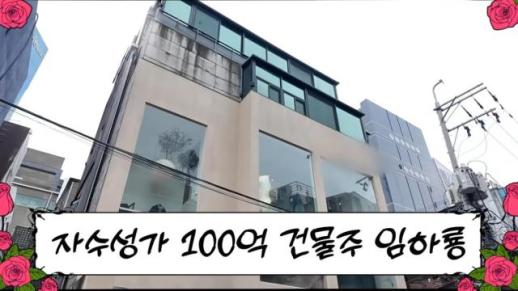 Comedian-Actor Im Ha-ryong’s Cheongdam-dong Property Grows From $500,000 Home to 10 Billion-Won Building Comedian and actor Im Ha-ryong’s real estate story has drawn wide attention online. A video posted April 30 on the YouTube channel 'Sunpung Sunwoo Yong-yeo' titled “First reveal of Sunwoo Yong-yeo’s 40-year friend Im Ha-ryong’s 10 billion-won Cheongdam-dong building” sparked strong reactions. In the video, Im said he bought a two-story detached home in Seoul’s Cheongdam-dong in 1991 for about 500 million won, including taxes. He said that in the 2000s he sold an apartment in Mok-dong and put about 600 million won into expanding the property into a five-story building. Im said the purchase was not solely for investment. “I started it to set up a cafe for my wife and live together,” he said, adding that he planned to place his wife’s cafe on the first floor and live upstairs. The building is now said to be worth in the 10 billion-won range. By simple calculation, that is more than nine times the roughly 1.1 billion won he said he initially put in, combining the purchase price and construction costs. His approach to rent also drew notice. Im said he still charges the same rent as “26 years ago,” raising only part of the first-floor rent. “Celebrities can’t raise it carelessly. You could get criticized,” he added. Real estate industry officials view the case as an example of long-term holding in a prime Gangnam-area location. They said areas like Cheongdam-dong, where both retail activity and residential demand have strengthened, tend to become more scarce over time. One industry official said it is often treated as a celebrity building investment story, but “in reality it is closer to a long-term holding case that stayed put for more than 30 years.”* This article has been translated by AI. 2026-05-07 14:55:07
 -
 Samsung Electronics CEOs Urge Staff to Avoid Loss of Competitiveness Ahead of Union Strike Samsung Electronics Vice Chairman Jun Young-hyun and President Roh Tae-moon, the company’s co-CEOs, issued a formal message to employees as the labor union prepares for a general strike. Samsung Electronics said the two CEOs posted the statement on the company intranet on the 7th, outlining the status of wage talks. They said the company has negotiated with the union since last December and has presented alternatives after considering employee interests, the company’s future competitiveness and business conditions, while seeking to broaden mutual understanding through dialogue. They said they regretted that the sides have not yet reached a final agreement and acknowledged that prolonged negotiations have likely left many employees concerned and frustrated. The CEOs also urged staff to help prevent damage to the company’s future competitiveness. “In a severe global business environment, all management, including myself, will approach this with a responsible attitude so we do not lose future competitiveness,” they wrote, asking employees to do their best in their respective roles. They added that the company would continue discussions with an open attitude and work toward an outcome employees can support. Samsung and the union have negotiated since last December over 2026 wages, but talks were suspended after failing to narrow differences over performance-bonus standards. The union plans to begin an 18-day general strike starting on the 21st. With the strike about 14 days away, concerns have grown that the dispute could spill into a broader economic issue. If a strike occurs, Samsung’s losses are estimated at about 30 trillion won. Samsung Electronics board chairman Shin Je-yoon wrote on the company intranet on the 5th that a strike would hurt the company’s business competitiveness, erode customer trust and cause losses for shareholders and investors, with serious negative effects on the national economy. He said it could reduce exports by tens of billions of dollars and cut tax revenue by tens of trillions of won, while triggering a weaker currency and lowering GDP. * This article has been translated by AI. 2026-05-07 14:53:39
 -
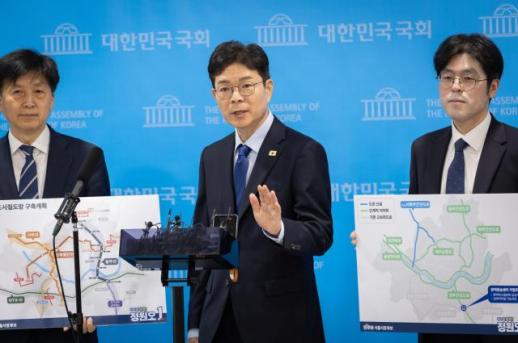 Seoul mayoral candidates clash on transit: card merger vs. free bus fares for 70+ Jung Won-oh, the Democratic Party candidate for Seoul mayor, on May 7 proposed expanding rail service in northern Seoul and merging the city’s Climate Companion Card with the government’s K-Pass. Rival candidate Oh Se-hoon of the People Power Party said savings from a merger should be used to subsidize bus fares for residents 70 and older. Jung announced the plan at the National Assembly press center as part of his “30-minute commute” pledge. His proposals include building a new Dongbu Line linking Suyu-dong in northern Seoul with the Sports Complex in Gangnam, expanding rail networks in the north, creating a grid-style rail system across Seoul, and setting up an express-bus transfer hub at the Man-nam Square area in Yangjae-dong. “We will connect Seoul’s rail lines more tightly and link roads without bottlenecks, tying Gangbuk and Gangnam together and starting a transportation revolution toward a 30-minute commute city,” Jung said. He also pledged to create a nationwide transit card by integrating Seoul’s Climate Companion Card with the government’s “Everyone’s Card” (K-Pass), under the name “K-Everyone’s Climate Companion Card,” to reduce the burden of public transportation costs. Jung said the existing Climate Companion Card benefits would be maintained while expanding the usable area nationwide, adding that he would build a system in which benefits increase with heavier use. Oh raised the issue of merging the Climate Companion Card while presenting housing pledges earlier May 7, outlining how he would use the savings. Oh, who introduced the Climate Companion Card during his time as Seoul mayor, said the Lee Jae-myung government rolled out a card using the same system, forcing residents to weigh which card offers better value. After reviewing whether the two needed to coexist, he said, he concluded they should be integrated to spare residents that inconvenience. Oh said a merger would cut Seoul’s budget and free up 70 billion won to as much as more than 100 billion won, which he plans to use to support bus fares for seniors 70 and older. He said he would announce details soon.* This article has been translated by AI. 2026-05-07 14:52:29
 -
 Pope Leo XIV’s Bank Call Ends Abruptly After Agent Doubts His Identity Even Pope Leo XIV, leader of the world’s 1.4 billion Catholics, could not get past a U.S. call center. A bank agent reportedly hung up on him when he called for help with his account. The New York Times reported May 5 that the story was shared by the pope’s close friend, Father Tom McCarthy, at a recent event in Naperville, Illinois. McCarthy, a well-known figure in the U.S. South, is chaplain at St. Rita of Cascia High School, a Catholic private school in Chicago. He met Leo XIV in Chicago in the 1980s, and both grew up in working-class neighborhoods, the Times said. According to the Times, about two months after his election, the pope called a bank in his hometown of Chicago. The pope, whose birth name is Robert Francis Prevost, told the call center he was Robert Prevost and said he wanted to change the phone number and address on file. He answered security questions, the report said. The agent told him the information was not sufficient and that he would need to visit a branch in person. The pope replied, “I don’t think I can,” and asked whether it would make a difference if he said he was Pope Leo. The agent then hung up, the Times reported. McCarthy confirmed by email that the account was true. He said the issue was resolved after another priest intervened and connected them with the bank’s president. The Times reported there was no further word about the call center agent. First American pope As the Roman Catholic Church’s first American pope, Leo XIV’s U.S. tax obligations again drew attention during this year’s tax season, following last year’s interest. In the United States, income tax returns are due each year by April 15, and Americans living abroad typically report worldwide income. The pope holds U.S. and Peruvian citizenship and also has Vatican citizenship, for a total of three nationalities. In a March report, U.S. Catholic broadcaster EWTN said the Vatican press office did not respond to questions about whether the pope filed a U.S. income tax return. Antonio Cizzoniti, a professor of canon law at the Catholic University of the Sacred Heart in Italy, told Vatican-focused outlet ACI Stampa that the pope, as head of state of Vatican City, has immunity that prevents foreign governments from enforcing civil or administrative obligations. Leo XIV has also drawn attention for high-profile moves on international conflicts and interfaith unity. He is set to meet U.S. Secretary of State Marco Rubio on the 7th to seek ways to address the Iran issue. Reuters reported that U.S. Ambassador to the Holy See Brian Burch said Rubio expected a “candid” meeting with the pope during the Vatican visit. Last month, the pope prayed jointly at the Vatican’s Urbano Chapel with Archbishop of Canterbury Sarah Mullally, the Anglican Communion’s first female leader, for religious unity and harmony. His appointment earlier this month of Bishop Evelio Menjivar-Ayala, who is from El Salvador, as head of the Diocese of Wheeling-Charleston in West Virginia also drew notice.* This article has been translated by AI. 2026-05-07 14:51:18
 -
 South Korea launches task force to normalize fiscal management, boost transparency The government has launched a task force to correct what it called irrational systems and practices in fiscal management, aiming to strengthen transparency and efficiency. The effort will focus on tightening oversight of fraudulent receipt of national treasury subsidies and normalizing research and development investment, among other reforms. The Planning and Budget Office said it held the first meeting of the “Fiscal Management Normalization Task Force” on Thursday afternoon at the Fiscal Information Service, chaired by Vice Minister Lim Ki-geun. The task force was formed as part of the Lee Jae-myung administration’s “national normalization project,” which seeks to build what it describes as a country grounded in fundamentals. It will review and improve inefficiencies and unreasonable practices that remain in fiscal operations. Lim will lead the group, which includes three director-level officials from the office and six private-sector experts in public finance. Last month, President Lee Jae-myung called for fair, transparent and rational reforms across society, saying the country must end an era in which breaking rules brings benefits while following them brings losses. He instructed ministries to identify and pursue tasks to “normalize the abnormal.” At Thursday’s meeting, participants discussed priority tasks based on ideas developed by the office’s working-level staff and proposals from outside experts. They agreed to focus on steps to improve fiscal transparency and effectiveness, including stronger controls against improper subsidy claims; normalizing R&D investment and restoring trust; and creating a public-interest reporting incentive fund to encourage reporting of wrongdoing such as stock manipulation and collusion. “Planning Office is an institution that oversees public finances beyond individual fiscal projects,” Lim said. “We will continuously review and improve fiscal management until the public is satisfied, and ensure people can feel changes on the ground.” The office said it will finalize the list of tasks after consultations with related agencies, including the Office for Government Policy Coordination. At a second meeting scheduled for early June, it plans to review progress by task and disclose related results to the public.* This article has been translated by AI. 2026-05-07 14:48:47
 -
 South Korea’s top court says arrest of suspect who voluntarily appeared was unlawful South Korea’s Supreme Court has ruled that police unlawfully executed an arrest warrant by taking a suspect into custody after he voluntarily appeared at a police station, saying the grounds and necessity for arrest were not met. According to the legal community on Wednesday, the Supreme Court’s First Division (Justice Ma Yong-ju presiding) upheld an appeals court ruling that sentenced a man identified only as A to 18 months in prison, a 10 million won ($7,300) fine and 17.6 million won in forfeiture for violating the Act on the Punishment of Acts of Arranging Sexual Traffic (arranging prostitution). Prosecutors said A rented four units in an officetel in Uijeongbu, north of Seoul, from August 2020 to January 2021, hired female workers and arranged paid sex for male customers who came after seeing online advertisements. Lower courts imposed the same sentence and rejected A’s claim that police executed the arrest warrant illegally. The Supreme Court said the request for and issuance of the arrest warrant were lawful, but the arrest carried out under the warrant was illegal. A prosecutor at the Uijeongbu District Prosecutors Office sought the warrant on Jan. 22, 2021, at the request of an officer with the Gyeonggi Nambu Provincial Police Agency, and a judge at the Uijeongbu District Court issued it on Jan. 25, the court said. Police searched and seized A’s bank account on Jan. 26 and the officetel he rented on Feb. 4. Just before the officetel search, police contacted A for the first time to ask whether he would participate in the warrant execution process, but he declined, saying he was in Jeonju, North Jeolla Province, among other reasons. Police later repeatedly demanded that A appear, calling his mobile phone. A responded that it was difficult because he was out of town and that he would appear after consulting a lawyer, then agreed to come in voluntarily at 3 p.m. on Feb. 19. When he arrived at the police station at that time, police executed the warrant and arrested him. The court said the conclusion that the grounds and necessity for arrest were satisfied was “markedly lacking in rationality” under common experience. It noted that A arrived exactly at the agreed time at the guidance desk at the main gate and was asking where the relevant department was located, showing no special behavior suggesting a risk of destroying evidence or fleeing. The court added that, aside from the fact that a warrant had been issued, it was difficult to find circumstances supporting the reasons and need for arrest at the time of execution. It also said the “suspect arrest report” prepared immediately after the arrest listed only the circumstances of A’s voluntary appearance and his prior criminal record, without explaining why the warrant had to be executed or the basis for concluding there was a risk of evidence destruction or flight. Still, the Supreme Court dismissed A’s appeal, saying the lower court did not commit an error that affected the verdict by misunderstanding legal principles on the warrant’s execution and alleged illegality in the investigation and trial procedures. The court said interrogation records prepared by investigators and A’s written statements made while he was detained following the unlawful arrest could not be used as evidence of guilt. However, it said the remaining evidence cited in the first- and second-instance rulings, excluding A’s statements, was sufficient to find the criminal facts proven beyond a reasonable doubt. * This article has been translated by AI. 2026-05-07 14:47:22