
Journalist

Ahn Young-jip
-
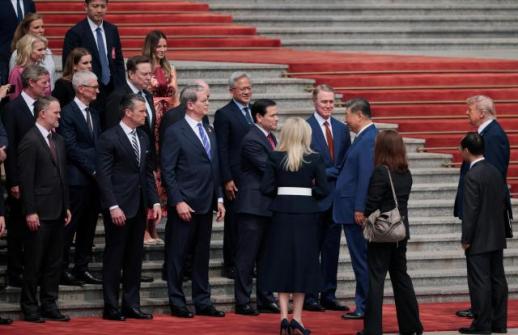 CEOs Respond Positively to US-China Summit During Trump's Visit CEOs of major U.S. companies accompanying President Donald Trump on his visit to China expressed positive reactions regarding the U.S.-China summit. According to the Wall Street Journal, business leaders who traveled with Trump attended a welcome ceremony and summit held at the Great Hall of the People in Beijing on May 14. Jensen Huang, CEO of NVIDIA, commented to reporters as he exited the Great Hall, saying, "President Xi and President Trump were fantastic." Elon Musk, CEO of Tesla, also noted the summit's outcomes, stating, "There were many good things." Along with Musk and Huang, other prominent business figures, including Apple CEO Tim Cook, were part of the delegation. They also attended the welcome ceremony for Trump at the Great Hall of the People. The presence of top executives from major U.S. technology companies highlights the focus on advanced technology, supply chains, and the business environment in China during this summit. NVIDIA is at the center of discussions regarding AI semiconductor export regulations and market access in China, while both Apple and Tesla have significant production and sales operations in the country. High-ranking officials from the Trump administration, including Secretary of State Marco Rubio, Treasury Secretary Scott Vessen, and Defense Secretary Pete Hegseth, also participated in the welcome ceremony. Earlier, President Xi emphasized cooperation in his opening remarks at the summit, stating, "The common interests of the U.S. and China are greater than our differences," and added that the success of both countries presents opportunities for each other, with a stable U.S.-China relationship benefiting the world.* This article has been translated by AI. 2026-05-14 15:46:25
 -
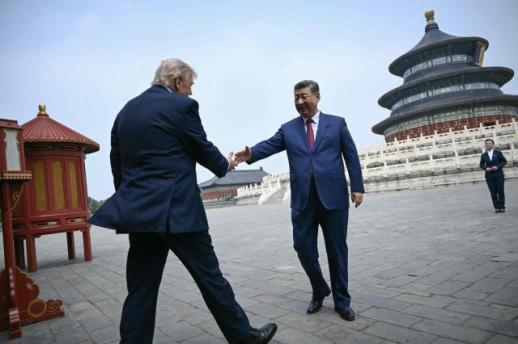 Trump and Xi Arrive at Temple of Heaven After Summit U.S. President Donald Trump and Chinese President Xi Jinping arrived at the Temple of Heaven after concluding their summit at the Great Hall of the People on May 14, according to China’s state broadcaster CCTV. Following their meeting, which lasted from 10:15 a.m. to approximately 12:30 p.m., the two leaders toured the Temple of Heaven and are scheduled to attend a state dinner in the evening. The Temple of Heaven is a sacred site where emperors historically offered sacrifices to the heavens, symbolizing the connection between celestial order and earthly governance. This visit holds significance as it marks a departure from Trump’s first visit to China in 2017, when he was invited to the Forbidden City. Analysts suggest that this invitation to the Temple of Heaven is rich in meaning, allowing China to showcase not only the grandeur of its ancient imperial history but also to convey its cultural depth to President Trump. Additionally, agriculture is a key agenda item for this visit, enhancing the significance of the Temple of Heaven, a place historically associated with prayers for abundant harvests. Observers believe that President Trump may naturally discuss increasing purchases of U.S. soybeans, grains, and meats during this visit. The Temple of Heaven also holds special significance in U.S.-China relations. According to the Singapore-based United Daily News, former President Richard Nixon visited the Temple of Heaven during his historic trip to China in 1972, becoming the first sitting U.S. president to do so. Henry Kissinger, the former U.S. Secretary of State known as a long-time friend of the Chinese people, has visited the site more than ten times, reflecting its importance in diplomatic history.* This article has been translated by AI. 2026-05-14 15:44:42
 -
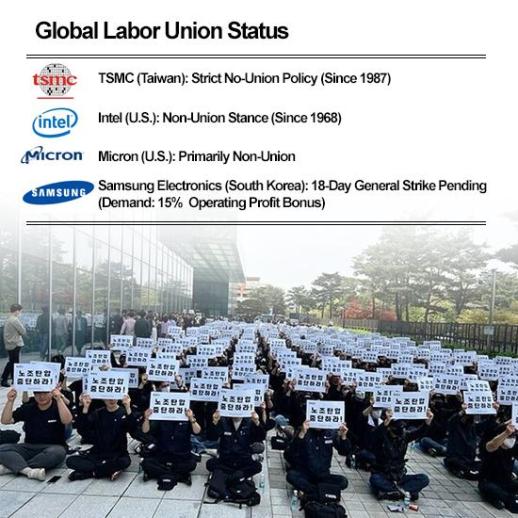 AJP Eye: Samsung's AI ambitions face 'Opex trap' as labor dispute threatens crucial Capex SEOUL, May 14 (AJP) - Samsung Electronics, riding on the AI boom to join the exclusive $1 trillion valuation club, is caught in a squeeze that no chip roadmap can solve: a labor dispute forcing it to choose between rewarding its workers today and funding the factories that will determine its place in the AI memory hierarchy tomorrow. The Opex (operational expenditure)-versus-Capex (capital expenditure) tension is now acute. Following a 17-hour marathon mediation session that collapsed Wednesday, the National Labor Relations Commission has urged both sides to resume talks Saturday. The central friction is performance bonuses. The union is demanding a legally guaranteed pool equal to 15 percent of annual operating profit; the commission has proposed 12 percent as a compromise. The union has rejected it. The arithmetic of a prolonged standoff is stark. Industry analysts estimate a full shutdown of Samsung's production lines would cost approximately 1 trillion won ($670 million) per day in direct losses. Should the union proceed with its threatened 18-day general strike, total damages could reach 30 trillion won — a figure that would dwarf any bonus settlement and land squarely on the capex budget Samsung needs most right now. That budget pressure is the real story. Samsung is competing in an AI memory race where capital deployment speed is the primary variable. TSMC, which has maintained a no-union policy since its founding in 1987, has guided 2026 capital expenditure at $52–56 billion, up to 40 percent above 2025 levels, with 70–80 percent earmarked for advanced process nodes at 2-nanometer and 3-nanometer. Micron, also operating without unions, has revised its fiscal 2026 capex forecast above $25 billion after spending $5 billion in its second fiscal quarter alone. Neither company is negotiating bonus pools. Both are building fabs. The structural contrast is not incidental. The global semiconductor industry runs almost entirely on a non-union model, for reasons embedded in the physics of the business. Chip fabrication requires continuous 24-hour cleanroom operation; any strike-induced halt triggers contamination protocols, yield losses, and recovery timelines measured in weeks, not days. The workforce is composed overwhelmingly of engineers and R&D specialists compensated through stock options and merit pay rather than collective agreements. The Wall Street Journal has described union friction as a potential "obstacle" to semiconductor industry competitiveness. TSMC founder Morris Chang has drawn an explicit parallel to the United Auto Workers, arguing that while unions may secure near-term wage gains, they erode the long-term productivity on which innovation depends. Samsung's situation is more complicated than its rivals' by design. It is a sprawling conglomerate with a large unionized manufacturing base — a structure that served it well in earlier industrial eras but creates friction in a business where uninterrupted capital deployment is existential. The company must now navigate that friction at precisely the moment when HBM4 qualification, new fab capacity, and Nvidia supply contracts are all in play simultaneously. Global investors are watching the Saturday mediation closely. If Samsung cannot contain its opex commitments, it risks ceding the capex window to rivals, who face no such constraint. In a memory supercycle where supply is already sold out and AI demand is accelerating, lost ground won't easily be recovered. — AJP Eye is AJP's business and markets commentary column. 2026-05-14 15:42:55
 -
 SK Telecom Hosts Forest Retreat for Long-Time Customers At 9 a.m. on May 10, a light green banner reading "Path to SK Telecom Forest Retreat" caught the eye along the road lined with trees at Hyangsusan in Yongin, Gyeonggi Province. This sign pointed the way to the Forest Camp at Everland, which is typically closed to the public. Families, pulling luggage and holding their children's hands, walked with light steps as SK Telecom (SKT) opened its doors for the 'T Long-Term Customer Forest Retreat Day' for customers who have been with the company for over a decade. The Forest Camp spans approximately 90,000 square meters (about 22 acres) in the Hyangsusan area of Yongin and is not usually accessible to the general public. SKT has partnered exclusively with Everland to grant long-term customers a full day at this expansive space. Participants enjoyed the area as if they had rented it out, with around 50 families attending without feeling crowded. The weather was perfect for an outdoor event, with clear skies and a refreshing breeze. Upon entering, participants chose their spots on the grassy area set up with tents and umbrellas. SKT provided coffee, various beverages, and snacks at the entrance, along with bubble-making tools for families with young children. Equipment for family activities, such as books and board games, was available for rent on-site, and activities like glider-making and frisbee-throwing captured the children's attention. Even those who arrived empty-handed found everything they needed at the event. Children ran around on the grass, launching gliders into the air. The red foam gliders, emblazoned with the SK Telecom logo, soared against the blue sky. Parents laughed along with their children as they cheered. One participant remarked, "My child is busy playing with bubbles, throwing frisbees, and flying gliders without a moment's rest," smiling as they spoke. At 10 a.m., the main forest retreat program began, divided into sessions for children and adults. Although participation was voluntary, nearly all attendees joined in. The morning session quickly filled up, and the reporter signed up for the 1 p.m. session. Lunch consisted of a bento box filled with bulgogi, shrimp, fruits, and a variety of side dishes, providing ample portions. After the meal, participants followed a guide into the woods. This area has been part of the land since the days of the former natural farm that preceded Everland. As they walked along paths lined with pine and oak trees, the guide explained the names and origins of the plants they encountered. The stories behind the plants made the hour-long walk engaging and enjoyable, and participants felt a sense of rejuvenation as they strolled through the dappled sunlight of the forest. Stopping briefly in a clearing, participants picked up bamboo poles as instructed by the guide. They engaged in stretching exercises and simple cooperative games using the poles. The sight of everyone forming a circle to raise the bamboo poles together created a picturesque moment filled with laughter. After the forest retreat walk, families returned to the grassy area for recreational activities. The host led light-hearted games, including quizzes with prizes for winners. During a segment introducing the longest-tenured SKT customer, a woman who has been with the company for 29 years took the spotlight. When sharing her story, one participant took the microphone to express a desire to reconnect with her father, who had called to congratulate her on passing the police exam 15 years ago. This heartfelt moment brought tears to many eyes. The recreation session concluded after activities like children's dance time and an adult breath-holding game, lasting just over an hour. Following the recreation, participants were given free time until the 4 p.m. departure. Many lounged on blankets, reading books or enjoying one last glider flight with their children. Satisfaction was evident on their faces. One female customer attending with her husband and child said, "This is my first time attending, and I am very pleased and satisfied. I truly feel treated as a customer, and I am very grateful for this wonderful venue." Now in its third year, the forest retreat operates in both spring and fall each year. This spring season, from May 3 to 18, a total of 1,800 participants were invited across six sessions. The competition rate soared from 130 to 1 in the first year to 636 to 1 this year. Everyone who attended expressed satisfaction with the experience. SKT plans to expand its offerings for long-term customers, starting with the forest retreat, followed by gourmet events, amusement park invitations, and musical performances. The strategy aims to reward customers who have been with the company for a decade with experiences rather than discounts.* This article has been translated by AI. 2026-05-14 15:42:24
 -
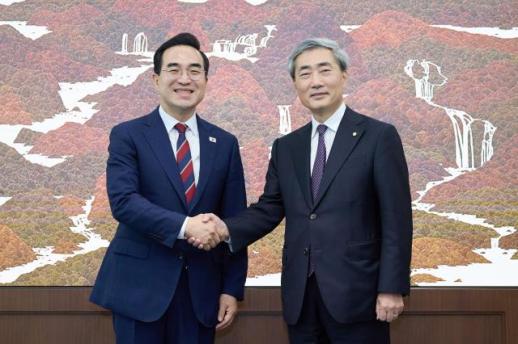 Chief of newly-launched budget ministry meets BOK governor SEOUL, May 14 (AJP) - Park Hong-geun, the chief of the newly-launched Ministry of Planning and Budget, met with Bank of Korea (BOK) governor Shin Hyun-song in Seoul on Thursday. They discussed ways to strengthen cooperation in fiscal and monetary policy, as well as in establishing future strategies. During their talks at the Bank of Korea headquarters in central Seoul, both sides expressed concerns that, while exports remain robust, inflationary pressures are rising due to the prolonged war in the Middle East and sustained high oil prices. They also agreed on the need to focus on stabilizing livelihoods by ensuring price stability and increasing support for the underprivileged. Their first such meeting comes as the government pushes for fiscal expansion and structural reforms. As an icebreaker at the start of the meeting, Park presented a pine bonsai to Shin, saying, "Just as the roots and trunk of a pine tree depend on each other, let us continue to cooperate." "Close coordination between the ministry and the central bank has never been more important," Park said. "No single institution can tackle these economic challenges alone," Shin replied. The two sides also stressed the need for cooperation in addressing major challenges such as the transition into the artificial intelligence (AI) era, demographic shifts, climate change, growing wealth inequality, and regional economic imbalances. Park outlined plans to establish mid- to long-term strategies in close collaboration with the Bank of Korea. Shin pledged that the BOK would actively cooperate. Shin said the central bank would expand its role beyond its traditional focus on price and financial stability, actively researching and offering policy proposals on growth and structural reform, an approach in line with that of his predecessor, Rhee Chang-yong. The two also agreed to meet more frequently to share key issues and to continue close cooperation. 2026-05-14 15:34:54
 -
 Samsung Elec adjusting output ahead of threatened strike SEOUL, May 14 (AJP) - Samsung Electronics has started scaling back wafer output at its chip facilities in a preemptive move to protect quality integrity, as the company braces for a union walkout that could begin as early as Thursday, a source close to the matter told AJP. The production cutback marks the first tangible operational impact of the labor dispute on Samsung's critical chip manufacturing operations. Talks have reached an impasse. The representative union has rejected a call from the National Labor Relations Commission to continue dialogue over the weekend, saying it has no intention to engage "unless the management presents a proper proposal." Samsung is the world's largest memory chip supplier, and any yield disruption at its fabs risks aggravating a market already stretched thin by surging AI demand. 2026-05-14 15:29:01
 -
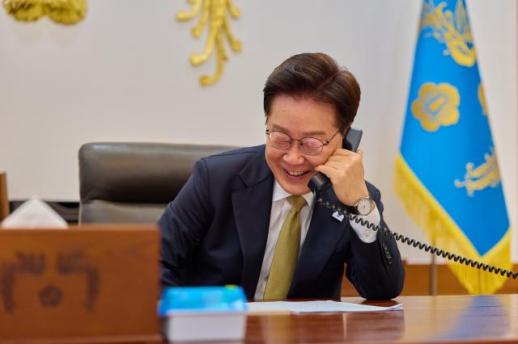 President Lee Emphasizes Public Responsibility in Financial Sector President Lee Jae-myung stated on May 14 that while the financial sector operates in a private capacity, it is fundamentally a quasi-public enterprise reliant on state-issued currency and monopolistic licenses, thus it must fulfill its public responsibilities.In a post on X (formerly Twitter), President Lee remarked, "Usury and gambling are signs of national decline." He added, "We will swiftly and maximally secure consumer finance and inclusive finance."He shared a document on X detailing the results of a special crackdown on illegal private finance from November last year to April this year, which led to the arrest of 1,553 individuals.President Lee emphasized, "Loans exceeding legal interest rates are void; if the interest rate (regardless of the nominal rate) exceeds 60%, the principal is also void. There is no need to repay, and lenders who provide such loans can face criminal penalties. Unlicensed lending will also be punished."Earlier, during a Cabinet meeting on May 12, President Lee criticized the private debt collection company 'Sangnok-su' for still pursuing delinquent debts from the early 2000s credit card crisis, calling it "primitive predatory finance."* This article has been translated by AI. 2026-05-14 15:03:21
 -
 South Korea's National Assembly Proposes New Subsidy Regulations for High-Cost Plans The National Assembly of South Korea is moving forward with a proposal to limit the disparity in subsidies for different telecommunications rate plans. This initiative comes in response to concerns that subsidies have become concentrated on high-cost plans since the repeal of the Device Subsidy Law. The telecommunications industry has expressed opposition, arguing that this marks a return to previous regulations just nine months after the law was abolished. According to the National Assembly's legislative information system, a group of ten lawmakers, including Lee Hoon-ki from the Democratic Party, submitted a bill to amend the Telecommunications Business Act on May 12. The proposed amendment highlights that since the repeal of the Device Subsidy Law, subsidies from the three major telecom companies—SK Telecom, KT, and LG Uplus—have been disproportionately directed toward high-cost plan users, while support for low-cost plan users has been insufficient. The amendment stipulates that if the difference in subsidies between rate plans exceeds a threshold set by presidential decree, it will be classified as discriminatory distribution. This aims to prevent the practice of providing higher subsidies to high-cost plan users. Additionally, it would require telecom companies to clearly explain the subsidy amounts and conditions for each rate plan when selling devices alongside service contracts. Industry representatives have labeled the bill a return to the era of the Device Subsidy Law. They argue that since the law was repealed, competition among telecom companies for subsidies has increased, allowing consumers to purchase devices at lower prices. They contend that reintroducing limits on subsidy disparities would negate these benefits. A telecom industry official stated, "The government abolished the Device Subsidy Law to stimulate competition among the three telecom companies, but now they are seeking to impose restrictions again, which shows a lack of clear policy direction." The Device Subsidy Law was introduced in 2014 to address excessive competition among telecom companies and discrimination against users. It regulated subsidies through a system of public support and caps on additional subsidies, but faced criticism for limiting market competition and reducing consumer benefits. In 2024, the National Assembly passed a bill to repeal the law, which was officially abolished in July of the same year. Concerns have also been raised about potential reverse discrimination against high-cost plan users. If subsidies for low- and mid-cost plans are increased, it could lead to a reduction in support for high-cost plan users. An industry representative noted, "If we limit the benefits for high-cost plan users, who already pay more, it could create a situation where they receive fewer benefits despite higher payments." There is a growing belief that this amendment may lead to a decline in market competition rather than enhance consumer protection. Consumers may feel burdened by the high costs of purchasing expensive smartphones, and the restriction on subsidy disparities could diminish marketing competition among the three telecom companies. An industry official remarked, "The original intent of repealing the Device Subsidy Law was to expand subsidy competition to reduce consumer telecom costs and stimulate market competition. It is disappointing to see the government and National Assembly moving toward re-intervening in market pricing."* This article has been translated by AI. 2026-05-14 15:01:59
 -
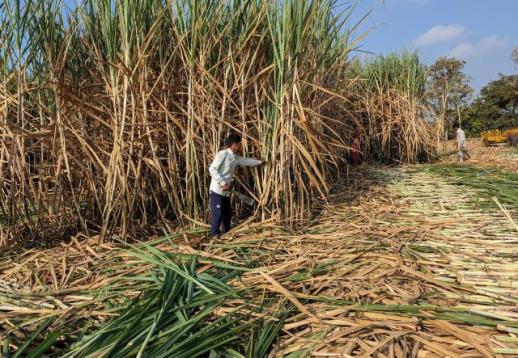 India bans sugar exports, adding more import cost pressure for Korea SEOUL, May 14 (AJP) - India banned sugar exports on Wednesday with immediate effect through September 30, sending global prices sharply higher and raising cost pressure on Korean refiners and the country's processed food, beverage and bakery makers on top of energy-related inflationary risks. The Indian government issued the notification Wednesday, according to Reuters. New York raw sugar futures rose more than 2 percent and London white sugar futures jumped 3 percent on the announcement. The end-date corresponds with the close of India's sugar marketing year, which runs October through September. Korea's direct exposure to Indian supply is limited. The country's three sugar refiners — CJ CheilJedang, Samyang Corporation and Daehan Sugar — source most of their raw cane from Australia and Thailand, both duty-free under existing free trade agreements, according to industry statements during previous Indian export restrictions. The risk for Korea runs through global benchmark prices: when India removes more than a million tons from world markets, Australian and Thai sellers can charge more, and that cost feeds through to Korean refiners and ultimately to consumer goods. India is the world's second-largest sugar producer and exporter after Brazil. The ban was triggered by a second consecutive year in which domestic production is expected to fall below consumption, according to Reuters, as cane yields weaken across major growing regions and forecasts of El Nino-driven monsoon disruption raise the risk of further supply shortfalls. The Indian government had earlier permitted mills to export 1.59 million metric tons this year. Of that, about 800,000 tons had been signed under contract and roughly 600,000 tons already shipped, the Reuters report said. Shipments already at Indian ports or handed over to customs before the notification will be allowed to proceed. For Korea, the ban arrives in a domestic sugar market still absorbing the impact of February's Korea Fair Trade Commission ruling. The KFTC on February 12 imposed fines totaling 408.3 billion won on the three refiners for colluding on B2B sugar pricing between February 2021 and April 2025. The three firms control roughly 89 percent of the domestic sugar market, according to the KFTC. The commission noted that all three refiners independently cut sugar prices during the investigation period — in July 2025, November 2025 and January 2026 — meaning current Korean B2B prices sit below their cartel-era peaks. The Korean sugar market operates within a structurally protected framework. Refined sugar imports carry a 30-percent tariff, while raw sugar is subject to a 3-percent base tariff under a quota system, according to the Ministry of Agriculture, Food and Rural Affairs. There is recent precedent for how Seoul has responded to Indian sugar restrictions. When India imposed a prior export ban in the second half of 2023 that lasted more than a year, MAFRA cut both the raw sugar base tariff and the quota tariff to zero, allowing refiners to diversify sourcing toward Brazil and Central America. The 2023 measure was approved at a cabinet meeting on May 30 of that year and took effect in early June. MAFRA has not yet issued a public response to Wednesday's Indian notification. The Seoul government is yet to respond to the latest Indian move. Brazilian and Thai exporters are expected to benefit most from the ban, with shipments likely redirected toward Asian and African buyers, according to Reuters. India's track record offers a cautionary note. The 2023 ban was originally framed as temporary but ran beyond a year, and the current notification's language — "or until further orders" — preserves the same option for extension. Existing supply contracts may insulate Korean refiners on top of the blockage of Strait of Hormuz and disruption of Middle East crude sources. 2026-05-14 14:59:38
 -
 The Need for AI in Environmental Regulation Compliance A story from a plating factory illustrates the challenges faced by many businesses. The facility's wastewater treatment system has been non-compliant for some time, and while the site manager is aware of the issue, no one speaks up. Reporting the violation would lead to stricter penalties in the future, so the risk continues to accumulate. The state of environmental regulation compliance in South Korea's industries remains reactive rather than proactive. To understand this, one must first acknowledge the scale of the regulations. Before its merger with the Ministry of Climate, the Ministry of Environment oversaw more than 70 laws, and when including subordinate regulations and local ordinances, the environmental obligations imposed on individual businesses number in the hundreds. It is virtually impossible for a single site manager to grasp all these obligations, track amendments, and conduct self-assessments for compliance. While professional consulting services are available, the costs, which can reach tens of millions to billions of won per facility, are beyond the reach of most small and medium-sized enterprises. Even if problems are identified early, businesses are not exempt from penalties. Self-reporting leads to a record of violations, which can result in harsher penalties for future infractions. For business owners, environmental issues remain a case of 'knowing is losing.' As a result, companies ignore potential risks or remain silent when they are aware of them, creating a vicious cycle. The consequences extend beyond the factory walls. Every business impacts the environment, but inadequate preemptive management leaves local residents with no basis for trust. This vague anxiety about environmental issues often translates into opposition, resulting in well-functioning businesses being blocked from obtaining permits due to NIMBY (Not In My Backyard) sentiments. The entire industry pays the price for the failure to manage risks, not just the individual business. Environmental issues often become disasters after the fact, while proactive measures remain ineffective. The instinctive anxiety felt when a facility is not environmentally compliant is not limited to environmental experts; the staff on-site is aware as well. However, there is no language, channel, or incentive to bring these concerns to the table. This is where AI can play a crucial role. AI can compare real-time data against permitting conditions, highlight relevant changes amid frequent regulatory updates, and identify potential violations before they occur. It can also automatically compile management records to serve as evidence of diligent compliance. While general-purpose AI cannot immediately take on this role due to limitations in understanding legal contexts, an AI specialized in environmental regulations could change the game. The key lies in structural transformation. In a system where knowing leads to penalties and external assistance is prohibitively expensive, AI presents a nearly unique solution to fundamentally alter this cost structure. It can shift the paradigm from 'knowing is losing' to 'knowing is fortunate.' This change is not about altering human attitudes but about changing the underlying structure. This issue is not confined to the corporate consulting market for large enterprises. It gains real significance when it reaches small and medium-sized businesses, which are most vulnerable to risks. Filling the gap where no infrastructure previously existed can make a decisive difference. These are tasks that are too numerous for humans to handle alone but too risky to ignore. While advocating for environmental and legal compliance is easy, demanding voluntary adherence in a structure devoid of incentives or immunity is unrealistic. Compliance with environmental regulations is a matter of survival for the industrial ecosystem. To move beyond a reactive paradigm, a new infrastructure is needed that transitions expert capabilities into an AI-based continuous diagnostic system for compliance.* This article has been translated by AI. 2026-05-14 14:59:37