
Journalist

Ahn Young-jip
-
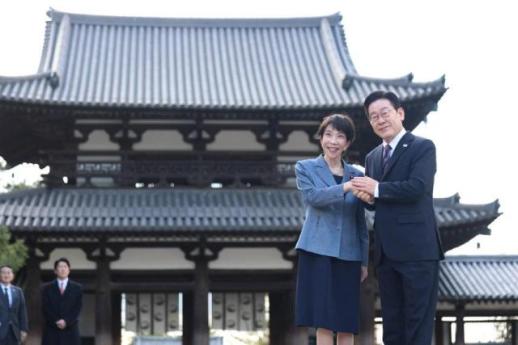 Japanese Prime Minister Takaiichi to Visit South Korea for Summit with President Lee Japanese Prime Minister Sanae Takaiichi is scheduled to visit South Korea on May 19-20 for a summit with President Lee Jae-myung, the Japanese government reported to its parliament on May 14. According to Japanese media, including TBS News, Chief Cabinet Secretary Masanao Ozaki conveyed the details of Takaiichi's visit during a meeting of the House of Representatives' Committee on Rules and Administration. The upcoming summit is part of a "shuttle diplomacy" initiative, where the leaders of both countries visit each other's nations. President Lee and Prime Minister Takaiichi first met in person during the Asia-Pacific Economic Cooperation (APEC) summit in Gyeongju last October, where they agreed to actively pursue shuttle diplomacy. Following this, the two governments have discussed holding the next meeting in Andong, President Lee's hometown, after he visited Takaiichi's hometown in Nara Prefecture, Japan, for a summit on January 13-14. TBS News reported that the agenda for the upcoming meeting is expected to include discussions on stable energy supply in light of the situation in Iran and the geopolitical dynamics in Northeast Asia, including North Korea.* This article has been translated by AI. 2026-05-14 14:30:39
 -
 Naver Shares Rise on Acquisition Hopes for Woowa Brothers Naver's stock price has shown strong gains amid speculation about its potential acquisition of Woowa Brothers, the operator of the popular food delivery service Baedal Minjok (Baemin). According to the Korea Exchange, as of 1:33 PM on May 14, Naver shares were trading at 211,500 won, up 4.96% from the previous trading day. The stock opened at 204,000 won, a 1.24% increase from the last close, and quickly gained momentum, reaching a peak of 216,000 won during the session. However, some profit-taking led to a slight pullback in gains. Market analysts suggest that the news of Delivery Hero's (DH) efforts to sell Woowa Brothers has boosted investor sentiment. DH is reportedly exploring acquisition interest from major domestic and international companies, with Naver identified as a key contender. DH acquired Woowa Brothers in 2020 and is now looking to sell the company approximately six years later. The expected sale price is estimated to be around 8 trillion won. Industry sources indicate that Naver has received a teaser letter containing key management and business information from DH. Additionally, global platform companies such as Alibaba, Uber, and DoorDash are also being mentioned as potential buyers.* This article has been translated by AI. 2026-05-14 14:29:24
 -
 Friendship Across Borders Celebrated at Korea-India Cultural Innovation Contest The Korea-India Cultural Innovation Contest, co-hosted by the Indian Embassy in Korea, the Indian Cultural Center, and Aju Press (AJP), concluded with approximately 550 enthusiastic participants. The submission period ran from April 10 to May 3. The contest was praised for highlighting emotional connections and future cooperation possibilities between the two countries through AI video and essay formats. The contest showcased innovative content that combined Korea's planning capabilities with India's creative sensibilities in a rapidly changing digital environment. In the AI video category, Kim Dong-hee won the grand prize for his work titled "Flying Higher Together." The gold medal went to Jeong Gu-jeong, while Pavithraa M R received the silver, and Lim Hee-jin took home the bronze. In the essay category, Sonali Ray claimed the top prize with her piece titled "One Frame, Two Worlds." Kim Ji-young received the gold medal, Gu Jun-hee won silver, and Choi Ji-soo earned bronze. The award-winning works reflected on the past and future of Korea-India relations through narratives and humanistic reflections utilizing AI technology. The final award ceremony will take place on May 16 in conjunction with the India Culture Day event at Yeouido Hangang Park, scheduled for 6:22 PM. Winners will receive certificates and prizes.* This article has been translated by AI. 2026-05-14 14:27:46
 -
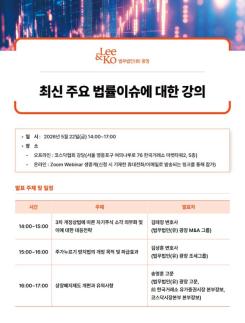 Law Firm Gwangjang to Discuss Stock Price Control Prevention Law Strategies Law Firm Gwangjang announced on May 14 that it will conduct a lecture on May 22 for KOSDAQ members, focusing on key legal issues affecting corporate management and capital markets, including the mandatory cancellation of treasury stocks and the so-called "stock price control prevention law." The lecture aims to assess corporate management risks arising from recent changes in commercial law and capital market regulations and to share response strategies. It will consist of three sessions: mandatory cancellation of treasury stocks, the stock price control prevention law, and the reform of the delisting system. In the first session, attorney Kim Tae-jung from the M&A group will present on "Mandatory Cancellation of Treasury Stocks Under the Third Amendment to the Commercial Law and Response Strategies." Amid ongoing discussions in political and market circles regarding the use of treasury stocks for maintaining control and defending management rights, he will explain key issues of the amended commercial law and practical response measures from the perspectives of corporate governance and financing. The second session will feature attorney Kim Sang-hoon from the tax group, who will discuss "The Purpose and Impact of the Stock Price Control Prevention Law." This law aims to prevent major shareholders from intentionally keeping corporate stock prices low to reduce inheritance and gift tax burdens, which is part of ongoing discussions regarding amendments to inheritance and gift tax laws. In the political arena, there are ongoing discussions about supplementing tax standards to reflect not only the market price but also net asset values for companies with excessively low price-to-book ratios (PBR). The lecture is expected to focus on how these regulatory changes will impact corporate shareholder return policies and succession strategies. In the final session, advisor Song Young-hoon, who previously served as the deputy head of the KRX's securities market division and the KOSDAQ market division, will present on "Reform of the Delisting System and Key Considerations." He plans to introduce the direction of the delisting system reform and practical application cases from the exchange, as well as outline the response measures that listed companies should be aware of. A representative from Gwangjang stated, "We hope this lecture will help KOSDAQ members effectively respond to legal and regulatory changes and establish a stable management environment."* This article has been translated by AI. 2026-05-14 14:25:58
 -
 Korea-Japan Economic Cooperation Meeting to Focus on Supply Chains and AI As global supply chains are being reshaped and competition in the artificial intelligence (AI) sector intensifies, Korea and Japan are accelerating their economic cooperation. Business leaders from both countries will discuss ways to establish a 'future-oriented partnership' focusing on key industries such as semiconductors, mobility, energy, and finance.The Korea-Japan Economic Association announced on May 14 that it will co-host the 58th Korea-Japan Business Meeting in Tokyo at the The Okura Tokyo from May 19 to 20. This year's theme is 'Next Step Together,' marking the first event since the new presidents of the two economic associations took office, and is expected to outline a new direction for Korea-Japan economic cooperation.The meeting is particularly noteworthy as it coincides with a scheduled Korea-Japan summit on May 19, suggesting that the business sector will also contribute to strengthening private-sector cooperation amid improving political and diplomatic relations.Leading the Korean delegation will be Koo Ja-yeol, Chairman of the Korea-Japan Economic Association and LS Group. Other prominent attendees include Shin Dong-bin, Chairman of Lotte Group; Park Jung-won, Chairman of Doosan Group; Koo Ja-eun, Chairman of LS Group; Koo Ja-kyun, Chairman of LS Electric; Kim Dong-wook, Vice President of Hyundai Motor; Lee Hyung-hee, Vice Chairman of SK; and Lee Jae-eon, President of Samsung C&T.Representatives from the finance sector and platform companies will also participate. Notable attendees include Shinhan Bank CEO Jin Seon-kyu, OK Financial Group Chairman Choi Yoon, and Kwon Dae-yeol, Head of ESG at Kakao, who will discuss digital transformation and financial cooperation.On the Japanese side, key figures will include Koji Akiyoshi, Chairman of the Japan-Korea Economic Association and Asahi Group, along with other prominent business leaders such as Masakazu Tokura, Honorary Chairman of the Japan Business Federation (Keidanren); Masayuki Hiodo, Chairman of Sumitomo Corporation; Keiichi Iwata, Chairman of Sumitomo Chemical; Akitoshi Takemura, General Manager of Toyota Motor; and Koji Nagai, Chairman of Nomura Holdings.The meeting is expected to highlight the necessity of industrial collaboration between Korea and Japan in response to growing global economic uncertainties. As the U.S.-China conflict continues and supply chain fragmentation deepens, there is an increasing need for cooperation between companies in sectors such as semiconductor materials, components, equipment, batteries, future vehicles, and decarbonized energy.With the intensification of competition in the AI industry, discussions are also anticipated regarding collaboration in data centers, power infrastructure, semiconductors, and advanced manufacturing. The potential for cooperation between manufacturing companies like LS, Doosan, and Hyundai Motor and Japanese material and component firms will be closely watched.On May 18, Koo Ja-yeol and the Korean delegation plan to meet with Prime Minister Sanae Takaichi to explain the significance of the Korea-Japan Business Meeting ahead of the summit and request the Japanese government's cooperation for economic collaboration between the two countries. 2026-05-14 14:23:53
 -
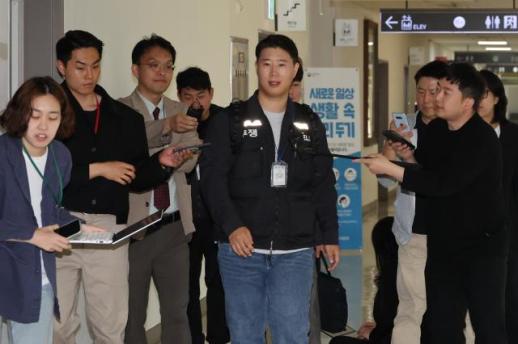 Samsung Union Declares No Reason to Negotiate with Government or Company, Moves Toward Strike As Samsung Electronics and the Central Labor Relations Commission proposed additional talks to avert a total strike, the union has effectively rejected the offer, signaling an escalation in tensions. On May 14, Samsung Electronics sent a formal letter to the National Samsung Electronics Union and the Samsung Group's inter-company union, stating, "We propose additional discussions between labor and management." The company noted that while both sides had shared their views during recent mediation by the labor commission, they had not reached an agreement. The labor commission also officially requested the resumption of mediation talks on May 16, marking a simultaneous call from both the government and the company for negotiations just a week before the planned strike. However, the union insists that the establishment and transparency of a performance bonus system must be prioritized. Choi Seung-ho, chairman of the inter-company union, stated, "There is no reason to negotiate if the establishment and transparency of the performance bonus system are not achieved." Choi added that there could be room for dialogue if there are plans for the establishment and transparency of a cap removal system. However, the company has shown reluctance to agree to the establishment of such a system, which is interpreted as a rejection of the proposal. From May 11 to the early hours of May 13, the labor and management attempted mediation under the labor commission but ultimately failed to find common ground. The union demands that 15% of operating profit be allocated for performance bonuses and the removal of the 50% salary cap. In contrast, the company has proposed maintaining the existing performance bonus system based on economic value while adding special rewards for the DS division. During the mediation process, the labor commission also suggested maintaining the current OPI system and implementing special management performance bonuses for the DS division, but the union rejected these proposals. The union plans to proceed with a total strike from May 21 to June 7, as previously announced.* This article has been translated by AI. 2026-05-14 14:21:35
 -
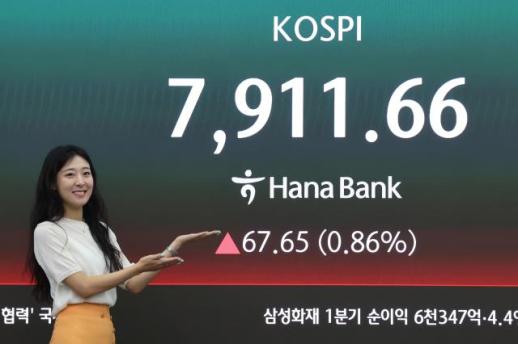 Wall Street Turns Its Attention to South Korean Stocks Beyond Semiconductors The South Korean stock market is emerging as a new investment destination for Wall Street, fueled by the surge in artificial intelligence (AI) and semiconductors. Beyond the soaring stock prices of SK Hynix and Samsung Electronics, companies like SK Square and Samsung Life, which hold stakes in these firms, are also attracting global investors' attention. Two years ago, foreign capital was primarily focused on reevaluating the Japanese stock market, but that gaze is now shifting toward Korea. The Nihon Keizai Shimbun reported on May 14 that "walking the streets of New York, one can feel the popularity of Korean culture, from music to food and cosmetics. Wall Street is no different," noting that both institutional and individual investors are increasingly drawn to South Korean stocks. This trend was evident at the "Sorn Investment Conference" held in New York on May 12. Known as a "hedge fund festival," the event showcased investment ideas from both emerging and veteran fund managers. Eduardo Marques of hedge fund Pertento Partners took the stage, stating, "Lately, I have been focused on uncovering complex value investment opportunities hidden within Korean stocks." The driving force behind the rise of the South Korean stock market is the demand for high-performance memory for AI data centers. The Nihon Keizai Shimbun highlighted that the KOSPI index has tripled in the past year, marking the steepest rise among major global indices. The tight supply of high-performance memory for data centers has led to soaring stock prices for SK Hynix and Samsung Electronics, lifting the entire market. On the surface, South Korean semiconductor stocks still appear undervalued. According to the Nihon Keizai Shimbun, the projected price-to-earnings ratios (PER) for SK Hynix and Samsung Electronics are both around six, still below their American competitor Micron Technology, which stands at nine. However, Marques emphasizes that he is not focused on this PER gap. He remarked, "PER comparisons are already well-known in the West," suggesting that there are much more deeply discounted stocks available for purchase. He pointed to SK Square and Samsung Life as notable examples. SK Square is a major shareholder in SK Hynix, while Samsung Life holds significant shares in Samsung Electronics. The Nihon Keizai Shimbun noted that the market capitalizations of these two companies are only about half the value of their stakes in memory firms. Due to the unique cross-shareholding structure of South Korean conglomerates, these long-ignored discount factors are now seen as attractive value investment opportunities by Wall Street investors. Investor expectations are also being fueled by the South Korean government's push for improved corporate capital efficiency. There is growing anticipation among foreign investors that the undervaluation of holding companies and insurance firms, long viewed as a symbol of the Korea Discount, may be resolved in conjunction with the government's corporate value-up program. Similar to the recent reevaluation of the Japanese stock market amid pressures for improved capital efficiency and activism from investors, a similar transformation may be on the horizon for the South Korean market. There are also projections that the AI memory boom could translate into domestic consumption in South Korea. Jonathan Lennon of Present Lake Partners recently analyzed that Samsung Electronics is considering a plan to pay bonuses equivalent to 10% of operating profits, similar to its competitors, after interviewing several former employees. He stated, "Our calculations suggest that the total bonuses for both companies could reach $40 billion, which corresponds to several percent of South Korea's GDP," indicating that this could have unprecedented ripple effects. Individual investors are also rapidly pouring funds into the market. A memory stock exchange-traded fund (ETF) launched by U.S. firm Roundhill attracted over $6 billion within a month of its debut in early April. The Nihon Keizai Shimbun reported that this marks the fastest inflow rate ever, surpassing that of Bitcoin ETFs in 2024. Nearly half of the ETF's assets are in SK Hynix and Samsung Electronics. Access for U.S. investors to South Korean stocks is also expanding. Interactive Brokers, a U.S. online brokerage, began offering trading services for stocks listed on the Korea Exchange on May 7. Previously, U.S. investors could only access South Korean stocks through ETFs or American Depositary Receipts (ADRs), but now they have broader options for investing in individual South Korean stocks. Strengths Compared to U.S. and Japanese Markets This trend is also linked to the high valuation pressures in the U.S. stock market. Marques noted, "No matter how much one believes in artificial intelligence, the valuations of U.S. stocks appear very high." The Nihon Keizai Shimbun reported that the S&P 500 index reached an all-time high on May 13, with projected PERs in the 21 range, significantly exceeding the 15-year average of 17. While the AI growth story remains valid, there is a growing perception that it has become difficult to generate additional returns solely from U.S. stocks, increasing interest in alternative investment destinations like South Korea. A notable point is the contrast with the Japanese market. The Nihon Keizai Shimbun reported that Japanese stocks were hardly mentioned at the Sorn Conference. Just two years ago, activist investors were prominent speakers, drawing attention to the Japanese market, but now it has been noted that "the narrative has run dry" for Japanese stocks. The strategies of investment banks and brokerages are also changing. Hong Kong-based CLSA is set to hold a new investor event called the "Northeast Asia Forum" in Seoul in June. In contrast, the existing "Japan Forum," which has been held for over 20 years, is expected to be renamed and scaled down, according to the Nihon Keizai Shimbun. This shift of a marquee Asian stock event from Tokyo to Seoul symbolically reflects where global investment banks see the flow of capital in Northeast Asia heading. The competition among Northeast Asian stock markets to attract global money is intensifying. It is noteworthy that a leading Japanese economic newspaper framed the situation as "Japanese stocks are running out of steam, while South Korean stocks present new investment ideas." This signals that the recent rally in the South Korean stock market is being interpreted as a shift in the allocation of global capital in Northeast Asia, extending beyond just a semiconductor boom.* This article has been translated by AI. 2026-05-14 14:17:08
 -
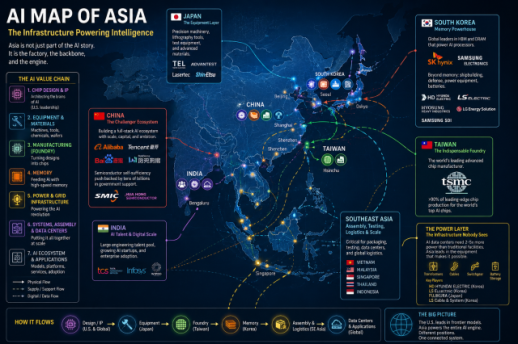 ASIA INSIGHTS: How Asia is redrawn into the AI map SEOUL, May 14 (AJP) -The software was written in California. The intelligence is being manufactured in Asia. A Bloomberg chart circulating this week tells the story cleanly: South Korea has overtaken the United Kingdom to become the world's eighth-largest stock market, at $4.04 trillion. Six of the ten largest equity markets on Earth now sit in Asia. The United States ushered the generative AI era. But the East building its physical infrastructure is collecting the dividend. This is not a coincidence. It is the logical consequence of how artificial intelligence actually works. Every AI query, response, every generated image begins not with software but with hardware: electrons moving through silicon, copper, and exotic materials assembled to nanometer tolerances. That supply chain runs through Asia. Understanding how each major market fits into it reveals not a single AI boom but four distinct ones, each feeding into the next. Taiwan: The Indispensable Foundry Without TSMC, there is no AI at scale. The pure-play foundry controls more than 90% of the world's leading-edge chip production. Nvidia's Blackwell GPUs, AMD's MI series, Apple's M-chips — all fabbed in Taiwan. In Q1 2026, TSMC reported revenue of $35.6 billion, up 35% year-on-year, with profit jumping 58%. Capital expenditure for 2026 is guided at $52–56 billion, a 37% increase, signaling management sees no demand ceiling. Goldman Sachs estimates Taiwan's market is "well over 80%" exposed to AI-related revenue. TSMC's largest customers are collectively planning over $1.2 trillion in data center capex through 2028. Almost all of it flows through Hsinchu. South Korea: The Memory Monopoly If Taiwan is the foundry, South Korea is the memory bank — and in AI, memory is no longer a commodity. It is a chokepoint. High-Bandwidth Memory, or HBM, sits alongside AI processors and feeds them data at speeds standard DRAM cannot approach. The world's HBM comes overwhelmingly from two companies in Gyeonggi Province. SK Hynix beat Samsung in operating profit for the first time in 2025, posting a record 47.2 trillion won for the year. Its stock rallied more than 210%. The KOSPI has gained nearly 80 percent in just five months into the year to become the world's best-performing major index. SK hynix holds a 57–62% share of the global HBM market, supplies Nvidia almost exclusively, and has already sold out its entire 2026 capacity. The Bank of America calls 2026 a "memory supercycle similar to the boom of the 1990s," projecting the HBM market to reach $54.6 billion — up 58 percent year-on-year. The stock rally however goes broader than memory. Investors have poured into shipbuilding, defense, power equipment, and cultural exports. HD Hyundai Electric, LS Electric, and Hyosung Heavy Industries carry order books extending years forward as AI data centers drive unprecedented electricity demand. Goldman Sachs has noted Korea's market is "deeper and broader" than Taiwan's — a rare thing to say about a market whose memory champions alone have rewritten the rules of the semiconductor industry. Japan: The Equipment Layer Japan's role sits one layer upstream: the machines that make the chips. Tokyo Electron, Advantest, and Lasertec supply the lithography tools and test equipment that TSMC and SK Hynix depend on to scale. The Nikkei 225 crossed 60,000 for the first time in history on April 23, 2026. On May 7, markets reopened after Golden Week and immediately priced in a global AI rally that had run in their absence — the index surged 5.58 percent, its largest single-day point gain ever, led by SoftBank (+18.44%), Tokyo Electron (+9%), and Advantest (+7%). J.P. Morgan has set a year-end 2026 Nikkei target of 70,000. SoftBank deserves a sentence of its own. Once mocked for Vision Fund losses, Masayoshi Son's bets on Arm Holdings and OpenAI have made the company, in the words of one analyst, "the listed proxy for OpenAI and Arm." Japan's decades of stagnation have found, in AI infrastructure demand, a genuine secular growth engine. China and Hong Kong: The Challenger Ecosystem China's position is the most contested and the most consequential to watch. Blocked from advanced Nvidia chips since 2022, Chinese companies have responded by building a parallel AI ecosystem. DeepSeek's R1 model, released in January 2025, claimed performance comparable to OpenAI's best systems at a fraction of the cost — and rattled global markets. The Hang Seng Tech Index surged nearly 30 percent in the weeks that followed. Alibaba, which has pledged $52 billion over three years in AI infrastructure, added $153 billion in market value from its January 2025 lows. Chinese chipmakers SMIC and Hua Hong Semiconductor have rallied as Beijing backs semiconductor self-sufficiency with incentives reportedly worth up to $70 billion. The valuation case is straightforward: Hang Seng Tech trades at roughly 24 times forward earnings versus 25–31 times for the Nasdaq 100. UBS rates Chinese tech "most attractive," citing rapid AI monetization and policy support. The U.S. built the leading models; China is building a parallel ecosystem around them. There is a layer beneath the semiconductors that deserves attention: the power grid itself. AI data centers consume electricity at two to five times the rate of conventional facilities, creating a global shortage of high-voltage transformers, cables, and switchgear — equipment made disproportionately in Asia. Korea's HD Hyundai Electric dominates ultra-high-voltage transformer supply for North America. LG Energy Solution and Samsung SDI supply large-scale battery storage systems stabilizing AI campus power grids. Japan's Fujikura, a cable specialist, has been among the surprise winners of the infrastructure buildout. Every kilowatt delivered to a GPU cluster passes through equipment increasingly likely to carry an Asian manufacturer's nameplate. The structural thesis is simple. AI is a software product requiring a hardware supply chain of extraordinary complexity. The software came from the United States. The hardware supply chain is Asian — from the foundries of Taiwan to the memory fabs of Korea, from Japan's equipment makers to China's challenger chipmakers, down to the transformers and cables that keep the whole system powered. The intelligence was born in California. The factory floor is in Asia. 2026-05-14 14:09:13
 -
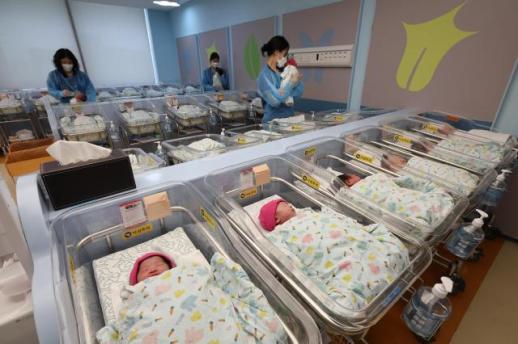 Korean firms ramp up family-friendly perks as low birth rate bites SEOUL, May 14 (AJP) - South Korean companies are widening cash payouts and parental leave benefits to lift the world's lowest birth rate, with game publisher Krafton reporting a near doubling of in-house births a year after overhauling its childbirth and childcare program. Krafton said Thursday that 46 children were born to its employees between January and April this year, about twice the 23 births recorded in the same period last year and 21 in 2024. The Seoul-based firm rolled out the expanded scheme in February 2025. The program offers up to 100 million won ($66,992) per child over a worker's career, alongside parental leave of up to two years, automated hiring of replacement staff and counseling for returning parents. The company is co-running a study with Seoul National University's Population Policy Research Center on its effectiveness. The findings suggest cash and non-cash benefits work differently. Direct subsidies signal corporate sincerity, with 83.4 percent of the staff surveyed saying they felt the company's family-friendly message was genuine. Non-cash measures such as flexible hours and childcare support more strongly shaped attitudes toward having children. "Through this research, we confirmed that real change is possible when companies actively join in solving social problems," said Choi Jae-keun, head of Krafton's General Operations Department. Krafton joins a growing roster of Korean firms tackling the demographic slump. Booyoung Group ignited the trend in 2024 with a 100 million won bonus per newborn, which lobbied the government into exempting such corporate gifts from tax. Kumho Petrochemical and HD Hyundai have since followed with cash incentives, while Samsung Electronics, LG and Hyundai Motor have expanded onsite daycare, fertility coverage and extended parental leave. The corporate push appears to align with a tentative national turnaround. South Korea's total fertility rate climbed to 0.8 in 2025, a four-year high, with 254,500 newborns marking the steepest annual increase since 2007, government data showed in February. 2026-05-14 14:03:59
 -
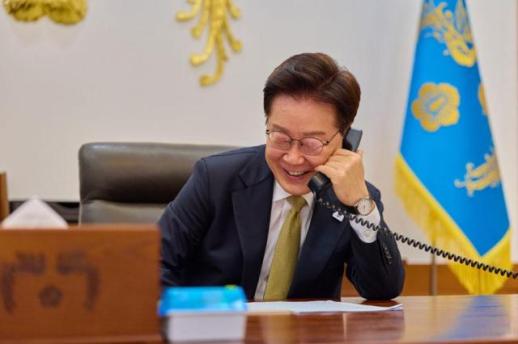 Leaders of Korea and Mexico agree to expand cooperation in phone call SEOUL, May 14 (AJP) - Lee Jae Myung spoke by phone with Mexican President Claudia Sheinbaum Pardo, Cheong Wa Dae said on Thursday. In a written press briefing, presidential spokesperson Kang Yu-jung said the two leaders agreed on the need to expand bilateral cooperation during their phone conversation earlier in the day. The two leaders have kept in close contact since their first face-to-face meeting in June last year on the sidelines of the G7 gathering in Canada. They also exchanged letters earlier this year. Recalling an event last week at Mexico City's Zócalo Plaza, where tens of thousands gathered to catch a glimpse of K-pop superstars BTS, they agreed to work to strengthen cultural exchanges between the two countries. Lee described Mexico as South Korea's largest trade and investment partner in Latin America and stressed the need to restart talks on a free trade agreement as soon as possible. He also called for closer cooperation on energy and other sectors to cope with growing global uncertainties amid the prolonged conflict in the Middle East. Sheinbaum was quoted as saying she has a strong interest in boosting cooperation with Korea. Lee also congratulated Mexico on co-hosting the World Cup, which kicks off on June 11 and runs through July 19 across 16 cities in the U.S., Canada, and Mexico. This will mark the first time the quadrennial tournament is hosted by three nations simultaneously. Lee also accepted Sheinbaum's invitation to visit Mexico, with both sides agreeing to begin preparations and hold further talks on strengthening bilateral ties. 2026-05-14 14:03:43