
Journalist

Aju Press
-
 Myeongryun Jinsagalbi Franchise Used Policy Funds for High-Interest Loans The operator of the all-you-can-eat meat restaurant chain Myeongryun Jinsagalbi has been found to have provided high-interest loans to franchise owners using low-interest policy funds. Financial authorities plan to block this structure that shifts financial burdens onto franchisees. On May 10, the Financial Services Commission and the Fair Trade Commission announced measures to address high-interest improper loans by franchise headquarters utilizing policy funds. This follows an investigation prompted by the Myeongryun case, which revealed three instances of franchise headquarters offering high-interest loans to franchisees after receiving policy fund loans, along with one additional case. According to the authorities' investigation, Myeongryun borrowed low-interest funds at an annual rate of 3-6% from policy financial institutions such as the Industrial Bank of Korea. Subsequently, it lent approximately 89.9 billion won to 13 affiliated lending companies established by its major shareholder, which then provided franchisees with high-interest loans ranging from 12-18% under the guise of covering renovation costs. The total amount of loans executed for Myeongryun franchisees reached 145.1 billion won from September 2022 to August of the previous year. The investigation also uncovered evidence that the affiliated lending companies managed their total assets to remain below 10 billion won to evade registration requirements with the Financial Services Commission, suggesting a practice known as “splitting registration” to avoid scrutiny by the Financial Supervisory Service. However, it is reported that Myeongryun has since returned all its lending licenses. Similar structures were identified in other franchise headquarters. One franchise utilized 1.2 billion won in bank funds at an annual rate of 4% backed by the Korea Credit Guarantee Fund, while its CEO's affiliated lending company provided loans totaling 11.4 billion won at an interest rate of 13% to 112 franchisees. The authorities are concerned that franchise headquarters may expand their businesses using low-interest policy funds while imposing high-interest loan burdens on franchisees. Notably, it was found that loans received by franchisees were often used for opening costs such as renovations, with repayments linked to sales or added to payments for essential supplies. In response, the Financial Services Commission will strengthen management of policy loans to franchise headquarters. Moving forward, policy financial institutions must verify whether franchise headquarters hold loans to franchisees when providing new loans or guarantees. They will also check for misuse of funds and monitor changes in loan amounts or new loans at the time of maturity extensions. If inappropriate high-interest loans to franchisees are confirmed, the supply of policy funds will be restricted. New policy loans and guarantees will be halted, and existing loans and guarantees will face limitations on maturity extensions or be encouraged to adopt installment repayments. However, if franchise headquarters voluntarily reduce loan interest rates or resolve issues, they will be exempt from these restrictions. 2026-05-10 12:09:00
 -
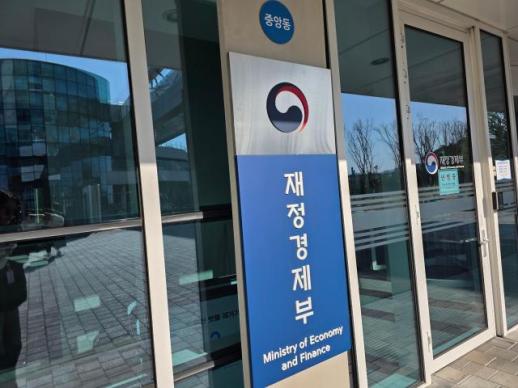 Government Expands Support for Oil Import Companies Amid Ongoing Middle East Conflict As the conflict in the Middle East continues, increasing uncertainty in international oil prices and crude oil procurement has prompted the South Korean government to expand financial support for oil import companies and assist in diversifying import sources. This initiative aims to strengthen responses to the growing financial burdens and supply chain risks faced by the industry. The Ministry of Finance and Economy announced on May 10 that it held the "Second Financial Support Review Meeting for Oil Import Companies" on May 8, in collaboration with the Korea Export-Import Bank, the Korea National Oil Corporation, and domestic oil import firms. The meeting was convened to share the outcomes of industry recommendations raised during the first meeting held on April 8, and to review the current crude oil supply situation, financial support status, and any additional challenges. Participating companies proposed measures including: improving financing conditions, supporting diversification of import sources, deferring tax payments and providing tax incentives, and increasing government stockpiling of oil. Recently, fluctuations in international oil prices and shipping costs have heightened the financial pressures on domestic oil import companies. Analysts note that the reliance on Middle Eastern oil has led to increased payment costs and concerns over supply disruptions. Moon Ji-sung, the Director of International Economic Management at the Ministry of Finance, stated, "Given the significant volatility of the situation in the Middle East, it is essential to closely monitor developments. The risks of potential disruptions in oil exports from Middle Eastern countries and uncertainties within the Organization of the Petroleum Exporting Countries remain." He added, "We are swiftly addressing the recommendations made during the first meeting to alleviate the operational difficulties faced by oil import companies, and we will thoroughly review the government's role in restructuring supply chains for energy security with relevant agencies." During the first meeting, companies had requested stable provision of policy funds for affected businesses until international oil prices stabilize, expanded financial support for crude oil and naphtha purchases, and assistance in identifying alternative supply sources for diversification. The government plans to continue engaging with the industry to assess on-the-ground challenges and enhance related support measures.* This article has been translated by AI. 2026-05-10 12:04:49
 -
 Doosan Fined $2.3 Million for Delayed Subcontract Agreements Doosan, a major system integration (SI) company, has been penalized by the Fair Trade Commission (FTC) for failing to issue subcontract agreements on time over several years.On May 10, the FTC announced it would impose a corrective order and a fine of 230 million won (approximately $2.3 million) on Doosan for violating subcontracting laws by delaying the issuance of written contracts during the outsourcing of system development and management services.According to the FTC, from January 2022 to October 2024, Doosan failed to provide written contracts containing legally required details for 516 SI service agreements with 182 subcontractors before the start of the services. In some cases, contracts were issued up to 291 days after work had begun, with an average delay of 26 days.The 516 agreements in question represent 35% of all contracts (1,473) during that period, with the total subcontracting amount reaching 40.8 billion won, accounting for 34.6% of the overall contract value. The FTC explained that the scale of the violations and their repeated nature warranted the imposition of a fine.Additionally, Doosan issued 'incomplete documents' for some contracts that did not clearly specify payment deadlines and inspection periods. The company was also found to have failed to retain some subcontracting documents for three years. However, the FTC deemed the violations relatively minor and issued a warning regarding those issues.Industry experts interpret this sanction as a response to the prevalent practice of 'contracting after work begins' in the SI sector. It has been repeatedly pointed out that in large projects, subcontracted workers are often deployed before contracts are finalized or pricing discussions occur.This practice leaves smaller subcontractors vulnerable, as they must incur costs for development personnel and resources without clear contract terms, increasing the risk of disputes over payment and project scope.With the recent expansion of investments in AI and data centers, along with rising demand for digital transformation, the importance of effective subcontractor management in the SI market is growing.According to the FTC, the domestic SI market generated 56 trillion won last year, reflecting an average annual growth rate of 6.58% over the past five years. The high level of internal transactions among large corporations underscores the need for a fair subcontracting order.An FTC official stated, "We will continue to focus our specialized investigative capabilities on the advanced industry sector to correct unfair trading practices that infringe on the rights of subcontractors and impose strict penalties for violations to establish a fair subcontracting order."* This article has been translated by AI. 2026-05-10 12:03:19
 -
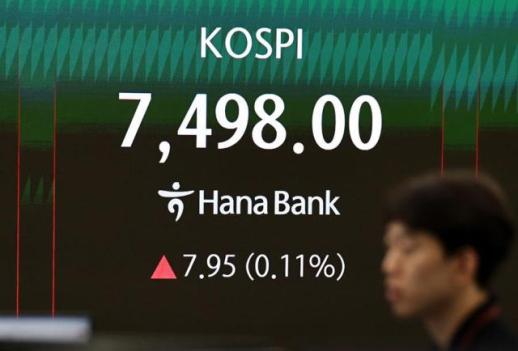 More South Koreans borrow to invest in stocks amid KOSPI's historic rally SEOUL, May 10 (AJP) - South Koreans are increasingly borrowing money again to invest in stocks amid a frenzy fueled by a recent record-breaking rally in the Korean stock market. According to financial data released on Sunday, outstanding balances on interest-bearing overdrafts at the country's five major banks - KB Kookmin, Hana, NH NongHyup, Shinhan and Woori - stood at 40.50 trillion Korean won (US$29 billion) as of last week. The amount surged by 715.2 billion won in less than a week from the end of April, marking the fastest increase and the highest level since 2023, when individual investors rushed to take advantage of ultra-low interest rates to buy stocks and cryptocurrency. The surge came amid renewed expectations for the long-depressed South Korean bourse, as the Korea Composite Stock Price Index (KOSPI), which had fallen below 2,500 points in January last year shortly after disgraced former President Yoon Suk Yeol's botched, short-lived martial law debacle, has since fully recovered and continued its historic rally, closing at 7,498 points last Friday after briefly surpassing the psychologically important, unprecedented level of 7,500 in intraday trading. The benchmark KOSPI's record bull run into uncharted territory, driven by an artificial intelligence (AI)-fueled chip supercycle, appears to be prompting more investors to take out loans and pour their money into stocks in search of higher returns. Even those who had shunned the stock market for years are returning, though some still hesitate, fearing they may have already missed the peak. Cash parked in bank accounts has also been on the decline, with liquid balances at the five major banks dropping by 501.3 billion won to 696.51 trillion won over the same period, a sign that more people are pulling their money out to invest in stocks rather than leaving it in banks. "Stock investment is likely the main factor, but some of the borrowed money may also be used for housing costs, as tighter loan regulations have made it harder for households to secure funds through other means," said one banking staffer. 2026-05-10 11:51:06
 -
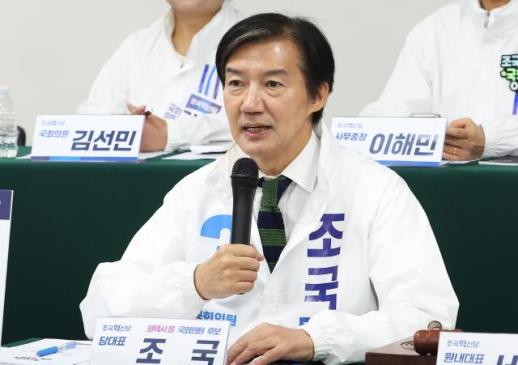 Jokuk Proposes Amendments to Pyeongtaek Support Special Law Jokuk, leader of the Jokuk Innovation Party, stated on May 10 that Pyeongtaek needs responsible support from the government and the National Assembly to take a significant leap forward. He announced the adoption of the "Pyeongtaek Support Special Law Amendment" as the party's official stance. During a field meeting with 11 members of the Jokuk Innovation Party at the Godeok STV Knowledge Industry Center in Pyeongtaek, Jokuk emphasized the importance of the amendment. "Pyeongtaek is home to the world's largest single semiconductor factory, the Samsung Electronics campus, and the largest U.S. military base, Camp Humphreys," he said. "We aim to elevate Pyeongtaek, a strong leader and beneficiary in artificial intelligence and a symbol of the Korea-U.S. alliance." He argued that the Pyeongtaek Support Special Law needs revision. While acknowledging that many projects have been carried out under the law enacted in 2005, he pointed out that it is insufficient to support national security and industrial strategy, highlighting its many gaps. Jokuk noted that despite four extensions of the deadline, including the passage of a bill on May 7, the sunset clause has left Pyeongtaek city and project stakeholders in a state of uncertainty. "To ensure stable business operations and a consistent development strategy, the sunset clause must be eliminated," he stressed. On this day, the members of the Jokuk Innovation Party confirmed the amendment to the Pyeongtaek Support Special Law as the party's official position. The proposed amendments include: 1) establishing and implementing measures to improve transportation for local residents, 2) legalizing national subsidies outlined in the enforcement decree, and 3) abolishing the sunset clause. After the adoption of the amendment as the party's official stance, Jokuk stated, "The amendment supported by the Jokuk Innovation Party will serve as a strong backing for me and a source of hope for the residents of Pyeongtaek. The Jokuk Innovation Party will demonstrate to the residents of Pyeongtaek that we act, not just speak."* This article has been translated by AI. 2026-05-10 11:48:18
 -
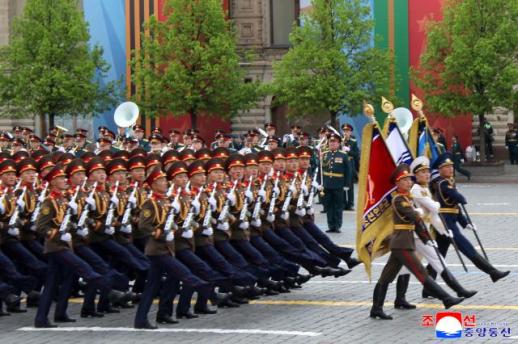 North Korean Troops Participate in Russia's Victory Day Parade North Korean state media reported that the country's military took part in Russia's Victory Day military parade commemorating the end of World War II. The Korean Central News Agency (KCNA) stated on May 10 that the "81st anniversary celebration of the Great Patriotic War victory" took place in Moscow's Red Square the previous day, with the "Korean People's Army combined forces participating at the invitation of Russia." Army Colonel Choi Young-hoon led the troops in the march, and Russian President Vladimir Putin expressed his gratitude to the commanders after the parade concluded. The Workers' Party's official newspaper, Rodong Sinmun, also covered the event extensively with photographs, detailing the atmosphere on-site. The newspaper reported, "As the song 'The Struggle for Justice' was played, the Russian flag and the victory banner appeared in the square," and included excerpts from President Putin's speech. It added, "The troops of the Democratic People's Republic of Korea, who displayed immortal feats in battles to liberate Kursk, marched alongside the Russian military units." Additionally, the newspaper noted that President Putin met with veterans, participants of the special military operation, and commanders of the People's Army who took part in the parade. The report also highlighted that President Putin issued a congratulatory letter on May 6 in honor of Victory Day, including parts of its content, emphasizing the significance of the event. On the same day in Pyongyang, members of the Russian embassy in North Korea visited the Liberation Tower to lay flowers in commemoration of Victory Day. The Liberation Tower symbolizes the Soviet soldiers who died fighting to expel Japanese forces from the Korean Peninsula in 1945. During the ceremony, held with North Korean honor guards present, participants observed a moment of silence while the national anthems of Russia and North Korea were played in tribute to the Soviet heroes.* This article has been translated by AI. 2026-05-10 11:39:19
 -
 South Korea and U.S. Initiate High-Level Talks on $350 Billion Investment Project The South Korean and U.S. governments have officially begun high-level discussions on a strategic investment project worth $350 billion. The two countries are focusing on joint investments and research and development (R&D) in the shipbuilding and energy sectors, including nuclear power and liquefied natural gas (LNG), to enhance cooperation. According to the Ministry of Trade, Industry and Energy, Minister Kim Jeong-gwan visited Washington, D.C., from May 6 to 9 to discuss the strategic investment project and ways to strengthen industrial and trade cooperation with key U.S. officials. Following the passage of the Special Investment Act, discussions on subsequent legislation and implementation frameworks are gaining momentum. During his visit, Minister Kim met with U.S. Secretary of Commerce Howard Rutnik to explain the South Korean government's progress on subsequent legislation and implementation frameworks following the Special Investment Act's passage. The two sides discussed more concrete directions for advancing the strategic investment project based on previous discussions focused on shipbuilding and energy. As a result of this meeting, the Ministry of Trade, Industry and Energy and the U.S. Department of Commerce signed a memorandum of understanding (MOU) for the Korea-U.S. Shipbuilding Partnership Initiative. Under this agreement, the two countries plan to establish a Korea-U.S. Shipbuilding Cooperation Center in Washington, D.C., by the end of the year to support collaboration among governments, industries, and research institutions. Specific activities will include promoting foreign direct investment in the U.S. maritime industry, workforce development initiatives, shipyard productivity enhancement projects, and technology exchanges. The detailed areas of cooperation will be further defined through subsequent discussions between the two governments. The U.S. Department of Commerce will facilitate exchanges among U.S. shipbuilders, suppliers, universities, and research institutions while serving as a contact point for the center at the government level. The Ministry of Trade, Industry and Energy will coordinate cooperation among South Korean stakeholders in the shipbuilding sector and provide the necessary personnel and funding for the center's operations. Minister Kim also met with Russell Vought, Director of the Office of Management and Budget at the White House, to request U.S. government support for the Make American Shipbuilding Great Again (MASGA) project that South Korea is pursuing. Additionally, he discussed energy cooperation issues, including nuclear power, with U.S. Secretary of Energy Chris Wright, exploring ways to strengthen future collaboration. Minister Kim held a virtual meeting with Senator Bill Hagerty of Tennessee, a prominent supporter of South Korea, to discuss nuclear cooperation and digital issues, continuing outreach efforts to the U.S. Previously, during last year's Korea-U.S. summit, the two countries agreed to pursue the MASGA project, committing to $150 billion in investments in the U.S. shipbuilding sector. This investment is part of the broader $350 billion strategic investment commitment, which includes reductions in tariffs on South Korean products and automobile tariffs in exchange. The Ministry of Trade, Industry and Energy plans to maintain close communication with the U.S. regarding the strategic investment project while actively managing industrial and energy cooperation and trade issues. After concluding his visit to the U.S., Minister Kim is scheduled to return to South Korea via Incheon International Airport on the afternoon of May 10.* This article has been translated by AI. 2026-05-10 11:36:22
 -
 Shinhan Financial Group's CEO Jin Ok-dong Promotes Investment in North America Jin Ok-dong, the CEO of Shinhan Financial Group, is visiting the United States, Mexico, and Canada to hold investor relations (IR) meetings with overseas institutional investors. According to Shinhan Financial Group, Jin will meet with major global asset management firms and pension fund investors in North America over the next two weeks, starting from May 10 until May 22. During his visit, Jin will explain the stability and fundamentals of the South Korean financial market and will also visit local subsidiaries and branches to review the status of global operations and regional growth strategies. Jin plans to outline the group's enhanced corporate value improvement plans, which include a shareholder return system linked to return on equity (ROE) and growth rates, a capital policy that increases predictability and sustainability, and a strategy for diversifying revenue based on global business. He will also share Shinhan Financial's response to the prolonged conflict between the U.S. and Iran. "Transparent and consistent communication with investors is a crucial foundation for enhancing corporate value," Jin stated. "Shinhan Financial will thoroughly explain our sustainable system for expanding both group growth and shareholder returns to global investors, and we will continue to enhance corporate value based on market trust." Shinhan Financial has announced a new value enhancement policy this year, strengthening shareholder returns. The company has introduced a formula for calculating shareholder return rates linked to an elevated ROE target of over 10%. This new system eliminates the previous 50% cap on returns, establishing a predictable return framework calculated as '1 - (growth rate / target ROE)'. The dividend policy will also be strengthened, with plans to initiate tax-exempt dividends for three years starting from the 2026 fiscal year, aiming for a yearly increase of over 10% in the dividend per share (DPS). 2026-05-10 11:34:27
 -
 First Day of Increased Capital Gains Tax for Multiple Homeowners: Minister Kim Yoon-deok Addresses Concerns On the first day of the reimplementation of the increased capital gains tax for multiple homeowners, Minister of Land, Infrastructure and Transport Kim Yoon-deok dismissed concerns about a potential housing market freeze, stating, "The people's sovereignty government is different." In a post on X (formerly Twitter) on May 10, Kim noted, "Such forecasts are largely based on experiences from past administrations. Should we expect history to repeat itself this time? In the long run, I believe the people's sovereignty government will be different and must be different." This statement comes amid worries that multiple homeowners might withdraw their properties from the market due to the increased tax burden, leading to a housing market freeze. Kim emphasized that the people's sovereignty government has a different perspective and approach to real estate issues. He pointed out that previous administrations pursued stability policies for the real estate market while maintaining the basic framework of macroeconomic management, including monetary and financial policies. He added, "The Lee Jae-myung government is not merely focused on stabilizing the real estate market; we recognize that without addressing barriers to social mobility across income classes and regions, we cannot secure the future and unity of South Korea. We are pursuing fundamental institutional reforms to transform the economy from one reliant on real estate windfalls to a productive economic structure by completely redesigning the economic incentive structures in finance, taxation, and supply." Kim also highlighted the government's exceptional capacity for collaboration and execution. He stated, "As the public has witnessed with the achievement of a KOSPI of 7,000 and our response to the Middle East conflict, our housing supply policies are also different. Within just three months of taking office, we announced a plan to supply 1.35 million homes in the metropolitan area, followed by a plan for 60,000 homes in prime locations on January 29." He continued, "Most importantly, to legally and institutionally support these initiatives, eight legislative bills have been completed, and 14 are awaiting discussion in the National Assembly. We aim to finalize legislation before the end of the first half of the National Assembly session while breaking down barriers between departments to accelerate housing supply in areas like Gwacheon and Taereung more swiftly than ever." * This article has been translated by AI. 2026-05-10 11:33:07
 -
 70% of Homebuyers Selling Cryptocurrency Are in Their 30s A recent report reveals that 70% of individuals who sold cryptocurrency to fund their home purchases are in their 30s. This trend follows the government's introduction of a separate category for cryptocurrency sales in housing financing plans, confirming the influx of virtual asset profits into the real estate market among this age group. According to data submitted by the Ministry of Land, Infrastructure and Transport to Kim Jong-yang, a member of the National Assembly's Land, Infrastructure and Transport Committee, a total of 324 individuals reported using cryptocurrency sales to finance their home purchases between February 10 and March 31 of this year. Among them, 229 were in their 30s, accounting for 70.7% of the total. The amount of cryptocurrency sold by those in their 30s for home purchases reached 10.31 billion won, the highest among all age groups. Following them, individuals in their 40s reported 5.495 billion won. The amount sold by those in their 30s is approximately 1.9 times that of those in their 40s. Individuals in their 20s sold 1.185 billion won, while those in their 50s sold 1.072 billion won, and those aged 60 and above sold 510 million won. The housing financing plan is a document that details the source of funds when purchasing a home. It must be submitted to the relevant local government within 30 days of the contract date for all housing transactions in regulated areas and for properties valued over 600 million won in non-regulated areas. Since February 10 of this year, the revised real estate transaction reporting rules have required that cryptocurrency sales be reported as a separate item in the financing plan. Buyers must provide documentation of the transaction, the timing of the sale, and currency exchange records. This statistic is significant as it marks the first instance of cryptocurrency sales, previously classified under 'other funds,' being included in formal reporting. Notably, individuals in their 30s are considered to have a relatively high participation rate in risky asset investments such as stocks and cryptocurrencies. This trend confirms that they are realizing investment profits to fund home purchases. However, the proportion of cryptocurrency sales in the overall home purchase financing remains small. In the case of individuals in their 30s, cryptocurrency sales accounted for only 0.1% of their home acquisition funds. Among their own funds, proceeds from property sales made up the largest share at 18.7%, followed by bank deposits at 14.6%, gifts and inheritances at 6.9%, and proceeds from stock and bond sales at 4.3%. Market analysts are paying attention to the potential for cryptocurrency and stock investment profits to flow into the real estate market, particularly among the 2030 generation. With ongoing loan regulations and housing price pressures, it is anticipated that younger individuals will increasingly utilize financial investment profits, in addition to existing savings or parental support, to fund home purchases. A real estate industry insider stated, "The inclusion of cryptocurrency sales as a separate item in the financing plan has begun to clarify how younger generations are sourcing their funds. While the scale is still limited, the trend of investment profits from the 2030 generation flowing into the housing market is likely to continue."* This article has been translated by AI. 2026-05-10 11:31:42