
Journalist

Amira Guirguis
-
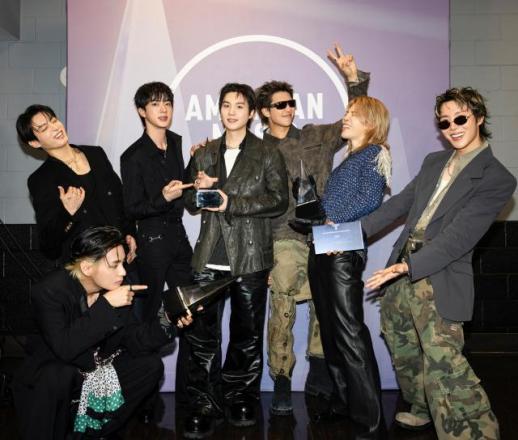 BTS opens comeback awards year with three-trophy sweep at 2026 AMAs SEOUL, May 26 (AJP) - BTS launched their comeback awards run in style on Monday, claiming three trophies at the 2026 American Music Awards in Las Vegas — including a second Artist of the Year win — in their first major awards showing since returning from a nearly four-year hiatus. The haul arrived less than a year after all seven members completed South Korea's mandatory military service, an obligation that effectively suspended full-group activity for roughly two years. Monday's result underscored that the group's global fanbase, known as ARMY, had remained mobilized through the pause. All seven members attended the ceremony at the MGM Grand Garden Arena, marking their first full-group appearance at the AMAs since 2021. "ARMYs, we made it once again," leader RM said in his acceptance speech. "Because this award is decided by fan votes, I sincerely express my gratitude and respect to ARMY, who have stood by us for 13 years." Busta Rhymes presented the top prize, with BTS edging a stacked field that included Bad Bunny, Bruno Mars, Harry Styles, Justin Bieber, Kendrick Lamar, Lady Gaga, Morgan Wallen and Sabrina Carpenter. Taylor Swift, the most-decorated artist in AMA history with 40 trophies, walked into the night with eight nominations and left empty-handed. J-Hope thanked fans around the world, while Jimin acknowledged the supporters who had joined the group's ongoing tour, switching to Korean to tell ARMY he was "truly grateful and full of love." BTS also won Song of the Summer for "Swim," the Billboard Hot 100-topping lead single from their comeback album ARIRANG. The group opened the broadcast with a pre-recorded performance of "Hooligan," filmed at Allegiant Stadium during their world tour. A third honor, Best Male K-Pop Artist, was announced after the main broadcast, bringing the night's tally to three. Accepting Song of the Summer, the members said they had spent the hiatus reflecting on what kind of music felt most authentic at this stage of their career. "The only thing we believed in was that we had to keep challenging ourselves and moving forward," they said. "To everyone who keeps swimming forward no matter the circumstances — we send our love and support." The AMA showing arrives amid sustained commercial momentum. ARIRANG debuted at No. 1 on the Billboard 200 in March with 641,000 equivalent album units in its first week, according to Luminate, giving BTS its seventh chart-topper on the U.S. albums chart. The record held the top spot for three weeks — the longest run for a group album since Mumford & Sons' Babel in 2012 — pointing to demand that has extended well beyond the initial wave of comeback interest. The accompanying ARIRANG World Tour has amplified that trajectory. Billed as the group's largest tour to date, the run spans 85 dates in 34 cities across 23 countries, having opened at Goyang Stadium on April 9 and completing 18 of its 85 shows to date, all to sold-out crowds, with the tour scheduled to continue through March 2027. The current Las Vegas residency at Allegiant Stadium overlapped with awards week, allowing the group to attend the ceremony mid-tour. Asia and Oceania legs are slated to follow later this year and into early 2027, with stops in Melbourne, Sydney, Kaohsiung, Bangkok, Kuala Lumpur, Singapore, Jakarta, Hong Kong and Manila. BTS's 2021 Artist of the Year win had marked the group's arrival as the first Asian act to claim the AMAs' top fan-voted honor. Introducing the band earlier in the evening, host Queen Latifah described them as "not just a big group — a global group," drawing a roar from the arena. Seven acts tied for the night's lead with three trophies each: Bruno Mars, BTS, Cardi B, KATSEYE, Sabrina Carpenter, HUNTR/X and Sombr. BTS was not the only Korean-linked act to make an impact. KATSEYE, the group formed through a HYBE–Geffen Records partnership, also took home three awards including New Artist of the Year, adding to a broader showing for K-pop and K-pop-adjacent acts at a ceremony where fan engagement carries unusual weight. The AMAs rank among the major U.S. music honors, with nominees determined by commercial metrics such as streaming, sales, radio airplay and touring, while winners — including Artist of the Year — are chosen through fan voting, a format that has historically favored acts with highly organized global fanbases. BTS first won at the show in 2018 with Favorite Social Artist, and later expanded their footprint into major categories including Tour of the Year and Favorite Pop Duo or Group. 2026-05-26 17:47:58
 -
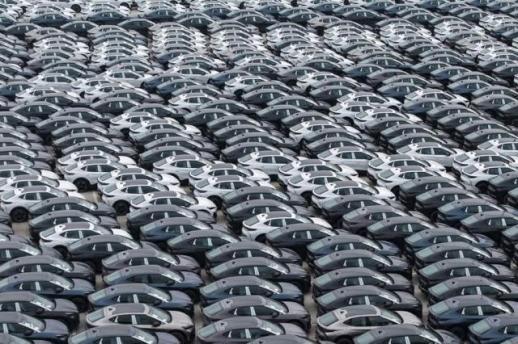 ASIA INSIGHT: China takes wheel in EV era while Japan and South Korea feel pinch SEOUL, May 26 (AJP) - There was a time when the global automobile world felt almost immutable. Germany stood for engineering precision. Japan perfected reliability. America sold aspiration. And China simply assembled parts. That no longer holds. Electric vehicles are not simply a new kind of car. They are a new kind of industrial system. In that shift, China has done something few expected, moving from the margins of manufacturing to the center of technological competition. Chinese automakers like BYD and CATL are no longer imitators chasing established leaders. They are setting the pace. China is now the world's largest auto exporter, and in electric vehicles it is not just competing. It is shaping the market itself. The old assumption that Chinese cars were "cheap but inferior" is increasingly outdated. In many segments, the price advantage is so sharp that rivals in Europe, Japan, and South Korea are left competing on fundamentally unequal terms. What makes China's rise different is not just cheaper prices. Behind those prices is an entire system working in China's favor, an ecosystem of battery supply chains, heavy government support, sophisticated software, and enormous domestic demand that allows automakers to adapt rapidly. In some cases, Chinese EVs are priced at nearly half the cost of comparable Western or Japanese models. And it is no longer contained within China. In Europe, Chinese EV brands are steadily gaining market share. In Seoul, imports of Chinese electric vehicles have surged at a striking pace. The expansion is now visible not only in showrooms but also in factory contracts. Japan's long dominance of hybrid technology, once a major strength, has become a form of strategic inertia. The shift to fully electric cars exposed a gap that rivals quickly took advantage of. In China, Japanese carmakers are losing ground not only to local brands but also to consumers who now care more about software and connected systems than traditional mechanical quality. South Korea is in a more complicated position. Hyundai and Kia have done well in the EV shift, investing early in design, new platforms, and building strong global brands. But they now face intense pressure from Chinese companies that can produce at much larger scale and lower prices. The bigger concern is batteries. Chinese companies are gaining more control over key materials and production. As a result, it is becoming harder for South Korea to hold on to one of its most important export industries. But the bigger change is not about individual companies. It is about what a car has become. An electric vehicle is no longer mainly about engine performance. It is now shaped by software, computer chips, batteries, and control over supply chains. It is closer to a moving computer than a traditional machine. China understood this earlier and moved faster to build it at a national scale. But that does not mean its EV industry has no weaknesses. Price wars are intense. And in an overcrowded domestic market, many companies struggle to make profits. For some, going overseas is no longer just about growth. It is about survival. But even China's weaknesses do not change the bigger picture. The uncomfortable reality for Japan and South Korea is that past glory in internal combustion engines does not guarantee success in the electric age. This is not a gradual shift but a fundamental break from everything that came before. And history is often unkind in moments like these. Dominant players in one era often fail to recognize how quickly the rules have changed in the next. There is a familiar precedent. In smartphones, once-dominant players like Nokia were swept aside by platform-driven ecosystems they underestimated. The auto industry may not move as fast as consumer tech, but the direction of change is similar, and the stakes are far higher. Cars are not just products. They are part of a country's industrial backbone, connected to exports, jobs, and national identity all at once. That is what makes China's EV surge more than a market story. It is a reordering of industrial power in Asia. For Japan and South Korea, the question is no longer whether competition will intensify. It already has. The real question is whether Japan and South Korea can take what they are good at, building reliable, well-engineered, trusted cars, and remake themselves for a world where the car is essentially a software product on wheels. A world where vehicles are not just sold, but constantly updated and improved long after they leave the factory. The shift is already underway. The hard part is accepting how much has already changed. 2026-05-26 17:47:13
 -
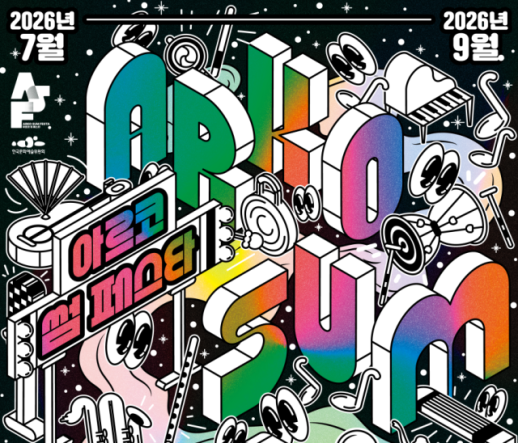 ARKO connects 15 performing arts festivals under summer series SEOUL, May 26 (AJP) - The Arts Council Korea will launch the 2026 ARKO SUM FESTA in July, bringing together 15 performing arts festivals across the country under a single brand, the council said Tuesday. ARKO SUM FESTA was introduced last year as an integrated brand for festivals selected under the council's national performing arts festival support program. This year's edition will focus on strengthening links among participating festivals and expanding audience access to local performing arts events. The festival series will run from July to September in cities and regions including Seoul, Busan, Jeju, Chuncheon, Miryang, Gwangmyeong, Hwaseong and Eumseong. Participating festivals span theater, dance, music and traditional arts. Theater events include the Korea Theater Festival in Busan, while dance programs include the Busan Ballet Festival and the Chuncheon Performing Arts Festival. Music events include the July Festival and the Seoul International Computer Music Festival, and traditional arts festivals include the Dongnae Folk Arts Festival in Busan's Dongnae-gu district. Ahead of the main festival period, ARKO will hold Preview Week programs in two rounds, from June 19 to 20 and from July 25 to 26. The preview programs will introduce participating festivals through showcases, workshops, exhibitions and hands-on programs. All Preview Week events will be free of charge, though some indoor performances and workshops will require advance reservations through Naver Booking. Advance registrants will receive ARKO SUM FESTA merchandise and a coupon book for participating festivals. The first Preview Week will begin with an opening event at the main hall of ARKO Arts Theater on June 19, featuring theater, dance, traditional arts and music performances from programs highlighted in last year's festival series. On June 20, additional showcases, workshops, exhibitions and public participation programs will be held at ARKO Arts Theater and around Marronnier Park in Seoul. Lee Beom-heon, chair of the Arts Council Korea, said expanding contact points with audiences is as important as developing strong festival programs. "Through ARKO SUM FESTA, we will strengthen the promotional foundation for participating festivals and helps audiences more easily discover and enjoy performing arts festivals across the country," Lee said. 2026-05-26 17:35:23
 -
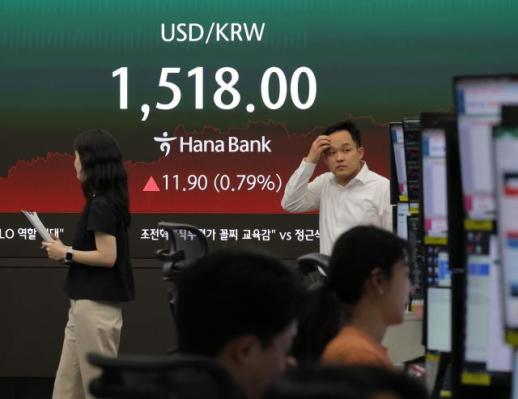 AJP Focus: 1,500 won per USD holds as capital outflows outweigh C/A surplus SEOUL, May 26 (AJP) - The South Korean won continues to hover near the 1,500-per-dollar mark despite solid economic indicators that would traditionally lift the currency, underscoring what analysts describe as a structural shift in the country's foreign exchange dynamics. The won closed at 1,504 against the dollar on Tuesday, holding sharply weaker than at the start of the year despite bullish readings on the current account, exports, and equities that have more than offset the inflationary pressure from the prolonged Gulf crisis. While the KOSPI has outperformed global equity peers and even commodities such as oil and gold, the won ranks among Asia's weakest currencies. According to data from the Bank of Korea (BOK) and Investing.com, the won has slid 5.2 percent against the U.S. dollar since the start of the year, exceeding declines of 4.5 percent for the Philippine peso, 3.5 percent for the Thai baht, and 1.4 percent for the Japanese yen. Over the same period, the Singapore dollar, Malaysian ringgit, and offshore Chinese yuan gained 0.6 percent, 2.3 percent, and 2.5 percent, respectively. On the surface, South Korea's external fundamentals appear solid. The country maintained a current account surplus through the first quarter, while exports kept up double-digit growth thanks to chip boom. Manufacturing output and factory utilization rates have also shown signs of revival, and the nation's credit default swap (CDS) premium — a key gauge of external financial stability — has held steady in the low-20 basis-point range. The problem, analysts say, is not a shortage of dollar inflows but the fact that dollars earned through exports and current account surpluses are no longer staying within the domestic foreign exchange market. "The recent weakness of the won is closer to a structural problem in which dollars earned in South Korea do not remain inside the country, rather than a currency crisis–style absolute shortage of greenbacks," said Kim Ji-hyun, manager of the International Finance Research Team at the Bank of Korea's International Department. "As it has become difficult to expect exchange rate stability through a current account surplus alone, we must evaluate capital flows and outbound investment demand in tandem." Demand for dollars has steadily expanded as domestic investors channel funds into overseas assets, companies finance foreign operations, and foreign investors repatriate proceeds from stock sales. A surge in outbound investment by South Korean investors has emerged as a major source of downward pressure on the won. As appetite for U.S. technology stocks and global exchange-traded funds (ETFs) grows, both retail and institutional investors are increasingly shifting capital into dollar-denominated assets. According to BOK balance-of-payments data, overseas securities investments by South Korean residents rose by $26.1 billion between January and March, while foreign investors trimmed their holdings of domestic securities by $41.29 billion. Together, the two flows generated net capital outflow pressure of roughly $67.4 billion in the securities investment sector alone. Last year, residents' net purchases of overseas securities reached a record $140.28 billion, with overseas equities accounting for about 82 percent, or $114.3 billion, of the total. The corporate sector is reinforcing the trend. Exporters are increasingly deploying dollars earned abroad for local investments and reinvestment in overseas subsidiaries rather than repatriating the funds. As production bases for key industries such as semiconductors, batteries, and automobiles expand overseas, the traditional link between strong exports and a stronger won has weakened. Even the equity rally has failed to support the currency. The benchmark KOSPI has surged more than 87 percent since the start of the year, buoyed by expectations of a semiconductor upcycle and foreign capital inflows, surpassing the 8,100 mark during intraday trading on Tuesday. Yet the won has remained subdued. Analysts say the pattern reflects a broader structural transformation in the South Korean economy, in which capital outflows increasingly outweigh traditional won-supporting factors such as export growth and stock market gains. A prolonged period of elevated exchange rates could eventually weigh on the broader economy. While exporters benefit from higher won-converted earnings, a weaker currency also drives up import prices and production costs. With Dubai crude oil prices averaging above $100 per barrel, a weak won is further inflating the cost of imported energy and raw materials. Analysts point to the combination of elevated oil prices and currency weakness as a key driver behind producer price inflation reaching 6 percent. Market observers say the future direction of the won will hinge less on the size of the current account surplus and more on whether capital outflow pressures ease. Even if semiconductor exports continue recovering, the won-dollar exchange rate could remain elevated so long as outbound investment, foreign profit-taking, and overseas corporate reinvestment persist at current levels. 2026-05-26 17:35:05
 -
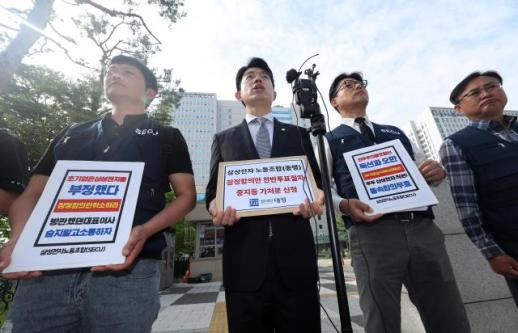 AJP Watch: Union divide and distrust deepen ahead of Samsung Elec vote SEOUL, May 26 (AJP) - The AI windfall powering record earnings and soaring stock prices is increasingly turning into a curse in disguise for Samsung Electronics, as wage negotiations meant to share the rewards of the semiconductor boom instead expose widening internal disparities and threaten the company’s long-cultivated “One Samsung” ethos. Just days before a crucial ratification vote on the tentative wage agreement, divisions between labor groups escalated into open legal conflict Tuesday, deepening uncertainty over whether the deal can stabilize the company’s fractured labor landscape. The Samsung Electronics Co. Union (SECU), a minority union representing primarily employees in the Device eXperience (DX) division — the segment overseeing smartphones and home appliances — filed for an injunction to halt the ongoing vote, arguing that the representative union unfairly stripped thousands of its members of voting rights shortly before the deadline. At the heart of the dispute lies mounting anger over what many employees see as an increasingly skewed compensation structure under the AI-driven semiconductor boom. The proposed agreement would allow some employees in the semiconductor-focused Device Solutions (DS) division to receive compensation packages approaching 600 million won ($438,000), while some research and development staff in non-chip divisions reportedly receive bonuses as low as 6 million won. The staggering disparity has intensified resentment across divisions and accelerated a sharp realignment inside Samsung’s union structure. The current legal standoff unfolded through a rapid and chaotic sequence of events last week that SECU claims exposed serious procedural inconsistencies. According to union officials, the representative union initially invited SECU members to participate in the tentative agreement vote through official emails sent May 20 and May 21. Around the same period, however, SECU experienced a sudden influx of roughly 10,000 new members, swelling its total eligible voting base to approximately 12,000 employees. But shortly after the expansion, the representative union abruptly notified SECU on the evening of May 21 that its members would no longer be granted voting rights. Koo Jeong-hwan, secretary general of SECU, alleged the move reflected fears that the rapidly enlarged minority union could significantly influence the outcome and potentially derail approval of the wage pact. “That itself is a procedural violation,” Koo told AJP. “This situation is really serious.” He argued that denying employees the right to vote represented both an abuse of authority and a breach of basic labor principles. The dispute illustrates how the AI boom is reshaping not only Samsung’s earnings profile but also its internal corporate order. For decades, Samsung maintained a tightly controlled organizational culture built around cohesion, hierarchy and collective identity. But the explosion in AI-related profits within the semiconductor business is increasingly fragmenting that structure into competing constituencies divided by business lines, compensation gaps and perceptions of unequal recognition. The tentative wage deal itself had initially been viewed as a breakthrough after management narrowly avoided an unprecedented strike that threatened to disrupt the global memory chip supply chain. Instead, the agreement now risks becoming a catalyst for broader distrust across the company. Koo warned that if the vote proceeds without resolving procedural disputes, Samsung could face prolonged legal and operational uncertainty even if the agreement is formally approved. “If the vote is invalidated later, all voting matters from this point would become void and need to be conducted again,” he said. As the Wednesday deadline approaches, the court’s decision on the injunction could determine not only the fate of this year’s wage agreement, but also how Samsung navigates a far more fragmented labor environment in the AI era. 2026-05-26 17:09:52
 -
 Regulators warn of risks over South Korea's first single-stock leveraged ETF SEOUL, May 26 (AJP) - Financial authorities issued an investor warning as South Korea prepares to permit the listing of "single-stock leveraged ETFs and ETNs" for the first time in the domestic market. As these instruments track two times the daily performance of specific individual stocks—Samsung Electronics and SK hynix — the Financial Services Commission (FSC) and the Financial Supervisory Service (FSS) warned that they can conversely accelerate catastrophic losses. According to the FSC and the FSS, single-stock leveraged products will debut on the domestic stock market starting Wednesday. For ETFs, eight asset management firms will roll out a total of 16 products, while Mirae Asset Securities will introduce two ETN products. The underlying assets are strictly limited to Samsung Electronics and SK hynix. These products are structured to track two times the daily return of a specific stock. If Samsung Electronics shares advance 5 percent in a single day, the corresponding ETF would surge approximately 10 percent; conversely, if the stock sheds 5 percent, the ETF would plunge roughly 10 percent. Given the daily price fluctuation limit of plus or minus 30 percent, an investor could theoretically face a maximum loss of up to 60 percent in a single day, making them unsuitable for investors with a low capacity to absorb losses. These new instruments also lack the benefit of diversification. Rather than spreading risks across multiple shares like traditional KOSPI 200 ETFs, these products invest exclusively in a single stock. Consequently, negative catalysts such as a downturn in the semiconductor cycle or an earnings shock could cause the prices of these leveraged products to fluctuate violently. In global markets, single-stock leveraged products have frequently exhibited extreme price swings, often utilized as short-term speculative tools. In a stark historical precedent, the Leverage Shares 3x Long IONQ ETP on the London Stock Exchange saw its net asset value effectively wiped out after its underlying asset plummeted 39 percent in a single day. Similarly, from last year through early this year, while Tesla shares advanced approximately 18 percent, a corresponding two times leveraged ETF suffered a 20 percent loss due to repeated volatility eroding returns over time. This discrepancy stems from the compounding error, often referred to as "volatility drag." If an underlying stock's price repeatedly fluctuates over a prolonged period, the cumulative return can diverge significantly from the two times return expected by investors. For instance, if a two times leveraged product surges 60 percent on the first day and plunges 60 percent on the second, the cumulative loss will widen to 36 percent. Another risk factor is premium/discount volatility, where the market trading price of an ETF deviates excessively from its actual net asset value (NAV) if investment demands heavily concentrate on one side. The FSS urged investors to verify tracking error rates via the Korea Exchange (KRX) platform prior to trading. To mitigate speculative frenzies, authorities have raised entry barriers. New investors must complete an additional two-hour online preparatory training course and maintain a minimum base deposit of 10 million won (US$6,667). According to financial authorities, approximately 93,000 investors completed the advanced training between April 28 and May 21. The regulatory emphasis on caution is deeply intertwined with the recent boom in leveraged trading, driven by retail demand for high-risk foreign tech ETFs. While authorities permitted these local products to resolve regulatory asymmetries with overseas markets, they remain vigilant against excessive speculation. The FSS stated that it plans to intensively monitor trading trends and tracking errors moving forward, while cracking down on deceptive marketing that could mislead retail investors. Market observers also note that retail investors' appetite for high-risk instruments could expand further, driven by the recent investment frenzy surrounding semiconductors and artificial intelligence. The so-called "National Growth Fund" — a goverment-supported fund investing in strategic, high-tech sectors such as semiconductors, AI, and robotics — began its sales last Friday with a total volume of 600 billion won ($400 million). 2026-05-26 17:09:15
 -
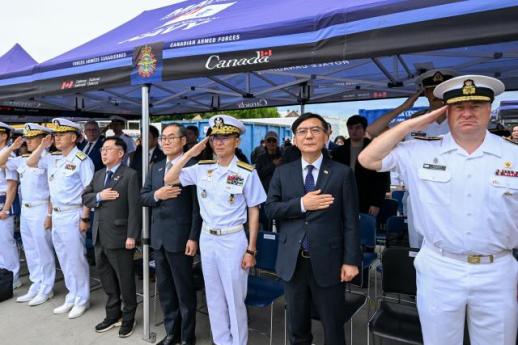 Korean submarine scores high with Canadian crew ahead of Ottawa decision SEOUL, May 26 (AJP) - The Canadian crew after their first onboard journey aboard a South Korean submarine had only high praise for the ROKS Dosan Ahn Chang-ho, boosting Team Korea’s momentum in the final stretch of Ottawa’s multibillion-dollar competition to replace its aging submarine fleet. The KSS-III-class diesel-electric submarine arrived at Canadian Forces Base Esquimalt on Saturday after a nearly two-month voyage from Jinhae in southern Korea, marking the first trans-Pacific deployment by a South Korean submarine. The vessel was officially welcomed Monday before scheduled joint exercises with the Royal Canadian Navy and allied forces. The visit comes at a crucial stage in Canada’s Canadian Patrol Submarine Project, or CPSP, aimed at replacing the country’s aging Victoria-class submarines with up to 12 modern diesel-electric vessels. Glenn Copeland, managing director of Hanwha Defence Canada, described the timing of the submarine’s arrival as significant as Ottawa prepares to narrow the field. Hanwha Ocean, the maker of ROKS Dosan, is leading the Korean consortium against the European rival led by Germany’s ThyssenKrupp Marine Systems, with the Canadian government expected to make its choice as early as next month. “I think this is the best conventional submarine available in the world today,” Copeland said, arguing that the KSS-III meets Canadian operational requirements in range, endurance, size and weapons capability. “We feel very positive about our chances,” he added. “Right now, if you ask anyone, they will say it is 50-50. But there are clearly factors working in our favor.” The Dosan Ahn Chang-ho departed Jinhae on March 25 and traveled roughly 15,000 kilometers across the Pacific, stopping in Guam and Hawaii for supplies. Two Canadian sailors boarded the submarine in Hawaii on May 7 and sailed aboard the vessel to Victoria, giving Ottawa a rare firsthand opportunity to evaluate Korean submarine operations at sea. Their reactions were notably enthusiastic. Petty Officer 2nd Class Jake Dixon compared the experience to “buying a brand-new Tesla and then you’re coming out of a ’99 Honda Civic,” according to local media reports. Lieutenant-Commander Brittany Bourgeois, who also spent about two weeks aboard the submarine, praised the vessel’s condition and spacious interior. “Being on board a modern submarine really opened our eyes to the possibilities ahead of us,” she said. The positive reviews could strengthen South Korea’s standing as Canada grapples with severe operational strain in its submarine fleet. Ottawa currently operates four Victoria-class submarines purchased secondhand from Britain in 1998, but reports indicate only one remains operational while the others are undergoing repairs. Rear-Admiral David Patchell, commander of Canada’s Pacific fleet, recently told CBC that the country needed replacement submarines “yesterday.” “We’ve operated submarines for more than 100 years, but we have not truly been a submarine-owning nation,” Patchell said. “With 12 modern submarines, Canada can become one.” The contest has increasingly evolved beyond submarine specifications into a broader strategic and industrial competition. Hanwha Ocean has sought to distinguish itself through wider economic cooperation proposals, including an equity investment in Canadian space startup Reaction Dynamics and a $345 million steel infrastructure project tied to Algoma Steel. Canadian media have generally viewed the Korean bid favorably compared with TKMS’ proposal centered on German launch infrastructure technology. Still, analysts note that the KSS-III’s strengths could also pose questions for Canadian planners. Its vertical launch system and heavy strike capability — developed in response to threats from North Korea and broader regional tensions involving China — may exceed the Royal Canadian Navy’s current operational requirements, which do not include ballistic or cruise missile submarine missions. By contrast, TKMS’ Type 212CD is widely viewed as highly suitable for Arctic operations because of its smaller size, maneuverability and ability to operate in shallow and ice-covered waters across Canada’s Arctic archipelago. But the German bid faces mounting concerns over delivery schedules. TKMS already has a substantial production backlog tied to orders from Germany, Norway, Singapore, Türkiye and India, leading some Canadian defense analysts to question whether deliveries could realistically meet Ottawa’s target timeline in the mid-2030s. For South Korea, the Pacific crossing itself may prove strategically significant beyond the Canadian bid. The deployment demonstrated not only the endurance and operational reliability of the KSS-III platform, but also Seoul’s growing ambition to compete directly with established European defense manufacturers in high-end naval procurement markets increasingly shaped by geopolitical competition and supply-chain reliability. A South Korean Navy official said the Dosan Ahn Chang-ho is expected to participate in joint exercises with Canadian forces in early June, though exact schedules have not been disclosed. 2026-05-26 16:57:59
 -
 KOSPI touches down above 8,000 for first time amid flat Asian market SEOUL, May 26 (AJP) -South Korean stocks closed above the 8,000 mark for the first time Tuesday as investors rushed to compensate for Monday's market holiday and price in the broader Asian rally fueled by hopes for a reopening of the Strait of Hormuz and renewed momentum in AI-related shares. The benchmark KOSPI surged 2.6 percent to close at 8,047.50 after climbing as high as 8,131.15 during the session. The index stayed above the 8,000 threshold throughout the day and passed the test above the new four-digit territory, a yawning stretch from the mid-2,000 range just a year ago. Institutional investors led the advance, purchasing a net 911.1 billion won ($605.5 million) worth of shares on the main bourse. Retail investors sold a net 616.7 billion won, while foreign investors offloaded 184.1 billion won after reversing from earlier buying and extending their recent selling streak. The junior KOSDAQ rose 1.0 percent to 1,172.50 after touching an intraday high of 1,205.12. Retail investors bought a net 224.2 billion won, while foreign and institutional investors sold 148.6 billion won and 33.7 billion won, respectively. Semiconductor heavyweights drove the broader market higher as investors reinforced bets that South Korea's AI-led chip rally still has room to run. Samsung Electronics rose 2.2 percent to close at 299,000 won, while SK hynix jumped 5.7 percent to 2,052,000 won, reinforcing expectations that the two stocks may settle into a new trading range after breaking major price milestones. Gains spread across the semiconductor supply chain. Samsung Electro-Mechanics surged 17.3 percent to 1,572,000 won, while DB HiTek soared 21.8 percent on expectations for passive fund inflows tied to its upcoming inclusion in the KOSPI 200 index. AI-related component makers also rallied sharply. Samwha Capacitor hit the daily trading limit with a 30 percent jump as investors bet on stronger demand for multilayer ceramic capacitors, or MLCCs, used in AI servers and advanced electronics. LG Innotek climbed 23.6 percent to 1,096,000 won, while Samwha Electronics rose 29.9 percent. Shipbuilders were another major source of strength as expectations for expanding global defense and energy infrastructure spending continued lifting the sector. Hanwha Ocean advanced 10.2 percent to 134,700 won, while HD Hyundai Heavy Industries gained 9.6 percent. Automakers also joined the rally, with Hyundai Motor Company rising 5.2 percent to 689,000 won. LG Electronics added 1.1 percent to 239,500 won. Some large-cap shares, however, lagged the broader market. POSCO Holdings fell 1.2 percent to 442,000 won, while Naver slipped 1.5 percent to 200,000 won. Samsung SDI declined 0.8 percent to 642,000 won and SK Square edged down 0.3 percent to 1,181,000 won. The Korean won strengthened as risk appetite improved, closing at 1,504.30 per dollar, up 12.90 won from the previous session. The currency opened at 1,515.0 won and briefly weakened to around 1,516 won before reversing course during afternoon trading. Still, foreign selling in equities suggested overseas investors have yet to fully return despite the record-setting rally. Foreigners were net buyers earlier in the session before turning sellers shortly before the close, according to market data. Oil prices also rebounded Tuesday after plunging the previous session, reflecting lingering caution over Middle East developments despite growing optimism surrounding U.S.-Iran negotiations. Brent crude traded above $98 per barrel, while West Texas Intermediate hovered near $91.60. Prices remained below recent highs as markets monitored whether diplomacy could eventually reopen the Strait of Hormuz. Regional markets were mixed. Japan's Nikkei 225 slipped 0.3 percent after hitting a record high in the previous session, while China's Shanghai Composite also fell 0.3 percent. Hong Kong equities edged higher, supported by semiconductor-related shares. 2026-05-26 16:54:22
 -
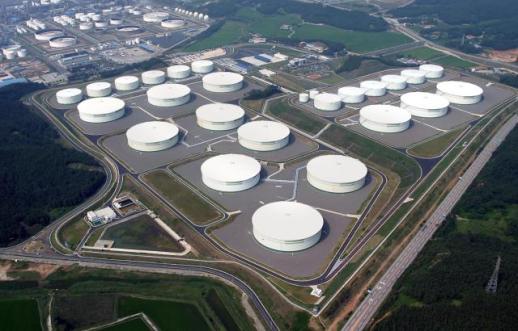 Korea holds off on IEA oil release, eyeing August crunch SEOUL, May 26 (AJP) - South Korea is holding back on releasing its share of the International Energy Agency's record emergency oil stockpile, opting to preserve the buffer for a potentially graver supply crunch in August as the Strait of Hormuz remains effectively shut. With the June 9 deadline for Seoul's pledged contribution just two weeks away, Yang Ki-wook, director general for industrial resources security at the Ministry of Trade, Industry and Resources, told reporters Tuesday at the Sejong government complex that the country sees little immediate need to tap its reserves. The IEA in March coordinated the largest emergency stock release in its 52-year history, with its 32 member states agreeing to put 400 million barrels on the market to blunt the supply shock from the U.S.-Israel-Iran conflict. South Korea's quota stands at 22.46 million barrels, or about 5.6 percent of the total. Officials are betting that the worst is yet to come. Although recent diplomatic overtures between Washington and Tehran have stirred cautious hopes of a ceasefire, a prolonged closure of the Strait of Hormuz could leave Korean refiners scrambling for crude from August onward, when domestic stockpiles are projected to thin sharply. IEA Executive Director Fatih Birol warned that global oil markets could slip into a "red zone" in July or August as inventories drain and summer travel demand swells, with Middle Eastern barrels still largely absent from the market. "Government stockpiles are a tool for the worst-case scenario, so we believe a release should be considered cautiously, keeping the card in hand for what may come," Yang said, adding that domestic refiners have responded positively to the existing swap arrangement, under which the government lends out reserves against verified overseas purchases. Seoul is also reshaping its supply map. Non-Middle Eastern crude is projected to account for 51.5 percent of imports from May through July, up sharply from 30.9 percent a year earlier — a shift Yang called unprecedented and a strategic imperative for the country's resource security. 2026-05-26 16:53:23
 -
 N. Korea tests mixed-fire tactics as Xi's possible Pyongyang trip looms SEOUL, May 26 (AJP) - North Korea fired several close-range ballistic missiles and artillery rockets into the Yellow Sea on Tuesday, South Korea’s military said, amid speculation that Chinese President Xi Jinping could visit Pyongyang soon. The Joint Chiefs of Staff said it detected various types of projectiles, including close-range ballistic missiles, fired from the area of Jongju, North Pyongan Province, toward waters off the North’s west coast at around 1 p.m. The close-range ballistic missiles flew about 80 kilometers, and the military believes North Korea also fired artillery rockets, a type of multiple rocket launcher system, along with them. It is unusual for North Korea to fire close-range ballistic missiles and artillery rockets at the same time. The launch is seen as an apparent attempt to demonstrate its ability to evade air defenses and conduct mixed-fire strikes. Military authorities are also keeping open the possibility that loitering munitions, or so-called suicide drones, may have been used in the launch. Officials reportedly detected trajectories on radar that differed from those of typical ballistic missiles or artillery rockets, raising the possibility that a new weapons system was involved. The military said further analysis is needed to make a precise assessment. The launch marked North Korea’s first ballistic missile firing in 37 days and its eighth such launch this year. On April 19, North Korea fired several short-range ballistic missiles from the eastern coastal area of Sinpo, South Hamgyong Province, toward the East Sea, claiming they were equipped with cluster warheads. North Korean state media said Kim Jong-un oversaw the launch of five upgraded Hwasong-11 Ra tactical ballistic missiles, which struck a target zone 136 kilometers away and covered an area of about 12.5 to 13 hectares. The test was aimed at assessing new warheads carrying cluster bombs and fragmentation mines. The South Korean Unification Ministry later noted that an unusually large number of commanders from North Korean frontline units were present at the test, saying this appeared to underscore Kim’s push to expand tactical missile deployments against South Korea. Tuesday’s launch drew attention as it came amid speculation that Xi could visit North Korea as early as this week. If Xi’s visit takes place following recent U.S.-China and China-Russia summits, it would be Xi’s first trip to North Korea since June 2019. “The government once again calls on North Korea to respond to our peace policy and efforts to reduce tensions,” South Korean Foreign Ministry spokesperson Park Il said at a briefing Tuesday. Park said South Korea will continue pursuing a phased and pragmatic approach to resolving the North Korean nuclear issue while maintaining close coordination with the international community. 2026-05-26 16:07:04