
Journalist

Andre Lim
-
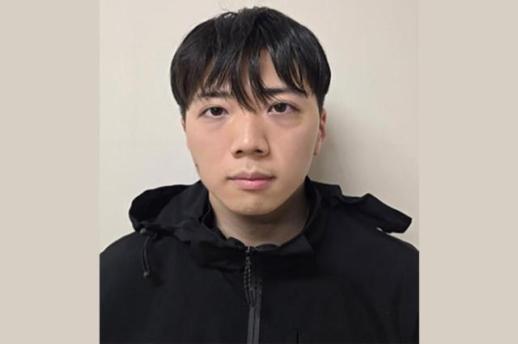 Identity of Suspect in Gwangju High School Murder Case Revealed Jang Yoon-ki, a 23-year-old unemployed man, has been identified as the suspect in the murder of a high school girl and the attempted murder of a male student in Gwangju. According to Yonhap News Agency, the Gwangju Police Agency released Jang's personal information, including his photograph and date of birth, on their website on May 14. The released photo is a mugshot taken at the time of his arrest. The police had decided to disclose his identity on May 8, but Jang did not consent, leading to a five-day waiting period before the information was made public at 7 a.m. today. During the waiting period, Jang's identity circulated on social media. This marks the first time that the identity of a suspect in a violent crime has been disclosed in the Gwangju area. Born in 2002, Jang was unemployed at the time of his arrest. He is accused of fatally stabbing a 17-year-old high school sophomore, identified as A, at around 12:11 a.m. on May 5 in a secluded walkway in the Wolgye-dong area of Gwangju. He is also charged with attacking another 17-year-old student, identified as B, with a weapon. The police plan to transfer Jang to the prosecution later today.* This article has been translated by AI. 2026-05-14 07:57:46
 -
 KOSPI Hits 8000: Is Now the Time to Invest in Stocks? The KOSPI index surged to 8000 early in the trading session, drawing significant interest from individual investors. Contrary to concerns over high interest rates and economic recession, the domestic stock market has shown signs of recovery, particularly in the semiconductor and artificial intelligence (AI) sectors. Foreign investment is flowing back into major semiconductor stocks like Samsung Electronics and SK Hynix, rapidly changing market sentiment. Analysts note that the expansion of AI server investments and expectations for a recovery in the semiconductor industry are fueling a growing sense of "FOMO" (fear of missing out) among investors, prompting discussions about whether now is the right time to enter the market. Many investors are expressing that it feels wasteful to keep money only in savings accounts. Until last year, interest rates of 3-4% on deposits were seen as strong investment alternatives, but the recent rebound in the stock market is prompting a shift of funds back into equities. However, experts caution against getting swept up in the current market enthusiasm. They point out that the recent gains are largely concentrated in specific sectors like AI and semiconductors, and uncertainties remain regarding the pace of corporate earnings recovery and the global economic situation. A resurgence of "debt investment" among individual investors is also viewed as a risk factor. There are concerns that the increase in margin trading, which has been observed during previous stock market rebounds, could reoccur. In online investment communities, comments like "This time, it will really hit 3000" and "If you don't buy now, it will be too late" are becoming increasingly common. The real estate market is also showing subtle signs of change. In key areas of Seoul, the number of urgent sales is decreasing, and some complexes are experiencing a rebound in asking prices. However, since transaction volumes have not surged dramatically, many in the market believe it is still too early to declare a full recovery. Conversely, there is a growing sentiment among younger investors in their 20s and 30s to shift their focus from real estate to U.S. ETFs or dividend stocks. This trend indicates a stronger inclination towards cash flow based on salary and long-term investments, rather than taking on excessive debt to purchase homes as in the past. A securities industry insider noted, "Interest in investment strategies that focus on long-term asset growth while enduring volatility is definitely increasing, rather than seeking quick profits as in the past. Particularly, investors in their 20s and 30s are increasingly considering factors like actual residence, retirement, and cash flow simultaneously."* This article has been translated by AI. 2026-05-14 07:55:22
 -
 Ok-soon Requests Editing Amid Controversy and Pregnancy Rumors on 'I Am Solo' Ok-soon, a participant in the 31st season of the ENA·SBS Plus dating program 'I Am SOLO', has reportedly requested edits to her broadcast appearances, sparking a flurry of speculation and rumors online. Recent posts on various online communities have circulated claims from an anonymous workplace forum. One post alleges that "Ok-soon is pregnant and has been diagnosed with a nervous breakdown, requiring complete rest." It further claims that she requested edits from the production team, stating, "If there are any issues with the baby, I will hold you responsible," and that her initial request was denied until she mentioned drastic measures, leading to her request being accepted. Another post discusses the final couple combinations from 'I Am SOLO' Season 31, mentioning Young-ho & Ok-soon, Young-sik & Jeong-hee, and Gyeong-soo & Young-sook. However, these claims remain unverified and are based on speculation circulating online prior to the broadcast. As these posts gained traction, reactions from netizens followed. Some expressed skepticism, stating, "Did she come on the show just to find a doctor husband and edit the show to her liking?" and "Soon-ja was ostracized, and now this is the outcome." Others noted, "She must have been very happy before the show, but now the atmosphere has completely changed." The controversy has intensified, intertwining with previous discussions around the 'behind-the-scenes' controversy. During the broadcast, a scene showed Ok-soon conversing with Young-sook and Jeong-hee while excluding Soon-ja, prompting viewers to question whether there was an atmosphere of exclusion or pressure against a specific participant. Additionally, an unreleased video from Season 31, shared on the YouTube channel 'Chonjang Entertainment TV', reignited the debate as it featured Ok-soon making remarks to Soon-ja like, "Why does it feel like a funeral?" and "Are you jealous?" This video was removed just two days after its release. Recently, some online communities have suggested that the production team may consider completely editing out parts of future broadcasts, leading to ongoing speculation among viewers. As of now, the production team has not issued any official statements regarding the rumors circulating online. 2026-05-14 07:50:53
 -
 KOSPI Surge Raises Concerns for Inverse ETFs as Prices Plummet ◆Major News from Ajou Economics ▷"If KOSPI Hits 12,000, Will Inverse ETFs Drop to Zero?"... Inverse ETFs Face Delisting Risk Amid KOSPI Rally - According to the Korea Exchange on May 13, prices of KOSPI 200 leveraged ETFs, including KODEX 200 Futures Inverse 2X, TIGER 200 Futures Inverse 2X, RISE 200 Futures Inverse 2X, and KIWOOM 200 Futures Inverse 2X, have all fallen to the 100 won range. Only PLUS 200 Futures Inverse 2X remains above 200 won. - Following KOSPI's historic breach of 7,000 points on May 6, the index surged to nearly 7,999 points on May 12, continuing its strong upward trend. This rapid increase has led to significant losses for leveraged ETFs betting on a decline in the index. A year ago, these products had total net assets exceeding 5 billion won, but many are now nearing delisting criteria, except for KODEX and TIGER products. - Industry experts suggest that if the KOSPI's upward trend continues for an extended period, the prices of leveraged ETFs could theoretically approach zero due to the compounding negative effects characteristic of inverse leveraged ETFs during rising market conditions. - However, asset management firms are not currently considering delisting, citing substantial demand from individual investors. - Market analysts attribute the heightened caution regarding KOSPI's overheating to factors such as Middle East risks, valuation pressures, and the 'Sell in May' sentiment. They explain that funds are flowing into leveraged ETFs as investors bet on a potential correction following the recent rapid rise. ◆Key Reports ▷Domestic Risks Ease Amid Hopes for U.S.-China Talks, KOSPI Could Reach 8,000 with Just 2% Gain - On May 13, the semiconductor sector rebounded just one day after experiencing a decline due to domestic risks, contributing to a reversal in KOSPI's fortunes. The ongoing labor dispute at Samsung Electronics remains a concern, but government officials have assured that a strike is unacceptable and that they will support negotiations to resolve the issue. - The previously raised issue of national dividend payments has been dismissed as a personal opinion, leading to a calming of domestic risks. Despite foreign investors continuing to sell large-cap semiconductor stocks for five consecutive trading days, the influx of bargain-hunting by institutions and individual investors has driven the semiconductor sector's recovery, supporting the index's rise. - A high-level meeting is scheduled for May 14 in Beijing between U.S. Treasury Secretary Scott P. Hensarling and Chinese Vice Premier He Lifeng to coordinate the agenda for a summit between President Donald Trump and Chinese President Xi Jinping, who is expected to request greater access to the Chinese market. The anticipated attendance of Jensen Huang, CEO of NVIDIA, who was previously rumored to be absent, has further fueled market optimism. ◆Major Announcements After Market Close (May 13) ▷Hyper Corporation Announces 20 Billion Won Shareholder Allocation Capital Increase ▷HLB Pharmaceuticals Announces 120 Billion Won Shareholder Allocation Capital Increase ▷Samyang Foods Reports Record Q1 Earnings Driven by 'Fire Noodle' Craze, Operating Profit Up 32% ▷Korea Electric Power Corporation Reports Q1 Operating Profit of 3.7842 Trillion Won, Up 0.8% Year-on-Year ▷Emart Reports Q1 Operating Profit of 178.3 Billion Won, Up 11.9% Year-on-Year ▷CJ Logistics Reports Q1 Operating Profit of 92.1 Billion Won, Up 7.9% Year-on-Year ◆Fund Trends (As of May 12, Excluding ETFs) ▷Domestic Equity: 9.6 Billion Won ▷Overseas Equity: -41.2 Billion Won ◆Key Schedule for Today (May 14) ▷UK: Q1 GDP Growth Rate, Industrial Production (March) ▷US: Retail Sales (April)* This article has been translated by AI. 2026-05-14 07:48:00
 -
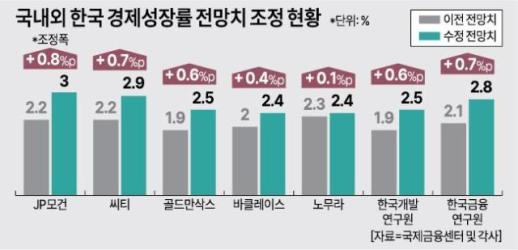 Korean Economy Expected to Improve Amid Semiconductor Boom The Bank of Korea will hold a monetary policy meeting on May 28 to announce its revised economic outlook. This will be the first forecast since the economy exceeded expectations in the first quarter, drawing significant attention. With a clear structural improvement in the semiconductor sector, there is keen interest in how much the Bank will raise its annual economic growth forecast for this year. According to the Bank of Korea, the initial forecast for the first quarter's real GDP growth was around 0.9%. However, the actual growth rate was 1.7%, nearly double the Bank's projection. Analysts suggest that even if the remaining quarters see zero growth, an annual growth rate in the 2% range is still likely. Major domestic research institutions and the government have already adjusted their growth expectations upward. The Korea Development Institute (KDI) raised its growth forecast from 1.9% to 2.5%, an increase of 0.6 percentage points. The Korea Financial Research Institute also revised its estimate from 2.1% to 2.8%. Domestic securities firms, including KB Securities and Samsung Securities (2.7%), Meritz Securities (2.6%), NH Investment & Securities (2.5%), Hana Securities (2.4%), and Hyundai Motor Securities (2.3%), expect growth to be stronger than previously anticipated. The driving force behind this growth is undoubtedly the semiconductor industry. The demand for high-bandwidth memory (HBM) and server memory continues to expand due to the proliferation of artificial intelligence (AI), contributing to record-high current account surpluses. In March, the current account surplus reached $37.33 billion, significantly surpassing the previous record of $23.19 billion in February. A Bank of Korea official stated, "Companies are increasing capital investments, and imports of capital goods are also rising significantly. Given the trends in semiconductor export prices and volumes, the semiconductor sector is not expected to face any major disruptions." Global market perspectives are even more optimistic than domestic forecasts. Recently, the average growth forecast from eight major investment banks has risen to around 2.4%. JP Morgan provided the most optimistic estimate, increasing its projection from 2.2% to 3.0%, while Citigroup (2.9%) and Goldman Sachs (2.5%) raised their forecasts by 0.7 and 0.6 percentage points, respectively. Barclays also adjusted its estimate from 2.0% to 2.4%. There is speculation that the Bank of Korea may raise its growth forecast this year. On May 11, Deputy Prime Minister and Minister of Economy and Finance Koo Yun-cheol indicated that, buoyed by the semiconductor boom and rising exports, the economic growth rate would likely exceed the target of 2.0%. Historically, the Bank has adjusted its growth forecasts upward following unexpected growth in the first quarter. For instance, after the first quarter of 2024 saw a GDP growth rate of 1.30%, well above the expected 0.50%, the Bank raised its annual growth forecast from 2.1% to 2.5% in its May revision. However, inflation remains a significant concern for the Bank of Korea. Ongoing supply-side pressures due to the prolonged conflict in the Middle East are contributing to rising inflation. The consumer price inflation rate has shown a sharp upward trend, with increases of 2.0% in January, 2.0% in February, 2.2% in March, and 2.6% in April, all significantly above the Bank's inflation target of 2.0%. Lee Dong-won, head of the Bank's Economic Statistics Division, noted, "As inflationary pressures increase, there are downward factors affecting growth. The final growth trajectory will depend on the trends in semiconductor exports and the effectiveness of government policies."* This article has been translated by AI. 2026-05-14 07:46:08
 -
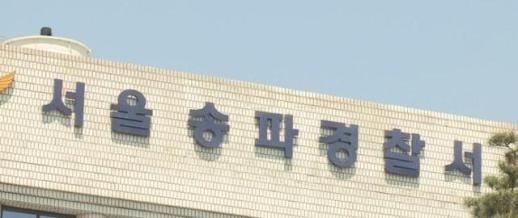 Search Continues for Missing Woman in Bukhansan National Park A search is underway for a woman in her 50s who has been missing for nearly a month after hiking in Bukhansan National Park. According to Yonhap News on May 13, the Songpa Police Station in Seoul received a report on April 17 at 11:28 a.m. stating, "I think my wife is missing," and has been searching for Kim, 52, since then. Kim's husband reported that he received a call from her workplace around 9 a.m. on the day she went missing, informing him that she had not shown up for work. After checking the area around their home with their son, he promptly contacted the police. Police reviewed closed-circuit television footage and confirmed that Kim was seen around noon that day ascending from the Doseonsa Temple in Gangbuk District toward Yongammun. However, her whereabouts have remained unknown since then. Authorities, including police and fire departments, are continuing their search efforts in the Bukhansan area. Online users have expressed their concerns, saying, "I hope she is found safe," and "It's unfortunate that there has been no trace of her for nearly a month during a weekday hike." Others commented on the challenging terrain of Bukhansan, emphasizing the importance of safety for search personnel, and expressed sympathy for her family, stating, "How anxious must her family be?" Many also noted the dangers of hiking alone, with comments like, "It’s alarming that an adult woman has been missing for so long," and "I hope clues are found soon," as well as suggestions for improving tracking systems for hikers.* This article has been translated by AI. 2026-05-14 07:24:45
 -
 U.S. and South Korea Hold 28th Integrated Defense Consultative Meeting The South Korean Ministry of National Defense and the U.S. Department of Defense announced on May 14 that they held the 28th Integrated Defense Consultative Meeting (KIDD) in Washington, D.C., on May 12 and 13. The meeting was attended by Hong Chul, Director of Defense Policy, and John Nod, Deputy Assistant Secretary of Defense for Indo-Pacific Security Affairs, along with James Finch, Acting Deputy Assistant Secretary for East Asia, who served as the chief representatives from both sides. Key officials from the defense and diplomatic sectors of both countries were also present. During the meeting, the two sides evaluated the overall status of defense cooperation within the U.S.-South Korea alliance and exchanged views on policy directions to strengthen the alliance's combined defense posture. The Ministry stated, "Both sides agreed to actively promote cooperation for the implementation of the Joint Fact Sheet on defense matters and the Joint Communiqué from the 57th U.S.-South Korea Security Consultative Meeting (SCM) held last November." Additionally, the KIDD was assessed as providing a crucial foundation for advancing practical cooperation to further solidify the alliance, with plans to deepen collaboration to achieve common security goals in the Korean Peninsula and the Indo-Pacific region. A key agenda item for this meeting was the transfer of operational control. South Korean Defense Minister An Gyu-baek and U.S. Secretary of Defense Pete Hegseth held a bilateral meeting at the U.S. Department of Defense on May 11, prior to the KIDD. In a press briefing with reporters at the South Korean Embassy in Washington, D.C., the day after the meeting, Minister An stated, "The transfer of operational control based on conditions remains unchanged, with the goal of setting a target year for the transfer to be confirmed by the presidents after the two ministers agree on it during the SCM in November." He also noted, "There are some differing views from the U.S. side." The conditions agreed upon for the transfer of operational control include: 1) military capabilities necessary to lead combined defense; 2) the alliance's comprehensive ability to respond to North Korea's nuclear and missile threats; and 3) a security environment on the Korean Peninsula and in the region that is conducive to a stable transfer. The government is considering setting a target year for the transfer after completing verification related to Full Operational Capability (FOC) in the second phase, with plans to seek approval from the U.S.-South Korea defense ministers during the SCM in October.* This article has been translated by AI. 2026-05-14 07:00:50
 -
 Netanyahu Secretly Visits UAE, Marks Historic Breakthrough in Relations Benjamin Netanyahu, the Prime Minister of Israel, made a secret visit to the United Arab Emirates (UAE) on May 14, during a time of conflict with Iran, according to the Israeli Prime Minister's Office. The office stated that Netanyahu met with Sheikh Mohammed bin Zayed Al Nahyan, the President of the UAE, during his covert trip, which occurred amid the ongoing "Lion's Roar" military operation. This visit is seen as a significant breakthrough in the relationship between Israel and the UAE. A source familiar with the discussions told Reuters that Netanyahu and Sheikh Mohammed met on March 26 in Al Ain, an oasis city near the Oman border, and their talks lasted several hours. The source also revealed that David Barnea, the head of Mossad, visited the UAE at least twice during the conflict to coordinate military operations. The UAE recognized Israel as a state and established diplomatic relations in 2020 through the so-called Abraham Accords, alongside Bahrain. Since then, the two countries have expanded their cooperation across various sectors, particularly in security. Following the outbreak of war, Israel deployed Iron Dome missile defense systems and personnel to the UAE, which has been under heavy fire from Iran. This marks the first time Israel's Iron Dome has been stationed abroad.* This article has been translated by AI. 2026-05-14 06:25:05
 -
 Corporate Loans Surge by 21 Trillion Won This Year, Testing Bank Stability As of April this year, the outstanding balance of corporate loans at South Korea's five major banks has increased by over 21 trillion won, nearing last year's total annual increase. This surge is attributed to the government's tightening of household loan regulations and a push for productive finance, prompting banks to significantly increase their corporate loan portfolios. However, the simultaneous rise in both loan balances and delinquency rates amid fierce competition in corporate finance has raised concerns about the urgent need for a balance between growth and risk management.According to the financial sector, as of the end of April, the outstanding balance of corporate loans at KB Kookmin, Shinhan, Hana, Woori, and NH Nonghyup banks reached 866.646 trillion won, an increase of 21.3392 trillion won compared to the end of last year. Following a rise of 5.4449 trillion won in March, this marks the second consecutive month of increases exceeding 5 trillion won, bringing the total increase within just four months close to last year's annual figure of 24.1029 trillion won. As of May 11, the corporate loan balance continued to rise, reaching 867.1478 trillion won.In contrast, the outstanding balance of household loans at these five banks decreased by 3.821 billion won to 767.296 trillion won as of the end of last month, reflecting a contraction. This decline is interpreted as a result of reduced loan demand following the government's management policies and rising interest rates after the Middle East conflict.The competition among banks to attract corporate loans has intensified, leading to a reversal where corporate loan interest rates are now lower than those for household loans. Typically, corporate loans carry higher interest rates due to the greater risk of default. However, since the government emphasized 'productive finance' at the end of last year, the trend has shifted, with corporate loan rates falling below household loan rates.According to the Bank of Korea, the average interest rate for corporate loans at domestic deposit banks was 4.14% in March, down from 4.2% in February. In contrast, the interest rate for household loans rose to 4.51%, an increase of 0.06 percentage points from the previous month.Industry analysts predict that the reversal of household and corporate loan rates is likely to persist for the time being, as banks solidify their focus on expanding corporate loans in line with the government's clear policy direction.However, there are concerns that aggressive expansion of corporate loans may increase the burden of stability management for banks. The simultaneous rise in loan volumes and delinquency rates suggests that the expansion could lead to an increase in non-performing assets for banks.In fact, the average delinquency rate for corporate loans at the five major banks rose to 0.46% at the end of the first quarter, a 2.5-fold increase from 0.19% at the end of 2021. The delinquency rate for the Industrial Bank of Korea, which has a significant proportion of corporate clients, jumped from 0.28% to 0.98% during this period. Notably, the delinquency rate for small businesses is rising even faster, averaging 0.57% at the five major banks and 1.42% at regional banks. This trend is attributed to weakened debt repayment capabilities among companies amid sluggish domestic demand and geopolitical risks stemming from the Middle East.A financial sector official stated, "Banks with a high proportion of small business loans may face increased difficulties in loan management if the economic situation worsens. Given that corporate loans generally have higher delinquency rates and larger volumes compared to household loans, managing loan quality will become a new challenge for the banking sector."* This article has been translated by AI. 2026-05-14 06:21:31
 -
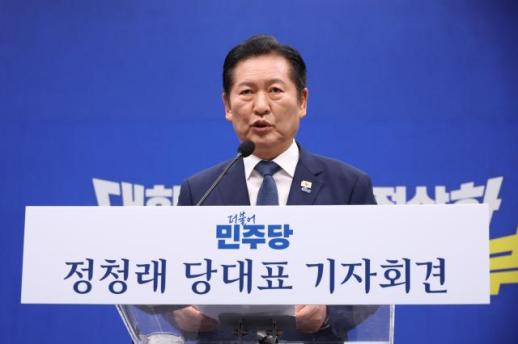 Election Outlook: Seoul's Vote Key Amid Strong Ruling Party Support With just 20 days until the local elections on June 3, political experts are identifying Seoul, Busan, and Daegu as key battlegrounds. The outcome of the Seoul mayoral race, in particular, is expected to significantly influence the political landscape going forward. On May 14, Ajou Economics surveyed six experts regarding their predictions for the gubernatorial elections, all of whom forecasted an advantage for the ruling Democratic Party. Predictions varied, with some experts suggesting the party would win in 9 out of 16 districts, while others anticipated victories in as many as 15 districts. Initially, the Democratic Party was expected to achieve a decisive victory, leveraging the early support ratings for the administration of Lee Jae-myung and the judgment against the Yoon Suk-yeol government. However, recent analyses indicate that even experts are uncertain about the election results, which have entered a fog of unpredictability. Major Battlegrounds: Seoul, Busan, and Daegu… Experts Predict Ruling Party Majority Experts unanimously agree that Seoul is the most critical battleground in this election. The city holds symbolic significance as the capital, and both the Seoul mayor and Gyeonggi Province governor are seen as stepping stones to higher office. Additionally, Seoul was won by the People Power Party four years ago, intensifying the competition between the two parties. The Democratic Party has nominated Jeong Won-oh, the mayor of Seongdong District, while the People Power Party has put forward incumbent Mayor Oh Se-hoon. Eom Kyung-young, director of the Era Spirit Research Institute, stated, "For the People Power Party, even if they do not achieve a majority in the gubernatorial races, winning in Seoul would be considered a success." Jo Sung-joo, head of the Political Development Institute, added, "The Democratic Party must reclaim Seoul to truly claim victory in the local elections," noting that the People Power Party would be evaluated positively if they can retain Busan, Daegu, and Gyeongnam. The mayoral race in Daegu features Democratic Party candidate Kim Boo-kyum, a former prime minister, against the People Power Party's Choo Kyung-ho, a former economic minister. The Busan mayoral race includes former lawmaker Jeon Jae-soo from the Democratic Party and incumbent Mayor Park Hyung-jun from the People Power Party, both considered major contests. Political analyst Park Sang-byeong remarked, "I see Seoul, Busan, and Daegu as battlegrounds. The election outcome could hinge on a margin of 3 to 5 percent in vote share," adding that significant mistakes in the lead-up to the election could alter the results. Jo Sung-joo also identified Seoul, Busan, and Daegu as key battlegrounds. Experts generally predict that the Democratic Party will win more than half of the 16 gubernatorial races. However, estimates for the number of Democratic Party winners range from 9 to 15. Park Sang-byeong forecasts a decisive victory for the Democratic Party in 15 districts, while Lee Jong-hoon predicts a worst-case scenario for the People Power Party, estimating a 15 to 1 outcome. Shin Yul, a professor at Myongji University, anticipates the Democratic Party will win in 12 to 13 districts, while Choi Jin, head of the Presidential Leadership Research Institute, expects 13 victories for the party. Conversely, Eom Kyung-young believes the People Power Party will successfully defend its positions in five districts in the Yeongnam region, predicting a 9 to 7 outcome in favor of the Democratic Party. Jo Sung-joo expressed caution regarding predictions for the number of winners. Upcoming Variables: Special Prosecutor and Real Estate Issues… "No Major Impact on Overall Trend" Experts predict that the special prosecutor law proposed by the Democratic Party and real estate issues could become significant variables in the upcoming election. The Democratic Party claims that the prosecution under the Yoon Suk-yeol administration engaged in fabricated investigations and prosecutions, prompting them to propose a special prosecutor law to uncover the truth. The People Power Party, however, argues that the special prosecutor aims to dismiss charges against President Lee Jae-myung and erase crimes. Lee Jong-hoon noted, "The People Power Party candidates are rallying around the special prosecutor issue rather than Jang Dong-hyuk's leadership to consolidate votes," adding that issues such as the recent end of the capital gains tax exemption and how real estate prices will respond could also influence voter sentiment, along with potential last-minute candidate unifications. Shin Yul also pointed out that the special prosecutor could provoke anger among moderate voters, and issues like the long-term holding tax exemption and property taxes could have an impact. He also mentioned that the government's response to recent attacks in the Strait of Hormuz could resonate with voters. Conversely, some experts believe that the issues raised as variables before the local elections are unlikely to significantly alter the overall trend. Choi Jin stated, "While constitutional amendments and special prosecutors are important topics in politics, the election will ultimately be determined by the judgment against Lee Jae-myung and the judgment against Yoon Suk-yeol's supporters," predicting that the 'Yoon Suk-yeol judgment' will have a more substantial effect. Park Sang-byeong added, "While issues like candidate selection controversies or inappropriate remarks are certainly relevant, they are not variables that will significantly impact the election outcome. Mistakes made just before the election could directly affect votes, but as the election approaches, the dynamics can change frequently, so the impact on voter sentiment is likely to be minimal."* This article has been translated by AI. 2026-05-14 06:19:36