
Journalist

Avidan Kent
-
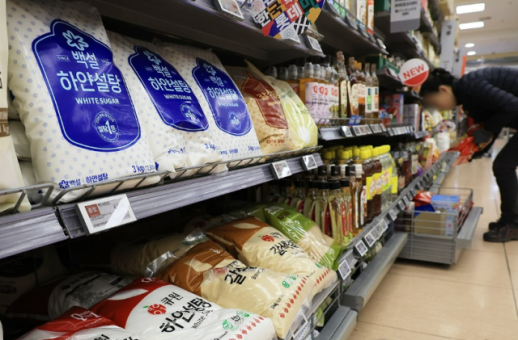 CJ CheilJedang, Samyang executives get suspended prison terms in $3B sugar price-fixing case A Seoul court on Wednesday convicted current and former executives and employees of CJ CheilJedang and Samyang of fixing sugar prices in a case prosecutors valued at about 3 trillion won. A judge handed suspended prison terms to top executives and fined each company 200 million won. Judge Ryu Ji-mi of the Seoul Central District Court sentenced Kim, a former CJ CheilJedang Food Korea chief, and Choi, a former Samyang CEO, to 2 1/2 years in prison, suspended for three years, and fined each 100 million won for violating the Fair Trade Act. Nine other employees from the two companies also received suspended prison terms and fines. Under joint-penalty provisions, the court fined CJ CheilJedang and Samyang 200 million won each. "Based on the defendants’ confessions and corroborating evidence, guilt is recognized," the court said, adding that the conduct "undermined the basic purpose of the law and distorted market order." The judge said that even when collusion occurs in business-to-business transactions, "the ultimate harm can be passed on to consumers" and should not be treated lightly. The court also noted that the companies had previously been investigated by the Fair Trade Commission in a flour price-fixing case and had received relief or reduced penalties through a leniency program, yet similar conduct was repeated. Still, the judge said it was difficult to conclude the companies reaped excessive profits, citing the public nature of international raw sugar prices, the bargaining power of large buyers and price trends for raw sugar. The court also considered that the defendants admitted wrongdoing and expressed remorse, and that some responsible parties had been detained for more than five months. Prosecutors said the defendants agreed in advance on the timing and size of sugar price increases from February 2021 to April last year, limiting competition. Prosecutors put the value of the collusion at about 3.2715 trillion won. Investigators said the companies quickly reflected increases in raw sugar costs in product prices, but limited price cuts when raw sugar prices fell. During the period, sugar prices rose as much as 66.7%, and even after raw sugar prices declined, prices remained about 55.6% higher than before the collusion. At closing arguments, prosecutors sought three years in prison and a 100 million won fine for Kim, and 2 1/2 years in prison and a 70 million won fine for Choi. * This article has been translated by AI. 2026-04-23 11:19:23
 -
 South Korea Defense Ministry: Wartime Command Transfer Timing to Be Set at SCM South Korea’s Defense Ministry said Wednesday that the timing of the transfer of wartime operational control will be decided by the South Korean and U.S. defense chiefs at the Security Consultative Meeting, based on recommendations from the two militaries, and then submitted to the presidents of both countries. Defense Ministry spokesperson Jeong Bit-na made the remarks at a regular briefing in response to a question about comments by U.S. Forces Korea Commander Xavier Brunson at a U.S. House Armed Services Committee hearing. Brunson said a roadmap had been submitted to the Pentagon to meet the required conditions before the second quarter of fiscal 2029 (the first quarter of 2029 by South Korean standards). Jeong said the allies are pursuing the transfer “systematically, stably and consistently” under the “conditions-based OPCON transition plan” agreed in 2015, with the principle that the transfer will take place once mutually agreed conditions are met. She said the ministry has designated this year as “the first year of the OPCON transfer” and is working to complete the transition as soon as possible. She added that Seoul is strengthening cooperation with Washington to complete verification of full operational capability, or FOC, this year and decide the transfer timing. Assessment and verification for the transfer proceed in three stages: initial operational capability (IOC), full operational capability (FOC) and full mission capability (FMC). The FOC assessment has been completed and verification is underway. The ministry said it held the first 2026 meeting to assess progress on the OPCON transfer on Jan. 28, chaired by Defense Minister Ahn. At the time, it said completing FOC verification this year was the key goal as it moves ahead with the transfer within the administration’s term.* This article has been translated by AI. 2026-04-23 11:16:12
 -
 KAIST-Linked Deep Tech Startup Point2 Closes $76M Series B Round The Korea Advanced Institute of Science and Technology said on the 23rd that Point2 Technology, a deep-tech startup co-founded by KAIST professor Bae Hyun-min and alumni, has secured an expanded Series B investment. The company closed the Series B round at about 100 billion won ($76 million). KAIST said it is the first Korea-based startup and the first among South Korean semiconductor companies to receive a strategic investment from Nvidia. KAIST cited Point2 Technology’s “e-Tube” technology as a key driver of the deal. AI data centers must connect thousands of semiconductors, but copper wiring has limits on transmission distance, while fiber optics have been criticized for higher costs and power use. The company’s approach uses radio-frequency signals and plastic waveguides to transmit data, aiming to address both constraints. KAIST said it extends transmission distance about 10 times compared with copper wiring, while cutting power consumption and cost to about one-third of optical cables. It also reduces data-transfer latency, which KAIST said positions it as a core technology for next-generation AI infrastructure. “This is a representative case in which core technology developed at KAIST led to investment from global big tech,” Bae said. He added that KAIST will strengthen support so startups with strong technology can enter global markets more quickly. 2026-04-23 11:15:27
 -
 Platinum Bridge Wraps Up Cosmoprof Bologna 2026, Steps Up K-Beauty Push in Europe Platinum Bridge, which supports K-beauty brands seeking to enter Europe, has completed its participation in the global beauty trade show “Cosmoprof Worldwide Bologna 2026” in Bologna, Italy. Cosmoprof is widely known as one of the world’s largest beauty industry events, drawing brands and buyers from dozens of countries each year and showcasing trends across skincare, makeup, hair care and ingredients. At the exhibition, Platinum Bridge highlighted its premium skincare brand EQULIB. European and other international distribution officials visited the booth for meetings, and the company said talks with some buyers moved into discussions on exports and distribution. EQULIB was presented as a lineup built around functional ingredients and skincare technology. The products received favorable feedback for ingredient stability and packaging quality, the company said. In Europe, strict rules on ingredients and safety standards make certification readiness a key evaluation factor. The company said the exhibition was followed immediately by a local event in Milan. After the trade show, Platinum Bridge ran a K-beauty pop-up store in the Porta Venezia commercial district, an area known for active fashion and beauty spending and strong local foot traffic. Working with Italian distributor Umerity, Platinum Bridge invited buyers it met at the fair to the pop-up. The company described the approach as linking business-to-business meetings with direct checks of consumer response. Product testing and consumer feedback were gathered on site, and some items were used to gauge local preferences and purchase intent, the company said. Interest in naturally derived ingredients and functional skincare has been growing in the European market. “Europe has high cosmetics regulatory standards, but it is also a region with strong market trust,” Platinum Bridge said in a statement. “An entry strategy that considers local certification and distribution structure at the same time is important.” The company added that the trade show and pop-up “reconfirmed demand and potential for K-beauty in Europe,” and said it plans to support certification work and expand distribution networks so competitive brands can gain a foothold in local retail. Industry observers say that as K-beauty’s presence grows in the global market, strategies that go beyond simple exports to secure both local distribution and direct consumer touchpoints are becoming more important.* This article has been translated by AI. 2026-04-23 11:12:19
 -
 Korea Tourism Organization Earns Top Rating in 2025 Public Agency Satisfaction Survey Korea Tourism Organization President Park Seong-hyeok said Wednesday the agency received the highest rating, "very excellent," in the Finance and Economy Ministry’s 2025 public agency customer satisfaction survey. The annual survey, intended to improve service quality and public satisfaction, covered 186 public institutions this year. Results were released in five tiers: very excellent, excellent, average, poor and very poor. The organization was the only agency under the Ministry of Culture, Sports and Tourism to earn the top grade. The result was attributed to efforts to expand programs nationwide, including the "Digital Tourism Resident ID" and "Travel Month," aimed at responding to regional population decline, as well as initiatives to attract domestic and international visitors and boost domestic demand. "The organization’s sincere efforts to deliver happiness to people’s lives through tourism led to the meaningful result of the highest customer satisfaction rating," Park said. "As the nation’s leading public institution in tourism, we will listen more closely to the public and, through innovation, grow into an organization that moves travelers from around the world." Separately, the organization is accepting entries through next month’s May 12 deadline for a public contest seeking proposals on tourism policy. It said it plans to gather creative ideas from the public to improve tourism-related services and expand customer-centered projects. Details are available on the Korea Everywhere tourism website. 2026-04-23 11:09:52
 -
 Samsung Targets Europe With High-Efficiency Built-In AI Appliances Samsung Electronics said it held an appliance technology seminar, “The Brief Milan,” on April 21 (local time) at a showroom inside its Italian subsidiary in Milan for major local media and influencers. The company highlighted high-efficiency AI appliances tailored to energy-conscious European consumers, along with SmartThings-based features such as “AI Energy Saving Mode.” Samsung showcased a range of laundry products that meet Europe’s energy-efficiency Grade A standard. The Bespoke AI Washer cuts energy use by an additional 65% beyond the Grade A threshold and includes “AI Custom Wash+,” which detects load weight, fabric type and soil level to run an optimized cycle automatically. The Bespoke AI Dryer and the all-in-one washer-dryer Bespoke AI Combo also achieved Grade A energy efficiency. When connected to SmartThings and run in “AI Energy Saving Mode,” the Bespoke AI Washer can reduce energy use by up to an additional 70% and the Bespoke AI Dryer by up to an additional 20%. The Bespoke AI Combo can cut energy use by up to an additional 60% for washing and up to an additional 30% for drying. Samsung also presented built-in kitchen appliances designed to fit European living spaces while maintaining performance. The event introduced a new hood-integrated induction cooktop rated at Europe’s “A+” energy-efficiency grade. With a hood built into the center of the cooktop, it is designed to remove smoke and odors generated during cooking. Also on display, the Bespoke AI Dishwasher reduces energy use by an additional 20% compared with Europe’s Grade A benchmark and features a built-in design intended to blend into kitchen spaces. The Bespoke AI Refrigerator 1-Door uses “Space Max” technology to provide 387 liters of interior capacity while keeping a compact exterior, and includes an “Auto Open Door” function that opens with a touch. It also uses metal materials to help retain cold air and includes an “AI Precise Cooling” function that analyzes usage patterns to limit temperature increases inside the refrigerator. A built-in top-refrigerator, bottom-freezer (BMF) model also uses Space Max technology to offer up to 298 liters of capacity. When connected to SmartThings and used in “AI Energy Saving Mode,” it can reduce energy use by up to 15%. Samsung also displayed the Bespoke AI Family Hub refrigerator, featuring a 21.5-inch touchscreen and an internal camera-based “AI Vision” function that recognizes items being added and removed in real time. With “AI Energy Saving Mode” enabled through SmartThings, it can reduce energy use by up to 10%. “Samsung Electronics will actively target the European market by strengthening our lineup of high-efficiency built-in AI appliances tailored to the European lifestyle,” said Moon Jong-seung, a vice president in Samsung’s DA Business Division. * This article has been translated by AI. 2026-04-23 11:09:18
 -
 NH Financial Group’s 100-Year Life Research Institute Targets Retirement Planning As South Korea moves deeper into a super-aged society, competition in finance is shifting. Wealth management, once centered on high-yield products and affluent clients, is increasingly focused on planning for 30 to 40 years after retirement. With pensions, inheritance, housing and medical costs now requiring integrated management, firms are competing less on returns and more on retirement-planning capability. NH Financial Group has moved early. In 2011, it established the 100-Year Life Research Institute under NH Investment & Securities and built the “100-year life” brand. The institute helped frame retirement not as a social exit but as managing a second chapter of life, putting “100-year life” ahead of the term “retirement.” The institute has grown beyond research into a core unit shaping the group’s pension and wealth-management strategy, while also serving as a hub linking affiliates. Combined with the group’s customer base in rural areas and among older adults, it has become a key part of NH’s differentiation. A field-based approach is another strength. The institute visits local agricultural cooperatives and underserved areas to provide lifetime asset-management education, extending programs into rural communities nationwide. It also regularly publishes retirement planning materials for office workers and asset-management reports tailored to rural households. Backed by a nationwide branch network, NH can deliver retirement content to older customers even at the township level, a system competitors find difficult to replicate. Recently, the institute has focused on “pension withdrawal strategy,” arguing that in retirement the order and timing of withdrawals matter more than saving. How people manage the national pension, retirement pension, personal pension and other financial assets can change after-tax income and how long assets last, making tax-saving simulations an important part of retirement planning. Kim Dong-ik, head of the 100-Year Life Research Institute, often stresses that “pensions are not only about saving, but about the science of withdrawals.” Its education platform is also expanding. The “100-Year Life University,” jointly run with Seoul National University’s Center for Senior Retirement Planning Support, has produced more than 1,500 graduates. The institute is widening its reach through programs such as “Life University on the Road” and “Noble Class,” expanding beyond financial education into consulting for major life transitions. * This article has been translated by AI. 2026-04-23 11:06:06
 -
 Pyongyang labels Japanese drone units a threat as military tensions rise SEOUL, April 23 (AJP) - Pyongyang slammed on Thursday Japan’s move to establish dedicated drone units within its Ground Self-Defense Force, calling the restructuring a "reckless" step toward reviving the country’s past imperial ambitions. State media reported that the modernization of Tokyo’s unmanned capabilities, paired with its recent acquisition of long-range strike weapons, has pushed the region into a dangerous new phase of military escalation. The criticism comes as the Japanese Ministry of Defense prepares to launch specialized departments this month focused on the research and deployment of combat drones, according to reporting by the Yomiuri Shimbun. For Pyongyang, these technical upgrades are not merely defensive adjustments but are evidence that Japan is abandoning its post-war pacifist stance in favor of a "pre-emptive strike" doctrine aimed at its neighbors, including South Korea and the broader region. The commentary released by the Korean Central News Agency pointed to a string of recent Japanese military expansions, including the procurement of American Tomahawk cruise missiles. It specifically highlighted the deployment of Type 12 surface-to-ship missiles in Kumamoto and high-speed glide weapons in Shizuoka. These systems, which allow Japan to strike targets from outside an enemy’s firing range, are being characterized by North Korean officials as the tools of a "war chariot" accelerating toward overseas aggression. While Tokyo has maintained that its military buildup is a necessary response to the shifting security landscape in East Asia, North Korea argued that the 1,000-kilometer range of Japan’s new missile variants far exceeds what is required for "minimum necessary" self-defense. The state media report urged the international community to stay alert, claiming that the integration of these high-tech offensive assets is stoking the "war fever" of Japanese militarism. Japanese Defense Minister Shinjiro Koizumi has stated that the lessons from the war in Ukraine, where drone technology has rapidly evolved, make it essential for Japan to adopt new methods of combat. Japan currently plans to spend roughly 5 trillion yen (approximately 33 billion dollars) on standoff defense capabilities through 2027, according to the Japanese government’s 2022 Defense Buildup Program. 2026-04-23 11:05:42
 -
 South Korea to Speed Development of Next-Generation Power Semiconductors as AI Drives Demand As artificial intelligence spreads and demand surges for data centers, electric vehicles and next-generation power grids, the South Korean government is accelerating efforts to foster a next-generation power semiconductor industry. The Ministry of Trade, Industry and Energy said it held a "Next-Generation Power Semiconductor Forum" on April 23 at the EL Tower in Seoul’s Seocho district, attended by officials from related ministries and experts from industry, academia and research institutes. The ministry said it presented progress on its "road map to foster the next-generation power semiconductor industry." The road map follows the "Semiconductor Industry Strategy for the AI Era" announced in December last year. The ministry said it has prepared the plan over about four months since launching a task force last year. At the forum, participants reviewed interim progress and discussed directions for large-scale research and development and plans to build a southern-region power semiconductor innovation belt. Power semiconductors convert, distribute and control supplied electricity to fit the needs of different devices. They are considered key components for electric vehicles, defense systems, high-voltage direct current transmission (HVDC) and data centers. Demand is rising quickly for products based on silicon carbide (SiC) and gallium nitride (GaN), which perform better than conventional silicon in high-temperature, high-voltage and high-frequency environments. The government said it will pursue a mid- to long-term plan spanning next-generation technology development, demonstration and mass-production infrastructure, and workforce training to secure core technologies and stabilize supply chains. The ministry said it is planning large, integrated R&D that goes beyond piecemeal support, linking demand companies in areas such as EVs, defense, power grids and data centers to full-cycle efforts from materials and devices to modules, systems and demonstration. It also plans to build regional infrastructure centered on key hubs. The ministry said it will upgrade public fab infrastructure in the power semiconductor specialized complex in Busan and support the use of demonstration data secured at existing public infrastructure in places such as Pohang and Naju so it can be applied in private companies’ mass-production processes. To train key talent within the southern-region innovation belt, the ministry said it will connect regional hub universities and develop practice-focused curricula using local demonstration infrastructure, aiming to create a foundation for regions and industry to grow together. Choi Woo-hyuk, director general for advanced industry policy, said, "As the reshaping of the global supply chain surrounding power semiconductors accelerates, we will push compound semiconductors as a key development task and, together with related ministries, build an ecosystem to foster the power semiconductor industry centered on the 'southern-region power semiconductor innovation belt.'"* This article has been translated by AI. 2026-04-23 11:05:21
 -
 South Korea cites chip boom, policy support for Q1 GDP surge; warns Q2 slowdown likely The government said Thursday that South Korea’s stronger-than-expected first-quarter gross domestic product growth reflected a combination of a semiconductor-led upswing, policy support and a swift response to the Middle East war. It cautioned, however, that a second-quarter slowdown is likely as base effects fade and war-related risks intensify. The Bank of Korea said real GDP grew 1.7% in the first quarter from the previous quarter, a preliminary estimate. That was well above the central bank’s February forecast of 0.9%. A Finance and Economy Ministry official said the first-quarter figure was the highest since the third quarter of 2020 and that growth momentum that had been building since the second half of last year accelerated further in the first quarter. The government pointed to a recovery in exports led by semiconductors and the impact of policy measures as key drivers. The official said improved conditions in semiconductors and other IT sectors outperformed earlier expectations, boosting exports and equipment investment. He added that measures including a supplementary budget passed last July, stronger electric-vehicle subsidies and policies to invigorate capital markets helped support a rebound in domestic demand. The official also highlighted a private-sector-led pattern. Private consumption rose 0.5% from the previous quarter. Equipment investment climbed 4.8% on semiconductor equipment spending and increased purchases of corporate vehicles and aircraft. Construction investment rose 2.8% on more groundbreaking for semiconductor plants and higher housing supply. Exports increased 5.1%, supported by strong semiconductor shipments and more foreign tourists. The government assessed the Middle East war’s impact as limited in the first quarter. The official said the war began in late February, leaving little time for effects to be reflected, and that steps such as an oil price cap helped prevent a sharp pullback in consumption. He said early indicators, including March credit card approvals, also showed a solid trend. From the second quarter, he said, conditions could change. The official said quarter-on-quarter growth would likely be adjusted lower as base effects from the strong first quarter combine with tighter supplies of construction materials and higher oil prices as the war’s impact is more fully reflected. He said the semiconductor upturn and government policies could provide some cushion, but uncertainty remains high. On the full-year outlook, the official said the government has set a goal of 2% growth this year, but that the annual path needs closer monitoring given rising external uncertainty, including how the Middle East situation develops. The government said it will seek to limit downside risks by quickly executing the supplementary budget and preparing additional measures to support consumption. The official said more than 85% of supplementary budget projects will be executed in the first half, alongside Middle East-related response steps to ease negative effects. He added that the government also plans to speed up work on structural reforms and longer-term growth strategies. * This article has been translated by AI. 2026-04-23 11:04:33