
Journalist

Avidan Kent
-
 Seoul spring festival turns Han river into a theme park SEOUL, April 14 (AJP) - Seoul's signature spring festival, the "Seoul Spring Festival," has transformed the Han River into a vibrant cultural hub. Running from April 10 to May 5, the iconic seasonal festival is Seoul's premier culture and tourism event that offers visitors trendy experiences involving K-Beauty, K-Fashion, K-Pop, K-Food, and K-Art all in one place. This year's festival takes place along the Han River, featuring diverse programs including a drone light show, the Wonder Show, a large-scale performance combining traditional Korean music, classical music, dance, and K-pop, a Han River carousel, Han River swings installed on building rooftops, and water playgrounds. 2026-04-14 17:32:28
 -
 Doosan E&C We’ve Golf Team Gets Early 2026 KLPGA Win as Kim Min-sol Goes Wire-to-Wire Doosan E&C’s We’ve golf team has opened the 2026 season with an early victory on the Korea Ladies Professional Golf Association tour, signaling momentum at the start of the year. Kim Min-sol, who plays for Doosan E&C, won the iM Financial Open, which ended April 12, delivering the team’s first win of the season. She led from the opening round through the final round for her second career wire-to-wire victory, never giving up the lead. The win was notable because it came in just the second event after the domestic season opener. Last year, the team’s first win did not come until July, more than three months later. With an early breakthrough, expectations have risen that the team can surpass its combined four wins from last season. For Kim, the title was her third career win and her second wire-to-wire victory. Afterward, she said, “Since I’ve built a good flow early in the season, I want to try challenging for multiple wins this year. I’ll keep up good performance consistently.” The team credited its fast start to its culture and support system. Ahead of this season, Doosan E&C added Lee Se-young to form an eight-player roster, aiming to create synergy by sharing experience between veterans and younger players. Led by general manager Oh Se-uk, the club said it is providing customized management tailored to each player’s routine, including structured winter training and mental-care support for psychological stability. The team said that attention to detail has helped players maintain performance early in the season. A Doosan E&C official said, “With the season’s first win coming earlier than last year, the mood across the team is very good,” adding, “We plan to keep working to create an environment where players can focus only on performance so we can carry the strong early flow forward.”* This article has been translated by AI. 2026-04-14 17:27:00
 -
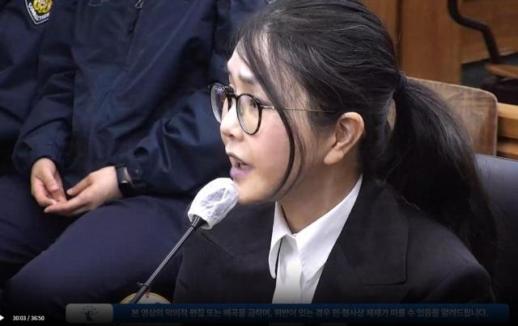 Disgraced former first couple reunite in rare court appearance together SEOUL, April 14 (AJP) - Kim Keon Hee, the wife of disgraced former President Yoon Suk Yeol on Tuesday appeared as a witness in Yoon's trial over election-related violations. Tuesday's hearing at the Seoul Central District Court in southern Seoul drew particular attention as it was the couple's first court appearance together, also marking their first encounter in several months since being held in separate remand prisons. After taking an oath, Kim answered only a few questions related to her identity and otherwise repeatedly said she would refuse to testify on most issues, claiming she had no knowledge of or involvement in the allegations. Prosecutors suspect that Yoon, along with Kim, was involved in interfering with candidate nominations during the 2022 by-elections through dubious political broker Myung Tae-kyun, who allegedly influenced state affairs by offering advice on various matters. Yoon and Kim were indicted on charges of receiving opinion polls worth 270 million Korean won (US$183,000) free of charge from Myung in exchange for securing the nomination of Kim Young-sun, the former lawmaker of the main opposition People Power Party (PPP), while Kim was found not guilty on that charge among a slew of other charges at the first-instance trial in January. During their 50-minute court appearance, Yoon gazed at Kim as she took to the witness stand, whispering to his lawyers. He also kept his eyes on her as she left the courtroom. Meanwhile, the court plans to hold the case's final hearing in mid-May, with a verdict expected sometime in June. 2026-04-14 17:13:59
 -
 MBC Every1, E Channel’s ‘Dolsing N Mosol’ draws scrutiny ahead of premiere MBC Every1 and E Channel’s new variety show “Dolsing N Mosol” on Monday released viewing points ahead of its first broadcast. The program follows divorced women who want to love again and men who have never dated as they meet at a “dating dorm school” and learn about relationships. Producers have promoted it as an unprecedented pairing, highlighting raw emotions and unpredictable developments. The premise brings together people at sharply different stages: those who have experienced marriage and divorce, and those who have not had a first relationship. That gap could set it apart from other dating shows, but it also raises the risk that the imbalance itself becomes the main hook. The categories are not simply about having “more” or “less” dating experience. Divorced participants have lived through commitment, responsibility and the aftermath of a breakup. The never-dated participants are at an entry point. Each side can carry different expectations, anxieties and wounds. The show, however, presents the awkwardness and potential clashes from that contrast as a selling point. Kim Jae-hoon, the producing director, said he discussed with a writer why dating programs “always match people within the same group,” calling that “a prejudice” and a self-imposed frame. The argument can sound like breaking stereotypes. But it also risks dismissing why people often seek partners with similar circumstances: comparable life stages, relationship pace, emotional burden and levels of responsibility can reduce the chance of getting hurt. In that sense, similarity can function less as prejudice than as a practical safeguard. Concerns are not limited to the show attempting an unusual pairing. One side is restarting after a relationship failure; the other is facing first-time awkwardness and fear. The format can push each to absorb the other’s burden. A divorced woman could become an overwhelming first experience for a never-dated man, while a never-dated man could require a divorced woman to explain and guide emotions from the beginning. Critics say that framing it as a “new perspective” may mask a structure in which one participant becomes the other’s training ground. The “dating dorm school” setting also draws scrutiny. While love can be learned, turning entertainment into a classroom can make cast members feel like teaching material. With two groups that differ widely in experience, editing may emphasize who is more inexperienced, who is more hurt, and who must “handle” whom. In that case, viewers may end up watching immaturity rather than sincerity, and the “raw emotions” touted by producers can become emotions consumed rather than protected. Promotional language from the hosts has not eased those concerns. Phrases such as “a dating program that smashes prejudice,” “a dopamine hit,” and “suffocating, unbelievable scenes” suggest the show is being packaged as both a relationship experiment and an emotional stimulant. Dating shows often rely on provocation and observation, but the question is whether the provocation here comes from an intentionally uneven setup. The point is not that relationships between divorced women and never-dated men are impossible; they can happen in real life. But when personal histories and first relationships are assembled as a broadcast concept — “this pairing will be fun to watch” — the relationship can shift from a human connection to a format-driven experiment. Ahead of its premiere, “Dolsing N Mosol” has already generated attention. After it airs, the show will face a basic test: whether it truly broadens understanding beyond stereotypes, or whether it relies from the start on an asymmetry designed for consumption. * This article has been translated by AI. 2026-04-14 16:51:32
 -
 StreamMusic Launches Web-Based Service to Settle and Manage Overseas Royalties for K-pop Rights Holders StreamMusic, a tenant company at the Korea Creative Content Agency’s CKL Corporate Support Center, has launched an “overseas royalty settlement and management service” for K-pop copyright holders, aiming to address growing challenges in managing rights as the global music market expands. The company said the service is designed to manage overseas royalty income more systematically and transparently. As K-pop has spread globally, royalties have been generated through overseas streaming, concerts, broadcasting and licensing. But differing national copyright systems and settlement structures have made it difficult for individual rights holders to manage the process themselves. The industry has pointed to complex settlement chains involving intermediaries, limited access to data and delays in settlement as key factors reducing visibility into earnings. StreamMusic said its service is built as a web-based “integrated management platform.” It combines contract management, a settlement dashboard and settlement processing in a single system, allowing rights holders to handle overseas royalty-related tasks in one place. A key feature is expanded data access and transparency. Rights holders can view original settlement data directly, and the dashboard breaks down results by platform (including streaming and broadcasting), region, song and quarter. That allows users to see not only totals but also where revenue was generated, by country and platform. The platform also adopts a “song-by-song contract structure,” rather than broad, bundled agreements. StreamMusic said this lets rights holders sign and manage contracts for individual works, enabling more flexible overseas distribution strategies and rights management for specific songs in an industry shaped by varied collaboration models. Beyond viewing data, the service digitizes the process from contracting through settlement. After signing up, rights holders can complete contract execution, rights registration and settlement checks online, StreamMusic said, simplifying procedures that have often been handled offline. The company said the system can also help rights holders recognize income faster. While overseas royalties have often taken significant time to appear as confirmed earnings, users can track settlement flows on an ongoing basis through the data-driven dashboard, which can also support financial planning. Industry observers have described the launch as an example of the digital shift in global copyright management, as the scale and complexity of royalty income rise alongside the growth of the K-pop market. Ryu Jihoon, CEO of StreamMusic, said, “Recovering overseas royalties is an important task to ensure K-pop copyright holders receive their rightful rights and income.” He added, “We will continue working to build an environment where rights holders can check and manage their royalties under more reasonable contract terms and a transparent settlement structure.” The Korea Creative Content Agency said it supports the growth of content startups such as StreamMusic through the CKL Corporate Support Center, including tenant support and production support facilities.* This article has been translated by AI. 2026-04-14 16:42:37
 -
 Korean Internet Banks Lift Deposit Rates Into 3% Range to Compete for Savers As major commercial banks keep deposit rates in the 2% range, South Korea’s internet-only banks are competing for funding by offering rates even 0.1 percentage point higher. The strategy is aimed at attracting rate-sensitive savers seeking higher returns on deposits. According to the financial sector on Monday, key deposit and savings products at internet banks are generally priced in the 3% range. KakaoBank raised rates on some funding products by up to 0.1 percentage point starting Monday. Its one-year time deposit rose to 3.1% from 3.0%, and its one-year flexible savings product increased to 3.25% from 3.15%. The move marked an additional hike about two months after Feb. 13 and puts its rates among the highest compared with major commercial banks. K Bank also increased the one-year rate on its “CodeK” time deposit to 3.2% from 3.01% starting March 31, a 0.19 percentage point rise. Toss Bank has not raised rates on funding products this year, but launched a one-year “time deposit with interest paid upfront” product in December at about 2.8% annually. Internet banks have been stepping up rate competition as they seek to expand their deposit base by offering higher yields than traditional lenders. Unlike major banks, internet banks do not operate offline branches, reducing fixed costs such as branch expenses and in-person staffing and giving them more room to offer higher deposit rates. “Given the nature of internet banks, we are maintaining a strategy of setting deposit rates somewhat higher than those of major banks,” an official at one internet bank said. “Even offering rates in the 3% range does not put undue pressure on profitability.” Rising market rates have also played a role. According to the Korea Financial Investment Association, yields on one-year bank bonds have recently been in the low 3% range, up about 0.3 percentage point so far this year. While higher bank-bond yields raise funding costs, major banks have a larger share of low-cost deposits — such as payroll accounts and corporate operating funds — reducing the incentive to raise deposit and savings rates. Internet banks, by contrast, have a higher share of customers sensitive to interest rates and are moving to strengthen competitiveness through deposit and savings products. “Market rates have risen significantly recently, so we adjusted rates as a response,” another internet-bank official said.* This article has been translated by AI. 2026-04-14 16:42:00
 -
 Kookmin University professor selected for national food yeast research project SEOUL, April 14 (AJP) - To address food supply instability caused by climate change, Professor Park Yong-chul was selected for a government-funded core research project to develop precision fermentation technology using food-grade yeast, Kookmin University said Tuesday. The project, titled "Development of a genetic tool kit for the food yeast Candida utilis for precision fermentation and application to food material production," is part of the 2026 Basic Research Program. The initiative is overseen by the Ministry of Science and ICT (MSIT) and the National Research Foundation of Korea (NRF). The Core Research category specifically supports creative individual researchers to help them grow into leaders in their respective fields. Professor Park and his team at the Department of Convergence Bioengineering will use synthetic biology to build a genetic toolkit for Candida utilis. These toolkits consist of biological parts and modules used to modify the yeast's genome. This engineering allows the yeast to produce essential food ingredients, such as proteins and amino acids, more efficiently. The research aims to establish domestic production methods for these materials, reducing South Korea's reliance on imported food resources. By using precision fermentation, the team hopes to create a stable supply chain for various food ingredients that are increasingly threatened by global environmental shifts. The research team has a history of developing microorganism-based technologies to produce health-related materials, including human milk oligosaccharides, glutathione, and terpenes. They are also expanding into the bio-chemical sector, focusing on the production of biodegradable plastics and methods for capturing carbon dioxide using modified yeast strains. The professor has received multiple commendations from the Ministry of Education and the Ministry of Trade, Industry and Energy for his work in CRISPR-based engineering and fermentation. He also serves as the founder of BioCraft, a company dedicated to commercializing yeast technologies developed in the laboratory. 2026-04-14 16:28:01
 -
 Ildong Pharmaceutical Expands DropTop Cholesterol Drug Supply to Three More ASEAN Countries Ildong Pharmaceutical said April 14 it signed an additional agreement with its Indonesian partner, Kalbe Pharma, to expand the supply territory for its drug DropTop as it broadens its presence in Southeast Asia. DropTop is a combination therapy for dyslipidemia that pairs rosuvastatin, a statin that inhibits cholesterol synthesis, with ezetimibe, which reduces cholesterol absorption. Ildong said it signed a contract with Kalbe International, a distribution affiliate of Kalbe Pharma, to expand DropTop supply to three ASEAN countries. With the deal, Ildong will have a cooperation framework with the Kalbe Group in a total of eight Southeast Asian countries, including Indonesia, its existing supply market. Ildong signed a partnership agreement with Kalbe Pharma in 2020 and has continued exports since 2023 after completing approval and launch procedures. The product is sold locally under the brand name “Rozet.” Ildong said it has posted average annual growth of about 130% over the past three years since launch and ranks No. 1 by market share in Indonesia’s dyslipidemia combination-drug market. Ildong said it plans to pursue product approvals and launches in the newly covered countries in stages, and to accelerate market entry with localized marketing and distribution strategies. “Through this agreement, DropTop can enter most ASEAN member states,” a company official said. “Working with the Kalbe Group, we will continue to expand our market reach and product lineup.”* This article has been translated by AI. 2026-04-14 16:27:00
 -
 Seoul targets sovereign AI and AI belt in Saemangeum for new strategic funding SEOUL, April 14 (AJP) -South Korea will channel around 10 trillion won ($7.4 billion) into a new slate of strategic industries from high-value OLED displays to sovereign artificial intelligence and AI infrastructure belt along the southern coast in a bid to widen its technological edge over fast-following rivals and anchor future growth engines. The second round of “mega projects” under the 150 trillion won National Growth Fund spans six areas — next-generation bio and vaccines, OLED displays, future mobility and defense, sovereign AI, renewable energy infrastructure and a large-scale industrial hub in Saemangeum. Financial Services Commission Chairman Lee Eog-weon announced the plan Tuesday after chairing the fund’s second strategy committee meeting, describing the selections as sectors “where Korea can further expand its super-gap over latecomers.” The most immediate deployment of capital is expected in bio and vaccines, targeting firms that have entered global Phase 3 clinical trials — the final and most capital-intensive stage before commercialization. The fund will provide low-interest loans for facility investment tied to new drug development, alongside direct investments through joint ventures. Initial approvals could come as early as May. In displays, the government is moving to reinforce Korea’s dominance in premium OLED, as Chinese competitors rapidly narrow the gap. Samsung Display and LG Display are expected to be among key beneficiaries, with policy financing aimed at supporting large-scale capital expenditures needed to push into higher value-added segments. Future mobility and defense projects will focus on unmanned systems — including drones, UAVs and autonomous helicopters — covering the full spectrum from airframes to electronic systems and propulsion. Officials emphasized the broad industrial spillovers, noting the sector’s deep linkages with materials, components, batteries, semiconductors and engines. Sovereign AI has emerged as another central pillar. The initiative aims to build a fully independent AI ecosystem — from foundation models to data centers — reducing reliance on foreign technologies. This marks a shift from the first round of projects, which focused more narrowly on AI semiconductors such as neural processing units. The fund will also invest in large-scale renewable energy projects, including solar and offshore wind farms in regions such as Haenam and Gochang. Beyond energy transition goals, the projects are designed to secure stable power supplies for energy-intensive AI data centers, increasingly seen as critical national infrastructure. Another flagship investment targets Hyundai Motor Group’s planned industrial complex in Saemangeum. The project envisions a cluster integrating robotics, AI and hydrogen energy, backed by roughly 9 trillion won in private investment. The fund will provide tailored support through a mix of direct investment, infrastructure financing and loans aligned with project milestones. The government expects to mobilize more than 50 trillion won over the next five years to support the broader advanced industry ecosystem, combining 35 trillion won in indirect investment through public-private funds and 15 trillion won in direct financing. The structure is designed to address persistent “investment blind spots” in areas where private capital alone has been insufficient, while also expanding participation to new fund managers and incorporating entrepreneurial track records — including failed ventures — into selection criteria. The first round of mega projects, announced in December, included offshore wind, next-generation batteries and AI semiconductor production bases. Of the 6.6 trillion won approved so far, funding has already begun flowing into projects such as the Shinan offshore wind farm, a Pyeongtaek AI chip cluster and Rebellions’ capital increase. The government plans to begin executing initial investments for the second-round projects as early as next month. 2026-04-14 16:23:24
 -
 KAIST and Microsoft Research develop automated system to fix time-related AI errors SEOUL, April 14 (AJP) - To reduce hallucinations, including time-based errors in large language models (LLMs), a joint team of researchers developed an automated diagnostic system that uses classic database theory to ensure AI provides up-to-date information, the Korea Advanced Institute of Science and Technology said Tuesday. The research addresses a common frustration for users who find that chatbots often provide outdated facts. For example, when asked about a recently appointed government official, an AI might confidently name someone who left the position a year ago. This occurs because the models struggle to track how information changes over time, a problem known as temporal hallucination. Korea Advanced Institute of Science and Technology (KAIST) Professor Hwang Eui-jong and his team worked with Microsoft Research (MSR) to apply temporal database design to AI evaluation. This theory, which has been refined over the last 40 years, allows the new system to automatically generate 13 different types of complex questions based on the chronological flow of data. Previously, humans had to manually write and update test questions to check if an AI was staying current. The new automated framework eliminates this labor-intensive process. When real-world information changes, the system simply updates its internal database to refresh the evaluation criteria and correct the AI's logic. According to the study, the system reduced the cost of building evaluation data by 51 percent. It also improved the detection of time-related errors by an average of 21.7 percent. Rather than just checking if the final answer is right, the system verifies whether the dates and timelines the AI uses to explain itself are actually accurate. The researchers expect the technology to be particularly useful in high-stakes fields such as law and medicine. In these sectors, even a minor misunderstanding of a specific timeframe can lead to serious errors in advice or documentation. "This research shows how classic database theories can solve modern reliability issues in artificial intelligence," Professor Hwang Eui-jong said. He added that turning professional data into evaluation resources will provide a practical foundation for verifying AI performance in specialized industries. The study, which featured PhD student Kim So-yeon as the lead author, will be presented at the International Conference on Learning Representations (ICLR) 2026. MSR researchers Jindong Wang and Xing Xie also participated as co-authors. (Reference Information) Journal/Source: International Conference on Learning Representations (ICLR) 2026 Title: Harnessing Temporal Databases for Systematic Evaluation of Factual Time-Sensitive Question-Answering in Large Language Models Link/DOI: https://arxiv.org/abs/2508.02045 2026-04-14 16:05:49