
Journalist

Aya Aboelenien, Chau Minh Nguyen
-
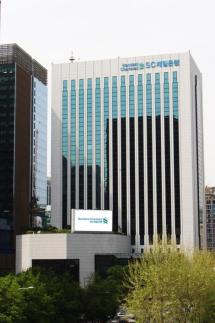 SC First Bank Reports Q1 Net Profit of 104.9 Billion Won, Down 6.3% Year-on-Year SC First Bank reported a decline in profits for the first quarter of this year, attributed to rising operating costs. On May 15, the bank announced that its net profit for the first quarter was 104.9 billion won, a decrease of 6.3% compared to the same period last year.Interest income fell due to a decline in the net interest margin (NIM). For the first quarter, interest income was 291.5 billion won, down 5.1% from the previous year. During the same period, NIM decreased by 0.23 percentage points.In contrast, non-interest income increased significantly, driven by improvements in the wealth management (WM) sector, which saw a rise in high-net-worth clients. Non-interest income for the first quarter reached 110.1 billion won, a 25.1% increase year-on-year.The total loan portfolio grew to 43.7363 trillion won, marking a 2.2% increase from the previous year. Asset quality indicators remained stable, with the non-performing loan (NPL) ratio at 0.56% as of the end of March, similar to the end of last year.SC First Bank plans to continue enhancing its WM sector performance by expanding private banking (PB) centers in the metropolitan area and Busan, following the success in Apgujeong.* This article has been translated by AI. 2026-05-15 23:19:47
 -
 Samsung Electronics DS Division Leadership Engages with Labor Union Samsung Electronics' semiconductor (DS) division leadership visited the labor union office at the Pyeongtaek campus on May 15 to engage in active dialogue with union representatives.According to Samsung Electronics, Vice Chairman Jeon Young-hyun and other executives from the DS division met with the joint action headquarters of the Samsung Electronics labor union at the union office located at the Pyeongtaek campus.The meeting included four executives from Samsung Electronics: Vice Chairman Jeon Young-hyun, President Kim Yong-kwan, President Han Jin-man, and President Park Yong-in. The union was represented by Chairperson Choi Seung-ho, Vice Chairperson Lee Song-yi, Director Kim Jae-won, and Director Jeong Seung-won.Vice Chairman Jeon expressed a commitment to open dialogue with the union and conveyed a desire to resume negotiations.Earlier, the Samsung leadership issued an official statement proposing 'unconditional dialogue' with the union, emphasizing, "We urge the union to engage in discussions promptly, considering the concerns of the public and the national economy."They also conveyed an apology to the public, stating, "The labor-management issues at Samsung Electronics have caused significant burden and concern for the public and the government. As our achievements grow, the expectations of society for Samsung become stricter and larger, and we have not adequately addressed this." They added, "The Samsung leadership feels a heavy sense of responsibility for how the situation has unfolded. We sincerely apologize." * This article has been translated by AI. 2026-05-15 23:18:00
 -
 Chabi Reports Q1 Revenue of 20.7 Billion Won, 21% Growth Year-on-Year Chabi announced that its consolidated revenue for the first quarter reached 20.7 billion won, marking a 21% increase compared to the same period last year. The charging service segment recorded sales of 13.9 billion won, a 13% year-on-year growth, demonstrating stable growth. The charger manufacturing segment also saw a 41% increase in revenue, totaling 6.8 billion won compared to the previous year. Due to the seasonal nature of export volumes, which are concentrated in the fourth quarter, the company reported an operating loss of 9.7 billion won for the first quarter. However, the key performance indicator, EBITDA, improved by 17 percentage points year-on-year, reaching -2%, indicating that the company is nearing profitability, according to Chabi officials. A Chabi representative stated, "The increase in electric vehicle registrations and the rising utilization rate of chargers are driving revenue growth and improving profitability in the charging service sector." Chabi anticipates that demand for charging infrastructure will continue to grow alongside the expansion of the electric vehicle market. The charging service business is structured to expand revenue as the cumulative number of registered electric vehicles and charger utilization rates increase. Recent trends show a sharp rise in electric vehicle sales, which is expected to accelerate both the foundation for long-term growth and the pace of performance improvement. According to the Ministry of Trade, Industry and Energy's report on the automotive industry trends for March and the first quarter of 2026, domestic electric vehicle sales in the first quarter increased by 155.8% compared to the same period last year, with approximately one in four vehicles sold by April this year being electric. This trend suggests a rapid expansion in demand for fast charging services and charger utilization. Choi Young-hoon, CEO of Chabi, remarked, "The charging service sector is improving profitability to a level capable of generating its own cash flow, and the foundation for long-term growth is being further strengthened with the expansion of electric vehicle adoption. The manufacturing sector will also continue to improve annual performance, focusing on global export growth." Meanwhile, Chabi is pursuing various initiatives to expand charging infrastructure nationwide and lead the mobility ecosystem in the era of one million electric vehicles. Starting at the end of May, third-generation chargers equipped with NACS connectors will be fully operational at major living hubs and highway rest areas in Seoul and the metropolitan area, allowing Tesla users to conveniently access Chabi chargers. Recently, Chabi partnered with Hyundai to launch a dedicated electric vehicle charging subscription service for Hyundai customers, enhancing accessibility to charging infrastructure while reducing usage costs.* This article has been translated by AI. 2026-05-15 23:15:17
 -
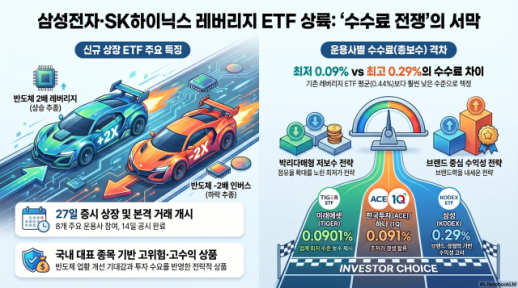 Samsung and SK Hynix Launch Leveraged ETFs Amid Fee Competition Single-stock leveraged and inverse exchange-traded funds (ETFs) based on Samsung Electronics and SK Hynix are set to launch at the end of this month. Major asset management firms are simultaneously introducing related products, intensifying fee competition in the ETF market. According to the financial investment industry on May 15, eight asset management companies, including Samsung, Mirae Asset, Korea Investment, KB, Shinhan, Hanwha, Kiwoom, and Hana Asset Management, completed disclosures for 16 single-stock leveraged and inverse ETFs on May 14. The products are scheduled to be listed on May 27. The upcoming ETFs include leveraged products that aim to double the daily stock price returns of Samsung Electronics and SK Hynix, as well as inverse ETFs that bet on a twofold decline in stock prices. This marks the introduction of high-risk, high-reward products based on leading semiconductor stocks in the domestic market. With similar products launching simultaneously, asset managers are emphasizing fees as a key competitive factor. The total expense ratios for these new products have been set lower than the average annual fee of 0.44% for existing listed equity leveraged ETFs. Mirae Asset Management has proposed the lowest fee, setting the total expense ratio for its TIGER ETF at 0.0901%. Korea Investment Trust Management's ACE ETF and Hana Asset Management's 1Q ETF have also joined the low-fee competition, each setting their fees at around 0.091%. In contrast, the industry leader, Samsung Asset Management, has set the total expense ratio for its KODEX ETF at 0.29%, which is nearly three times higher than the lowest fee offerings. Market analysts suggest that Samsung Asset Management is opting for a strategy focused on profitability, leveraging its market share and brand strength. The financial investment industry anticipates that the launch of these single-stock leveraged and inverse ETFs will intensify competition in the domestic ETF market. Given the recent optimism surrounding the semiconductor sector and increasing investor demand for Samsung Electronics and SK Hynix, interest in related ETFs is expected to grow.* This article has been translated by AI. 2026-05-15 23:12:55
 -
![[6·3 Local Elections] Ruling Party Responds to Oppositions Claims of Election Interference](https://image.ajunews.com//content/image/2026/05/15/20260515162306497471_518_323.jpg) [[6·3 Local Elections]] Ruling Party Responds to Opposition's Claims of Election Interference The Democratic Party on May 15 responded to claims by Song Eon-seok, co-chair of the People Power Party's election committee, who labeled President Lee Jae-myung's market visits as election interference. "Should the government be paralyzed during the election period?" Jo Seung-rae, Secretary General of the Democratic Party, asked during a press conference at the National Assembly. "Does that mean the president should not do anything? If that's the case, then even the Cabinet meetings would be considered election interference," he added. Jo emphasized that governance must continue even during elections, questioning whether the president should refrain from communicating on issues of diplomacy, security, politics, society, safety, and public welfare. He dismissed the allegations as mere political attacks, calling them "quite low-level discourse." Choi Gi-sang, also Secretary General of the Democratic Party's Election Committee and a former judge, remarked, "If the opposition claims that the president's governance violates the law, they should specify which laws were broken. It seems inappropriate to challenge the president's governance in the context of an election." Meanwhile, Song took to Facebook to assert that the president has crossed the line of election interference by actively campaigning. He criticized Lee's visits to the Namnok Market in Ulsan on May 13 and the Moran Market on May 14, describing them as blatant election interference. Song pointed out that Seongnam is Lee's political hometown and that the candidate for mayor, Kim Byeong-wook, is a former senior secretary to the president, suggesting that the choice of locations was intentionally dubious. He noted that while past presidents have faced allegations of election interference, none have campaigned daily at traditional markets nationwide just weeks before an election.* This article has been translated by AI. 2026-05-15 23:10:19
[[6·3 Local Elections]] Ruling Party Responds to Opposition's Claims of Election Interference The Democratic Party on May 15 responded to claims by Song Eon-seok, co-chair of the People Power Party's election committee, who labeled President Lee Jae-myung's market visits as election interference. "Should the government be paralyzed during the election period?" Jo Seung-rae, Secretary General of the Democratic Party, asked during a press conference at the National Assembly. "Does that mean the president should not do anything? If that's the case, then even the Cabinet meetings would be considered election interference," he added. Jo emphasized that governance must continue even during elections, questioning whether the president should refrain from communicating on issues of diplomacy, security, politics, society, safety, and public welfare. He dismissed the allegations as mere political attacks, calling them "quite low-level discourse." Choi Gi-sang, also Secretary General of the Democratic Party's Election Committee and a former judge, remarked, "If the opposition claims that the president's governance violates the law, they should specify which laws were broken. It seems inappropriate to challenge the president's governance in the context of an election." Meanwhile, Song took to Facebook to assert that the president has crossed the line of election interference by actively campaigning. He criticized Lee's visits to the Namnok Market in Ulsan on May 13 and the Moran Market on May 14, describing them as blatant election interference. Song pointed out that Seongnam is Lee's political hometown and that the candidate for mayor, Kim Byeong-wook, is a former senior secretary to the president, suggesting that the choice of locations was intentionally dubious. He noted that while past presidents have faced allegations of election interference, none have campaigned daily at traditional markets nationwide just weeks before an election.* This article has been translated by AI. 2026-05-15 23:10:19 -
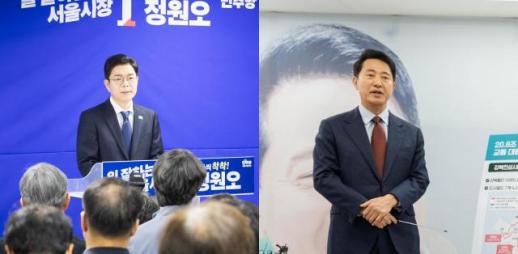 Oh Se-hoon Criticizes Jung Won-o's Property Tax Relief Proposal for Homeowners Oh Se-hoon, the People Power Party's candidate for Seoul mayor, criticized Jung Won-o's proposal to reduce property taxes for homeowners, calling it "disappointing and merely a stopgap measure." Oh made his remarks on the afternoon of May 15 during a visit to a site in Gangdong District, where he held a meeting with the "Citizens' Countermeasures Committee for Real Estate Hell." He stated, "As property values rise across Seoul, property taxes will inevitably increase. Proposing to reduce taxes for a select few while creating an environment that raises property taxes is akin to breaking someone's limbs and then offering a band-aid as a solution." Oh further pointed out that Jung's proposal is limited to homeowners without income and includes age restrictions, calling it "extremely disappointing and merely a stopgap measure." Earlier, on May 13, Jung announced his plan to implement property tax relief for homeowners without income. Following a press conference at the National Assembly that morning, Jung told reporters, "There have been many calls for measures as property taxes for homeowners are expected to rise significantly across Seoul. If I am elected mayor, I will ensure that these measures are implemented before September." He clarified that property taxes can be temporarily reduced through ordinances under the Local Tax Special Provisions Act. Regarding price limits for high-value homes, Jung mentioned, "There will be a cap, but the specifics will be discussed immediately after the election among the newly elected district mayors."* This article has been translated by AI. 2026-05-15 23:07:54
 -
 SeAH Steel Holdings Reports 1st Quarter Operating Profit of 26.7 Billion Won, Down 59% Year-on-Year SeAH Steel Holdings announced on May 15 that it recorded consolidated sales of 991.9 billion won and an operating profit of 26.7 billion won for the first quarter. While sales increased by 4.7% compared to the same period last year, operating profit fell by 59%. Despite weak demand in key sectors like construction, sales rose due to strong product sales in the North American oil and gas market. However, a decline in the selling price of oil country tubular goods (OCTG) and delays in logistics and raw material procurement caused by geopolitical risks in the Middle East led to the drop in operating profit. A representative from SeAH Steel Holdings stated, "The North American energy market is expected to maintain a solid trend due to ongoing demand for supply chain restructuring and inventory replenishment. We anticipate a gradual recovery in profitability from price increases starting in the second quarter." The company also plans to continue expanding product sales by responding to new demands from Middle Eastern oil and gas and LNG projects, as well as data centers in the Americas and offshore wind projects. On a standalone basis, SeAH Steel reported first-quarter sales of 415.8 billion won, a 17.8% increase from the same period last year, while operating profit decreased by 11.1% to 23.2 billion won. This growth was attributed to the recognition of sales from the Shin An Woo I offshore wind and Canadian natural gas pipeline projects, along with increased sales volumes driven by rising LNG demand in North America. However, the imposition of steel tariffs in the United States and rising raw material costs have negatively impacted profitability. SeAH Steel noted, "The effects of the rising won-dollar exchange rate and a profitability-focused sales strategy have improved operating profit compared to the previous quarter." Meanwhile, SeAH Besteel Holdings is working towards achieving carbon neutrality by 2050, having obtained verification for its carbon footprint assessment solution under the international standard 'ISO 14607.'* This article has been translated by AI. 2026-05-15 23:06:00
 -
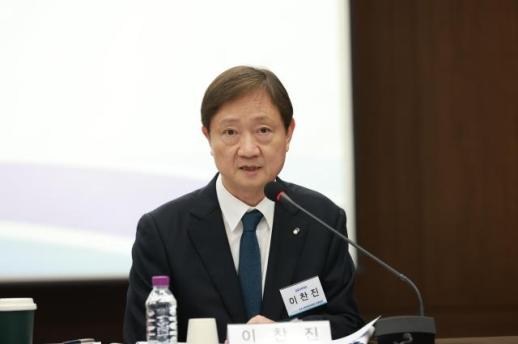 Financial Supervisory Service Chief Calls for Funding Shift to Productive Sectors The Financial Supervisory Service (FSS) is intensifying oversight to redirect funds concentrated in household loans and real estate project financing (PF) toward more productive sectors. The aim is to encourage financial institutions to actively support corporate investment and the real economy rather than relying solely on stable interest income. On May 15, the FSS held a plenary meeting of the 2026 Financial Supervisory Advisory Committee at the Bank Hall in Seoul, where they discussed the direction of financial supervision. In his opening remarks, Lee Chan-jin, the head of the FSS, noted, "The uncertainty in the global economy continues due to the impact of the situation in the Middle East that began in February. If high exchange rates and inflation persist, corporate activities may contract, and the difficulties faced by ordinary citizens and vulnerable groups could worsen." Lee emphasized the need for a shift in the direction of funding from the financial sector. He stated, "Financial institutions should not be fixated on easy interest income but should support productive sectors to foster economic growth." To achieve this, the FSS plans to manage risks related to household debt and real estate PF by implementing loan inspections and introducing limits on PF lending. The goal is to mitigate excessive capital flow into real estate and create conditions for funds to be supplied to productive sectors such as businesses. The FSS will also work on regulatory reforms to enhance the investment capacity of financial institutions. This includes rationalizing loss recognition for market risks in the banking sector and revising the calculation system for the insurance sector's solvency ratio (K-ICS) to broaden the foundation for investments in productive areas. Protecting ordinary citizens and vulnerable groups was also highlighted as a key supervisory task. The FSS aims to promote a culture of inclusive finance within the banking sector and support savings banks and mutual finance institutions in fulfilling their roles as community financial entities. Additionally, measures to combat financial crimes, including comprehensive strategies to eradicate voice phishing and one-stop support services for illegal lending, will be strengthened. This year, the Financial Supervisory Advisory Committee consists of 92 members, with the number of consumer-related representatives increased to 25 to align with academia, research institutions, and the financial sector. This change aims to more broadly reflect consumer opinions in the direction of supervision.* This article has been translated by AI. 2026-05-15 23:00:06
 -
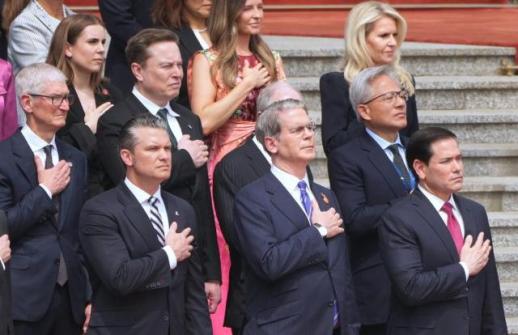 U.S.-China Summit Highlights Big Tech's Role in AI and Semiconductor Competition The U.S.-China summit held on May 14 at the Great Hall of the People in Beijing was more than just a diplomatic event. It symbolized a shift in the 21st-century global order, indicating that the new power dynamics are now centered around AI, semiconductors, data, platforms, energy, and supply chains, rather than solely military and diplomatic relations. Notably, the presence of prominent U.S. tech CEOs in the delegation led by President Trump drew significant attention. Leaders from major companies, including NVIDIA's Jensen Huang, Tesla's Elon Musk, and Apple's Tim Cook, joined representatives from BlackRock, Goldman Sachs, Qualcomm, Meta, Micron, Visa, Mastercard, and Boeing, effectively forming a 'technology supremacy delegation' in Beijing. This contrasts sharply with Cold War-era summits, which primarily focused on nuclear weapons and military alliances. Today's U.S.-China discussions center on AI, semiconductors, platforms, data, supply chains, and advanced manufacturing. The core of global supremacy has shifted from “who has more aircraft carriers” to “who controls the strongest AI ecosystem and semiconductor supply chain.”Trump's decision to bring U.S. tech leaders to China was not coincidental; it served as both a warning and a negotiation signal. The U.S. currently dominates the global AI industry in software and design capabilities. Companies like OpenAI, NVIDIA, Google, Meta, Microsoft, and Apple maintain the strongest influence in AI algorithms, cloud computing, semiconductor design, and platforms. Notably, NVIDIA's GPUs are often referred to as the 'oil' of the AI era. In this context, Jensen Huang's participation in Beijing is highly symbolic. A Taiwanese-American, Huang stands at the forefront of the AI revolution. NVIDIA is a dominant player in the AI training semiconductor market and symbolizes U.S. AI superiority. However, NVIDIA's long-term growth is challenging without access to the Chinese market, which is the world's largest manufacturing hub and a vast AI application market. Trump is leveraging this reality, indicating that while the U.S. holds the core AI technologies, the market and manufacturing ecosystem remain crucial in China. Interestingly, private sector leaders participated directly in parts of the summit, a rare occurrence in diplomatic meetings traditionally reserved for diplomats and security officials. This reflects the reality that U.S. national competitiveness is increasingly intertwined with private technology firms. The U.S. AI supremacy has not emerged solely from government efforts. It is the result of a massive ecosystem involving Silicon Valley, Wall Street, university research labs, the Department of Defense, cloud companies, and semiconductor firms. In essence, the U.S. is forming an AI supremacy structure that combines state and corporate power. Conversely, China is also formidable. While it lags in foundational semiconductor technology, it excels in data scale, manufacturing application, and national-level investment. Companies like Huawei, SMIC, Baidu, Alibaba, and Tencent are rapidly establishing an AI self-sufficiency system despite U.S. sanctions. China's strength lies in its speed. While the U.S. operates on a free-market innovation model, China employs a total mobilization system. When deemed necessary, central and local governments, state-owned enterprises, and private companies act in unison. This concentrated nurturing model, demonstrated in high-speed rail, electric vehicles, and solar industries, is now being applied to AI. Another critical difference is data. In the AI era, the key components are data, power, and semiconductors. China has accumulated vast amounts of data based on its large population and mobile ecosystem, combined with a cheap manufacturing base and a massive domestic market. In contrast, the U.S. excels in creative innovation and foundational technologies. Companies like OpenAI, Google DeepMind, and NVIDIA are shaping the direction of global AI technology. Thus, the current AI competition is not merely a technological race; the U.S. is strong in 'brainpower,' while China excels in 'scale and execution.' Both nations harbor fears of each other. The U.S. is wary of China's potential success in combining manufacturing and AI application markets for technological self-sufficiency. Meanwhile, China is concerned about the U.S. leveraging its semiconductor, GPU, and cloud systems to stifle China's AI industry. Ultimately, the Beijing summit was not just about tariff negotiations; it represented a significant negotiation table concerning the power structure of the AI era. Where does South Korea stand in this landscape? South Korea occupies a uniquely delicate position. With Samsung Electronics and SK Hynix leading the memory semiconductor sector, it remains among the world's strongest. Additionally, companies like Naver, Kakao, LG AI Research, and Samsung Research are developing their own AI ecosystems. However, the challenge lies in scale. The U.S. is strong in platforms and foundational technologies, while China excels in markets and manufacturing. South Korea is strong in semiconductors but relatively weak in platforms and large-scale AI ecosystems. Nevertheless, there are significant opportunities for South Korea. First, there is AI semiconductors. The core of the AI era is computational power, and AI cannot exist without memory semiconductors. South Korean companies are among the best in the high-bandwidth memory (HBM) sector. Second, there is manufacturing-based AI. South Korea has a robust industrial base in automobiles, shipbuilding, batteries, semiconductors, and robotics. In the realm of 'industrial AI,' South Korea can aim for a top-three position globally. Third, there is culture and soft power. In the AI era, data is not the only important factor; content and culture also matter. The global influence of K-pop, K-dramas, and K-content may become vital assets in future AI training data and digital platform competition. Ultimately, the future world will not be driven solely by military supremacy. It will be an era where AI, semiconductors, data, platforms, culture, energy, supply chains, and finance form a vast network. The participation of U.S. tech companies in Trump's visit to China underscores this reality. They are not merely business leaders but 'technology generals' at the forefront of 21st-century American supremacy. The scenes at the Great Hall of the People in Beijing mark a historical moment, signaling that the world has entered an era of AI Cold War.* This article has been translated by AI. 2026-05-15 22:57:00
 -
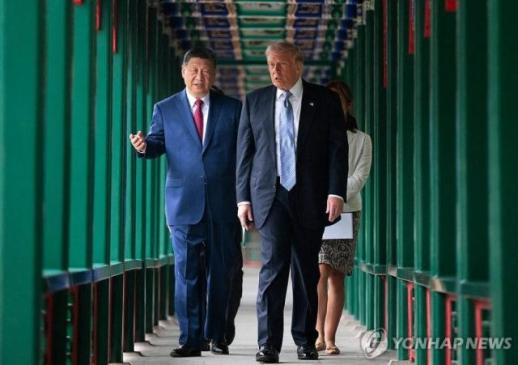 When the Doors of Zhongnanhai Open, the World Order is Reshaped Power speaks through space. Located in the heart of Beijing, adjacent to the Forbidden City, Zhongnanhai is the core of Chinese power, surrounded by high walls and strict security. This area, which is off-limits to ordinary tourists, serves as the de facto 'political heart' where the central leadership of the Chinese Communist Party and key officials of the State Council work and reside. Zhongnanhai is not merely a collection of buildings or offices; it symbolizes the very operation of power itself. Information released to the public is limited, and major policy decisions are made behind closed doors. Due to this characteristic, Zhongnanhai is often referred to as the 'center of invisible power.' In diplomacy, location is not just a backdrop. The venue of a meeting conveys its own message. Open meeting spaces and closed power areas carry different meanings. An invitation to Zhongnanhai is interpreted as a political signal that goes beyond mere hospitality. When President Xi Jinping invited President Donald Trump to this space, it held significance beyond a diplomatic schedule. It was seen as an expression of China's willingness to manage relations on a symbolic stage set by the country. However, this interpretation is context-dependent and should be considered alongside the officially confirmed messages. When was Zhongnanhai opened? Zhongnanhai has not historically been a space frequently opened to foreign leaders. However, there have been symbolic instances where it has been utilized during key moments in US-China relations. During President Richard Nixon's visit to China in 1972, his meeting with Chairman Mao Zedong took place in a power space near Zhongnanhai. This marked a significant turning point in US-China relations within the context of the Cold War. Subsequently, some US presidents have also held informal meetings with Chinese leaders in Zhongnanhai or similar symbolic spaces during their visits to China. These examples suggest that Zhongnanhai tends to be chosen for its symbolic significance rather than as a typical diplomatic venue. However, not all summits carry the same meaning, and each visit should be interpreted according to the political context and level of protocol at the time. Trump's invitation can also be understood in this context. In a situation where US-China relations are characterized by both competition and cooperation, a meeting in a symbolic space can be seen as a way to express the intent to manage the relationship. However, it is important to be cautious in interpreting this as an immediate improvement in relations or a strategic shift. Diplomatic gestures do not always align with actual policy directions. Trump and Xi: Different Styles of Power Another key element to note in this meeting is the governing styles of the two leaders. President Trump is regarded as a politician who prefers a pragmatic approach over traditional diplomatic norms. He emphasizes results over processes in negotiations and tends to make decisions in a flexible and sometimes unpredictable manner. In contrast, President Xi has demonstrated leadership that strengthens the party-centered governance structure and systematically concentrates power. The policy-making process is relatively closed, and national strategies are pursued from a long-term perspective. These differences also influence their diplomatic styles, resulting in a meeting of open and spontaneous negotiation styles with controlled and structured decision-making processes. Therefore, the essence of this meeting lies not merely in reaching agreements but in how these differing styles of power find common ground. Analysts suggest that the focus is likely to be on managing rather than resolving conflicts. The choice of Zhongnanhai as the venue can also be understood in this context. The closed and controlled environment is advantageous for reducing variables and managing the flow during negotiations. Understanding the Reality for South Korea The meeting at Zhongnanhai is not just an internal Chinese matter; it is connected to the broader international order. The current global environment is shifting from a single order to a coexistence of multiple power structures. The existing US-centered order competes with a new China-centered order, while coexisting to some extent. In this process, competition in key areas such as technology, supply chains, energy, and finance is intensifying. Even with ongoing meetings between leaders, the likelihood of resolving this structural competition in the short term is low. South Korea occupies an important position amid these changes. Economically, it is closely connected to both the US and China, and it has complex security interests as well. Thus, a strategy that allows for flexible responses depending on the situation is required, rather than a simplistic approach of choosing one side. It is a structure that must consider both diplomatic balance and industrial competitiveness. This meeting at Zhongnanhai reaffirms this reality. The world is becoming increasingly complex, and diplomacy has entered a stage that cannot be easily explained by simple cooperation or confrontation. Zhongnanhai is a symbol of Chinese power and a space that opens to the outside world only at limited moments. Meetings held here carry a certain political significance in themselves. However, it is essential to be cautious about overinterpreting that significance. While symbols are important in diplomacy, actual policies and outcomes are determined in separate realms. Trump's invitation could signal a de-escalation of tensions, but it may also be part of managing competition. Ultimately, what matters is not the location but the dynamics. US-China relations remain structured around coexistence of competition and cooperation, and a single event will not change the direction. Nevertheless, one fact is clear. The world order is currently undergoing a restructuring, and major countries are signaling to each other in various ways. The opening of the doors to Zhongnanhai is merely a scene that illustrates that this change is still in progress.* This article has been translated by AI. 2026-05-15 22:49:35