
Journalist

BAE IN SUN
-
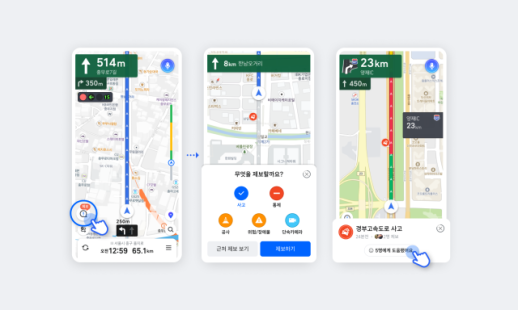 Tmap Launches Real-Time Traffic Reporting Feature for Drivers Tmap Mobility is enhancing its participatory traffic platform by introducing a feature that allows drivers to share real-time road conditions. On May 15, Tmap Mobility announced the launch of its real-time road information sharing feature, called 'social reporting.' The 'social reporting' feature enables drivers to share road conditions they encounter while driving with other users in real-time. Users can instantly report various information, including accidents, road closures, construction, hazards, and speed cameras, through the 'Report' button on the driving screen. To improve the accuracy and reliability of the information, Tmap Mobility has implemented a user-participation verification system. Drivers passing by the reported location can respond with options such as 'Yes,' 'No,' or 'Resolved' to verify the report. Additionally, users can acknowledge helpful reports by selecting 'Helpful.' Reports that do not receive updates for a certain period or are marked as resolved will be automatically closed to maintain current information. Users can also track the impact of their reports. In the 'My' tab under 'Driving Report Management,' they can view the status, number of views, and reactions to their reports in real-time, enhancing user engagement. Jeon Chang-geun, Chief Product Officer of Tmap Mobility, stated, "The importance of real-time information sharing among drivers is increasing in situations where unexpected accidents or sudden road closures cause inconvenience. Through social reporting, we aim to provide faster and more accurate road information and expand a trustworthy driving experience created with our users." Meanwhile, Tmap Mobility is expanding its business focus on mobility data and AI-based services. In the first quarter of this year, the company reported a 4.3% increase in revenue compared to the same period last year, strengthening its competitiveness as a daily mobility platform.* This article has been translated by AI. 2026-05-15 09:48:00
 -
 Kian84 Expresses Interest in Singer and Actress Kang Mina Webtoon artist and broadcaster Kian84 has expressed his feelings for singer and actress Kang Mina. On May 14, a video titled "Kang Mina Finally Returns" was uploaded to Kian84's YouTube channel, "Life84." During the video, Kian84 reminisced about a time he spent with Kang Mina, saying, "When we visited my aunt's house, my aunt and uncle really liked Mina. They asked if she would be the one to come for holidays in the future. I told them not to say such things, but they kept insisting." Kang Mina responded with a smile, asking, "So did that end with 'please don't say that'?" Kian84 replied, "I said that, but I didn't mind it either." When Kang Mina mentioned that she likes tall people, Kian84 chimed in, "I’m 180 cm tall. It’s just that my head is big, but I’m tall." Kian84 then asked, "So am I okay?" When Kang Mina laughed without answering, he followed up with, "A little more than 180 cm?" To which Kang Mina replied, "A little," prompting Kian84 to show a disappointed expression. Kang Mina also shared her secret to losing 10 kg, stating, "I didn’t do any special exercise; I just reduced my food intake. I ate two sandwiches a day. I would order one, cut it in half, and eat it for lunch and dinner."* This article has been translated by AI. 2026-05-15 09:43:08
 -
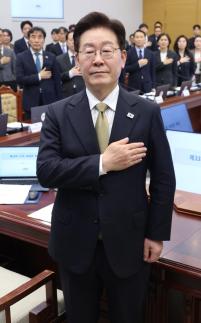 President Lee Sends Respectful Message on Teacher's Day President Lee Jae-myung expressed his deep respect and gratitude to all teachers across the nation on Teacher's Day, stating, "I extend my heartfelt appreciation to all teachers who are sweating it out in schools and classrooms at this very moment."In a Facebook post titled "To the Great Teachers Who Teach the Present and Shape the Future," President Lee emphasized that the existence of today's South Korea is due to the efforts and dedication of teachers.He quoted, "While I received life from my parents, I learned how to make that life meaningful from my teachers," describing teachers as those who give wings to children's dreams, provide encouragement to rise again, and often watch their growth from a closer position than parents.Reflecting on his own childhood, he recalled, "Thanks to the warm encouragement of my teacher, I gained the courage to move forward," adding that a single word from his teacher continues to support him to this day.President Lee noted, "I learned through my teachers that sincere interest and belief from someone can change a person's life," and he believes this experience is a cherished memory for many citizens as well.He acknowledged that "each day in the classroom is never light," stressing the need to understand the feelings of children who struggle to express themselves and to not overlook even the smallest words, but to grasp their underlying meanings.The president recognized that there will be moments when teachers share in the pain and tears of their students, stating, "I am well aware that the difficulties and responsibilities that teachers face in a rapidly changing educational environment are also increasing."He promised, "I will do my utmost to create a better environment where our teachers can fully dedicate themselves to education," vowing to continuously provide practical support and changes to ensure that teachers' passion and sense of mission do not fade away.* This article has been translated by AI. 2026-05-15 09:42:00
 -
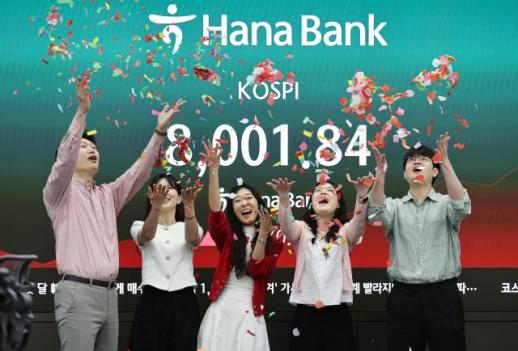 KOSPI Surpasses 8,000 Points for the First Time in History The KOSPI index, which had fluctuated around the 8,000-point threshold throughout the week, finally broke through this milestone during trading on May 15. This achievement comes just seven trading days after the index surpassed 7,000 points. According to the Korea Exchange, as of 9:15 a.m., the KOSPI was up 29.41 points (0.37%) at 8,010.82. The index opened lower at 7,951.75, down 29.66 points (0.37%) from the previous trading day, but quickly turned upward to exceed the 8,000-point mark. Market attention was focused on the potential for the KOSPI to break 8,000, buoyed by strong performance in U.S. markets. The previous night, the New York Stock Exchange saw a rally led by technology stocks, with all three major indices closing higher. The sentiment among investors was further stimulated by the reaffirmation of cooperation between U.S. President Donald Trump and Chinese President Xi Jinping during a summit held in Beijing. On the New York Stock Exchange, the Dow Jones Industrial Average closed at 50,063.46, up 0.75%. This marks the first time the Dow has surpassed the 50,000 mark since February 11. The S&P 500 and the tech-heavy Nasdaq Composite also rose, gaining 0.77% and 0.88%, respectively, both reaching new all-time highs. In the Korean stock market, individual investors drove the index's rise with a net purchase of 792.6 billion won. In contrast, foreign and institutional investors sold off shares, with net sales of 748.5 billion won and 53.5 billion won, respectively. Among large-cap stocks, the performance was mixed. Samsung Electronics (-0.17%), Doosan Enerbility (-0.34%), and Samsung C&T (-1.36%) saw declines, while SK Hynix (0.81%), SK Square (0.60%), Hyundai Motor (3.79%), LG Energy Solution (3.51%), and Samsung Electro-Mechanics (8.79%) posted gains. The KOSDAQ index started the day with gains but later turned downward. At the same time, the KOSDAQ was down 1.11 points (0.09%) at 1,189.98, having opened at 1,197.23, up 6.14 points (0.52%). In the KOSDAQ market, foreign investors were net buyers of 57.5 billion won, while individuals and institutions sold off shares, with net sales of 33 billion won and 1.9 billion won, respectively. Among large-cap KOSDAQ stocks, performance varied. Alteogen (0.65%), Rainbow Robotics (4.88%), Juseong Engineering (0.18%), and Rigakem Bio (0.82%) saw increases, while Ecopro BM (-1.20%), Ecopro (-1.05%), Kolon TissueGene (-2.27%), Samchundang Pharmaceutical (-4.44%), Lino Industry (-4.73%), and HLB (-1.69%) experienced declines.* This article has been translated by AI. 2026-05-15 09:39:00
 -
 The Evolution of Guanxi: Values Take Precedence Over Drinks in China In China, dinner gatherings often feature unfamiliar faces. The host typically provides a brief explanation: "They are ziziren (自己人, 'one of us')." This single phrase clarifies the reason for their presence and their respective positions.The term 'ziziren' goes beyond mere familiarity; it serves as a marker of trust. In China, friends do not require lengthy introductions through mutual acquaintances. The term ziziren suffices, a concept that may seem somewhat rude in South Korea.Many still perceive China's guanxi (关系, 'relationships') as a framework based on drinking and camaraderie, believing that friendship leads to successful business dealings. While this approach was once effective, the current dynamics are much more pragmatic. Even while sharing laughter and clinking glasses, individuals simultaneously assess each other's abilities, resources, reputations, influence, and potential value. If the balance of value is off, mere familiarity will not drive business forward.Thus, introducing someone as a ziziren is not a trivial favor; the introducer stakes their own credibility. Such recommendations are only possible after thoroughly evaluating the other person's capabilities and risks. Consequently, the term ziziren functions more like a strong endorsement than a casual label. While many may share a drink, few earn the recognition of being a ziziren.The network formed by these verified ziziren is known as quanzi (圈子, 'inner circle'). Within this network, information, opportunities, capital, and influence are exchanged among individuals whose value and trustworthiness have been established. In China, issues are often resolved more swiftly within a quanzi than through official channels. Many transactions and business opportunities are initially connected through this network.The operational dynamics of quanzi are also evident in corporate growth structures. Internal trust networks observed in large companies like Trip.com and Pinduoduo are mirrored in emerging tech firms such as DeepC and Unitree. Connections are first made among individuals verified through academic, regional, or professional networks, reducing decision-making costs and accelerating execution speed. The principles driving corporate organizations and individual business environments are fundamentally similar, regardless of scale.This shift represents more than just a change in interpersonal relationships; it is altering the very structure of opportunity in the Chinese market. Previously, having many acquaintances was advantageous, but now, being part of a specific quanzi is more critical. Information arrives late for those outside, and opportunities are often organized elsewhere. The nature of connections has shifted from quantity to quality, emphasizing where one is connected rather than how many connections one has. This structure is not limited to elite groups; it operates similarly in local communities and small business environments. The significance of the term ziziren transcends social hierarchies in China.The adage, "To do business with Chinese people, first become friends," remains relevant. However, today's friends are not merely those met over drinks; they are individuals recognized as ziziren. Guanxi has not disappeared but has been restructured into a system of verification. What operates in China today is 'verified guanxi.'- Choi Yeo-jin, CEO of MaxValue Capital, Ph.D. candidate in International Communication at the Chinese Academy of Social Sciences * This article has been translated by AI. 2026-05-15 09:36:00
 -
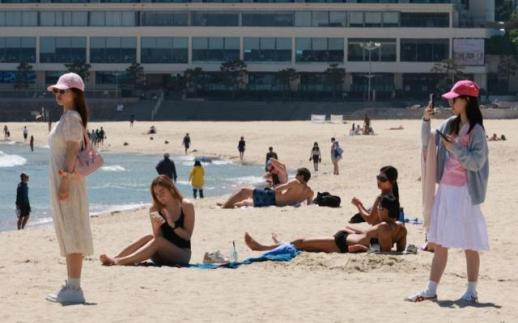 ASIA INSIGHT: Summer arrives earlier amid changing climate across Asia SEOUL, May 15 (AJP) - South Korea is beginning to feel like summer much earlier than usual. This week, temperatures in and around the capital hovered around 30 degrees Celsius in mid-May, a time when spring weather would normally still be mild. The temperatures felt more like late July than the weeks before the annual monsoon season. The heat itself may not seem shocking in a country with four distinct seasons, known for humid summers, but what stands out is how early it arrived. As the country begins to feel more like subtropical Asia before summer officially starts, such weather no longer feels incidental and is becoming the new norm. And South Korea is not alone. Across Asia, unusually warm weather has been arriving earlier and more frequently in recent years. Countries including China, India and Thailand have all experienced stronger heat waves and longer summer seasons. The Philippines and Thailand have issued repeated public health warnings as temperatures soared. In China, provinces have swung between drought and sudden flooding with growing frequency. Japan has also recorded unusually warm conditions, continuing a pattern that is becoming harder to dismiss as a seasonal irregularity. In Seoul, the changes can seem small at first. Spring feels shorter. Warm nights arrive earlier. People search for shade in May instead of June. What once felt unusual is slowly becoming normal. Cherry blossoms bloom earlier almost every year, only to fade more quickly in bursts of unusual heat. Meteorologists have long warned that climate change would make extreme weather more common across the region, and many Asian cities are now beginning to feel that shift in everyday life. Climate change does not mean every hot day is caused by global warming. But it does increase the likelihood of extreme temperatures occurring more often and with greater intensity. In other words, the weather is becoming less predictable and more extreme. The danger is not simply hotter days. It is the growing unpredictability. Seasons are becoming less reliable, less familiar and less tied to the rhythms people once trusted. Spring shrinks. Summers lengthen. Extreme weather arrives earlier and lingers longer. For many Asians, climate change is no longer just a scientific concept measured in polar ice or projections. It is something felt in daily life. Perhaps the most alarming part is how quickly the unbearable is becoming ordinary. Asia is warming faster than many other parts of the world, and densely populated cities are especially vulnerable. Concrete buildings and roads trap heat, making urban areas feel even hotter during periods of unusually warm weather. For many people, climate change is no longer something distant or theoretical. It is being felt through changing seasons, uncomfortable nights and earlier summers. People are beginning to adjust to conditions that would once have seemed abnormal. When temperatures above 30 degrees Celsius in May no longer surprise anyone, it may be a sign of how fast the climate itself is changing. 2026-05-15 09:35:16
 -
 SK Magic's New Water Purifier Ad Featuring Byun Woo-seok Surpasses 10 Million Views SK Magic announced on May 15 that its new water purifier campaign video, released in April, has surpassed a combined total of 12.8 million views on YouTube and Instagram within a month. The MEGA ICE segment garnered approximately 3.8 million views, while the Two Water segment reached around 9 million views.This response aligns with current summer consumer trends. As highball and home café cultures become deeply ingrained this summer, 'large ice' has emerged as a new consumer keyword. What was once exclusive to whiskey bars and premium cafés is now being recognized as a key element of the home beverage experience.SK Magic's new product, the MEGA ICE water purifier, directly targets this trend. It offers the largest ice size in the industry at 25 grams and features a post-freezing ice dispensing system that provides freshly made ice sequentially. The design allows consumers to enjoy café-quality beverages at home, including highballs, iced coffee, and carbonated drinks.In addition to its ice-making capabilities, the product emphasizes hygiene. It can produce up to 5.7 kg of ice per day in mega mode and is equipped with a large ice room with a capacity of 1.1 kg. This design ensures a stable supply of ice during the peak summer season when cold beverage consumption surges.Furthermore, an 'all stainless steel direct water line' is applied to all pathways, enhancing hygiene management throughout the water flow. The system includes a 'five-layer safety care' setup, featuring triple UV care for the ice room, UV care for the dispensing area and faucet, electrolyzed water care for the direct water line, and circulation care for the pathways.Jang Kyung-hoon, a professor of future content research at Halla University, commented, "It is rare for an advertisement's copy to simultaneously convey product functionality, model image, and seasonal sensibility. The structure where consumers first perceive the copy sensibly and then connect it to the product will work very favorably for brand recognition this summer season."Byun Woo-seok also shared his thoughts, stating, "I was impressed by the MEGA ICE when I saw it for the first time during filming; the ice really does not melt easily. I hope everyone enjoys a cool summer with the MEGA ICE water purifier."* This article has been translated by AI. 2026-05-15 09:31:50
 -
 Elon Musk Misses Final Arguments in OpenAI Trial Amid Trump’s China Visit Elon Musk, CEO of Tesla and SpaceX, did not attend the final arguments in the OpenAI trial. He is reportedly accompanying President Donald Trump on his visit to China. On May 14, Musk's lead attorney, Steven Molo, apologized to the jury for Musk's absence during the final arguments held at the federal court in Oakland, California. Molo emphasized that Musk is passionate about the case and that his absence does not indicate a lack of interest. The trial stems from a lawsuit Musk filed against OpenAI co-founders Sam Altman and Greg Brockman. Musk alleges they violated their promise to keep OpenAI a nonprofit organization and gained unfair advantages during the restructuring of the company. The controversy surrounding Musk's absence has intensified in light of his legal status. CNBC reported that Judge Yvonne Gonzalez Rogers previously designated Musk as 'subject to recall,' meaning he could be summoned back to court on short notice if necessary. Musk had already testified during the first week of the trial. Typically, witnesses must seek court permission to travel long distances, and it is unclear whether Musk received such permission for his trip to China, according to a court spokesperson. Musk's legal team did not respond to inquiries regarding the court's approval. Musk joined Trump on his visit to China just before the final arguments began. Trump met with Chinese President Xi Jinping in Beijing. The delegation also included Jensen Huang, CEO of NVIDIA, and Tim Cook, CEO of Apple. OpenAI quickly seized on Musk's absence as a point of contention. OpenAI attorney William Savitt stated during the final arguments, "Musk is not here today. My clients are here because they take this matter seriously." Both Altman and Brockman were present in court. OpenAI's legal team directly countered Musk's claims. Savitt and attorney Sarah Eddy presented evidence, arguing that Musk had previously sought to transition OpenAI into a for-profit entity but only intended to pursue this when he could control the company or merge it with Tesla. Eddy claimed that Musk's initial donations to OpenAI came with specific conditions, but he failed to provide proof of this. He pointed out that testimonies from Musk's associates and former OpenAI director Siobhan Gilly did not support Musk's claims.* This article has been translated by AI. 2026-05-15 09:27:54
 -
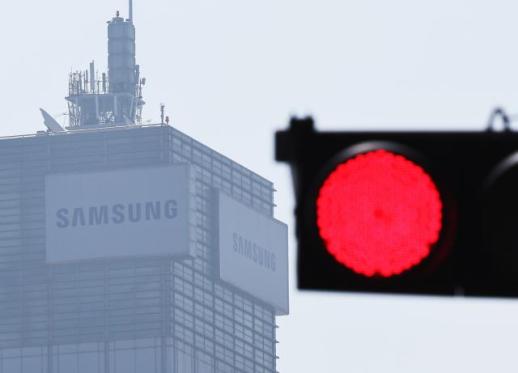 Samsung Workers Plan Nationwide Strike Amid Ongoing Labor Dispute The labor dispute at Samsung Electronics is escalating toward a nationwide strike. The National Labor Relations Commission's mediation efforts have failed, prompting the Samsung Electronics Labor Union to announce a strike starting on the 21st. The disagreement centers around the formalization of a performance bonus system. However, the current situation at Samsung extends beyond mere wage disputes, raising significant concerns about potential impacts on South Korea's semiconductor industry and the broader national economy. At the heart of the conflict is the performance bonus system. The union demands that a certain percentage of operating profit be enshrined in a collective bargaining agreement as a source for performance bonuses. Yet, the semiconductor industry is characterized by extreme volatility, with boom and bust cycles that can shift within a few quarters. Indeed, Samsung Electronics has recently experienced a significant downturn in performance amid a semiconductor industry slump, only now beginning to enter a recovery phase. Demands to institutionalize performance bonuses as fixed costs, disregarding the industry's structural realities, are difficult for the company to accept. The timing of the strike is particularly concerning. Global competition in the semiconductor sector has reached a critical level. The United States is pouring substantial subsidies into reshaping its domestic supply chain, while China is fiercely pursuing semiconductor self-sufficiency. Taiwan's TSMC is accelerating investments in expanding production capacity and advanced processes. With the growth of the AI market, the competition for semiconductor dominance is now pivotal to national competitiveness. If a nationwide strike at Samsung Electronics materializes, the repercussions will extend beyond the company itself. Disruptions in semiconductor production could lead to decreased exports, harm to partner companies, and reduced investment. Samsung is a cornerstone of South Korea's manufacturing sector, and any instability within the company will inevitably affect the national economy. It is difficult to view the union's aggressive stance, ignoring these implications, as a responsible approach. Particularly alarming is the increasingly militant direction of recent union actions. The company has even filed for a court injunction to prohibit illegal strike activities, reflecting this backdrop. Semiconductor manufacturing differs from general manufacturing; maintaining cleanroom standards and production line stability is crucial. Any production disruptions or safety issues can lead to long-lasting damage that is hard to rectify. Escalating conflicts surrounding critical national industrial facilities is not desirable. While it is valid to argue that Samsung should not remain entrenched in an authoritarian organizational culture, it is clear that the company has changed from the past. It recognizes the union as a legitimate negotiating partner, and its wage and welfare levels are among the highest in the country. Notably, despite the downturn in the semiconductor market last year, the company has maintained employment stability without large-scale restructuring. Demanding unilateral concessions without considering the sustainability of the business and industrial competitiveness is not a realistic solution. Labor rights must be respected. However, these rights should be exercised in a manner that acknowledges industrial realities and social responsibilities, especially for a company like Samsung Electronics that significantly impacts the national economy. What is needed now is not a battle for justification or a confrontational stance, but a practical compromise that preserves industrial competitiveness while establishing a reasonable compensation system. The government must also clarify its principles. In a situation where significant disruptions to a key national industry are anticipated, it should actively engage in necessary mediation and management. Striking a balance between the principle of labor rights protection and the reality of maintaining industrial competitiveness is crucial. A nationwide strike at Samsung would be a battle with no winners. If the company falters, workers will also be at risk, and if the industry wavers, the national economy will inevitably suffer. Now is not the time to escalate confrontations; it is time to view the reality with a clear perspective.* This article has been translated by AI. 2026-05-15 09:24:27
 -
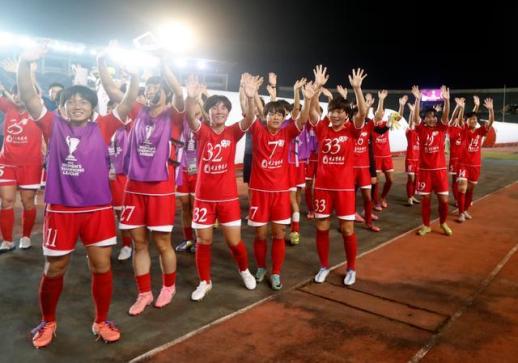 North-South Women's Football Match in Korea Sells Out in 12 Hours North Korea's My Hometown Women's Football Team's visit to South Korea has generated significant interest, leading to the complete sellout of tickets for the semifinals of the 2025-2026 Asian Football Confederation (AFC) Women's Champions League (AWCL) within just half a day. According to the Korea Football Association, tickets for the AWCL semifinals, which went on sale on May 12, sold out within approximately 12 hours, with 7,087 of the total 9,000 seats being purchased. The AWCL semifinals will be held in a single-elimination format. The match between South Korea's Suwon FC Women and North Korea's My Hometown Women's Football Team is set for May 20 at 7 PM at Suwon Sports Complex. This marks the first time since December 2018 that a North Korean team has participated in a sports event in South Korea. Notably, this is also the first visit by the North Korean women's football team to South Korea in 12 years since the 2014 Incheon Asian Games. The South Korean government has officially approved the North Korean team's visit. On May 14, the Ministry of Unification announced, "We have approved the visit of My Hometown Women's Football Team to South Korea for the 2026 AWCL." The approved delegation consists of 27 players and 12 staff members, totaling 39 individuals, who will stay from May 17 to May 24. They are expected to enter South Korea through Incheon International Airport on May 17, holding certificates for their visit in accordance with the Inter-Korean Exchange and Cooperation Act. A large-scale joint cheering event will also take place during the match. Approximately 200 organizations, including the Council of Civil Organizations for Inter-Korean Cooperation, the National Council for Reconciliation and Cooperation, the Coalition for Peaceful Unification, and the Hankyoreh Foundation for Unification Culture, have recently formed the '2026 AFC-AWCL Women's Football Joint Cheering Squad.' In support of the civilian cheering efforts, the government has decided to allocate approximately 300 million won from the Inter-Korean Cooperation Fund. The Ministry of Unification stated, "About 3,000 participants are expected to cheer for both teams, emphasizing support for all players. We have also provided guidance on the 'prohibited items' under AFC regulations and the ban on political and religious messages in the stadium." The joint cheering squad noted, "Considering this is a club competition, we plan not to use the national names. If necessary, we will refer to North Korea (Chosun) in conjunction with the match." Cheering slogans such as 'Go Suwon, Keep it Up My Hometown' and 'We Support Suwon FC Women, Welcome My Hometown Women's Football Team' are expected to be used.* This article has been translated by AI. 2026-05-15 09:22:29