

Journalist

CGTN
-
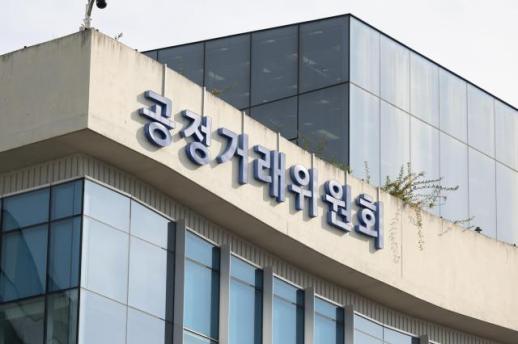 Fair Trade Commission Fines 'Gwi Han Sarang Deul' 210 Million Won for Misleading Franchise Practices A company that inflated the number of its stores while failing to disclose profits received from suppliers has been caught by fair trade authorities. The Fair Trade Commission announced on May 31 that it has imposed a corrective order and a fine of 210 million won on Gwi Han Sarang Deul for not reporting profits received from suppliers in its information disclosure statement while exaggerating the number of franchise stores. Gwi Han Sarang Deul operates the Gwi Han Jokbal franchise. According to the commission's investigation, Gwi Han Sarang Deul received 141,145,000 won from suppliers for facilitating transactions with franchisees in 2020 but did not include this amount in its disclosure statement. Additionally, in 2021, the company received 174,856,000 won from a sauce supplier but only reported 87,131,000 won in its disclosure statement. The commission views the economic benefits received by the franchise headquarters from suppliers as crucial information that could lead to price increases for franchisees. Therefore, the failure to disclose or downplay this information was deemed a deceptive practice, resulting in the corrective order and the fine of 210 million won. The investigation also uncovered false and exaggerated advertising practices by Gwi Han Sarang Deul. From April to July 2022, the company advertised on its franchise consultation website that it had opened 16 new stores in May and June. However, the commission found that only one store, the Yeoksam branch, was actually opened during that period. Of the remaining 15 stores, seven were opened at different times, and eight had not opened by December 2023. The commission considers the number of stores opened within a specific timeframe as a key indicator of the franchise's success. Consequently, it classified this behavior as false and exaggerated advertising and issued a corrective order. A commission official stated, "We will continue to monitor and take strict action against violations of information disclosure obligations and unfair advertising practices to ensure that prospective franchisees and franchise owners can engage in fair transactions with franchise headquarters on equal footing."* This article has been translated by AI. 2026-05-31 12:06:00
 -
 Korea's Privacy Commission Approves Naver's AI Tab After Review The Personal Information Protection Commission (PIPC) has reviewed and approved Naver's AI agent service, known as "AI Tab." On May 28, the PIPC held a plenary meeting where it concluded the review of Naver's AI Tab service, announcing the decision on May 31. The pre-approval review is a system designed to help companies establish appropriate legal measures when the application of personal information protection laws is unclear during the planning and development of new technologies and services like AI. If companies comply with the agreed-upon measures, they will not face penalties within that scope. Naver applied for the pre-approval review to ensure the safe use of user data ahead of the launch of its AI Tab, which provides personalized search results through interaction with an AI chatbot. The PIPC determined that Naver could legally operate the AI Tab service under personal information protection laws, provided it fulfills the agreed-upon protective measures for users. The key measures include three main points. First, Naver must clearly inform users who do not wish to receive personalized responses about the option to refuse data use and continuously improve measures to ensure users' control over their data based on their feedback. Additionally, Naver is required to transparently disclose the categories and key details of personalized information used in the AI Tab service through its privacy policy and implement additional safety measures to prevent misuse and leakage of personal information. Furthermore, during the analysis of users' service usage history, Naver must ensure that sensitive information is not inferred or utilized, and that unique identifiers such as resident registration numbers, account numbers, and credit card information are not included in AI responses. The PIPC plans to monitor whether Naver complies with these measures once the AI Tab is officially launched.* This article has been translated by AI. 2026-05-31 12:06:00
 -
 Deputy Prime Minister Baek Kyung-hoon Calls for South Korea to Compete in AI Frontier Models "It is time for us to challenge frontier models that can compete with the U.S. and China, moving beyond industry-specific artificial intelligence (AI)." Baek Kyung-hoon, Deputy Prime Minister and Minister of Science and ICT, made this statement during a press conference on May 29 at the Central Post Office in Seoul, marking his first anniversary in office. He reviewed the past year's achievements in AI infrastructure development, research and development normalization, and reducing communication costs, while emphasizing the need for a focus on frontier models and general artificial intelligence (AGI) in future AI policies. The Ministry of Science and ICT highlighted key accomplishments over the past year, including establishing a foundation for South Korea to become one of the top three AI nations, revitalizing a challenging research and development ecosystem, and ensuring basic communication rights while alleviating public burdens. In the AI sector, the ministry pointed to the promotion of the independent AI foundation model project and the expansion of national AI infrastructure as major achievements. Currently, South Korea has secured 260,000 graphics processing units (GPUs) and is expanding its collaboration with global companies such as OpenAI, NVIDIA, and Google DeepMind. Baek noted, "The most significant change over the past year has been the full-scale establishment of GPU-centered AI infrastructure, ensuring that researchers do not struggle to achieve results due to a lack of GPUs." He assessed that the focus of AI competition is shifting from infrastructure development to securing frontier models. "Until now, we have pursued AI transformation strategies centered on strong industries like semiconductors and manufacturing, concentrating on developing suitable independent AI models," he explained. However, he added that the rapid advancement of frontier models necessitates a reassessment of national strategies. Baek emphasized that to implement AI services accessible to all citizens, industry-specific models alone are insufficient. "South Korea must aim for AI capabilities on par with the U.S. and China," he stated. He also mentioned that securing infrastructure investments is essential for achieving competitiveness in frontier AI. "While we cannot directly compare our AI budget with those of the U.S. and China, it is crucial for South Korea to efficiently expand investments in technology, GPUs, data, and talent across the board," he said. During the conference, the ministry also unveiled plans for AGI and agentic AI. Baek remarked, "In the past, we questioned whether AGI was necessary, but that concern has disappeared. We must prepare for AGI-level frontier models." He added, "Soon, we will enter an era where AI will develop AI models on its own, and we must prepare for the accelerated pace of technological advancement starting now." Regarding the government's 'AI for All' policy, Baek explained that the focus is on expanding AI agents beyond simple chatbot services. "A time will come when citizens, businesses, and government agencies utilize AI agents to enhance productivity," he said, aiming to create an environment where AI provides practical assistance in daily life, including administrative services and financial tasks. On cybersecurity, he stressed the importance of both global cooperation and developing domestic capabilities. "It doesn't matter what rank we hold in cybersecurity; while short-term responses through global collaboration are important, it is even more crucial for South Korea to have the capacity to respond independently," he noted. Finally, Baek reflected on his past year in office, expressing initial concerns about what could be achieved in a rigid organization upon his appointment. "Fortunately, flexible communication, which is central to our culture, has become well established, and communication among staff has improved," he reported. He concluded by stating, "It is important to focus on the basics rather than inter-departmental power struggles, as many ministries rely on the Ministry of Science and ICT. We will concentrate on creating a system that can apply AI in the field."* This article has been translated by AI. 2026-05-31 12:03:00
 -
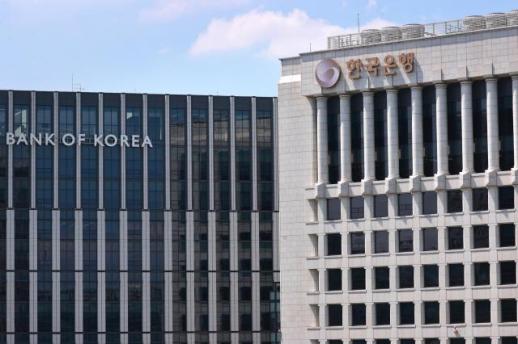 Despite Economic Growth, Companies Hesitate to Build Domestic Factories A recent analysis indicates that South Korean companies are shifting their investment decision-making from a focus on efficiency to include security considerations. This means that even in a favorable economic climate, companies may refrain from building factories, while they might proceed with investments during downturns. The Bank of Korea has warned that as the global paradigm of "economic security" rises, it is crucial to ensure that the domestic manufacturing and export base does not weaken. According to a report released by the Bank of Korea's Economic Research Institute on May 31, the criteria for corporate investment decisions have fundamentally changed since 2017, influenced by the U.S.-China power struggle, pandemic-related supply chain disruptions, and the Russia-Ukraine war. Traditionally, factors such as operating rates, interest rates, and exports dictated capital investment. However, uncertainties in trade policy and geopolitical risks have now become significant variables. The contribution of security and global factors to fluctuations in capital investment has increased from an average of 29.6% before 2020 to 43.9% afterward, a rise of 14.3 percentage points. In particular, for South Korea's key industries, such as semiconductor and automotive manufacturing, the contribution of security and global factors to investment fluctuations rose from an average of 33.1% between 2016 and 2019 to 48.7% after 2020, nearly matching market and economic factors. The automotive sector has seen even more dramatic changes, with the proportion of security and global factors jumping from 25.9% to 50.9% during the same period. This trend is reflected in the decisions of domestic automakers and battery companies to prioritize building factories in the U.S. over domestic investments following the implementation of the Inflation Reduction Act and the CHIPS Act. The concern is that this structural shift may impose burdens on the domestic macroeconomy. As foreign direct investment increases rapidly, the link between rising exports and domestic capital investment is weakening. The sensitivity of capital investment to exports has shown a gradual decline, and the domestic value-added effect per unit of private investment has also been decreasing since 2020. The traditional cycle of rising exports, expanding domestic investment, and increasing employment and income is now under threat. However, the Bank of Korea argues that the expansion of foreign direct investment should not be viewed merely as capital outflow. It should also be seen as a strategic move to enter the "inner circle" of global technological hegemony. Companies are securing benefits from domestic protectionist subsidies through large-scale investments in advanced economies while effectively circumventing rising non-tariff trade barriers. This is also seen as an unavoidable strategic choice to access critical parts of the global supply chain, including advanced technology ecosystems. Moreover, the increase in foreign direct investment could contribute to enhancing the country's credibility by accumulating net foreign assets. A high level of net foreign assets relative to GDP can stabilize the nation's credit rating. The Bank of Korea emphasized that to prevent the paradigm shift from weakening the domestic manufacturing and export base, policies must be implemented to enhance the incentives for core manufacturing processes and research and development to remain in the country. As the grammar of investment changes, so too must the grammar of policy. As major countries, including the U.S., European Union, China, and Japan, competitively expand direct support for strategic industries such as semiconductors and batteries, South Korea is also ramping up its support system for advanced industries through tax incentives, cluster development, financial support, and technology protection. The Bank of Korea has analyzed that the current indirect support methods have limitations in preventing investment hollowing. Compared to the direct subsidies of $39 billion from the U.S. CHIPS Act and 10.7 trillion won from Japan for attracting TSMC, South Korea's support is constrained in terms of immediacy and scale.* This article has been translated by AI. 2026-05-31 12:03:00
 -
 Deputy Prime Minister Baek Kyung-hoon Prioritizes Mission-Centric Reform Over Consolidation of Research Institutes The Ministry of Science and ICT has announced that it will prioritize mission-centric reform over the consolidation of government-funded research institutes under the National Science and Technology Council (NST). During a press briefing on May 29 at the Seoul Central Post Office, Deputy Prime Minister and Minister of Science and ICT Baek Kyung-hoon stated, "Rather than first discussing the reorganization of research institutes, we need to set mission-centric tasks first. Once a mission-centric system centered around the K-Moonshot Project is established, discussions on organizational restructuring can follow, but for now, setting mission-centric tasks is the priority." In response to concerns that there are more support staff than researchers at these institutes, First Vice Minister Koo Hyuk-chae noted that it is difficult to make uniform judgments across institutions. He explained, "Each institution has different circumstances, and we need to approach them according to their specific characteristics." According to the Ministry of Science and ICT, the current support for research personnel at NST-affiliated institutions is about 17% of the actual work support standard. The ministry also plans to continue improving the treatment of researchers at government-funded institutes. Deputy Prime Minister Baek remarked, "The disparity in treatment between private companies and research institutes is always a concern, and we are discussing how to improve it." Vice Minister Koo added, "It is necessary to continuously improve the treatment of experienced researchers, and we are considering expanding the budget for science and engineering research institutes in the next fiscal budget process." On the same day, the Ministry of Science and ICT announced plans to reform the evaluation system to support challenging research and development (R&D). Vice Minister Koo stated, "The R&D environment is changing rapidly, and the existing evaluation methods have limitations. We are reviewing a transition to a diagnostic and excellence evaluation system centered around experts." He further mentioned, "We aim to present evaluation directions as early as this year or by early next year."* This article has been translated by AI. 2026-05-31 12:03:00
 -
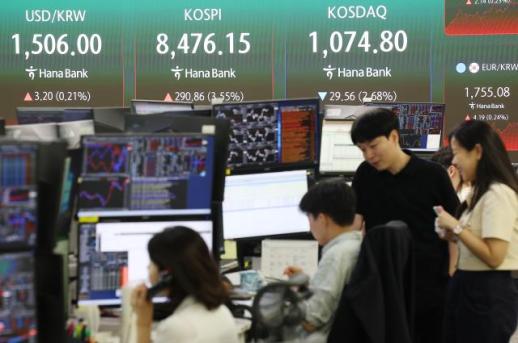 24-Hour Trading for Won-Dollar Exchange Begins July 6 Starting July 6, trading hours for the won-dollar foreign exchange will be extended to a continuous 24-hour format. This change is seen as a crucial step for South Korea as it aims to be included in the MSCI developed markets index. The Seoul Foreign Exchange Market Operations Committee announced on May 31 that it had approved significant changes regarding trading hours and days for the won-dollar exchange during a meeting held on May 29. Currently limited to 9 a.m. to 2 a.m. the following day, trading hours will be expanded to 6 a.m. Monday to 6 a.m. Saturday during New York's daylight saving time. At other times, trading will run from 7 a.m. Monday to 7 a.m. Saturday. Trading will also be available on holidays, except for weekends and January 1. Settlements will continue to be processed only on banking business days. The committee stated, "This measure will eliminate gaps in trading hours and enhance convenience for domestic and foreign investors, as well as importers and exporters, while reducing transaction costs." With the 24-hour trading, a time-weighted average price (TWAP) will be provided every hour. Opening, high, and low exchange rates will be reported based on the period from 6 a.m. to 6 a.m. the following day. The current closing exchange rate at 3:30 p.m. and the market average rate (MAR) will remain unchanged. The foreign exchange authorities plan to provide statistics based on these rates for the time being. The authorities intend to revise related foreign exchange trading regulations, including changing the market average rate from MAR to TWAP, based on feedback from market participants gathered during the committee meeting in June. Since the launch of the 'Foreign Exchange Market Modernization Plan' in 2023, the government has been gradually extending trading hours and easing restrictions on foreign transactions. In January, it officially announced that the foreign exchange market would be open 24 hours starting in July as part of its '2026 Economic Growth Strategy.' This initiative is part of a broader trend toward liberalizing the foreign exchange market in pursuit of inclusion in the Morgan Stanley Capital International (MSCI) developed markets index. MSCI has previously assessed that South Korea's foreign exchange market does not meet the standards for developed currencies due to its limited accessibility for 24-hour trading through offshore markets. However, some concerns have been raised about increased exchange rate volatility due to limited liquidity during nighttime trading. Kang Hyun-joo, a senior researcher at the Capital Market Research Institute, commented, "The expansion of trading hours is expected to alleviate gap risks and enhance the price discovery function of the regional market, representing an improvement in market microstructure."* This article has been translated by AI. 2026-05-31 12:03:00
 -
 Court Recognizes Workplace Dispute as Cause of Employee's Death from Brain Hemorrhage A South Korean court has recognized the death of a factory manager from a brain hemorrhage, which occurred shortly after a heated argument with a colleague, as a work-related injury. The ruling emphasized that even with pre-existing conditions, significant stress experienced during work can establish a causal link to such medical events. On May 31, legal sources reported that the Seoul Administrative Court's 13th Division, led by Judge Jin Hyun-seob, ruled in favor of the family of the deceased manager, identified as A, in a lawsuit against the Korea Workers' Compensation and Welfare Service. The family sought compensation for bereavement and funeral expenses, which had been denied by the agency. In March 2024, A, who was overseeing production, engaged in a fierce argument with a colleague over the receipt of work orders. The dispute continued for about ten minutes even after they moved to the break room. Shortly after the argument, A complained of sudden fatigue and lay down, only to be found unconscious by factory staff. He was later diagnosed with a brain hemorrhage and died a month later. The family claimed that A's death was a work-related injury and requested compensation, but the Korea Workers' Compensation and Welfare Service rejected their claim. The agency argued that the argument did not constitute acute stress severe enough to cause a brain hemorrhage and attributed the cause of death to A's personal health factors, including hypertension and a history of smoking. Consequently, the family filed a lawsuit against the agency. After the trial, the court ruled in favor of the family. The judges noted, "Given that A collapsed immediately after the argument, there is a significant causal relationship between his work and his death," and overturned the agency's decision. They determined that A was in an unusually agitated state during the dispute, which could not be dismissed as a mere disagreement. The court also highlighted that A had no prior history of cerebrovascular disease, suggesting that the mental stress from the conflict with his colleague could have interacted with any underlying conditions to trigger a sudden change in his vascular health.* This article has been translated by AI. 2026-05-31 12:00:00
 -
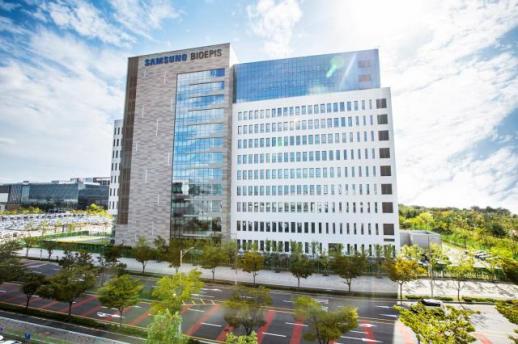 Samsung Bioepis Launches Ophthalmology Biosimilar 'Ofuviz' in Europe Samsung Bioepis is accelerating its entry into the European market with the launch of its ophthalmology treatment 'Ofuviz' (active ingredient: Aflibercept). This move marks a strategic expansion beyond its existing biosimilar business focused on autoimmune and rare diseases into the ophthalmology sector.On May 31, Samsung Bioepis announced the launch of the low-concentration formulation (40mg/mL) of 'Ofuviz' in Europe. Ofuviz is a biosimilar to Regeneron's blockbuster ophthalmology drug 'Eylea,' used for treating eye diseases such as wet age-related macular degeneration. It works by binding to vascular endothelial growth factor (VEGF) to inhibit the formation of abnormal blood vessels.This launch is seen as a significant step in strengthening Samsung Bioepis's presence in the European ophthalmology market. Earlier this year, the company introduced the biosimilar 'Byooviz' (active ingredient: Ranibizumab) in Europe, further expanding its portfolio of ophthalmology treatments.Market analysts view Samsung Bioepis as having evolved into a biopharmaceutical company capable of managing the entire cycle of development, clinical trials, approval, and sales.The company's performance supports this trend. In the first quarter of this year, Samsung Bioepis reported revenues of 454.9 billion won and an operating profit of 144 billion won, representing increases of 14% and 13%, respectively, compared to the same period last year. This growth is attributed to the expansion of global biosimilar sales, which has led to improved revenue and profitability.The first results since the establishment of its holding company have also been positive. Samsung Epise Holdings recorded consolidated revenues of 453.9 billion won and an operating profit of 90.5 billion won in the first quarter, successfully turning a profit. Samsung Epise Holdings was established in November of last year through the spin-off of Samsung Biologics and operates Samsung Bioepis as a wholly-owned subsidiary while pursuing biotechnological platforms and future new businesses through a newly created subsidiary.Linda Choi, Vice President of Samsung Bioepis's Commercial Division, stated, "With the launch of Ofuviz in Europe, we can provide various treatment opportunities for patients with ophthalmic diseases. We will continue to address unmet needs through biosimilars and contribute to enhancing social value, including reducing health insurance costs."* This article has been translated by AI. 2026-05-31 11:39:00
 -
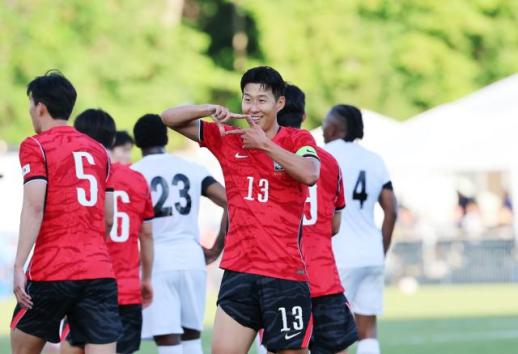 Son Heung-min Scores Twice as South Korea Leads Trinidad and Tobago 2-0 The South Korean national football team finished the first half leading 2-0 against Trinidad and Tobago, thanks to a brace from captain Son Heung-min. Under the guidance of coach Hong Myung-bo, South Korea concluded the first half at South Field, Brigham Young University in Salt Lake City, Utah, on May 31. In the first match of their final warm-up ahead of the North and Central America World Cup qualifiers, Coach Hong employed a three-back formation. Son played as the lone striker, supported by Bae Jun-ho and Lee Dong-kyung in the attacking midfield. Kim Jin-kyu and Baek Seung-ho controlled the midfield, while Jens Castrop and Kim Moon-hwan operated as wing-backs. The defense was composed of Lee Gi-hyuk, Jo Yu-min, and Lee Han-beom, with Jo Hyun-woo in goal. Despite a sluggish start, South Korea broke the deadlock thanks to Son. In the 40th minute, Kim Jin-kyu delivered a through ball to Kim Moon-hwan, who sent a low cross into the box, allowing Son to score the opening goal. Son quickly added a second goal. In the 42nd minute, after receiving a pass from Son, Bae Jun-ho was fouled inside the penalty area. Son stepped up to take the penalty and scored with a powerful shot to the left side of the goal, marking his 56th career international goal. With Son's two goals, South Korea ended the first half with a comfortable two-goal lead. * This article has been translated by AI. 2026-05-31 11:39:00
 -
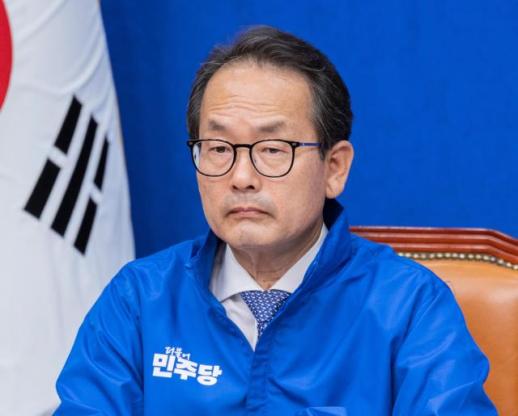 Democratic Party Criticizes People Power Party's Election Concerns The Democratic Party stated on May 31 that the People Power Party's critical stance toward the election is "distressing." This comment came after the People Power Party raised allegations of government interference and election manipulation regarding President Lee Jae-myung's inspection of the ballot stamp during early voting. Kang Jun-hyun, the party's chief spokesperson, held a press conference at the National Assembly, asserting, "Despite the Election Commission confirming that there are no legal issues, the People Power Party continues its baseless attacks." Kang emphasized that there are still factions within the People Power Party promoting conspiracy theories about election fraud and undermining the significance of early voting. He added, "Such behavior is a threat to democracy," urging the party not to fall into contradictions while trying to tarnish the president's image. In response to the People Power Party's claim that President Lee's message encouraging early voting constitutes election interference, Kang explained, "The government and the president have the right to encourage voting. A statement like 'It would be good if you vote' does not refer to any specific individual or party and is therefore permissible."* This article has been translated by AI. 2026-05-31 11:39:00