

Journalist

CGTN
-
 Software tantrums shake Asian markets; Korean shares lose nearly 3% SEOUL, February 05 (AJP) - Asian stocks tracked Wall Street lower early Thursday, as fears over disruption in the software industry from rapid advances in artificial intelligence triggered broad selling. The Nasdaq suffered its worst two-day rout since last April’s “tariff tantrums,” as investors retreated from software stocks following the release of a suite of industry-specific AI tools, including systems capable of reviewing legal contracts developed by Anthropic. Asian semiconductor shares took a header after Advanced Micro Devices reported earnings that fell short of elevated expectations for AI-driven growth. AMD shares plunged more than 17 percent. “The pullback reflects lingering concerns over AI-related earnings visibility,” said Han Ji-young, a researcher at Kiwoom Securities. “Given their close linkage to U.S. tech shares, Korean stocks remain vulnerable to further downside.” In Seoul, both the benchmark KOSPI and the secondary KOSDAQ retreated more than 2 percent, as foreign investors took profits following months of strong gains. As of 11:05 a.m., the KOSPI had fallen 2.76 percent to 5,223.10, while the KOSDAQ dropped 2.56 percent to 1,120.00. The won weakened against the U.S. dollar, pressured by renewed dollar strength and continued yen weakness. The move followed comments from U.S. Treasury Secretary Scott Bessent reaffirming support for a strong-dollar policy, while political uncertainty ahead of Japan’s snap election weighed on the yen. As a result, the won–dollar exchange rate rose above the 1,460 level in early trading, with the dollar gaining 1.20 won to 1,461.70. Foreign investors sold a net 2.3 trillion won on the main board and 2.1 trillion won on the KOSDAQ. Losses were broad-based across sectors, led by heavyweight technology stocks, while defense and shipbuilding shares also traded lower. Samsung Electronics fell 3.61 percent to 163,000 won, while chipmaker SK hynix dropped 3.67 percent to 867,000 won. Battery maker LG Energy Solution edged up 0.12 percent to 403,000 won. Financial and biotech shares were mixed. Samsung Life Insurance rose 0.46 percent to 198,400 won, while Samsung Biologics slipped 0.68 percent to 1,747,000 won. Automakers also posted mixed moves, with Hyundai Motor down 0.79 percent at 500,000 won and Kia up 0.57 percent at 157,700 won. Defense and aerospace shares weakened, with Hanwha Aerospace retreating 5.89 percent to 1,246,000 won. Shipbuilders were also under pressure. HD Hyundai Heavy Industries fell 2.06 percent to 571,000 won, while Hanwha Ocean slid 2.43 percent to 140,500 won after reporting weaker-than-expected fourth-quarter earnings, prompting near-term selling despite broker upgrades and positive long-term outlooks for LNG and special-purpose vessels. Elsewhere in Asia, Japan’s Nikkei 225 was nearly flat, down 0.15 percent at 54,210.24, while China’s Shanghai Composite fell 0.6 percent to 4,076.89 and Hong Kong’s Hang Seng Index dropped 1.1 percent to 26,543.85. 2026-02-05 11:19:04
 -
 BYD Korea Unveils Dolphin Electric Hatchback, Starting at 24.5 Million Won BYD Korea on Wednesday unveiled the BYD Dolphin, a small electric hatchback aimed at the urban EV market. The company said the Dolphin is optimized for city driving, with efficient packaging and a price positioned to appeal to first-time EV buyers, commuters and consumers looking to downsize. Its exterior follows BYD’s EV design concept, “Ocean Aesthetics,” reinterpreting the dolphin’s flowing curves and movement in a modern style. Despite its compact size, the Dolphin has a 2,700-millimeter wheelbase and seats five. With the rear seats folded, cargo space expands to as much as 1,310 liters, BYD Korea said. The model will be offered in two trims: the Dolphin and the long-range, higher-performance Dolphin Active. The Dolphin Active produces 150 kW (about 204 horsepower) and accelerates from 0 to 100 kph in 7.0 seconds. Both trims are built on the EV-only e-Platform 3.0 and include a heat-pump system to improve energy efficiency across driving conditions. The car uses BYD’s Blade Battery. The Ministry of Environment-certified driving range is up to 354 kilometers per charge (Dolphin Active). With fast charging, the battery can be charged to 80% in about 30 minutes, the company said. A rotating 10.1-inch touch display supports T Map navigation, wireless Apple CarPlay and Android Auto, and over-the-air updates. Features include vehicle-to-load capability, a panoramic glass roof with an electronic sunshade, and a 3D surround-view monitor. The Dolphin Active adds a two-tone exterior color option, ventilated front seats and wireless smartphone charging. The Dolphin earned a five-star rating in Euro NCAP crash tests, BYD Korea said. All trims come standard with seven airbags and advanced driver-assistance systems. Prices, after eco-friendly vehicle tax benefits and before subsidies, are set at 24.5 million won for the Dolphin and 29.2 million won for the Dolphin Active. BYD Korea said the Dolphin will go on sale nationwide starting Feb. 11, with test drives available at BYD showrooms. Deliveries of the Dolphin Active are scheduled to begin in March on a rolling basis. * This article has been translated by AI. 2026-02-05 10:51:00
 -
 Marco Landi says AI will expand cinematic creativity as festival moves to South Korea SEOUL, February 05 (AJP) - Marco Landi, the former president of Apple and a leading figure in the global artificial intelligence sector, says the technology should be viewed as a tool for augmented imagination rather than a threat to human creativity. Landi, who currently serves as the president of Institut EuropIA and founded the World AI Film Festival (WAIFF), shared his vision for the future of cinema and technology during a recent interview. His remarks come as the festival prepares to expand to South Korea in 2026, marking a significant step in his mission to build a global ecosystem for AI-driven storytelling. With a career spanning leadership roles at Texas Instruments and Apple, Landi has spent decades at the intersection of innovation and culture. He established the House of Artificial Intelligence in 2021 to promote education and inclusion, particularly for women and young creators. He later launched the World AI Cannes Festival to explore how AI transforms specific industries, with cinema emerging as a primary focus. "Film is a powerful lens because it brings together storytelling, emotion, music, image, and culture," Landi said. "Our goal is not a technological revolution that erases tradition, but a thoughtful transition that preserves Europe’s rich cinematic heritage while helping creators embrace new tools." The inaugural WAIFF in 2025 received 1,500 submissions from around the world in just three months. Landi noted that AI is radically lowering the barriers to entry for filmmakers, allowing creators to produce high-quality work with significantly smaller budgets. The decision to bring the festival to South Korea follows a surge of international interest. Landi emphasized that the Seoul edition is designed as a two-way bridge to foster cross-cultural exchange between South Korean creators and international filmmakers. "Every country brings its own cultural perspective, sensibility, and storytelling tradition," Landi said. "By sharing these experiences, we enrich one another. Cinema becomes a space of dialogue rather than competition." Addressing concerns about the ethical implications of AI, Landi stressed the importance of governance and the protection of intellectual property. He said WAIFF is developing an ethical charter to ensure creators are fairly rewarded and their work is respected. "AI is not here to replace creativity," Landi said, citing a conversation with musician Jean-Michel Jarre. "It is a tool that helps imagination move faster, reach further, and materialize ideas more efficiently." Landi's philosophy on technology leadership remains rooted in principles he observed during his time at Apple. He cited the influence of Steve Jobs, noting that technology must be effective enough for people to want to use it and beautiful enough for them to want to own it. As the festival grows, Landi hopes to reach at least 50 countries within three years. He envisions WAIFF as an ecosystem that connects creators, investors, and distributors while fostering sustainable business models for the new film industry. Traditional filmmaking and AI-assisted creation can coexist and enrich one another, Landi said. He noted that the festival aims to reach at least 50 countries within three years as it builds a broader structure dedicated to education and ethics. 2026-02-05 10:48:01
 -
 Celltrion posts record profit as new biosimilars drive sales growth SEOUL, February 05 (AJP) - South Korean biopharmaceutical company Celltrion reported record annual earnings on Thursday as strong sales of newer, higher-margin biosimilars lifted both revenue and profitability. In a regulatory filing, the firm said consolidated revenue for 2025 rose 17 percent from a year earlier to 4.16 trillion won, while operating profit jumped 137.5 percent to 1.17trillion won. It marked the first time Celltrion surpassed both 4 trillion won in annual revenue and 1 trillion won in operating profit in the same year. Operating margin rose to 28.1 percent, up 14.3 percentage points from a year earlier. Fourth-quarter revenue climbed 25.1 percent year on year to 1.33 trillion won, while operating profit surged 142 percent to 475.2 billion won, exceeding company guidance. Celltrion attributed the growth largely to rapid expansion of higher-margin new biosimilars. Alongside steady sales of established products such as Remsima, Truxima and Herzuma, newer drugs including Remsima SC, Yuflyma, Vegzelma and Zymfentra gained traction, lifting global biopharmaceutical sales 24 percent to 3.9 trillion won. New products accounted for 54 percent of total biopharmaceutical sales, the company said. Celltrion set a 2026 revenue target of 5.3 trillion won and plans to increase the share of new products in sales to 70 percent through bidding strategies centered on newer drugs and by strengthening its direct sales network. The company also plans to expand its contract manufacturing and development businesses through its Branchburg, New Jersey, facility, while broadening its biosimilar and innovative drug pipeline to support longer-term growth. * This article, published by Aju Business Daily, was translated by AI and edited by AJP. 2026-02-05 10:37:53
 -
 Older mothers on the rise due to later marriages SEOUL, February 5 (AJP) - The number of women giving birth in their late 30s and 40s is on the rise, as more and more tie the knot later in life, the Ministry of Data and Statistics said on Thursday. Childbirths among women in their late 30s increased for 11 consecutive months last year, rising an average of 5.1 percent from January through November, compared with the same period in 2024. Births to women in their 40s showed a similar trend. Over the same period, childbirths among women in their early 30s slowed, declining for three months in the second half of the year. The trend is widely attributed to later marriages, which are delaying women's first births. The average age at first marriage for women rose to 31.6 in 2024, up from 30.0 in 2015. "With more women marrying later in life, the age of first-time mothers has been rising," the ministry said. 2026-02-05 10:33:27
 -
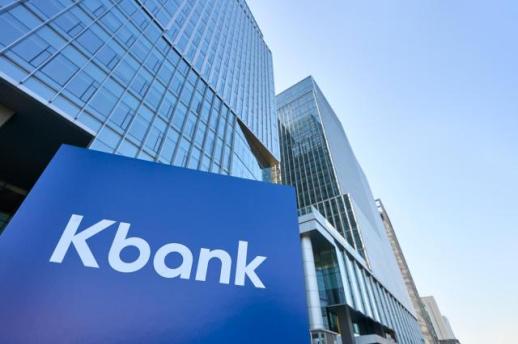 K Bank Makes Third KOSPI IPO Bid, Targets SME and Platform Growth 인터넷전문은행 케이뱅크가 설립 10주년인 올해 유가증권시장(코스피) 상장을 위한 세번째 도전에 나섰다. 새해 들어 코스피지수가 5000선을 넘어선 가운데 케이뱅크는 SME(개인사업자, 중소기업) 시장 진출과 플랫폼 비즈니스 기반 구축, 디지털 자산 분야 경쟁력 강화에 속도를 내며 성공적으로 증시에 안착하겠다는 각오다. K Bank, a South Korean internet-only bank, is making its third attempt to list on the Korea Stock Exchange’s main KOSPI market in its 10th anniversary year. With the KOSPI index topping 5,000 so far this year, the bank said it will accelerate expansion into the SME market — including sole proprietors and small and midsize companies — build out its platform business and strengthen competitiveness in digital assets as it seeks a stable market debut. CEO Choi Woo Hyung said at a news conference Thursday at the Conrad Seoul in Yeouido, Seoul, that “K Bank has continued its growth and innovation since its launch.” The bank said it was the first in South Korea to offer fully non-face-to-face products including home mortgage loans, real estate-backed loans for sole proprietors and guaranteed loans for sole proprietors. It also provides other lending products such as credit loans and jeonse deposit loans, along with deposit products including savings accounts, a parking account called Plus Box and an automatic savings service called Challenge Box — all through fully digital channels. As of last year, K Bank said it had 15.53 million customers, with 18.4 trillion won in outstanding loans and 28.4 trillion won in deposits. It cited interest-rate competitiveness and convenience as key growth drivers, saying it posted five straight years of top-tier average annual growth in deposits and loans among domestic banks, at 49.9% for deposits and 42.8% for loans, supported by what it called industry-low loan rates and industry-high deposit and savings rates. K Bank said it will use capital raised from the IPO to broaden its deposit and loan lineup and invest in future growth, including entry into the SME market, stronger tech leadership, expansion of platform businesses and new ventures such as digital assets. It aims to gradually expand from a household-loan-centered portfolio into corporate lending, targeting a 50-50 split between household and SME by 2030. The bank also plans to build an investment product lineup spanning stocks and bonds as well as alternative assets such as virtual assets and gold, and to expand partnerships with lifestyle companies. It said it is pursuing cooperation with countries including Thailand and the United Arab Emirates to build stablecoin-based cross-border remittance and payment infrastructure, with the goal of becoming a digital finance hub supporting more efficient cross-border money transfers. The offering totals 60 million shares, with an indicative price range of 8,300 won to 9,500 won per share. At the top of the range, the offering would raise 570 billion won. After listing, 725 billion won from past paid-in capital increases would be recognized as capital in calculating the BIS ratio, which the bank said would bring the total funding inflow effect to about 1 trillion won. K Bank will run book-building through Monday and set the final offering price on Feb. 12. Retail subscriptions will be held on Feb. 20 and 23 through NH Investment & Securities, Samsung Securities and Shinhan Investment Corp. The listing date is March 5. Choi said the bank prepared a “shareholder-friendly” offering structure by lowering the price range from earlier plans and adjusting the amount of shares available for trading on the first day of listing. “Based on the capital we secure, we will strengthen our capabilities and become an innovative financial company trusted by both customers and shareholders,” he said. * This article has been translated by AI. 2026-02-05 10:33:00
 -
 Hanwha expands Middle East footprint with debut of AI-integrated defense systems SEOUL, February 05 (AJP) - Hanwha is set to showcase next-generation, AI-enabled weapon systems on the global stage for the first time, signaling a major push into the Middle Eastern defense market and a deepening strategic partnership with Saudi Arabia. Hanwha aims to demonstrate South Korea’s defense competitiveness at the World Defense Show 2026 (WDS), to be held in Riyadh from Feb. 8 to 12. Hanwha Aerospace, Hanwha Systems and Hanwha Ocean announced Wednesday that they will jointly operate their largest-ever integrated exhibition booth at WDS, spanning 677 square meters, including an outdoor display area. Held biennially, the Saudi defense exhibition marks its third edition this year, with 773 companies from 76 countries expected to participate. At the center of Hanwha’s exhibition is the debut of its AI-enabled loitering precision-guided weapon (L-PGW), presented as a core capability for future warfare. Developed by Hanwha Aerospace, the L-PGW autonomously conducts reconnaissance, target identification and engagement using artificial intelligence. It integrates satellite data links to transmit battlefield information, before deploying and launching a self-destructing drone to strike designated targets. The system is being unveiled for the first time in a market long dominated by major U.S. and European defense contractors. The company will debut its multi-mission radar (MMR), which is designed to counter low-altitude aerial threats such as drones in coordination with ground-based weapon systems. It will also present AI-powered combat management systems, four-face fixed AESA multi-function radars, unmanned platforms and a stealth-designed “Smart Battleship,” reflecting the growing emphasis on networked and autonomous warfare. Beyond individual platforms, Hanwha is emphasizing a comprehensive, localization-focused cooperation model aligned with Saudi Vision 2030 goals. The K9A1 self-propelled howitzer on display has been customized specifically for Saudi requirements and is equipped with a 1,000-horsepower diesel engine produced by Korea’s STX Engine. Also featured is the Tigon wheeled armored vehicle, optimized for desert terrain. In the maritime domain, Hanwha Ocean will highlight its “Naval solutions” portfolio, spanning submarines, surface vessels and unmanned maritime systems. Exhibits include the 3,000-ton Jangbogo-III Batch-II submarine, launched in October last year. A key element of the presentation is Hanwha’s customized submarine base solution, offered as a comprehensive package covering design, construction, equipment, training and operations. The approach reflects a shift away from arms sales toward defense industrialization models focused on localization and long-term operational autonomy. "We are committed to making tangible contributions to Saudi Arabia’s defense capabilities and to further strengthening our strategic partnership,” a Hanwha official said. 2026-02-05 10:29:09
 -
 Peugeot Launches All-New 5008 Smart Hybrid Seven-Seat SUV Peugeot said Wednesday it has launched the seven-seat family SUV “All New 5008 Smart Hybrid” and has begun full-scale sales. The All New 5008 is billed as a “real French SUV,” with planning, engineering, design and production completed in France. Peugeot said it emphasizes family-focused space and practicality, along with the brand’s distinctive design. Peugeot said the model combines a 2,900mm wheelbase with a seven-seat layout and a smart-hybrid system, positioning it for both daily driving and travel. Buyers are offered a special extended-warranty promotion: 990,000 won for the Allure trim and 1.09 million won for the GT trim. The program extends coverage beyond the basic warranty period (36 months or 100,000 kilometers). Based on the new-vehicle registration date, coverage can be extended up to five years or 130,000 kilometers. Customers can enroll within six months of registration or 5,000 kilometers, whichever comes first. Separately, Peugeot is offering a five-year free maintenance program. Consumables such as engine oil, the engine oil filter and the air-cleaner filter can be replaced free of charge five times over five years. The All New 5008 is sold in two trims, Allure and GT. The Allure is priced at 48.9 million won. The GT is priced at 55.9 million won, limited to 300 vehicles as a launch promotion. With individual consumption tax cuts applied, the Allure costs 48.14 million won and the GT costs 54,999,000 won. Peugeot said buyers can also apply benefits for families with multiple children. Test drives are available starting Wednesday at Peugeot showrooms nationwide.* This article has been translated by AI. 2026-02-05 10:24:00
 -
 7th-Century Baekje Bamboo Flute Found in Palace Latrine Pit, Officials Say A 7th-century transverse wind instrument believed to be a Baekje “hoengjeok” (side-blown flute) has been unearthed at the Gwanbuk-ri site in Buyeo, South Korea, officials said. Researchers called it the first confirmed physical wind instrument from the Three Kingdoms period, a find they said could provide a key clue for reconstructing Baekje-era music. The Korea Heritage Service’s National Research Institute of Cultural Heritage and its Buyeo research center on Wednesday 공개했다 the artifacts recovered during the site’s 16th excavation campaign. The institute has excavated the Gwanbuk-ri area since 1982 to identify the remains of the royal palace from the Sabi period. The area is regarded as a Sabi palace site based on discoveries including large hall buildings, waterways, roads and extensive building platforms. The two-year, 16th excavation produced 329 wooden tablets and one hoengjeok, the institute said. The flute was found in a rectangular pit near a 7th-century building site identified as a Baekje “jodang,” or state council hall, officials said. The pit measured about 2 meters (6.6 feet) wide, 1 meter (3.3 feet) long and 2 meters (6.6 feet) deep. Made of bamboo, the instrument had four holes in a line and was found flattened, with parts missing. Analysis of organic material from inside the pit detected human parasite eggs, leading researchers to conclude the pit was likely part of a toilet facility attached to the council hall. Researchers said the bamboo shows deliberately made holes, and X-ray analysis indicated one end was sealed while the other had a hole for blowing. Based on those features, they said it appears to be a side-blown flute rather than a vertical wind instrument like those depicted on the Baekje gilt-bronze incense burner known as the Geumdong Daehyangno. Because the instrument was recovered from a core area of the Sabi Baekje palace, the institute said it is expected to be important for research on Baekje court music and instruments, and for evidence-based reconstruction of Baekje sound and performance. Comparative study with examples from China and Japan found the hoengjeok is similar to today’s sogeum, a small transverse flute, the institute said. It called the discovery the first identification of a Baekje hoengjeok and the first and only case of a physical wind instrument found from the Three Kingdoms period (7th century). The wooden tablets were described as the largest number confirmed at a single site in South Korea and as some of the earliest materials from Baekje’s Sabi period. Many were concentrated in waterways from the early stage of the capital’s move to Sabi, officials said. Some tablets include sexagenary year notations that help date their production. The institute said “Gyeongsin year” corresponds to 540 and “Gyhae year” to 543, shortly after Baekje moved its capital from Gongju (Ungjin) to Buyeo (Sabi) in 538. Other finds include wooden tablets used as state administrative documents: personnel records, financial ledgers, and tablets listing official ranks and posts, along with many “sakseol” fragments. Researchers said the material indicates the area was linked to Baekje’s central administrative offices known as the 22 busa. Among the sakseol fragments were not only personnel documents but also ledger tablets tied to state finances that record monthly grain. The institute also said many tablets show the reorganization of the capital’s central administrative districts — the five “bu” — and a local administrative system of bang, gun and seong. Tablets bearing terms such as “Ipdong,” “Insimcho,” “Hyeongokgae,” and the character “畑,” believed to have been created in Japan, were cited as evidence of Baekje’s advanced culture and active exchanges across East Asia. The institute said the newly released results are significant because they document how Baekje ran the state through written administration about 1,500 years ago and provide physical evidence that could aid reconstruction of the period’s musical culture and sound. * This article has been translated by AI. 2026-02-05 10:06:00
 -
 KAMA warns strict auto rules could open South Korea market to low-cost Chinese EVs South Korea’s auto industry, in the midst of a shift to electrification, could see its domestic market eroded by Chinese electric vehicles if regulations become excessive, industry officials warned. The Korea Automobile & Mobility Association, known as KAMA, said it held a meeting of its eco-friendly vehicle committee on Wednesday under the theme “Trends and implications of major countries’ auto environmental regulations and policy changes.” KAMA said the session compared and analyzed regulatory and policy shifts in major markets to assess their impact on the competitiveness of South Korea’s auto industry and to draw lessons for more effective vehicle greenhouse-gas reduction policies. Kang Nam Hoon, KAMA’s chairman, said major countries are “adjusting the pace of electrification” as EV demand weakens and governments move to protect domestic industry. He said the United States has reduced regulatory burdens on its auto industry, including scrapping EV mandates after the launch of the Trump administration. He added that the European Union, after running strict vehicle greenhouse-gas rules, has moved to adjust targets, expand flexibility for carrying over compliance and reflect preferential treatment for European-made EVs in its regulations to protect the auto ecosystem. Kang said Japan, whose export structure is similar to South Korea’s, is keeping environmental rules relatively low and encouraging companies to transition voluntarily, even though it is the world’s No. 2 auto exporter and No. 3 producer. By contrast, he said, South Korean companies are already facing significant difficulties under current regulations. He warned that moves to tighten rules further — to what he called the world’s highest level, linked to national emissions-reduction targets — would impose an “unbearable” burden on industry. “Excessive regulation could accelerate dependence on price-competitive Chinese EVs and their inflow into the domestic market, raising concerns that the domestic market could be eroded,” he said. To cut greenhouse gases effectively, Kang said, policymakers should “boldly” reduce reliance on new-vehicle rules that pressure companies and instead focus on measures that create demand, including expanded support for scrapping aging vehicles, more charging infrastructure and stronger incentives to buy eco-friendly vehicles. He also called for urgent, broad support to maintain and strengthen domestic production during the transition, including expanding production tax credits so EVs made in South Korea can secure real competitiveness. Kim Cheol Hwan, a managing director at InnoThink Consulting, said global climate policy, once focused on carbon cuts, is being reshaped into an “industrial security and supply chain strategy” centered on protecting domestic industry and countering China. He said U.S. and EU tariffs and policy changes do not mean abandoning electrification, but show a commitment to watch market conditions while prioritizing keeping manufacturing bases within their regions. Kim said the rapid shift to battery electric vehicles is running into practical barriers, including reduced purchasing power due to high interest rates and a lack of charging infrastructure, widening the gap between regulatory targets and what markets can absorb. He said consumers’ preference for hybrids will likely persist in the short to medium term. He said major countries are increasingly diversifying realistic emissions-cutting options rather than locking in a single technology path to minimize industrial friction, adding that punitive regulation alone has limits in driving demand. Kim urged South Korea to secure long-term stability by operating rules more flexibly, including institutionalizing conditional buffers if external variables that hurt electrification emerge, such as sudden market shifts or trade-related problems. He said the overall direction of targets should remain, but the role of hybrids should be recognized quantitatively based on their real contribution to carbon reductions, and flexibility in emissions-reduction pathways should be ensured. Experts at the meeting agreed that, amid changes in the global regulatory environment, South Korea needs regulatory policies that fully consider auto industry competitiveness. They also said EV adoption should be paired with support measures that keep the domestic production base solid while meaningfully creating demand. * This article has been translated by AI. 2026-02-05 10:03:24