

Journalist

CGTN
-
 Fed holds key rate at 3.50%-3.75%, says inflation remains elevated The Federal Reserve on Tuesday held its benchmark interest rate at 3.50% to 3.75%. The decision followed the central bank’s first scheduled Federal Open Market Committee meeting of the year, which ran for two days. The Fed had cut rates three straight times — in September, October and December — by 0.25 percentage point each, but paused that easing streak. The move was widely seen as a bid to slow the pace of policy changes as concerns persist that President Donald Trump’s sweeping tariff plans could reignite inflation. In its statement, the Fed said recent indicators suggest economic activity has been expanding at a solid pace. It added that job gains remain low, the unemployment rate shows signs of stabilizing, and inflation “remains somewhat elevated.” Reiterating its goals of maximum employment and 2% inflation, the Fed said uncertainty about the economic outlook remains high and it is watching risks to both sides of its mandate. At a news conference after the decision, Chair Jerome Powell said newly released data and sentiment reflected in the Fed’s Beige Book suggest growth is starting the year on a solid footing. He said the U.S. growth outlook has “clearly improved” since the FOMC meeting in December. On the timing and pace of further rate cuts, Powell reaffirmed the stance he laid out when the Fed cut rates in December, saying the Fed is in a good position to respond to risks between its dual goals. Powell said there was broad support within the committee — including among nonvoting members — to hold rates. He added, “No one sees the next rate adjustment as a rate hike” as a baseline outlook, underscoring that the Fed is not considering an increase at this point. The decision was not unanimous. Of the 12 voting members, 10, including Powell, supported holding rates, while two — Gov. Stephen Miran and Gov. Christopher Waller — dissented in favor of a 0.25-point cut. Miran previously served as White House National Economic Council chair during the Trump administration, and Waller has been mentioned as one of four candidates Trump is considering for the next Fed chair. Their dissent was seen as aligned with Trump’s push for rate cuts. Gov. Michelle Bowman, also cited as a potential Fed chair candidate, voted to hold rates. The decision kept the interest-rate gap between South Korea and the United States at 1.25 percentage points based on the upper end of the U.S. range. South Korea’s benchmark rate is 2.50%. The Bank of Korea on Jan. 15 held its rate at 2.50% for a fifth straight meeting. Asked about the economic impact of tariff policy, Powell said the U.S. economy has held up “quite well” given major changes in trade policy. He cited that tariff levels were softened from initial announcements, there were no foreign retaliatory steps, and much of the tariff increases have not yet been passed on to consumer prices. On the recent surge in gold prices above $5,000 an ounce, Powell said the Fed monitors markets but does not react to specific asset-price moves. “There may be claims that we’ve lost credibility, but that’s not true,” he said. He added that expected inflation shows the Fed’s credibility is “exactly where it should be,” rejecting claims that worries about damage to the Fed’s independence drove the rise in gold. Asked why he issued an unusual statement related to a grand jury subpoena involving him, Powell said, “Please refer to the statement released on the 11th. I won’t add to it or repeat it.” He also said he had nothing to say on whether he complied with the subpoena. Powell also declined to say whether he would continue serving out the remainder of his term as a Fed governor after his chair term ends in May, saying he had nothing to discuss on that matter. Trump, speaking the day before in Iowa during an economic address, said he would announce Powell’s successor “soon” and said that under a new chair, “you’ll see rates come down a lot.”* This article has been translated by AI. 2026-01-29 07:30:00
 -
 South Korea’s Digital Asset Framework Bill Stalls Over Stablecoin, Exchange Rules The government and the ruling party are struggling to draft a second-phase virtual asset bill, with delays in submitting a government proposal. The Democratic Party of Korea has moved to prepare its own version, but has yet to produce a draft as disagreements persist over licensing conditions for won-denominated stablecoin issuers and limits on ownership stakes in virtual asset exchanges. Draft framework takes shape as parties discuss creating a virtual asset council The Democratic Party of Korea’s digital asset task force held its second closed-door meeting Tuesday at the National Assembly Members’ Office Building in Seoul to work on the second-phase legislation. Members said they reached agreement on the law’s name and how to classify business categories, but remained divided on key issues. The bill’s stated purpose would be to promote the digital asset industry and protect investors. The working title was tentatively set as the “Digital Asset Framework Act.” The act would define eight categories of digital asset businesses. Of those, two to three categories seen as high-risk or requiring strong public trust would need authorization from financial regulators, while the rest could operate through registration. The draft would also create an interagency consultative body tentatively called the “Virtual Asset Council.” The Financial Services Commission chair would lead it, with members including a deputy governor of the Bank of Korea, a vice minister from the Ministry of Economy and Finance, and a vice minister from the Ministry of Science and ICT. The council would be expected to handle matters such as licensing won stablecoin issuance and responding to infrastructure problems. The Bank of Korea had sought a committee that would require unanimous votes to approve agenda items, but that approach was not accepted. After the meeting, task force chair Lee Jeong-moon told reporters, “Since the Financial Services Commission consults with the Bank of Korea in the policy decision process, most lawmakers agreed it would be better to proceed with a consensus-based approach rather than a unanimity rule.” Key disputes remain; agreement reached only on minimum capital No agreement was reached Tuesday on requirements for issuing won-denominated stablecoins, a central issue. The Bank of Korea argues issuance should be allowed only for consortia in which banks hold a majority stake, saying banks should lead the market to support financial stability. The Financial Services Commission and the ruling party counter that such a rule could block technology companies from entering the market, leaving the sides sharply split. However, they agreed to set the minimum paid-in capital for won stablecoin issuers at 5 billion won. The level appears to be based on regulatory standards for electronic money businesses. The task force said it will prepare compromise proposals on unresolved items and continue talks. Task force member Rep. Lee Kang-il said, “There are sharp differences between the National Assembly and the government over bank-majority consortia, and a mediation proposal has been delivered to both sides.” He added, “We will make decisions in a direction that helps the overall national interest and encourages public participation.” The task force is also expected to keep discussing whether to limit the ownership stake of major shareholders in virtual asset exchanges. The issue had appeared likely to be excluded to speed legislation, but the task force has shifted to a more cautious stance. Members broadly agree with the intent of limiting major shareholders’ stakes, but differ on whether to include it in the initial bill or pass the law first and revise it later. The task force said it will consult the party’s policy committee before deciding. The task force plans to spend about one to two weeks coordinating around mediation proposals, aiming to finalize and introduce the bill before the Lunar New Year holiday. Even if the ruling party reaches agreement with the government, the bill would still need discussions with the opposition People Power Party at the National Assembly’s Political Affairs Committee, suggesting the process could remain difficult for some time.* This article has been translated by AI. 2026-01-29 07:03:00
 -
 Fire Reported in Incheon’s Seo District; Heavy Smoke Reported Near Gajwa-dong A fire broke out in Incheon’s Seo District, officials said. In a disaster alert text message sent on the 29th, the district office said a fire near 173-222 in Gajwa-dong was producing heavy smoke as of 6 a.m. It urged nearby residents to move farther from the site and drivers to detour. * This article has been translated by AI. 2026-01-29 06:39:00
 -
 Fed Holds Key Rate at 3.50%-3.75%, Keeping U.S.-South Korea Gap at 1.25 Points On Jan. 28 local time, the Federal Reserve held its benchmark interest rate at 3.50% to 3.75%. The Fed said after its first regular Federal Open Market Committee meeting of the year that it decided to keep the rate unchanged. The decision keeps the interest-rate gap between South Korea (2.50%) and the United States at 1.25 percentage points, based on the upper end of the U.S. range.* This article has been translated by AI. 2026-01-29 06:12:00
 -
 South Korea to Fund 70 New Energy R&D Projects Worth 136.9 Billion Won The Ministry of Climate, Energy and Environment said it will post its “2026 Energy Technology Development Implementation Plan” and a first round of 70 new energy technology development projects totaling 136.9 billion won on the ministry website and the Korea Institute of Energy Technology Evaluation and Planning website on Wednesday. The ministry said it plans to support 201.4 billion won this year for new energy technology R&D projects to respond to the climate crisis and advance a sustainable energy transition. It said the program will focus on securing key components for an “energy expressway,” developing next-generation renewable energy technologies, and building the foundation for carbon-neutral R&D. For the “energy expressway,” the ministry said it will provide 12.9 billion won for technology development, including securing key components such as transformers and establishing AI-based systems to operate distributed power grids. To develop next-generation renewable energy technologies, it said it will invest 61.1 billion won in projects including narrowing essential technology gaps related to commercial-area tandem solar modules and offshore wind turbine blades, as well as expanding agrivoltaics. To accelerate carbon neutrality, the ministry said it will support 98.2 billion won for technology development including large-capacity heat pumps, building a clean hydrogen ecosystem, advancing core technologies across the nuclear power life cycle, and securing domestically developed carbon capture, utilization and storage, or CCUS, technologies. It also said it will invest 29.2 billion won to strengthen the energy R&D foundation by expanding advanced workforce training and bolstering follow-up support for strong research outcomes. A ministry official said additional announcements for new projects tied to international joint research and technology commercialization will come later after required procedures, including consultations with partner countries. The official said briefings for interested companies and researchers will be held on Feb. 5 in Seoul and Feb. 12 in Daejeon.* This article has been translated by AI. 2026-01-29 06:03:00
 -
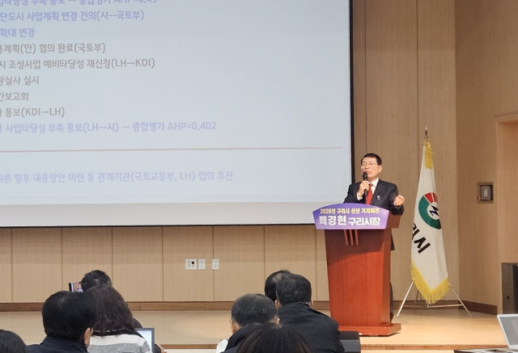 Guri Mayor Baek Kyung Hyun Lays Out Six Policy Priorities for 2026 Guri Mayor Baek Kyung Hyun used a New Year news conference on Tuesday to present what he called six operating directions for 2026: welfare, the economy, urban infrastructure, transportation, culture and the environment. Baek framed the agenda as a question of direction rather than speed, arguing that city policy should focus on where Guri is headed. On welfare, he emphasized what he described as a tighter safety net, treating support as a system rather than a one-time benefit. He pointed to transportation assistance for older residents and integrated medical and long-term care as administrative responsibilities in a rapidly aging city. On low birthrates, he said the city would approach the issue through housing, caregiving, education and work-life balance rather than relying on cash incentives alone. On the economy, Baek highlighted traditional markets and neighborhood commercial districts ahead of large-scale development or outside capital, signaling a focus on helping existing merchants endure rather than pursuing short-term stimulus. On future growth, he cited the Topyeong Hangang Smart Green City plan and a Sano-dong e-commerce advanced city concept, describing them as efforts to change Guri’s role in the greater Seoul area. On transportation, he pointed to the issue of whether GTX-B trains will stop at Galmae Station, calling it a matter of “citizens’ right to transportation.” On culture and daily-life infrastructure, he referenced festivals, sports and a new administrative welfare center building, saying city competitiveness should be measured in quality of life. On the environment, he cited the restoration of the Inchangcheon ecological stream, expansion of Imunan Lake Park and the creation of more walkable streets as steps toward a city focused on management rather than development. Baek said his guiding phrase for the year is “Nojeokseonghae,” a proverb meaning small accumulations become a sea, underscoring incremental change through repeated execution. He said the six directions are largely already underway, and whether they translate into improvements residents can feel will be determined over time.* This article has been translated by AI. 2026-01-29 05:03:48
 -
 Yangpyeong County head cites 88.3% pledge completion, outlines 2026 priorities Yangpyeong County Gov. Jeon Jin-seon told reporters on Jan. 28 that his administration has carried out 88.3% of its campaign pledges and will steer county policy in 2026 around four priorities: safety, the environment, tourism and health. About 100 news outlets attended the New Year briefing at the county hall. Jeon reviewed major projects and outlined plans, while stressing that the county’s focus is on building policies that last beyond a single term. Jeon cited the 88.3% pledge-implementation rate as a measure of progress, while noting the need to follow through on policy quality. He pointed to projects including the Namhan River Terrace, the Yangpyeong Sports Complex, a lighting street project at the Mulmang Market, and the completion of the Sinwon Water Purification Plant. He also highlighted Yangsuri’s selection as a UN Tourism Best Village, describing it as recognition of tourism planning tied to daily life, the environment and residents rather than short-term events. Jeon said a tourism city should be a place where people have reasons to stay, not simply a place that draws crowds. For 2026, Jeon said the county will run a task force aimed at international safe city certification and strengthen its integrated control center by expanding CCTV coverage. In tourism, he outlined plans to build infrastructure by dividing the county into western, central and eastern zones, and he cited proposals to elevate Dumulmeori and Semiwon as part of a national garden initiative. During a question-and-answer session, reporters raised long-running issues including a possible relocation of the county office, operation of a local emergency medical institution, construction of Yanggeun Bridge, and a proposed Yongmun-Hongcheon metropolitan railway. Jeon addressed some questions at length and declined to answer others immediately. Jeon said “2026 is an important period linking the eighth and ninth elected local administrations,” framing it as both a push to complete his term’s work and to build structures that can be carried forward. He also thanked the media and called for accurate, in-depth coverage, emphasizing communication as the basis for the relationship between local government and the press.* This article has been translated by AI. 2026-01-29 05:03:23
 -
 Anseong Mayor Kim Bo-ra Questions Eligibility Limits in Proposed Regional Doctor Program South Korea’s government is pushing to introduce a “regional doctor program” to address uneven distribution of medical workers. The plan aims to fill gaps in essential care in rural areas, smaller cities, and island and mountainous regions where staffing is scarce. Support for the idea is broad, but the debate has focused on how the program is designed. On Tuesday, Anseong Mayor Kim Bo-ra raised questions in a social media post. Kim said she supports the program in principle but asked whether the proposed approach can actually strengthen local health care. She publicly challenged discussions about limiting eligibility to applicants who graduated from middle and high schools within the relevant medical service area. The government is seen as considering that standard to prevent students from Seoul and other large cities from using the program as an alternative admissions route. It also reflects an expectation that students who grew up and studied locally are more likely to stay after completing mandatory service. Kim pointed to existing behavior around special admissions for rural and fishing communities. Some students, she wrote, move their registered address to rural areas near the capital region starting in middle school, attend local schools during the semester and travel to private academies in Seoul during breaks. The more a system is built around “where you’re from,” she argued, the more it can be exploited in ways that diverge from its purpose. Kim said restricting eligibility by middle and high school region does not guarantee a doctor will remain after mandatory service. She also questioned excluding applicants who grew up in Seoul but make a firm choice to provide essential care in underserved areas. Her criticism went beyond fairness in access. Kim said the program’s success depends less on applicants’ origins than on training that builds a sense of mission as a regional doctor. She called for education after selection that helps doctors understand local conditions, build relationships with residents and internalize the public nature of medical care — producing doctors who embrace local practice rather than simply fulfilling a service requirement. Kim acknowledged that motivations for becoming a doctor are complex and that many high-achieving students choose medical school for economic reasons, a reality she said will not change overnight. But she drew a line, arguing that the regional doctor program should not be distorted as a way to address that broader issue. Kim said the program should not be framed as compensation for people from certain areas, but as a system to develop doctors committed to taking responsibility for local health care. That makes the initial design crucial, she said — focusing not on whom to exclude, but on whom to cultivate and how. Kim said success should be measured not only in head counts but in whether more doctors ultimately stay, know their patients and remain part of the community. The answer, she argued, lies in choice, education and the program’s guiding philosophy, not birthplace.* This article has been translated by AI. 2026-01-29 05:03:00
 -
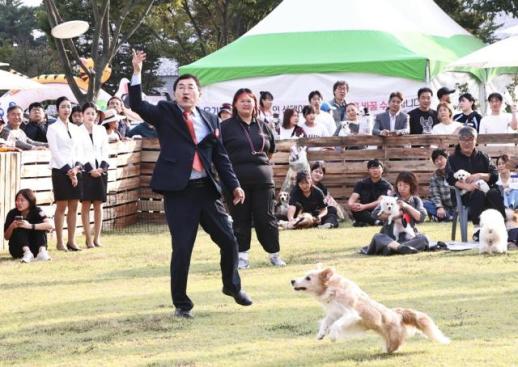 Gyeongju to Allow Pets in Restaurants and Bakeries Starting in March GYEONGJU, South Korea — Starting in March, restaurants and other food-service businesses in Gyeongju, North Gyeongsang province, will be allowed to admit pets if they meet specified hygiene and safety standards. Gyeongju City said Tuesday the system allowing customers to bring pets into food-service establishments will take effect March 1. The city said the move is intended to improve convenience for pet owners while also protecting the choice of customers who do not have pets. The policy applies to restaurants, snack bars and bakeries, and it limits eligible pets to dogs and cats. Ahead of the rollout, the city set new facility requirements, operating rules and administrative penalty standards for businesses that allow pets. Participating businesses must post a sign at the exterior entrance indicating pets are allowed. They also must install partitions or fencing to prevent animals from entering food-handling areas such as kitchens and ingredient storage rooms. Businesses must keep pets from roaming freely and provide dedicated seating, a cage, a restraint device or a separate designated area. They must also verify pets’ vaccination status and notify customers that unvaccinated animals will be barred from entry. To strengthen hygiene, the city said businesses must maintain spacing between tables and use covers to prevent contaminants such as animal hair from getting into food. Violations of facility standards or operating rules may result in corrective orders or administrative penalties, including suspension of business operations, the city said. To reduce confusion early in the rollout, the city said it will provide training and publicity for business owners and conduct intensive inspections of compliance. Mayor Joo Nak-young said, “As life with pets has become part of everyday living, this system is a step in which the administration responds ahead of changes in residents’ lives.” He added, “Through thorough hygiene and safety standards, we will create a dining environment that both pet owners and non-pet owners can use with confidence.”* This article has been translated by AI. 2026-01-29 02:00:00
 -
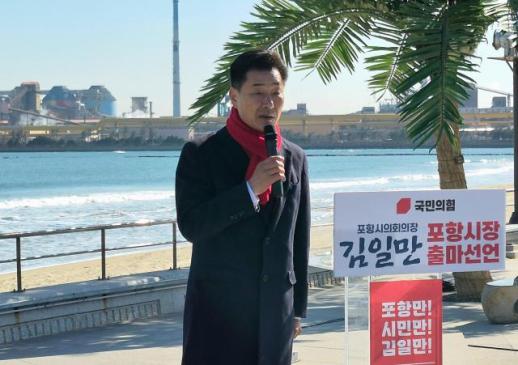 Pohang City Council Speaker Kim Il-man Announces Run for Mayor Kim Il-man, speaker of the Pohang City Council, officially announced his candidacy for Pohang mayor on the 28th in front of the “Goddess Statue” in Songdo, saying the city’s next decade should be guided by “one blueprint,” not fragmented projects. He adopted the campaign slogan “Only Pohang, only citizens, therefore Kim Il-man,” and set “a self-sufficient city where citizens are happy, a Pohang that feels good to live in” as his municipal administration slogan. “Politics is ultimately about making citizens’ daily lives less inconvenient and giving them a sense a month later that ‘things have changed,’” Kim said. Rather than listing lengthy, sweeping pledges, he said he would clearly set the city’s direction and move the entire administration consistently under it. Kim said Pohang’s growth agenda should move “together,” not “separately.” He argued that when industry, the port, tourism and urban renewal operate on their own, results weaken and residents feel less impact. “Now we need a ‘city administration blueprint’ that ties scattered projects into one direction,” he said. “Achievements that citizens can’t feel ultimately don’t last,” he added, saying he would judge city policy by changes in daily life rather than by numbers. Kim named Yeongil Bay Port as the first key pillar of Pohang’s development, saying port revitalization must be linked to regional and national strategies. He said he would establish ongoing cooperation channels with the central government, North Gyeongsang Province and industry to secure cargo volume and routes and make Pohang a gateway to the East Sea economic region. He also presented a single track that includes redefining Homigot’s status, restoring the old downtown and strengthening Pohang’s city brand. “Cities are not completed by industry alone. There must be a structure where people stay and return,” Kim said. He said a city is complete when alleys are lit after work, children can walk safely, older residents have shade to rest, and young people have places to stay. He pledged to link development and renewal to bring people back to the city center. Kim said politics is “not words but action,” and that leaders must follow through to the end. He pledged an administration that citizens feel they can trust with responsibility. “Explanations will be sufficient, decisions will be made openly, and results will be verified through indicators,” he said, adding that he would focus on Pohang and its citizens to open the city’s next 10 years.* This article has been translated by AI. 2026-01-29 01:51:00