

Journalist

CGTN
-
 LG Uplus Transitions Corporate Network to Wi-Fi 7, Enhancing Smart Office Capabilities LG Uplus announced on May 31 that it will fully transition its corporate wireless network to the next-generation communication standard, Wi-Fi 7 (802.11be), while also restructuring its authentication methods and network architecture. Wi-Fi 7 offers theoretical speeds up to 4.8 times faster than its predecessor, Wi-Fi 6/6E, along with ultra-low latency. To enhance the wireless environment at its main office, which experiences high traffic, LG Uplus has adopted key technologies from Wi-Fi 7. The company has implemented a "320MHz ultra-wideband channel," doubling the previous data transmission bandwidth of 160MHz. This expansion allows for seamless connectivity even in crowded environments where many users are accessing the network simultaneously. Additionally, LG Uplus has introduced multi-frequency simultaneous connection technology and the "4K-QAM" technology, which improves transmission efficiency by over 20%. This upgrade aims to stabilize video conferencing and cloud-based virtual desktop infrastructure (VDI) to wired LAN standards. A new "Unified IP System" has been established, integrating the wireless authentication framework with an automatic IP allocation system (DHCP). Previously, wireless networks were separated by office locations, requiring re-authentication each time employees moved between buildings. Now, employees can transition between locations such as Yongsan, Magok, and Sangam without interruption, maintaining a consistent network environment. The introduction of a "certificate-based automatic connection system" eliminates cumbersome login procedures, enhancing user convenience. Furthermore, a new "guest-only wireless network" has been created to improve collaboration with external partners while enhancing security. To maximize wireless scalability and management efficiency, LG Uplus designed this infrastructure based on a central data center. The system will first be applied to major offices this year, with plans to gradually expand the Wi-Fi 7 environment to regional branches and business sites nationwide. Kwak Hyo-shin, head of the architecture lab at LG Uplus, stated, "The transition to Wi-Fi 7 is not just about speed improvement; it represents a complete transformation of our corporate infrastructure to a wireless-centric model. We will continue to enhance our network competitiveness, optimized for AI and cloud-based work environments."* This article has been translated by AI. 2026-05-31 10:09:00
 -
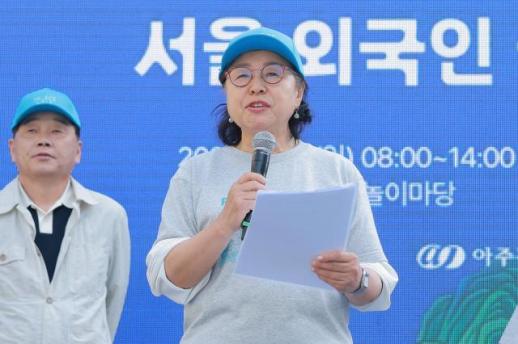 Seoul's Palace Walking Event Promotes Global Tourism, Says Tourism Chief Jo Tae-sook, the head of the Seoul Tourism Association, emphasized the importance of experiential tourism content utilizing Seoul's palaces while pledging to enhance the global competitiveness of the city's tourism industry on May 31. Speaking at the '2026 Seoul Foreign Palace Walking Event' held in Gwanghwamun Square, Jo stated, "Seoul's palaces are not just cultural heritage; they are valuable tourism resources that embody South Korea's history, tradition, and the unique charm of Seoul." He noted, "This event is particularly meaningful as it allows foreign participants to walk and experience the beauty of the palaces and Korean culture firsthand. The world is changing rapidly, and this type of global tourism content is essential." Jo added, "In this context, the palace walking event is a special occasion to enjoy Seoul's historical and cultural tourism, serving as an opportunity to showcase the city's new attractions to both domestic and international tourists." He also mentioned that the Seoul Tourism Association continues to collaborate with the tourism industry to support the development of Seoul's tourism sector and activate the global tourism industry. "We will do our utmost to ensure that Seoul becomes a sought-after tourist destination for people around the world," he said. Organized by Aju Economy, the foreign palace walking event features a route of approximately 7 kilometers that includes major historical sites such as Gyeongbokgung Palace, Changdeokgung Palace, Changgyeonggung Palace, and Jogyesa Temple, returning to Gwanghwamun Square. It was designed to allow both citizens and foreigners to experience Seoul's traditions and charm together. The event attracted over 1,200 foreign participants from various countries, including China, Japan, the United States, France, India, Vietnam, and Mexico, along with around 800 local residents, demonstrating a strong response. 2026-05-31 09:54:00
 -
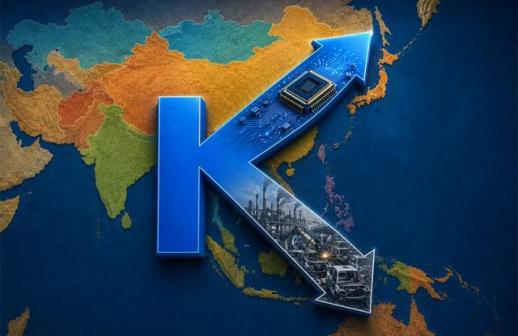 Transforming South Korea: The AI Semiconductor Revolution History does not offer the same opportunities to every nation. Some countries remain peripheral for centuries, while others decline after missing a single chance. However, there are rare instances where nations seize new opportunities at pivotal moments in history. South Korea is currently in such a situation. In the 1960s and 1970s, South Korea laid the foundation for economic growth through steel and shipbuilding. In the 1980s and 1990s, it entered the global market with its electronics and automotive industries. Since the 2000s, South Korea has risen to developed nation status through semiconductors and information and communication technology (ICT). Now, it stands once again at a monumental civilizational turning point, this time with artificial intelligence (AI). Many people perceive AI as merely a technology or service, often thinking of conversational AI like ChatGPT, image generation AI, or autonomous driving technology. However, AI is not just a technology; it represents a new industrial order and, more profoundly, a new operating system for civilization. Just as the steam engine replaced human muscle during the Industrial Revolution, electricity transformed factories and cities, and the internet revolutionized the flow of information, AI is reshaping human intellectual labor itself. The ways doctors diagnose, lawyers work, researchers conduct studies, and journalists gather information are all changing. AI is permeating factories, finance, defense, education, administration, and urban management. Humanity is on the brink of the most significant technological transition since the Industrial Revolution. To understand AI, one crucial fact must be acknowledged: AI is not solely a software industry. It requires vast amounts of data to be stored and processed, necessitating immense computational power, memory, data centers, communication networks, and energy. While the world of AI may appear virtual, it is firmly rooted in the real economy. Ultimately, the essence of the AI revolution is a semiconductor revolution, and the core of the AI power struggle is a battle for semiconductor supremacy. The trends in global capital markets in 2025 and 2026 illustrate this clearly. The leading companies on the U.S. stock market are no longer traditional manufacturing firms. AI-related companies like NVIDIA, Microsoft, Amazon, Alphabet, Meta, and Apple are at the forefront of the global capital market. Notably, NVIDIA has emerged as a symbol of the AI era. Once known primarily as a gaming graphics card company, it has now captured the attention of global investors. The reason is straightforward: NVIDIA's GPUs are the essential devices for AI computations. However, many overlook a critical fact: no matter how advanced a GPU is, it cannot function without memory to store and supply data. Just as the human brain cannot think without memory, AI cannot exist without it. If the GPU is the brain of AI, then memory is its memory. This is where South Korea's strategic value comes into play. South Korea currently stands at the center of the global memory semiconductor market. Samsung Electronics and SK Hynix are dominant players in the DRAM market and have achieved world-class competitiveness in the HBM (high-bandwidth memory) sector, which has emerged as a key product in the AI era. HBM is not just any memory; it is a critical component that determines the performance of AI servers. As AI models grow larger, the speed of data transfer between GPUs and memory becomes crucial, and ultimately, HBM performance dictates AI performance. In fact, the scale of AI models is increasing explosively. Early generative AI models utilized billions of parameters, while the latest models reportedly use hundreds of billions, with some exceeding one trillion parameters. This is not merely a technological advancement; it reflects the need for AI to understand complex contexts like humans and retain long-term information. The ability to analyze documents with hundreds of thousands of characters, learn from vast databases, and maintain long-term conversations is becoming increasingly important. Consequently, the competitiveness of AI is shifting from computational power to memory capacity, leading to a dramatic rise in the value of memory semiconductors. Recent forecasts from global market research firms and investment banks predict that the AI memory market will continue to grow at an annual rate of around 30%. Some projections suggest that the HBM market could reach approximately $100 billion by 2030. Currently, SK Hynix holds about 70% of the global HBM market share, while Samsung Electronics continues to make aggressive investments. As the AI revolution persists, South Korea's strategic importance will inevitably increase. The growth of AI data centers is also noteworthy. Today, the AI industry has effectively become synonymous with the data center industry. Global tech giants like Microsoft, Amazon, Google, and Meta are investing astronomical sums into building AI infrastructure. Recent analyses indicate that the investment scale for top hyperscaler companies in AI infrastructure has expanded to hundreds of trillions of won annually. Each AI data center houses tens of thousands of GPUs, necessitating a corresponding vast amount of HBM. Securing semiconductor production capacity for AI servers has become a key element of global competitiveness. This is not merely a growth in the IT industry; it is the construction of the infrastructure for a new industrial revolution. If railroads were the lifeblood of the Industrial Revolution in the 19th century, AI data centers are the lifeblood of digital civilization in the 21st century. Just as the countries that built railroads led the Industrial Revolution, those that establish AI infrastructure are likely to lead the new era. Interestingly, the AI industry does not only benefit semiconductor companies. As AI data centers proliferate, electricity demand surges. Industries related to transformers, wiring, cooling systems, and power distribution also experience growth. A power supply system is needed to operate AI servers, leading to an expansion of energy infrastructure. This is why the global power industry is gaining renewed attention. AI thrives on semiconductors but also consumes vast amounts of electricity. The International Energy Agency (IEA) and various research institutions forecast that power demand from data centers will increase sharply in the coming years. Some projections suggest that power demand from U.S. data centers could nearly double within a few years. This is why there are calls for countries to be both semiconductor powerhouses and energy powerhouses in the AI era. South Korea occupies a uniquely advantageous position amid these changes. It boasts world-class memory semiconductor competitiveness and advanced manufacturing capabilities. The battery and energy infrastructure industries are also strong. Most importantly, it is already deeply embedded in the core supply chain of the AI revolution. While the U.S. leads in AI platforms, it relies on South Korea for memory. China is pushing for AI self-sufficiency but still faces limitations in advanced memory. Europe is ahead in AI regulation and ethical discussions but lacks semiconductor production capacity. Ultimately, South Korea is at the center of the key supply chain in the AI era. The South Korean stock market reflects this reality. Recently, much of the rise in the KOSPI index has been driven by Samsung Electronics and SK Hynix. This is not merely an increase in specific companies' stock prices; it signifies a reassessment of the strategic value of South Korea's semiconductor industry by global capital. The semiconductor industry is not just a single company; it is a vast ecosystem. The materials, equipment, chemicals, logistics, finance, and research and development sectors all grow together. When a semiconductor factory is established, numerous partner companies and related industries move in tandem. Thus, semiconductors are not just an export industry but the growth engine of the entire South Korean economy. Of course, there are points of caution. The world has experienced numerous technology bubbles in the past. There was the dot-com bubble, and excessive optimism about certain industries has existed. Therefore, AI cannot be viewed through rose-colored glasses. However, the key issue is not the bubble but the structure. Currently, AI is not a temporary trend; it is fundamentally changing industrial structures. Companies that do not adopt AI will struggle to maintain competitiveness, and nations that do not leverage AI will find it challenging to secure growth drivers. This trend is unlikely to end in the short term. South Korea is now in a very special position. It has semiconductor technology, manufacturing competitiveness, and a highly educated workforce. Most importantly, it is already part of the core supply chain of the AI revolution. The question is whether it will stop here. Semiconductors are just the beginning. No matter how important semiconductors are, they alone cannot guarantee a nation's future. The true challenge lies in applying AI to real industries—transforming factories, automobiles, shipbuilding, logistics, and cities. Looking back at history, great nations have always prepared for the next stage. Britain moved from coal to railroads, and the United States transitioned from automobiles to the internet. South Korea must also leap from semiconductors to the next stage. It needs to evolve from an AI semiconductor powerhouse to an AI industrial powerhouse, and from an AI industrial powerhouse to an AI civilization state. What we are witnessing in the AI semiconductor supercycle is not merely an industrial boom. It could be a historical starting point for South Korea to once again enter the center of world history. The next phase of that starting point is physical AI and manufacturing AX. The moment AI moves beyond screen-based technology to influence real-world industries, factories, automobiles, robots, ports, and cities, a new industrial revolution will begin. South Korea's future may very well be determined at that juncture. And this is not just a matter of economic growth; it is a question of what kind of nation South Korea will become over the next century.* This article has been translated by AI. 2026-05-31 09:51:00
 -
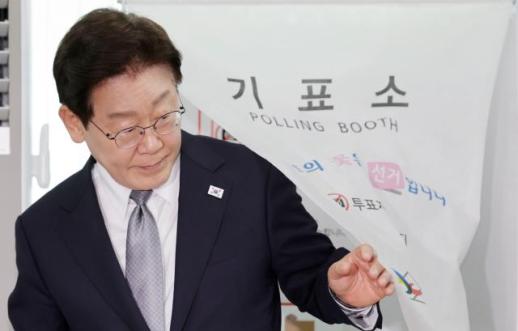 President Lee: Voter Apathy Gives Power to Self-Serving Individuals President Lee Jae-myung stated on May 31 that "the silence and apathy of voters give opportunities to those who deceive the public, abuse power for personal gain, and ruin the lives of themselves and their families." In a post on X (formerly Twitter), he quoted the Greek philosopher Plato, saying, "The cost of political indifference is being ruled by the worst of the worst." He urged citizens to actively participate in voting to demonstrate that the residents of this country are the people, to clarify where power should be directed, and to express the will of the sovereign. "I hope you will seek out and give opportunities to those who will use the power entrusted by the people solely for the people's will, with loyalty and competence," he added. Lee emphasized that "the world can become hell or heaven depending on the mindset and attitude of elected officials," asserting that "the power of voting is stronger than one might think. Whether those elected become loyal servants who enrich our lives or malignant rulers who destroy the world and inflict suffering on the people depends on the hands of the sovereign." He pointed out, "If there are politicians or political groups uncomfortable with this statement, they are precisely the entrenched vested interests that the sovereign must overcome through voting." Earlier, on the second day of early voting for the June 3 local elections, he had also appealed for voter participation, stating, "Abandoning your vote is akin to abandoning the future of yourself and your family." With the early voting turnout for this local election reaching a record high of 23.51%, he appears to be urging citizens to pay attention to the upcoming main voting day. 2026-05-31 09:30:00
 -
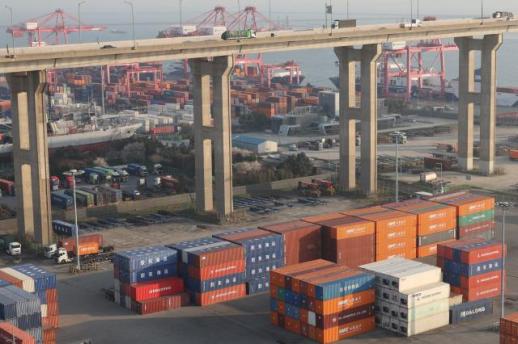 South Korea eyes record $900 billion in exports, aims for top-five trade power SEOUL, May 31 (AJP) - South Korea is on course to ship about $900 billion in goods this year, a surge that would vault Asia's fourth-largest economy into the world's top five trading nations, the trade ministry said. According to data from the Ministry of Trade, Industry and Resources on Sunday, exports reached $709.3 billion last year, the sixth country ever to clear the $700 billion mark and a milestone hit just seven years after crossing $600 billion in 2018. Through April this year, shipments soared 40.9% from a year earlier to a record $306.5 billion. The blistering pace has prompted the government, state researchers and brokerages alike to sharply lift their forecasts, far above the ministry's February target of $740 billion. "There are other variables, so I am cautious, but exports are expected to top $900 billion this year," Minister Kim Jung-kwan told reporters on May 27, adding that breaking into the top five was within reach. Kim stressed the boom was not propped up by chips alone. While semiconductor exports jumped about 140 percent, he said other sectors were growing a sturdy 14 percent to 15 percent, and small-business shipments climbed 10 percent. Beauty, fashion and food exports also advanced briskly, while shipments to emerging markets widened. Some experts forecast that the $1 trillion threshold may be within striking distance. Meritz Securities forecasts exports of $1.02 trillion, a 44.2 percent leap, as analyst Lee Seung-hoon projected chip and computer-component shipments would balloon 160 percent and 212 percent respectively on swelling AI infrastructure. From the second half, the ministry will mount an all-out push, channeling a record 275 trillion won in trade insurance, courting China and India, and nurturing 500 promising small exporters to cement what it called a robust, diversified trade structure. 2026-05-31 09:19:14
 -
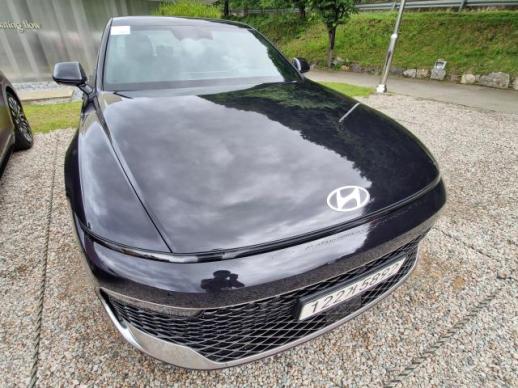 Test Drive: The New Grandeur, a Symbol of Success Hyundai's Grandeur, long regarded as a symbol of success, has returned with a facelift model after approximately three years and five months. This update marks a significant shift towards a software-defined vehicle (SDV). On May 28, I took a round trip of about 140 kilometers from the Godeok Business Valley in Gangdong-gu, Seoul, to Floating Flow in Chuncheon, Gangwon Province, with a passenger in the New Grandeur. The most striking feature from the driver's seat was the 17-inch display that filled the center of the dashboard. The interface has been simplified compared to previous models, replacing complicated buttons with an intuitive layout that mimics the experience of using smart devices. The traditional instrument cluster has been virtually eliminated, replaced by a box-shaped monitor that naturally comes into view beyond the steering wheel. A 'multi-function switch' that integrates turn signal and wiper functions has been added to either side of the steering wheel. The electronic gear shift lever has been moved to the right side of the steering wheel for easier shifting without taking hands off the wheel. As I exited the parking lot, I was pleasantly surprised by the expansive forward visibility. Although it is a sedan, it felt almost like an SUV in terms of openness. The larger side mirrors and the low dashboard design contributed to this improved sightline. In the urban section of Seoul, the quietness was impressive. Even at low speeds, road vibrations and external noise were minimal. The vehicle's body movements were also well-controlled. At the turnaround point, I experienced the true capabilities of the New Grandeur. The Smartstream 2.5-liter gasoline engine provided a natural and consistent response, as expected from a naturally aspirated engine. Switching to sport mode transformed the vehicle's character. Acceleration response became sharper, and the exhaust sound was more pronounced. The engine's RPM and the sound transmitted into the cabin felt more dynamic compared to the previous Grandeur. On the highway and through curves, the driving stability was particularly notable. The steering response was relatively immediate in cornering situations. The lane-keeping assist system operated reliably, helping to maintain the vehicle's center. Hyundai has implemented optimizations such as a cowl crossbar structure, enhanced front strut rigidity, and hydraulic rebound stoppers in the New Grandeur. These measures aim to reduce road impacts and improve ride comfort. A key feature of this model is the transformation of the vehicle's software experience. Hyundai has introduced its first next-generation infotainment platform, Pleos Connect. I tested the generative AI-based voice assistant, Gleo AI, within the vehicle. When I asked, "Play the latest news," it provided updates on domestic political news. It also responded immediately to the command, "Turn off the air conditioning." Gleo AI is based on a large language model (LLM) system. It supports not only basic vehicle control but also knowledge searches, schedule recommendations, and natural conversation capabilities. Hyundai developed Pleos Connect based on the Android Automotive Operating System (AAOS) and is working to expand the in-car app ecosystem. Currently, 11 third-party apps, including video and music streaming and gaming, are available. A Hyundai representative stated, "As we aim for an open ecosystem, the current apps are just the beginning," adding that the goal is to add more than ten new apps by the end of the year. The Smart Vision Roof, a first for Hyundai, also caught attention. It features polymer-dispersed liquid crystal (PDLC) film that allows for adjustable transparency of the roof. The market response to the New Grandeur has been enthusiastic, with over 10,000 units contracted on the first day of its launch. 2026-05-31 09:03:00
 -
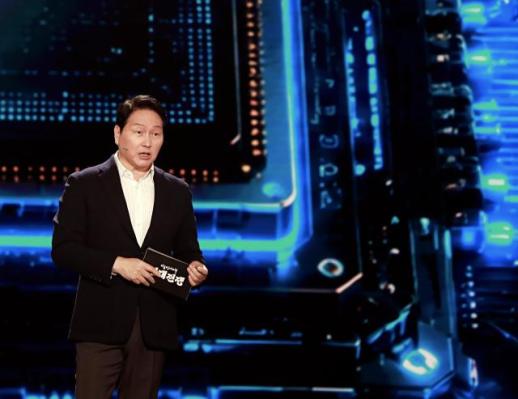 SK Group Chairman Chey Tae-won Discusses Entrepreneurship in the AI Era Recently, the KBS documentary "Talent War 2: Chey Tae-won's Answer" posed significant questions for our society living in the AI era. Chey Tae-won, chairman of SK Group, outlined four essential competencies that future talent must possess: thinking, adaptability, empathy, and body skills. Even as AI significantly replaces human knowledge and productivity, human competitiveness remains, centered on these four abilities. Watching this broadcast, I gleaned insights beyond just talent development; it was a reflection on entrepreneurship in the AI era. For over 30 years, I have studied entrepreneurship. As a journalist, I have reported from various industries, and I specialized in entrepreneurship during my doctoral studies in economics. My dissertation analyzed the determinants of entrepreneurship in South Korea and its impact on regional growth. The findings were clear: entrepreneurship plays a crucial role in growth, job creation, and the spread of innovation. While labor, capital, and technology are important, it is entrepreneurship that ultimately connects them to create new value. I do not view entrepreneurship merely as a spirit of starting a business. I define it as the ability to discover new opportunities, take risks, and create new value through innovation. This aligns with economist Joseph Schumpeter's concept of "creative destruction." The power of entrepreneurship lies in creating new products, markets, production methods, and organizations. As the AI revolution accelerates, I am convinced that the importance of entrepreneurship will only grow. Many people claim that AI will replace humans, and some jobs may disappear. However, the entrepreneurial spirit that drives economic growth will never vanish; it will become even more vital. Why is that? AI standardizes information, democratizes knowledge, and lowers technological barriers to entry. However, AI cannot define problems on its own, discover new markets, or take risks independently. Ultimately, it is up to humans to leverage AI to create new value. Just as the steam engine did not build railroads by itself and electricity did not create factories, AI cannot innovate on its own. Entrepreneurs have always been at the center of progress, and this will remain true in the AI era. It is not technology but entrepreneurship that will determine growth. The fourth muscle Chey Tae-won mentioned is body skills. At first, this may sound somewhat unexpected. However, I interpret this as the ability to execute. Entrepreneurship is not just about ideas; it is about action. There are countless excellent ideas in the world, but few people can turn them into reality. Anyone can think, but not everyone can execute. The most important characteristic of entrepreneurship is action. It requires the courage to take risks and enter the market. It involves the ability to create new products and provide new services. AI can propose strategies, write reports, and create business plans. However, building factories, meeting customers, and leading organizations are human responsibilities. In my experience managing a media company, I have seen countless plans. Most of them were excellent, but few were executed. The difference between success and failure lies not in ideas but in execution. This remains true in the AI era. Ideas utilizing AI will abound, but only a few will convert them into real value. Ultimately, the final stage of entrepreneurship is execution. Entrepreneurs are thinkers as well as doers. The market rewards action, not thought. Thus, I view body skills as the culmination of entrepreneurship. The AI era represents a renaissance of entrepreneurship. Through 30 years of studying entrepreneurship, I have come to one firm belief: the true driving force of economic growth is not technology but entrepreneurship. Technology is a means. Entrepreneurship is the direction. Technology can be possessed by anyone. Entrepreneurship cannot be possessed by everyone. The AI revolution will provide more knowledge for free, standardize more technology, and facilitate greater information sharing. However, precisely because of this, the value of entrepreneurship will rise even higher. The ability to think. The ability to adapt. The ability to empathize. The ability to execute. The four muscles Chey Tae-won mentioned are, in fact, the four facets of entrepreneurship. Thinking is the ability to discover opportunities, adaptability is the ability to overcome uncertainty, empathy is the ability to create value, and body skills are the execution that brings it to reality. I believe the AI era will not mark the end of entrepreneurship but rather its renaissance. As AI provides the same tools to everyone, it is humans who will make the difference: thinking humans, adaptable humans, empathetic humans, and action-oriented humans. These individuals will create new businesses, open new markets, and generate new jobs. The future of South Korea will also be determined not by AI technology itself but by the level of entrepreneurial spirit that utilizes AI to create new value. In the AI era, the protagonists of growth will not be technology but people, and those people are entrepreneurs.* This article has been translated by AI. 2026-05-31 08:54:00
 -
 Kiwoom Securities' CEO Eom Joo-sung Innovates Brokerage into Comprehensive Asset Management Platform Eom Joo-sung, CEO of Kiwoom Securities, summarizes his financial entrepreneurship as the 'evolution of platforms.' Over the past 20 years, Kiwoom Securities has pioneered the domestic retail investor market, rewriting the history of online brokerage. However, the environment Eom faces today is different. The brokerage-centered growth model is encountering limitations, and competition from large securities firms and platform companies is intensifying. He has proposed two solutions: a leap into large-scale investment banking and the expansion of retirement pensions and asset management platforms. His goal is to evolve from a company that merely facilitates transactions to a financial platform that manages customers' lifetime assets. At the same time, he must also address the challenge of restoring trust damaged by incidents such as the Youngpoong Paper crisis and system failures. Eom's leadership ultimately poses the challenge of whether he can simultaneously achieve 'growth' and 'trust.' Beyond the success of online brokerage to an asset management platform Eom Joo-sung is a manager who understands Kiwoom Securities' DNA better than anyone. After joining Kiwoom Securities in 2007 following his tenure at Daewoo Securities, he has gained experience in investment management, private equity, strategic planning, and corporate finance. Notably, he contributed to expanding Kiwoom Securities' revenue base while leading the investment management division for an extended period and later designed the company's mid- to long-term growth strategy as head of strategic planning. His appointment as CEO came during a tumultuous period. The CFD crisis and the Youngpoong Paper stock manipulation incident were deemed the biggest crises in Kiwoom Securities' history. Billions of won in provisions were incurred, and the group's management faced a series of resignations. The market began to question Kiwoom Securities' risk management capabilities and internal controls. Upon taking office, Eom prioritized restoring trust over growth. He reorganized the risk management structure and established a group risk management team. He brought in internal control experts and built a three-tiered defense system linking operations, risk management, and auditing. This was not merely an organizational restructuring but a fundamental transformation of Kiwoom Securities. However, he did not stop at defense. Eom began searching for a new growth model beyond the brokerage-centric structure that Kiwoom Securities had long relied on. The answer was an asset management platform. Eom emphasized, "Kiwoom, which set the standard for stock trading, must now set the standard for asset management." This is not just a business expansion. It is a declaration to transition from a company that facilitates individual investors' transactions to a platform company responsible for customers' investments, pensions, and overall asset management. Entering large-scale investment banking and creating new growth engines One of the most significant achievements of Eom's leadership is the entry into large-scale investment banking. In 2025, Kiwoom Securities received approval from the Financial Services Commission for issuance of notes, becoming the sixth large-scale investment bank in South Korea. This achievement signifies more than just obtaining a qualification. Issuance of notes allows securities firms to raise funds based on their own credit. This serves as a foundation for expanding corporate finance and venture capital investments. Eom has indicated that the funds raised through note issuance will be directed towards advanced industries, venture companies, and mid-sized enterprises. In fact, Kiwoom Securities has announced a strategy to allocate over 25% of the funds raised through note issuance to venture capital and maintain a corporate finance asset ratio of over 50%. Results are already emerging. Kiwoom Securities achieved record-high operating profit of 1.4882 trillion won and net profit of 1.115 trillion won in 2025, marking the first time the company surpassed 1 trillion won in net profit. However, Eom does not intend to stop there. He views large-scale investment banking not merely as a means of expanding size but as a hub connecting corporate finance, asset management, and platform businesses. The ultimate goal is to reduce reliance on brokerage and create a more stable and sustainable revenue structure. In this regard, Eom Joo-sung differs from the typical online brokerage CEO. While Kiwoom Securities previously focused on expanding trading volume, he emphasizes the long-term growth of customer assets. This reflects his philosophy as a financial entrepreneur, prioritizing structural growth over short-term results. Completing a 'lifetime financial platform' with retirement pensions and AI The future of Eom's leadership is most clearly reflected in the retirement pension business. Kiwoom Securities is set to make a significant entry into the retirement pension market in 2026, creating a new growth axis. The current scale of the retirement pension market has surpassed 500 trillion won. Eom views this not merely as a financial product market but as a vast platform market for managing the public's retirement assets. Therefore, Kiwoom Securities has chosen a differentiated strategy of an online investment-type pension platform instead of physical branches. Applying the existing mobile trading system (MTS) environment directly to the pension platform and providing AI-based portfolio services aligns with this strategy. Experienced investors can manage their investments directly, while novice investors receive asset allocation support from AI. This represents an attempt to transfer Kiwoom Securities' long-accumulated digital competitiveness into the pension market. Eom also sees AI as a new growth driver. In his New Year’s address, he identified AI, data, information security, and system stability as key elements of future competitiveness. Of course, challenges remain. The repeated HTS and MTS failures in 2025 exposed Kiwoom Securities' weaknesses. For an online brokerage, system failures are not merely technical issues but matters of trust. Customers do not trust a platform that is inaccessible when they need to trade. This is why Eom emphasizes the need for increased investment in IT infrastructure and strengthening system stability. Ultimately, Eom Joo-sung's financial entrepreneurship aims to create a lifetime financial platform that extends customer relationships, which began with stock trading, into pensions, asset management, and corporate finance. He is working to transform Kiwoom Securities from a simple brokerage into a platform that manages the entire financial life of investors. SWOT Analysis: Strengths: Eom Joo-sung's leadership strength lies in platform competitiveness and execution. Kiwoom Securities has maintained the top market share in the domestic stock market for over 20 years, establishing a strong base of retail investors. With the approval for large-scale investment banking and entry into the note issuance business, as well as the retirement pension market, the company is successfully expanding its business portfolio. Weaknesses: The reliance on brokerage remains high, and the aftereffects of past financial incidents and system failures persist. As an online platform company, issues with system stability can pose a critical weakness. Opportunities: The expansion of the retirement pension market and the growing demand for AI-based asset management present new growth opportunities. The note issuance business can also serve as a stepping stone for enhancing corporate finance competitiveness. Threats: Competition from new platform operators, including Toss Securities, and large securities firms is intensifying. Additionally, market volatility and increased regulatory scrutiny from financial authorities continue to pose challenges. * This article has been translated by AI. 2026-05-31 08:09:00
 -
 PSG Defeats Arsenal in Penalty Shootout to Win Back-to-Back UCL Titles Paris Saint-Germain (PSG) defeated Arsenal in a penalty shootout to win the UEFA Champions League (UCL) title for the second consecutive year. On May 31, PSG faced Arsenal in the 2025-2026 UCL final at Puskás Aréna in Budapest, Hungary. After a 1-1 draw through extra time, PSG triumphed 4-3 in the shootout. Under the guidance of coach Luis Enrique, PSG claimed its first UCL title last season and has now become the first team to win back-to-back titles since Real Madrid achieved three consecutive victories from the 2015-2016 to 2017-2018 seasons. Additionally, PSG completed the season with a domestic double, having secured the Ligue 1 title with 76 points (24 wins, 4 draws, 6 losses). Arsenal, which reached the UCL final for the first time, was unable to secure its first title, having previously finished as runners-up in the 2005-2006 season. Lee Kang-in, who started the match on the bench, did not play. He also remained on the bench during last season's final. Despite not stepping onto the field, Lee celebrated his 12th title with PSG. In terms of major trophies, he has won Ligue 1 three times, the Coupe de France twice, and the UCL twice, totaling seven major titles. The match began with Arsenal taking control early on. PSG fell behind just six minutes into the game due to a mistake by defender Marquinhos, which allowed Kai Havertz to score the opening goal, putting PSG down 0-1. PSG equalized in the 65th minute when Khvicha Kvaratskhelia was fouled in the penalty area by Cristian Mosquera, leading to a penalty kick. Ousmane Dembélé successfully converted the penalty, leveling the score. The outcome of the final was decided in the penalty shootout. After PSG took the first kick, Arsenal's second kicker, Eberechi Eze, missed his shot. PSG's third kicker, Nuno Mendes, had his attempt saved by Arsenal goalkeeper David Raya. The decisive moment came with the fifth kick. PSG's Lucas Beraldo scored, while Arsenal's Gabriel Magalhães missed, sealing PSG's victory.* This article has been translated by AI. 2026-05-31 07:15:00
 -
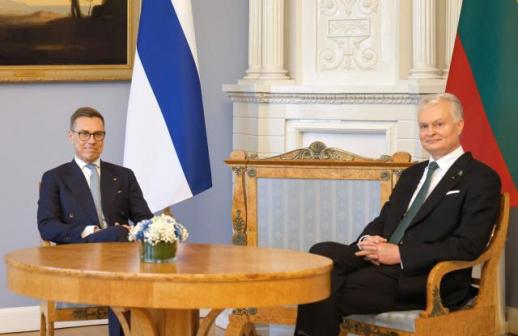 Lithuania Welcomes German Troops Amid Russian Threats Lithuania, a Baltic nation with a history of suffering under Nazi occupation in the 1940s, is now welcoming German troops, according to a report by The New York Times on May 30. As Russia poses a threat to Eastern European countries, Lithuania is embracing the presence of German and U.S. forces as a means of defense. In Vilnius, a local chef, Liutauras Ceprackas, expressed his support for the German troops stationed in the country. He noted that his Lithuanian customers are concerned about the possibility of a Russian invasion. "If the Russian army kills even one German soldier, wouldn’t that lead to war with Germany?" he asked, adding, "That’s why I expect them to keep us safe." This sentiment reflects the fears of Lithuanians, who share a border with Russia. Lithuania borders the Russian exclave of Kaliningrad and Belarus, a close ally of Russia. With a population of 2.89 million and a military of only 14,000, Lithuania is vastly outnumbered by Russia's military forces. Many residents question whether NATO membership alone is sufficient to deter a Russian attack. Despite its historical grievances, Lithuania welcomes the presence of German troops. The 45th Armored Brigade of Germany is noted as the first regular combat brigade deployed abroad since the fall of the Nazis in 1945. The report highlights how rapidly Europe is changing amid growing concerns over Russian aggression in Eastern Europe. The brigade is set to expand to 4,800 troops by next year. Former Lithuanian Defense Minister Raimundas Karoblis stated, "This brigade is strong and well-equipped, essentially giving Lithuania a second army." Since the deployment of German troops began, a survey conducted by the Lithuanian Ministry of Defense in December 2024 found that a majority of local adults support their presence. Local TV news anchor Andrius Tapinas even advised viewers, "If you see German soldiers, you should buy them a beer." A German officer recounted an encounter with a local jogger who thanked him in German for being there. The New York Times noted that for many Lithuanians, the fear of the Soviet troops that withdrew in 1993 looms larger than the memories of Nazi occupation. Today, Germany represents a democratic Europe, while Russia, especially in light of the war in Ukraine, evokes fears of invasion. Lithuania is also seeking to host 5,000 U.S. troops as part of its defense strategy. According to reports, President Gitanas Nausėda emphasized earlier this month that over 1,000 U.S. troops are currently stationed in a rotational capacity, stating, "Lithuania is ready to accept more allies and has all the necessary infrastructure for training and deployment." Additionally, Lithuania plans to send 40 troops to support U.S.-led operations for freedom of navigation in the Strait of Hormuz. This initiative is pending approval from the National Defense Committee and a parliamentary vote, reflecting Lithuania's commitment to attracting more U.S. forces even while sending a small contingent to the Iran conflict. 2026-05-31 05:54:00