

Journalist

CGTN
-
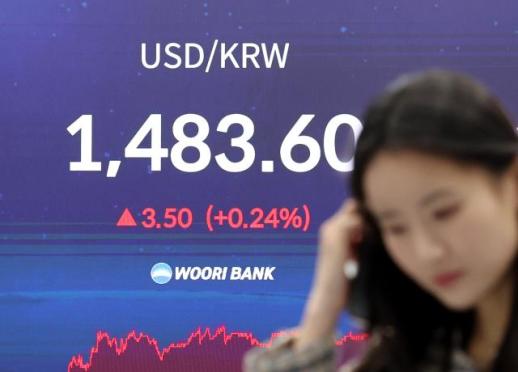 Korean won nears annual trough despite all-out defense SEOUL, December 23 (AJP) - The Korean won is nearing its annual trough of 1,487.6 per dollar last seen on April 9, when global markets reeled from renewed risk aversion triggered by Donald Trump’s tariff barrage, despite all-out defensive efforts by South Korean authorities. The dollar closed Tuesday in Seoul at 1,483.6 won, up 3.5 won even as the dollar index eased 0.23 percent to 98.072 and the greenback softened against the Japanese yen — underscoring idiosyncratic weakness in the won rather than broad dollar strength. The dollar is down 0.96 yen at 156.12 yen. The won’s slide through the psychologically critical 1,480 “defense line” came against the tide of foreign equity inflows, with overseas investors buying 955 billion won worth of KOSPI shares amid a global technology-stock shopping spree. The breach has raised questions over the effectiveness and limits of authorities’ FX-defense capabilities, particularly as equity inflows failed to translate into currency support. Ha Joon-kyung, senior presidential secretary for economic growth, became the latest official to join the chorus of intervention, warning in a local media interview on Monday that “one-sided market behavior has become pronounced since November,” and that speculative bets on further won weakness are intensifying. “It would be a misjudgment to think the government will stand by in the face of excessive market concentration,” Ha said — a pointed signal that authorities are prepared to act. Authorities have hinted all possible actions to defend the won, including dollar-selling and hedging operations by the National Pension Service, heightened real-time monitoring of FX flows, and repeated assurances that disorderly, speculative moves will not be tolerated. The Bank of Korea has supplemented with liquidity incentives, including interest payments on banks’ FX reserve deposits and a temporary waiver of the FX stability levy, while signaling readiness for additional liquidity support and market-smoothing operations to counter disorderly won moves. 2025-12-23 11:11:21
 -
 POSCO invests $3 million in US humanoid robot startup in push for 'physical AI' SEOUL, December 23 (AJP) - POSCO DX is making a strategic investment in a U.S.-based industrial humanoid robot startup as it seeks to accelerate automation and improve safety at heavy industrial sites such as steel mills. POSCO DX, led by Chief Executive Shim Min-seok, said on Tuesday it will invest $2 million in Persona AI and collaborate with the company on joint robot development. Including a separate $1 million investment from a fund backed by POSCO Technology Investment, the total investment at the group level amounts to $3 million. The move is part of POSCO DX’s strategy to combine POSCO Group’s artificial intelligence capabilities with advanced robotics to develop so-called “physical AI,” which integrates intelligence directly into machines operating in real-world environments. Persona AI, founded in June last year, is a U.S. startup focused on humanoid robots for labor-intensive industrial workplaces. The company was co-founded by Chief Executive Nicholas Radford, a former NASA robotics engineer, and Jerry Pratt, who previously served as chief technology officer at humanoid robot maker Figure AI. POSCO DX said Persona AI’s technology enables precise manipulation across a wide range of tasks, from assembling small components to handling heavy objects. According to the company, the robots are equipped with multi-axis tactile sensors in their hands that process data in real time, allowing simultaneous control of force and position through compliant control, which supports stable operation in industrial environments. Persona AI also applies artificial intelligence algorithms based on a robot foundation model, enabling autonomous interaction and task execution, POSCO DX said. POSCO DX said it plans to integrate its industrial AI software with Persona AI’s humanoid robot hardware to develop robots capable of replacing high-risk manual processes at POSCO facilities. The company has previously introduced technologies that allow remote operation of ultra-large equipment, including steel-mill cranes and unloading machines. A POSCO DX official said humanoid robots tailored to heavy industrial environments could simultaneously improve productivity and workplace safety. 2025-12-23 10:45:26
 -
 Nearly 90% of North Korean defectors satisfied with life in South Korea, survey finds SEOUL, December 23 (AJP) - About eight in 10 North Korean defectors say they are satisfied with their new life in South Korea, a survey reveals. The Korea Hana Foundation on Tuesday released its survey of around 2,500 North Korean defectors who arrived in Seoul between January 1997 and December last year. This year's survey, conducted through face-to-face interviews by about 76 specialized counselors, with a response rate of 86.4 percent or around 2,160 respondents, found that 81.2 percent were content with life in South Korea, up 1.6 percentage points from a year earlier and the highest level since the survey began in 2011. "Freedom" was the most common reason for satisfaction, cited by 41.5 percent, while 24.3 percent pointed to "separation from family" as the main reason for dissatisfaction. Some 14 percent said they experienced discrimination or were looked down on in the past year for being defectors, down 2.3 percentage points from the previous year and the lowest on record. Some 61.6 percent expressed satisfaction with their social and economic achievements, and 72.2 percent believed they could improve the social and economic status of themselves and their children. Wage gaps, however, still remain, with their average monthly income at 2.61 million won, compared to 3.20 million won for ordinary South Koreans. About 61.3 percent were employed, slightly lower than their compatriots in the South. 2025-12-23 10:38:43
 -
 Hyundai E&C joins offshore wind farm project in $480 million deal SEOUL, December 23 (AJP) - Hyundai Engineering & Construction (Hyundai E&C) said on Tuesday it has signed a construction contract worth 668.4 billion won ($480 million) to participate in an offshore wind farm project off Sinan, South Jeolla Province, a development with a total construction cost of 2.64 trillion won. The project, led by Hanwha Ocean, calls for the installation of 26 offshore wind turbines, each with a capacity of 15 megawatts, in waters southeast of Uido in Sinan County. Hyundai E&C’s contract accounts for 668.4 billion won of the total project cost. Hyundai E&C will jointly carry out construction with Hanwha Ocean, excluding turbine supply and installation. Its scope of work includes manufacturing and installing substructures, laying 32.5 kilometers of subsea cables, and building an offshore substation as well as an onshore monitoring facility. Construction is expected to take about three years, with commercial operations targeted for 2029. Once completed, the project is expected to generate 1,052 gigawatt-hours of electricity annually, enough to power about 292,500 four-person households for a year, based on average monthly consumption of around 300 kilowatt-hours. Hyundai E&C entered the offshore wind construction sector in 2015. The company said it has since built a track record in the sector, including the successful completion of the Jeju Hallim offshore wind farm, currently the country’s largest, which entered operation following a completion ceremony on Sept. 15. Hyundai E&C said it is also seeking to secure technologies linked to Hyundai Motor Group’s hydrogen value chain and to lay the groundwork for expansion into global renewable energy markets. As part of that effort, it signed a strategic memorandum of understanding in 2023 with Germany-based RWE, Europe’s largest power generation company. 2025-12-23 10:03:11
 -
 Korean automaker KGM partners with Samsung SDI on developing EV battery packs SEOUL, December 23 (AJP) - South Korean automaker KG Mobility (KGM) has signed a memorandum of understanding with Samsung SDI to form a strategic partnership aimed at developing and commercializing electric vehicle battery packs. Under the agreement, the two companies will jointly develop cylindrical nickel-cobalt-aluminum (NCA) battery packs and cooperate closely on high-voltage battery pack development, testing and production. The project will use Samsung SDI’s cylindrical 46-series NCA cells, which have a diameter of 46 millimeters. Samsung SDI said the cells offer long driving range and fast charging through high energy density, while improving safety and durability under a wide range of driving conditions. KGM said the cells incorporate high-capacity, high-nickel NCA cathode materials along with Samsung SDI’s proprietary silicon carbon nanocomposite (SCN) anode material, which reduces swelling, increases energy density and extends battery life while maintaining safety. Beyond the battery pack development program, KGM and Samsung SDI said they plan to pursue a longer-term partnership. This includes joint product planning based on Samsung SDI battery cells, cooperation on vehicle lineups, a global branding strategy for overseas markets and a joint review system for emerging technologies. Kwak Jeong-hyeon, head of KG Mobility’s business strategy division, said in a press release that the partnership will help the automaker respond to rapid changes in industry conditions and government policies, including the diversification of battery materials. 2025-12-23 09:46:36
 -
 New phone activations require face verification under pilot program SEOUL, December 23 (AJP) - Starting Tuesday, anyone activating a new mobile phone in South Korea must undergo face verification in addition to presenting an ID. The Ministry of Science and ICT said it launched a pilot program for stricter identity checks to prevent phones from being illegally activated for crimes such as voice phishing and smishing. Under the program, face verification will be mandatory for new activations at in-person sign-up counters run by major telecom operators including SK Telecom, KT, and LG Uplus as well as online channels operated by some 43 budget carriers. After a roughly three-month trial, the ministry plans to expand the verification procedure to all mobile carriers in March next year. Addressing privacy concerns, the ministry said facial data will be used solely for identity verification and immediately deleted afterward. 2025-12-23 09:36:57
 -
 KAI-backed AI firm Meissa raises $7 million ahead of planned 2026 IPO SEOUL, December 23 (AJP) - Korea Aerospace Industries (KAI) said on Tuesday that Meissa, a drone- and satellite-based geospatial artificial intelligence company in which it is a strategic investor, has completed a 9.7 billion won ($7 million) pre-IPO equity financing round. The deal brings Meissa’s cumulative funding to 35 billion won, the company said, adding that the proceeds will be used to upgrade its business operations. Meissa is targeting an IPO in the second half of 2026. As Meissa’s second-largest shareholder, KAI has invested about 8 billion won to date, while gradually expanding technical cooperation with the company across defense software and space-related projects. The latest investment aligns with KAI’s mid- to long-term strategy to internalize core technologies by combining Meissa’s geospatial AI capabilities with KAI’s major aerospace and defense hardware platforms, the company said. Meissa is developing a satellite operations and preprocessing solution designed to collect and analyze large volumes of imagery generated by KAI’s next-generation mid-sized and small-satellite programs in real time, converting the data into immediately usable information. The company said it plans to build an end-to-end infrastructure covering satellite data processing, distribution and utilization, and to strengthen its competitiveness in the satellite imagery solutions market. KAI also plans to integrate Meissa’s automatic 3D map generation technology into its flight simulator hardware to create more realistic virtual training environments and internalize a digital twin solution for simulators. 2025-12-23 09:23:09
 -
 Unionized rail workers postpone strike for now SEOUL, December 23 (AJP) - Unionized railway workers called off their planned all-out strike after receiving a new offer on bonus payments overnight. State-run rail operator KORAIL's workers, who had planned to go on strike starting with the first train on Tuesday unless the agreements are fulfilled, said they would discuss further on performance-based bonuses, as management proposed gradually restoring them from 80 percent of base pay to 90 percent next year and to full pay in 2027. With their last-minute decision to hold off on a strike for now, all trains are running normally. A union official said, "Commuters may have been inconvenienced by concerns late into the night," adding that rail workers would repay them with a safer public railway. 2025-12-23 08:59:01
 -
 South Korea unveils roadmap to move chemical sector up global value chain SEOUL, December 23 (AJP) - South Korea will revamp public-private research and development in its chemical industry to accelerate a shift toward higher value-added and environmentally friendly production, the government said on Tuesday, aiming to lift the sector’s global standing by 2030. The Ministry of Trade, Industry and Energy said it launched a chemical industry innovation alliance at a ceremony held at the Lotte Hotel in central Seoul, attended by representatives from local governments, industry, academia and research institutions. The ministry also released its K-Chemistry Next-Generation Technology Innovation Road Map 2030. The initiative comes as policymakers increasingly view a structural shift toward specialty and advanced materials as essential, alongside ongoing efforts by petrochemical companies to rationalize excess capacity. A central change is the move to support R&D across the entire value chain – from feedstocks and materials to applications and end-user demand – rather than fragmented, material-specific projects. MOTIE said it will strengthen linkages between chemical suppliers and downstream industries such as semiconductors and next-generation vehicles. As outlined at a petrochemical industry meeting the previous day, the government will give priority R&D support to companies participating in business restructuring, the ministry added. The road map is built on three pillars: expanding higher value-added products, accelerating the transition to eco-friendly production, and strengthening responses to global environmental regulations. MOTIE said it will upgrade R&D capabilities and infrastructure to secure core materials and process technologies. To expand the use of manufacturing AI transformation in the chemical sector, the plan calls for applying artificial intelligence across the full production cycle, from materials design to manufacturing. This includes building autonomous experimentation systems that combine AI with automated equipment to shorten development timelines for new materials, as well as deploying AI in processes such as polymerization, separation and finishing. Planned projects also include the development of intelligent process-control systems that optimize operating conditions in real time while minimizing energy use, the ministry said. About 80 domestic experts participated over six months in identifying priority technologies and assessing technological capabilities. After additional reviews by research leaders at petrochemical companies, MOTIE said it compiled 217 practical component technologies. These technologies will be classified into four categories based on market potential and technological readiness, with tailored support strategies for each. “Short-term intensive” items with large markets and strong technological foundations will receive commercialization-focused R&D support, while “long-term managed” items will be backed by challenge-oriented research. “Market pioneering” items – smaller but fast-growing markets with weaker technological bases – will receive first-mover R&D and patent analysis support, while “performance diffusion” items involving mature technologies will be supported through infrastructure upgrades such as scale-up and process-efficiency improvements. The innovation alliance, described by MOTIE as a full life-cycle cooperation model for the chemical industry, will serve as the control tower for implementing the road map. It will pursue nine flagship projects across nine subcommittees, including those focused on semiconductors and future mobility. Park Dong-il, head of industrial policy at the ministry, said petrochemical companies at a meeting chaired the previous day by Vice Minister Kim Jeong-gwan had “agreed to go all-in on business restructuring.” He said the road map would serve as a springboard for an industry “in crisis” to transform itself into a higher value-added sector, adding that the government would provide full R&D and policy support to strengthen competitiveness across the chemical industry ecosystem. * This article, published by Aju Business Daily, was translated by AI and edited by AJP. 2025-12-23 08:48:24
 -
 KAIST researchers develop animal-free culture platform to improve intestinal stem cell therapy SEOUL, December 23 (AJP) - Researchers have developed a new technology to grow human intestinal stem cells without using animal-derived materials, resolving a major safety hurdle for regenerative medicine. The method significantly improves the ability of these cells to move and repair damaged tissues, potentially accelerating treatments for intractable gastrointestinal diseases. The Korea Advanced Institute of Science and Technology (KAIST) announced on December 23 that a joint research team led by Professor Im Sung-gap of the Department of Chemical and Biomolecular Engineering has created a polymer-based culture platform called PLUS (Polymer-coated Ultra-stable Surface). The project included researchers from the Korea Research Institute of Standards and Science (KRISS) and the Korea Research Institute of Bioscience and Biotechnology (KRIBB). Current methods for growing intestinal stem cells often rely on "Matrigel" or mouse-derived cells to provide a foundation for growth. Because these materials come from animals, they carry risks of viral contamination and trigger strict regulatory hurdles for human use. The newly developed PLUS platform uses a synthetic polymer coating applied via gas-phase deposition, creating a completely "xenogeneic-free" or animal-free environment that remains stable at room temperature for three years. To understand why the cells grew so well on this synthetic surface, the team used proteomics, a method of analyzing all proteins within a cell simultaneously. They discovered that the PLUS platform triggers "cytoskeletal remodeling." This process essentially reorganizes the internal structural framework of the stem cells, specifically increasing proteins that bind to actin, which the cells use as a motor to move. Live imaging showed that stem cells grown on this platform moved nearly twice as fast as those grown on conventional surfaces. In laboratory models of damaged tissue, these cells repaired nearly half of the injured area within one week. This increased mobility is critical for cell therapy, as the injected stem cells must be able to migrate to and integrate with the patient's damaged intestinal lining to be effective. The researchers confirmed that the platform supports the mass production of stem cells derived from human pluripotent stem cells. The cells maintained their essential characteristics for over 210 days and successfully repaired intestinal inflammation in animal models, suggesting a high potential for clinical application in humans. "This research provides a synthetic culture platform that eliminates the dependence on animal-derived components, which has been a major barrier to the clinical application of stem cell therapies," Professor Im Sung-gap said. He noted that the technology could lead to a paradigm shift in how regenerative medicine is produced and distributed. The study involved Park Seong-hyun and Sun Sang-yu of KAIST, and Son Jin-kyeong of KRISS as lead authors. The research was supported by the Ministry of Science and ICT and the Ministry of SMEs and Startups. (Paper information) Journal: Advanced Materials Title: Tailored Xenogeneic-Free Polymer Surface Promotes Dynamic Migration of Intestinal Stem Cells DOI: https://doi.org/10.1002/adma.202513371 2025-12-23 08:28:54