

Journalist

CGTN
-
 BOK holds year-end key rate at 2.5%, ups growth forecast to 1.0% SEOUL, November 27 (AJP) - As widely expected, the Bank of Korea kept its base rate unchanged at 2.5 percent on Thursday in its final policy meeting of 2025, reflecting policy bind amid waning appeal of Korean debt and assets with the Korean won at crisis-level weakest. The freeze signals the Korean central bank's decision to stay on the sidelines while hoping for greater policy maneuvering room should the U.S. Federal Reserve cut its benchmark rate again in December. Monetary authorities trimmed the Korean policy rate twice in the first half of the year, lowering it a combined 50 basis points from 3.00 percent to 2.50 percent, but have held steady since May. The pause came as housing demand roared back ahead of a hawkish incoming administration and as the frenzy for U.S. tech stocks fueled structural weakness in both the won and Korean bonds. Those dynamics sharply limited fiscal and monetary options as authorities attempted to stabilize markets. The BOK’s easing cycle effectively stalled under the weight of renewed leveraged investment in property and equities. Korea’s household credit reached a record 1,918 trillion won ($1.3 trillion), with household loans alone totaling 1,845 trillion won — a staggering 96.2 percent of all household credit. Volatility in the foreign-exchange market added another layer of constraint. The central bank’s data shows the volume-weighted average dollar–won rate at 1,417 won as of Tuesday — exceeding the previous record of 1,398.88 won set in 1998 during the IMF bailout. For comparison, the annual average was 1,276.4 won in 2009 following the global financial crisis. The Bank of Korea separately raised this year's economic estimate to 1.0 percent from previous 0.9 percent and for next year's to 1.8 percent from 1.6 percent upon identifying stronger-than-expected exports led by AI chip boom. 2025-11-27 10:00:25
 -
 The hidden engine of Nuri's success: HD Hyundai Heavy's ground launch system SEOUL, November 27 (AJP) - When South Korea’s Nuri rocket lifted off before dawn on Thursday, attention naturally turned to the spacecraft streaking into the sky. But the success of the launch was rooted firmly on the ground — specifically, in the complex launch system engineered and operated by HD Hyundai Heavy Industries. For the fourth mission in a row, the country’s largest shipbuilder played a pivotal but largely unseen role in enabling one of South Korea’s most advanced technological achievements. Since completing the second launch pad at the Naro Space Center in 2020, Hyundai Heavy has overseen every element of Nuri’s launch system. The company independently designed, manufactured and installed the ground mechanical structures, fuel-supply lines and control equipment that power the rocket from the final seconds of the countdown through liftoff. Engineers also execute pre-launch checks, coordinating hundreds of components that must operate flawlessly to send the rocket safely skyward. What makes the system particularly significant is its 100 percent domestic technology rate — a benchmark that marks a clear departure from past reliance on foreign equipment. The fully homegrown infrastructure is now viewed as a core national asset, strengthening South Korea’s ability to conduct launch operations independently as its space program expands. Hyundai Heavy began venturing into space infrastructure in 2007 during the Naro rocket era. The company leveraged its deep engineering background — traditionally applied to ship hulls, offshore platforms and industrial systems — to develop new expertise in cryogenic fueling, high-pressure operations and launch safety. Over nearly two decades, this foundation has evolved into a sophisticated capability validated by each of Nuri’s successful flights. The Nuri program is expected to serve as a bridge to next-generation launch vehicles aimed at lunar exploration, satellite deployment and broader participation in global space supply chains. Hyundai Heavy’s proven launch operations are likely to anchor many of those projects, positioning the company as a key contributor to South Korea’s increasingly ambitious space agenda. A spokesperson for HD Hyundai Heavy Industries said Thursday’s launch underscored the maturity of the company’s infrastructure. “The success of the fourth launch confirms the stability of our domestically developed launch system,” the official said, asking not to be named. “We will continue supporting the fifth and sixth Nuri missions and actively participate in next-generation launch vehicle projects to help advance South Korea’s aerospace industry.” For a company best known for supertankers and shipyards, the reliability of Nuri’s launch system has become a new point of pride — quiet work that ensures the rocket’s flame rises cleanly into the sky, mission after mission. * This article, published by Aju Business Daily, was translated by AI and edited by AJP. 2025-11-27 09:57:41
 -
 South Korea's Hyundai Glovis secures $720 million LNG transport contract SEOUL, November 27 (AJP) - Hyundai Glovis said on Thursday it has signed a long-term liquefied natural gas (LNG) shipping contract worth about 960 billion won ($720 million) with a major global trading company, marking one of the largest gas-transport deals in the company’s portfolio. The contract, which runs for up to 15 years, will be serviced by a newly built 174,000-cubic-meter LNG carrier — a vessel large enough to transport more than half of South Korea’s daily LNG consumption in a single voyage. The ship will be equipped with advanced cryogenic storage systems capable of maintaining LNG at –162 degrees Celsius. Beginning in 2029, the carrier will ship LNG from the U.S. Gulf Coast to major global markets. Hyundai Glovis said the deal will help strengthen its position in the expanding global gas shipping sector and support stable international energy supply chains. The LNG shipping industry relies on sophisticated cryogenic technology and strict safety management. The International Energy Agency’s Gas 2025 report projects global LNG trade to grow by 300 billion cubic meters by 2030, a roughly 40 percent increase from 2023, driven by the diversification of energy supply chains and rising maritime transport demand. Hyundai Glovis is seeking to diversify beyond its core automobile transport business into LNG, LPG, and ammonia shipping. Since 2024, it has operated one LPG and one LNG carrier, and it plans to introduce four additional LNG vessels by 2027 to service Middle Eastern clients. “We will continue expanding our fleet to strengthen competitiveness in the LNG shipping market and broaden our global customer network,” a company spokesperson said. * This article, published by Aju Business Daily, was translated by AI and edited by AJP. 2025-11-27 09:45:07
 -
 Fire at Hallym University forces hundreds of students to evacuate in Chuncheon SEOUL, November 27 (AJP) - Hundreds of students were evacuated overnight after a fire broke out at a university in Chuncheon, Gangwon Province, in the early hours of Thursday. The fire occurred at around 1:27 a.m. on the fourth floor of a dormitory at Hallym University. Fire alarms sounded, prompting 346 students to evacuate, and no injuries were reported. The blaze damaged part of the building including two electrical panels before being extinguished in about 20 minutes. Police and fire authorities are investigating the exact cause of the fire. * This article, published by Aju Business Daily, was translated by AI and edited by AJP. 2025-11-27 09:23:11
 -
 National Assembly set to vote on arrest motion for PPP's former floor leader SEOUL, November 27 (AJP) - The National Assembly is set to decide on whether to pass the arrest motion for Choo Kyung-ho, the main opposition People Power Party (PPP)'s former floor leader over his alleged involvement in former President Yoon Suk Yeol's martial law debacle in December last year. Choo has been accused of interfering with parliamentary efforts to lift the martial law declared by Yoon on Dec. 3. The motion, initiated by independent prosecutors investigating the debacle, requires a majority of lawmakers present to pass. With the Democratic Party holding a majority, it is likely to be passed. If passed, a court will proceed with a hearing to determine whether to issue an arrest warrant for him. * This article, published by Aju Business Daily, was translated by AI and edited by AJP. 2025-11-27 09:06:03
 -
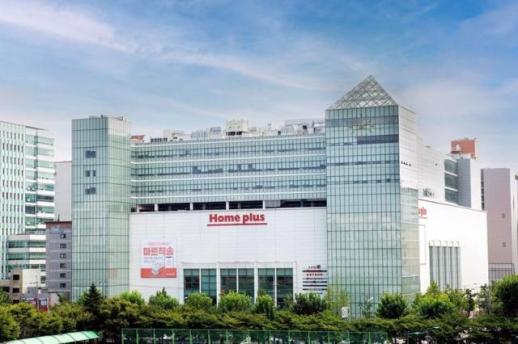 Homeplus sale stalls as main auction draws no bidders SEOUL, November 27 (AJP) - The planned sale of Homeplus has stalled after the main auction attracted no bidders, deepening uncertainty over the future of the South Korean hypermarket chain. Two companies had taken part in the preliminary bidding but both withdrew ahead of the final auction. The main auction closed at 3 p.m. on Wednesday with no proposals submitted. Sources from Homeplus said on Thursday it will continue to accept offers until Dec. 29, the deadline for filing a rehabilitation plan. The company added that if a qualified buyer emerges, the court may consider extending both the sale timetable and the plan-submission deadline. * This article, published by Economic Daily, was translated by AI and edited by AJP. 2025-11-27 08:54:42
 -
 Delinquencies on Korea's mom-and-pop business loans hit highest level since 2015 SEOUL, November 27 (AJP) - Delinquencies on loans to South Korea’s mom-and-pop businesses rose to their highest level in more than nine years in the third quarter, even as the banking sector’s overall nonperforming loan (NPL) ratio edged down, the Financial Supervisory Service (FSS) said on Thursday. The NPL rate for personal business loans climbed 0.02 percentage points from the previous quarter to 0.61 percent, the highest since June 2015. The FSS attributed the rise to a weak economic environment and higher borrowing costs, which have placed growing pressure on small self-employed borrowers. Across the banking sector, the overall NPL ratio stood at 0.57 percent in September, down 0.02 percentage points from the previous quarter but up 0.04 percentage points from a year earlier. Total NPLs amounted to 16.4 trillion won, a decline of 2 trillion won from June. Corporate loans made up 13.1 trillion won of the total, household loans 3 trillion won, and credit card loans 300 billion won. Banks generated 5.5 trillion won in new NPLs during the July–September period, down 900 billion won from the previous quarter but up 400 billion won from a year earlier. Household loan defaults remained at 1.4 trillion won, while corporate loan defaults fell by 1 trillion won to 3.9 trillion won. * This article, published by Aju Business Daily, was translated by AI and edited by AJP. 2025-11-27 08:43:38
 -
 North Korea highlights need for nuclear submarines North Korea's Korean Central News Agency criticized the recent U.S.-South Korea joint statement, claiming it reveals a hostile stance and could destabilize military security in the Asia-Pacific region. The agency argued that South Korea's pursuit of nuclear submarines could lead to a 'nuclear domino effect' and escalate an arms race. This response followed the joint fact sheet released on Nov. 14. North Korea's reaction is perplexing, given its own nuclear developments. The term 'nuclear domino' is particularly striking. If North Korea had not pursued nuclear weapons or submarines, it might have grounds to criticize South Korea. However, North Korea's nuclear arsenal is a significant global threat, making its stance questionable. Two motives may underlie North Korea's comments. First, it seeks to emphasize its status as a de facto nuclear state. Unlike official nuclear weapon states under the Nuclear Non-Proliferation Treaty (NPT), North Korea withdrew from the NPT after receiving nuclear technology and support. Recognizing North Korea as a nuclear state could encourage other countries, like Ukraine, to follow suit. Ukraine, once the third-largest nuclear power, might reconsider its stance due to its conflict with Russia. Second, North Korea's reaction may stem from anxiety over South Korea's potential acquisition of nuclear-powered submarines, which could disrupt China's maritime strategy. President Lee Jae-myung's push for nuclear submarines marks a significant shift in South Korea's defense capabilities. During a summit with President Trump, Lee highlighted the limitations of diesel submarines and advocated for nuclear fuel to enhance regional defense and reduce U.S. operational burdens. Critics argue that developing nuclear submarines could heighten regional tensions. However, historical evidence suggests tensions can escalate independently of such developments. North Korea's response underscores the strategic necessity for South Korea to pursue nuclear-powered submarines, emphasizing the importance of realistic power dynamics in international politics. Author's Background ▷Ph.D. in Political Science, University of Freiburg ▷Vice President, Korean Association of International Studies ▷Former Research Fellow, Korea Institute for National Unification * This article, published by Aju Business Daily, was translated by AI and edited by AJP. 2025-11-27 07:59:15
 -
 South Korea ushers in private-led space era with 4th Nuri launch GOHEUNG, South Korea, November 27 (AJP) - South Korea opened a new chapter in its space program Thursday with the successful fourth launch of the homegrown Nuri rocket — the first assembled by Hanwha Aerospace — marking a decisive shift toward a private sector–driven space industry. The 200-ton, three-stage rocket lifted off from the Naro Space Center at 1:13 a.m. and entered a sun-synchronous orbit 600 kilometers above Earth, deploying a next-generation medium satellite along with 12 cube satellites. The flight was completed in 18 minutes and 52 seconds, faster than the planned 21 minutes and 24 seconds, after its engines outperformed design specifications, according to Park Jong-chan of the Korea Aerospace Research Institute (KARI). The medium satellite made first contact with Antarctica’s King Sejong Station 42 minutes after launch, with further communications scheduled with ground stations in Daejeon and Norway’s Svalbard. Deputy Prime Minister Bae Kyung-hoon called the mission a “pivotal moment” as the country transitions from a government-led model to a private sector–driven space economy. “South Korea is committed to becoming a top-five space power, with ambitions stretching from lunar exploration to deep space,” he said. For the first time, Hanwha Aerospace led the manufacturing and assembly of Nuri, following a technology transfer agreement with KARI earlier this year. The transfer, valued at 24 billion won (US$16.2 million), gives Hanwha exclusive rights to produce and operate Nuri through 2032, covering design, manufacturing and launch operations. Launchpad and propulsion-test infrastructure remain under government control. Compared with Nuri’s third launch in May 2023, which reached 550 km and carried 500 kg of payloads, Thursday’s mission flew higher and carried 960 kg — nearly double the earlier load. Experts say the launch is a watershed moment in Korea’s emergence into the “new space” era. “This marks the true beginning of private-sector-led space development,” said Huh Hwan-il, aerospace engineering professor at Chungnam National University. “Japan transferred launch vehicle technologies to industry two decades ago, and Mitsubishi Heavy Industries now leads that market. Korea must prepare similar institutional groundwork to help companies fully utilize government-built capabilities.” The Korea Space Agency said it plans the fifth and sixth Nuri flights in 2026 and 2027, followed by a seventh in 2028. “We are planning next year’s budget to begin developing a next-generation launch vehicle building on Nuri’s technology,” said agency head Yoon Young-bin. South Korea’s steady push toward commercial space development — with Nuri now transitioning from state laboratories to private hands — positions the country to accelerate toward its long-term goal of joining the global top tier of space powers. * This article, published by Aju Business Daily, was translated by AI and edited by AJP. 2025-11-27 07:40:31
 -
 Korean Inc.'s USD hoarding is inevitable as U.S. trade and FDI footprints deepen SEOUL, November 26 (AJP) - South Korea’s finance minister signaled the government had even asked major exporters for help in propping up the won — a reversal of the usual dynamic that underscores the urgency on the FX front. But expectations for meaningful action remain low, as companies tied to massive U.S. investment commitments have little incentive to part with their dollar reserves. The won’s annual average has already exceeded 1,400 per dollar this year, surpassing the 1997 Asian financial crisis level of 1,398.88, according to market data. The currency’s depreciation has coincided with Korean firms accelerating overseas investment, especially in the United States, while delaying dollar conversions amid deepening uncertainty over the dollar’s trajectory. Data from the Bank for International Settlements (BIS) shows Korea’s real effective exchange rate (REER) slid to 89.09 at the end of October — its lowest since August 2009. A REER below 100 signals an undervalued currency, reflecting broad weakness against major trading partners. The index is expected to fall further in November as the dollar has strengthened more than 3 percent over the past month. A weaker won traditionally boosts export competitiveness, but today’s environment is anything but typical. Korea’s biggest exporters are generating large dollar inflows while committing to multiyear overseas investments denominated in dollars — leaving them with few reasons to repatriate foreign currency. “Companies are hoarding dollars simply because they don’t expect the dollar to weaken,” said Jang Bo-seong, senior researcher at the Korea Capital Market Institute. “It is common sense to avoid a money-losing practice.” Jang noted that exporters naturally hedge by holding dollars, since payments for overseas investments, equipment and raw materials are often settled in dollars. “Without a clear signal that the dollar will weaken, holding dollar assets is seen as the safer choice.” Chipmakers — responsible for roughly a quarter of Korea’s exports — epitomize the mixed effects. A strong dollar boosts revenue on U.S.-denominated sales but simultaneously raises import costs for equipment and materials while inflating the won value of massive overseas investments. SK hynix, whose U.S. exposure is particularly large with about 70 percent of sales linked to American customers, says its FX posture hinges primarily on its investment cycle rather than daily market moves. “Dollar inflows from exports are managed in line with overseas investment, procurement and payment schedules,” a company official said, adding that hedging strategies are used to reduce volatility. Samsung Electronics, Hyundai Motor and LG Electronics either did not respond to requests for comment or declined to discuss their foreign-currency management. The corporate preference for holding dollars is now directly shaping FX market dynamics. “Foreign exchange markets are ultimately driven by supply and demand,” Jang said. “When large corporates hold onto dollars instead of converting them, it inevitably tightens dollar supply in the domestic market.” This imbalance is magnified by Korea’s massive overseas investment pledges. Korean companies have committed more than $350 billion to U.S. projects as they seek to hedge geopolitical risks and secure access to advanced manufacturing ecosystems. A persistently weak won raises the won-denominated cost of those investments, further reinforcing incentives to stockpile dollars. For now, authorities have little choice but to hope for a retreat in the dollar. “If the dollar index begins to decline meaningfully, companies may reassess their currency positions,” Jang said. “For the time being, however, holding dollars remains rational from a corporate risk-management perspective.” As the won tests levels unseen even during past crises, policymakers and markets alike are closely watching whether corporate dollar hoarding — once viewed as a cyclical defensive move — is becoming a structural feature of Korea’s FX landscape. 2025-11-26 18:02:56