

Journalist

CGTN
-
 Early Voting for Local Elections Hits Record High at 11.6% On the first day of early voting for the Ninth Nationwide Simultaneous Local Elections, the turnout reached 11.6%, marking the highest figure since early voting was introduced for local elections. The National Election Commission reported that from 6 a.m. to 6 p.m. on May 29, 518,486 out of 44,649,908 eligible voters cast their ballots, resulting in an initial early voting rate of 11.60%. This figure is 1.42 percentage points higher than the first-day early voting rate of 10.18% recorded during the previous local elections in 2022. Since the introduction of early voting in the 2014 sixth local elections, this is the highest first-day turnout. In terms of hourly turnout, voting started at 0.5% at 7 a.m., increased to 1.7% by 9 a.m., and reached 4.86% by noon. The turnout continued to rise in the afternoon, hitting 8.15% at 3 p.m. and 10.39% at 5 p.m., before closing at 11.60% at 6 p.m. This turnout surpasses not only the 2022 local elections but also the early trends from the 2024 general elections. Regionally, the voting enthusiasm was particularly strong in the Honam region, with Jeonnam recording the highest turnout at 22.31%, followed by Jeonbuk at 19.39%. Other notable regions included Gangwon (14.37%), Gwangju (14.19%), Sejong (12.52%), Gyeongnam (12.28%), and Jeju (12.10%). In contrast, the metropolitan area showed relatively low turnout rates, with Seoul at 11.22%, Incheon at 10.15%, and Gyeonggi at 9.78%. Busan recorded 10.68%, Daejeon 10.75%, and Ulsan 10.92%, while Daegu had the lowest turnout at 9.02%. With the strong first-day turnout, attention is now on whether the final early voting rate will surpass the historical high of 20.62% set during the eighth local elections. In the case of the by-elections for the National Assembly, Gyeonggi Pyeongtaek, which includes Pyeongtaek, recorded a turnout of 7.94%, while Busan Buk-gu, which includes Buk-gap, had a turnout of 11.72%. The average early voting rate for the 14 districts holding by-elections on the first day was 12.07%. Early voting will continue for two days until May 30. Voting hours are from 6 a.m. to 6 p.m., and voters can cast their ballots at any early voting station nationwide by presenting an identification card such as a resident registration card or driver's license. 2026-05-29 19:15:00
 -
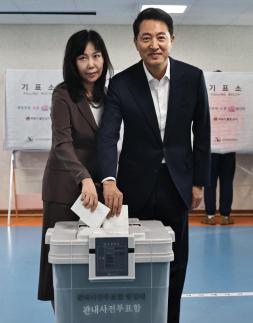 Oh Se-hoon Resumes Campaign, Calls Police Search a Government Election Interference Oh Se-hoon, the candidate for Seoul mayor from the People Power Party, resumed his campaign on May 29, three days after the Seosomun overpass collapse halted his activities. He strongly criticized the police's search of Seoul City Hall, calling it "blatant election interference," while focusing his efforts on winning over voters in the northern districts and among young people. On the first day of early voting for the June 3 local elections, Oh completed his own early vote in Yongsan and then visited Dobong, Gangbuk, Seodaemun, and Dongdaemun districts to intensify his campaign. Analysts suggest that this campaign resumption carries more significance than a mere return to electioneering. Despite the cautious atmosphere following the accident, Oh is positioning himself to consolidate his support base and attract moderate voters by emphasizing the need for government oversight and stability in the final stretch of the election. During a rally near Chang-dong Station in Dobong, Oh directly targeted his opponent, Jeong Won-oh of the Democratic Party, stating, "He has no genuine interest in the development of northern Seoul." He added, "Does Jeong think of northern Seoul as his voting ground while he actively campaigns in southern Seoul? In yesterday's TV debate, when asked about northern Seoul's development, he gave irrelevant answers." Oh reminded voters, "Do you remember when I lifted the height restrictions on the slopes of Bukhansan while serving as mayor? Development in northern Seoul should be demonstrated through action, not just words." He also expanded his outreach to young voters by visiting university areas near Yonsei University and Kyung Hee University. This strategy aims to mobilize the relatively conservative yet low-turnout 2030 demographic to the polls. At Yonsei University, where a festival was underway, Oh engaged with students, taking photos and fostering a friendly atmosphere. In his rally near Sinchon Station, he addressed economic issues, stating, "Even if stock prices hit 7,000 or 8,000 points, it doesn't improve the financial situation for ordinary citizens. For those living paycheck to paycheck, it's a different story altogether." A major issue in the election is the police's search of Seoul City Hall related to the Seosomun incident. The police conducted searches of city hall and its affiliated agencies, prompting immediate backlash from Oh. He questioned, "Is it reasonable to conduct a search just five days before the election? Would this have happened if I were the Democratic candidate?" Oh urged Jeong not to rely on support from the president and investigative agencies but to compete fairly based on policies and vision. The People Power Party also raised allegations of "government election interference" and intensified its criticism. Members of the party's National Assembly Administrative Safety Committee announced plans to visit the Seoul Metropolitan Police Agency on May 30 to protest. Oh continued to pressure Jeong for additional debates, stating, "It is regrettable that only one TV debate has occurred due to Jeong's avoidance. Avoiding debates suggests that there is something he wants to hide, whether it's the truth or his abilities." The People Power Party has officially proposed a live TV debate between Oh and Jeong on June 1 or 2. Political analysts believe this Seoul mayoral election will serve as a crucial test of public sentiment following the new administration's launch, extending beyond a mere local election. Voter turnout, particularly among northern Seoul residents and young voters, is expected to be a key factor in determining the outcome.* This article has been translated by AI. 2026-05-29 19:03:00
 -
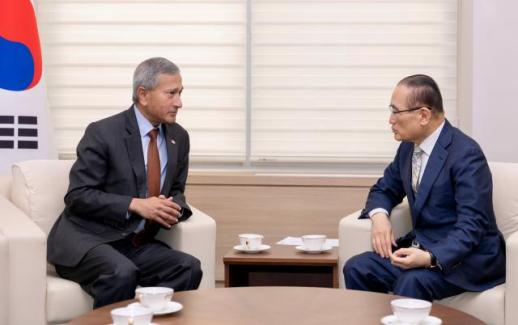 South Korea and Kazakhstan Discuss Expanding Energy and AI Cooperation Wi Sung-lak, the Chief of South Korea's National Security Office, met on May 29 with Roman Sklyar, the Chief of Staff to the President of Kazakhstan, and Gizat Nurdauletov, Secretary of the National Security Council, to discuss energy and supply chain cooperation between South Korea and Kazakhstan.According to the Blue House, Wi reviewed the current status of cooperation in energy and supply chains with the Kazakh officials.He emphasized that Kazakhstan, the world's 12th largest oil producer, is a key partner for diversifying South Korea's energy supply sources amid ongoing instability in energy prices due to the situation in the Middle East.Wi also checked on the progress of oil imports from Kazakhstan, which was discussed during the visit of South Korean Presidential Chief of Staff Kang Hoon-sik to Kazakhstan in April, and urged Kazakhstan to provide support for smooth oil imports.In addition to oil and gas, Wi proposed expanding practical cooperation in advanced technology fields such as critical minerals, nuclear power, and artificial intelligence (AI), and suggested enhancing high-level communication between the two countries.In response, Sklyar pledged to work towards Kazakhstan's contribution to South Korea's energy diversification. Nurdauletov expressed hope for expanded cooperation in defense sectors, including defense industry, military information, and personnel exchanges, and committed to maintaining close communication with South Korea.Wi also called for support for South Korean companies operating in Kazakhstan. Sklyar, who previously served as Deputy Prime Minister overseeing economic cooperation with South Korea, promised to ensure a favorable investment environment.Looking ahead, he expressed hope that the upcoming 'Korea-Central Asia Summit' in September, during which Kazakhstan's President Tokayev is expected to visit South Korea, would further develop bilateral relations. He emphasized the potential for the summit to elevate cooperation between the two regions.The Blue House reported that both sides agreed to closely cooperate, including activating communication channels between the presidential offices, to ensure the successful hosting of the summit.* This article has been translated by AI. 2026-05-29 18:36:00
 -
 LG Electronics Denies Claims of Workplace Harassment in Stabbing Incident LG Electronics stated on May 29 that there was no termination notice given to the assailant on the day of the violent incident involving a subcontractor employee, and claims that the victims had previously ignored the assailant have not been substantiated. According to LG Electronics, the company requested a personnel change from the assailant's employer on May 12, citing inadequate work performance. An executive from the assailant's company reportedly held a one-on-one meeting with the assailant at around 10:20 a.m. on the day of the incident, May 27, during which they proposed transferring the assailant to another project within the company. LG Electronics emphasized, "There was no termination notice given during this meeting," adding that the assailant had signed a one-year reemployment contract after reaching retirement age on April 30, meaning that the project termination did not equate to a dismissal. The company also refuted claims that the assailant had been subjected to disrespect or neglect by the victims. The assailant had been working as a support staff member on LG Electronics' development projects for the past two years. "To date, there is no evidence that the victims engaged in workplace harassment or inappropriate behavior towards the assailant," LG Electronics stated. It was also noted that there had been no complaints regarding work-related issues or harassment filed by the assailant through the company's grievance system or labor-management council over the past two years. In response to concerns about the management system of subcontractors, LG Electronics explained, "We are conducting our operations under legally binding contracts and have provided independent workspaces for our employees." The company condemned the assailant's actions, stating, "It is unacceptable for the perpetrator, who committed a brutal crime using a weapon that should not have been carried, to shift the blame for their motives onto the company and the victims. We are concerned about the potential secondary trauma to the victims' families caused by these one-sided claims." In light of this incident, LG Electronics plans to review its processes related to subcontractors.* This article has been translated by AI. 2026-05-29 18:15:00
 -
 Special Prosecutors Investigate Former Police Chief Yoon Hee-keun in Unification Church Case The second special investigation team, led by Special Prosecutor Kwon Chang-young, is probing allegations that the police covered up an investigation into overseas gambling linked to the Unification Church. On May 29, the team announced that it conducted raids on the residences and offices of four individuals, including former Police Chief Yoon Hee-keun and former Gangwon Police Chief Kim Do-hyung, the day prior. The special investigation team executed search warrants based on allegations of abuse of power and breach of confidentiality. However, they did not disclose the specific charges against each suspect. Yoon is currently identified as a suspect in the investigation. The special investigation team is looking into claims that the police were aware of allegations involving Unification Church leader Han Hak-ja and other officials engaging in overseas gambling but failed to pursue a formal investigation. Reports indicate that in 2022, the police received a tip from an insider suggesting that Han had been gambling abroad using church members' cash and subsequently prepared an intelligence report. Although this report was classified as a top-priority alert, it was never assigned as a formal case, leading the special investigation team to suspect a potential cover-up. The team is particularly focused on evidence suggesting that the Unification Church received information about the investigation before it officially began. Previously released recordings involving former Unification Church leader Yoon Young-ho reportedly include comments advising to prepare for possible raids and indicating that the police's awareness of the investigation was communicated by influential figures. Earlier, the Kim Geon-hee special investigation team, led by Special Prosecutor Min Jung-ki, indicted Kwon Seong-dong, a member of the National Assembly, and Han for exchanging intelligence. However, the investigation into the internal leak of police information and the cover-up process remains unresolved. The special investigation team plans to analyze the seized materials and summon Yoon and others to investigate potential involvement from police leadership and the presidential office. 2026-05-29 18:15:00
 -
 Shift to Fair Value in Mergers Could Transform South Korea's M&A Landscape A proposed amendment to the capital markets law that applies 'fair value' in mergers of listed companies is expected to reshape South Korea's mergers and acquisitions (M&A) market. The current system, which primarily relies on average stock prices for merger valuations, may shift to a model that incorporates asset value, earnings potential, and future growth prospects, leading to significant changes in restructuring and merger strategies for listed companies. According to financial investment industry sources and lawmakers on May 29, the amendment related to 'fair merger valuation' passed the National Assembly's Political Affairs Committee on May 14 and is likely to be addressed in a plenary session after the fall assembly reconvenes. The committee views this bill as one of the key legislative tasks related to capital markets. The amendment proposes moving away from the existing market price-based system for calculating merger ratios of listed companies, instead applying a 'fair value' that comprehensively reflects asset value, earnings potential, future cash flows, and growth prospects. It also includes provisions to strengthen the accountability of external valuation agencies and the obligation of boards to explain their decisions. Under the current capital markets law, the merger ratios for listed companies are determined based on average stock prices over a certain period. While this approach aimed to enhance predictability by using an objective market indicator, there have been ongoing criticisms that it allows undervalued stock prices to be used to set merger ratios favorable to major shareholders. The issue gained prominence following the merger of Samsung C&T and Cheil Industries, which sparked a broader awareness that market prices do not necessarily equate to fair prices. In 2024, the merger of Doosan Bobcat and Doosan Robotics also reignited criticism over the valuation methods used, amid controversies regarding the overvaluation and undervaluation of certain affiliates. Recently, there has been a growing demand for the protection of minority shareholders' rights during merger processes. Shinsegae Food, which submitted a revised report on May 21, raised the buyout price by approximately 30% following controversy over the merger valuation. Market analysts suggest that simply applying the statutory market price is no longer sufficient to persuade shareholders. The influence of activist funds and minority shareholder platforms is increasing, leading to more frequent debates over the legitimacy of pricing and procedural fairness in mergers. Industry experts believe that in the future, not only the price itself but also the independence and transparency of valuation agencies will become critical issues in the M&A market. Business leaders express concerns about the increased burdens that may arise from these regulatory changes. Incorporating various valuation factors into the fair value assessment could complicate merger processes and extend timelines. There are also concerns about heightened litigation risks. Companies currently pursuing holding company transitions, restructuring, or succession plans may need to reassess their overall strategies. Conversely, investors and academics view the amendment as a potential opportunity to enhance trust in South Korea's capital markets. By reducing controversies surrounding major shareholder-driven mergers and strengthening protections for minority shareholders, it could help alleviate the 'Korea Discount.' A financial industry representative stated, "In the past, the focus was on calculating merger ratios according to legal formulas, but moving forward, the process of explaining why a price is fair will become crucial. If the bill is enacted, companies pursuing mergers will inevitably face greater challenges."* This article has been translated by AI. 2026-05-29 18:12:00
 -
 Samsung Maintains Lead in Global TV Market, But TCL's Growth Narrows Gap Samsung Electronics maintained its position as the leading global TV manufacturer by shipment volume in the first quarter of this year. However, the growth of China's TCL has accelerated, narrowing the market share gap between the two companies compared to a year ago. According to industry sources on May 29, market research firm Counterpoint Research reported that Samsung's global TV shipments increased by 8% year-on-year in the first quarter. Samsung's market share rose from 16.1% in the first quarter of last year to 16.8% this year. In contrast, TCL's shipments surged by 22% during the same period, boosting its market share from 12.0% to 14.1%. As a result, the gap between Samsung and TCL has decreased from 4.1 percentage points to 2.7 percentage points. TCL's rapid growth is attributed to its expansion in miniLED LCD TV sales. The company increased shipments across its major TV product lines in the first quarter, targeting both the premium and mid-range markets with its miniLED offerings. While Samsung showed strong growth in the W-OLED TV segment, the overall shipment volume of OLED TVs remains smaller than that of LCDs, limiting the impact on its total market share. Although Samsung has maintained a premium image, it faces challenges from Chinese competitors in terms of pricing and product range expansion. Industry analysts noted that TCL briefly surpassed Samsung in monthly shipments at the end of last year and has continued to expand its miniLED production. They believe that this year, the competition in the TV market will shift towards a confrontation between OLED-focused premium strategies and miniLED-driven volume strategies. Starting in the second quarter of this year, the competition is expected to intensify as major players like Samsung, LG Electronics, TCL, and Hisense launch new products. Chinese manufacturers, in particular, are aiming to increase their market share in North America and emerging markets with large LCD and miniLED offerings. For Samsung, the focus has shifted from merely increasing shipment volumes to maintaining a strong share of premium products and profitability. However, to retain its position as the global TV leader, it will likely need to navigate price and performance competition with Chinese companies in the miniLED and mid-range segments as well as in OLED and large-screen TVs. An industry insider remarked, "While Samsung's status as the global TV market leader remains unchanged, TCL's growth rate cannot be overlooked. This year, competition will be fierce not only for premium products but also for volume in miniLED and large LCD segments."* This article has been translated by AI. 2026-05-29 18:06:00
 -
 Weather Forecast: Clear Skies and Early Summer Heat Expected Nationwide On Saturday, May 30, clear skies are expected across the country, with daytime temperatures rising significantly, leading to early summer heat. Daegu is forecasted to reach a high of 32 degrees Celsius, with notable warmth particularly in the Gyeongsang region. According to the Korea Meteorological Administration on May 29, the weather on May 30 will be influenced by high pressure moving eastward over the Yellow Sea, resulting in generally clear conditions nationwide. While there are no significant rain forecasts, strong sunlight will cause inland temperatures to rise above average. Morning lows are expected to range from 12 to 19 degrees Celsius, while daytime highs will be between 25 and 32 degrees. Compared to the average morning lows of 11 to 16 degrees and daytime highs of 22 to 27 degrees, morning temperatures will be similar or slightly higher, and daytime temperatures will be elevated nationwide. Due to the significant temperature difference between day and night, residents should take care of their health. Morning lows in major cities are forecasted as follows: Seoul 16 degrees, Incheon 16 degrees, Suwon 14 degrees, Chuncheon 14 degrees, Gangneung 19 degrees, Cheongju 15 degrees, Daejeon 14 degrees, Jeonju 15 degrees, Gwangju 14 degrees, Daegu 15 degrees, Busan 17 degrees, Ulsan 16 degrees, and Jeju 17 degrees. Daytime highs are expected to be: Seoul 28 degrees, Incheon 26 degrees, Suwon 27 degrees, Chuncheon 29 degrees, Gangneung 31 degrees, Cheongju 30 degrees, Daejeon 29 degrees, Jeonju 28 degrees, Gwangju 29 degrees, Daegu 32 degrees, Busan 29 degrees, Ulsan 30 degrees, and Jeju 26 degrees. Particularly in the Gyeongsang region, many areas will see daytime temperatures exceed 30 degrees. With humidity factored in, the perceived temperature could rise to around 31 degrees, necessitating adequate hydration for those engaging in outdoor activities for extended periods. Fog that persisted overnight will mostly dissipate, but some sea fog may linger over the Yellow Sea and around Jeju Island until morning. Vessels navigating or fishing in these areas should exercise caution for maritime safety. Waves are expected to reach heights of 0.5 meters in the Yellow Sea, 0.5 to 1.0 meters in the South Sea, and 0.5 to 1.5 meters in the East Sea. Air quality is expected to be at a level ranging from 'good' to 'moderate' across all regions. Some areas in the central and western parts of the country may experience temporarily elevated levels of foreign fine dust in the early morning, but conditions are expected to improve as atmospheric dispersion becomes more favorable throughout the day.* This article has been translated by AI. 2026-05-29 18:03:00
 -
 To young Jeju islanders, life does not give tangerines SEOUL, May 29 (AJP) - "Jeju's wind is harsh, but people learn to bend instead of break." The line from the hit Netflix drama When Life Gives You Tangerines celebrates the resilience of people on South Korea's southern island. In reality, however, the wind has become harsh enough to drive many young Jeju residents away altogether. As Jeju recorded a second consecutive year of net population loss, young islanders told AJP that a lack of quality jobs, limited career opportunities and a narrower cultural scene compared with Seoul are pushing them to leave their hometown in search of a future on the mainland. South Korea's premier resort island is now confronting a demographic reversal after years of rapid growth fueled by an "in-migration boom." According to the "2025 Domestic Migration Trends in the Honam and Jeju Regions" released Thursday by the Honam Regional Statistics Office, 77,588 people moved into Jeju in 2025 while 81,861 moved out, resulting in a net population loss of 4,273 people. The decline follows a net loss of 1,808 people in 2024 and marks a stark turnaround from more than a decade of uninterrupted growth. Jeju's population expanded from 577,000 in 2010 to more than 700,000 in 2023 as retirees, remote workers and lifestyle migrants flocked to the island. Young adults accounted for much of the outflow. The net migration rate among people in their 20s stood at minus 3.2 percent, while teenagers and people in their 30s also posted negative migration rates. Statistics indicate that employment and education are the main drivers. About 18,000 people moved from Jeju to the Seoul metropolitan area last year, while roughly 16,000 moved in the opposite direction, resulting in a net outflow of around 2,000 people to greater Seoul. Jobs were cited as the leading reason for leaving the island, accounting for 35.5 percent of departures. Education-related moves represented 12.7 percent, well above the national average of 9.2 percent. The trend is especially pronounced among young singles. One-person households accounted for 86.8 percent of interregional departures from Jeju, reflecting young people relocating alone for work or study. "There are no jobs unless young people become civil servants, work at public corporations or get jobs at banks, so many young people from Jeju move to the Seoul metropolitan area," said a Jeju native in her 30s who is preparing to seek employment in Seoul and requested anonymity. "There's nowhere for young people to hang out." She said career options outside government service, teaching and a handful of professional occupations remain limited, pushing many residents toward the capital region. Another Jeju native in her 30s who now works as a civil servant in Seoul said living in the capital during university fundamentally changed her perception of the island. "After experiencing Seoul's infrastructure during college life, life in Jeju felt frustrating," she said. Lee, a 27-year-old pharmacist born and raised in Jeju until high school, spent about seven years in Seoul and said the gap extends beyond jobs. "Jeju offers fewer opportunities for young people to gain experiences," Lee said. "There are especially fewer opportunities in cultural life and employment." She recalled having to fly to Seoul whenever her favorite group, Davichi, held a concert, requiring additional costs for flights and accommodation. "There are so many events in Seoul," she said. "Seoul is vibrant and full of youthful energy." Lee said policymakers should focus on attracting major corporations and high-value industries to the island. Many of her longtime friends from Jeju have already relocated to the Seoul area for work. Kim Sung-bum, a parliamentary candidate for Seogwipo, argued that the exodus reflects structural economic challenges rather than declining attachment to the island. "I believe young people are leaving their hometown not because they lack affection for the region, but because there are not enough quality jobs where they can build their future," Kim told AJP. Asked how he would address the issue if elected, Kim said attracting future industries and creating stable, well-paying jobs would be central to the effort. "We will work closely with the central and local governments to secure relevant budgets so that we can overhaul the regional economic structure through future industries and provide quality jobs and stable living conditions," he said. For many young Jeju residents, the problem is not a lack of affection for the island. It is that while Jeju remains a dream destination for visitors and retirees, it increasingly struggles to offer the opportunities that young people believe they need to build their lives. 2026-05-29 17:45:58
 -
 Samsung SDS Executive Advocates Redesigning Processes for AI Transition "The transition to artificial intelligence (AI) in businesses is not merely about adopting AI tools; it requires a comprehensive redesign of work processes, data management, and organizational operations," said Shin Gye-young, Vice President and head of the AI Business Team at Samsung SDS. Shin made these remarks during a presentation on 'Transitioning to AI Native Enterprises' at the Samsung SDS AX Summit held on May 29 at the company's Jamsil campus in Songpa, Seoul. The summit focused on sharing strategies and real-world applications of AI agent-based AX (AI Transformation). He noted, "There is a saying that AI does not take jobs away, but rather those who effectively utilize AI may take jobs from others. Similarly, if companies do not properly implement AX, they risk falling behind in competition." Shin defined AI native transition as the innovative redesign of overall business and IT processes based on AI. He emphasized the need for a hybrid strategy that combines both top-down and bottom-up approaches for implementing AX. The bottom-up approach involves enhancing productivity and AI literacy through the use of AI at the employee and departmental levels, although it can be challenging to measure the overall impact of investments. In contrast, the top-down approach focuses on redesigning entire workflows, allowing for clearer assessment of key performance indicators (KPIs) and return on investment (ROI). To measure the success of AX, Shin proposed three key indicators: AI performance KPIs, workflow KPIs, and business KPIs. He explained that it is essential to evaluate how much AI has improved accuracy and coverage compared to existing tasks, reduced work hours and personnel input, and ultimately led to improvements in quality and productivity. Shin identified six core pillars for AI native transition: process redesign, securing AI-ready data, developing and operating agents, governance, talent development, and fostering an organizational culture. He particularly highlighted the importance of data cleansing, metadata management, and access control. The operational framework for agents was also noted as a key challenge. Shin stressed the need for environments where general employees can create agents using natural language, as well as low-code development environments that operate according to workflows, alongside traditional coding environments for developers. He explained that created agents should be registered in an internal marketplace for reuse, with integrated management of permissions, usage, token costs, and risks associated with external tool usage. Samsung SDS shared its own organizational practices, stating that it established a structure to lead the company's AX transition through a reorganization last year, encouraging the use of AI tools across various departments. Currently, about 107 AI professionals are actively engaged, and the company has implemented systems for identifying best practices and providing training and certification. Customer examples included Woori Bank and Samsung Electronics. Woori Bank announced its transition to AX, designing over 175 agents across five major functions and 27 core tasks. Samsung SDS has built more than 300 agents based on its 'Fabrics' platform, supporting the redesign of financial operations such as customer management, credit, and asset management. To support AX, Samsung SDS is integrating its data analytics platform 'Brightics AI,' agent platform 'Fabrics,' and automation platform 'Brite Automation.' Additionally, the company is facilitating the adoption of OpenAI Enterprise to assist domestic companies in expanding their use of AI.* This article has been translated by AI. 2026-05-29 17:42:00