

Journalist

CGTN
-
 In the Age of AI, Com2us Platform Seizes Quantum Leap Opportunity with B2B Expansion "As game developers adapt fiercely to survive, Com2us Platform sees another opportunity. Our goal is clear: to instill strong trust in the market that 'clients will succeed with Com2us Platform.'" Iru Da, director of Com2us Platform's Technology Business Division, recently shared the company's business objectives in response to changes in the development environment, including artificial intelligence (AI), during an interview with Aju Economy. Com2us Platform, a subsidiary of Com2us Holdings, is expanding its B2B portfolio by developing new businesses in cloud, system integration (SI), and AI integrated services (MaaS), following its core business of the game backend platform, Hive. Hive began as an internal platform to support global game services for the Com2us Group. After validating common functions necessary for game services, such as login, authentication, payment, operations, and community management, Com2us Platform began external commercialization of Hive to third-party game companies in 2021. This decision was based on the belief that the global service know-how gained internally would be in demand by external game developers. Iru Da explained, "Just as Google's Gmail started as an internal product and expanded externally, Hive also began its external opening based on validated product viability." He noted that in the early days of external release, Hive's recognition was low, so they had to start by explaining the platform to clients. Despite having a data separation system, there were initial misunderstandings that game data or business information from the Com2us Group might leak. Hive experienced a turning point in growth in 2022 with the introduction of cross-play functionality, which supports both mobile and PC. Iru Da stated, "MMORPG clients, who had a high demand for PC games, chose Hive because it allows for cross-play implementation with just a few lines of code, which resonated well in the market." After five years of external commercialization, Hive's business achievements are becoming evident. According to the company, Hive is currently applied to over 250 games. This marks an increase from 112 contracted games and 86 partners at the end of the first quarter last year to 145 games and 158 partners this year. Com2us Platform is now broadening its business into infrastructure and system integration. The experience gained from Hive's external commercialization has laid the groundwork for expanding into cloud, SI, and AI businesses. Leveraging its global game service operation experience, Com2us Platform is expanding its cloud and SI business. Starting in 2024, it plans to supply customized infrastructure to domestic and international developers as a global partner of Tencent Cloud, responding to system construction and operational needs through SI and B2B consulting. The experience from Hive's external commercialization is expected to create synergies in cost reduction for developers when utilizing both Hive and cloud infrastructure. According to Com2us Holdings' first-quarter data, revenue from Com2us Platform's cloud business increased by 212% year-on-year and 13% quarter-on-quarter. Additionally, in April, the company expanded its business with the launch of AI integrated services (MaaS - Model as a Service), providing generative AI models to enterprises. Iru Da emphasized, "Companies can freely utilize the latest generative AI models from AI firms like OpenAI, Google, and Anthropic with just a single application programming interface (API) integration. This allows for immediate incorporation of AI technology into services without the substantial costs of building GPU infrastructure or navigating complex contracts with individual model providers." He identified 'efficiency' as the core of the AI business. As the development environment changes with the proliferation of AI tools, he believes that Hive can also evolve to meet the needs of developers using AI, potentially leading to a quantum leap. Iru Da stated, "In the AI era, a developer's competitiveness is not merely about using a lot of tokens. As AI tool usage becomes more common, the ability to consider cost efficiency and operational stability in development is becoming increasingly important." However, challenges remain. The downturn in the gaming industry poses variables for Hive as well. Iru Da noted, "There is a polarization phenomenon in the gaming industry. Indie and mid-sized game companies are struggling with marketing competition and cost burdens." He added, "Hive is a platform that can only thrive if the games succeed, emphasizing that 'our success is tied to our clients' success.'"* This article has been translated by AI. 2026-05-29 15:45:00
 -
 Labor and Industry Ministers Clash Over Excess Profits Ministers Kim Young-hoon of the Ministry of Employment and Labor and Kim Jung-kwan of the Ministry of Trade, Industry and Energy are at odds over the issue of excess profits generated by large corporations. Kim Young-hoon advocates for using these excess profits to address social polarization through co-prosperity, while Kim Jung-kwan emphasizes the need for reinvestment. On May 29, Kim Jung-kwan stated on his social media that "the world is currently in a race to secure leadership in artificial intelligence (AI) investments," adding that competing nations are preparing for victory in the AI era with unprecedented large-scale investments. He stressed, "Now is a critical time to connect the profits generated by the semiconductor industry to 'productive reinvestment' for the future," and urged the strategic use of the AI boom to secure a growth engine for South Korea's industrial leap. He warned that even a single missed investment could collapse the industrial ecosystem. Kim Jung-kwan further noted, "What is needed now is not hesitation but determination, and not dispersion but concentration." Kim Jung-kwan's remarks are interpreted as a response from the Ministry of Trade, Industry and Energy to the recent debate on the distribution of excess profits raised by Kim Young-hoon. During a meeting with reporters on May 27, Kim Young-hoon stated, "The only solution to how to socially distribute the excess profits of large corporations is social dialogue," and announced plans to hold a discussion forum soon. However, members of the ruling People Power Party reacted by saying it was like "rolling up sleeves to cut open a goose's belly." This reflects concerns that the concept of excess profits is unclear and that government intervention should be minimized. In response, Kim Young-hoon addressed speculation on his social media the previous day, stating, "There are misconceptions that the government intends to take away and redistribute the profits of large corporations. This misinterprets the government's concerns and the essence of social dialogue. The government has no authority to forcibly intervene in the legitimate profits of companies, nor does it intend to do so." He added on social media, "Someone must be a fence and clean up the mess so that the goose can safely continue to lay eggs. That egg growing into another goose is sustainable growth for all. A company may be small, but its dreams cannot be small." As differences in the ministers' positions on the handling of excess profits emerge within the government, the Blue House sees a need for public discourse. Chief Spokesperson Kang Yu-jung remarked the previous day, "The Labor Minister's comments highlight the necessity of performance distribution from his perspective. If it were the Industry Minister, he would be discussing excess operating profits or profits from the industry's standpoint." She added, "The Blue House also hopes for various opportunities for public discourse through future forums."* This article has been translated by AI. 2026-05-29 15:33:00
 -
 Nexon's 'MapleStory' brings fantasy world to life in southern Seoul SEOUL, May 29 (AJP) - Game developer Nexon's iconic game "MapleStory" has taken over southern Seoul with giant monster installations and themed attractions as part of a large-scale event marking its 23rd anniversary. The monthlong event, in collaboration with the Lotte Group, runs until June 21 around Lotte World Tower and Seokchon Lake in Jamsil, bringing the world of the massively multiplayer online role-playing game (MMORPG) to life. At the lawn of Lotte World Tower, visitors can explore a themed exhibition inspired by Henesys, one of the most recognizable towns in "MapleStory." Giant sculptures of iconic monsters including "Orange Mushroom" and "Slime" are also on display. At nearby Seokchon Lake, game-themed art balloons have drawn crowds of residents, tourists and "MapleStory" fans. The oversized installations stand out against Seoul's urban skyline and have become popular photo spots. Visitors can take commemorative photos, explore interactive exhibition spaces and experience the game's fantasy world in real life, along with augmented reality mini-games, a stamp rally and a pop-up store. 2026-05-29 15:32:29
 -
 Early voting begins nationwide for June 3 local elections SEOUL, May 29 (AJP) - Voters on Friday began casting ballots in early voting for the June 3 local elections at 3,571 polling stations across the country. Eligible voters may cast their ballots at any polling station nationwide from 6 a.m. to 6 p.m. on Friday and Saturday, regardless of their registered address. A valid photo ID, such as a resident registration card, passport or driver's license, is required to cast a ballot. The elections next week will choose about 4,000 officials including metropolitan mayors, provincial governors, local government heads and education superintendents, and fill other vacancies. Details on polling stations and voting information are available on the National Election Commission's website or through its hotline at 1390. 2026-05-29 15:26:12
 -
 Financial Sector Faces Growing Burden Amid High Rates and Inflation In the prolonged phase of high interest rates, inflation, and currency fluctuations, the financial sector is effectively acting as a buffer against economic shocks. Beyond supporting vulnerable groups and contributing to policy-driven financial resources, there is increasing emphasis on expanding loans to low- and mid-credit borrowers through internet-only banks, as well as the role of secondary financial institutions like credit cards, insurance, and savings banks in providing financial support to the public. However, indicators of financial health are already showing signs of deterioration, raising concerns about the limits of support capacity. According to the financial sector on May 29, banks and other financial institutions have launched various win-win programs, including lowering loan interest rates for vulnerable groups, interest refunds, fee reductions, and financial support for small businesses. Notably, banks have recently implemented programs such as Small Business 119 Plus, Business Closure Support Loan, and Sunshine Loan 119 to enhance support for small businesses. These programs focus on long-term installment repayment and interest reductions for borrowers before delinquency, low-interest refinancing loans for those who have closed their businesses, and additional funding for diligent repayers. The burden of policy-driven financial resources is also increasing. Shinhan Financial became the first in the sector to contribute an additional 100 billion won to the Microfinance Foundation in March, with KB Financial and Woori Financial each adding 100 billion won as well. Internet-only banks are facing pressure to increase their share of loans to low- and mid-credit borrowers following controversies over 'cherry-picking' high-credit customers. This burden is also spreading to secondary financial institutions. Credit card companies are absorbing the urgent financial needs of low- and mid-credit borrowers and small business owners while managing the dual challenge of delinquency rates in card loans and cash services. According to the Credit Finance Association, the outstanding balance of card loans from nine credit card companies (Samsung, Shinhan, KB Kookmin, Hyundai, Lotte, Hana, Woori, BC, and NH Nonghyup) was 42.983 trillion won at the end of April, slightly down from the record high the previous month but still nearing 43 trillion won. The insurance sector is meeting funding demands through insurance contract loans and household and corporate loans, while savings banks and capital companies, which have a high proportion of low- and mid-credit borrowers, are more sensitive to the impacts of economic downturns. Warnings have already emerged regarding financial health indicators. As of the end of March, the delinquency rate for won-denominated loans at domestic banks was recorded at 0.56%, the highest level in a decade since the first quarter of 2016. The delinquency rate for savings banks remains around 6%, and risks associated with real estate project financing (PF) are leading to increased provisions. Particularly, savings banks, capital companies, and insurers, which have overlapping exposures to PF and low- and mid-credit loans, are assessed to be exposed to compounded risks. Within and outside the financial sector, while win-win financing has the positive function of protecting vulnerable borrowers, there are warnings that repeated support for borrowers whose repayment capacity has not recovered could lead to a 'bad debt hot potato' scenario. A financial sector official stated, “While the financial sector is cushioning the shocks of the high-rate economy, excessive support in a situation where delinquency rates and PF risks are simultaneously rising could exacerbate potential bad debts. A sophisticated policy design is needed to balance the protection of vulnerable borrowers and the resolution of bad debts.”* This article has been translated by AI. 2026-05-29 15:26:00
 -
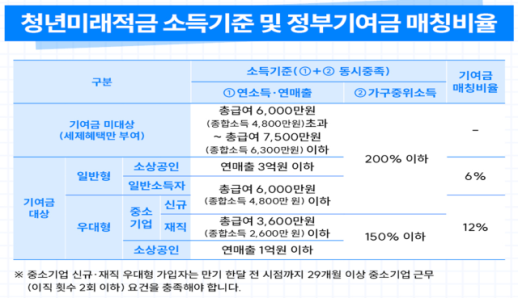 Youth Future Savings Accounts Offer Up to 8% Interest Rates The interest rates for Youth Future Savings Accounts have been announced by various banks. While all participating institutions offer a base interest rate of 5%, the maximum rates vary between 7% and 8% depending on the bank's bonus rates. When factoring in government contributions and tax exemptions on interest income, the effective interest rate for the preferred accounts could reach as high as 19.4% annually. On May 29, the Financial Services Commission reported that the details of the preferential interest rates for Youth Future Savings Accounts were published on the Consumer Portal of the Korea Federation of Banks. This savings product features a fixed interest rate over three years, starting with a base rate of 5% and adding 2 to 3 percentage points in preferential rates from the institutions. The banks offering the highest rate of 8% include the five major banks—KB Kookmin, Shinhan, Hana, Woori, and NH Nonghyup—as well as Industrial Bank of Korea and Korea Post. These institutions provide a maximum interest rate of 8% by adding up to 3 percentage points to the base rate. Other banks, such as Suhyup Bank, iM Bank, Busan Bank, Gwangju Bank, Jeonbuk Bank, Gyeongnam Bank, and Kakao Bank, offer a maximum preferential rate of 2 percentage points, resulting in a top interest rate of 7%. Common preferential rates are also available. Young individuals earning an annual salary of 36 million won or less, or with a total income of 26 million won or less, can receive an additional 0.5 percentage points. Those who complete the 'Financial Counseling for All Youth' program are eligible for an extra 0.2 percentage points. Other preferential rates depend on financial transaction activities such as salary transfers, credit card usage, and automatic payments. Considering government contributions and tax benefits, the actual benefits of the Youth Future Savings Accounts are even greater. According to the Financial Services Commission, the effective benefits of the standard accounts are similar to those of a regular savings account with an annual interest rate of 13.2% to 14.4%. The preferred accounts are estimated to provide benefits equivalent to a regular savings account with an annual interest rate of 18.2% to 19.4%. For instance, if a participant deposits 500,000 won monthly for three years, accumulating a principal of 18 million won, a standard account holder receiving the 8% interest rate would receive a total of 21.38 million won at maturity, including a government contribution of 1.08 million won and interest of 2.3 million won. A preferred account holder would receive a total of 22.55 million won, including a government contribution of 2.16 million won and interest of 2.39 million won. The Youth Future Savings Accounts are set to launch on June 22. Fourteen institutions, excluding Toss Bank, will offer the accounts starting on that date, while Toss Bank plans to launch in December, pending system development. The interest rates for Toss Bank will be announced in accordance with its launch schedule. Applications will be accepted from June 22 to July 3. During the first five business days, from June 22 to 26, applications will be staggered based on the last digit of applicants' birth years. On June 22, those born in years ending in 1 or 6 can apply; on June 23, those with years ending in 2 or 7; on June 24, 3 or 8; on June 25, 4 or 9; and on June 26, 5 or 0. From June 29 to July 3, all applicants can apply regardless of their birth year. After applications are submitted, eligibility and income assessments will be conducted sequentially. The Financial Services Commission and related agencies plan to provide additional information soon regarding the application process, income assessment methods, transitioning from the Youth Jump Account to the Youth Future Savings Account, and necessary preparations before applying.* This article has been translated by AI. 2026-05-29 15:26:00
 -
 China Vows Strong Response to EU Trade Protectionism Chinese state media has strongly criticized the European Union's (EU) pressure tactics, warning that it will "fight back to the end." This response comes as the EU considers implementing import quotas and additional tariffs in response to the issue of overproduction from China. On May 29, the social media account "Yuyuantantian," affiliated with China Central Television (CCTV), stated, "If the EU insists on enforcing its so-called 'overproduction tools,' China could immediately launch countermeasures, including anti-discrimination investigations and security checks on industries and supply chains." It emphasized that the Ministry of Commerce has made it clear it will firmly retaliate if national interests and corporate rights are infringed upon. The media outlet further warned, "If the EU stubbornly pushes forward with its 'overproduction tools,' China will take immediate action and implement comprehensive countermeasures. Trade friction is neither unfamiliar nor frightening to China. We will fight to the end (奉陪到底)." The EU's proposed 'overproduction tools' refer to mechanisms that would allow for the imposition of import quotas or additional tariffs to counteract the influx of low-priced goods from China. The EU is set to hold a special meeting to discuss unfair trade practices related to China and potential responses. Ahead of the meeting, Stefan Sejourne, the EU Commissioner for Prosperity and Industrial Strategy, warned that European industries in chemicals, metals, and clean technologies are at risk of being undermined by unfair competition from China. He indicated that the EU would systematically mobilize measures such as import quotas and tariffs. In response, Yuyuantantian criticized the EU's increasingly radical economic and trade policies toward China, stating, "The EU's shift toward trade protectionism is a result of long-term decline in European industries and lobbying by vested interest groups." It added that the EU, facing difficulties, is avoiding necessary structural reforms by raising barriers instead of addressing the root causes. China has also hinted at potential retaliation against European products. Yuyuantantian noted, "European products such as meat, alcohol, luxury goods, and cosmetics hold significant market shares in China. If the EU defines Chinese products as overproduced based on the logic that 'production capacity exceeds domestic demand,' it should consider whether the same criteria apply to European products sold in China." This suggests that a wide range of European consumer goods could become targets of China's response. The Chinese government has also issued an official response. Mao Ning, a spokesperson for the Chinese Foreign Ministry, stated during a briefing the previous day, "The EU should view the China-EU trade relationship comprehensively and objectively and adhere to its free trade commitments." She indicated that China would closely monitor the EU's actions and take necessary measures to safeguard its legitimate rights and interests. This exchange comes amid the EU's recent expansion of its measures against China across various sectors, including industry, telecommunications, and digital platforms. The EU is advancing the Industrial Acceleration Act (IAA), which prioritizes 'production within Europe' for public procurement and subsidies in strategic industries such as batteries, electric vehicles, and solar energy. Additionally, it is pushing for amendments to cybersecurity laws to exclude Chinese telecommunications companies like Huawei from European networks, thereby tightening regulations on Chinese firms. Recently, the EU imposed a fine of 200 million euros (approximately $349 million) on the Chinese e-commerce platform Temu for selling illegal products that did not meet safety standards. On the same day, it initiated an investigation into JD.com's acquisition of the German electronics distributor Ceconomy under foreign subsidy regulations (FSR), suspecting that JD.com may have received favorable financial and tax benefits from the Chinese government, potentially distorting competition in the EU market. The FSR was introduced to prevent companies receiving foreign government subsidies from distorting market competition by acquiring EU firms or participating in public tenders.* This article has been translated by AI. 2026-05-29 15:22:00
 -
 Debate Over 'Social Solidarity Wage' Amid Semiconductor Boom Raises Concerns This year, Samsung Electronics and SK Hynix, the leading players in the artificial intelligence (AI) semiconductor market, are projected to report unprecedented operating profits of around 350 trillion won and 250 trillion won, respectively. This remarkable windfall has sparked excitement across South Korean society.As substantial excess profits are anticipated, a nationwide debate has emerged over how to distribute these gains. Signs of subtle fractures are appearing within the government and political circles. While the presidential office and economic ministries emphasize the need to boost investment and enhance industrial competitiveness, the Ministry of Employment and Labor and labor groups are advocating for the sharing of excess profits. Notably, Minister of Employment and Labor Kim Young-hoon’s recent proposal for a 'Korean-style social solidarity wage' has intensified the controversy. Although the intention is to discuss the distribution structure of excess profits, concerns from various sectors are significant.The global semiconductor market is effectively in a state of war. The United States is pushing domestic investments through the CHIPS Act, while China is mobilizing national subsidies to bolster its semiconductor industry. Taiwan's TSMC and U.S. companies like NVIDIA and Intel are pouring astronomical amounts into the AI semiconductor race.Amid this backdrop, mixed messages regarding the use of excess profits are complicating the situation domestically, leading to market confusion. Companies are left uncertain whether the government is encouraging investment expansion or pressuring them to return excess profits. This has led to complaints that the government is effectively twisting corporate arms.The mention of a Korean-style social solidarity wage should have been approached with caution. The European social democracy model has already shown significant limitations. Even Germany and France have long shifted their focus toward labor market flexibility and enhancing corporate competitiveness. Simply labeling it 'Korean-style' does not change its essence. The idea of socially distributing corporate excess profits is likely to be interpreted by the market as a signal for increased government intervention.However, it is not necessary to taboo social discussions. The concentration of excess profits in specific industries and companies in the AI era is not unique to South Korea. In the U.S. and Europe, debates over taxing platform companies and big tech, as well as wealth redistribution, continue. It is also crucial to consider how to leverage the semiconductor industry's boom as a catalyst for national economic recovery.The method and pace of this discussion are key. The government should focus on establishing a calm framework for public discourse rather than rushing into distribution debates. It is essential to align the messages from the presidential office, economic team, and labor ministry. The market prioritizes consistency in policy direction. Increasing unnecessary uncertainty is problematic for the government.Particularly, recent global industrial competition has shifted from corporate rivalry to a national effort. The U.S., China, Japan, and Europe are all concentrating national resources on supporting their semiconductor industries. If South Korea becomes overly absorbed in the debate over corporate profit distribution, it risks allowing its competitors to gain an advantage.The debate over excess profits in the semiconductor sector is not merely a distribution issue. It is a matter that impacts the future industrial competitiveness and growth strategy of the South Korean economy. The government must approach this issue from a long-term perspective focused on the growth and expansion of the industrial ecosystem, rather than immediate political messaging. Above all, what is needed now is not provocative topics that escalate conflicts, but rather a refined ability to create social consensus while minimizing market confusion.* This article has been translated by AI. 2026-05-29 15:18:00
 -
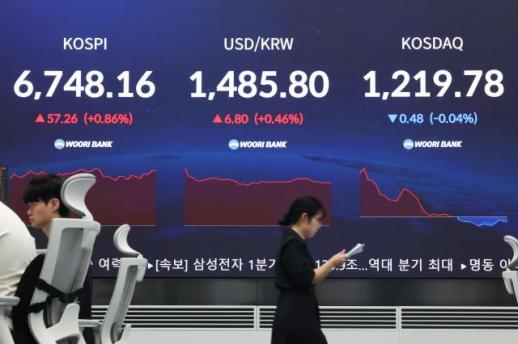 Korea's tax revenue brims from strong stock and corporate earnings SEOUL, May 29 (AJP) - South Korea’s national tax revenue expanded sharply during the first four months of this year on track for excess revenue of 25.2 trillion won ($17 billion) this year on blistering stock market rally and corporate earnings, the government said Friday. According to the Ministry of Economy and Finance on Friday, cumulative national tax revenue from January to April reached 164.1 trillion won ($109.7 billion), adding 21.9 trillion won from the same period last year. The tax collection progress rate came to 39.5 percent against budgeting, faster than 38.0 percent a year earlier. For the single month of April, national tax revenue stood at 55.2 trillion won, climbing 6.3 trillion won on year. The finance ministry cited expansions in securities transaction taxes, corporate income taxes, and personal income taxes as the primary catalysts for the monthly gain. Securities transaction tax collections jumped by 1.1 trillion won, fueled by expanding transaction turnover and higher tax rates. According to the finance ministry, the trading volume of listed shares in March soared to 1,449.4 trillion won, nearly quadrupling from the 357.1 trillion won recorded in the same month last year. Since the beginning of the year, the domestic equity market has experienced a massive influx of retail capital, with trading activity concentrating heavily around semiconductor and artificial intelligence (AI) sectors. Market observers noted that the relentless upward momentum of mega-cap tech stocks, such as Samsung Electronics and SK hynix, combined with an investment frenzy into single-stock leveraged exchange-traded funds (ETFs) and exchange-traded notes (ETNs), further amplified the trading surge. Corporate tax collections also advanced by 2.2 trillion won, reflecting a sharp turnaround in corporate profitability. The finance ministry explained that the annual operating profits of companies listed on the benchmark KOSPI rose 29.5 percent on an individual basis and 25.4 percent on a consolidated basis last year. Personal income taxes rose by 1.3 trillion won, driven by expanded corporate bonus payouts and a rise in capital gains from stock liquidations. Value-added tax (VAT) collections also ticked up by 300 billion won, supported by an expansion in import values. By item, cumulative figures for the January-April period showed that personal income taxes expanded by 5.9 trillion won year-on-year. Over the same four-month span, securities transaction taxes and corporate taxes increased by 3.1 trillion won and 3.2 trillion won each. 2026-05-29 15:16:51
 -
 Trump Honors Late NHL Star Claude Lemieux as a 'Warrior on Ice' President Donald Trump publicly paid tribute to Claude Lemieux, a star of the National Hockey League (NHL), who has passed away. Lemieux won the Stanley Cup four times and was known for his fierce competitiveness in the playoffs. On May 28, Trump wrote on Truth Social, "Claude Lemieux was a true legend in hockey and one of the fiercest competitors in the sport's history." He also noted that Lemieux was close to his family and a "great Trump supporter." Trump highlighted Lemieux's four championships and his impressive playoff record of 80 goals. Lemieux won the Stanley Cup in 1986 with the Montreal Canadiens, in 1995 and 2000 with the New Jersey Devils, and in 1996 with the Colorado Avalanche. Lemieux died at the age of 60. The NHL Alumni Association and the Montreal Canadiens announced his passing. Local authorities reportedly believe his death was a result of suicide. In 1995, he led New Jersey to its first Stanley Cup victory and received the Conn Smythe Trophy as the most valuable player in the playoffs. Over his regular-season career, he played 1,215 games, scoring 379 goals and providing 407 assists. In the playoffs, he played 234 games, recording 80 goals and 78 assists. Trump also extended his condolences to Lemieux's family, including his son Brendan and Deborah, saying, "You and your father were warriors on the ice."* This article has been translated by AI. 2026-05-29 15:16:00