

Journalist

CGTN
-
 CEO of Major U.S. Oil Company Predicts Rising Oil Prices in June and July Mike Worth, CEO of the U.S. oil company Sevrun, has forecasted increased pressure on international oil prices in June and July. Although oil prices recently fell amid hopes for a U.S.-Iran agreement, Worth noted that diminishing market buffers, such as inventories and strategic petroleum reserves, could lead to supply disruptions affecting prices. In an interview with the Financial Times on May 28, Worth stated at a conference hosted by investment bank Bernstein, "The market's ability to absorb imbalances has significantly weakened compared to the early days of the war." He added, "As we enter June and especially into July, the pressure for price increases will become more pronounced." Recent oil prices have declined in response to the potential for a U.S.-Iran agreement. According to the Financial Times, Brent crude was trading at $93.71 per barrel on May 28. Over the past week, speculation that the two countries could end a three-month conflict has led to a drop of about 10%. However, Worth emphasized that actual supply disruptions have not been resolved. The Financial Times reported that due to the war in Iran, between 12 to 13 million barrels of oil are not being supplied to the global market daily. The Strait of Hormuz is a critical maritime route, accounting for about one-fifth of the world's oil trade. The factors that have previously limited sharp price increases include pre-war oil stockpiles, the release of strategic reserves, and the influx of sanctioned oil from Iran, Russia, and Venezuela. Worth remarked, "As these reserves and alternative supplies diminish, the market's capacity to withstand additional shocks is decreasing." He also noted that governments need to replenish their reserves in preparation for future shocks, which could create additional demand. However, he cautioned that if the war prolongs and oil prices rise further, economic slowdowns could reduce demand, potentially limiting the upward trend in prices.* This article has been translated by AI. 2026-05-29 14:24:00
 -
 Hyundai AutoEver Shares Surge 23% on Robotics and SDV Strategy Hopes Hyundai AutoEver's shares soared more than 23% during trading on expectations of benefiting from Hyundai Motor Group's robotics and software-defined vehicle (SDV) strategy, reaching a new 52-week high. According to the Korea Exchange, as of 2:14 PM, Hyundai AutoEver's stock was trading at 919,000 won, up 173,000 won (23.19%) from the previous day. The stock peaked at 953,000 won during the session, setting a new 52-week record. Analysts have identified Hyundai AutoEver as a key beneficiary of Hyundai Motor Group's robotics and SDV strategy, which has boosted investor sentiment. Lee Jae-il, an analyst at Eugene Investment & Securities, noted in a report that "if humanoid robots are deployed in smart factories, they will handle operations, maintenance, and monitoring tasks." He added that there is potential for the company to serve as a bridge connecting external clients with Boston Dynamics, indicating possibilities for expansion beyond its current affiliations. He further explained that "the expansion of Hyundai Motor Group's global production bases and the application of smart factory solutions will create more business opportunities," and that the full-scale implementation of SDV could significantly enhance revenue generation capabilities through the introduction of next-generation middleware and a per-vehicle charging model. Eugene Investment & Securities forecasts Hyundai AutoEver's revenue for this year to reach 4.7 trillion won, with an operating profit of 282.6 billion won. The analyst maintained a 'buy' rating on the stock and raised the target price from 700,000 won to 880,000 won, a 14% increase.* This article has been translated by AI. 2026-05-29 14:22:00
 -
 KOSPI Touches 8458 Points Before Stabilizing Above 8400 The KOSPI index reached a new intraday high, buoyed by strong institutional buying. As of 2:04 PM on May 29, the KOSPI was up 255.05 points (3.12%) at 8440.45, according to the Korea Exchange. The index opened at 8384.31, rising 199.02 points (2.43%) from the previous trading day, and despite some fluctuations, it maintained an upward trend. The index surged to 8458.25, surpassing the previous intraday high of 8457.09. Although it has since given back some gains, it remains solidly above the 8400 mark. In terms of trading volume, individuals and foreign investors sold a net 896.5 billion won and 1.9705 trillion won, respectively, while institutions bought a net 2.8016 trillion won, driving the index higher. Major stocks in the securities market also showed strong performance. Samsung Electronics rose 4.92%, SK Hynix increased by 1.14%, SK Square was up 1.46%, Samsung Electro-Mechanics surged 13.41%, Hyundai Motor climbed 7.09%, LG Energy Solution gained 3.39%, Samsung Life Insurance rose 7.55%, HD Hyundai Heavy Industries increased by 0.71%, and Samsung C&T was up 8.14%. In contrast, the KOSDAQ index struggled, recording a decline. At the same time, the KOSDAQ was down 33.83 points (-3.06%) at 1070.53. It opened at 1112.15, up 7.79 points (0.71%) from the previous day, but reversed course due to selling pressure from foreign and institutional investors. In the KOSDAQ market, individuals bought a net 306.7 million won, but foreign and institutional investors sold a net 926 million won and 2.264 trillion won, respectively, pulling the index down. Top stocks in the KOSDAQ also generally showed weak performance. EcoPro BM fell 1.37%, Alteogen dropped 1.35%, EcoPro declined 3.39%, Juseong Engineering was down 0.72%, Kolon TissueGene fell 6.76%, Rino Technology decreased by 1.82%, Peptron dropped 2.50%, and HLB was down 0.59%. Conversely, Rainbow Robotics rose 0.57%, and Samchundang Pharmaceutical was up 0.15%.* This article has been translated by AI. 2026-05-29 14:20:00
 -
 SpaceX Lowers IPO Valuation to $180 Billion, Retreats from $200 Billion Goal Elon Musk's SpaceX has reduced its target valuation for its initial public offering (IPO) to over $180 billion (approximately 2,705 trillion won), down from the previously reported goal of over $200 billion (about 3,006 trillion won). According to Bloomberg on May 29, the company's valuation expectations were adjusted following consultations with advisory firms and investors. SpaceX aims to raise up to $75 billion (around 113 trillion won) in this IPO, which would set a record for the largest IPO in history if achieved. The listing process is expected to begin in early June. The company plans to start official investor marketing as early as June 4 and could set the offering price on June 11. However, the size of the offering and valuation details may change based on market reactions from investors, and the timeline could be delayed by a few days. In the IPO documents submitted on May 20, SpaceX highlighted its reusable rocket and satellite internet businesses while presenting AI services and infrastructure as new growth areas. The proposal also included plans for an orbital data center and a potential market valued at $28.5 trillion (approximately 4,283.6 trillion won). The company announced in February that it had acquired Musk's xAI, which owns the chatbot Grok and the social media platform X. Bloomberg reported that this transaction valued SpaceX at $1 trillion (about 1,503 trillion won) and xAI at $250 billion (approximately 376 trillion won). Financial results showed both revenue growth and a return to losses. In 2025, revenue reached $18.7 billion (around 28.1 trillion won), up from $14 billion (about 21 trillion won) the previous year. The profit of $791 million (approximately 1.19 trillion won) in 2024 turned into a loss of $4.94 billion (about 7.43 trillion won) in 2025. This IPO will be underwritten by 23 banks, including Goldman Sachs, Morgan Stanley, Bank of America, Citigroup, and JPMorgan Chase. The company plans to list on the Nasdaq and Nasdaq Texas under the ticker symbol 'SPCX.'* This article has been translated by AI. 2026-05-29 14:14:00
 -
 Aekyung Industry Launches 76 Beauty Products at Olive Young's First U.S. Store Aekyung Industry's beauty brands AGE20'S and LUNA will debut at Olive Young's first U.S. store, aiming to expand their presence in the American market. On May 29, Aekyung Industry announced that it will showcase 53 products from AGE20'S and 23 products from LUNA at the Olive Young store opening in Pasadena, near Los Angeles, California.The store will feature AGE20'S flagship product, the 'Signature Essence Pact Intense Cover,' which will be available in 20 shades to cater to the diverse skin tones of American consumers. Additionally, mini-sized products exclusive to the U.S. market will also be offered. This essence pact combines makeup and skincare, providing a natural glow and a moisturizing feel, according to the company.The company will also introduce sun care products, including the 'UV Defense Hydro Calming Sunscreen,' which has received over-the-counter certification in the U.S. Aekyung Industry plans to expand its product lineup in the U.S. market by focusing on color cosmetics and sun care.LUNA will feature its 'Long Lasting Tip Concealer' as a key product, available in a total of 20 shades at the local store, emphasizing high coverage and adherence.An Aekyung Industry representative stated, "The U.S. is a key global beauty market with a diverse range of skin tones and makeup needs. We focused on product composition and color diversification that reflect local consumer characteristics."Since its launch in 2013, the AGE20'S Signature Essence Pact Intense Cover has sold over 240 million units as of March this year. To celebrate its entry into Olive Young, Aekyung Industry held a pop-up store near Hongdae Station in Mapo-gu, Seoul, on May 25. 2026-05-29 14:06:00
 -
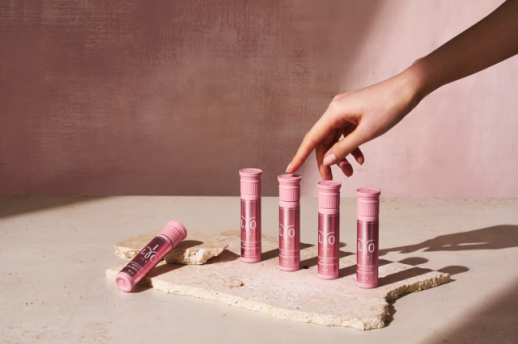 Dong-A Pharmaceutical's ILO Brand Enters U.S. Market with Olive Young Dong-A Pharmaceutical's inner beauty brand, ILO, has officially entered the U.S. offline market. Traditionally, pharmaceutical companies have relied on distribution networks centered around pharmacies and hospitals, but there is a growing trend to expand distribution channels to domestic and international offline stores targeting consumers in their 20s and 30s. On May 29, Dong-A Pharmaceutical announced that ILO has officially launched at the Olive Young store in Pasadena, California. This entry is based on the sales performance of ILO products in domestic Olive Young stores and global malls. The company plans to expand its consumer touchpoints in the U.S. through local stores. The Pasadena location will sell five products, including the Type 1 Collagen Biotin Ampoule (8-pack), Dual Slim Cut (60 tablets), Whitetachyon (30 packets), Mucin Collagen Jelly (10 packets), and Kamut Enzyme (30 packets). Alongside its offline store launch, ILO will also begin selling through local online malls, maintaining a dual distribution strategy. A Dong-A Pharmaceutical representative stated, "We plan to enhance the excellence of K-inner beauty in the U.S. market and provide a professional healthcare experience."* This article has been translated by AI. 2026-05-29 14:04:00
 -
 AI Agents Drive Token Costs Up 1,000%, Sparking Corporate Concerns The widespread adoption of AI agents in the corporate sector is leading to unexpected repercussions. The unique token consumption structure of these agents is driving up AI implementation costs, while employees are engaging in a phenomenon known as "token maxing," where they repeatedly perform meaningless tasks to inflate internal AI usage metrics, deepening corporate concerns. A paper released on May 29 by Microsoft Research and Stanford University reveals that agent-based coding tasks consume up to 1,000 times more tokens than standard chatbots. Even simple AI tools that manipulate external systems use between 5 to 30 times more tokens compared to regular chat interactions. When the same task is executed repeatedly, token usage can vary by as much as 30 times, making cost predictions nearly impossible. The study notably demonstrated that "higher token consumption does not equate to increased accuracy." It found that accuracy peaks at a mid-cost range before reaching a saturation point. The financial impact is evident in actual billing. According to a case study from AI cost consulting firm LinOps, a SaaS startup with 35 engineers saw its monthly AI expenses soar to $87,000 within four months of implementing coding agents like Claude and CodeX, as well as its own bug triage agent. Only after applying optimization measures such as context pruning, lightweight model separation, and daily usage limits was it able to reduce costs to around $24,000 per month. In addition to the token cost issues, organizational cultural side effects are surfacing. Amazon mandated that over 80% of its developers use AI weekly and implemented an internal leaderboard for token consumption, leading employees to engage in token maxing by repeatedly executing unnecessary tasks on the company’s AI agent platform to boost their scores. In response, Amazon has restricted the visibility of the leaderboard. A similar trend has emerged at Meta, where a leaderboard for approximately 85,000 employees recorded a total token consumption exceeding 60 trillion over a 30-day period. The surge in token costs may present a windfall for the Chinese AI industry. The API pricing for DeepSeek V3.2 is $0.14 per million input tokens, significantly cheaper than GPT-5's $2.50. For output tokens, DeepSeek costs $0.28 compared to GPT-5's $15, widening the gap further. As token consumption volumes increase, the price difference could lead more cost-conscious companies to consider adopting Chinese models. The overall increase in token usage is also steep. An analysis of OpenRouter platform data by investment firm Alja revealed that weekly token usage surged by over 3,800% as of December last year, with a sharp acceleration beginning in January 2025. The average prompt length has quadrupled from about 1,500 tokens in early 2024 to approximately 6,000 tokens.* This article has been translated by AI. 2026-05-29 14:04:00
 -
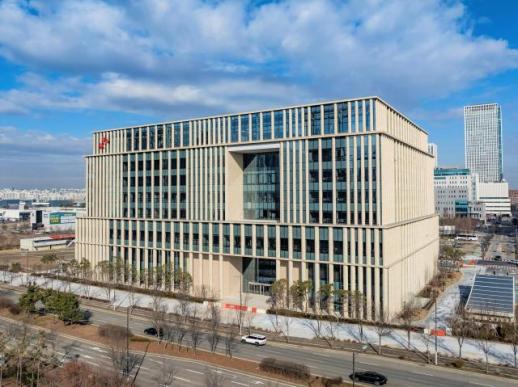 SK Bioscience Selected for National Growth Fund, Secures 300 Billion Won SK Bioscience announced on May 29 that it has finalized a funding plan based on the National Growth Fund during its regular board meeting. This decision follows the company's selection as a recipient of fund support by the Fund Management Review Committee under the Financial Services Commission the previous day. This marks the first time a domestic drug and vaccine developer has received support from the National Growth Fund. The funding, totaling 300 billion won, will be provided in the form of ultra-low interest long-term loans. The company plans to utilize these funds for research and development (R&D) and commercialization preparations for its 21-valent pneumococcal conjugate vaccine, GBP410, which is currently undergoing global Phase 3 clinical trials, as well as to enhance its production capabilities. GBP410 is an advanced pneumococcal vaccine candidate developed in collaboration with Sanofi, featuring an expanded preventive range compared to existing vaccines. The company aims to secure top-line results by the second half of next year. The National Growth Fund is a public-private policy finance program established to foster advanced industries such as artificial intelligence (AI), semiconductors, and biotechnology. The government selects support recipients focusing on large-scale projects with global competitiveness, including bio-development projects in Phase 3 clinical trials. SK Bioscience continues to supply domestically developed vaccines, including flu and varicella vaccines, through the National Immunization Program (NIP), contributing to the establishment of a domestic infectious disease prevention system. The company plans to expand its pipeline for infectious disease response, including a patch-based flu vaccine, RSV preventive antibody drugs, and an mRNA vaccine platform. To support these initiatives, the company relocated its headquarters and research organization to the Songdo Global R&D Center in January. It has established an integrated system encompassing R&D, process development (PD), quality, and business development, aiming to enhance efficiency throughout the entire cycle from research to commercialization and strengthen global collaboration and next-generation pipeline development capabilities. An Jae-yong, CEO of SK Bioscience, stated, "We will continue to strengthen our core pipeline development and production capabilities to enhance Korea's vaccine sovereignty and secure future infectious disease response capabilities."* This article has been translated by AI. 2026-05-29 14:04:00
 -
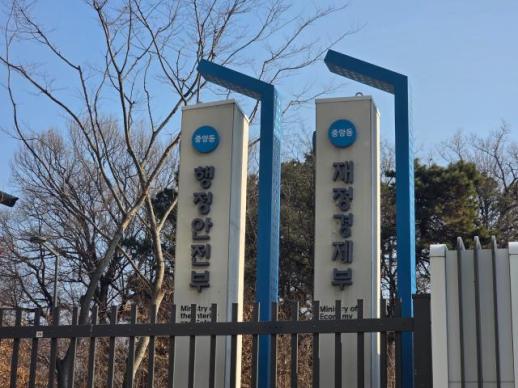 Foreign Investors Purchase 22.7 Trillion Won in Korean Government Bonds Post WGBI Inclusion Foreign investors have purchased a net total of 22.7 trillion won in Korean government bonds based on transaction standards and 18 trillion won based on settlement standards since the country's inclusion in the World Government Bond Index (WGBI). On May 29, the Ministry of Economy and Finance held the seventh meeting of the "WGBI Regular Monitoring and Investment Promotion Task Force" at the Government Seoul Complex, chaired by Hwang Soon-kwan, head of the National Treasury. The task force, which includes representatives from the Ministry of Finance, Financial Services Commission, Bank of Korea, Financial Supervisory Service, and Korea Securities Depository, discussed trends in foreign capital inflows since the WGBI inclusion began. The WGBI is a major index for advanced bonds managed by the UK-based Financial Times Stock Exchange (FTSE) Russell. It is considered the largest bond index globally due to its stringent criteria, which include government bond issuance balance, credit ratings, and market accessibility. South Korea was confirmed for WGBI inclusion in April of last year, with the process starting last month and set to continue in phases until November. According to the Ministry of Finance, net foreign purchases of Korean government bonds since the WGBI inclusion began are 22.7 trillion won based on transaction standards (from March 30 to May 27) and 18 trillion won based on settlement standards (from April 1 to May 27). Despite increased market volatility due to external factors such as the recent Middle East conflict and tightening monetary policies in major economies, foreign net purchases have continued in both April and May. Notably, the inclusion in the WGBI has attracted new investors, including Japanese investors, who accounted for 6 trillion won based on settlement standards. Consequently, net foreign purchases of Korean government bonds from January to May reached 36.3 trillion won, an increase from 32.8 trillion won during the same period last year. Additionally, investments from pension funds and central banks, which tend to hold assets long-term, have made up a significant portion of this total. The government plans to regularly monitor the inflow of foreign capital through the task force and continue holding investment briefings for foreign investors. Hwang Soon-kwan, head of the National Treasury, stated, "In April and May, foreign capital has flowed in at a significant scale. The influx of new investors, including those from Japan, will contribute to expanding the investor base and stabilizing the market in the medium to long term." He added, "Given the recent volatility in government bond rates, we must remain vigilant in June and closely monitor foreign capital inflow trends. Despite the challenging market conditions, we should strive to enhance foreign investment in our bond market through various efforts."* This article has been translated by AI. 2026-05-29 14:02:00
 -
 CNN Sues AI Startup Perplexity for Unauthorized Use of 17,000 Articles and Videos CNN has filed a copyright lawsuit against the AI search startup Perplexity, claiming it used CNN's articles, videos, and images without permission in its AI responses. On May 28, local time, Reuters and Bloomberg reported that CNN filed the lawsuit in the U.S. District Court for the Southern District of New York. The complaint alleges that Perplexity unlawfully copied over 17,000 pieces of CNN content for its service. CNN contends that Perplexity provided answers to user queries that were either identical to or substantially similar to the original content, allowing users to access key information from CNN without visiting its website. The two parties had previously discussed a content licensing agreement but failed to reach a consensus. According to The Verge, negotiations stalled late last year due to disagreements over the scope of use. CNN subsequently requested that Perplexity cease using its materials, but the startup continued to do so. Specifically, CNN claims that Perplexity's AI search engine and AI browser, Comet, continued to collect data even after access was blocked. The lawsuit cites instances where users entered CNN article titles and received nearly identical sentences in response. Perplexity has denied the allegations. A company spokesperson stated, "The facts are not copyright protected." Perplexity has previously argued in other lawsuits that AI-generated responses do not constitute copyright infringement and that building a searchable database falls under fair use. CNN is seeking damages and an injunction against further copyright infringement, asserting that Perplexity utilized its materials for AI service operations without covering the costs of original reporting. This lawsuit adds to the growing legal disputes surrounding Perplexity with media and content companies. The startup is also facing lawsuits from The New York Times, Dow Jones, New York Post, and Reddit over copyright infringement and unauthorized data use.* This article has been translated by AI. 2026-05-29 14:02:00