

Journalist

CGTN
-
 Kancho Launches Season 2 of 'Find My Name' Event Lotte Wellfood announced on May 28 that it will launch Season 2 of its consumer participation event, "Find My Name," featuring its chocolate snack, Kancho. The first season of the event, held from September to November last year, gained significant attention as participants sought names engraved on the snacks, including their own and those of loved ones. The event sparked a trend on social media, with consumers engaging in a buying frenzy known as "Kancho-gang" until their desired names appeared, leading to a threefold increase in sales during the event and resulting in a shortage of the product. This year's event has been upgraded for a more enjoyable experience with friends and family. The number of names featured on the snacks has been expanded from 504 to 550. The new names are primarily based on popular baby names while excluding those from Season 1 to enhance variety. The event also introduces new fun elements. A real-time ranking of submitted names will be available on the event page, and the top two most submitted names will be used to create special merchandise for prizes. The packaging has been redesigned with Kancho characters "Kani" and "Choni" embarking on an adventure to find names. To participate, consumers can take a photo of the Kancho snack with their name on it and upload it to the event page via a QR code on the front of the package. The submission period runs from April 27 to June 7. Lotte Wellfood has prepared a total of 5 million won worth of prizes. Customers who participate with their own names will have a chance to win an iPhone 17 (2 winners), Marshall Acton 3 speakers (3 winners), and Illy Easy Pod Machines (5 winners). Those who submit names of others can also win 10,000 won gift certificates for 7-Eleven (30 winners) and Kancho exchange gift coupons (100 winners). Winners will be announced on June 19. A representative from Lotte Wellfood stated, "Thanks to the explosive interest we received last year, we are excited to present Season 2 with an expanded list of 550 names. We hope participants enjoy the name-finding game with their loved ones and create special memories with Kancho." Lotte Wellfood has been actively expanding its consumer participation events. In February, it held the "Draw Happiness on Castard" event, encouraging consumers to draw on Castard packaging and share it on social media. Last year, it launched the "Finding Happy Mongshell" event, inspired by the chocolate decoration resembling a smiling face, which also gained popularity online.* This article has been translated by AI. 2026-05-28 16:46:00
 -
 Kakao Union Secures Right to Strike as CEO Emphasizes Unity "While we have not yet sufficiently narrowed our differences, I will work harder to unite us as one Kakao through dialogue," Jeong Shin-a, CEO of Kakao, stated in a company bulletin amid a looming strike crisis following failed wage negotiations between management and the union. Jeong expressed regret to employees, known as "crew," for not quickly resolving various concerns and uncertainties. Kakao recently reported its highest quarterly performance to date and alleviated concerns over legal risks facing founder Kim Beom-soo, seemingly addressing internal issues. However, the conclusion of a rigorous management overhaul has given way to new internal dilemmas, including labor disputes and confusion over service strategies, putting Jeong's leadership to the test. The relationship between Kakao management and the union has deteriorated significantly. Disagreements over performance bonuses and the inclusion of restricted stock units (RSUs) in bonus calculations have persisted since the declaration of an emergency management strategy on May 27, leading to the collapse of the second round of mediation by the Gyeonggi Provincial Labor Relations Commission. The union claims that despite strong performance, management is prioritizing cost-cutting at the expense of employees. With the breakdown of negotiations, all five corporate unions within the Kakao community, including the headquarters union, have secured the legal right to strike, raising the possibility of a coordinated strike for the first time in the company's history. Additionally, the challenge of "revising service strategies" has emerged. Kakao's ambitious overhaul of the KakaoTalk service, aimed at accelerating stock recovery and developing AI monetization models, has faced severe backlash. The Chief Product Officer, Hong Min-taek, who led the overhaul, recently resigned, effectively marking the initiative as a failure. The stock price, which had recovered to the 70,000 won range before the overhaul, has now plummeted to the 40,000 won range, reflecting harsh market evaluations. The KakaoTalk overhaul faced significant user backlash for introducing overly commercial features into a private communication space used by 50 million users. Excessive advertising in chat rooms, the prominent placement of commerce and payment tabs, and changes to the user interface that compromised intuitiveness drew criticism. Users expressed frustration, stating that the platform had transformed from a convenient messaging service into a tool for aggressive monetization. In response, Jeong has taken decisive steps to address labor disputes while completely restructuring the product organization. The existing product teams will be decentralized, and the previously fragmented design teams will be integrated to enhance user experience consistency across services. A new "User First Task Force" will be established within the KakaoTalk organization to strengthen communication with users and improve service quality. This move is seen as an attempt to directly confront the ongoing user backlash and internal confusion following last year's overhaul. Industry experts view Kakao's actions as a declaration of a "return to square one." Jeong's emphasis on "one Kakao" is interpreted as a commitment to restoring essential trust as a public service rather than being solely focused on commercial pursuits, echoing the founding philosophy of Kim Beom-soo, who is currently stepping back from management due to health issues. Some voices suggest that Kim's return to management may be necessary to navigate the simultaneous crises. However, a Kakao representative stated, "Kim is not involved in management due to health issues. Currently, we are focused on establishing an emergency management system led by Jeong and resolving the ongoing labor disputes and stabilizing services."* This article has been translated by AI. 2026-05-28 16:42:00
 -
 Hyungji I&C Targets Japanese Business Attire Market with Carisnote Hyungji I&C is partnering with Japanese trading company Itochu to penetrate the Japanese fashion market. The company plans to target both online platforms and offline distribution networks with its women's brand, Carisnote.On May 28, Hyungji I&C announced that it is officially launching its entry into the Japanese market in collaboration with Itochu and fashion distribution firm CNB Network. Itochu is a leading Japanese trading company with a global network across various industries, including textiles, fashion, food, energy, and retail. CNB Network, a partner of Itochu, is currently planning a K-fashion online platform in collaboration with the trading giant.Through this platform, Hyungji I&C aims to introduce Carisnote to the Japanese market, with plans to expand its offerings to include men's brands Yejak and Bon in the future.Japan is recognized for its relatively high demand for formal business attire. In response, Hyungji I&C's strategy focuses on maintaining the activity and functionality of Carisnote while presenting styles suitable for formal work environments.The company is also expanding its offline distribution network. This fall, Hyungji I&C plans to participate in the F/W season order meetings of major Japanese trading companies, including Itochu, to enhance its distribution channels in key department stores, premium shopping malls, and boutiques. A representative from Hyungji I&C stated, "We will intensify our efforts in the Japanese market based on a two-track strategy that encompasses both online and offline channels, while also expanding the overseas presence of our brands."Additionally, prior to its entry into Japan, Carisnote recently underwent a brand renewal, focusing on shedding the heavy and outdated image of its previous women's clothing while maintaining its core value of 'elegance.'* This article has been translated by AI. 2026-05-28 16:42:00
 -
 KOSPI slips after record rally while BOK holds rate but signals hikes ahead SEOUL, May 28 (AJP) - The Bank of Korea held its benchmark interest rate steady on Thursday but delivered its clearest signal yet that a tightening cycle is coming, pulling the KOSPI back from this week's record highs as traders repriced for higher borrowing costs ahead. The central bank kept its policy rate at 2.5 percent, a decision nearly every economist had expected, at the first meeting chaired by new BOK governor Shin Hyun-song. The news lay in the dissent: five of the seven board members voted to hold while two pushed for an immediate increase, a rare split that underscored how quickly the policy mood has shifted. The board's own projections now lean toward lifting the rate to 3 percent within six months, with two members signaling it could rise further, toward 3.25 percent. The benchmark KOSPI fell about 0.5 percent to close at consecutive sessions, taking profit after a rally that has nearly doubled the index this year, while domestic individuals and institutions continued to provide the offsetting demand that has sustained the market through the run. Market breadth, though still narrow, was less lopsided than Wednesday, when only 77 stocks advanced against 826 declines on the main board even as the index set a record — a sign the rally may be beginning, tentatively, to widen beyond its semiconductor core. The junior KOSDAQ underperformed the main board, weighed by weakness across smaller growth shares. Elsewhere in Asia, Japan's Nikkei 225 closed down nearly 0.5 percent at around 64,693, easing from record territory as investors positioned ahead of the Bank of Japan's mid-June policy meeting, now widely seen as the likely moment for its next rate increase. China bucked the regional trend, the Shanghai Composite edging up around 0.25 percent to close near 4,103, led by a near 6 percent jump in SMIC, the country's largest chipmaker, on optimism over China's drive for domestic chip self-sufficiency. The Korean won eased to around 1,504 against the dollar, weaker than Wednesday's close near 1,500.9 and consistent with the strain the central bank cited in justifying a tighter path. Oil, the source of the inflation pressure behind the day's decision, remained the key external variable. The regional picture is one of central banks diverging. Korea and Japan are both edging toward tighter policy, while China leans the other way in search of growth. For Korea, the message of the day is that the era of cheap money is ending — and a path toward 3 percent rates will test the chip-driven rally that has powered the market all year, pressuring the lofty valuations behind it even as a firmer won reshapes the calculus for the foreign investors who have lately been selling. 2026-05-28 16:38:49
 -
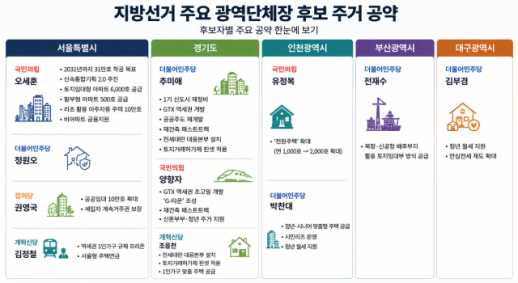 New Housing Models Proposed Ahead of Local Elections As the June 3 local elections approach, candidates for regional leadership positions are unveiling various housing models, including 1,000-won housing, citizen REITs, installment apartments, and land lease housing. These policies target young people, newlyweds, and those displaced by redevelopment projects. However, an analysis of the official five-point pledges submitted to the National Election Commission on May 28 reveals that few candidates have provided specific details regarding supply volume, funding, pricing conditions, or implementation pathways. The analysis categorized the new housing models proposed by candidates into land lease, installment, REITs, 1,000-won housing, and social housing. This review focused on the extent to which the official pledges outlined the supply entities, funding sources, volume, pricing conditions, and execution methods, rather than ranking the merits or effectiveness of the policies. In Seoul, Oh Se-hoon, the candidate from the People Power Party, proposed land lease apartments, installment apartments, and housing for migrants utilizing REITs, along with financial support for non-apartment construction. Oh aims to initiate the construction of 310,000 units by 2031 through the Rapid Integrated Planning 2.0 initiative, with plans to supply 6,000 land lease apartments and 500 installment apartments. His proposal also includes 100,000 units of REITs-based housing for migrants and financial support for non-apartment construction. While the official pledge document provides relatively detailed information on supply volume and business methods, actual occupancy may take time due to the construction timeline. Additionally, the land lease housing model's success depends on land acquisition methods and consumer preferences. The installment apartments also require further clarification on repayment structures and the timing of ownership transfer in subsequent plans. In the Incheon mayoral race, Yoo Jeong-bok from the People Power Party stands out with his pledge for 1,000-won housing, aiming to expand the current program, which operates at 1,000 units annually, to 2,000 units. While this expansion is based on an existing policy, the official pledge document does not sufficiently clarify land acquisition strategies, target demographics, locations, or selection criteria. Park Chan-dae, the Democratic Party candidate for Incheon mayor, has promised housing tailored for youth and seniors, citizen REITs, Incheon-style social housing, and rental support for young people. However, the operational structure of the citizen REITs, supply volume, and profit-sharing methods are not clearly outlined in the official pledge document. Similarly, details regarding the supply areas, methods, and volume for Incheon-style social housing require further explanation. In Busan, Jeon Jae-soo from the Democratic Party proposed public SPC land lease supply utilizing the North Port and the area behind the new airport. However, this proposal is intertwined with other development projects, making it difficult to assess the timing and volume of housing supply separately. In Sejong, candidate Jo Sang-ho proposed supplying 1,000 units of basic housing for youth, while Choi Min-ho proposed 3,000 units of rental housing exclusively for civil servants. Yet, the official pledge documents still need additional details on supply methods, pricing conditions, funding structures, and land acquisition plans. Experts emphasize the importance of evaluating supply volume, funding, and execution pathways rather than merely focusing on the new housing models. The supply shortage in Seoul and the surrounding metropolitan area is linked to a lack of new construction in urban centers, suggesting that small-scale models targeting specific demographics may not sufficiently alleviate overall market instability. Song Seung-hyun, CEO of Urban and Economy, stated, "Seoul's supply expansion pledges must also address business viability and regulatory easing. The level of detail in execution plans will influence the credibility of the pledges." Seo Jin-hyung, a professor at Kwangwoon University, noted that while recent housing welfare policies are shifting from selective to universal welfare, the critical issue remains securing funding. He added, "While redevelopment projects can increase supply, they may also trigger price hikes, necessitating complementary policies." Kim Je-kyung, head of Tumi Real Estate Consulting, remarked, "Among local election pledges, policies related to redevelopment projects can have the most direct impact on the market, as they are linked to the Seoul city's permitting authority. It is essential to assess the candidates' genuine commitment and sincerity in their proposals." 2026-05-28 16:38:00
 -
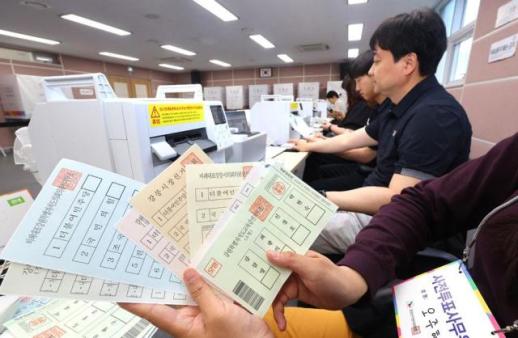 Two-day early voting for local elections set to begin this week SEOUL, May 28 (AJP) - Early voting for the upcoming June 3 local elections is set to begin this week. According to the National Election Commission (NEC), voters may cast their ballots at any polling station nationwide, regardless of their registered address, from 6 a.m. to 6 p.m. over two days from Friday to Saturday. Voters must bring a photo ID showing their date of birth such as a resident registration card, passport or driver's license. Mobile IDs are accepted only if they can be opened and verified on site, and saved images are not valid. Depending on their registered address, voters may receive up to seven ballots, as the elections will choose about 4,000 metropolitan mayors, provincial governors, local government heads and education superintendents, and fill other vacancies. Voters should use the official tool provided at polling booths and mark just one candidate per ballot. Taking photos inside polling stations or of ballots is prohibited, and violators can face up to two years in prison or a fine of up to 4 million won (about US$2,700). Damaging ballots or causing a disturbance at a polling station is also punishable. Meanwhile, more than 44.6 million people are eligible to vote, up more than 340,000 from the previous elections in 2022. Of them, 89,151 are South Koreans residing overseas and 151,532 are foreigners staying here. 2026-05-28 16:35:31
 -
 Salary Workers Launch AX Organization to Drive AI Development Salary Workers has established a dedicated organization for AI transformation (AX) aimed at creating an AI-centered development environment. According to Salary Workers on May 28, the AX team is an engineer-focused organization that seeks to enhance brand productivity and operational efficiency through AI transformation. Team members assigned the role of AX engineers will develop and implement strategies to maximize AI utilization in the product development process. The formation of the AX organization is part of a strategy to accelerate business expansion, contributing to the enhancement of Salary Workers' platform capabilities. Salary Workers envisions an AI-centered development system that goes beyond mere efficiency improvements, aiming to introduce new features and shorten service update cycles. The short-term goal of the AX organization is to expand an AI-centered development system focused on efficient reasoning. To achieve this, the team will concurrently pursue protocol definition, standardization, and harness engineering. They will define agreements on development outputs, unify work processes, and establish a harness system to enhance reasoning reliability. In the medium to long term, the focus will be on creating business impact. The dedicated team plans to expand its AI transformation experience, initially applied in the development sector, across the entire business. A representative from Salary Workers stated, "Standardization and automation of the development process are essential steps to maximize the effectiveness of AI utilization. We aim to build a reliable development environment to create a more stable service operation system."* This article has been translated by AI. 2026-05-28 16:34:00
 -
 Chinese Embassy Criticizes US Forces Commander for 'Dagger' Comment The Chinese government has strongly criticized U.S. Forces Korea Commander Javier Brunson for describing South Korea and the U.S. military presence there as a "forward base" for countering China. On May 28, the Chinese Embassy in South Korea issued a statement in response to Brunson's recent public remarks, stating, "Your comments have clearly crossed the line." Brunson had previously likened South Korea to a "dagger" and a "fixed aircraft carrier" in the context of its geographical significance and the role of U.S. forces in deterring China. A spokesperson for the Chinese Embassy questioned, "Is referring to U.S. forces as an aircraft carrier or dagger an act of aggression, or is there an intention to take other countries hostage?" The spokesperson also referenced a recent agreement between U.S. and Chinese leaders to establish a "constructive and strategically stable relationship," asking Brunson whether his hostile remarks toward China were sanctioned by Washington or aimed at undermining the outcomes of the U.S.-China summit. Additionally, some South Korean media outlets have criticized Brunson's comments, urging him to respect regional countries and work harder to promote peace and stability in the area. This statement from the Chinese Embassy is seen as an effort to counter U.S. moves to expand the role of U.S. forces in South Korea beyond North Korean deterrence to include responses to regional conflicts such as those in the Taiwan Strait. China has recently reiterated the need for stability in U.S.-China relations. According to state-run Xinhua News Agency, Wang Yi, a member of the Political Bureau of the Communist Party of China and Foreign Minister, met with U.S. strategic and economic figures in New York on May 27, stating, "China-U.S. relations extend beyond bilateral ties and affect global peace and the future of humanity." Wang emphasized the need for both countries to quickly realize a "constructive strategic stability relationship." Regarding the Taiwan issue, he stated, "Taiwan independence and peace and stability in the Taiwan Strait are incompatible."* This article has been translated by AI. 2026-05-28 16:34:00
 -
 Bank of Korea Holds Interest Rates Steady Under New Governor Shin Hyun-sung Shin Hyun-sung, the new Governor of the Bank of Korea, held his first monetary policy committee meeting and decided to keep the benchmark interest rate unchanged. Market attention focused not just on the decision itself but on the future trajectory of interest rates. Governor Shin indicated that he would consider raising the benchmark rate at an appropriate time, taking into account inflation and financial stability. This decision, characterized as a 'hawkish' hold, sends a signal of monetary tightening, aligning closely with the central bank's fundamental role in light of the current economic realities facing South Korea. Coincidentally, the United States is also experiencing a leadership transition at its central bank. The Federal Reserve is adjusting its initial policy direction under new leadership. Both central banks are facing scrutiny as they deliver their 'first messages' to the market. In the U.S., inflationary pressures are mounting, creating conditions more favorable for interest rate hikes rather than cuts. Meanwhile, South Korea must navigate a complex landscape of unexpected economic growth, rising household debt, real estate market fluctuations, and currency volatility. Given this context, Governor Shin's initial message carries significant weight. He stated, "The most challenging aspect is when the factors we consider conflict, leading to a dilemma. However, this time, looking at inflation, growth, exchange rates, and real estate, the path forward is clear." This declaration suggests that all indicators are pointing toward a single goal: raising interest rates. Recently, South Korea's economy has shown relatively strong growth, buoyed by a semiconductor boom and recovering exports. However, a closer look reveals underlying weaknesses. Real estate prices in the capital region are rising again, and household debt is increasing at an alarming rate. The ongoing conflict in the Middle East has led to rising international oil prices and increased currency volatility, contributing to upward pressure on inflation. This has raised concerns in the market about the potential for inflation due to the combination of fiscal expansion and rising oil prices. In this environment, the first monetary policy meeting under Governor Shin strongly suggests the possibility of two additional interest rate hikes within the year, which is seen as a signal to reduce market uncertainty. The prevailing sentiment in the market, driven by the impact of the Middle East conflict, has been in favor of interest rate increases, leading to rising rates. In a structure like South Korea's, where asset markets and household debt significantly influence the economy, a passive stance from the central bank could exacerbate issues. Governor Shin's remarks have effectively confirmed the likelihood of a rate hike, the first in three and a half years. Within the Federal Reserve, there is a growing sentiment that "signals of interest rate increases must be sent." Earlier this year, the market favored expectations of rate cuts, and there was pressure from the President for such cuts. However, recent inflation concerns stemming from the Middle East conflict have opened the door to potential rate hikes. Despite pressures from the market and political spheres, the Fed appears committed to maintaining price stability. This underscores the notion that the trust in a central bank stems from its ability to make uncomfortable decisions. Governor Shin must firmly grasp this critical point. As calls for economic stimulus grow amid the government's expansionary fiscal policy, the independence of the monetary authority and its commitment to price stability will face increasingly stringent tests. In times when fiscal and monetary policies are misaligned, the central bank must play a stabilizing role. Failing to tighten monetary policy could lead to severe consequences, including currency instability and entrenched inflation in the future. Of course, tightening alone is not a panacea. With the pain of small business owners and vulnerable borrowers reaching a critical point, interest rate policies always come with painful side effects. The key, as Governor Shin mentioned, lies in the speed and direction of these policies. Another crucial task for the Bank of Korea is to manage market expectations effectively, providing a compass for economic actors to navigate a predictable environment. As the last line of defense for the economy, the central bank must be willing to deliver tough messages, even if they are uncomfortable for the market. In this regard, the first monetary policy meeting under Governor Shin has left a legacy that goes beyond a simple rate hold. What the Bank of Korea needs now is time to build trust, which begins with a principled monetary policy that moves steadily toward a clear destination indicated by the data. 2026-05-28 16:34:00
 -
 Hana Bank Launches 'Korea Forever Savings' for Veterans with 2% Interest Rate Hana Bank announced on May 28 that it will launch the 'Korea Forever Savings' account on June 1, in honor of the month dedicated to patriotic service and veterans.The Korea Forever Savings account offers a preferential interest rate of 2.0% per year to veterans, police officers, firefighters, and other uniformed personnel without any conditions.General customers can also benefit from a maximum interest rate of 2.0% by meeting certain criteria: a 1.0% rate for making six or more salary or pension deposits within the first year, a 0.5% rate for the first transaction, and an additional 0.5% for completing a pledge to display the national flag and demonstrate love for the country.From June 15 to August 15, customers who sign up will have a chance to win prizes through a lottery, including five An Jung-geun medals and twenty Taegeukgi card medals. Additionally, 100 participants will receive an opportunity to join a tour of the Seoul Veterans Affairs Office's historical sites along with a commemorative gift.Active police officers and firefighters who open an account will receive a 3,000 won mobile voucher for Paris Baguette.The savings account will be available for a limited time, with a cap of 60,000 accounts sold from June 1 to August 15. Each year, Hana Bank collaborates with various organizations, including the Daejeon Veterans Affairs Office, to launch products in recognition of the month dedicated to patriotic service.* This article has been translated by AI. 2026-05-28 16:32:00