

Journalist

CGTN
-
 LG Uplus Reduces Plans from 53 to 18, Implements QoS Across All Tiers LG Uplus is set to overhaul its telecommunications pricing structure, focusing on a new integrated 5G and LTE plan launching on June 1. The company aims to simplify its pricing by centering on data volume and speed, while implementing a data assurance option (QoS) across all tiers. Additionally, age-based benefits and discounts for bundled services will now be automatically applied without separate applications, streamlining the subscription process. On May 28, LG Uplus held an online press conference to announce the launch of its 'Simply 2.0' campaign, which aims to simplify the subscription and usage processes for its services, particularly focusing on pricing and bundling. Jang Jun-young, head of LG Uplus's marketing group, stated, "This reform is focused on reducing the time customers spend making decisions. Previously, customers had to compare LTE and 5G plans along with data offerings, but the new integrated plan redefines the product structure to simplify selection criteria." The key features of this overhaul include the integrated 5G and LTE plans called 'Data Plan' and 'Plus Plan,' automatic application of benefits based on age and usage patterns, an all-in-one structure that combines mobile and internet services, and expanded 5G roaming coverage. LG Uplus has reduced its plans from 53 to 18, simplifying the structure to allow customers to choose based on data volume and speed. A notable feature is the application of the data assurance option (QoS) across all tiers. However, there are limitations on QoS speeds in the lower-priced tiers. Depending on the plan, QoS speeds can reach up to 400 Kbps, which is sufficient for standard video viewing, messaging, and web browsing, but may not support high-performance gaming or high-definition video streaming. Specifically, for monthly fees: the 'Data Plan 300MB' at 28,000 won offers a speed of 400 Kbps; the 'Data Plan 14GB' at 55,000 won provides 1 Mbps; the 'Data Plan 95GB' at 68,000 won offers 3 Mbps; and the 'Data Plan 125GB' at 70,000 won delivers 5 Mbps. Plans priced at 85,000 won or higher, such as the 'Data Plan MAX,' allow unlimited data usage without speed restrictions. Kang Jin-wook, head of LG Uplus's mobile and digital business group, remarked, "Regardless of the plan chosen, customers will experience uninterrupted data usage, marking a significant change for users. We believe we are entering an era where unlimited access to YouTube and KakaoTalk is possible." Some analysts have raised concerns that expanding QoS to lower-priced tiers could negatively impact the company's profitability. In response, Kang stated, "While there may be concerns about profitability due to the government's announcement of a 380 billion won reduction in telecommunications costs across the three major carriers, we plan to offset this by securing additional revenue through new businesses like AI." Age-based benefits will also be automatically applied without separate applications. For instance, a youth customer using the 'Data Plan 9GB' at 47,000 won will receive 11GB of data monthly, and after exhausting that, they can use data at 1 Mbps. Upon turning 20, they will automatically receive an additional 4GB of data without any application process. The bundling structure for mobile and internet services has also been simplified. Customers can now receive mobile, internet, and bundling benefits with a single subscription, and the previously scattered discount structures can now be easily viewed. LG Uplus will also introduce a dedicated internet product called 'Nugget All-in-One,' which offers the same speeds as existing internet products (100 Mbps, 500 Mbps, 1 Gbps) while automatically applying bundling benefits when combined with mobile plans. Roaming services have also been revamped. Customers can now use roaming on their existing tablets or secondary phones without a separate application process. Changes have also been made to voice roaming services, allowing free calls through the 'Exio' roaming service, which previously incurred additional charges. Starting next month, LG Uplus plans to offer free calls based on the Exio service in Japan, expanding to 171 countries worldwide by July. To ensure stable roaming quality in popular travel destinations, the company is collaborating with global network quality analysis firm OpenSignal. They aim to continuously manage customer experience quality, focusing not only on speed but also on network reliability. In the future, LG Uplus plans to introduce an AI-based optimal plan recommendation feature. Kang noted, "From a business strategy perspective, we are preparing an AI-based optimal plan recommendation feature. As discussions on related regulations are underway at the government level this year, we are researching ways to recommend plans that better suit our customers."* This article has been translated by AI. 2026-05-28 11:00:00
 -
 Naver to Invest 1 Trillion Won in AI Content and Creator Ecosystem Over Five Years Naver is accelerating its efforts to enhance its artificial intelligence (AI) search competitiveness by expanding its content and creator ecosystem. The company believes that the strength of its AI platform lies in content based on service experience. Naver plans to invest 1 trillion won over the next five years to secure quality content and strengthen its creator compensation system. Having grown as a search portal in the 2000s while creating a creator ecosystem, Naver sees this ecosystem as a crucial factor for continued growth in the AI era. On May 28, Naver held a media roundtable at The Plaza Hotel in central Seoul, focusing on its data and content strategy for the AI era. The event featured Chief Data and Content Officer (CDO) Kim Kwang-hyun, Content Service Division Head Lee Il-koo, and Search Platform Division Head Kim Sang-beom, who discussed strategies for revitalizing the content and creator ecosystem and enhancing the competitiveness of AI search services. Kim emphasized that the focus of AI platform competition is shifting from model performance to data quality and service competitiveness. “As CDO, I will work to build high-quality data that serves as the foundation for executable agents through partnerships with creators and external partners, connecting this data with AI to provide differentiated user experiences and compete more boldly,” Kim said. He also highlighted plans to expand non-technical efforts to find quality content and creators over the next five years with the same 1 trillion won investment. “In the AI era, where we need to create gaps in data and service experience in addition to technology, Naver's unique content ecosystem, built over 25 years, is our strongest asset,” Kim added. Naver aims to strengthen its competitiveness by partnering with creators as core partners and expanding the AI ecosystem together. As part of its strategy to explore content and creators, Naver is launching a new fellowship program called 'Naver Mate.' This program will spotlight around 3,000 outstanding creators who enrich the content ecosystem with expertise and diversity, based on AI briefing citation counts, each month. Creators in the Naver Mate program will have their profiles and content marked with an official emblem, making their work more visible across various Naver services, including integrated search and AI briefings. To encourage the production of quality content, Naver will provide activity funds ranging from 300,000 to 10 million won, totaling 20 billion won, based on citation counts. The Naver Mate program will begin next month, targeting creators of blogs, cafes, Knowledge iN, and premium content, with plans to expand to clip creators in the second half of the year. Naver plans to operate the program in beta until the end of this year, gradually enhancing it by incorporating AI tab response citations and expanding the support targets and scale. Lee Il-koo stated, “Even in the AI era, user-generated content (UGC) that reflects creators' real experiences and insights is a key asset that adds diversity and expertise to AI. We will focus on creating a consensus among all users about good creators and content to revitalize the content ecosystem.” Naver aims to implement an integrated AI agent that seamlessly connects various services beyond AI search. The company revealed its technological direction and core assets. Kim Sang-beom highlighted the importance of a product-native large language model (LLM) optimized for service scenarios, a vast dataset of 10 billion records, and harness engineering for stable service operation as key assets. He explained that Naver's experience in building and operating its search ecosystem with proprietary technology is a unique strength. The next-generation Hyperclova X model will also be applied soon. Naver is enhancing its AI search lineup. According to the company, the AI briefing launched in March last year has been used by 30 million people monthly, providing quick and accurate answers. The AI tab, which entered closed beta in April, has surpassed 3 million users. Additionally, Naver plans to introduce a new version of Smart Lens by the end of next month, a service that allows users to quickly capture information through their camera and connect to actions. This is expected to create strong synergy with the AI briefing and AI tab. Kim Sang-beom noted, “Starting next month, when the AI tab is officially launched, all Naver users will be able to utilize conversational search on both mobile and PC. We will implement an agentic AI service that connects search to actual execution based on Naver's unique assets that best understand the daily lives and contexts of Korean users.” 2026-05-28 11:00:00
 -
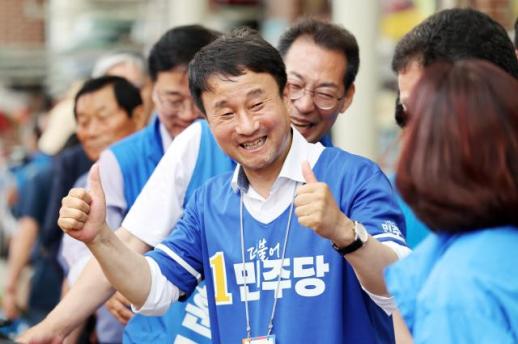 Han Byeong-do Promises Support for Daegu's New Airport and Administrative Merger Han Byeong-do, the floor leader of the Democratic Party, visited Daegu on May 28 to pledge full support for the campaign promises of mayoral candidate Kim Boo-kyum, including the integration of the Daegu-Gyeongbuk new airport and a previously stalled administrative merger. He also committed to creating a Daegu that retains its youth through industrial transformation. During his visit to Kim's campaign rally, Han expressed, "I am here to convey my urgent hope that you will elect Kim. We will surely change Daegu's difficult issues through administration, not politics, with the strength of the ruling party." Han emphasized that if Kim is elected, he will work with President Lee Jae-myung to realize the new airport project and the administrative merger of Daegu and Gyeongbuk. "Regarding the airport issue, the most challenging core problem is the financial aspect. We will secure the budget for this within the year," Han stated. He added that the administrative merger would receive 20 trillion won over four years, with 5 trillion won allocated annually, which he believes will significantly transform Daegu and Gyeongbuk. He concluded, "The only candidate who can overcome Daegu's crisis and make this transformation a reality is Kim. If you elect him, we will turn these promises into reality alongside President Lee. We will show that through industrial transformation, we can create hope in Daegu, where young people are leaving due to a lack of jobs. Please lend your support so we can work for Daegu."* This article has been translated by AI. 2026-05-28 10:57:00
 -
 Samsung Electronics Union Plans Two-Track Negotiation System After a tentative wage agreement received 80% approval, the Samsung Electronics branch of the super corporate union announced plans to implement a two-track negotiation system separating the DS (semiconductor) and DX (finished products) divisions.Choi Seung-ho, head of the super corporate union, stated on May 28 that the leadership will be divided into five members for the DS division and three for the DX division to better reflect the unique circumstances and issues of each sector.Choi expressed gratitude to union members for their support of the 2026 wage agreement, noting, "While the 80% approval is encouraging, I understand it does not necessarily reflect overall member satisfaction." He acknowledged the disappointment and concerns that may not be captured in the vote.Previously, Lee Song-yi, the vice chair from the DX division, announced plans for a leadership overhaul, including a vote for the chair's reappointment.The restructuring will focus on improving losses in the non-memory sector within the DS division and addressing demands from the DX division.In the DS division, the union plans to demand that the company present a vision for turning the non-memory sectors, such as system LSI and foundry, into profitable areas. Choi promised to communicate directly with members regarding customer service issues and advocate for improvements in business continuity and working conditions.For the DX division, two new leaders will be appointed to focus on member demands, and the union plans to allow participation from other unions in future negotiations to gather diverse opinions.Choi apologized for past mistakes and committed to fulfilling his responsibilities as chair. He also expressed regret for inappropriate comments made during negotiations, such as those regarding assisting with foundry job transitions and frustrations within the DX division.A meeting to announce the vote for the chair's reappointment is scheduled for June 17.Choi stated, "The super corporate union will focus on preparing for the 2027 wage and collective agreement while restructuring operations for both DS and DX divisions. We will strive to achieve more satisfactory results in the next negotiations compared to those in 2026." 2026-05-28 10:57:00
 -
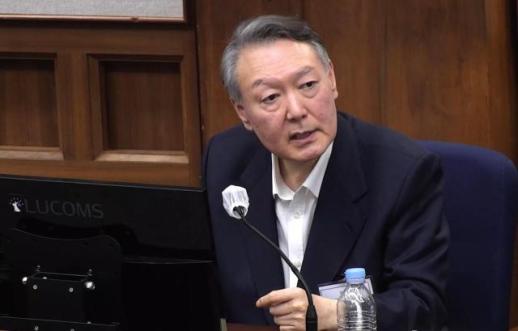 Yoon Suk Yeol Acquitted of Perjury in Han Duck-soo Trial Yoon Suk Yeol, the former president, was acquitted of perjury charges related to his testimony in the trial of former Prime Minister Han Duck-soo concerning the declaration of martial law on December 3. On May 28, the Seoul Central District Court's Criminal Division 32, presided over by Judge Ryu Kyung-jin, ruled Yoon not guilty of perjury and dismissed the request for compensation related to the case. The court also provided guidance on the criminal compensation process for Yoon following the verdict. Previously, the special prosecution team led by Jo Eun-seok had sought a two-year prison sentence for Yoon. The court stated, "Considering that Yoon directed the additional gathering of six cabinet members just two minutes after a meeting in his office at 9:09 PM on December 3, 2024, and that the documents related to the martial law had already been prepared for Deputy Prime Minister Choi Sang-mok, it appears that the defendant (Yoon) had a plan to convene the cabinet regardless of Han's suggestion." The court concluded, "It is difficult to view the defendant's testimony as contradictory to his memory." Furthermore, the court noted that the testimony of former Defense Minister Kim Yong-hyun, who reported to Yoon before the martial law declaration that it was necessary to present agenda items to the cabinet meeting, supported this conclusion, indicating that the prosecution had not sufficiently proven the charges. The court emphasized the legal criteria for establishing perjury, stating that perjury occurs when a witness makes statements that contradict their experienced facts, while subjective evaluations or opinions regarding legal effects are not subject to punishment. The court remarked, "Whether the meeting of the convened cabinet members actually met the legal quorum for a cabinet meeting or had legal effect is a separate issue," adding that Yoon's assertion that he intended to convene the cabinet from the outset is merely a subjective evaluation of the nature of that meeting, making it difficult to classify as perjury regarding factual matters. This implies that even if Han and other cabinet members did not fully recognize Yoon's directive for an additional gathering and claimed they intended to persuade the president to hold a cabinet meeting, it does not negate Yoon's original plan. This trial stemmed from Yoon's testimony as a witness in Han's trial last November. At that time, when asked by the special prosecution team whether Han suggested convening the cabinet meeting to maintain a legal appearance, Yoon responded, "Cabinet members are not puppets here to maintain an appearance; isn't that a question reflecting too much opinion?" The special prosecution team deemed this a false testimony implying that Yoon intended to hold the cabinet meeting from the beginning, leading to the perjury charges filed against him a month later in December. This ruling marks the first acquittal for Yoon in a trial related to the December 3 martial law. However, while Yoon has been cleared of perjury charges, he still faces multiple ongoing trials related to insurrection charges. Yoon was sentenced to life imprisonment in the first trial for his role as the "mastermind" behind the martial law declaration and is currently undergoing an appeals process. Additionally, he received a seven-year prison sentence in the second trial for obstructing the execution of an arrest warrant by mobilizing the presidential security service, with a first trial ruling regarding his directive for a drone operation in Pyongyang also scheduled for June 21. Meanwhile, the special prosecution team plans to review the ruling in detail before deciding whether to appeal. 2026-05-28 10:57:00
 -
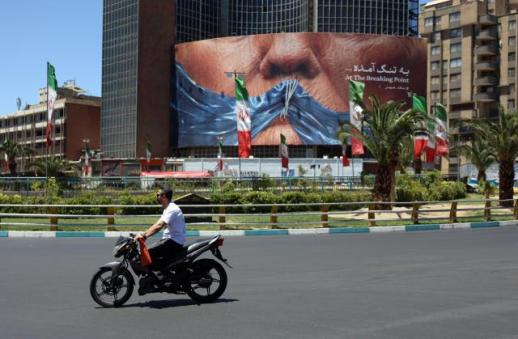 Iran Refuses to Back Down on Uranium Enrichment and Hormuz Control Iran's top security official has stated that the country will not compromise on key demands, including its right to uranium enrichment and control over the Strait of Hormuz, in negotiations with the United States. On May 28, Ebrahim Azizi, chairman of the Iranian Parliament's National Security Committee, posted on social media platform X, asserting, "Iran will not back down from its red lines regarding uranium enrichment rights, possession of enriched uranium, control over the Strait of Hormuz, and the lifting of sanctions." Azizi also criticized President Donald Trump, claiming that Trump oscillates between threatening Iran and begging for a deal to escape the strategic deadlock created by U.S.-Iran negotiations. Earlier, on May 27, Trump stated during a cabinet meeting that the Strait of Hormuz should not be controlled by any specific country and that the U.S. would monitor the situation. When asked if he would accept a proposal for China or Russia to handle Iran's highly enriched uranium, he responded, "No. That would make me uncomfortable." Regarding negotiations with Iran, Trump remarked, "Iran wants a deal very badly," but added, "So far, we have not reached a level that satisfies us." He emphasized, "We will be satisfied. If not, we will have to end things."* This article has been translated by AI. 2026-05-28 10:57:00
 -
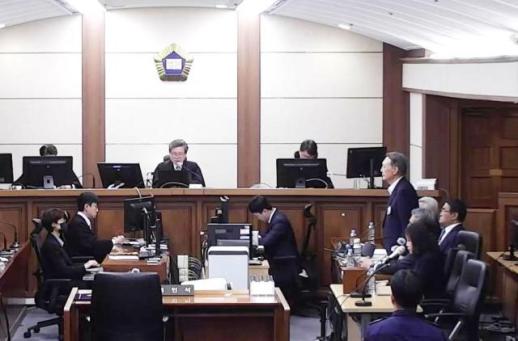 Impeached ex-president cleared of perjury charges in martial law-related case SEOUL, May 28 (AJP) - Disgraced former President Yoon Suk Yeol on Thursday was cleared of perjury charges, one of several allegations related to his botched martial law debacle. Yoon had been accused of making false accounts during former Prime Minister Han Duck-soo's trial, which was also related to the debacle. During the trial in November last year, when asked whether he had planned from the beginning to convene a Cabinet meeting before declaring martial law on Dec. 3, 2024, Yoon testified that he intended to do so because legal requirements had to be met. Prosecutors alleged that he had only moved to convene the meeting at Han's proposal and sought a two-year prison sentence for him. But the Seoul Central District Court said in its ruling that it appeared "highly likely" that Yoon had already planned to hold the meeting, regardless of any proposal from Han. The court added that it could not conclude that Yoon's testimony in court was inconsistent with his memory. Meanwhile, Yoon, who was ousted from office on April 4 last year after the Constitutional Court of Korea unanimously upheld his impeachment, had already been sentenced to life imprisonment on major charges of insurrection and abuse of power related to the debacle, along with several other charges pending appeal. 2026-05-28 10:56:33
 -
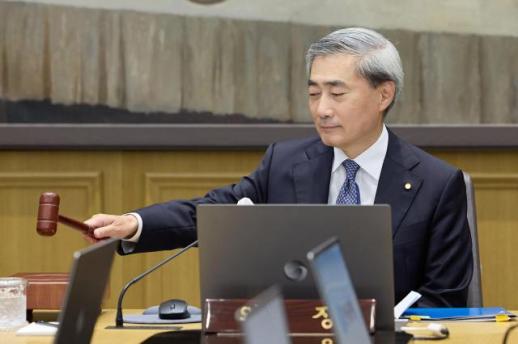 Bank of Korea Holds Interest Rate Steady for Eighth Consecutive Time, Signals Possible Hike The Bank of Korea's Monetary Policy Committee decided on May 28 to keep the benchmark interest rate at 2.50% for the eighth consecutive time. However, for the first time, the committee's policy statement indicated a potential timeline for future rate hikes, suggesting a shift towards tightening monetary policy. In the statement, the committee noted, "Future monetary policy will be determined by assessing the extent of inflationary pressures, the trajectory of economic improvement, and financial stability conditions, including the timing of interest rate increases." The committee projected that domestic inflation rates would exceed target levels for an extended period, stating, "Despite the impact of the Middle East conflict, growth is expected to continue improving, supported by a strong semiconductor market." During the decision-making process, five committee members voted to maintain the current rate, while members Jang Yong-seong and Yoo Sang-dae expressed a minority opinion favoring an increase to 2.75%. Full text of the monetary policy statement: The Monetary Policy Committee has decided to maintain the Bank of Korea's benchmark interest rate at the current level of 2.50% until the next policy direction decision. While inflationary pressures have increased due to the Middle East conflict, growth has expanded more than expected, driven by strong exports, particularly in semiconductors. Financial stability risks persist, but given the high uncertainty surrounding the developments in the Middle East and their potential impacts, it is deemed appropriate to maintain the current rate while closely monitoring the situation and its effects on growth and inflation. The global economy is expected to slow due to rising energy and commodity prices and supply disruptions stemming from the Middle East conflict, despite increased investments in artificial intelligence. Inflationary pressures are anticipated to rise significantly. In international financial markets, U.S.-Iran negotiation delays and potential shifts in major countries' monetary policies have led to a sharp increase in government bond yields, while the U.S. dollar has strengthened. Stock prices have surged, reflecting expectations of increased AI investment demand and strong corporate earnings. Going forward, the global economy and international financial markets are expected to be influenced by the developments in the Middle East, trends in AI investment, and changes in major countries' monetary, fiscal policies, and trade environments. Domestically, the economy has seen significant growth driven by strong exports and investment, particularly in semiconductors, along with healthy consumer spending. Employment has continued to rise, although the pace of increase has slowed, particularly in the service sector. While the domestic economy may face some pressures from rising commodity prices and supply chain disruptions, it is expected to continue improving, supported by the semiconductor market and supplementary budgets. As a result, this year's growth rate is projected to exceed the February forecast of 2.0%, reaching 2.6%. This growth trajectory carries substantial upside and downside risks related to the semiconductor market's expansion, domestic demand impacts, developments in the Middle East, and changes in the trade environment. In terms of domestic prices, the consumer price inflation rate rose significantly to 2.6% in April, driven by a sharp increase in oil prices, while the core inflation rate (excluding food and energy) remained at 2.2%. Short-term inflation expectations among the public are in the high 2% range. Price increases are expected to continue, influenced by rising international oil prices and increasing demand pressures from income growth. Consequently, this year's consumer price and core inflation rates are projected to significantly exceed the February forecasts of 2.2% and 2.1%, respectively, reaching 2.7% and 2.4%. Future price trajectories are subject to high uncertainty regarding international oil prices, exchange rate movements, the extent of cost increases, and the effectiveness of government price stabilization measures. In the financial and foreign exchange markets, high volatility in key price variables has persisted. Government bond yields have risen sharply due to concerns over domestic and international inflation and changing expectations regarding monetary policy. The won-dollar exchange rate, which had slightly decreased, has risen again to around 1,500 won due to the strengthening of the U.S. dollar and continued foreign selling of stocks. Stock prices have experienced significant fluctuations influenced by the developments in the Middle East, but have maintained a steep upward trend due to improved corporate earnings expectations. Housing prices in the metropolitan area have resumed their upward trend, with increased expectations for further rises, while household loans have shown limited growth, although the increase in housing-related loans has slightly expanded. The Monetary Policy Committee will continue to monitor growth trends while ensuring that inflation rates stabilize at target levels over the medium term, paying attention to financial stability. The domestic economy is expected to see inflation rates exceed target levels for an extended period, and growth is anticipated to remain robust, supported by the semiconductor market despite the impact of the Middle East conflict. In terms of financial stability, there are ongoing concerns regarding high exchange rate volatility and the housing market and household debt situation in the metropolitan area. Therefore, future monetary policy will be determined by assessing the extent of inflationary pressures, the trajectory of economic improvement, and financial stability conditions, including the timing of interest rate increases. In this interest rate decision, five members of the Monetary Policy Committee voted in favor, while Jang Yong-seong and Yoo Sang-dae expressed the opinion that an increase to 2.75% would be appropriate.* This article has been translated by AI. 2026-05-28 10:54:00
 -
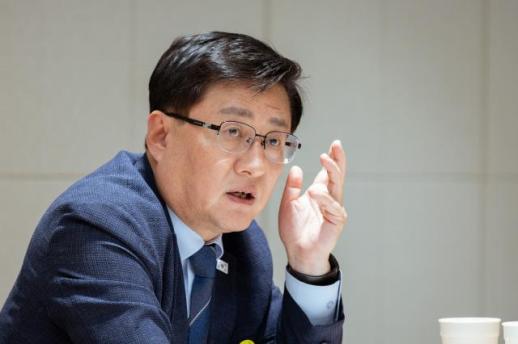 Climate Minister Warns of Possible KEPCO Losses Amid Prolonged Middle East Conflict Minister Kim Sung-hwan of the Ministry of Climate, Energy and Environment stated on May 28 that if the conflict in the Middle East continues, there is a possibility that Korea Electric Power Corporation (KEPCO) could return to losses due to rising gas prices.During his appearance on the YouTube program "Jang Yoon-sun's Convenience Store for Reporting," Kim discussed the energy price instability stemming from the prolonged conflict, noting, "We are beginning to see pressure from rising gas prices that could impact electricity rates."He explained that the wholesale electricity price (SMP) was around 100 to 110 won before the conflict but has now risen to the mid-120 won range. He added, "If the annual average SMP exceeds 146 won, KEPCO will enter a loss-making structure."However, he reassured that the current SMP is still below the threshold for losses, stating, "We are still maintaining a profit margin."Kim emphasized that while there are no immediate signs of a shift to losses, the possibility cannot be ruled out if gas prices continue to rise. He stated, "Our task is to minimize the use of coal and gas while expanding nuclear and renewable energy to prevent increases in electricity rates."He reiterated the importance of a dual energy policy that incorporates both renewable energy and nuclear power. He remarked, "During the Moon Jae-in and Yoon Suk Yeol administrations, renewable energy and nuclear power were often seen as conflicting, but this approach makes it difficult to reduce coal and gas usage. The key is to utilize both to establish a foundation for carbon reduction."Regarding the expansion of electric vehicles, Kim noted, "Public institutions are already mostly required to purchase electric vehicles for new vehicle acquisitions," adding that preparations are underway to transition special vehicles such as police patrol cars and postal motorcycles and trucks to electric models. He mentioned that discussions are ongoing with relevant ministries to encourage electric vehicle purchases by corporations through differentiated cost handling methods.Kim also introduced the 'Sunlight Income Village' project, a key energy policy of the Lee Jae-myung administration. He explained, "This year, we plan to pilot the project in about 700 to 1,000 villages, allowing residents to participate in solar energy projects through cooperatives and earn energy income."He cited the example of Goyang-ri in Yeoju, where a 1 MW project generated approximately 10 million won in monthly communal profits, stating, "This could become a new rural basic income model that connects solar energy to residents' incomes."On the topic of renewable energy pricing, he noted, "The costs for solar and wind power have significantly decreased compared to the past," with solar prices dropping to around 120 won and wind power to 108 won.However, he diagnosed that the domestic industry has weakened due to aggressive pricing from Chinese imports and policy setbacks. Kim stated, "The solar industry has nearly stagnated during the three years of the Yoon Suk Yeol administration, causing the domestic industry to shrink. Although domestic modules are about 20% more expensive, they only account for about 20% of total generation costs, so we must promote both the development of the domestic industry and the expansion of renewable energy."Additionally, he addressed environmental issues closely related to daily life, mentioning measures to control lovebug larvae. He stated, "We are currently piloting the use of bio-based agents for larvae control and plan to verify their effectiveness this year to decide on full-scale implementation next year."* This article has been translated by AI. 2026-05-28 10:54:00
 -
 Early Voting Begins Tomorrow: Vote at Any Polling Place Nationwide Early voting for the June 3 local elections and National Assembly by-elections will take place over two days, starting May 29. Voters can cast their ballots at any early voting site across the country from 6 AM to 6 PM, regardless of their registered address. According to the National Election Commission on May 28, voters must present an identification card that includes their date of birth and photo, such as a resident registration card, passport, or driver's license. Mobile identification must be verified through an application on-site; saved image files will not be accepted as valid identification. In this election, voters will receive seven ballots for the following positions: city and provincial governors, education superintendents, heads of districts and cities, local assembly members, proportional representatives for local assemblies, and district assembly members. However, voters in Sejong City and Jeju Province, which do not have basic local governments, will only receive four ballots for the governor, education superintendent, and local assembly members. Additionally, voters in 14 districts, including Pyeongtaek in Gyeonggi Province and Busan's Buk-gap, where by-elections for the National Assembly are being held, will receive one extra ballot. Ballots will not be distributed for elections where candidates are elected unopposed, such as the mayor of Siheung. During early voting, voters from within and outside the district must stand in separate lines. The distinction is based on the local assembly district. Voters casting early ballots within their district will receive their ballots, mark them, and place them directly into the ballot box. Voters from outside the district must place their marked ballots into a return envelope provided and seal it before submitting it to the ballot box. Voters must use the official marking tools available at the polling station, and they can only mark one candidate on each ballot. Ballots marked with unofficial tools or for more than one candidate will be deemed invalid. Taking photos or recording videos inside the polling place is prohibited. Anyone caught photographing their marked ballot may face up to two years in prison or a fine of up to 4 million won. Actions such as damaging ballots or causing disturbances at polling places are also punishable by law. A spokesperson for the National Election Commission stated, "Early voting boxes will be stored in locations equipped with CCTV, and the footage will be displayed on large screens at the provincial election commission offices, allowing anyone to check the storage conditions at any time." Voters can find the locations of early voting sites on the National Election Commission's website.* This article has been translated by AI. 2026-05-28 10:54:00