

Journalist

CGTN
-
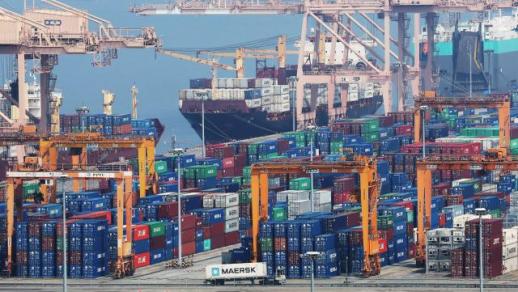 UPDATE: Korea's C/A at record high, foreign invest dip steepest in Feb *Updated with additional information SEOUL, April 8 (AJP) — South Korea's current account surplus reached a historic monthly high in February, crossing the $20 billion mark for the first time since records began and will stay largely insulated from the Middle East-driven oil and dollar spike at least through March, the central bank said Wednesday. Bank of Korea (BOK) data showed the February current account posted a record $23.19 billion surplus, surpassing the previous high of $18.7 billion in December and extending the surplus streak to 34 consecutive months — the second-longest on record. Chip-led goods account drove the outperformance, logging a $23.36 billion surplus, up more than $8 billion from a month earlier and marking another record. The streak in goods surplus extended to 35 months. Exports remained the core engine. February outbound shipments reached $70.37 billion on a balance-of-payments basis, up 29.9 percent on year — an all-time high for the month. Semiconductor exports surged 157.9 percent to $25.26 billion, accounting for 37 percent of total exports, while IT devices including mobile phones jumped 67.8 percent. Shipbuilding exports also rebounded, rising 45.5 percent and snapping a four-month contraction streak. By contrast, autos and machinery remained soft. Passenger car exports fell 22.9 percent and auto parts dropped 24.4 percent, while machinery and precision instruments declined for another month. The BOK downplayed the weakness, citing fewer working days due to the Lunar New Year, noting that daily average exports still rose at a double-digit pace. "The fact that the Lunar New Year holiday fell in February this year reduced the number of working days," said Yoo Seong-wook, head of the BOK's financial statistics department. "On a daily average basis, exports actually increased by 14.6% year-on-year and 15.2% month-on-month." The services account remained in deficit for a 45th straight month, though the gap narrowed to $1.86 billion. Imports rose 7.5 percent on year to $51.93 billion, with energy demand firm. Gas imports increased 15.6 percent, coal 20.5 percent, and mineral imports 26.7 percent, reflecting both higher volumes and steady industrial demand. Despite the trade strength, the financial account showed clear strain. Foreign investment liabilities – foreign investment in Korea - fell by $11.94 billion, the steepest drop on record, with equity outflows hitting $132.7 billion — exceeding even the COVID-era selloff. The “Sell Korea” trend reflects a mix of factors, including concerns over an AI-driven semiconductor bubble and mounting geopolitical risks tied to the Middle East conflict. While debt securities, including bonds, saw an increase of $1.33 billion, the pace of growth slowed significantly from the $4.47 billion recorded in the previous month. Meanwhile, Korean residents’ overseas investment (portfolio assets) continued to rise, increasing by $8.64 billion, though this was a sharp decline from January’s $13.46 billion. The central bank expects the current account to remain resilient through March, as oil price increases have yet to fully feed into import costs and refined product exports provide a partial offset. Still, risks are building. With roughly 70 percent of Korea’s crude imports passing through the Strait of Hormuz, prolonged disruption could sharply raise energy import costs and weigh on the trade balance. The "Sell Korea" sentiment is expected to have worsened in March as the average exchange rate weakened from 1451 to 1,493 won per dollar - the fourth-weakest on record. Foreign investors sold 32 trillion won ($21.3 billion) on the benchmark KOSPI in March alone. The bond market also reflected this weakness, with 3-year and 10-year Treasury yields rising to 3.552 percent and 3.879 percent, respectively, - up 16.8 percentage points and 12.6 percentage points from the end of February. 2026-04-08 08:19:51
 -
 Actress Han Chae-a Shares Video Featuring Daughter and Recovering Dog Actress Han Chae-a has shown her daughter in a new YouTube video. A video titled 'Soonshim (our pet dog) we've been with for 14 years. We're still learning about her' was posted April 6 on Han's YouTube channel. In the video, Han said Soonsim has recently been unable to eat. She said a hospital visit found the dog's teeth were badly decayed and would need to be removed. "She used to get up at the slightest rustling sound, but now she can't even get up when I call her name right in front of her," Han added. Han said Soonsim gradually recovered after surgery and was shown looking energetic and enjoying a walk. The video also revealed Han's daughter, Cha Bom, who drew attention for her resemblance to her mother. Han married Cha Se-ssi, the youngest son of Cha Bum-kun, a former South Korea national soccer team head coach, in 2018. 2026-04-08 07:51:15
 -
 OPNION: BOK chief nominee Shin faces immediate test Shin Hyun-song’s nomination as the next governor of the Bank of Korea has been broadly welcomed by markets, reflecting confidence in both his credentials and temperament. In my own brief encounters with him, he left a strong impression of humility — a trait not always associated with figures of global stature. Few would dispute that his theoretical grounding and practical experience rank among the best. Notably absent so far is the kind of envy or backlash that often trails even the most capable nominees. His long career abroad may partly explain that. Whether that global pedigree proves to be an asset or a liability, however, will soon become clear. Because the timing leaves little room for abstraction. South Korea’s economy is entering what can only be described as an emergency phase. The shock from U.S. and Israeli strikes on Iran has already rippled through markets. Oil prices have surged, the won has weakened past 1,500 per dollar, and the familiar but dangerous combination of rising inflation risks and slowing growth has returned. Financial stability — not just growth — is again the immediate concern. In such moments, policy coordination becomes critical. The so-called “F4” — the finance minister, the BOK governor, the Financial Services Commission chair and the Financial Supervisory Service governor — forms the core command structure. By most assessments, the current lineup lacks cohesion and depth, particularly with the departure of Gov. Rhee Chang-yong, widely regarded as the strongest international voice in the group. Shin’s global standing likely tipped the balance in his favor. Yet that same background raises a practical question: how quickly can he translate international expertise into domestic crisis management? The presidential office has pointed to his prescience ahead of the 2008 global financial crisis and his role in designing key stabilization tools — including levies on foreign-exchange liabilities and forward position limits — as evidence of readiness. Still, whether those credentials translate into real-time responsiveness in today’s far more complex environment remains an open question. His policy challenge begins with a familiar dilemma, now intensified: balancing price stability against growth. Under Rhee, policy at times leaned toward supporting growth, including relatively aggressive rate cuts. Today, the constraint is different. The exchange rate has become the fault line. The won’s sharp decline — and the perception that it has underperformed peers under the current administration — has fueled calls for tightening. Yet the domestic economy, already weakened by external shocks, makes a rate hike difficult to justify. Shin is often described as hawkish, but his recent remarks suggest caution. His observation that dollar liquidity remains stable — and that exchange rate movements need not immediately signal financial instability — has been read as a signal that policy may stay on hold. Some have even interpreted it as tolerance for further won weakness, raising the possibility that easing could remain on the table. In the near term, the priority is unlikely to be rates alone. Stabilizing the foreign-exchange market and restoring confidence may require a broader toolkit. Just as important will be Shin’s ability to assert leadership within the F4 framework. His emphasis on the economy’s capacity to absorb shocks — rather than fixating on the exchange rate level itself — points to a strategy centered on managing volatility rather than defending a specific line. His first real test, in that sense, is simple but unforgiving: whether the market stabilizes. Beyond the immediate horizon lies a more complex landscape. The Middle East conflict, elevated oil prices and shifting U.S. monetary policy will continue to weigh on Korea’s outlook. Even in a best-case scenario, a quick return to stable global conditions appears unlikely. And even if external pressures ease, structural challenges remain: restoring potential growth, managing household debt, and recalibrating an economy that has grown increasingly vulnerable to external shocks. This is where Shin’s role may need to expand. The Bank of Korea cannot remain a rate-setting institution alone. It will be expected to function as a strategic anchor — helping to redesign economic balance in a period of overlapping crises. At the same time, central bank independence will come under scrutiny. With the Lee Jae Myung administration holding a parliamentary majority, tensions may not surface immediately. In crisis, alignment between fiscal and monetary authorities is natural, even necessary. But over time, the familiar friction between political priorities and monetary discipline is likely to re-emerge. That, too, will be part of Shin’s test. In just over 10 days, he is expected to take office. The pace of events suggests he will have little time to settle in. Markets will not grant a grace period. His National Assembly confirmation hearing may, in effect, be his only window to refine his approach. After that, the real test begins. About the author: ▷International economics, Seoul National University College of Social Sciences and graduate school ▷Ph.D. in economics, University of Missouri ▷CEO, MaeKyung TV and MaeKyung Publishing; Washington correspondent and editorial writer, Maeil Business Newspaper ▷Visiting professor, Seoul National University Department of Economics ▷CEO, Yeonwoo Consulting 2026-04-08 07:26:32
 -
 BTS’ ‘Arirang’ Tops Billboard 200 for Second Week, Netflix Live Draws 18.4 Million After a 3-year, 9-month wait, BTS returned with its fifth full-length album, “Arirang (ARIRANG),” and quickly posted major results across charts and streaming platforms. ◆Billboard 200: Two straight weeks at No. 1, a first for a Korean act BTS’ “Arirang” held the top spot for a second consecutive week on the Billboard 200, the main U.S. albums chart. A chart preview published on the 6th said the album remained No. 1 on the April 11-dated chart. It is the first time a Korean artist has led the Billboard 200 for two straight weeks. It is also BTS’ seventh No. 1 album on the chart. In its second week, “Arirang” recorded 187,000 album units. That included 114,000 in pure album sales, 65,000 streaming equivalent album (SEA) units and 8,000 track equivalent album (TEA) units. The album debuted with 641,000 units in its first week, the group’s best weekly total for an album, and maintained strong numbers in week two. ◆Spotify and Netflix: Strong results across platforms BTS also led Spotify’s latest weekly global charts, taking No. 1 on “Weekly Top Albums,” “Weekly Top Songs” and “Weekly Top Artists” for a second straight week. A key moment in the comeback came on March 21 at Gwanghwamun Square in Seoul, where about 100,000 people gathered for a comeback stage. The event was livestreamed on Netflix to about 190 countries. Netflix data cited in the article said 18.4 million people connected simultaneously on the day of the live broadcast. Afterward, it ranked in the weekly top 10 in 80 countries and No. 1 weekly in 24 countries. ◆HYBE cites U.S. song camps and a Korea-forward concept HYBE and BigHit Music pointed to three factors behind the results: a production system built around large song camps in the United States, a concept that puts Korean sensibilities at the center, and a strategy aimed at expanding beyond the core fan base. The companies said Bang Si-hyuk, HYBE’s board chairman, leased a U.S. studio for an extended period in 2025 and brought in multiple producers. Through repeated song camps, 200 to 300 candidate songs were gathered, with final tracks selected from that pool. The album’s concept highlights Korean elements. The article said “Arirang” incorporates a traditional rhythm pattern and other cultural motifs into a global pop framework. It said the track “ALIENS” reflects aspects of everyday Korean life, and the title track “SWIM” uses visuals tied to Korean spatial aesthetics. The sixth track, “NO. 29,” uses the sound of the bell of King Seongdeok’s Divine Bell from the Silla era. ◆Beyond the fan base: New listeners up more than 690% Spotify data cited in the article said the number of new listeners who first encountered BTS music on the album’s release day jumped by more than 690%. International reviews also followed. The Guardian said, “If ‘BUTTER’ was an attempt to move toward the Western mainstream market, ‘Arirang’ is an album that invites the world in BTS’ own way.” Rolling Stone UK gave the album a perfect score, praising its scale and completeness. ◆‘ARIRANG’ world tour to open in Goyang BTS is set to open “BTS WORLD TOUR ARIRANG” on April 9 at the main stadium of Goyang Sports Complex in Goyang, Gyeonggi Province. With results already posted across album charts, streaming and online viewing, the group is now moving into touring as its next phase of activity. * This article has been translated by AI. 2026-04-08 00:06:26
 -
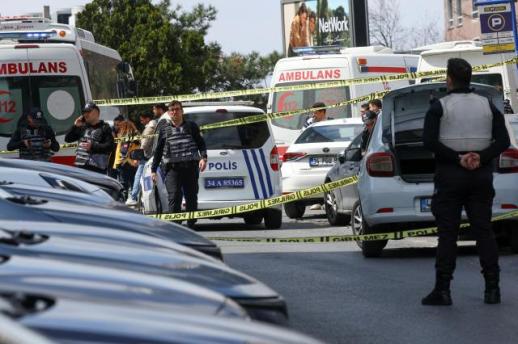 Turkish police neutralize three gunmen as Istanbul attack targets financial district SEOUL, April 07 (AJP) - Turkish security forces killed three gunmen in a high-stakes shootout outside Yapi Kredi Plaza in Istanbul, on Tuesday, thwarting what authorities described as a treacherous assault on the heart of the metropolitan commercial district. The engagement, which left two officers with minor injuries, marks the most direct threat to the financial hub of Besiktas since the regional security environment fractured in late February. This disruption of the status quo on Buyukdere Street signals an aggressive shift in militant tactics as instability from the nearby conflict begins to penetrate the nation's primary economic corridor. The incident began when the assailants, who traveled from the neighboring province of Izmit in a rental vehicle, opened fire on police units stationed near the plaza blocks. The Minister of Interior Mustafa Çiftçi confirmed that investigators have identified the suspects, noting that one maintained ties to a group that exploits religion, while another, a member of a pair of brothers involved in the cell, had a prior criminal record involving narcotics. Istanbul Governor Davut Gul characterized the daytime gunfight as a provocative act aimed at the stability of the city. This security breach arrives as the Eastern Mediterranean grapples with a series of shocks stemming from the war in Iran, which escalated following the initiation of major combat operations on February 28. Since the start of the hostilities, the region has seen a marked increase in militant activity and cross-border tensions that have rattled markets from Washington to South Korea. While Seoul has focused on the safety of energy corridors, Ankara has been forced to bolster its own urban defenses against the ripple effects of the Iranian conflict. The targeting of a major landmark in Istanbul is viewed by security analysts as a direct consequence of the heightened regional friction triggered by the ongoing combat operations to the east. "In the treacherous attack carried out against our police officers on duty in front of Yapı Kredi Plaza Blocks in İstanbul, three assailants were neutralised," said Burhanettin Duran, the presidency's head of communications. Duran emphasized that the "swift and decisive response" of security forces prevented a potentially larger catastrophe. "This heinous attack will never undermine our faith or determination in achieving our goal of a 'Terror-free Türkiye' and a 'terror-free region'," he added, asserting that the state would continue its fight against all threats and provocations with steadfast resolve. Justice Minister Akin Gurlek assigned a deputy chief prosecutor and two assisting prosecutors to oversee the multi-faceted investigation into the cell's origins and potential handlers. Forensic teams remained at the scene to collect ballistic evidence and process the rental vehicle used in the transit from Izmit. Coordination between the prosecutor's office and law enforcement units continues as they attempt to identify potential local support networks associated with the neutralized gunmen. 2026-04-07 22:06:48
 -
 Newspapers Must Ask ‘Good Questions’ to Create Fresh Perspectives, Korea Newspaper Association Chief Says "Asking good questions and creating new perspectives through public debate is both the duty and the right of newspapers." Park Jang-hee, chairman of the Korea Newspaper Association, made the remarks on 7일 at the Korea Press Center during the 70th Newspaper Day ceremony. He said machines cannot raise doubts on their own or empathize with the values of the times and the pain of neighbors. The ceremony was co-hosted by the Korea Newspaper Association, the Korea Newspaper and Broadcasting Editors Association and the Journalists Association of Korea. In his address, Park said artificial intelligence can produce answers instantly from vast data, while biased claims spread through algorithms on platforms “as if they were the correct answer.” He called the current moment “an era of answers.” He said high-quality journalism grounded in facts and balance is “a journey with no final destination.” Citing this year’s Newspaper Day slogan — “Beyond the algorithm, read the real world” — he urged newspapers to dig into truths that cannot be reduced to calculation and to build spaces for unity and public discussion. Lee Tae-gyu, president of the editors association, stressed responsibility in his opening remarks. “Technology cannot judge and verify what is true, nor does it take responsibility for results,” he said, adding that newspapers exist to put accuracy over speed, trust over sensationalism and responsibility over trends. He said the power to read the real world lies in journalism — in reporters’ on-the-ground verification, editors’ standards and the media’s sense of duty to the community. Park Jong-hyeon, president of the journalists association, also emphasized rebuilding trust in a message to readers. “AI and algorithms deliver information quickly, but they do not guarantee the truth,” he said. He called on the media to ask more questions, verify more and keep records more responsibly, pledging to choose substance over breaking news and accuracy over speed while staying in the field. A reception followed the ceremony, drawing about 300 guests including National Assembly Speaker Woo Won-shik; Jeong Cheong-rae, Democratic Party leader; Jang Dong-hyeok, People Power Party leader; Seoul Mayor Oh Se-hoon; and Lee Gyu-yeon, senior presidential secretary for public relations and communication. In welcoming remarks, Park said that when the world is unsettled, society needs clearer standards of truth, and that newspapers have the strength to push back against falsehoods and extremism. He said that strength comes from trained reporters in the field and rigorous fact-checking. Park added that while the AI era is unlike the past, AI is built on learning, and learning depends on refined accumulations over time — meaning the standing of original journalism and the value of carefully produced works will rise. * This article has been translated by AI. 2026-04-07 19:54:19
 -
 U.S. Leads Global Biotech for 15 Years as China Gains; South Korea Expands CDMO Footprint The number of publicly listed biotech companies and biotech patent filings has continued to rise worldwide, with the United States holding the top spot for 15 years. With expectations that Asia led by China will expand, South Korean biotech companies are accelerating efforts to secure global production hubs, led by contract development and manufacturing (CDMO). Data released Tuesday by the Korea Institute of Science and Technology Information (KISTI) showed the number of biotech companies listed on stock exchanges worldwide rose to 2,787 in 2022 from 1,542 in 2009, an average annual increase of 4.68%. By country over the past 15 years from 2009 to 2023, U.S.-based companies accounted for the largest share at 28.86%, followed by China, India and Canada. South Korea ranked fifth with 5.18%. Companies listed on the Nasdaq made up the biggest portion at 18.46%, while firms listed on South Korea’s KOSDAQ and KOSPI accounted for 6.1%. The United States also led biotech patent filings over the past 15 years, with a 17.54% share, followed by China at 12.51% and Japan at 9.74%. China’s share more than doubled over the period and ranked first in 2021 at 15.5%. South Korea held fifth place at 4.99%. As the market remains heavily weighted toward the United States, some analysts expect Asia’s market — centered on China — to expand over the medium to long term. South Korean companies are responding with large investments, including in U.S. production facilities to build global footholds. Samsung Biologics, Celltrion and Lotte Biologics have been expanding U.S. manufacturing bases. Samsung Biologics said it completed the acquisition of GlaxoSmithKline’s plant in Rockville on March 31 local time. Celltrion said it completed the acquisition of a Branchburg, New Jersey, facility from Eli Lilly on Dec. 31 and began full operations in January. Lotte Biologics was the first among them to secure a U.S. production base, acquiring a 40,000-liter facility in Syracuse, New York, from Bristol Myers Squibb in 2022 and operating it. Combined, the three companies’ U.S. biologics production capacity totals 166,000 liters. An industry official said U.S. facilities would play key roles by easing tariff risks, strengthening responses to global clients and diversifying supply chains. Some have called for policy support, including expanded institutional investment and government incentives to encourage sustained capital inflows from overseas. In its report, KISTI said, “Especially for patent filings, a strategy appears necessary to respond to U.S. technological leadership and China’s quantitative expansion,” adding that companies should be guided to shift R&D toward “qualitative innovation” so they can move from quantity to quality in technology development. * This article has been translated by AI. 2026-04-07 18:34:01
 -
 Korean Biotech CDMOs Expand From Manufacturing to Integrated Services Korean biotech companies are tightening their grip on the contract development and manufacturing (CDMO) market, reinforcing South Korea’s standing as an Asian bio hub. As global drugmakers expand outsourcing, Korean firms are moving beyond basic production into higher-value work that includes process development and regulatory support. BioPlan, a biopharmaceutical market research firm, said on the 7th that Samsung Biologics’ Songdo Bio Campus in Incheon was selected as the world’s largest single facility by production capacity. It held the No. 1 spot again after a 2022 survey, a result seen as validating the company’s “super-gap” strategy. Celltrion also gained ground. Operating Plants 1, 2 and 3 in Incheon, Celltrion ranked seventh in the survey, joining the global top 10. China’s CL Biologics’ Shenzhen facility ranked second, and a Genentech facility in the United States acquired by Switzerland’s Lonza in 2024 ranked third. In revenue, Korean companies are also closing in on global leaders. Jefferies said Samsung Biologics ranked fourth in global CDMO sales in 2024, posting $3.27 billion (about 4.9458 trillion won), behind Lonza, Thermo Fisher and Catalent. The report cited surging demand as CDMOs shift from small-molecule drugs toward more complex products such as cell and gene therapies. The shift is reflected in business models. Samsung Biologics is expanding modalities such as antibody-drug conjugates, while extending into contract research through “Samsung Organoid,” building an integrated service system that spans research and development. It has also strengthened its production base. After securing 17 of the world’s top 20 pharmaceutical companies as clients, it completed the acquisition of a biopharmaceutical manufacturing facility in Rockville, Maryland, on March 31 local time. With a 60,000-liter drug substance plant capable of supporting clinical through commercial production, its total capacity expanded to 845,000 liters. Celltrion is also upgrading its structure on the back of growing orders. After signing a contract manufacturing (CMO) deal worth about 678.7 billion won with Eli Lilly early this year, it added further contracts, pushing its cumulative CMO order backlog past 1 trillion won within the first quarter. The company is also shifting weight toward higher-value services. It is pursuing a CMO strategy aimed at boosting clients’ competitiveness through formulation changes, seeking differentiation with its own subcutaneous (SC) formulation conversion technology. A key example is its “formulation-change CMO” business, applying know-how built through products such as Remsima SC and Herzuma SC to external clients. Celltrion is accelerating its overseas footprint as well. It recently completed the relocation of a biopharmaceutical production facility in Branchburg, New Jersey, and set its expansion scale at 75,000 liters. That would raise its drug substance capacity from 316,000 liters to 571,000 liters. The company aims to secure CMO revenue through local production while broadening into CDMO and cutting costs to expand supply to the U.S. market. Lotte Biologics said it signed a CDMO contract on the 1st with a U.S. oncology-focused biotech company to produce antibody drug substance and develop processes. It plans to produce late-stage clinical samples and optimize processes at its Syracuse, New York, campus, while linking with its Songdo campus to strengthen integrated CDMO capabilities. As companies broaden their scope, the basis of competition is changing. A production-only model is showing limits, and integrated capabilities that include clinical support and regulatory approvals are emerging as a key factor. Jung Yoon-taek, head of the Korea Pharmaceutical Industry Strategy Research Institute, said, “The market is being reshaped from CMO to CDMO and to CRDMO,” referring to contract research, development and manufacturing organizations. “Competition is shifting toward companies that can provide customized, integrated services,” he said. The trend is also feeding into expanded investment by global drugmakers in South Korea. Roche signed a memorandum of understanding with the Ministry of Health and Welfare last month on strengthening global competitiveness in the biohealth industry and agreed to pursue $500 million (about 750 billion won) in investment over five years. Eli Lilly also announced a plan this year to invest a total of $500 million over five years. Even as South Korea emerges as a new hub, companies still face the task of proving both capacity and technology. Lee Seung-gyu, vice chairman of the Korea Bio Association, said the CDMO market requires not only scale but also quality control, skilled operating staff and the ability to respond to regulatory approvals to win sustained orders. “The key is building global competitiveness that matches market demand,” he said.* This article has been translated by AI. 2026-04-07 18:33:00
 -
 LG Energy Solution sinks deeper into red with second straight quarterly loss SEOUL, April 07 (AJP) - LG Energy Solution posted a widening operating loss for the first quarter of 2026, marking its second consecutive quarterly deficit as a prolonged slump in global electric vehicle demand and a sharp drop in U.S. tax credits eroded profitability at the world's No. 2 battery maker. The company said in a preliminary regulatory filing on Tuesday that it logged a consolidated operating loss of 207.8 billion won ($138.7 million) for the January to March period, swinging from a 374.7 billion won profit a year earlier and deepening from a 122 billion won loss in the preceding quarter. Revenue slipped 2.5 percent on-year to 6.555 trillion won, dragged down by sluggish North American EV sales and production halts at Ultium Cells, the company's joint-venture plants with General Motors, whose first two facilities suspended operations in early January. ‘ A shift in accounting treatment compounded the decline. LG Energy Solution said it began sharing a portion of the Advanced Manufacturing Production Credit proceeds with customers at standalone and formerly joint-venture plants this year, booking only the net figure as other revenue — a change that effectively reduced the recognized subsidy relative to actual production volumes. Rising costs tied to the ramp-up of five North American energy storage system production sites and elevated expenses stemming from the U.S.-Iran conflict also weighed on results. Industry analysts nonetheless expect the first half to mark the trough. Surging demand for grid-scale and data center-linked ESS batteries, fueled by the global build-out of artificial intelligence infrastructure and power grids, is widely seen as the catalyst for a second-half turnaround. LG Energy Solution has been channeling resources toward the segment, aiming to more than triple ESS-related revenue and to expand global ESS battery production capacity to over 60 gigawatt-hours by the end of 2026. "We plan to raise the combined share of ESS and new businesses from about 20 percent today to the mid-40 percent range, building a more stable and balanced portfolio," CEO Kim Dong-myung said at the company's annual shareholders' meeting in late March. Shares of LG Energy Solution closed at 408,500 won, 0.97 percent lower than the day before. 2026-04-07 17:54:06
 -
 LG Arts Center Stages ‘Uncle Vanya’ as Rival National Theater Company Mounts Its Own LG Arts Center and the National Theater Company of Korea will both stage Anton Chekhov’s ‘Uncle Vanya’ in the first half of this year, setting up another close-timed matchup after last year’s dueling productions of ‘Hedda Gabler.’ Director Son Sang-gyu, who is leading LG Arts Center’s version, said at a production news conference on April 7 in Seoul that he welcomed the overlap. “I think it’s a good thing that we interpret the same work differently,” he said. Son said he watched last year’s ‘Hedda Gabler’ faceoff with interest and, after seeing both productions, came away thinking it could be worthwhile to mount the same classic at the same time. He said that after news spread of another head-to-head, he initially brushed off concerns from people asking if he was worried, but has since felt a sense of camaraderie. “They’re working hard, and we’re working hard,” he said. “I find myself cheering them on.” Son said his production will reimagine the play without locking it to a specific era or place, unlike the original set on a 19th-century Russian country estate. He said the staging aims to help audiences connect with a story written about 130 years ago by infusing Chekhov’s text with contemporary emotions and language. Actor Lee Seo-jin will play Vanya, and actor Go A-sung will play his niece, Sonya, in her first stage play since debuting as an actor. Son highlighted a clear difference from the National Theater Company’s approach. “They changed the setting to Korea,” he said. “We didn’t. Even if it’s not radical, we’re looking for ways to express it freshly, without strain, and as freely and effectively as possible.” LG Arts Center Director Lee Hyun-jung said she was surprised to hear the National Theater Company would stage the same work. She said audiences could find it more engaging to watch the two productions back-to-back and compare how each interprets the classic. Son said he saw echoes of his father in Vanya, a man who complains but shoulders responsibility until he finally erupts in anger. He also said Lee Seo-jin’s on-screen persona — grumbling yet reliably completing tasks — made him a strong fit for the role. “My father worked late and retired,” Son said. “Because he had to support the family, he used to say, ‘I’ve never even been able to take a trip.’ Who can judge that kind of life?” He added that ‘Uncle Vanya’ portrays regret over not doing what one wanted and the humiliation that follows, but said it would be wrong to declare the character lived incorrectly. Son said he hopes the production offers comfort by encouraging people to be more forgiving about their own lives, much as one accepts a tree as it is. He said he recently cried while watching the cast rehearse, but described the play as a comedy. “It’s a comedy, but I want to include sadness and emotion, too,” he said. “I want audiences to laugh.” He recalled once seeing a young couple arguing on the street and finding it funny from the outside, even if it was not funny for them. The production runs May 7-31 at LG Arts Center Seoul’s LG Signature Hall. 2026-04-07 17:42:23