

Journalist

CGTN
-
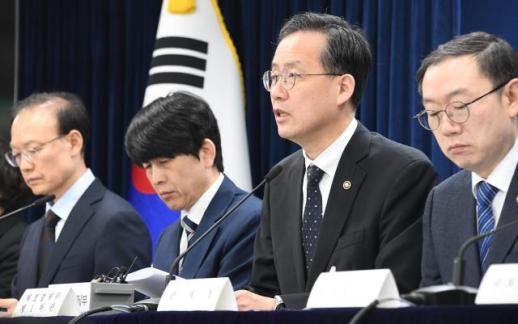 Seoul waives duties on freight surge to curb inflation spillover SEOUL, April 3 (AJP) — South Korea will waive customs duties on extraordinary freight cost increases for imports from the Middle East, as the crippling of the Strait of Hormuz threatens to spill into domestic prices and broader inflation. The emergency measure, announced Friday by the Ministry of Economy and Finance, allows companies to exclude surging shipping costs incurred from longer alternative routes when calculating import duties. The move comes as tanker freight rates on Middle East–China routes have soared 608 percent from a year earlier, with the chokepoint effectively sealed by Iranian forces. Customs duties are typically levied on the total value of imports, including freight. By excluding the recent spike in shipping costs, the government aims to ease the burden on importers and contain pass-through inflation. “U-turn cargo” — shipments originally destined for the Middle East but forced to return — will face minimal inspections, while key imports such as energy and raw materials will be granted pre-arrival clearance to ensure immediate domestic supply upon arrival. Administrative procedures for supply-sensitive items will also be streamlined. For raw materials used in paint and polyethylene (PE) resin, firms will be allowed to submit testing plans in place of full toxicity data, cutting approval timelines from more than three months to a fraction of that period. In the pharmaceutical and medical device sectors, a fast-track review system will prioritize essential items such as IV solutions, sanitary pads and injection needles. On-site Good Manufacturing Practice (GMP) inspections required for facility changes will be replaced with document-based reviews. To preempt shortages in daily necessities, quality inspections for items such as municipal trash bags will be reduced from 10 days to one. The 100 million won ($66,000) cap on direct purchases by local governments will also be temporarily lifted. For asphalt, where prices have climbed alongside crude oil, authorities will advise local governments to delay non-urgent road maintenance projects. In the case of automotive urea, the government will facilitate inter-company trading and may release public stockpiles if needed. Fertilizer-grade urea supply will be stabilized through the National Agricultural Cooperative Federation (Nonghyup). “Eight of the 13 measures will take effect immediately, with the remaining regulatory revisions to be completed within two weeks,” First Vice Finance Minister Lee Hyung-il said. “We will maintain these temporary exemptions until the emergency subsides, while closely monitoring for potential side effects.” 2026-04-03 13:29:28
 -
 HD Korea Shipbuilding issues $1.57 bn in exchangeable bonds, sparking valuation re-rating hopes SEOUL, April 03 (AJP) - HD Korea Shipbuilding & Offshore Engineering has launched a 2.37 trillion won ($1.57 billion) exchangeable bond issuance targeting shares of its flagship subsidiary HD Hyundai Heavy Industries, a move analysts say could dismantle the holding company discount that has long weighed on its stock. The company disclosed the EB issuance on March 31, later revising the total from an initially announced 3.03 trillion won. The bonds are exchangeable into a 4.3 percent stake in HD Hyundai Heavy Industries at a conversion price of 523,125 won per share, with exchange requests eligible from June 14. The offering crystallizes a plan first floated at a January management briefing, where executives acknowledged that HD Hyundai Heavy Industries' thin free float had become a bottleneck for unlocking shareholder value. "The company had announced it had no plans to sell its stake, but by issuing exchangeable bonds, it has effectively liquidated its HD Hyundai Heavy Industries holdings in a way that minimizes market shock," said Kim Yong-min, an analyst at Yuanta Securities. By opting for exchangeable bonds rather than a block deal, the shipbuilder chose to cushion the market from a sudden supply shock. Instead of offloading a large tranche of shares in one sweep, the structure allows a gradual expansion of circulating stock as bondholders exercise their conversion rights over time. For HD Korea Shipbuilding, monetizing a long-dormant subsidiary stake could serve as a springboard for valuation re-rating, with the parent's standalone net cash position projected to swell to nearly 5 trillion won. HD Hyundai Heavy Industries, by contrast, faces near-term headwinds on the supply side. EB investors are widely expected to engage in hedge trading — shorting the underlying shares to manage risk — which could exert downward pressure on the stock in the coming weeks. Market attention has now turned squarely to how the war chest will be deployed. Given that both companies already sit on ample liquidity, analysts view the fundraising as a preemptive move to finance large-scale strategic investments rather than a routine cash buffer. Potential targets include establishing a naval defense foothold in the United States and pursuing mergers and acquisitions in next-generation green maritime technology, particularly as Washington has signaled its desire to deepen cooperation with South Korean shipbuilders. No concrete spending plans have been finalized, however, leaving a degree of uncertainty. "This fundraising will give HD Korea Shipbuilding's overseas expansion and M&A pursuits significant momentum. It could serve as a catalyst for narrowing the valuation gap with rival shipbuilders," said Jeong Dong-ik, an analyst at KB Securities. As of 11:20 a.m. Friday, KOSPI-listed HD Korea Shipbuilding traded 7.42 percent up at 376,500 won per stock. 2026-04-03 11:22:44
 -
 Asian stocks rebound as Hormuz passage hopes ease war fears SEOUL, April 3 (AJP) — Asian markets continued to seesaw with each development in the Iran war, but moved higher in early Friday trading on rising hopes for the reopening of the Strait of Hormuz. Japan’s Nikkei 225 rose 1.08 percent to 53,029.41, while China’s Shanghai Composite Index edged up 0.21 percent to 3,927.59. Hong Kong’s Hang Seng Index was closed from Friday through April 6 for the Easter holiday. In Seoul, the benchmark KOSPI rebounded at the open after a sharp sell-off in the previous session, when geopolitical fears triggered a sidecar trading curb. As of 10:51 a.m., the index rose 2.71 percent to 5,376.08, while the tech-heavy KOSDAQ gained 1.02 percent to 1,067.08. In currency markets, the Korean won strengthened slightly against the U.S. dollar, with the exchange rate falling to 1,509.40 won from 1,519.7 in the previous session. Sentiment was supported by reports that Tehran is drafting a post-war maritime protocol with Oman to guarantee safe navigation through the Strait of Hormuz, potentially including transit fees instead of a full blockade. Overnight on Wall Street, major indexes ended mixed after recovering from early losses tied to war concerns. The Dow Jones Industrial Average fell 0.13 percent, while the S&P 500 rose 0.11 percent and the Nasdaq Composite gained 0.18 percent. The Philadelphia Semiconductor Index and the Russell 2000 also posted modest gains. Oil prices remained volatile. U.S. West Texas Intermediate briefly surged toward $114 per barrel following remarks by U.S. President Donald Trump, before paring gains on Iran-Oman negotiation headlines, reflecting persistent uncertainty over supply risks. Brent crude futures for June delivery settled at $109.03 per barrel, up 7.8 percent from the previous session. All major stocks in Seoul traded higher in early deals, with gains seen across sectors. Tech and chipmakers led advances, with Samsung Electronics rising 3.64 percent to 184,900 won and SK Hynix jumping 5.60 percent to 876,500 won. Autos and mobility stocks also traded higher, with Hyundai Motor up 2.04 percent at 475,000 won and Kia gaining 1.93 percent to 153,500 won. Hyundai Mobis rose 0.64 percent to 392,000 won. Energy and industrials advanced, as LG Energy Solution added 0.62 percent to 407,000 won, Hanwha Aerospace rose 1.20 percent to 1,434,000 won, Doosan Enerbility gained 2.88 percent to 96,300 won, and HD Hyundai Heavy Industries climbed 4.21 percent to 457,500 won. HD Hyundai Electric rose 1.81 percent to 898,000 won, while Hanwha Ocean advanced 1.84 percent to 121,500 won. Among biopharmaceutical stocks, Samsung Biologics climbed 0.44 percent to 1,592,000 won and Celltrion gained 0.61 percent to 197,900 won. Financials edged higher, with KB Financial Group rising 0.96 percent to 147,900 won, Shinhan Financial gaining 1.96 percent to 93,500 won, Samsung Life climbing 3.69 percent to 225,000 won, and Mirae Asset Securities advancing 3.73 percent to 63,900 won. Other large caps also moved higher, with Samsung C&T rising 1.52 percent to 268,000 won and SK Square gaining 2.56 percent to 481,500 won. The combination of overnight gains in U.S. tech shares, a firmer won and stronger futures points to a short-term technical rebound in Korean equities, though lingering geopolitical risks ahead of the weekend are likely to cap further upside. 2026-04-03 11:18:26
 -
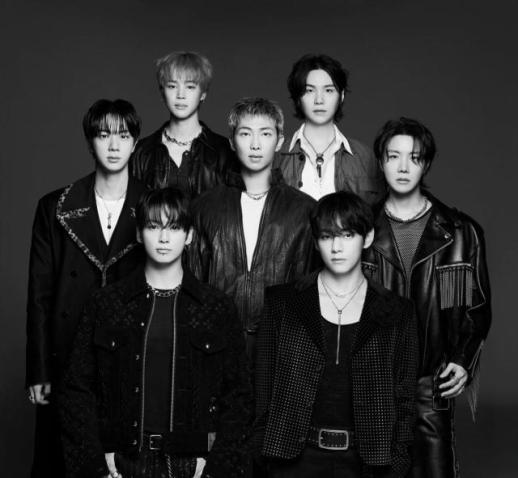 BTS to drop 'Come Over' on 'Arirang' deluxe vinyl SEOUL, April 03 (AJP) - BTS will release a new single, "Come Over," as part of a deluxe vinyl edition of its fifth studio album "Arirang," its agency BigHit Music said Friday. The deluxe LP will include all 14 tracks from the original album along with the new song, bringing the total to 15. The track will be available exclusively on the deluxe vinyl edition. Suga participated in producing the track, while RM and J-Hope are credited as songwriters. According to the agency, Come Over blends elements of stadium anthem and pop and is dedicated to the group’s fandom, ARMY. BTS is set to kick off its "BTS World Tour Arirang" in Goyang, northwest of Seoul, on April 9, with the tour scheduled to continue in major cities worldwide through 2027. 2026-04-03 11:14:51
 -
 Woori Bank to Turn Branch Idle Space Into Community Platform With Goodwill Store Woori Bank said Thursday it will convert idle space at branches nationwide into a social-contribution platform aimed at supporting local communities. As some branches scale back operations, the bank will bring in Goodwill Store outlets that sell donated goods. The pilot “Goodwill Branch Yeoju” has continued to provide essential financial services for local residents while also creating jobs for vulnerable groups and encouraging local donations, the bank said. Woori Bank said it plans to expand various community-focused branch models tailored to local conditions and welfare needs. It said the effort will center on three goals: improving access to financial services, supporting vulnerable groups and strengthening ties with local communities. “Finance has a public function and should grow together with local communities, beyond simply providing services,” Shin Young-cheol, head of Woori Bank’s social contribution department, said. He said using idle space would allow customers to access banking services nearby while communities benefit from jobs and welfare support.* This article has been translated by AI. 2026-04-03 11:03:00
 -
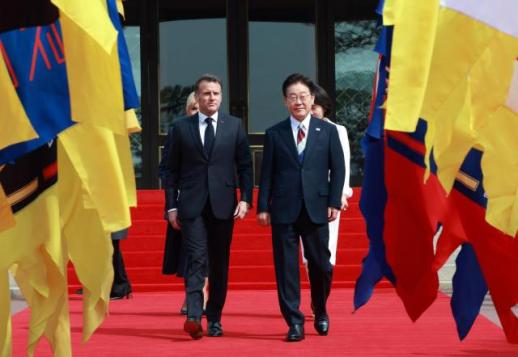 Korea and France hold summit to elevate ties to strategic partnership SEOUL, April 03 (AJP) -South Korea and France are elevating bilateral ties to a “global strategic partnership” during French President Emmanuel Macron’s two-day state visit — his first to Korea since taking office in 2017 and the first by a French president in 11 years — which began Friday amid mounting geopolitical tensions. Macron arrived in Seoul on Thursday for a two-day visit following a trip to Japan, in what French officials described as an effort to expand France’s strategic and economic role in the Indo-Pacific at a time of “strong international and regional tensions.” The two are set make a joint declaration after the summit with President Lee Jae Myung, focused to formalize the upgrade from the “comprehensive partnership for the 21st century” established in 2004, 22 years ago, the presidential office in Seoul said. “President Lee plans to strengthen strategic communication with France … and build a future-oriented partnership,” senior presidential spokesperson Kang Yu-jung said in a written briefing. France, a permanent member of the U.N. Security Council and a key European Union country, is seen by Seoul as a critical partner in addressing global security and economic challenges. The two leaders are expected to discuss expanding cooperation across a wide range of sectors, including artificial intelligence, quantum technology, space, nuclear energy, trade and investment, as well as education, culture and people-to-people exchanges. In a contribution to French daily Le Figaro, Lee said bilateral ties must evolve beyond a traditional partnership into “strategic collaboration” encompassing key innovation sectors such as artificial intelligence and nuclear energy. The meeting marks the third in-person exchange between Lee and Macron, following talks on the sidelines of the G7 summit in Canada last June and the G20 summit in South Africa last November. South Korea and France were among some 40 countries that joined a videoconference hosted by British Foreign Secretary Yvette Cooper on Thursday, aimed at coordinating joint action to reopen the Strait of Hormuz. The talks followed remarks by U.S. President Donald Trump on Wednesday that the strait could reopen “naturally,” adding that countries reliant on the waterway should take responsibility for securing it. “Just take it, protect it, use it for yourselves,” he said. Speaking in South Korea on Thursday, however, Macron dismissed the idea of a military seizure as “unrealistic.” “It would take an indefinite amount of time, and it would expose all those who venture through this Strait to coastal risks from the Revolutionary Guards, as well as ballistic missiles,” he said. 2026-04-03 11:01:57
 -
 2026 World Cup Field Set at 48: Iraq Returns After 40 Years, Italy Misses Again On April 1, Iraq beat Bolivia 2-1 in the intercontinental playoff to claim the final ticket to the 2026 World Cup. The result sent Iraq to the World Cup for the first time since 1986, ending a 40-year wait. Iraq, which borders Iran, has been shaken by war in the Middle East, with about 100 people killed, leaving the country in an unstable situation. Despite the security strains, large crowds poured into streets across Baghdad and other cities after the win, setting off fireworks and cheering. The Iraqi government declared a two-day public holiday. Another team ended an even longer drought. The Democratic Republic of Congo qualified for the finals for the first time in 52 years, beating Jamaica in the intercontinental playoff after a 120-minute match. DR Congo scored in extra time and held on for the win. Italy, a four-time champion, failed to qualify for a third straight World Cup. Italy drew Bosnia and Herzegovina 1-1 after extra time in the European qualifying playoff Group A final on April 1, then lost on penalties. After the setback, Italy’s football federation president and the national team director resigned, the report said. Bosnia and Herzegovina, meanwhile, will return to the World Cup for the second time, 12 years after 2014. South Korea’s first opponent in Group A was set as the Czech Republic, which qualified for the first time since the 2006 tournament in Germany. The Czech Republic beat Denmark on penalties after extra time in the European playoff Group D final. The 2026 tournament will be the first World Cup to expand from 32 teams to 48. Jordan and Uzbekistan from Asia, Cape Verde from Africa, and Curacao from the CONCACAF region will make their World Cup debuts. With the United States, Canada and Mexico hosting, the North America World Cup is expected to be the largest in the tournament’s history. The number of matches will rise from 64 to 104, and the competition will run 39 days, the longest World Cup to date.* This article has been translated by AI. 2026-04-03 10:54:00
 -
 National Museum of Korea to Display Andong Bongjeongsa Yeongsanhoi Hanging Scroll Painting A national treasure held by Bongjeongsa Temple in Andong, North Gyeongsang Province — the “Andong Bongjeongsa Yeongsanhoi Hanging Scroll Painting” — will go on display in Seoul. The National Museum of Korea said Thursday it will present the work in a special exhibition, “A Buddha Leading to Enlightenment: The Andong Bongjeongsa Gwaebul,” from April 7 to June 21 to mark Buddha’s Birthday. The museum’s annual gwaebul exhibition series began in 2006 to highlight the historical, cultural and artistic value of large Buddhist hanging scrolls kept at temples. This year marks its 20th edition. Gwaebul are oversized Buddhist paintings hung outdoors for major ceremonies, making them difficult to see up close under normal circumstances. The Bongjeongsa scroll was made in 1710 (the 36th year of King Sukjong’s reign). It measures 821.6 centimeters (323.5 inches) tall and 620.1 centimeters (244.1 inches) wide and was created by joining 16 silk panels side by side. The painting depicts the Yeongsanhoi scene — the Buddha Sakyamuni delivering his most profound teaching at Vulture Peak in India — with the Buddha centered and flanked symmetrically by eight bodhisattvas and 10 disciples. The faces of the Buddha, bodhisattvas and disciples use a traditional shading technique known as barim to add a pink flush. For the Buddha’s face, artists first applied red shading, then evenly painted a yellow-toned base to create volume, producing a lifelike effect. The museum said the work also features a distinctive element found only on this scroll: a gold-leaf swastika (卍) motif attached to the Buddha’s chest, using metallic sheen to add a three-dimensional effect to the otherwise flat surface. An inscription at the bottom records details of the project, including participants and patronage. It lists 166 people who took part, spanning different social ranks and including men and women, lay believers and monks — evidence, the museum said, of Buddhism’s broad social base at the time. “When the scroll was hung in the courtyard in front of Bongjeongsa’s main hall more than 300 years ago, those who faced the Yeongsanhoi scene hoped to reach enlightenment as they looked upon the Buddha before their eyes,” a museum official said. The official added that the museum hopes visitors will “share and connect with the Buddha’s teachings” while viewing the work in Seoul. * This article has been translated by AI. 2026-04-03 10:48:20
 -
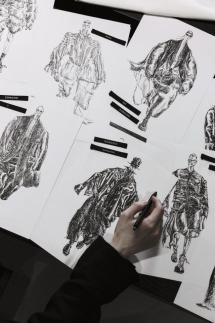 INTERVIEW: How Jay Songzio shaped BTS's return in armor and restraint SEOUL, April 3 (AJP) — More than 18 million viewers tuned in live. Add to that over 30 million registered fans worldwide, and the scale of the moment becomes clear. When the lights rose on March 21 over all seven members of BTS — together on one stage for the first time in nearly four years — it was less a comeback than a global event. The afterglow has yet to fade. The album ARIRANG has climbed the Billboard charts, and its music videos continue to ripple across platforms. Just as indelible, however, were the clothes: armor-like silhouettes that accentuated the forceful, experimental tracks like “Body to Body,” “Hooligan,” and “FYA,” with the backdrop of Korea’s ancient Gwanghwamun gateway. Behind that visual language stood Songzio, the high-end contemporary label founded in 1993 by designer Song Zio — and now steered by his son, Jay Songzio. “A look comes together when someone wears it,” said Jay Songzio, the brand’s creative director. “When different pieces come together on a person to create a striking look, that’s when I feel it works.” Based in Seoul and Paris, the label operates roughly 120 stores worldwide, with flagship boutiques in both cities and a new New York location underway. Under Jay Songzio, the house has expanded beyond menswear into womenswear, steadily widening its global footprint. A collaboration rooted in identity BTS had worn Songzio before, but the 2026 “ARIRANG” comeback at Gwanghwamun Square marked a deeper collaboration — one that began at the conceptual stage and evolved in tandem with the performance itself. At its core was a shared intent: to foreground Korean identity. Songzio’s longstanding philosophy — reinterpreting tradition through a modern lens — aligned naturally with that ambition. The collaboration, initiated by HYBE roughly two months before the performance, sought a distinctly Korean design partner to match both the symbolic weight of the “Arirang” concept and the historic venue. The choice carried its own message. BTS, long associated with European luxury houses, turned instead to a domestic designer for a landmark return — reinforcing the global positioning of Korean culture across both music and fashion. The result was “Lyrical Armor”: a concept merging the strength of traditional armor with a lyrical, almost poetic sensitivity. Drawing on early Joseon-era armor and hanbok worn by artists and performers, the collection envisioned what the brand described as “heroes of a new era who overcome turbulent history to create the future.” There was no fixed reference point. The designs emerged through an iterative back-and-forth process, evolving alongside the performance narrative. Each member was assigned a persona: RM as the hero, Jin the artist, Suga the architect, J-Hope a traditional performer, Jimin the poet, V a scholar-like figure, and Jungkook the pioneer. The group was not passive. Members contributed feedback on color, accessories and silhouette — details that shaped the final look. Netflix said the performance drew 18.4 million global viewers within 24 hours. An unconventional path to design Jay Songzio studied art history and mathematics before spending years in Paris, gradually growing into the brand. “Fashion became part of my life,” he told AJP. “It naturally blended into my worldview — art, fashion and everyday life don’t feel separate.” His references range widely: Renaissance and Romantic painting, classical literature, cinema. He sees fashion much like film — a multidisciplinary medium where narrative, character and visual language converge. At the center of his philosophy lies restraint. “Even as the world changes, maintaining your own identity is important,” he said, adding that patience is essential. This sensibility also defines how he diverges from his father. Where Song Zio pursued seasonal reinvention, Jay emphasizes repetition — building a recognizable identity over time. “Most people don’t follow shows every six months,” he said. “What matters is leaving a clear impression of what the brand represents.” Emotion, restraint and ‘avant-garde elegance’ For Songzio, beauty is not stylistic but authentic. “It’s about how convincingly you express your own language,” he said. “That’s what makes something beautiful.” Emotion, in his framework, is not excess but discipline. “Authenticity matters most. You should be able to explain your work naturally,” he said. He describes his creative state as deliberately restrained — a balance the brand calls “avant-garde elegance,” where experimental form meets composure rooted in Eastern sensibilities. That restraint is visible even in color. “It’s a color that suits restraint,” he said of black, describing it as a canvas rather than a direct emotional statement. His process favors purity — an idea he traces to Pablo Picasso’s notion that it takes a lifetime to draw like a child. “Purity means expressing your emotions and inspiration without over-filtering,” he said. It also informs his technique. He prioritizes hand sketching over digital tools. “Small differences can create huge results,” he said. “The tactile process of making clothes matters. Even a small detail — like the placement of a button — feels different when it’s drawn by hand.” For him, design is unfinished until worn. “A look comes together when someone wears it,” he repeated. “When different pieces come together on a person to create a striking look, that’s when I feel it works.” Reinterpreting ‘han’ on stage Nowhere did these ideas converge more clearly than in the BTS stage costumes. The project reimagined “han” — the idiosyncratic Korean sentiment often translated as heart-wrenching sorrow — as a forward-driving force. By merging armor’s rigidity with the fluidity of hanbok, the garments were built to transform through layering, asymmetry and detachable elements. The scale extended beyond BTS themselves to an 80-member performance team. “Han is deeply emotional, but it also drives you forward,” he said. “We wanted to reinterpret it as a forward-looking force.” He described it as a “common mentality” shaped by Korea’s turbulent history — not merely grief, but resilience and momentum. Designing for the stage Rather than impose a single narrative, Songzio approached the BTS collection through individual character arcs. He was particularly drawn to V’s “doryeong” concept — a young nobleman or scholar-like figure. “It combines strength and softness, which aligns well with our direction,” he said. The visual strategy leaned on stark contrast: black and white. White elements cut through the potential heaviness of armor-inspired forms, sharpening visibility on stage. Early designs also explored transformability. Layered garments were engineered to evolve during performance, though achieving this without appearing visually heavy proved a technical challenge. For Songzio, it was also an opportunity — long deferred — to push Korean elements more boldly into his work. The brand’s ambitions extend beyond the stage. A new flagship in New York is underway, conceived not merely as retail space but as a platform for Korean artists. Collaborations continue as well, including ongoing work with The Walt Disney Company, reinterpreting figures such as Mickey Mouse through Songzio’s distinct lens. At its core, the philosophy remains consistent: avant-garde yet elegant, structured yet fluid, rooted in identity yet open to reinterpretation. The Gwanghwamun stage offered a rare convergence — a moment when that philosophy reached a global audience. More than a costume project, the collaboration placed Songzio within a broader cultural narrative, one in which Korean design actively shapes how the country presents itself to the world. Between armor and hanbok, tradition and modernity, restraint and expression, Songzio continues to chart its course — on its own terms. 2026-04-03 10:33:36
 -
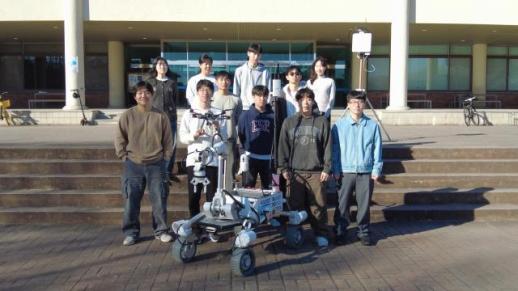 KAIST's student team qualifies for global Mars rover finals in Utah SEOUL, April 03 (AJP) - A team of undergraduate students from the Korea Advanced Institute of Science and Technology (in South Korea has reached the final stage of the world's largest Mars rover competition. This is the first time a team from the university has qualified for the final round of the international event that is designed to spotlight rovers capable of carrying out missions in environments that are similar to Mars. The Korea Advanced Institute of Science and Technology (KAIST) said Friday that team MR2, part of the student robotics club Microrobot Research (MR), secured a spot in the 2026 University Rover Challenge (URC). The team is advised by KAIST's Department of Mechanical Engineering Professor Park Yong-hwa. The URC is an international engineering contest organized by the Mars Society. It takes place at the Mars Desert Research Station (MDRS) in Utah, where the desert environment closely resembles the surface of Mars. Participating students must design and build rovers to complete tasks involving life detection, equipment maintenance, and autonomous driving. A total of 116 university teams from 18 countries entered the preliminary rounds of the competition this year. KAIST MR2 earned 95.38 percent on their evaluation, placing them among the top 38 teams invited to the finals. The result highlights the design and control capabilities of the South Korean undergraduate researchers. The team's rover, named GAP-1000, is a modular vehicle built to operate in extreme conditions. It features a robotic arm with six joints, which allows it to move with a level of flexibility similar to a human arm. This design enables the rover to lift objects weighing more than 5 kilograms and perform delicate repairs on machinery. The vehicle also features an advanced navigation system that combines high-precision satellite positioning with sensors that track the rover's movement and wheel rotation. This allows the GAP-1000 to find the most efficient paths through rocky and difficult terrain without human intervention. A drone relay system ensures the team can maintain a communication link with the rover even when it travels behind obstacles. For its scientific mission, the rover uses a drill to collect soil samples from 10 centimeters below the surface. An onboard laboratory uses chemical tests and light analysis to check for proteins and other biological signs of life in real time. The system is designed to provide immediate feedback on whether a sample contains traces of living organisms. "We handled everything from the initial design to the final production ourselves, and though we faced many challenges, we are happy to be the first team from our school to make it to the finals," said student leader Jeong Myeong-woo. He added that the team will focus on final preparations to ensure a strong performance in the United States. Professor Park Yong-hwa said it was impressive to see the students independently develop a rover for such a harsh environment. He noted that the competition serves as an opportunity to showcase South Korean technical expertise to a global audience. President Lee Kwang-hyung said that having undergraduate students design and build a rover that can compete on the world stage is a significant achievement. He stated that he expects the experience to help the students grow through international competition. The MR2 team consists of 13 students from several departments, including mechanical engineering, electrical engineering, and industrial design. The group has finished long-distance testing in outdoor environments and is currently performing final system checks. The finals are scheduled to take place at the MDRS in Utah from May 27 to May 30, 2026. 2026-04-03 09:54:44