

Journalist

CGTN
-
 KBO League draws record preseason crowds, fueling 10 million-fan expectations The 2026 KBO League is drawing big crowds even before opening day, raising expectations it could top 10 million fans for a third straight season. Momentum has also been boosted by South Korea’s run to the quarterfinals of the 2026 World Baseball Classic, setting up what analysts expect will be an even tougher ticket hunt. The KBO has set attendance records in each of the past two seasons, cementing its status as the country’s most popular sport. After breaking the 10 million mark for the first time in 2024 with 10,887,705 fans, last season drew a record 12,312,519. In the 2025 season, 331 of 720 games sold out, a sellout rate of about 46%, and seat occupancy reached 82.9%. This year’s outlook has been lifted by the WBC, which ended March 18 (Korean time). South Korea reached the quarterfinals for the first time in 17 years, drawing renewed attention from fans. The surge showed up in TV ratings. Nielsen Korea reported combined ratings for the three major terrestrial broadcasters of 16.5% for the game against Japan, 12.4% for the game against Australia that clinched a quarterfinal berth, and 9.5% for the quarterfinal against the Dominican Republic. The early demand was also clear in exhibition games. The Korea Baseball Organization said attendance on March 21 and 22 was 80,042 and 83,584, respectively. Both days surpassed the previous single-day exhibition record of 71,288 set on March 9 last year. Commentators said the crowds point to another strong season. Min Hun-gi, a SPOTV analyst, said he was surprised to see nearly 20,000 fans at Busan’s Sajik Baseball Stadium for an exhibition game. “Now pro baseball has firmly become a major social and cultural phenomenon beyond just a sport,” Min said. “This year it will be really hard for fans to get tickets.” Kim Sun-woo, an MBC Sports Plus analyst, said the exhibition-game atmosphere suggests the league could again reach 10 million fans. “In the WBC, young players became the focal point and delivered results, which raised interest among baseball fans,” Kim said. “That energy will carry straight into strong support for each club in the regular season.” The KBO is also moving quickly to match fan demand. Starting March 27, it will team up with Starbucks Korea to release new stadium-themed drinks, food and goods. The league also renewed a digital partnership with TikTok for a third straight year, planning original content and interactive events to expand its online outreach.* This article has been translated by AI. 2026-03-25 00:03:00
 -
 Asian stocks rise on Trump remarks on Iran despite lingering volatility SEOUL, March 24 (AJP) - South Korea's KOSPI closed up more than 2 percent on Tuesday, tracking gains across Asian and U.S. markets as investors reacted to U.S. President Donald Trump's remarks delaying potential military action against Iran, despite swirling intraday volatility. The benchmark index rose 148.17 points or 2.74 percent to close at 5,553.92 points. It opened more than 4 percent higher, rose to an intraday high of 5,643, fell to 5,395.2, and later recovered to close at 5,553.92. Retail and institutional investors bought 722.5 billion won ($483 million) and 968.3 billion won, respectively, while foreign investors sold a net 1.986 trillion won, extending their selling streak. Most large-cap stocks closed higher. Samsung Electronics rose 1.8 percent to 189,700 won, and SK hynix gained 5.7 percent to 986,000 won. Hyundai Motor added 1.4 percent to 492,000 won. LG Energy Solution surged 10.3 percent to 392,500 won, leading gains. Samsung Biologics rose 1.6 percent to 1,547,000 won, while Hanwha Aerospace advanced 4.5 percent to 1,335,000 won. The broader gains reflected improved sentiment across the market. The junior KOSDAQ gained 24.55 points or 2.24 percent to close at 1,121.44. Similar to the KOSPI, it showed early strength, briefly turned lower during the session, and later recovered its upward momentum in the afternoon. Foreign and institutional investors bought 167.1 billion won and 22.1 billion won worth of shares, respectively, while retail investors sold 159.6 billion won. The move was driven by remarks from Trump, who signaled a weeklong delay in potential military action against Iran, citing ongoing dialogue. A sharp overnight drop in oil prices also supported the move. But market volatility remained elevated. The KOSPI has triggered sidecar mechanisms 10 times in less than two months, one of the highest frequencies since the global financial crisis. In March alone, seven sidecars were activated. Circuit breakers were also triggered twice this month, the first such occurrence since March 2020. The rebound came as part of a broader global rally, with Asian and U.S. equities moving higher on expectations following Trump's remarks, although underlying geopolitical risks remain unresolved. However, the broader situation remained uncertain, with markets continuing to react to headlines rather than confirmed developments. The shift in sentiment was also reflected in global markets. Overnight, U.S. markets closed higher. The Dow Jones Industrial Average rose 1.4 percent, while the Nasdaq and S&P 500 gained 1.4 percent and 1.2 percent, respectively. Asian markets also advanced. In Japan, the Nikkei 225 rose 1.4 percent, with automakers leading gains. Toyota Motor climbed 2.79 percent to $210.64 after announcing a $1 billion investment in U.S. plants, reinforcing expectations for continued global expansion. China’s Shanghai Composite gained 1.8 percent, and Hong Kong’s Hang Seng Index climbed 2.7 percent. Despite the gains, volatility remained a key feature of the market. The South Korean won strengthened to 1,495.2 per dollar, reversing recent weakness as markets reacted to Trump's remarks on Iran. Oil prices held above key levels, with Brent crude at $102.6 a barrel and West Texas Intermediate at $90.6. Frequent swings in oil prices and conflicting signals over U.S.-Iran negotiations have continued to drive volatility in global markets. 2026-03-24 17:56:37
 -
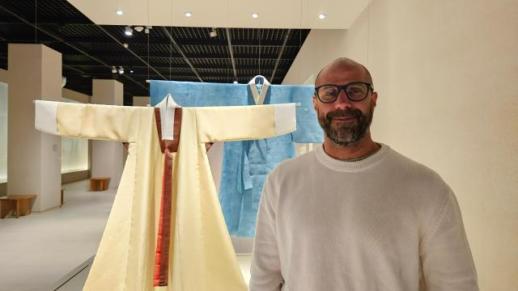 Folk Museum anchors Gwanghwamun beyond BTS spotlight SEOUL, March 24 (AJP) - Gwanghwamun, the historic gateway to Gyeongbokgung Palace, briefly became the center of the world last Saturday as BTS turned it into a global livestream stage. But just steps away, another kind of crowd continues to gather — one drawn not by spectacle, but by story. On ordinary days, that stop is the National Folk Museum of Korea. Museums have been enjoying a surge in popularity, fueled in part by last year’s “K-pop Demon Hunters” hype and a broader global appetite for cultural immersion. The National Museum of Korea drew more than 6.5 million visitors last year, placing it alongside institutions like the Louvre and the Vatican Museums among the world’s most visited. The Folk Museum alone welcomed 2.28 million visitors, and nearly 60 percent of them foreigners. The appeal begins the moment visitors step inside. The entrance hall hums with motion. A group of French tourists leans into a digital display animating a traditional Korean village. Nearby, American college students mirror the gestures of a projected folk dance, their laughter echoing under the high ceiling. “I liked the interactive dance exhibit the most,” said Will, a 28-year-old visitor from Washington, still tracing the choreography with his hands. “It felt very interactive,” his friend added. “You could really immerse yourself in the experience.” Unlike traditional museums that rely on dense timelines and academic explanations, the Folk Museum organizes its exhibits around life itself — birth, childhood, marriage, aging and death — woven through the rhythm of seasons. The approach is deliberate. “If we just display objects by era, it can be difficult for foreigners to connect,” a museum official said. “But when we show how people lived — what they celebrated, how they raised children — those are experiences everyone can understand.” That philosophy is perhaps most vividly expressed in a special exhibition titled “Happy Birthday.” The gallery explores childbirth as both a personal and communal milestone. Among more than 300 artifacts are a delicate baek-il jeogori, worn by infants on their 100th day, and a father’s handwritten parenting diary, its careful script conveying quiet devotion. At the center stands the Cheonin Cheonjamun, a book of a thousand Chinese characters, each written by a different person — a symbol that a child is raised not by parents alone, but by an entire community. For some visitors, the resonance is immediate. “Everything here is beautiful,” said Tiago, a 42-year-old architect from Portugal now living in Angola, pausing before a display of traditional wooden furniture. “There’s a simplicity, but also a deep sense of purpose. Others point to something more subtle: accessibility. The museum’s layout is intuitive, its signage clear, and its exhibits cohesive — qualities that make it easy to navigate even for first-time visitors unfamiliar with Korean history. That accessibility has helped position the museum as part of a broader cultural circuit. Tourists often visit it alongside nearby landmarks such as Gyeongbokgung Palace, the National Museum of Korea and the National Museum of Modern and Contemporary Art, creating a curated day-long journey through Korean heritage. Lee Yourim, who has run a café near the museum for a decade, sees this pattern daily. “A lot of people visit several places in one course,” she said. “They go to the palace, then the museum, then somewhere else nearby.” She added that foreign visitors frequently praise the museum’s family-oriented programs, especially those designed for children. Steve Lebwohl, a 76-year-old businessman from Portland, Oregon, the museum’s strength lies in its storytelling. “The architecture is simple but functional,” he said. “What stands out is the content — the way it covers seasons, birth, dance. It gives you background and context on things that foreigners are curious about.” “It’s a rounded exhibit for a national museum,” he added. His son-in-law, Oh Hanbin, a Korean American, offers a more personal perspective. He has brought his children to the museum not just as tourists but as participants in a kind of cultural inheritance. “We wanted to show them how their halmeoni and harabeoji grew up,” he says, using the Korean words for grandparents. “There aren’t many places in Portland where you can experience Korean culture like this.” As Gwanghwamun shifts from global stage back to everyday crossroads, that quieter draw remains — a place where visitors move not just through exhibits, but through the lived rhythms of a culture. 2026-03-24 17:45:56
 -
 Lee Soo-man’s A2O Entertainment launches ‘Zalpha’ K-pop audition in Seoul A2O Entertainment Korea, founded by producer Lee Soo-man, said Tuesday it will hold its first official event, the “A2O Zalpha Audition.” The audition is drawing attention because it is Lee’s first project in South Korea that he will plan and oversee since a noncompete restriction in the domestic K-pop market was lifted. When Lee sold his SM Entertainment stake to HYBE in 2023, he agreed not to produce albums in South Korea for three years. That agreement was lifted last month, allowing him to resume domestic producing work. The audition will be held regularly every Sunday from 1 p.m. to 5 p.m. at A2O Entertainment Korea in Seoul’s Gangnam district. Applicants can show up in person on the day without separate advance steps or apply through the company’s official online channels. Categories include vocal, rap, dance and acting, and the audition is open regardless of nationality or gender. A2O said it plans to expand the program beyond South Korea to Japan, the United States and other markets. During the noncompete period, Lee established A2O Entertainment and formed the girl group “A2O May,” centered on Chinese members, focusing on overseas activities. The company said the domestic audition is expected to help put Lee’s “K-pop 2.0” approach on a full track.* This article has been translated by AI. 2026-03-24 17:43:42
 -
 BTS Comeback Show in Seoul Spurs Economic Boost, Debate Over Public Space Controls BTS’ return is no longer just entertainment news. The group’s comeback show held March 21 at Gwanghwamun Square was treated as a citywide event, not a brief item on the arts page. The Seoul Metropolitan Government activated a separate safety plan that included phased entry, traffic controls and even a plan for subway trains to pass through without stopping, anticipating the possibility that more than 260,000 people could gather. Newspapers also printed BTS special editions. One group’s comeback rippled through city administration, public safety, mass transit and newsroom decisions. The immediate impact around central Seoul was striking. Convenience store sales near Gwanghwamun rose about fourfold compared with a week earlier, and department store sales in nearby Myeongdong also climbed sharply. Hotels in the Myeongdong and Gwanghwamun areas were close to fully booked, and reservations by foreign visitors surged. A free concert shifted sales, hotel occupancy and visitor flows — a sign that the event was moving the local economy, not just drawing fans. That scale also helped fuel a cooler public reaction. For some residents, the fatigue was less about disliking BTS than about questions such as why the city had to be controlled to that extent and why a public space had to be reshaped around a single star act. After the show, criticism grew that the response was excessive. Yonhap reported that the crowd was estimated at 104,000 by organizers and about 48,000 based on Seoul’s real-time city data, while about 10,000 public workers were deployed, including 6,700 police officers. Some merchants said strict controls kept them from seeing as much of the expected foot-traffic boost. Seen that way, the debate is not simply “people who love BTS” versus “people who hate BTS.” Gwanghwamun is a symbolic public space, tied both to the city’s royal-era landscape and to modern political rallies and civic memory. A BTS performance there showcased South Korea’s cultural reach, and its free admission and global live broadcast gave it a measure of public value. But public value does not mean residents should be expected to accept any level of disruption. The central issue is not whether BTS belongs on such a stage, but what standards, public agreement and after-the-fact evaluation should apply when a mega cultural event uses a major public space. In that sense, calling BTS’ return a social event is not only praise for popularity. When a single comeback can close roads, mobilize security, prompt special newspaper editions and affect retail sales and lodging demand, it reflects a new reality. BTS is not just a pop act; it is a force that tests how a city prepares for and manages mass gatherings. The mix of excitement and exhaustion is a predictable result of that scale. * This article has been translated by AI. 2026-03-24 17:42:21
 -
 ‘Salmokji’ aims to deliver immersive K-horror with water ghost tale A mysterious figure captured on a road-view image and a dark, deep reservoir form the backbone of the new Korean horror film “Salmokji,” which aims to turn a familiar “water ghost” legend into a modern, immersive scare. A press screening and news conference for “Salmokji,” directed by Lee Sang-min, was held Tuesday afternoon at CGV Yongsan I’Park Mall in Seoul. Lee attended with cast members Kim Hye-yoon, Lee Jong-won, Kim Jun-han, Kim Young-sung, Oh Dong-min, Yoon Jae-chan and Jang Da-a. The film follows a production crew that heads to a reservoir to verify an unexplained figure seen on road-view imagery, only to encounter a series of strange events. Starting from an everyday digital tool, the story shifts into the psychological pressure of an isolated setting. Lee said he wanted to maximize fear rooted in place. “I’ve always loved horror films, and my previous short films were also in the horror genre,” he said. “I wanted to amplify the fear a space can create. I focused on the ‘water ghost’ because I thought it could show an original image.” He said the goal was not just to watch fear unfold, but to make audiences feel as if they are inside it. “From the planning stage, I hoped viewers would feel ‘experiential horror,’ as if they were being bewitched by a water ghost,” Lee said, adding that the film uses devices unique to the creature, including appearances and reflections on the water’s surface. He also expressed confidence in a ScreenX version produced in postproduction, saying distortion in scenes such as the road-view sequence would heighten immersion. Cast members said they were drawn by the script and the project’s distinctive energy. Kim, who said she has long enjoyed horror films, described the shoot as exciting. “The script was so fun, and I really wanted to challenge myself with the character,” she said. “I think it will remain a good part of my career.” Jang, making her screen debut, plays Se-jeong, a character who meets a shocking end. “It was a completely different character from me, so acting out the dramatic emotional changes was a big experience,” she said. She added that the final scene became “much more horrific” than what was on the page, and said she went into filming prepared for what she called a “terrible death.” “It wasn’t easy, but the staff and I worked as one, focused on making the scene come out well,” she said. The production’s atmosphere also drew attention, with cast members recounting unusual experiences on set. Kim Jun-han said staff members reported seeing an unidentified young child, and that sensor lights at their lodging turned on and off on their own. “I thought, maybe that means the film will do well,” he said with a laugh. Underwater filming was described as a key element supporting the movie’s finish. Lee Jong-won said he trained ahead of time for an action sequence that required him to dive deep underwater to save someone. “Acting underwater wasn’t easy, but I did my best,” he said. Kim Young-sung and Oh Dong-min said their on-screen “brother” chemistry helped ground the story’s fear in realism. Recalling an underwater shoot in subzero wind chill, Oh said Kim would shiver between takes but snap into character as soon as action was called. Kim credited Oh’s emotional performance for helping him stay immersed through the final scene. Lee said he sees horror as a form of entertainment for younger audiences, noting a recent atmosphere of Gen Z moviegoers returning to theaters after the box-office success of “The Man Who Lives With the King.” “I also used to relieve the stress of exam periods by watching horror films when I was a teenager,” Lee said, recalling enjoying them with friends as a kind of courage test. “Horror films have a charm — after you scream, you feel refreshed when it ends.” He said he hopes students facing midterms will use “Salmokji” to blow off stress and enjoy what he described as a Gen Z-style “courage test.” “Salmokji” is scheduled for release in April. * This article has been translated by AI. 2026-03-24 17:24:23
 -
 Little-known Korean tanker bet pays off as Hormuz crisis turns VLCCs into liquid gold SEOUL, March 24 (AJP) - A little-known South Korean shipowner has emerged as one of the biggest winners of the Persian Gulf crisis, as a wartime chokehold on the Strait of Hormuz transforms oil tankers into highly profitable floating storage — and draws takeover interest from the world’s largest container carrier. Janggeum Maritime, the tanker arm of Sinokor Merchant Marine Group, has struck an investment deal with Geneva-based Mediterranean Shipping Company (MSC), under which the global shipping giant is seeking to acquire a 50 percent stake in the firm. The two sides have signed an agreement and filed for merger approval with South Korea’s Fair Trade Commission, as well as regulators in Greece and Cyprus. Details of the deal including financial terms were not disclosed. The deal comes as Janggeum Maritime rides an extraordinary windfall from a market dislocation triggered by war in the Middle East. With the Strait of Hormuz effectively crippled following U.S.-led strikes on Iran in late February, crude exports from key Gulf producers have plunged while onshore storage capacity has rapidly filled. That imbalance has pushed global oil majors and traders to charter very large crude carriers (VLCCs) as floating storage units, sending demand — and earnings — sharply higher. Floating storage in the region has surged from around 10 million barrels before the conflict to more than 50 million barrels, according to Reuters. Over the same period, crude exports from eight Middle Eastern countries dropped from 25.13 million barrels per day to 9.71 million barrels. Janggeum Maritime moved early. The company had aggressively expanded its fleet of secondhand VLCCs ahead of the conflict — a strategy that is now paying off. Since late December, Sinokor has been linked to the purchase of 29 VLCCs built between 2010 and 2016, paying between $68 million and over $100 million per vessel, well above benchmark valuations, according to a Lloyd’s report. The acquisitions included eight vessels from John Fredriksen’s Frontline, six from Belgium’s CMB.Tech, three from the UK’s Zodiac Maritime, and two from New York-listed International Seaways. Other reported sellers include Greece’s Marinakis Group, George Economou’s TMS Tankers and Chandris Group. Industry insiders say the nature of those purchases offered an early clue. “Buying older VLCCs — especially without scrubbers — is a strong signal they’re intended for storage rather than transport,” a shipping source said. “Fuel efficiency matters less when vessels are anchored.” That strategy was reinforced in late January, when the company pre-positioned at least six empty tankers in the Persian Gulf. When the conflict escalated on Feb. 28 and shipping routes tightened, oil companies scrambled to secure storage — and Janggeum was already in place. The payoff has been dramatic. The company is now estimated to be earning about $500,000 per day per vessel from floating storage leases — up from $30,000–40,000 a year ago, $70,000–80,000 in late February, and even above the roughly $400,000 currently earned on key Middle East–Asia transport routes. With MSC entering the picture, Janggeum Maritime is now looking beyond opportunistic gains. The tie-up is aimed at diversifying into broader shipping operations by leveraging MSC’s global container network, potentially transforming the tanker-focused firm into a more integrated maritime player. Janggeum Maritime declined to comment on its fleet acquisitions and VLCC strategy. MSC did not respond to requests for comment. 2026-03-24 17:23:37
 -
 Kim Hyo-joo jumps to No. 4 in women’s golf world ranking after Founders Cup win Kim Hyo-joo, the Fortinet Founders Cup champion on the LPGA Tour, climbed to No. 4 in the women’s world golf ranking after earning her eighth career victory. In the rankings released March 24 (Korean time), Kim rose four spots from No. 8 last week to No. 4, matching her career-high position for the first time since March 2015. Kim opened her season with a solo third-place finish at the LPGA Tour’s Honda Thailand, then captured her first win of the season in her third start at the Founders Cup. She won the title March 23 at 16-under 272, edging Nelly Korda of the United States by one stroke (15-under 273). It was Kim’s first LPGA Tour victory in a year, since the Ford Championship in March last year. Kim led from the opening round through the final round for a wire-to-wire win and reclaimed the Founders Cup title 11 years after first winning the event in 2015, her LPGA Tour debut season. Kim Sei-young, who tied for third at the Founders Cup, moved up one spot from No. 10 to No. 9 in the world ranking. Yoo Hae-ran stayed at No. 13 and Choi Hye-jin held at No. 15. Kim A-lim was No. 25, Hwang Yoo-min No. 31 and Ko Jin-young No. 37. Lim Jin-hee, who also tied for third at the Founders Cup, jumped 10 places from No. 49 to No. 39. The top three remained unchanged: Jeeno Thitikul of Thailand at No. 1, Korda at No. 2 and Charley Hull of Britain at No. 3.* This article has been translated by AI. 2026-03-24 17:12:00
 -
 Public servants required to alternate vehicle use SEOUL, March 24 (AJP) - Civil servants nationwide are required to alternate the use of their vehicles depending on the last digit of their license plates as part of measures to cope with energy shortages amid supply disruptions caused by the ongoing conflict in the Middle East. At a cabinet meeting with key aides at Cheong Wa Dae on Tuesday, President Lee Jae Myung said, "Public institutions should lead by example, and I ask civil servants to join an energy-saving campaign by reducing electricity use in their daily lives." Starting Wednesday, workers at public institutions will be required to leave their cars at home at least one day a week and use public transportation instead. Drivers of eco-friendly vehicles, such as electric and hydrogen cars, are exempt, and private-sector workers are also encouraged to participate. Such mandatory measures were last implemented in 2011, when oil prices exceeded US$100 per barrel. This would also be the first time since the 1991 Gulf War that they have been extended to the private sector. Citing increasing uncertainty over crude oil and natural gas supplies amid the prolonged conflict that began with U.S.-led airstrikes on Iran late last month, Lee said, "To respond to this serious crisis, the government should proactively move into an emergency mode." "Because petrochemical products are used everywhere, it is hard to predict when, where and what problems may arise," Lee said, urging aides to "thoroughly prepare and implement contingency plans with the worst-case scenario in mind." Referring to suspected price gouging among refiners, Lee warned that inflating prices to take advantage of rising oil prices must be "rooted out and strictly punished." He also urged officials to ensure a 25 trillion-won ($16.7 billion) supplementary budget is swiftly implemented and properly planned so the public can feel its impact. Its parliamentary approval is scheduled for early next month. 2026-03-24 17:06:38
 -
 Celltrion Expansion, HLB Tissue Bank License, Aribio Alzheimer’s Trial Update and More Celltrion to expand new drug-substance production in Songdo, investing 1.2 trillion won Celltrion said March 24 it will secure additional manufacturing capacity, including a major expansion at its headquarters campus in Songdo, Incheon, with investment exceeding 1 trillion won. The company said the plan is intended to meet rising global demand for biopharmaceuticals and strengthen manufacturing competitiveness. The investment will be carried out in phases from this year through 2030 and includes infrastructure expansion across the Songdo campus, a U.S. production base and domestic sites. At Songdo, Celltrion will invest 1.2265 trillion won to expand Plants 4 and 5 simultaneously, bringing total capacity to 180,000 liters. The new facilities will apply automation and smart-factory technology, the company said, enabling production ranging from small-batch, multi-product runs to large-scale manufacturing. It said the system is expected to support faster production of future biosimilars and new drugs. Celltrion also finalized the scale of an expansion at its Branchburg, New Jersey, facility to strengthen competitiveness in the U.S. market. It plans to increase capacity there from 66,000 liters to 75,000 liters, securing total drug-substance production capacity of 141,000 liters. The Branchburg site is expected to play a key role in local supply for the Celltrion Group and in expanding its contract manufacturing (CMO) business, the company said. Celltrion is also moving to strengthen drug-product production. A new drug-product facility being expanded at Songdo is nearing completion within the year and, once operational, will be able to produce 6.5 million liquid vials annually. Combined with the maximum output of the Plant 2 drug-product line, Songdo would have total capacity of 10.5 million vials, the company said. A new drug-product plant planned for an industrial complex in Yesan, South Chungcheong province, has secured its site and is scheduled to begin design work within the year. Celltrion said that once the Yesan plant is completed and Celltrion Pharm’s planned expansion of prefilled syringe (PFS) production is finished, the group would be able to internalize about 90% of its global drug-product needs. The company said it expects significant manufacturing cost savings compared with overseas drug-product CMO production. HLB Life Science wins tissue bank license, expanding human tissue graft business HLB Life Science said March 24 it has obtained a tissue bank license and will move ahead with expanding its human tissue graft business. The approval provides a foundation to handle human tissues including bone, cartilage, fascia and skin, the company said. The product HLB Life Science will distribute, “Freedom Inject Refill,” is an injectable acellular dermal allograft derived from human tissue. Using acellular dermis as its raw material, it is used to treat damaged tissue such as ligaments, tendons and muscles and to support surgical procedures, the company said. The company said the material is produced by removing cells and fat components from skin-derived tissue while preserving extracellular matrix components needed for tissue regeneration, including collagen. It is expected to be used broadly for reconstruction, regeneration and recovery of damaged soft tissue and joints. Initial supply targets include orthopedic surgery, neurosurgery, obstetrics and gynecology, and urology clinics nationwide, with distribution to be expanded gradually, the company said. Aribio says ADPD 2026 presentation supports reliability of global Phase 3 data for AR1001 Aribio said March 24 that Sharon Sha, a Stanford University professor and the global principal investigator, presented an update on the global Phase 3 program for its oral Alzheimer’s disease treatment candidate AR1001 at ADPD 2026 in Copenhagen. POLARIS-AD is a large global Phase 3 trial evaluating the efficacy and safety of AR1001 (30 mg, once daily) in patients with early Alzheimer’s disease. A total of 1,535 patients are enrolled across 13 countries in North America, Europe and Asia, making it the largest trial among oral treatments currently in development, the company said. In the presentation, Sha said, “The baseline demographic characteristics and cognitive and functional indicators in POLARIS-AD are similar to those in existing global registration trials, and no unexpected safety signals have been observed to date.” Sha also highlighted what Aribio described as AR1001’s mechanistic differentiation. “AR1001 has very high blood-brain barrier (BBB) permeability, and its selectivity for PDE5 is superior to PDE6 and PDE11, resulting in fewer side effects than drugs in the same class,” she said. Aribio said this could be a competitive advantage in a market where long-term use is required. Aribio said it plans to release top-line data from the global Phase 3 trial in the third quarter and is aiming to submit a new drug application to the U.S. Food and Drug Administration in the second half of the year. Hugel’s Wellage runs mobile pop-up events to deepen consumer engagement Hugel said March 24 that its clinical cosmetics brand Wellage expanded offline consumer outreach through hands-on events. In collaboration with Beauty+, Wellage held a three-day “moving pop-up” from March 19 to 21 at university campuses and around Seongsu-dong. The company said the event was designed to strengthen brand experience among its core targets, including college students and the MZ generation, and drew about 2,800 visitors over three days. Wellage ran trial programs for its flagship “Real Hyaluronic Blue 100 Ampoule” and its new “Real Hyaluronic Soothing Cream,” and held a participatory product-draw event to gather consumer feedback, the company said. Daewoong Pharmaceutical signs supply deal with TR for digital spirometry device “The Spiro Kit” Daewoong Pharmaceutical said March 24 it signed a supply agreement with TR for a digital spirometry device, “The Spiro Kit,” and will strengthen sales to clinics, hospitals and health screening centers nationwide. Under the agreement, TR will handle development and manufacturing, while Daewoong Pharmaceutical will oversee distribution, sales and marketing through its nationwide network, the company said. Daewoong described the deal as a strategic partnership combining a medical device developer’s technology with a pharmaceutical company’s sales infrastructure. TR is expected to secure stable sales channels and marketing capabilities, while Daewoong Pharmaceutical adds a digital medical device to its business portfolio, it said. The companies said the partnership is aimed at meeting rising demand for pulmonary function tests as South Korea’s national health screening system is revised. With pulmonary function testing (PFT) formally added to general health screenings starting this year, people ages 56 and 66 will have an opportunity to detect major respiratory diseases such as chronic obstructive pulmonary disease (COPD) earlier through screenings, the company said.* This article has been translated by AI. 2026-03-24 17:06:28