

Journalist

CGTN
-
 Im Sung-jae Ties for Fourth at Valspar Championship as Matt Fitzpatrick Wins Im Sung-jae’s bid for his first PGA Tour victory in 4 years and 5 months fell short after he faltered in the final round of the Valspar Championship. Im shot a 3-over 74 on Sunday in the fourth round at Innisbrook Resort and Golf Club’s Copperhead Course (par 71) in Palm Harbor, Florida, with two birdies and five bogeys. The tournament purse was $9.1 million. After starting the day alone in first with a two-shot lead, Im finished at 8-under 276, tied for fourth. He opened with back-to-back bogeys on Nos. 2 and 3 and made five bogeys through the par-4 10th, slipping out of contention for his third career PGA Tour title. Still, the result marked his first top-10 finish of the season and a step forward after a wrist injury sidelined him from tournaments in January and February. He struggled upon returning in March, missing the cut at the Arnold Palmer Invitational and The Players Championship. At this event, he led outright after each of the first three rounds. Matt Fitzpatrick of England won with a closing rally, finishing at 11-under 273. He earned $1,638,000 (about 2.46 billion won) in prize money. It was Fitzpatrick’s third PGA Tour title, following the 2022 U.S. Open and the 2023 RBC Heritage. Kim Seong-hyeon finished tied for seventh at 7-under 277, his first top-10 since a tie for fourth at the 2024 May CJ Cup Byron Nelson, 1 year and 10 months ago. Kim Joo-hyung ended tied for 18th at 4-under 280.* This article has been translated by AI. 2026-03-23 08:42:38
 -
 OPINION: Why Iraq now matters As tensions between the United States, Israel and Iran intensify, global attention has fixed on Tehran, Washington and Tel Aviv. Yet the most consequential variable in this widening conflict lies elsewhere — largely overlooked, but increasingly decisive. That variable is Iraq. At first glance, Iraq appears peripheral, spared the sustained bombardment seen elsewhere. In reality, it is fast becoming the space where the logic of war is most deeply embedded. What unfolds inside Iraq may not dominate headlines, but it is quietly shaping the structural conditions that will determine how — and whether — this conflict ends. Iraq’s fragility is not new. The 2003 U.S.-led invasion, justified by the search for weapons of mass destruction, dismantled the precarious balance that had allowed a Sunni minority to govern over a Shiite majority and Kurdish population. What followed was not simply regime change, but state erosion. The post-2011 U.S. withdrawal, combined with the shockwaves of the Arab uprisings and the Syrian civil war, created a vacuum that gave rise to the Islamic State group, which seized Mosul and declared a caliphate stretching across Iraq and Syria. Though IS was eventually defeated through international coordination, the conflict left behind a fragmented security landscape. Armed groups proliferated, and many were never fully absorbed into the state. Iraq today remains a country where the state exists, but does not fully monopolize the use of force. The most visible manifestation of this reality is the Popular Mobilization Forces (PMF), a loose umbrella of largely pro-Iran militias. Formally incorporated under the prime minister’s authority in 2016, the PMF in practice retains significant autonomy. Its influence extends beyond security into politics and the economy. Meanwhile, remnants of IS continue to stage low-level insurgent attacks, underscoring the persistence of instability. And yet, Iraq in recent years had shown tentative signs of recovery. Under Prime Minister Mohammed Shia al-Sudani, the government attempted to recalibrate its posture with an “Iraq First” approach — seeking to soften its pro-Iran image while maintaining internal balance. The fragile power-sharing arrangement among Shiites, Sunnis and Kurds, though imperfect, was functioning. Baghdad was even beginning to be seen as a city on the path to normalization. That fragile equilibrium is now rapidly unraveling. The most immediate driver is the growing assertiveness of armed groups beyond state control. Iran-aligned militias — some only loosely connected to the PMF — have already entered the conflict in support of Tehran, launching drone and missile attacks on U.S. bases, diplomatic facilities and energy infrastructure within Iraq. These actions are not directed by the Iraqi government, yet they are unfolding on Iraqi soil. Baghdad has repeatedly insisted that it will not be drawn into war and that disputes must be resolved diplomatically. But its inability to control military activity within its own borders is becoming increasingly evident. For Washington and Tel Aviv, Iraq is no longer a neutral space, but a permissive environment for hostile operations. The response has been calibrated but clear. The United States has carried out targeted strikes against militia positions and leadership nodes — limited in scope, but designed to maintain deterrence without triggering full escalation. Israel, too, has reportedly continued intermittent strikes against Iran-linked networks in Iraq and Syria. Iraq may not be an official battlefield, but it is already a theater of shadow war. Another layer of volatility lies in the Kurdish region. The Kurdistan Regional Government retains substantial autonomy and maintains channels with Western partners. In a conflict scenario, Erbil’s strategic choices could significantly alter Iraq’s internal balance. At the same time, Kurdish forces may be drawn into confrontation if militia attacks intensify, raising the risk of a broader internal clash. The economic dimension is equally precarious. Iraq’s fiscal stability depends overwhelmingly on oil exports, most of which flow through southern terminals in Basra. Any disruption tied to Gulf tensions or infrastructure damage would quickly translate into a national financial crisis. Compounding this risk, instability in Iranian gas supplies is already affecting electricity generation, feeding public discontent and amplifying political pressure. Security risks are bleeding into economic vulnerability — and back again into political instability. Iraq thus faces a stark dilemma. If the government fails to restrain militias, it invites stronger U.S. military responses, fueling sovereignty disputes and domestic backlash. If it confronts them directly, it risks internal conflict with powerful, politically entrenched armed groups. Neither path offers a clear route to stability. This is precisely why Iraq matters. It is not the primary battlefield of the Iran-Israel confrontation. But it is the arena where uncontrolled escalation is most likely to occur — where deniable attacks, fragmented authority and overlapping interests create a constant undercurrent of tension. Iraq does not simply reflect the conflict; it sustains it. For the international community — and for South Korea in particular — this reality demands closer attention. Iraq’s instability is not a contained national issue. It is directly linked to regional order, energy security and the broader global risk environment. The war we are witnessing is not confined to visible frontlines. Another front is already open — less visible, but no less decisive. And it runs through Iraq. About the author: ▷Visiting senior research fellow, Asan Institute for Policy Studies ▷Adviser, Daeryook Ajou Law Firm ▷Chair, Economic and Trade Subcommittee, Korea-Russia Dialogue (KRD) ▷Member, Trade Agreement Countermeasures Committee, Ministry of Trade, Industry and Energy ▷Former president, Korea Institute for International Economic Policy ▷Former chair, Korea Pacific Economic Cooperation Council (KOPEC) 2026-03-23 07:21:54
 -
 Korea’s National Museums, Library Launch BTS-Themed Programs for Visitors With BTS’ comeback performance at Gwanghwamun now over, national cultural institutions are rolling out programs aimed at keeping the momentum going for visitors in South Korea. The events include exhibitions, hands-on activities and performances introducing the depth and range of Korean culture. The Ministry of Culture, Sports and Tourism said on the 22nd that five institutions are running BTS-related special programs: the National Museum of Korea, the National Museum of Modern and Contemporary Art, the National Folk Museum of Korea, the National Museum of Korean Contemporary History and the National Library of Korea. The ministry said the programs were designed to help visitors experience K-culture. The National Museum of Korea released an English-language video in which a museum guide introduces cultural treasures BTS members are known to favor, including the pensive bodhisattva statue and the moon jar. The National Museum Foundation of Korea, working with HYBE, developed merchandise using objects from the museum’s collection and is selling the items at museum shops and other outlets. The National Museum of Modern and Contemporary Art is running a program for international visitors, “MMCA: Meet the K-Art,” offering expert-led explanations through April 19. The National Folk Museum of Korea is operating an outdoor “K-playground” where visitors can try traditional games such as tuho, spinning tops and jegichagi, featured in the holiday episode of the YouTube series “RUN BTS!” The museum also holds a Saturday performance, “K-Heung Hanmadang,” featuring BTS songs with Korean elements — including “IDOL” and “ON” — along with introductions to traditional instruments, rhythms and hanbok referenced by the group. The program runs through April 30. The National Museum of Korean Contemporary History is displaying a “time capsule” donated by BTS and related videos through May 31. It will also run a children’s education program, “Arirang of Rock (樂),” from April through June, linking the 100th anniversary of director Na Woon-gyu’s film “Arirang” (1926) with BTS’ “Arirang” performance (2026) to explore the song as popular culture in modern and contemporary history. The National Library of Korea is holding a book display at its Digital Library under the theme “Books That Inspired BTS Music!” The exhibit brings together literary works said to have inspired BTS members, including Kim Yeong-rang’s “Until the Peonies Bloom” and Yun Dong-ju’s “Boy.” The ministry said, “This event will turn the BTS performance into a comprehensive cultural festival where Korea’s history, art and literature come together,” adding that it expects the effort to raise South Korea’s cultural profile and help attract K-culture tourists. * This article has been translated by AI. 2026-03-23 06:05:27
 -
 Artist Park Chan-kyong Recasts Zen Tales in Solo Show 'Eyeball Zen Master' at Kukje Gallery In Park Chan-kyong’s painting “Eyeball Zen Master” (2025), a disciple whose eyeball has been torn out is smiling. Blood pours from the wound — an emergency by any measure — yet a strange grin spreads across his face. The work is a reworking of a Buddhist story about Guji Zen Master. The tale says Guji taught by raising a single finger when asked about the Dharma. A novice monk copied the gesture without understanding it, and Guji cut off the boy’s finger. The story does not end there: Guji later summoned the novice and asked, “What is the great meaning of the Buddha Dharma?” As the novice tried to raise his index finger, he saw it was gone and, the story says, reached enlightenment. Park replaced the finger with an eyeball to make the theme his own. “As a painter, or a visual artist, if I’m dealing with the riddle-like stories of Zen koans, I thought the eye worked better than the finger,” he said. A representative of the Jogye Order offered a blunt explanation: “The point is that everything is absent.” The representative continued: “It’s the realization of, ‘I said it was there when it wasn’t.’ It exists, yet it doesn’t; it doesn’t exist, yet it does. Knowing that you don’t know is the beginning. Then you can begin from there.” Park discussed appropriation, transformation and artistic identity at a press preview March 19 for his solo exhibition “Eyeball Zen Master” at Kukje Gallery in Seoul. “I can’t say my work lacks individuality, but my main interest is less in finding an original expression of Korean modernization than in recreating stories and pictorial motifs that have been handed down for a long time,” he said. “I like going to temples and taking photographs. From that process, I transform or borrow motifs I find in paintings.” The exhibition includes works that reshape Buddhist episodes into what Park described as a kind of “Zen Buddhist grotesque SF.” They include “Huike Cutting Off His Arm” (2026), based on the story of Huike severing his arm in pursuit of the Way, and “Hyetong Zen Master” (2025), his take on the story of Hyetong showing resolve to learn the Dharma by carrying a brazier on his head. The gallery space also echoes a temple. “When you go to a temple, you see a lot of dark browns and greens,” Park said. “I painted the exhibition space in those colors to create that atmosphere.” In “The Late-Arriving Bodhisattva — Diorama” (2026), Park replaces the Buddha and the disciple Mahakashyapa with the Buddha and a rabbit. He referred to a commonly depicted scene in which the Buddha extends his feet in welcome when Mahakashyapa arrives late to the cremation. “But I think painting it exactly as it was long ago isn’t very realistic,” Park said. “This is a much more gloomy and troubled era, so I changed it to a lonelier scene, with a rabbit looking at the Buddha’s feet.” Park said encountering “Eyeball Zen Master” can feel like looking at a pagoda. “My attitude toward tradition is similar to the feeling of looking at the pagoda in the painting ‘Brother-and-Sister Pagoda,’” he said. “When I saw that pagoda before, it felt familiar and unfamiliar at the same time — like I almost understood it, but didn’t. I wanted to show that feeling. The figures in the painting looking at the pagoda and viewers looking at my paintings are the same.” The exhibition runs through May 10 at Kukje Gallery K1. * This article has been translated by AI. 2026-03-23 06:03:29
 -
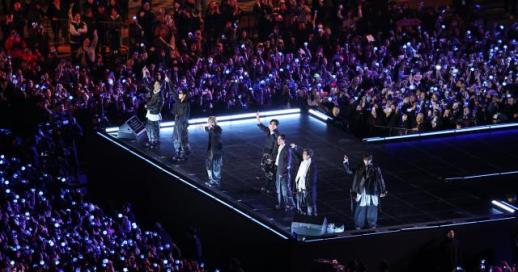 BTS comeback and legacy SEOUL, March 22 (AJP) - On the night of March 21, Gwanghwamun Plaza became a festival ground for the world. 'BTS THE COMEBACK LIVE: ARIRANG,' BTS members' first full-group stage in 3 years and 9 months since their military discharge, concluded with long preparation and a spectacular finale. That day, Gwanghwamun was not simply a concert venue. It was a place of harmony, a moment when the world became one. A plaza where the world gathered Those filling the plaza were not only Koreans. Fans flew in from Japan, America, Europe, South America, and Southeast Asia, gathering in one place. English, Japanese, Chinese, Spanish, Thai. Different languages mixed, but everyone communicated in one language. The language of music. Even foreigners became friends with each other. They took photos with light sticks together. Shared gifts. Their faces were full of smiles. Police and volunteers in yellow vests were armed with foreign languages. They guided in English, Japanese, and Chinese. But many foreigners had studied Korean. Instead of "Where go?" they asked "Where should I go?" Some had practiced "Thank you." Awkward Korean met awkward English, creating amusing scenes. Everyone smiled and communicated. A festival that began while waiting in line The festival began even while lining up to enter the venue. People yielded to each other. Those who came first held their places, those who came later stood behind. There was no cutting in line. Instead, there was laughter. Even waiting was enjoyable. A plaza that became one When the performance started, the plaza became completely unified. Tens of thousands of purple light sticks swayed together. When songs played, everyone sang along. Fans who didn't know Korean had memorized the lyrics. Pronunciation didn't matter. Singing together was enough. When someone fell, people around helped them up. In front of shorter people, others naturally lowered their posture. While enjoying the performance, they considered each other. Lingering echoes Even as people left after the performance, the festival continued. No pushing. No rushing. Moving slowly, in order, exchanging greetings like "Good job," "It was fun." Fans naturally picked up what had fallen on the ground. Those who enjoyed the festival took responsibility for its ending. The real stage was the entire plaza BTS sang on stage. But the real stage was the entire plaza. The harmony, consideration, and joy ARMYs showed. That was the real performance. The next day, March 22, Gwanghwamun Plaza returned to daily life. But those passing through know. The day before, something special happened here. People from around the world gathered in one place to enjoy music, respect each other, and laugh together. Different languages, different skin colors, different ages—all were one. What happened at Gwanghwamun Plaza wasn't simply a concert. It was a global festival. A moment of harmony. A miracle created by music. Where the purple wave passed, warmth remained. And in everyone's memory, this day will last long. A global festival unfolded at Gwanghwamun. That night, Seoul was the center of the world. 2026-03-22 20:48:54
 -
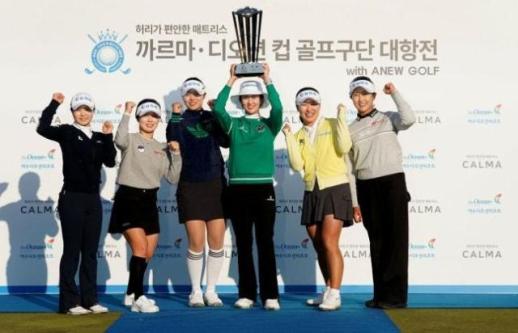 Samchully wins Karma-Diocean Cup KLPGA club team championship Samchully Golf Team captured the title at the Korea Ladies Professional Golf Association club team championship. Samchully posted a combined 11-under 61 in the third and final round of the Karma-Diocean Cup Golf Club Team Championship with ANEW GOLF on March 22 at The Ocean Country Club (par 72) in Yeosu, South Jeolla Province. With a tournament total of 19-under 197, Samchully beat the Korea Golf Association women’s national team (17-under 199) by two strokes to lift the trophy. The winner’s prize was 50 million won. Launched in 2022, the event marked its fifth edition this year and is the country’s only KLPGA club team competition. Ten teams competed, including inaugural champion Mediheal, Samchully, SBI Savings Bank, Daebo Construction, Karma, Daebang Construction, Daesun Distilling, Amano Korea, Rejuran Golf Team and the KGA women’s national team. The first and second rounds were played in foursomes, with two players alternating shots with one ball. The final round used a scramble format, with teammates choosing the better-positioned ball for the next shot. Samchully’s roster includes 11 KLPGA Tour players: Ko Ji-won, Ko Ji-woo, Ma Da-som, Park Bo-gyeom, Lee Jae-yoon, Lee Se-hee, Seo Gyo-rim, Jeon Ye-seong, Kim Min-ju, Hong Jin-young and Choi Ga-bin. Jeon and Seo played the final round, making a birdie at the par-3 12th and then cutting two more strokes over the next six holes to secure the team’s first title in the event. The KGA team of Kim Gyu-min and Yang Yun-seo briefly closed within one stroke in the final round but finished second. SBI Savings Bank, represented by Kim Ga-hee and Kim Ji-yoon, took third at 13-under 203.* This article has been translated by AI. 2026-03-22 19:33:00
 -
 Culture minister credits public, fans for safe BTS Gwanghwamun concert Culture, Sports and Tourism Minister Choi Hwi-young thanked the public and fans after BTS’ comeback concert at Seoul’s Gwanghwamun Square ended without any safety incidents. In a social media post on March 22, Choi said the group’s “Arirang” performance at Gwanghwamun “ended safely without a single safety accident,” crediting “the mature civic awareness of our people” and the cooperation of the global BTS fan base, known as ARMY. Choi also praised BTS, which returned as a full group after three years and five months. He said the group’s vocals and dynamic choreography, performed before a crowd that turned the square purple, drew admiration from fans. He added that the concert was livestreamed to viewers in more than 190 countries and thanked residents who tolerated inconvenience, along with volunteers, public officials and others who worked to keep the site safe. Choi pledged continued government support for Korean pop culture, saying the government would do its best to help K-culture spread “faster and more widely” worldwide. Organizers estimated 104,000 people attended the March 21 “BTS THE COMEBACK LIVE|ARIRANG” concert, while Seoul’s real-time city data put the crowd at 42,000. After finishing domestic schedules, BTS is set to begin overseas activities starting March 23 with a Spotify stage in New York, including an appearance on “The Tonight Show Starring Jimmy Fallon.” The group is also scheduled to launch its new “Arirang” world tour on April 9 at Goyang Stadium.* This article has been translated by AI. 2026-03-22 17:54:00
 -
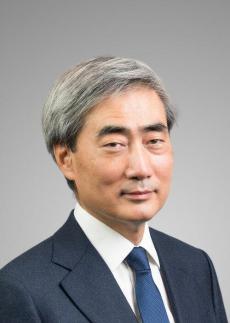 Shin nomination signals BOK shift toward financial stability, external shock shield SEOUL, March 22 (AJP) - President Lee Jae Myung on Sunday nominated Shin Hyun-song, economic adviser and head of the Monetary and Economic Department at the Bank for International Settlements (BIS), as the next governor of the Bank of Korea, tasked with navigating monetary policy amid the economic fallout from the Gulf war crisis. The presidential office said Shin’s combination of academic depth and policy experience makes him well suited to manage rising uncertainty linked to geopolitical tensions and inflation risks, while balancing price stability and growth. Shin, a former Princeton University professor and senior adviser to former conservative President Lee Myung-bak in 2010, has spent the past decade at the Bank for International Settlements, where his work has centered on global liquidity, financial cycles and systemic risk. Shin’s research indicates a policy approach that places financial stability at the core of monetary decision-making. In “Global Banking Glut and Loan Risk Premium” (IMF Working Paper, 2011), Shin argues that financial conditions are driven by the balance sheet expansion of global banks and leverage cycles, rather than policy rates alone. In a related line of work, “Global Liquidity and Procyclicality” (BIS/NBER), he elaborates that credit supply expands and contracts with global banking conditions, amplifying boom-bust cycles across economies. These findings suggest that central banks need to monitor credit growth, leverage and asset prices alongside inflation. His arguments point to the need for close attention to household debt management and macroprudential policy tools. A central theme in Shin’s work is the dominant role of the U.S. dollar in the global financial system. In BIS Quarterly Review articles, including “The Dollar, Bank Leverage and the Deviation from Covered Interest Parity” (BIS, 2018), Shin documents how dollar-denominated credit outside the United States exposes borrowers to funding risks when the dollar strengthens. His research shows that tighter global dollar liquidity can lead to capital outflows, currency depreciation and tighter financial conditions, regardless of domestic policy settings. Shin’s appointment comes as the won is at its weakest level against the U.S. dollar since the global financial crisis, ending last week at around 1,500 per dollar. Shin has also emphasized that inflation dynamics are increasingly influenced by external forces. In a BIS speech, “Inflation: Drivers and Dynamics” (2022), he highlights the role of commodity prices, exchange rates and global financial conditions in shaping inflation, especially in open economies. This suggests that monetary policy decisions will need to account for imported inflation and exchange rate pass-through, particularly as oil prices and energy supply disruptions weigh on import-dependent Korea. Under his watch, the Bank of Korea may prioritize financial stability and systemic risk monitoring, global liquidity and capital flow conditions, and exercise caution on rate cuts amid U.S. dollar strength. Following a parliamentary confirmation hearing, Shin is expected to succeed current Bank of Korea Governor Rhee Chang-yong, whose four-year term ends on April 20. 2026-03-22 17:27:40
 -
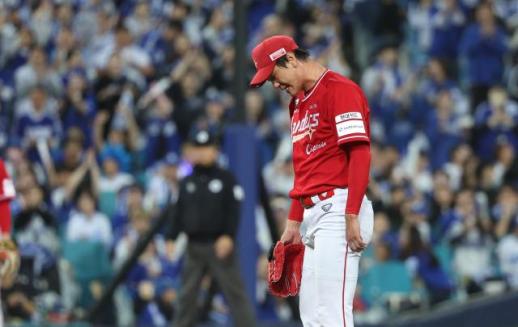 SSG’s Kim Gwang-hyeon to Have Shoulder Surgery; Rehab Expected to Take 6+ Months SSG Landers left-hander Kim Gwang-hyeon will undergo shoulder surgery. SSG said March 22 that Kim was diagnosed with a bone spur in the back of his left shoulder and will have surgery at a hospital in Nagoya, Japan, later this month. The club said rehabilitation is expected to take more than six months and that it will fully support Kim so he can focus on recovery. In a post on social media, Kim said he decided on surgery after “a lot of 고민.” He wrote that he understands shoulder surgery can be “devastating” for a baseball player, but said he hopes it will allow him to return healthier and stay on the mound “even one year longer.” He apologized to fans and teammates for being sidelined by injury. Kim felt shoulder pain during training at SSG’s spring camp in the United States on Feb. 15 and returned to South Korea. Tests found a bone spur in the back of his left shoulder, a condition in which repeated pitching causes bone to grow and irritate surrounding areas. To avoid surgery, Kim began a customized rehabilitation program in Japan on March 9, but it was ultimately determined that rehab alone would not resolve the injury. The surgery poses a major threat to Kim’s career, as shoulder operations are considered especially risky for pitchers. Given that Kim was born in 1988, there are concerns his recovery could be slow and that he could miss the entire season. Kim, who debuted in 2007, has a 180-108 record with two holds and a 3.43 ERA in 415 KBO League games. He has pitched 2,321 2/3 innings with 2,020 strikeouts and ranks third on the league’s career wins list.* This article has been translated by AI. 2026-03-22 17:12:00
 -
 IVE’s ‘HEYA’ Music Video Tops 100 Million YouTube Views; Three Hits Pass 300 Million IVE has earned its sixth music video to surpass 100 million views on YouTube with “HEYA.” Starship Entertainment said the music video for “HEYA,” the title track from IVE’s second EP, “IVE SWITCH,” topped 100 million views on Friday. The milestone gives the group six music videos with more than 100 million views. Since its debut with “ELEVEN,” IVE has continued to post blockbuster view counts through “HEYA,” reinforcing its popularity. “LOVE DIVE,” “After LIKE” and “I AM” have each exceeded 300 million views, showing sustained interest over time. Released April 29, 2024, “HEYA” pairs narrative lyrics inspired by folklore with a powerful hip-hop sound. The song ranked high on major domestic streaming charts after its release and also gained traction on iTunes’ Top Song chart, the agency said. The “HEYA” music video passed 10 million views within 19 hours of release and reached No. 1 on YouTube’s worldwide music video trending list. The track also placed in the upper ranks of the “2024 Melon Year-End Chart” Top 100, indicating long-running performance. IVE held its fourth fan concert, “DIVE INTO IVE,” on Friday at Inspire Arena in Incheon and is set to meet fans again at a 4 p.m. show Saturday. The performance will be livestreamed on Beyond LIVE.* This article has been translated by AI. 2026-03-22 15:51:37