

Journalist

CGTN
-
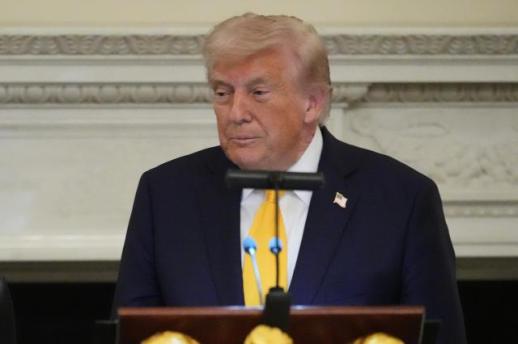 Korea stays out of joint statement by US allies condemning Iran SEOUL, March 20 (AJP) - South Korea signaled strategic caution by staying out of a joint statement by key U.S. allies, condemning Iran over its effective closure of the Strait of Hormuz while stopping short of committing to the U.S. call for naval support in the region. warships to the crippled waterway. A foreign ministry official said Friday that Seoul is “well aware of the situation” regarding the joint statement by the United Kingdom, France, Germany, Italy, the Netherlands, Japan, and Canada condemning Iran, adding that the government “plans to review the matter while taking various factors into consideration.” The statement was initially issued by six countries. Canada joined later. “We condemn in the strongest terms recent attacks by Iran on unarmed commercial vessels in the Gulf, attacks on civilian infrastructure including oil and gas installations, and the de facto closure of the Strait of Hormuz by Iranian forces,” the seven countries said in the statement. They warned that such disruptions to international shipping and the global energy supply chain pose “a threat to international peace and security,” and urged Iran to immediately cease attacks on civilian infrastructure, including oil and gas facilities. The statement also called for an end to attacks on commercial vessels, as well as the laying of mines and the use of drones and missiles. In addition, the countries expressed readiness to “contribute to appropriate efforts to ensure safe passage through the Strait,” while saying they would welcome participation from other countries. The Strait of Hormuz, through which roughly 20 percent of global oil shipments pass, is a critical maritime chokepoint. Tensions have surged as Iran, currently in conflict with the United States and Israel, moves to restrict traffic in the area, raising concerns over a global energy crisis. The joint statement is widely seen as an effort to ease tensions with U.S. President Donald Trump, who has reportedly voiced frustration over allies’ reluctance to deploy naval assets. Notably, however, the statement did not include any commitments related to military support, such as dispatching warships. Foreign Minister Cho Hyun also declined to disclose details of diplomatic communications, saying “it is difficult to reveal the contents of discussions conducted through diplomatic channels.” Speaking at a parliamentary session on Tuesday, he gave an ambiguous response when asked whether the United States had formally requested the deployment of naval forces. “It could be seen as a request, or not,” Cho said. He said the government would prioritize national interests and the safety of its citizens. However, as other U.S. allies move swiftly to align with Washington, questions remain over how long South Korea can maintain this cautious posture. The pressure comes after Trump said on Truth Social on March 14 that he would ask five countries to send warships to the region to keep the Strait of Hormuz “open, safe and free,” before later expanding the request to include two more. 2026-03-20 15:09:16
 -
 BTS Live D-1 : Gwanghwamun choice hinged on true identity of BTS - Korean: organizers SEOUL, March 20 (AJP) -Delving into BTS’ identity was the starting point of the comeback project, and that process ultimately led to “Koreanness” and, in turn, to the iconic setting of Gwanghwamun, organizers said Friday. “‘Why Gwanghwamun?’ was the question we heard most,” said Yoo Dong-joo, president of HYBE Music Group APAC, during a media briefing. Yoo said the historical resonance of Gwanghwamun was central to the thematic arc of “ARIRANG.” “If their journey began in Korea, then their return should also begin from a place that symbolizes that origin,” he said. The album, he explained, is meant to reinforce the bond between the artists and the land that shaped them. The official music video for SWIM, the lead single from the fifth full-length album by the musical group BTS, amassed more than four million views on YouTube within thirty minutes of its 1:00 p.m. (0400 GMT) release today. By anchoring the “ARIRANG” project at the symbolic heart of the republic, BTS ties its return to a site long associated with Korean history and public expression. The choice elevates what might otherwise have been a commercial broadcast into something closer to a civic homecoming. Gwanghwamun is inseparable from the legacy of the candlelight protests and has long served as a gathering place where the public asserts its collective voice. For organizers, the square was the only venue capable of sustaining what they described as a distinctly BTS narrative — one rooted in Korean identity even after years of individual global activity. The collaboration with Netflix, meanwhile, provides the technological bridge to carry that localized message to a global audience. Brandon Riegg, a Netflix vice president, said he was excited about the platform’s first-ever livestreamed concert reaching viewers in more than 190 countries, while also acknowledging the challenge of satisfying both fans on site and audiences watching around the world. The event will mark Netflix’s first live music performance and the first live event to be broadcast from South Korea to a global audience on the platform. Production will be led by director Hamish Hamilton, whose credits include the Emmy, Grammy and Oscar ceremonies, the Super Bowl halftime show, the opening ceremony of the 2012 London Olympics, and performances by Madonna, Beyoncé and Rihanna. Authorities expect an audience of 260,000 people to occupy the central district. Security personnel have been tasked with securing a perimeter that encompasses both the modern square and Gyeongbokgung Palace. The lead track, "SWIM," will serve as the centerpiece of a performance merging traditional aesthetics with pop production. Saturday’s free concert is projected to be the largest live music event in the history of the streaming platform. Executive producer Garrett English noted that the technical team is focused on maintaining intimacy despite the massive physical scale. The arrangement is designed to capture the interaction between the seven members and the civic gathering in real time. BigHit Music Vice President Kim Hyun-jung stated that the project resonates with a cross-generational demographic. The performance is scheduled to begin at 8 p.m. local time and will be available in over 190 countries. The city has implemented traffic restrictions to accommodate the influx of fans and international media. This event marks the first collective activity for the members in three years and nine months. The live broadcast will be archived on the streaming platform following its conclusion. 2026-03-20 15:04:41
 -
 BTS’ Jimin and V Share Message Ahead of Gwanghwamun Comeback Concert BTS members Jimin and V shared their thoughts with fans ahead of a concert set for Seoul’s Gwanghwamun area. V wrote on the global fan platform Weverse on the 20th that he was nervous because it had been a while since he performed on stage, but said he was preparing to show what the group had worked on. “Our biggest wish is that the show ends safely without anyone getting hurt,” he wrote. “On the day of the concert, please enjoy it with a relaxed mindset and an atmosphere where we look out for each other. I think that will make it an even more beautiful day.” He added, “Thank you for always supporting us. I love you. I missed you a lot, too. See you tomorrow!” Jimin also posted a message to fans the same day. “Finally today — I don’t know how long I’ve been waiting for this day,” he wrote. “So I’m excited, but also anxious. Thank you. See you in a bit. ARMY, I love you.” Earlier, BTS released its fifth full-length album, “ARIRANG,” at 1 p.m. on the 20th. A comeback group live broadcast, “STUDIO NOTES ARIRANG,” is scheduled for 2 p.m. the same day on the group’s Weverse team channel. A concert titled “BTS Comeback Live ARIRANG” is set for 8 p.m. on the 21st in the Gwanghwamun Square area. “ARIRANG,” BTS’ first new album in three years and nine months, is reported to include 14 tracks, including the title song “SWIM.”* This article has been translated by AI. 2026-03-20 14:42:51
 -
 BTS Leader RM Injures Ankle in Rehearsal, Will Limit Movement at Comeback Show BTS leader RM has suffered an ankle injury. BigHit Music said March 20 that RM was hurt during a concert rehearsal on March 19 and was taken to a hospital for tests and treatment. The company said he was diagnosed with an accessory navicular sprain with a partial ligament tear and a talus contusion — a ligament injury and inflammation — and was placed in a leg cast. Medical staff advised him to minimize movement for at least two weeks and focus on recovery. "We made the difficult decision together with the artist to minimize RM's movement at the comeback show, prioritizing medical advice and preventing the injury from worsening," the company said. It added that some of his onstage performance, including choreography, will be limited. BTS is scheduled to hold a free return concert, "BTS THE COMEBACK LIVE | ARIRANG," at Gwanghwamun Square at 8 p.m. on March 21.* This article has been translated by AI. 2026-03-20 14:42:16
 -
 BTS Returns With Fifth Studio Album 'ARIRANG,' Releases 'SWIM' Music Video BTS returned with its fifth full-length album, “ARIRANG.” The group released the album at 1 p.m. on the 20th and unveiled the music video for its title track, “SWIM.” Shot against the open sea off Lisbon, Portugal, the video moves between a real large ship and detailed sets, emphasizing scale and visuals. The video opens on a massive vessel crossing an endless ocean. A woman is shown shaken and discouraged as she endures a difficult period. BTS appears as helpers guiding the ship — taking the helm, raising the anchor and scanning the route ahead. The seven members stay by her side in their own ways, offering quiet support. She eventually breaks a necklace that had felt like a restraint and smiles, conveying anticipation, tension and the moment of taking on a new challenge. Hollywood actor Lili Reinhart appears in the video, adding a restrained emotional arc. Director Tanu Muino led the production, creating a film-like mise-en-scène. In comments released through BigHit Music, the members said viewers can see a subtly more mature BTS. They also asked fans to watch it as they would a movie because it has a storyline. The group shared a weather-related anecdote, saying there was not a single day of good weather during filming and that a rain-soaked scene turned out beautifully. “ARIRANG” is described as an album that captures BTS’ identity and universal emotions many people can relate to. Bang Si-hyuk, the label’s chairman, oversaw overall production. The title track, “SWIM,” is an alternative pop song about pressing forward through life’s waves, framing the resolve to keep swimming at one’s own pace as a form of love for life. BTS will hold “BTS Comeback Live: ARIRANG” at 8 p.m. on the 21st around Gwanghwamun Square in Seoul, where it plans to perform new songs including the title track. On the 23rd (local time), the group will team up with global audio and music streaming platform Spotify for a “Spotify X BTS: SWIMSIDE” event in New York. It will then appear on NBC’s “The Tonight Show Starring Jimmy Fallon” on the 25th and 26th.* This article has been translated by AI. 2026-03-20 14:12:20
 -
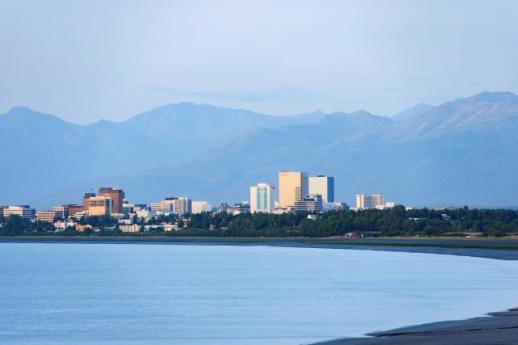 US pitches Alaska to South Korea and Japan as Gulf substitute for energy import SEOUL, March 20 (AJP) -While pressuring allies to help reopen the Strait of Hormuz, Washington is also selling them an alternative — Alaska. The pitch is becoming increasingly explicit: if South Korea and Japan are unwilling or unable to shoulder more of the military burden in the Gulf, they can instead buy into a U.S.-controlled energy system that bypasses it. That strategy gained a timely boost on Wednesday, when the United States showcased investor appetite for its Arctic resources. A federal oil and gas lease sale in the National Petroleum Reserve–Alaska (NPR-A) drew a record $163.7 million in bids, with 11 companies competing for more than 1.3 million acres. Major bidders included ConocoPhillips, ExxonMobil and a joint effort involving Repsol and Shell. The result — the strongest in the reserve’s history — is already being framed by U.S. officials as proof that Alaska can anchor a new energy order. “This is the strongest sale we have ever had,” said Kevin Pendergast of the Bureau of Land Management, while Interior Secretary Doug Burgum called it central to “America’s energy security.” But the timing also raises a more pointed question: whether Washington is leveraging a geopolitical crisis to accelerate a commercial realignment in its favor. A meeting between U.S. President Donald Trump and Japanese Prime Minister Sanae Takaichi on Thursday, expected to reinforce alliance coordination, instead turned strained. Trump openly pressed Japan to do more in securing Gulf shipping routes, while mocking references to Pearl Harbor underscored the asymmetry in expectations. Japan, constrained by its pacifist constitution and still nearly 90 percent dependent on Middle Eastern energy, is responding less with warships than with checkbooks. Tokyo is finalizing investments in Alaska oil, U.S. natural gas and small modular reactors as part of a broader $550 billion package pledged last year. An initial $36 billion tranche is already in motion. South Korea is likely to face a similar proposition. Seoul has pledged up to $350 billion in U.S. investments, with $150 billion set aside for shipbuilding, and energy is emerging as a central channel through which that capital can be directed. In that context, Alaska begins to look less like an option and more like a curated solution. South Korean firms have already been on the move. POSCO International has taken a stake in Glenfarne Alaska Partners, the lead developer of a $44 billion LNG project designed to ship gas directly across the Pacific. If completed, it would lock in long-term supply relationships centered on U.S. infrastructure. Nearly all of South Korea’s and Japan’s energy imports pass through the Strait of Hormuz, a chokepoint now exposed to prolonged disruption. The recent shock has already pushed currencies and markets toward crisis territory. Alaska, by contrast, offers a route that is politically aligned, geographically direct and — crucially — under U.S. control. “Energy security isn’t just about price. It’s about reliability,” Alaska Governor Mike Dunleavy wrote, framing the state as a supplier “from one stable democracy to another.” By steering allies toward U.S.-based supply, Washington is effectively internalizing parts of their energy security — converting geopolitical risk into investment inflows and long-term commercial ties. For Japan, this aligns with its traditional model of securing stable procurement. For South Korea, whose firms are deeply embedded in trading, infrastructure and industrial ecosystems, the implications are broader. Participation in projects like Alaska LNG is not just about supply — it is about being integrated into a U.S.-led energy architecture. That creates both opportunity and constraint. “In practice, that could mean competition as well as cooperation,” said Marc Muendler of UC San Diego, noting that U.S. policy is likely to favor allied capital — on its own terms. Investment in U.S. oil, gas and critical minerals is increasingly tied to trade discussions, tariff relief and broader supply-chain alignment. A parallel U.S.-Japan initiative on rare earths and lithium is expected, with South Korea likely to be drawn in. What emerges is a pattern: allies are being asked not only to share security burdens, but to reallocate capital into U.S. strategic sectors. Washington’s message is no longer limited to securing sea lanes. It is also selling an alternative system — one that reduces exposure to Middle Eastern risk while deepening reliance on U.S. energy. 2026-03-20 14:10:39
 -
 T.O.P to Return With First Full-Length Solo Album, “Another Dimension” Singer T.O.P is returning with a solo album. TOPSPOT PICTURES said on the 20th that T.O.P will release his first full-length album, ‘Multi-Perspective (ANOTHER DIMENSION),’ on April 3 through major online music platforms. Along with the announcement, T.O.P has been rolling out teaser videos on his official social media channels highlighting the new release’s mood. The first teaser, ‘I’m Totally Crazy! (Studio54),’ used distinctive typography and sound to signal the start of his comeback. A second teaser, ‘DESPERADO,’ set in a film-like scene, spotlighted T.O.P’s signature presence and raised anticipation for a musical shift on the album. The album is T.O.P’s first full-length project as a solo artist. The agency said he led overall production and prepared the record over a long period. ‘Multi-Perspective’ will be released at 6 p.m. on April 3, and preorders begin at 3 p.m. on the 20th through online album retailers.* This article has been translated by AI. 2026-03-20 14:09:17
 -
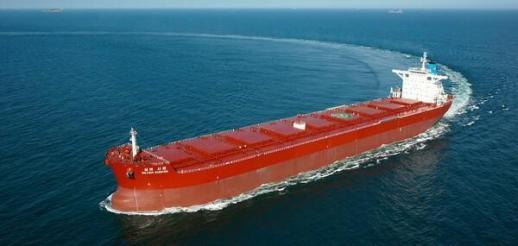 Janggeum Maritime to Hand Over 50% Stake to MSC, Reshaping VLCC Tanker Market Janggeum Maritime is moving to set up a joint management structure with MSC, the world’s largest shipping company. According to the shipping industry on the 20th, Janggeum Maritime recently signed a preliminary investment agreement to transfer more than 50% of its stake to MSC and begin joint management. Under the structure, MSC and Janggeum Shipping will each hold 50%, and the two sides will jointly run the company. Led by Vice Chairman Jeong Ga-hyeon, the son of Janggeum Shipping Chairman Jeong Tae-soon, Janggeum Maritime is a key affiliate responsible for the group’s tanker business. It has rapidly expanded its presence in the VLCC market through aggressive vessel purchases. The industry estimates Janggeum Shipping owns one out of every four VLCCs worldwide, and some analyses say it operates about 40% of the world’s VLCCs that are available for service. MSC’s move is widely seen as a strategic push to expand beyond its container-focused business into crude oil transport. MSC ranks No. 1 in the container ship market with about a 21% share by capacity. Industry officials said the transaction could go beyond a simple equity investment. With the top container carrier moving more directly into tankers, they expect shifts in freight-rate bargaining power and supply coordination in the VLCC market. The deal still requires approvals from regulators in multiple countries. Authorities in Greece and Cyprus have begun reviews, and the transaction must also clear competition scrutiny in major jurisdictions, including South Korea. Whether the deal could raise monopoly concerns as market power grows is expected to be a central issue.* This article has been translated by AI. 2026-03-20 14:03:10
 -
 New Look at Kim Si-seup, Early Korean Travel Writer Linked to King Danjong □ A book to read alongside the film ‘The Man Who Lives With the King’ The film ‘The Man Who Lives With the King’ is drawing strong interest, and many viewers have been moved by the death of the ill-fated King Danjong. Not shown in the movie, however, Kim Si-seup (pen name Maewoldang) is a key figure in the Danjong story. Kim’s decision to set out on wide-ranging travels, described as “tangyu,” grew out of anger over Grand Prince Suyang’s seizure of the throne. According to Yi Geung-ik’s , Kim collected the bodies of five of the Six Martyred Ministers — including Seong Sam-mun and Bak Paeng-nyeon — buried them at Noryangjin and marked the graves with small stones. Kim also held a “chohonje,” a rite to summon Danjong’s spirit, at Donghaksa temple in Gongju, South Chungcheong Province. The article also recounts an episode involving Han Myeong-hoe. After seeing Han’s writing at a pavilion at Apgujeong — “靑春扶社稷(young, he supports the state) 白首臥江湖(old, he rests by rivers and lakes)” — Kim rewrote it as “靑春危社稷(young, he endangers the state) 白首汚江湖(old, he sullies rivers and lakes).” The book introduced here traces Kim’s life from birth to death in chronological, accessible prose. On-site photographs throughout aim to bring him closer to readers as a vivid, present figure. Kim is described as a prodigy who wrote classical Chinese poetry at age 3 and read the Confucian classics from age 5. The book says his early promise was blunted by personal loss — the deaths of his mother, maternal grandmother and King Sejong in succession. His father took a stepmother, and the word “father” does not appear even once in Kim’s writings, the book says. The coup known as the Gyeyu Jeongnan, in which Suyang seized the throne, pushed Kim’s life in a direction opposite what those around him expected. Studying at Jungheungsa temple on Bukhansan, Kim heard the news and burned all the books he had. After three days in seclusion with his door locked, he chose “tangyu” — traveling across Joseon to see the land firsthand and feel the hardships of ordinary people. The book follows where he went, what he saw and thought, and what he wrote. It says he ultimately relied on Buddhist temples and died at Muryangsa temple in Buyeo, South Chungcheong Province. □ Recasting Kim as Korea’s first travel writer and first novelist The book also seeks to reposition Kim as Korea’s first travel writer and first novelist. He is widely known as a figure of principle, but his role as the author of , described here as Korea’s first novel, is less recognized. The five stories in are all set in Korea, with characters and settings tied to historical events such as the Red Turban Rebellion and Japanese pirate raids, the book says. It also notes the work’s imaginative use of folk motifs — ghosts, an undersea dragon palace, the king of the underworld and a wager with the Buddha. The book says Kim was also the first to travel widely across the country, from Sinuiju in the far north to the southern coast, a feat requiring unusual resolve in the early Joseon period. As he traveled, he recorded cultural heritage in verse, and his journeys became a creative process of empathizing with people’s lives and documenting historical sites. It adds that much of his life on the road took place in his 20s and 30s. □ Temples, shrines, stone steles and portraits: Tracking Kim’s traces nationwide The book’s other feature is its detailed mapping of sites linked to Kim across the country. It records, and shows in current photographs, where to find Muryangsa in Buyeo, which has a stupa said to hold his relics; 13 shrines housing his spirit tablet; 11 stone monuments engraved with his poems; and six locations with portraits of him. The author says such detail was possible through field visits, and the material is aimed at readers who want to follow Kim’s footsteps. So Jong-seop was born in 1966 at Muryangsa temple in Buyeo, South Chungcheong Province. He served as editor-in-chief at Sisa Journal and at Asia Economy. He is currently political desk chief at Asia Economy and hosts the YouTube channel ‘So Jong-seop’s Current Affairs Show.’ In 2011, he founded the Maewoldang Kim Si-seup Memorial Association and serves as its president, and he has led 60 ‘Kim Si-seup field trips’ to date. He also runs the YouTube channel ‘So Jong-seop’s Common Sense School.’ He has written several books, including , , and . * This article has been translated by AI. 2026-03-20 13:58:38
 -
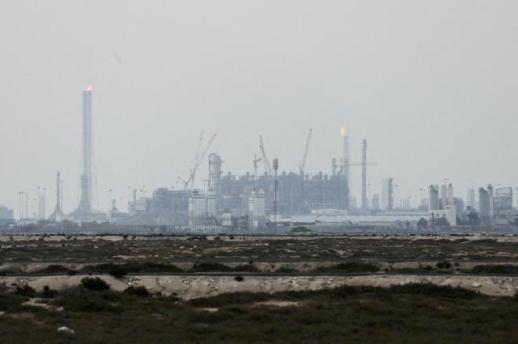 Seoul readies contingency as Qatar LNG force majeure looms SEOUL, March 20 (AJP) - South Korea has prepared a contingency plan for a worst-case scenario in which liquefied natural gas (LNG) imports from Qatar are completely halted as missile strikes on the Gulf state’s key energy infrastructure raise the risk of prolonged supply disruption, according to government officials in Seoul Friday. The move underscores how the escalating Iran war is beginning to hit global energy supply chains directly, with retaliatory attacks now extending beyond oil routes into core LNG production facilities. According to government officials, the contingency plan — drawn up shortly after the outbreak of hostilities — assumes a “zero-import” scenario for Qatari LNG and outlines response measures including stockpile management and alternative sourcing. “We have already secured sufficient volumes to last through the end of this year,” a senior official at the Ministry of Trade, Industry and Energy said. “Even if imports from Qatar fall to zero, there will be no immediate issue in managing domestic supply.” Concerns intensified after Iran launched missile strikes on Qatar’s Ras Laffan industrial complex, the world’s largest LNG export hub, in retaliation for an Israeli attack on Iran’s South Pars gas field earlier this week. QatarEnergy said the strikes damaged facilities accounting for about 17 percent of its LNG export capacity and warned that repairs could take three to five years. The company’s chief executive also signaled the possibility of declaring force majeure on long-term supply contracts for up to five years, potentially affecting key buyers including South Korea. The prospect has rattled global markets, though industry officials in Seoul said a full-scale, long-term force majeure declaration remains unlikely given the massive financial losses it would entail. South Korea imported 6.97 million tons of LNG from Qatar last year, accounting for 14.9 percent of total imports, making it the third-largest supplier after Australia and Malaysia. Dependence on Qatari LNG has been declining as Seoul diversifies its import portfolio. That trend is expected to accelerate. A 2.1 million-ton long-term contract with Qatar is set to expire at the end of this year, reducing the country’s reliance on Qatari LNG to around 8 percent from next year. Officials said the government is pursuing a two-track strategy — securing short-term spot cargoes while identifying medium-term replacement contracts — to prepare for prolonged disruptions of up to five years. South Korea’s LNG system remains heavily centralized, with Korea Gas Corp. importing about 75 percent of total volumes, allowing for coordinated supply management. Strategic reserves, officially set at around nine days of mandatory stockpiles, are currently above required levels. Industry officials said that even if shipments from Qatar are delayed, adjustments can be made within annual delivery plans. The more immediate concern lies in prices. Qatar accounts for roughly one-fifth of global LNG exports, and any sustained disruption could shift the market balance sharply in favor of suppliers, reversing expectations of a looser supply environment in the coming years. The broader energy shock is already building. Oil prices have surged following attacks on Gulf infrastructure, with some projections suggesting crude could climb as high as $150 to $180 per barrel if disruptions persist into April. Such a scenario would likely spill over into LNG markets, increasing power generation costs and putting upward pressure on household gas and electricity prices in South Korea. 2026-03-20 13:57:05