

The pitch is becoming increasingly explicit: if South Korea and Japan are unwilling or unable to shoulder more of the military burden in the Gulf, they can instead buy into a U.S.-controlled energy system that bypasses it.
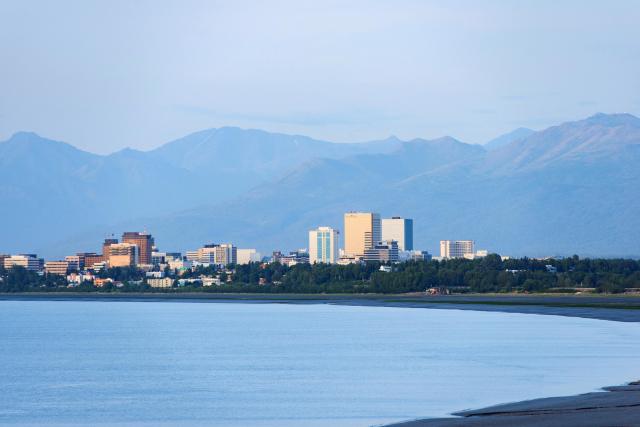
That strategy gained a timely boost on Wednesday, when the United States showcased investor appetite for its Arctic resources. A federal oil and gas lease sale in the National Petroleum Reserve–Alaska (NPR-A) drew a record $163.7 million in bids, with 11 companies competing for more than 1.3 million acres. Major bidders included ConocoPhillips, ExxonMobil and a joint effort involving Repsol and Shell.
The result — the strongest in the reserve’s history — is already being framed by U.S. officials as proof that Alaska can anchor a new energy order.
“This is the strongest sale we have ever had,” said Kevin Pendergast of the Bureau of Land Management, while Interior Secretary Doug Burgum called it central to “America’s energy security.”
But the timing also raises a more pointed question: whether Washington is leveraging a geopolitical crisis to accelerate a commercial realignment in its favor.
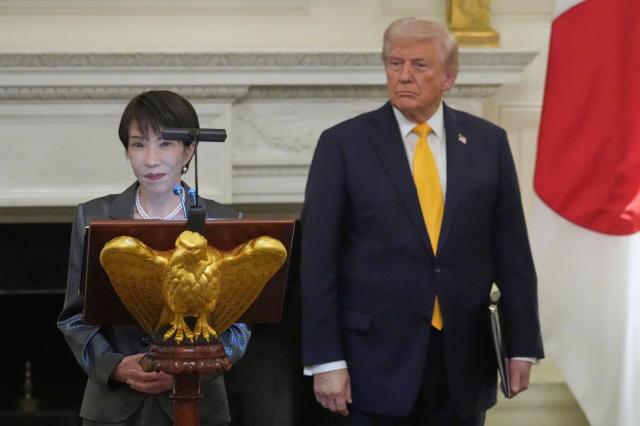
Japan, constrained by its pacifist constitution and still nearly 90 percent dependent on Middle Eastern energy, is responding less with warships than with checkbooks.
Tokyo is finalizing investments in Alaska oil, U.S. natural gas and small modular reactors as part of a broader $550 billion package pledged last year. An initial $36 billion tranche is already in motion.
South Korea is likely to face a similar proposition. Seoul has pledged up to $350 billion in U.S. investments, with $150 billion set aside for shipbuilding, and energy is emerging as a central channel through which that capital can be directed.
In that context, Alaska begins to look less like an option and more like a curated solution.
South Korean firms have already been on the move. POSCO International has taken a stake in Glenfarne Alaska Partners, the lead developer of a $44 billion LNG project designed to ship gas directly across the Pacific. If completed, it would lock in long-term supply relationships centered on U.S. infrastructure.
Nearly all of South Korea’s and Japan’s energy imports pass through the Strait of Hormuz, a chokepoint now exposed to prolonged disruption. The recent shock has already pushed currencies and markets toward crisis territory.
Alaska, by contrast, offers a route that is politically aligned, geographically direct and — crucially — under U.S. control.
“Energy security isn’t just about price. It’s about reliability,” Alaska Governor Mike Dunleavy wrote, framing the state as a supplier “from one stable democracy to another.”
By steering allies toward U.S.-based supply, Washington is effectively internalizing parts of their energy security — converting geopolitical risk into investment inflows and long-term commercial ties.
For Japan, this aligns with its traditional model of securing stable procurement. For South Korea, whose firms are deeply embedded in trading, infrastructure and industrial ecosystems, the implications are broader.
Participation in projects like Alaska LNG is not just about supply — it is about being integrated into a U.S.-led energy architecture. That creates both opportunity and constraint.
“In practice, that could mean competition as well as cooperation,” said Marc Muendler of UC San Diego, noting that U.S. policy is likely to favor allied capital — on its own terms.
Investment in U.S. oil, gas and critical minerals is increasingly tied to trade discussions, tariff relief and broader supply-chain alignment. A parallel U.S.-Japan initiative on rare earths and lithium is expected, with South Korea likely to be drawn in.
What emerges is a pattern: allies are being asked not only to share security burdens, but to reallocate capital into U.S. strategic sectors.
Washington’s message is no longer limited to securing sea lanes. It is also selling an alternative system — one that reduces exposure to Middle Eastern risk while deepening reliance on U.S. energy.

Copyright ⓒ Aju Press All rights reserved.
