

Journalist

CGTN
-
 Why South Korea’s Internet Banks Sat Out Bank of Korea’s ‘Project Hangang’ CBDC Test As the Bank of Korea moves ahead with the second phase of its central bank digital currency experiment, known as “Project Hangang,” attention is turning to why South Korea’s internet-only banks are not taking part. Industry officials cite weak profitability, high upfront costs and limited interoperability as key factors that reduced incentives to join. According to the financial sector on Thursday, the country’s three internet banks did not express an intention to participate in the second-phase program. Project Hangang is a test in which the central bank issues a blockchain-based “wholesale digital currency,” and private banks distribute it as a payment instrument called “deposit tokens,” allowing consumers to use them in everyday transactions. Nine banks will participate in the second phase: the seven banks that joined the first phase — KB Kookmin, Shinhan, Woori, Hana, IBK and NH NongHyup, and Busan Bank — plus Kyongnam Bank and iM Bank. Kim Dong-seop, head of the Bank of Korea’s digital currency planning team, said at a briefing the previous day that the central bank did not proceed by selecting some banks and excluding others. He said internet banks likely had “various considerations,” including internal circumstances and priorities. Industry observers say the project’s unclear revenue model, combined with heavy initial infrastructure spending, likely discouraged participation. They argue that while a privately led stablecoin market can create both a risk of losing deposit customers and an opportunity to capture a new market, the central bank’s model does not present banks with a clear profit structure. During the first real-transaction test, conducted for two months starting in April last year, the seven participating commercial banks were reported to have spent nearly 35 billion won on infrastructure such as computer systems and on marketing for the project. Skepticism also remains over user convenience. The central bank says it simplified payment procedures in the first phase by introducing features such as biometric authentication. But internet banks and big tech firms that already offer advanced “face pay” and other streamlined payment services do not see it as a distinct innovation, according to industry assessments. Criticism has also focused on the technical design. The Bank of Korea expects distributed ledger technology, including blockchain, to help prevent misuse of deposit tokens. However, industry officials argue the system is effectively centralized and could paralyze the entire payment network if problems arise at the central bank. Internet banks say they will monitor market reaction to the second test before deciding whether to join later, but many in the industry expect participation is unlikely. One industry official said the first project failed because it lacked interoperability. “If the goal is a digital currency that works globally, linking with dollar stablecoins and the like is important, but the second project also has no interoperability,” the official said. The official added that there are no internationally successful cases of a centralized deposit-token system based on a permissioned blockchain, and said banks have reason to be cautious because the revenue model and operating costs are uncertain and could become a “sinkhole of sunk costs.”* This article has been translated by AI. 2026-03-19 17:03:00
 -
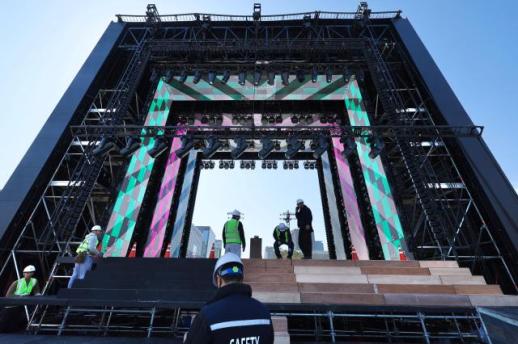 BTS Live D-2 : RM and Jin urge fans safety for landmark Gwanghwamun return SEOUL, March 19 (AJP) - Members of K-pop legend band BTS -- RM and Jin -- shared Thursday their anticipation for a long-awaited comeback while placing public safety at the center of their preparations for a massive performance in South Korea. Writing on the fan platform Weverse, the artists addressed the upcoming March 21 concert at Gwanghwamun Square, which follows the release of their fifth full-length album, "Arirang," on Friday. The messages align with the stringent security directives issued by the government. This event marks the first time the seven-member band has performed together in nearly four years. RM, the group's leader, focused on the necessity of maintaining order to ensure the event remains a positive experience for all attendees. "To our Army! We are also truly excited to meet you all at Gwanghwamun. Since it is a gathering for many people, we ask that everyone ensure they enjoy the performance safely and joyfully," he wrote. The 31-year-old explicitly requested that the audience follow the guidance of the thousands of security personnel stationed throughout central Seoul. "Please follow the instructions of the on-site staff and safety personnel on the day, and we look forward to seeing your orderly behavior," he added. The rapper further noted that the success of the performance depends on the individual conduct of each person in the crowd. "I believe a better performance is completed only when there is order and consideration created by each and every one of you, Army," he shared. RM also expressed appreciation for the government and municipal bodies coordinating the logistics of the square. According to Seoul City, 14,700 police officers and firefighters have been mobilized to manage the influx of people. "I also want to say a sincere thank you to the police officers, as well as those in the fire department, government, and local municipalities, who are working hard for our safety," the artist concluded. Jin reinforced the sentiment of gratitude while acknowledging the honor of performing at such a culturally significant site in South Korea. "Hello, this is Jin. Somehow, only one day remains until our comeback. Thanks to the help and support of many people, we are able to hold our comeback show at Gwanghwamun," the 33-year-old wrote. The vocalist highlighted the collective effort required to organize a show of this magnitude in a public space. He urged those planning to attend to remain vigilant and prioritize their own safety throughout the day. The singer emphasized the group's dedication to the performance while maintaining a focus on the well-being of the public. "It is an honor to be able to greet you all together after a long time in such a meaningful place, and I want to express my deep gratitude to those who helped and everyone who understood," he stated. He closed his remarks by reminding fans of the importance of safety during the live event. "We will also do our best to show you a great stage! For those watching on-site, please be sure to pay attention to safety!" he added. A total of 22,000 people were selected to watch the concert in Gwanghwamun Square on Saturday. However, authorities estimated that some 260,000 people will visit the area to feel and enjoy the vibe of BTS' comeback stage. Currently, the square is locked tight for specialist personnel preparing the stage, lighting and audio systems. To prevent accidents such as stampedes, the authorities have established a stadium-style crowd management system featuring 31 controlled entry points around the square. Mandatory subway bypasses have been scheduled for Gwanghwamun, City Hall, and Gyeongbokgung stations to prevent dangerous overcrowding during the event. Traffic congestion in the surrounding district is expected to reach one hundred percent during peak performance hours. Security operations will remain in effect until the conclusion of the concert on the evening of March 21. 2026-03-19 16:45:39
 -
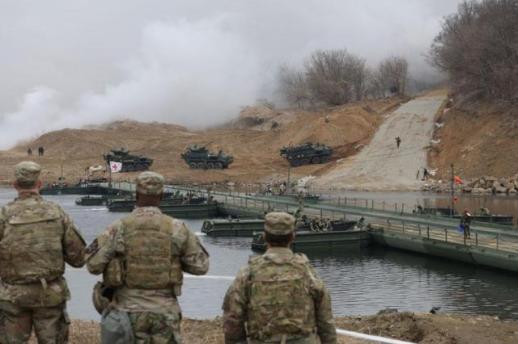 South Korea, US wrap up annual joint military exercise SEOUL, March 19 (AJP) - This year's joint military exercise between South Korea and the United States has concluded, military authorities from both countries said in a joint statement on Thursday. The Joint Chiefs of Staff (JCS) and the U.S. Combined Forces Command (CFC) said the annual exercise dubbed "Freedom Shield" (FS) was conducted under more realistic scenarios simulating full-scale war and other conflicts to prepare for contingencies on the Korean Peninsula "with a focus on maintaining a high level of combined readiness." They also said the exercise which began on March 9 involving about 18,00 troops from both countries served as a key opportunity to assess combat readiness to prepare for the transfer of wartime operational control from Washington to Seoul. During the exercise, USFK publicly showcased for the first time the Indirect Fire Protection Capability (IFPC), a mobile ground-based weapons system often compared to Israel's Iron Dome. The exercise "demonstrates the strength of our alliance and our ability to train, build readiness, and operate seamlessly as one force," said U.S. Forces Korea Commander Gen. Xavier Brunson, who also serves as the commander of the CFC. "No other alliance trains as we do from competition, to crisis, to conflict all with an eye to peace and stability on the Korean Peninsula and in Northeast Asia. There is no substitute for training, there is no excuse for not being ready," he added. JCS chief Jin Yong-sung also said the exercise "reaffirmed the common value of peace and stability of the Korean Peninsula shared between and U.S.," while elevating the allies' defense posture and combined operational capabilities to the "next level." 2026-03-19 16:43:17
 -
 AI war jolts Seoul into bipartisan push for defense chips SEOUL, March 19 (AJP) - The U.S.-Israel war on Iran — increasingly described as the world’s first “AI war” — is forcing South Korea to confront a critical vulnerability: its heavy reliance on foreign semiconductors in defense systems. Both Washington and Tel Aviv have confirmed deploying a “variety” of artificial intelligence tools in combat, from targeting systems to leadership strikes. The conflict has underscored how modern warfare is rapidly evolving into a data- and chip-driven domain — and how exposed countries can be without secure supply chains. The reality check has trigged an unusually bipartisan flurry among lawmakers. Lawmakers from both the ruling and opposition parties are reviving long-delayed efforts to foster a domestic defense semiconductor industry, aiming to reduce reliance on imports and build self-reliant military capabilities. Microchips already sit at the core of modern weapons systems — from fighter jets and naval vessels to missiles, radar and satellites. Yet South Korea sources nearly all of them from abroad. Internal estimates show that about 98.9 percent of semiconductors used in Korean defense systems are imported, leaving the country acutely vulnerable to external disruptions. That dependency stands in stark contrast to South Korea’s global leadership in memory chips, led by Samsung Electronics and SK hynix. The gap lies in system semiconductors — the logic chips essential for defense applications, where Korea still lags global leaders. Rep. Lee Un-ju, a Supreme Council member of the ruling Democratic Party, on Wednesday introduced a sweeping bill aimed at fostering a domestic defense semiconductor industry and stabilizing supply chains increasingly strained by geopolitical rivalry. Her proposal, titled the Special Act on the Promotion of the Defense Semiconductor Industry and Supply Chain Stabilization, frames semiconductors not merely as industrial goods but as strategic security assets. The bill calls for the creation of a Defense Semiconductor Promotion Committee under the Ministry of National Defense to assess industrial competitiveness and supply chain vulnerabilities, while building a centralized information management system. It also outlines state-backed support across the semiconductor value chain — from materials and fabrication to packaging and design — along with preferential procurement policies for domestically produced defense chips. A key focus is strengthening system semiconductors, which require far higher levels of reliability and resilience than commercial chips and underpin communications systems, radar, satellites and missile platforms. “By building a stable supply chain and fostering a domestic ecosystem, we can strengthen the foundation of self-reliant defense and contribute to economic growth,” Lee said, calling for bipartisan cooperation. A similar effort had already been underway. Rep. Sung Il-jong of the ruling People Power Party, who chairs the National Assembly’s Defense Committee, introduced related legislation in February 2025, reflecting a growing sense of urgency. “Nearly 99 percent of defense semiconductors used in South Korean weapons systems are imported,” Sung told AJP. “Our sovereign weapons systems, including missiles, depend on semiconductor sovereignty.” His proposal emphasizes building a full domestic ecosystem — from design and fabrication to packaging and maintenance — while prioritizing locally developed chips in defense procurement and strengthening safeguards against technology leakage. The push is also shaped by shifting U.S. policy. The U.S. Department of Defense is moving to phase out Chinese components from its weapons systems, with plans to exclude them from general-purpose semiconductors by 2027 and eliminate them entirely from existing programs by 2031. The effort spans the entire defense industrial base, from critical minerals to communications and navigation systems. For allies such as South Korea and Japan, the implications are immediate. Washington is increasingly urging partners to align their supply chains, effectively redrawing the boundaries of acceptable sourcing. The private sector is beginning to respond. The Defense Acquisition Program Administration has been pursuing defense semiconductor initiatives since 2023, including efforts to cultivate AI-specialized personnel. Hanwha Systems has launched joint research programs with Seoul National University and Sungkyunkwan University to localize key technologies. The company aims to develop high-frequency communication chips by 2031 and is working on domestically produced high-power, wideband semiconductors for radar systems. Still, the economics remain a major hurdle. Unlike commercial semiconductors, which benefit from massive economies of scale, defense chips are typically produced in small volumes with highly specialized specifications. That makes them less attractive to private firms without sustained government support — a gap the proposed legislation seeks to address through subsidies, workforce development and measures to prevent technology leakage. 2026-03-19 16:26:15
 -
 Porsche to Expand EV Push in South Korea With Cayenne Electric, Korean Battery Cells Porsche, the sports-car maker, is strengthening its electrified lineup in South Korea, led by the Cayenne Electric, which is set for an official local launch in the second half of this year. The company also plans to increase EV investment in the market. Starting this year, Porsche’s all-electric models sold in South Korea will use Korean battery cells, a move aimed at reinforcing its lead in the premium EV segment priced above 100 million won. Matthias Busse, CEO of Porsche Korea, announced the plan on the 19th at a 2026 New Year media briefing in Seoul’s Gwangjin District, calling South Korea “a market where the shift to electrification is moving quickly.” Porsche Korea delivered 10,746 vehicles last year, up 30% from a year earlier, topping 10,000 units for the second time since its establishment despite what it described as a difficult external environment. Electrified models drove the gains. Last year’s sales mix was 38% internal-combustion vehicles, 34% all-electric vehicles and 28% plug-in hybrids. Electrified models accounted for 62%, or 6,630 vehicles. That contrasts with Porsche’s global sales structure, which the company said is centered on internal-combustion models at 66%. Porsche said it will broaden its electrification push in South Korea. Christiane Zorn, head of overseas and emerging markets at Porsche AG, presented the company’s cooperation strategy for the Korean EV market and said the Cayenne Electric, due in the second half, will use battery cells from LG Energy Solution. Porsche previously used battery packs from LG Energy Solution and Samsung SDI in the Taycan and Macan Electric, respectively. The Macan used batteries from China’s CATL through 2024, but switched to Samsung SDI batteries starting this year. “Electrification is not simply a change in powertrain; it is a process of combining new technology with our high-performance DNA,” Zorn said. She added that Porsche plans to apply Korean battery cells to major models sold in South Korea starting this year. Porsche’s overseas and emerging markets region consists of eight countries, including South Korea. South Korea’s share rose to 19% in 2025 from 14% in 2018, the company said. Last year, South Korea became Porsche’s fifth-largest market globally, ranking second in Taycan sales, third in Panamera sales and fourth in Cayenne sales. It also ranked sixth worldwide in all-electric vehicle sales. The Cayenne Electric made its first appearance in South Korea at the event. Porsche said it will launch the new 911 Turbo S and the Macan GTS in the first half of this year. In the second half, it plans to introduce the Panamera Red Exclusive and the Cayenne Electric. The Cayenne Electric is a battery-electric vehicle developed from the heritage of Porsche’s Cayenne sport utility vehicle line. It uses a Formula E-based regenerative braking system to boost performance. The Cayenne Turbo Electric produces 1,156 horsepower and 153.0 kg·m of maximum torque under launch control. It accelerates from 0 to 100 kph in 2.5 seconds and has a top speed of 260 kph. It supports charging up to 400 kW. Porsche said it also considered long-distance driving and off-road capability. The exterior keeps the existing design identity while adding more forward-looking elements. Inside, Porsche applied its “Porsche Driver Experience,” featuring what it called the widest flow display in the brand’s history to strengthen an intuitive interface and personalization features. Personalization options include 13 exterior colors, nine wheel designs and 12 interior combinations, along with up to five interior packages and accent packages. Porsche also unveiled the Panamera Red Exclusive in South Korea. The model is limited to 100 units for the Korean market. Based on the Panamera 4, it includes a sport design package, 21-inch wheels and exclusive taillights. Porsche paired Guard Red and Bordeaux Red to emphasize a sporty look and added red lettering on the exterior for differentiation. Busse said Porsche will pursue “value-focused growth” this year based on its electrification leadership, and will make qualitative growth a core goal by expanding its electrified lineup, strengthening brand experiences and expanding its network. 2026-03-19 16:21:15
 -
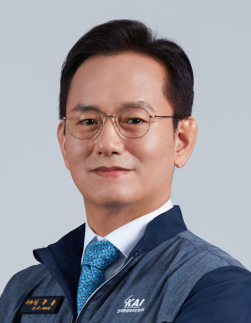 KAI Names Defense Expert Kim Jong-chul CEO, Pledges 'One Team' Push Korea Aerospace Industries, or KAI, said it held an inauguration ceremony Thursday at its headquarters in Sacheon, South Gyeongsang province, formally appointing Kim Jong-chul as its ninth CEO. His official term is three years. KAI described Kim, a 31st class graduate of the Air Force Academy, as a defense industry expert who has held key posts in the Air Force and the Defense Acquisition Program Administration. While working at the Defense Ministry, Kim conducted cost analyses for the KT-1 and T-50 programs. At the Office for Government Policy Coordination, he led the creation of the defense sector’s first dedicated organization for arms exports, the company said. As head of DAPA’s command and reconnaissance programs division, Kim planned a range of strategic weapons projects, including reconnaissance satellites, and is seen as having a strong grasp of future aerospace and defense industries, KAI said. In his inaugural address, Kim said he would seek growth opportunities despite an uncertain external environment. He called rapid technological advances and ongoing wars a rare “golden time,” and pledged relentless innovation and challenge. He outlined four management priorities for KAI’s renewed growth: continuous innovation and challenge; developing cash-cow businesses and expanding the future business portfolio; building a win-win cooperation ecosystem; and creating “One Team KAI.” Kim said KAI will expand existing revenue-generating businesses across fixed-wing and rotary-wing aircraft, unmanned systems, satellites, software and avionics components, including the KF-21 Boramae, which is to be delivered to the Air Force in the second half of this year. He said the company will also pursue portfolio expansion to secure future growth engines in areas such as software represented by AI pilots, avionics, manned-unmanned teaming systems, unmanned aircraft and drones, guided weapons systems and space projects. To support that effort, Kim pledged to reorganize the company and establish a performance-based personnel system to foster a research and development environment that does not fear failure. Kim also emphasized expanding strategic cooperation with domestic defense companies in line with the government’s “Team Korea” policy. He said KAI will build a horizontal communication system so all employees, including those at subsidiaries, work toward shared goals under a “One Team KAI” approach. After the ceremony, Kim inspected the production site for a mass-produced KF-21 aircraft scheduled to roll out at the end of March. He also visited major production lines and offices, including the fixed-wing and rotary-wing divisions, the space center and the development center, to review on-site conditions.* This article has been translated by AI. 2026-03-19 15:57:22
 -
 Woori Bank to Offer 200 Billion Won in Online Credit Lines for Seoul Small Businesses Woori Bank said on March 19 it signed an agreement with the Seoul Metropolitan Government and the Seoul Credit Guarantee Foundation to support 200 billion won in guaranteed overdraft loans under the “Seoul-style Small Business Relief Account No. 3” program. The program is part of Seoul’s “Small Business Support Project.” It aims to quickly provide online overdraft credit lines of up to 10 million won to small business owners facing heavier operating burdens amid high interest rates and a slowing economy. The bank said it expects the program to ease funding pressure, support business stability and expand help for very small firms with limited access to finance. Eligible applicants are Seoul-based small business owners who have operated for more than one year, whose representative has a NICE credit score of at least 600, and who posted either at least 2 million won in combined sales over the past three months or at least 10 million won in reported sales over the past year. Loans are structured as one-year, lump-sum repayment products, with extensions of up to five years available after review. For the first five days after launch, applications will be accepted under a five-day rotation based on the last digit of an applicant’s birth year. From March 26, applications will be accepted without restrictions. During the rotation period, guarantee application dates by last digit are: March 19 (1,6), March 20 (2,7), March 23 (3,8), March 24 (4,9) and March 25 (5,0). To reduce financing costs, Woori Bank will cover 50% of the first-year guarantee fee and waive fees for unused overdraft limits. “This Seoul-style Relief Account No. 3 program is designed to ease small business owners’ financial burden and support a real recovery in operations,” said Park Jun-seok, head of Woori Bank’s SOHO Business Department. He said the bank will continue working with Seoul and related agencies to strengthen inclusive finance and expand practical financial support and on-site consulting.* This article has been translated by AI. 2026-03-19 15:51:57
 -
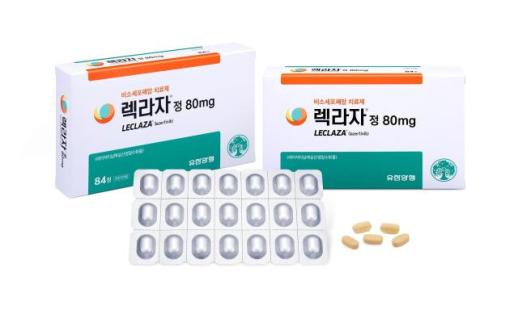 Open Innovation Becomes Key Model Behind South Korea’s Homegrown Drug Development Open innovation is taking hold as a strategy to improve the efficiency of new drug development, as companies seek to share risk and speed commercialization in an industry that requires heavy spending and long timelines. Industry officials said March 19 that partnerships between pharmaceutical companies and biotech firms are expanding. Drugmakers can reduce research burdens by bringing in outside technology, while biotech startups gain funding and clinical development support. A leading example is Yuhan Corp.’s lung cancer drug Lekraza. The non-small cell lung cancer targeted therapy was developed by Oscotec and licensed to Yuhan in 2015 at the preclinical stage. Yuhan later licensed it out to global drugmaker Janssen for up to 1.4 trillion won while Phase 1 trials were underway. Under the deal, Janssen holds development and commercialization rights, while Yuhan retains rights in South Korea. Of Yuhan’s 33 pipeline programs, 17 are sourced externally. Jung Yoon-taek, head of the Korea Pharmaceutical Industry Strategy Institute, said a model in which biotech ventures develop early technology, traditional drugmakers raise its value through clinical trials, and then transfer it to global companies is efficient in terms of specialization and division of labor. Open innovation is also extending beyond licensing into investment. Traditional drugmakers are joining promising biotechs as strategic investors, taking early stakes in growth potential. DongKoo Bio & Pharma recently bought 1 billion won of a 27 billion won convertible bond issued by Genome & Company. Since 2020, it has invested about 3.5 billion won in Genome & Company through equity purchases and additional buying. DongKoo Bio & Pharma is strong in manufacturing and sales of dermatology and urology prescription drugs, but antibody-drug conjugates, or ADCs, are considered technically demanding and high-risk. The investment is seen as a move to deepen its partnership by supporting Genome & Company’s ADC-focused drug development. Co-development is also being used to improve the odds of success. Canarpta Therapeutics, an ADC design specialist, has bispecific ADC technology that targets two markers at the same time. GC 녹십자 invested a total of 7 billion won in Canarpta Therapeutics in two rounds in 2020 and 2023, and the companies are jointly developing the bispecific ADC KNP-701. Lotte Biologics also joined the effort, investing 1.2 billion won in 2023 to participate in co-developing an ADC platform. Handok is also pursuing open innovation, jointly developing the bile duct cancer treatment tovesimig with ABL Bio and Compass Therapeutics. It aims to launch the drug in South Korea in 2027 as its own new medicine. Bile duct cancer is a rare cancer with few treatment options, and Handok is seeking to shift from a business centered on in-licensed products to one that holds its own new drugs. Handok signed a licensing agreement with ABL Bio, the original developer of tovesimig, securing rights in South Korea. An industry official said domestic companies have limited research and development resources compared with global drugmakers, making collaboration around technologies with higher chances of success a practical choice. With the domestic market saturated, the official added, open innovation is not merely optional but a way to survive by operating efficiently with less capital.* This article has been translated by AI. 2026-03-19 15:51:00
 -
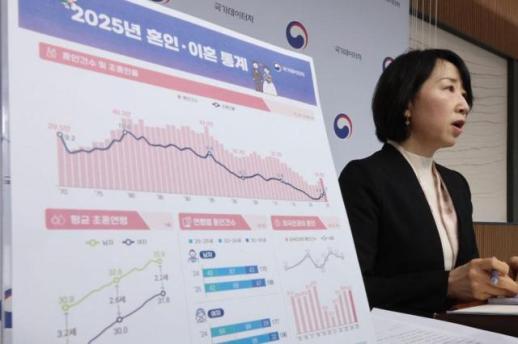 Young newlyweds drive marriage rates to rise for third straight year SEOUL, March 19 (AJP) - Some 240,000 couples tied the knot last year, up 8.1 percent or 18,000 couples from a year earlier, seeing a rise for a third straight year since 2025, the Ministry of Data and Statistics said Thursday. The figure is also the highest in seven years, up from 239,200 in 2019, recovering to pre-pandemic levels after dipping to around 200,000. Of the total 240,000 couples, some 82.6 percent were first-time marriages for both spouses, while 9 percent were remarriages for both. Among men, 87.5 percent were first-time grooms and 12.3 percent were remarrying, while among women, 85.9 percent were marrying for the first time and 13.6 percent were remarrying. The average age at first marriage was 33.9 for men and 31.6 for women, up 1.3 years and 1.7 years respectively, compared to a decade ago. Among first-marriage couples, cases in which the wife was older accounted for 20.2 percent, up 0.3 percentage points. Marriages involving a foreign spouse totaled 21,000, down 0.3 percent. Marriages with foreign women accounted for 16,000, while those with foreign men stood at 5,000. Among foreign wives, those from Japan and Laos increased, while marriages with women from Viet Nam and Thailand declined. Among foreign husbands, those from Japan and Canada rose, while marriages with men from China and the U.S. fell. With marriages rising across all regions except North Jeolla Province, Gyeonggi Province saw the highest number of marriages, followed by Seoul and Incheon. Marriages were most common in December, followed by May and July, while June and September saw the fewest. Meanwhile, divorces totaled 88,000, down by about 3,000 from 2024. Divorces were most common among couples married for 30 years or more, followed by those married for five to nine years and for four years or less. By age, divorce rates were highest among men in their late 40s and women in their early 40s. The ministry attributed the rise to a sharp increase in marriages among people in their early 30s. "The number of marriages have risen significantly, driven largely by those in their late 20s to early 40s, with the biggest surge among people in their early 30s," said Park Hyun-jung, a ministry official. 2026-03-19 15:50:01
 -
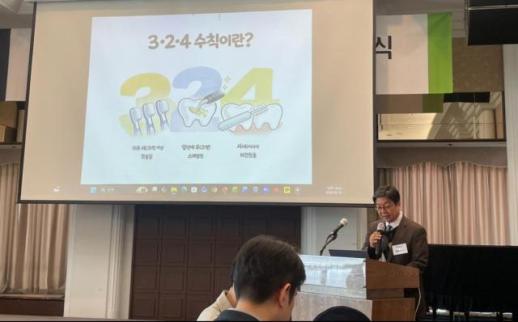 Study: Poor Gum Health May Raise Risk of Esophageal, Colorectal Cancer Periodontal disease is among South Korea’s most common conditions. National Health Insurance Service data show that, as of 2024, more than 19.5 million people received treatment for periodontal disease, with covered costs totaling about 2.3 trillion won. Against that backdrop, researchers presented findings suggesting that poorer gum health may be linked to a higher risk of certain cancers. Experts note that because the mouth is directly connected to the digestive tract, inflammation from periodontal disease can negatively affect overall health. Park Jae-yong, a professor of gastroenterology at Chung-Ang University College of Medicine, presented an analysis on March 19 at the Korea Press Center in Seoul during the 18th Gum Day event, focusing on the relationship between poor gum health and esophageal cancer. Park said the study was based on a hypothesis that swallowing saliva could repeatedly carry oral inflammation, leading to chronic inflammation and potentially esophagitis. He said the analysis found the risk was about 16% higher among people with tooth loss and about 10% higher among those with periodontal disease. Neglecting oral care, he said, may increase the risk of digestive-tract cancers due to bacteria associated with gum disease. He added that significant associations were also found between esophageal cancer and poor oral hygiene habits, including brushing fewer than three times a day, not brushing before bed, and not using interdental cleaning tools. Separately, speakers cited a 2024 study published in Nature on how gum-disease bacteria can affect the colorectal cancer environment. Kook Joong-ki, a professor in the Department of Oral Biochemistry at Chosun University’s College of Dentistry, said animal experiments showed that a specific bacterium — Fusobacterium nucleatum subspecies animalis C2 — can worsen cancer when it reaches the colon. Dongkook Pharmaceutical and the Korean Academy of Periodontology have designated March 24 as Gum Day since 2009 to raise public awareness of periodontal disease and its links to health. This year’s 18th event was held under the theme, “Thorough gum care reduces the risk of digestive-tract cancers.”* This article has been translated by AI. 2026-03-19 15:48:00