


Both Washington and Tel Aviv have confirmed deploying a “variety” of artificial intelligence tools in combat, from targeting systems to leadership strikes. The conflict has underscored how modern warfare is rapidly evolving into a data- and chip-driven domain — and how exposed countries can be without secure supply chains.
The reality check has trigged an unusually bipartisan flurry among lawmakers.
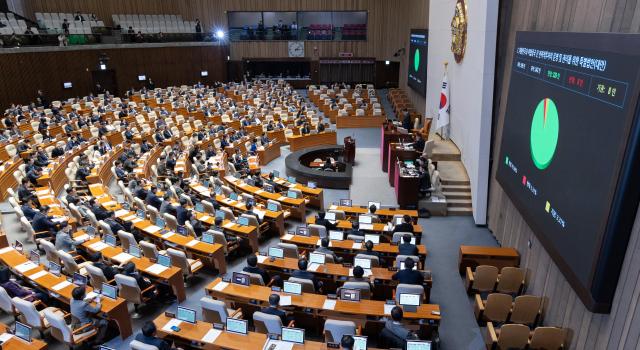
Lawmakers from both the ruling and opposition parties are reviving long-delayed efforts to foster a domestic defense semiconductor industry, aiming to reduce reliance on imports and build self-reliant military capabilities.
Microchips already sit at the core of modern weapons systems — from fighter jets and naval vessels to missiles, radar and satellites. Yet South Korea sources nearly all of them from abroad. Internal estimates show that about 98.9 percent of semiconductors used in Korean defense systems are imported, leaving the country acutely vulnerable to external disruptions.
That dependency stands in stark contrast to South Korea’s global leadership in memory chips, led by Samsung Electronics and SK hynix. The gap lies in system semiconductors — the logic chips essential for defense applications, where Korea still lags global leaders.
Her proposal, titled the Special Act on the Promotion of the Defense Semiconductor Industry and Supply Chain Stabilization, frames semiconductors not merely as industrial goods but as strategic security assets.
The bill calls for the creation of a Defense Semiconductor Promotion Committee under the Ministry of National Defense to assess industrial competitiveness and supply chain vulnerabilities, while building a centralized information management system.
It also outlines state-backed support across the semiconductor value chain — from materials and fabrication to packaging and design — along with preferential procurement policies for domestically produced defense chips.
A key focus is strengthening system semiconductors, which require far higher levels of reliability and resilience than commercial chips and underpin communications systems, radar, satellites and missile platforms.
“By building a stable supply chain and fostering a domestic ecosystem, we can strengthen the foundation of self-reliant defense and contribute to economic growth,” Lee said, calling for bipartisan cooperation.
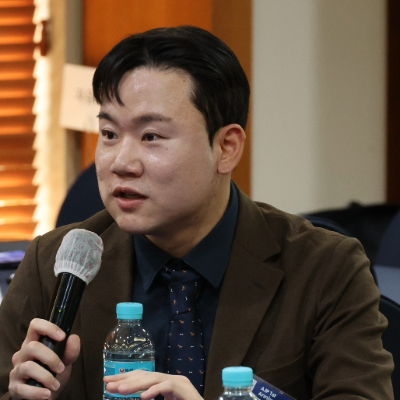
“Nearly 99 percent of defense semiconductors used in South Korean weapons systems are imported,” Sung told AJP. “Our sovereign weapons systems, including missiles, depend on semiconductor sovereignty.”
His proposal emphasizes building a full domestic ecosystem — from design and fabrication to packaging and maintenance — while prioritizing locally developed chips in defense procurement and strengthening safeguards against technology leakage.
The push is also shaped by shifting U.S. policy. The U.S. Department of Defense is moving to phase out Chinese components from its weapons systems, with plans to exclude them from general-purpose semiconductors by 2027 and eliminate them entirely from existing programs by 2031.

For allies such as South Korea and Japan, the implications are immediate. Washington is increasingly urging partners to align their supply chains, effectively redrawing the boundaries of acceptable sourcing.
The private sector is beginning to respond. The Defense Acquisition Program Administration has been pursuing defense semiconductor initiatives since 2023, including efforts to cultivate AI-specialized personnel.
Hanwha Systems has launched joint research programs with Seoul National University and Sungkyunkwan University to localize key technologies. The company aims to develop high-frequency communication chips by 2031 and is working on domestically produced high-power, wideband semiconductors for radar systems.
Still, the economics remain a major hurdle. Unlike commercial semiconductors, which benefit from massive economies of scale, defense chips are typically produced in small volumes with highly specialized specifications.
That makes them less attractive to private firms without sustained government support — a gap the proposed legislation seeks to address through subsidies, workforce development and measures to prevent technology leakage.
Copyright ⓒ Aju Press All rights reserved.
