

Journalist

CGTN
-
 Thinkware Launches Caltrwin KX and KR Window Tint Film Lineup Thinkware said March 17 that its automotive tint brand Caltrwin is launching two new window film lines, KX and KR. The new lineup consists of a reflective type and a nonreflective type, aimed at improving both driving visibility and heat-blocking performance. The reflective KR film is a metal-based product made with a high-purity sputtering process, the company said. It is offered in visible light transmission (VLT) grades of 11% and 27%, with infrared rejection (IRR) of up to 85% and total solar energy rejection (TSER) of 64%. The nonreflective KX film uses nano-ceramic technology based on polymer fusion coating to deliver high clarity and stable heat blocking, Thinkware said. It is available in VLT grades of 6%, 12% and 34%, with IRR of up to 90% and TSER of up to 68%, which the company said can help keep the cabin comfortable in strong sunlight. Caltrwin also offers after-sales service. Customers who have the film installed at an official Caltrwin shop will receive a manufacturer warranty certificate, and the company provides a seven-year quality warranty for issues such as cracking, fading and discoloration. A Thinkware official said the new KX and KR lines focus on core tint performance, including visibility and heat blocking, and are expected to be a good option for customers seeking verified performance at a reasonable price. To mark the launch, Thinkware said it will run a first-come, first-served review event through April 12. The first 10 customers to post an installation review online will receive a premium car wash voucher worth 100,000 won.* This article has been translated by AI. 2026-03-17 09:21:17
 -
 RideFlux Releases Video of Fully Hands-Off Autonomous Truck Hauling 11 Tons RideFlux, an autonomous-driving software startup, said Tuesday it has released video showing a heavy-duty self-driving truck carrying 11 tons of cargo completing a long-distance route between Seoul and Jincheon, North Chungcheong province, without any intervention by a safety operator. The footage highlights a key result from RideFlux’s middle-mile autonomous freight transport service, which the company has been piloting since October last year. RideFlux’s autonomous truck regularly runs a 224-kilometer (139-mile) round trip from the Southeast Logistics Complex in Songpa-gu, Seoul, to a logistics center in Jincheon while loaded with 11 tons of cargo. The video covers the full one-way trip, showing the truck navigating highways and congested city streets, including signalized intersections and roundabouts, without a single manual input. RideFlux said the run demonstrates “hub-to-hub” freight transport that extends beyond highway-only autonomous trucking to complex urban roads. The company said it is the only firm in South Korea holding a temporary permit for a large freight truck to operate autonomously on city streets. RideFlux said it plans to launch full freight service on the Seoul Songpa-Jincheon route once it secures a paid-transport permit in the first half of this year. It also plans to start service later this year on the Gunsan Port-Jeonju-Daejeon route and in Gangneung. “This video is a visible result showing how advanced unmanned technology is being implemented stably in real logistics operations,” CEO Park Jung-hee said.* This article has been translated by AI. 2026-03-17 09:00:58
 -
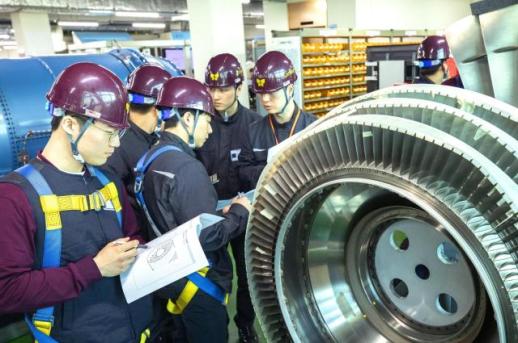 Jin Air Expands Onboarding Training for New Aircraft Mechanics Jin Air said on the 17th it has overhauled its onboarding program for newly hired aircraft mechanics to strengthen their skills. The carrier said the revamped training makes active use of Korean Air’s maintenance training infrastructure and includes joint sessions with Air Busan, focusing on raising maintenance expertise and standardizing quality ahead of integration. Since January, Jin Air has been running the strengthened program for 38 new mechanics. Starting this year, it moved part of on-the-job training into the onboarding phase, extending the training period from one month to six months. The company said the change is intended to help recruits build solid fundamentals and practical capability as hiring has expanded beyond aviation maintenance majors to include general engineering fields such as mechanical and electronic engineering. The curriculum includes aviation safety and security, maintenance work procedures, occupational safety and health training, maintenance manuals, and equipment and field practice. Jin Air added new linked training with Korean Air so recruits can learn strict maintenance processes firsthand. Trainees will study core basics such as aircraft systems and airframe structure, and improve job readiness through training using actual heavy-maintenance aircraft and digital content. The airline said it aims to reinforce basic competency and further strengthen group-level safety systems. Air Busan’s new mechanics are also participating. The two airlines’ new hires will complete the same curriculum at one location for six months, building technical ties and a sense of belonging. Jin Air said it expects the joint program to help establish a unified maintenance training system and proactively standardize maintenance quality. After completing the program, the new mechanics will be assigned to departments starting in mid-August, then receive field OJT and aircraft-type specialized training in sequence. Jin Air said it will strengthen safety competitiveness through systematic talent development and continued investment in maintenance so mechanics can reach top-tier industry capability. * This article has been translated by AI. 2026-03-17 08:57:21
 -
 Netflix to Release BTS Comeback Documentary 'BTS: The Return' on March 27 Netflix said it will release a feature-length documentary, “BTS: The Return,” chronicling the group’s comeback journey on March 27. Netflix on the 17th unveiled an official poster and trailer to launch promotion. The documentary follows BTS as the seven members reunite after a 3-year, 9-month hiatus and complete their fifth full-length album, “Arirang (ARIRANG).” The film looks back on the group’s rise since its 2013 debut and focuses on the members’ struggles and growth as they prepare their next chapter. It includes behind-the-scenes footage of the members reuniting in Los Angeles and continuing their music work while reflecting on what the team means to them. Netflix positioned the documentary as a key follow-up to “BTS Comeback Live: Arirang,” which will be streamed exclusively live on Netflix at 8 p.m. on March 21. Bao Nguyen, director of “The Greatest Night in Pop History,” directed the project. It was co-produced by global production company This Machine and HYBE. In the trailer, the members share candid reflections on the past, present and future, alongside the message, “We came back to where we naturally belong.” “BTS: The Return” is set for a worldwide simultaneous release on Netflix at 4 p.m. on March 27.* This article has been translated by AI. 2026-03-17 08:43:44
 -
 KakaoBank Cuts Rates on Real Estate-Backed Loans for Sole Proprietors to Low 2% Range KakaoBank said on 17 it will cut interest rates on its “real estate-backed loans for sole proprietors” by as much as 0.75 percentage points to ease financing burdens for small business owners. The bank said it will lower loan rates by up to 0.60 points and expand its preferential rate discount to 0.30 points a year from 0.15. With both applied, the minimum rate is 2.895% a year. KakaoBank said it is the only financial firm offering rates in the 2% range among banks providing real estate-backed loans to sole proprietors. KakaoBank launched the product in October last year. It can be used non-face-to-face for up to 1 billion won for purposes including business operating funds and purchasing a business site. Some industries, including residential building development and supply and residential building rental, are excluded. “We further lowered rates on our real estate-backed loans for sole proprietors to expand financial support for small business owners struggling to raise funds,” KakaoBank said, adding it will continue to introduce innovative financial services to improve convenience for sole proprietor customers.* This article has been translated by AI. 2026-03-17 08:42:00
 -
 Hyundai Motor, Kia expand Nvidia partnership for autonomous driving tech Hyundai Motor and Kia have joined hands with Nvidia to cooperate on autonomous mobility technology, with Nvidia capabilities set to be used in Hyundai vehicles offering Level 2 or higher automated driving. Industry officials said the expanded cooperation follows a recent meeting between Hyundai Motor Chairman Chung Euisun and Nvidia CEO Jensen Huang, and now extends to autonomous driving, a key future growth area for automakers. According to the industry on March 17, the two sides began jointly developing next-generation autonomous driving solutions on March 16 (local time), combining Hyundai Motor and Kia’s in-house software-defined vehicle, or SDV, capabilities with Nvidia’s autonomous driving technology. Hyundai Motor and Kia, which are developing SDVs based on their quality and safety philosophy, plan to apply some of Nvidia’s Level 2-plus autonomous driving technology first to select models. Hyundai Motor said it will use Nvidia’s autonomous driving integrated architecture, “Drive Hyperion,” to build its own solution that can scale from Level 2 to Level 4. Nvidia Hyperion is a reference architecture that bundles hardware essential for autonomous driving, including high-performance central processing units, graphics processing units, sensors and cameras. It is designed to integrate platforms across vehicle models. Hyundai Motor plans to make active use of Nvidia’s broad data and AI technologies, while integrating data gathered across the group into a single training pipeline. Hyundai Motor Group said adopting Hyperion will help it build a virtuous data cycle spanning data collection — including video, language and behavior — AI training and performance improvements, deployment in real vehicles, and upgrades in data quality. The group also said it will step up wide-ranging talks centered on its U.S.-based autonomous driving joint venture, Motional, to advance Level 4 robotaxi technology, while strengthening competitiveness in technology and services. The company said combining a standardized architecture with Hyundai Motor Group’s accumulated experience as a global top-three automaker would enable it to develop an optimized SDV architecture in-house. Over the longer term, the group expects its autonomous driving competitiveness to improve as high-performance AI collects, learns from and structures high-quality real-world road data on its own. The cooperation is also tied to the Chung-Huang meeting, the company said. Hyundai Motor plans to allocate some of the 50,000 Blackwell GPUs it is set to receive from Nvidia to Saemangeum in North Jeolla Province for use in developing autonomous vehicles and an AI data center. Kim Heung-soo, vice president in charge of Hyundai Motor Group’s global strategy organization, said, “Expanding the partnership with Nvidia will be an important momentum for realizing the safe and reliable autonomous driving technology Hyundai Motor Group is pursuing.” He added, “Based on a one-team collaboration system across the group, we will secure differentiated technological competitiveness from Level 2-plus autonomous driving technology to Level 4 robotaxi services.” Rishi Dhall, vice president of Nvidia’s automotive division, said, “By combining Hyundai Motor Group’s vehicle engineering capabilities with Nvidia’s computing and AI technology, we are building safe and intelligent autonomous driving systems.” He added, “We will continue collaboration between the two companies from Level 2-plus advanced driver assistance features to robotaxis.” 2026-03-17 08:18:26
 -
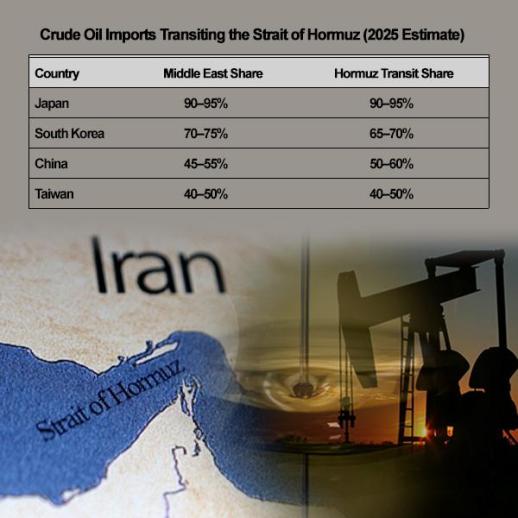 US mounts more pressure on allies for maritime coalition in Strait of Hormuz SEOUL, March 17 (AJP) -South Korea and Japan — both heavily dependent on Middle Eastern energy supplies passing through the Strait of Hormuz — have been repeatedly singled out by U.S. President Donald Trump as Washington seeks international support for reopening the vital shipping lane amid the ongoing U.S.–Israeli war with Iran. Speaking at the White House on Monday during a meeting with trustees of the John F. Kennedy Center for the Performing Arts, Trump renewed his call for allies to join a coalition to secure the strait — though responses from partner countries have so far ranged from cautious non-commitment to outright reluctance. “We strongly encourage other nations whose economies depend on this strait far more than ours,” Trump said. “We get less than 1 percent of our oil from the strait and some countries get much more.” “Japan gets 95 percent. China gets 90 percent. Many of the Europeans get quite a bit. South Korea gets 35 percent. So we want them to come and help us with the strait,” he added, without providing the basis for the numbers. According to petroleum association postings of each countries, Japan depends 90 to 95 percent on Hormuz transit and South Korea around 65 to 70 percent. The share for China is lower at 50 to 60 percent. Trump expressed frustration at what he described as a lack of enthusiasm from countries that benefit from U.S. military protection. “We’ve protected them from horrible outside sources, and they weren’t that enthusiastic — and the level of enthusiasm matters to me,” he said. "We have some countries where we have 45,000 soldiers, great soldiers, protecting them from harm's way, and we have done a great job," he added, declining to name them. The United States maintains roughly 50,000 troops in Japan and about 28,500 troops in South Korea, two of Washington’s closest security partners in Asia. Seoul has signaled that it is weighing the request carefully. The South Korean government said it remains in consultations with Washington and will address the issue only after “careful deliberation.” Japan has issued a similar response, emphasizing the complexity of any military involvement in the conflict. Pressure on Seoul has already intensified at the diplomatic level. South Korean Foreign Minister Cho Hyun held a phone call Monday with U.S. Secretary of State Marco Rubio, according to the foreign ministry. Rubio briefed Cho on the situation in the Middle East and called for cooperation to restore stability in the region. He also emphasized the importance of global coordination to secure maritime traffic through the Strait of Hormuz and stabilize oil prices. Cho thanked Washington for assisting with the evacuation of Korean nationals from the region and requested continued support. The two officials agreed to meet soon for further discussions on bilateral and global security cooperation. The diplomatic push underscores Washington’s growing concern that the war — now entering its third week — could turn into a prolonged disruption to global energy markets. The Strait of Hormuz normally carries about one-fifth of the world’s oil shipments, making it one of the most strategically sensitive maritime chokepoints in global trade. The suspension has spiked oil prices to $100 a barrel and other commodities, causing disruptions across the board. The standoff is also becoming politically sensitive in the United States. Although the U.S. military’s superiority over Iran has never been seriously questioned, the conflict has proven more resilient than some policymakers initially expected. Iran’s most effective retaliation has been targeting regional oil infrastructure and effectively blocking commercial shipping through the strait. Rising crude prices have already pushed up gasoline costs in the United States — a development that could complicate domestic politics as congressional midterm elections approach. Trump has responded with a mix of defiance and reassurance. He said some countries have privately expressed willingness to support the U.S. effort but declined to identify them. “We don’t need anybody,” Trump said. “We’re the strongest nation in the world.” At the same time, he warned that any Iranian attempt to mine the strait would be “a form of suicide.” Across the Atlantic, the response from European capitals has been markedly cautious. European Union foreign ministers meeting in Brussels stressed that they had little appetite for becoming directly involved in a conflict that many leaders view as a U.S.-initiated war. “This is not our war. We have not started it,” said Boris Pistorius. EU foreign policy chief Kaja Kallas said there was no consensus among member states to extend the EU’s existing Red Sea naval mission — known as Aspides — to the Strait of Hormuz. “There was a clear wish to strengthen our operation, but for the time being there was no appetite to change the mandate,” she told reporters after talks with EU foreign ministers. Germany and Italy both opposed expanding the mission’s scope, arguing that shifting naval assets into the strait could risk escalating the conflict. British Prime Minister Keir Starmer also declined to commit to a full naval escort operation. “We will not be drawn into the wider war,” Starmer said at a press conference in London, though he noted that Britain would continue exploring options with allies to restore freedom of navigation. Several European leaders also emphasized that the Strait of Hormuz crisis does not fall under the mandate of NATO’s collective defense framework, which is triggered only when member states themselves are attacked. Luxembourg Foreign Minister Xavier Bettel put the point bluntly: “Blackmail is not what I wish for.” Regardless of the broad reluctance among allies, the pressure on energy-dependent economies in Asia and Europe is likely to grow if the blockade continues. The surge in oil prices has already raised fears of renewed inflation and disruptions across global manufacturing and food supply chains and capital flight in Asian markets. 2026-03-17 08:13:14
 -
 Seoul to Boost Public Delivery App Budget as Shinhan’s Ttaenggyeoyo Expands Seoul and other local governments are stepping up support for public food-delivery platforms, with the city planning to expand next year’s related budget to 3.5 billion won. The push comes as concerns grow that domestic demand could weaken amid global wars and rising oil prices, and officials look to public delivery apps as a way to boost small-business sales and local economies. According to the financial sector on March 16, Seoul drafted a 2026 public delivery app budget totaling 3.5 billion won: 300 million won for promotion and 3.2 billion won for district-level delivery vouchers. That is sharply higher than 108 million won in 2024 and 2.5 billion won in 2025. Ttaenggyeoyo has effectively become the sole operator in Seoul’s public delivery app market, making it a joint project that requires close coordination between the city and Shinhan Bank. Seoul and Shinhan Bank plan to closely analyze accumulated public delivery app data and expand targeted marketing. They aim to issue about 64.4 billion won worth of delivery vouchers through discounts and payback programs, roll out quarterly franchise-linked promotions, and broaden use of digital Onnuri gift certificates. They also plan to widen partnerships for delivery operations beyond a single provider, working with Kakao Mobility, GS Retail and Vroong to strengthen service competitiveness. Other local governments are also allocating funds this year. Gwangju Metropolitan City and Busan set aside 100 million won and 50 million won, respectively. The Ministry of SMEs and Startups earmarked 300 million won for research services related to revitalizing public delivery apps. Such budget support is helping Ttaenggyeoyo expand. Unlike private delivery apps, public platforms can lower their cost structure with local government backing. Ttaenggyeoyo has maintained a low brokerage fee of about 2% under that model. As a result, Seoul Delivery+Ttaenggyeoyo’s market share stood at 7.7% last year, nearly tripling from 2.64% a year earlier. Shinhan Bank has sought to broaden the platform ecosystem by linking policies such as free advertising and onboarding fees with financial support for small merchants. Cooperation is also widening beyond Seoul in areas that have put budget money into public delivery apps. By service usage share, Seoul accounts for 25%, followed by Gyeonggi (19.6%), South Chungcheong (7.1%), South Gyeongsang (6.8%), Gangwon (6.6%), North Chungcheong (5.8%), Gwangju (4.6%) and Busan (4.6%). Shinhan Bank said it plans to rapidly expand its local-government network this year. It has agreements with 51 local governments nationwide and has broadened cooperation with basic local governments such as Busan’s Dongnae District and Gijang County. It also plans a promotion this month in Gyeonggi Province offering discounts when purchasing local currency. Officials are also reviewing ways to combine public delivery apps with small-business support programs tied to supplementary budgets and with policies aimed at revitalizing local economies. “With global wars and rising oil prices, the government’s 고민 about stimulating domestic demand is growing,” a financial industry official said. “There is direct support such as help with electricity bills, but if public delivery apps increase small merchants’ sales, it can lead to broader consumption.”* This article has been translated by AI. 2026-03-17 06:06:00
 -
 BTS Comeback Concert Spurs ARMY ‘Pilgrimage’ Tours Across Seoul and Beyond As BTS’ “BTS Comeback Live: Arirang” concert at Seoul’s Gwanghwamun Square on March 21 approaches, fans from the global ARMY fandom are increasingly traveling to South Korea. Online communities and social media are rapidly sharing “pilgrimage” routes that trace the group’s footsteps, prompting domestic tourism platforms and local governments to roll out fan-focused itineraries. On Reddit, one of the largest English-language online communities, a five-day map titled “ARMY Seoul Guide” has drawn attention by listing BTS-related locations across the capital. On social media, more fans are posting about their trips under the hashtag “BTS Pilgrimage.” A top stop for many visitors is HYBE’s headquarters in Yongsan, where fans routinely take photos and post them online. Major heritage sites are also central to many itineraries, including Gyeongbokgung Palace, which drew global notice in 2020 when BTS performed there in hanbok on NBC’s “The Tonight Show Starring Jimmy Fallon.” Nearby palaces — Changdeokgung, Deoksugung and Changgyeonggung — are also popular. The National Museum of Korea is another frequent destination, known among fans as a place associated with leader RM, who is known for visiting exhibitions. The museum plans to offer a special product at its shop in collaboration with the National Museum Foundation of Korea to mark the group’s new release. Seoul Forest, a large park in the city, has also become a must-visit as fans have created bench gardens named for members, including “RM Forest,” “SUGA Forest” and, more recently, “j-hope Forest,” set up to mark j-hope’s military discharge. With more fans arriving, searches for BTS-related travel products have surged. Travel platform Klook said searches for BTS travel products rose 61% in January–February 2026 compared with November–December 2025. Klook is selling tailored packages including a Pyeongchang tour of “In the SOOP” filming locations, a Gangneung Jumunjin tour tied to the jacket shoot for the group’s 2017 second album, and a Seoul ARMY walking tour. Local governments are also moving to capture what they call a “BTS tourism boom.” Pohang, in North Gyeongsang Province, is promoting stay-type tourism built around mulhoe mentioned by member Jin and a local cafe known as a filming site for the “Spring Day” music video. The city plans to link travel routes to Pohang with messages such as “a Pohang trip after the concert.” Seoul plans BTS-related events for foreign visitors, including ARMY, during the “2026 Seoul Spring Festa,” set for April 10 across 11 areas along the Han River, including Yeouido, Ttukseom, Banpo and Nanji. The city also plans street performances, a random dance festival and participatory events at major sites for fans from around the world. Yoon Hye-jin, a professor in the Department of Tourism Development and Management at Kyonggi University, said K-content fandoms are a core tourism segment with strong spending power. She urged officials to systematize “pilgrimage” content to maximize tourism synergy, adding that local governments should foster a culture in which fandoms and regions resonate and design detailed, customized products that reflect each fandom’s characteristics.* This article has been translated by AI. 2026-03-17 06:04:26
 -
 Shinhan Bank’s Ddaenggyeoyo delivery app tops 8.5 million users, fueled by low fees Shinhan Bank’s food delivery platform Ddaenggyeoyo, once known as “a delivery app made by a bank,” has grown into a nationwide service, drawing 8.5 million users in four years. Analysts attribute the growth to a “shared-growth” model that pairs low brokerage fees with a no-ad-fee structure, appealing to both customers and small merchants. Shinhan Bank said March 16 that Ddaenggyeoyo surpassed 8.5 million cumulative users as of the end of February, four years after its official launch. The total rose by 500,000 in two months after topping 8 million at the end of last year. The number of affiliated merchants has also expanded rapidly, increasing by about 120,000 in a year from fewer than 200,000 at the end of 2024. Order volume has climbed even faster. Annual orders were under 100 billion won in 2023, rose to 113.6 billion won in 2024, and surged to 669.8 billion won in 2025. Orders totaled 143.2 billion won in the first two months of this year. Some forecasts say annual orders could exceed 1 trillion won if the pace continues. More than two-thirds of users — 72% — place repeat orders, suggesting the service has built stable customer satisfaction, the bank said. Ddaenggyeoyo entered a fiercely competitive market dominated by a handful of large platforms, where high brokerage fees and advertising costs have been a major complaint among self-employed business owners. Positioning itself as a public-minded delivery app, Ddaenggyeoyo has focused on local small businesses. While some apps charge brokerage fees of about 9% to 10% plus advertising fees, Ddaenggyeoyo keeps its brokerage fee at about 2% and does not charge advertising fees, the bank said. In the financial sector, Ddaenggyeoyo’s growth is also being viewed as an example of a bank expanding into everyday financial services. The “Ddaenggyeoyo interest-subsidy loan,” linked to the platform, is aimed at reducing financing costs for affiliated small merchants. The program began in Seoul in July 2025 and, as of February, had issued 2 billion won in Seoul and 3.4 billion won nationwide that month, pushing cumulative lending past 50 billion won. Shinhan Bank has also expanded related services, including Ddaenggyeoyo savings products, a rider-only check card and promotions such as discount coupons to connect merchants, riders and users. Lee Eun-hee, a professor of consumer science at Inha University, said Ddaenggyeoyo reduces fee burdens for store owners while offering incentives such as coupons to encourage use. She said the key to sustained growth will be whether the platform can maintain market share boosted by public delivery-app consumer coupons and convert it into a self-sustaining user base.* This article has been translated by AI. 2026-03-17 06:03:00