

Journalist

CGTN
-
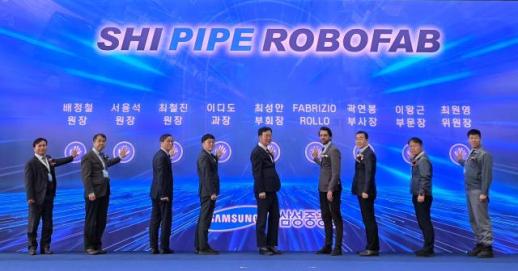 Samsung Heavy Industries Launches Shipbuilding Industry’s First Robotic Pipe Spool Factory Samsung Heavy Industries said March 16 it has begun full operations of what it called the shipbuilding industry’s first automated factory for producing pipe spools, branded “PIPE ROBOFAB.” The completion ceremony was held at the Chilseo industrial complex in Haman, South Gyeongsang Province, with about 70 attendees including Samsung Heavy Industries Vice Chairman and CEO Choi Seong-an, officials from the Ministry of Trade, Industry and Energy, shipowners such as ENI and MISC, and other industry representatives. Piping, often described as a ship’s circulatory system, is produced through a spool-making process in which components such as elbows, tees and flanges are welded and assembled into a single unit based on design drawings. Samsung Heavy Industries said it built a smart management system that integrates the entire workflow — from pipe design to automated logistics, high-precision machining and measurement, alignment and welding — and combined it with vision AI to create an automated production system. The Pipe Robofab facility has a total floor area of 6,500 square meters and can produce about 100,000 pipe spools a year, the company said. It said shifting spool production to advanced robotics is expected to shorten production time while ensuring consistent quality and improving safety. “Pipe Robofab is a site that has innovated the pipe spool process by combining Samsung Heavy Industries’ skilled welding technology with 3X (AX·DX·RX) technologies,” Choi said. “It will be an opportunity to upgrade the manufacturing competitiveness of the shipbuilding industry by one level.” Choi Won-young, chairman of the company’s labor-management council, said AI and automation are “an unavoidable major trend” across industries. He said labor and management will keep communicating to expand jobs as shipbuilding volumes grow, while supporting employment stability for workers and a safer work environment. 2026-03-16 09:45:05
 -
 Hana Financial to Launch 500 Billion Won Infrastructure Fund Focused on AI, Renewables Hana Financial Group will commit 500 billion won to support future-focused strategic sectors, including renewable energy and artificial intelligence infrastructure. Hana Financial said Monday it will form the Hana Modu Growth Infrastructure Fund to expand the flow of private capital into what it called “productive finance.” The fund will be financed entirely by Hana Financial Group affiliates. Hana Bank will contribute 400 billion won, joined by Hana Securities with 50 billion won, Hana Life Insurance with 20 billion won, Hana Capital with 17 billion won, Hana Insurance with 10 billion won, and Hana Alternative Investment Management with 3 billion won. Key targets are renewable energy projects and AI and digital infrastructure, which the group described as national priorities. In renewables, the fund will invest in the Wando Geumil offshore wind power project, described as the country’s largest. Electricity generated there is to be used for national AI data centers and power infrastructure for advanced industries in the Honam region. In AI and digital infrastructure, it will invest in large-scale data center development projects including the Bucheon Samjeong-dong AI Hub Center and the Incheon Guwol-dong AI Hub Center. Hana Financial said it plans to take an active role in early-stage development. It aims to secure high-quality assets early and later provide financial advisory and arranging services when large-scale funding is needed, to improve returns. In January, Hana Financial said through its “group productive finance council” that it would expand productive finance supply to 17.8 trillion won by 2026. A Hana Financial Group official said the fund is intended to be a core example of productive finance by supplying capital to the real economy, adding that the group will continue to expand investment in innovation-driven growth areas.* This article has been translated by AI. 2026-03-16 09:39:00
 -
 Air Premia Cuts 18 Seats to Expand Economy Legroom to 33 Inches Air Premia is reducing seat counts to increase economy-class legroom to 33 inches, part of a broader effort to improve cabin space. The airline said Monday it cut the total number of seats on aircraft HL8701 from 344 to 326, a reduction of 18 seats. As a result, economy seat pitch on the aircraft has been expanded from 31 inches to 33 inches. After the reconfiguration, HL8701 will enter service starting Monday. Routes operated by the aircraft will offer the wider seat spacing. Air Premia said it has been steadily pursuing seat-space improvements to enhance comfort for long-haul passengers. In 2024, the airline also adjusted two aircraft that had been operated with 338 seats to 320 seats, expanding economy seat pitch. Air Premia operates nine aircraft with the following configurations: 309 seats (three aircraft), 320 seats (two), 326 seats (two) and 344 seats (two). All aircraft except the 344-seat planes are operated with economy seat pitch of at least 33 inches. The airline said it plans to expand economy seat pitch to 33 inches or more across its entire fleet within the year. Air Premia also replaced the cabin carpet as part of the latest changes.* This article has been translated by AI. 2026-03-16 09:33:16
 -
 T’way Air cargo volume jumps 130% in two years as long-haul network expands T’way Air said its cargo business is maintaining steady growth, supported by an expanded global network and the introduction of larger aircraft. The airline said Monday that its first-quarter cargo volume this year was provisionally tallied at about 9,000 metric tons. That is up about 130% from about 4,000 tons in the first quarter of 2024, expanding the business to about 2.3 times its size in two years. T’way Air also reported that its total cargo volume last year rose 92% from about 18,000 tons a year earlier to 34,000 tons. The company attributed the gains to the successful establishment of medium- and long-haul routes, including European services to Paris, Rome, Barcelona and Frankfurt, as well as flights to Sydney and Vancouver, along with what it called strategic cargo sales efforts. T’way Air said it has optimized processes for higher-value shipments such as cosmetics and e-commerce cargo, as well as fresh foods and semiconductor parts. It also said it is strengthening cold-chain capabilities based on temperature-control solutions. A company official said the cargo business has entered a stable phase and is positioning itself as a trusted supplier in global markets. The official said the airline will prioritize safe operations while continuing to upgrade cargo capabilities and pursue sustainable growth. The airline said it will begin introducing Airbus’ next-generation A330-900NEO aircraft in stages starting this year. It said the model can cut fuel consumption and carbon emissions by about 25% compared with existing aircraft and is expected to support higher cargo volumes.* This article has been translated by AI. 2026-03-16 09:12:17
 -
 Yamaha Korea, Hyundai SangGong Motors Show 2026 Sports Boats and Outboards at KIBS Yamaha Korea’s Hyundai SangGong Motors took part in the 19th Korea International Boat Show (KIBS), showcasing 2026-model sports boats, outboard motors and other marine leisure products, the company said, calling the exhibition a success. The event was held March 6-8 at KINTEX in Goyang, Gyeonggi Province, drawing large numbers of marine leisure industry officials and visitors from Korea and abroad. KIBS, co-hosted by Gyeonggi Province and the Ministry of Oceans and Fisheries, is the country’s largest marine leisure industry exhibition, featuring yachts, boats and marine equipment. Organizers also describe it as one of Asia’s three major boat shows. This year’s show was held alongside the Korea International Fishing Show and the Camping & Picnic Fair, offering a broader look at marine leisure and outdoor industry trends. At the exhibition, Yamaha Korea Hyundai SangGong Motors highlighted new products including the “2026 Sports Boat 255XD.” The model won KIBS’ Product of the Year award in the overseas category for boats, yachts and personal watercraft, the company said. The 255XD delivers a combined output of more than 500 horsepower and includes Yamaha technologies such as WakeBooster, DRIVE-X and Cool Touch soft seats. The company said it is optimized for wake surfing and wakeboarding. The company also displayed 2026-model WAVERUNNER personal watercraft. It said the PWC line is a flagship model for Yamaha Marine, which is marking its 40th anniversary, and features agile handling, strong power and durability. Yamaha also expanded its outboard lineup, unveiling four new models for the first time at the show: the F400AST2, F350BST2, F200SET and F250SET. The F400AST2 and F350BST2 apply DES digital electronic steering, which the company said is the first such system for outboards. The electric-powered system is designed to improve steering convenience and simplify installation and maintenance. A pearl white color option was added alongside the existing gray. The F200SET and F250SET use a 4,169cc large-displacement engine for higher output. The company said weight was reduced through lightweighting technology while durability was strengthened. With the DEC system, the models also allow more precise throttle control. A separate booth offered hands-on demonstrations of Yamaha’s next-generation integrated boat control platform, HELM MASTER EX. Visitors could try features including autopilot and joystick control, the company said.* This article has been translated by AI. 2026-03-16 09:03:41
 -
 Hyundai Opens 400kW EV Fast-Charging Station at Germany’s Nürburgring Hyundai Motor Co. has opened an electric vehicle fast-charging station inside Germany’s Nürburgring circuit capable of charging at up to 400 kW. The automaker said March 16 that its high-performance brand, Hyundai N, began operating the Nürburgring N fast-charging station on March 14 at the Nürburgring Nordschleife track. The Nürburgring, often called one of the world’s most demanding tracks, is a popular destination for car enthusiasts. Hyundai built the station in the parking lot at the entrance to the circuit’s tourist-drive access point. With the new facility, EV drivers can charge at the entrance and head directly onto the track. Hyundai said it will run the station on a pilot basis starting this month to coincide with the opening of the circuit’s track season this year. The station can charge EVs regardless of brand. It has two direct-current fast chargers, and each unit can charge up to two vehicles, allowing four EVs to charge at the same time. Charging is available at up to 400 kW. The E-GMP-based high-performance EVs Ioniq 5 N and Ioniq 6 N can charge from 10% to 80% in 18 minutes using an 800-volt ultra-fast charging system. After stabilizing and upgrading the service, Hyundai said it will offer free charging at this station starting next month for European Ioniq 5 N and Ioniq 6 N users who use the “Charge MyHyundai” app. The Nürburgring N fast-charging station will operate for 10 years from this year through 2035. Hyundai said it is expanding high-performance EV infrastructure in line with Hyundai N’s mission of “high performance for everyone.” In South Korea, it opened its first N fast-charging station at Inje Speedium in 2023 alongside the launch of the Ioniq 5 N. “Beyond proving the potential of high-performance EVs with the Ioniq 5 N and Ioniq 6 N, we built the N fast-charging station to create an ecosystem where drivers can fully enjoy high-performance experiences on the track,” said Park Jun-woo, head of Hyundai’s N Management Office and an executive director.* This article has been translated by AI. 2026-03-16 08:57:05
 -
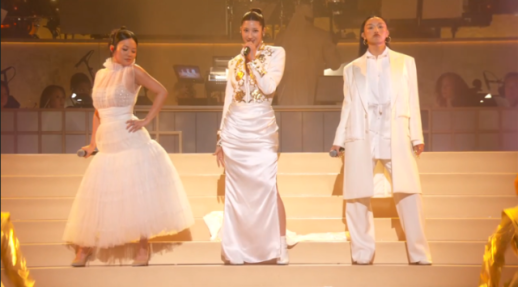 KPop Demon Hunters went Up, Up, winning 2 Oscars for Best Animated and Original Song *Updated with additional information SEOUL, March 16 (AJP) -KPop Demon Hunters turned Hollywood’s biggest night on Sunday into a K-pop celebration, sweeping two trophies at the 98th Academy Awards — Best Animated Feature and Best Original Song — as the Netflix sensation outshone heavyweight Hollywood contenders including Zootopia 2. Nearly a year after its global premiere, the animated hit — blending K-pop spectacle with Korean folklore and fantasy action — capped a remarkable awards-season run that has propelled it into one of the most culturally influential animated films in recent years. “To all the fans who got us here, and for all of those who look like me, sorry that it took us so long to see ourselves in a movie like this,” Korean-Canadian director Maggie Kang said as she accepted the award alongside co-director Chris Appelhans and writer Michelle L.M. Wong. “But it is here, and that means the next generations don’t have to go longing,” Kang added. “This is for Korea and for Koreans everywhere.” Produced by Sony Pictures Animation and released globally by Netflix, the film premiered on June 20, 2025 and quickly became one of the platform’s most-watched titles. The story follows fictional K-pop superstars Rumi, Mira and Zoey, who secretly battle supernatural threats while maintaining their global pop-idol personas — a concept that merges K-pop performance culture with animated fantasy storytelling. The film’s Oscar triumph capped a year-long wave of accolades, including major wins at the Golden Globe Awards, Critics Choice Awards and Grammy Awards. “Golden” captures Best Original Song The film also claimed the Best Original Song Oscar for “Golden,” a track that became a breakout hit from the film’s soundtrack. Written by EJAE, Mark Sonnenblick, Joong Gyu Kwak, Yu Han Lee, Hee Dong Nam, Jeong Hoon Seo and Teddy Park, the song was performed by EJAE, Audrey Nuna and REI AMI. “Growing up, people made fun of me for liking K-pop, but now everyone is singing our song,” singer-songwriter EJAE said in her acceptance speech. “I realized this award isn’t really about success — it’s about resilience. I’m incredibly grateful to our team, the amazing cast, all the producers, and of course my mom and dad.” Other nominees included “Dear Me” from Diane Warren: Relentless, “I Lied to You” from Sinners, “Sweet Dreams of Joy” from Viva Verdi!, and “Train Dreams” from Train Dreams. Hanbok-themed performance lights up Oscars stage The song also took center stage during the ceremony at the Dolby Theatre in Los Angeles, where EJAE, Audrey Nuna and REI AMI delivered a live performance of “Golden.” The stage opened with performers dressed in traditional Korean hanbok, accompanied by narration that built anticipation before the singers emerged in white to perform the K-pop-infused number. The performance blended synchronized choreography with Korean cultural imagery — bringing the film’s signature mix of K-pop aesthetics and folklore-inspired storytelling to the Oscars stage. With Netflix already announcing plans for a sequel, the triumph of K-Pop Demon Hunters suggests the film’s global cultural impact may only be beginning. 2026-03-16 08:54:47
 -
 Netflix’s ‘K-Pop Demon Hunters’ Wins Oscar for Best Animated Feature Netflix’s animated film ‘K-Pop Demon Hunters’ won an Oscar on Sunday night, taking the Academy Award for best animated feature at the 98th Academy Awards at the Dolby Theatre in Hollywood, Los Angeles. The film beat fellow nominees ‘Arco,’ ‘Elio,’ ‘Little Amelie’ and ‘Zootopia 2.’ Director Maggie Kang thanked fans and said, “I’m sorry it took so long to make a movie with a protagonist who looks like me.” She added, “The next generation won’t have to long for movies like this. This award is for Korea and Koreans around the world,” drawing applause. Co-director Chris Appelhans said music and storytelling can connect people across cultural borders, adding that he wanted artists and musicians to “sing in your own voice.” The Netflix action-fantasy centers on a K-pop idol group that fights evil spirits and protects the world through song. Released last June, it set a new Netflix record for most views, according to the report. The soundtrack song ‘Golden,’ performed in the film by the girl group Huntrix, topped Billboard’s main singles chart, the Hot 100. * This article has been translated by AI. 2026-03-16 08:48:06
 -
 Hanwha Tech and Life Units Expand AI-Driven Synergies, Pursue New Businesses Hanwha Group’s Tech and Life Solutions units, which are pursuing a corporate split, are stepping up efforts to develop new business models by creating synergies across divisions. The group aims to improve customer convenience, strengthen competitiveness across businesses and secure new revenue by opening new markets. The push is expected to gain momentum as the management drive of Kim Dong-seon, vice president of Hanwha Galleria and Hanwha Vision, combines with artificial intelligence across robotics, food and beverage, and distribution. Hanwha Galleria and Hanwha Vision said on the 16th that, starting with the latest collaboration, they will actively seek “new technologies” and “customized services” that can be used not only in distribution and services but also across a range of industrial sites. Both companies are set to be placed under a new Tech and Life holding company to be launched in the second half of this year, tentatively named Hanwha Machinery & Service Holdings. As a first step, Ourhome, which is expanding in group catering and food-ingredient distribution, will pilot Hanwha Vision’s AI technology at some sites to help prevent safety accidents, manage food hygiene and quality, and ensure smoother supply of ingredients. AI cameras installed in kitchens will check in real time whether cooks comply with dress and hygiene rules as they enter. The cameras will also detect unusual sounds and temperature changes to help prevent accidents such as fires. The companies are also pursuing an “intelligent automatic ordering system” to improve ingredient supply. A “BCR camera” that combines barcode recognition and video capture will automatically register inventory in real time, and the companies plan to develop a “customized SCM solution” in which AI places orders on its own. Hanwha also plans to introduce “customized services” using technology from Hanwha Vision and Hanwha Robotics at Galleria department stores and across hotels and resorts to improve customer convenience. Using AI cameras, the group plans to gauge store congestion and customer preferences to boost operating efficiency and service. It also plans a system that alerts employees immediately when AI cameras detect unusual situations. The companies’ food and beverage units plan to actively use Hanwha Robotics’ collaborative robots, including VINOBOT and cooking robots, in customer service. Once the ongoing corporate split is completed, the two units plan to set up a separate organization to drive new business development through cross-division synergies. New technologies will be applied first at Life unit sites, then expanded into business models aimed at generating outside revenue. A Hanwha official said cross-division synergies are “one of the key indicators” of the blueprint envisioned by Hanwha Machinery & Service Holdings, adding that the group will continue investing in research and development and collaboration to develop technologies that make daily life more convenient and better.* This article has been translated by AI. 2026-03-16 08:39:20
 -
 Autonomous A2Z, Busan Bus Operators Sign Deal to Advance Self-Driving Transit Autonomous A2Z, a South Korean autonomous-driving company, said it signed a memorandum of understanding with the Busan Metropolitan City Bus Transport Business Association on March 13 for “mutually beneficial cooperation to innovate public transportation based on autonomous driving.” The company said the agreement is aimed at combining advanced autonomous-driving technology with existing public transit operating experience to improve Busan’s autonomous public transportation services and build a cooperative framework to respond to future mobility needs. Under the deal, the two sides plan to cooperate on autonomous-driving demonstrations, joint research based on operational data, joint participation in pilot and demonstration projects, and the creation and operation of a working consultative body. Autonomous A2Z signed a separate MOU in September last year with the Seoul Special City Bus Transport Business Association and related organizations on “K-autonomous driving shared growth.” Last month, it also signed an agreement with the Korea National Federation of Taxi Transport Associations, expanding efforts to build a “Korean-style autonomous driving” ecosystem across public transportation, including buses and taxis. The company said it has accumulated demonstration experience in 13 cities and provinces nationwide, including Seoul, Sejong, Daegu and Anyang. “Autonomous driving technology is not meant to replace existing public transportation, but to work with various modes of mobility, including buses and taxis, to make urban mobility services more efficient as future social infrastructure,” Han said. He added that the company will use its technology and operating experience built in Seoul and other cities to develop an autonomous service model in Busan that works in step with public transportation.* This article has been translated by AI. 2026-03-16 08:36:16