

Journalist

CGTN
-
 Kim Yunji Wins Another Silver, Sets South Korea Record for Most Winter Paralympic Medals at One Games Kim Yunji, a 19-year-old rising star in South Korean para sports, added a silver medal on Tuesday to set a new national record for the most medals won by a South Korean athlete at a single Winter Paralympics. Kim finished second in the women’s 10-kilometer interval start cross-country skiing race at the 2026 Milan-Cortina Winter Paralympics, clocking 26 minutes, 51.6 seconds at the Tesero Cross-Country Stadium in Italy. Oksana Masters of the United States won gold. The result gave Kim one gold and two silvers at these Games, the most by a South Korean athlete at one Winter Paralympics. The previous mark was set by Shin Eui-hyun at the 2018 Pyeongchang Games with one gold and one bronze. Kim earlier won South Korea’s first Winter Paralympic gold medal by a female athlete in the women’s 12.5-kilometer individual biathlon and also took silver in the cross-country sprint. South Korea has four medals so far at these Games, including Kim’s three and a bronze by snowboarder Lee Je-hyeok. In wheelchair curling, the mixed doubles team of Baek Hye-jin and Lee Yong-seok has reached the final, guaranteeing at least a silver medal.* This article has been translated by AI. 2026-03-11 20:27:00
 -
 Novo Nordisk to Cut Wegovy U.S. Wholesale Price Up to 50%, Raising Pressure on GLP-1 Rivals Novo Nordisk’s obesity drug Wegovy will see its U.S. wholesale acquisition cost cut to about half starting next year, a move that industry watchers say signals a shift toward price competition in the fast-growing glucagon-like peptide-1 (GLP-1) market. According to the industry on Tuesday, the Danish drugmaker will reduce the WAC for Wegovy injections, oral Wegovy and the oral diabetes drug Rybelsus by 35% to 50% starting Jan. 1. The monthly list price for GLP-1 treatments will be adjusted to $675, about 1.01 million won, roughly half of Wegovy’s previous level. WAC is the wholesale list price before discounts and rebates. Because the U.S. government does not directly control drug prices, WAC serves as a benchmark for negotiations with insurers and wholesalers. A lower WAC can also pull down reference prices in other markets. The price cut is being read as a response to patent expirations and intensifying competition. Patents on semaglutide, Wegovy’s key ingredient, are set to expire starting this month in countries including China, India and Brazil. With China-developed drugs and low-cost generics coming into view, the company appears to be moving early to defend market share. The GLP-1 obesity-drug market is expanding rapidly. It is estimated at about $72 billion, about 107 trillion won, and is projected to reach $139 billion, about 206 trillion won, by 2030. Still, some in the industry caution that a larger market does not necessarily translate into higher profits. “For example, the toxin market grew, but cutthroat competition among companies only intensified,” one industry official said. Competition is also becoming more complex as GLP-1 treatments, long dominated by injections, expand into oral formulations. Some analysts describe the shift as a transition from high-priced breakthrough therapies to more widely used treatments. The price pressure is expected to weigh on South Korean companies as well. Among domestic GLP-1 obesity candidates, Hanmi Pharmaceutical’s efpeglenatide is considered the most advanced, with the company aiming for a launch in the second half of this year. Other obesity drugs under development in South Korea are largely in Phase 1 or Phase 2 trials. If global benchmark prices fall, domestic new drugs are likely to face added pressure in pricing. Recovering clinical costs that can run into the trillions of won would require sharply higher sales volumes, but late entrants may struggle to win market share quickly. “Even if latecomers enter, profitability could drop sharply in an already lower global pricing environment,” another industry official said, adding that differentiation such as improved formulations or fewer side effects will be needed.* This article has been translated by AI. 2026-03-11 18:33:00
 -
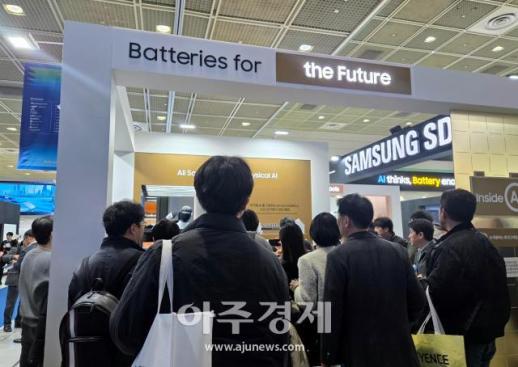 InterBattery 2026 Showcases Solid-State Batteries for Humanoid Robots “I came to see the solid-state battery that’s supposed to go into a humanoid robot, but there are so many people the line is long.” South Korea’s largest battery exhibition, InterBattery 2026, opened on March 11 with companies competing to showcase solid-state battery technology. With expectations rising for next-generation demand such as humanoid robots, crowds gathered around the displays. South Korea’s three major battery makers are seeking a rebound from a temporary demand slowdown by highlighting next-generation technology, aiming to secure future customers and regain initiative in a global market led by China. Samsung SDI unveiled a pouch-type solid-state battery sample for “physical AI,” drawing reactions from visitors surprised to see a sample already on display. The company said it aims to mass-produce the battery in the second half of next year for use in applications including robots and aviation systems. Choi Go-ul, a Samsung SDI group leader, told reporters that the pouch-type solid-state battery unveiled that day is scheduled to be mass-produced in 2027 and used in humanoid robots. LG Energy Solution also displayed a solid-state battery cell intended for humanoid robots, citing advantages such as higher energy density and faster charging beyond the limits of lithium-ion batteries. In robotics, an autonomous driving robot called Carti100 drew attention. The exhibit highlighted that cylindrical batteries can deliver output and durability suited to harsh industrial sites. At SK On’s booth, visitors clustered around a display of its sulfide-based solid-state battery. The company also exhibited a Hyundai Wia logistics robot AMR equipped with a high-nickel ternary battery. The robot is used for logistics automation at industrial sites including Hyundai Motor Group Metaplant America, known as HMGMA. Nam Sang-cheol, head of the cathode materials research center at battery materials maker Posco Future M, said at the event that the company is working with U.S. battery startup Factorial to develop batteries for drones and humanoid robots. He said the commercialization target is 2028 and that Posco Future M’s cathode materials are expected to be adopted by multiple customers. Nam said the company is also developing solid-state batteries and is supplying materials at the pilot stage in quantities ranging from tens to hundreds of kilograms. He added that it has completed development of a technology applying a nano-scale thin coating to cathode surfaces and has secured related patents.* This article has been translated by AI. 2026-03-11 18:05:46
 -
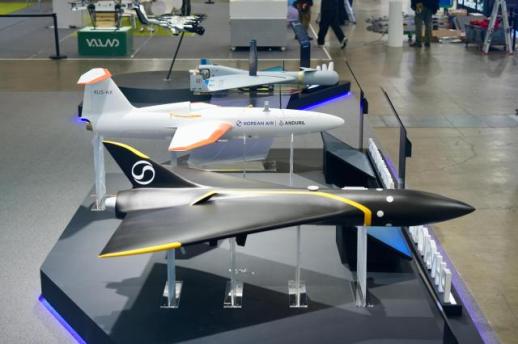 Korean Air Expands Defense Portfolio With Small Drones Rising military tensions in the Middle East amid U.S.-Iran friction have underscored drones as a core capability in modern warfare, with countries moving to field more systems that can deliver high operational impact at relatively low cost. Korean Air, South Korea’s largest airline, is adding drones to its portfolio beyond passenger and cargo transport as it pushes deeper into the defense aviation market. As of March 11, industry officials said Korean Air’s aerospace division is seeking to expand the scope of its unmanned aircraft business with U.S. defense firm Anduril. At Drone Show Korea (DSK) 2026 in Busan last month, the company showcased an AI small drone and swarm-flight drones, among other systems. The small unmanned aircraft drew interest from U.S. Forces Korea and officials from Southeast Asian and Middle Eastern countries, according to reports. Korean Air last year began developing small unmanned aircraft for battlefield use with the Agency for Defense Development and is nearing commercialization, the officials said. Small drones have recently reshaped battlefields in the Middle East and Europe, carrying out missions beyond reconnaissance, including precision strikes and disrupting air defenses. Bloomberg and other outlets have reported that Iran’s main loitering munition, the Shahed-136, costs about $20,000 per unit, while air-defense missiles used to shoot them down can cost billions of won. The U.S. Department of Defense has launched a “Drone Dominance Program” to deploy large numbers of high-performance, low-cost drones. It plans to invest about $1.1 billion through next year to field more than 350,000 expendable, low-cost loitering munitions. Korean Air is also widening its position in South Korea’s defense sector, pursuing development of a medium-altitude unmanned aerial vehicle about the size of a fighter jet and a low-observable unmanned wingman aircraft. The company completed rollout of its first prototype last year. In military aviation, Korean Air has secured major projects. In August, the Defense Acquisition Program Administration selected the company as the preferred bidder for a 961.3 billion won ($?) performance upgrade program for 36 UH-60 Black Hawk helicopters. In December, it won a 1.8 trillion won electronic warfare aircraft (Block-I) system development project as part of a consortium with LIG Nex1. It also won an airborne early warning and control aircraft project worth 3.9 trillion won. “To strengthen capabilities in the domestic aerospace business and build a foundation for sustainable growth, we are identifying a range of business opportunities based on the technology and experience we have accumulated,” a Korean Air official said.* This article has been translated by AI. 2026-03-11 18:03:42
 -
 Miyeon, NOWZ set to perform at fashion-themed festival in Tokyo SEOUL, March 11 (AJP) - Miyeon of K-pop girl group i-dle and rookie boy band NOWZ will perform at Japan's "Tokyo Girls Collection," the island country's largest fashion-themed festival, according to their agency Cube Entertainment. Miyeon, along with five-member boy band NOWZ consisting of Hyunbin, Yoon, Yeonwoo, Jinhyuk, and Siyun will appear at the festival, which celebrates its 42nd year, scheduled for Thursday at Yoyogi National Stadium in Tokyo. The festival, often abbreviated as TGC, is a biannual fashion event that has been running since 2005. The event blends runway shows highlighting Japanese street fashion with live performances by popular artists including NewJeans, LE SSERAFIM, FIFTY FIFTY, TWICE, BLACKPINK and Tomorrow X Together. Miyeon, who debuted in 2018 as a member of K-pop girl group i-dle, released her second mini album "MY, Lover" in November 2025 and has built recognition through appearances at global festival stages including Dream Concert Abu Dhabi 2025. The group recently kicked off their fourth world tour starting with concerts in Seoul. Debuted in 2024, NOWZ recently released their Japanese debut EP and have been active in Japan. They are expected to energize the festival with their signature high-energy performance. 2026-03-11 18:00:38
 -
 Iran's 'Drones vs Patriots': If U.S. forces shift, who guards South Korea's skies? SEOUL, March 11 (AJP) - As U.S. air-defense assets are increasingly drawn into the widening war with Iran, South Korea faces an uncomfortable question: how much of its own air and missile defense can it sustain without American cover. Seoul has quietly acknowledged it cannot prevent U.S. tactical assets from being redeployed if Washington needs them elsewhere. The concern is not abstract. North Korea’s missile and drone tactics bear striking similarities to those now being tested in the Middle East. Iran’s campaign illustrates the emerging battlefield logic. Tehran is firing waves of cheap suicide drones and ballistic missiles that cost tens of thousands of dollars each. The United States and Israel are shooting them down with Patriot and THAAD interceptors costing hundreds of thousands — sometimes millions — per shot. It is a classic “cost-mass” war: low-cost weapons forcing defenders to expend far more expensive interceptors. Every military now faces the same question — how long it can afford to sustain that exchange. The current phase of the conflict began in late February when the United States and Israel launched coordinated strikes on Iranian nuclear facilities, missile bases and Islamic Revolutionary Guard Corps command centers. Iran responded with large-scale retaliatory barrages — hundreds of ballistic and sea-launched missiles and roughly 2,000 drones targeting U.S. bases, Israel and energy infrastructure across the Gulf. Although the tempo of launches eased in March, the pattern has settled into a grinding contest of attrition. At the center of Iran’s strategy is the Shahed-136 loitering munition, a relatively simple drone costing between $20,000 and $50,000 that can be launched in swarms to overwhelm air defenses. These drones are paired with Fateh and Shahab ballistic missiles and low-flying cruise missiles designed to saturate and probe Western missile shields. Opposing them is a multilayered U.S.-led defense network built around Patriot PAC-3 and THAAD batteries, backed by fighter aircraft and long-range bombers striking launch sites and command nodes. Interception rates in some sectors have exceeded 90 percent — but the exchange is costly. For South Korea, the battlefield dynamics unfolding in the Middle East mirror a scenario military planners have long warned about. North Korea has repeatedly rehearsed what analysts call “compound saturation attacks” — launching ballistic missiles, cruise missiles and drones simultaneously to overwhelm defenses. Pyongyang has also unveiled short-range missiles believed capable of carrying tactical nuclear warheads. Greater Seoul is already exposed to long-range artillery. In a crisis it could also face salvos of dozens or even hundreds of missiles launched in quick succession. The Iran conflict has begun to reshape the defense calculus on the peninsula. The Washington Post, citing Pentagon officials, recently reported that Washington has begun moving elements of a THAAD battery out of South Korea to reinforce missile defense in the Middle East. The Pentagon is also examining Patriot and THAAD interceptor stocks across the Indo-Pacific as potential reserves for a prolonged campaign against Iran. The U.S. Defense Department has declined to comment on specific redeployments, but officials acknowledge that air-defense assets are being shifted between theaters as Iranian missile and drone attacks intensify. For Seoul, the message is blunt: in a prolonged conflict, American missile defenses will be deployed where they are needed most. South Korea’s answer to that strategic uncertainty is L-SAM, its first domestically developed upper-tier missile interceptor. Hanwha Aerospace declared the program complete last November, marking the first time the top layer of Korea’s missile-defense architecture — the Korea Air and Missile Defense system (KAMD) — has been filled with a fully indigenous weapon. L-SAM interceptors are designed to destroy incoming ballistic missiles at altitudes of roughly 50 to 60 kilometers using hit-to-kill technology. Only a handful of countries — including the United States and Israel — have independently developed the full combination of interceptor, long-range radar and battle-management systems required for such missions. “From a technology perspective, South Korea is clearly capable of developing systems like L-SAM,” said Choi Seung-woo, head of the North Korea Nuclear Response Policy Center at the Seoul Security Forum. But missile defense, he noted, must be viewed as a layered architecture rather than a single weapon system. “Air and missile defense runs from high altitude through midcourse to terminal interception,” Choi said. “Simply asking whether L-SAM can replace Patriot is far too narrow.” Building a layered shield Under the current KAMD structure, Patriot PAC-2/3 and the domestically developed Cheongung-II (M-SAM-II) cover interceptions up to roughly 40 kilometers. L-SAM takes over in the 50-to-60 kilometer band. Above that layer — between roughly 40 and 150 kilometers — South Korea still relies heavily on the U.S.-operated THAAD battery deployed on the peninsula. A follow-on system, L-SAM-II, now under development, is intended to extend South Korea’s indigenous intercept capability into that upper tier in the early 2030s. The Iran war, analysts say, underscores why such capabilities matter. “For interception performance, Cheongung-II already reaches the mid-90 percent range,” said Choi Gi-il, a military studies professor at Sangji University. “Together with L-SAM, South Korea has the ability to substitute for U.S. airpower in key areas. I don’t think talk of an air-defense vacuum is justified.” He added that L-SAM should be compared not with Patriot but with higher-tier systems such as THAAD or Israel’s Arrow interceptor. “Viewed that way, South Korea is not in a position where it needs to panic about defending against North Korea.” Still, the longer the Iran war drags on, the more it exposes a structural reality of the U.S. alliance system. American strategic assets — Patriots, THAAD batteries and interceptor stockpiles — are global resources that can be shifted wherever Washington deems the threat most urgent. For Seoul, that makes the drive toward an indigenous missile shield less a matter of prestige than strategic insurance. With L-SAM now operational and follow-on systems under development, South Korea is gradually building the kind of multilayered air-defense architecture that would allow it to hold its own skies — if allied interceptors are needed elsewhere. 2026-03-11 17:58:23
 -
 Samsung strike risk rises as 60 percent of union members cast ballots SEOUL, March 11 (AJP) - The likelihood of a strike at Samsung Electronics, the world’s largest memory chipmaker supplying about a quarter of global DRAM, is rising as more than 60 percent of its unionized workers have cast ballots on collective action over disputes about employee bonuses. A joint strike committee representing three Samsung labor unions said Wednesday that over 60 percent of their roughly 90,000 members had participated in the vote since balloting began Monday. Under South Korean law, a strike requires approval from a majority of total union membership. The largest group, the Samsung Group Unified Union, reportedly surpassed the 50 percent participation threshold on the first day alone. The ballot, which runs through March 18, could pave the way for a joint protest next month and potentially a full-scale strike between May 21 and June 7 if the motion passes. The vote follows a breakdown in wage negotiations after the National Labor Relations Commission suspended mediation between Samsung and its three main unions — the Samsung Electronics Labor Union (SELU), the National Samsung Electronics Union and Samsung Electronics Co. Union. Together they represent more than 90,000 employees, roughly 70 percent of Samsung Electronics’ 129,000 workforce, making the potential walkout one of the most consequential labor actions in the company’s history. At the heart of the dispute is Samsung’s Economic Value Added (EVA) bonus system. Unlike local rival SK hynix, which distributes 10 percent of operating profit as bonuses and recently removed its payout cap, Samsung calculates performance rewards after deducting capital costs and taxes from operating profit. Union members argue the formula makes bonuses opaque and unpredictable. “We initially demanded 20 percent of operating profit, but management offered us a choice between maintaining the current 20 percent EVA or shifting to a 10 percent operating profit model, which actually results in a smaller bonus pool,” a union official told AJP. “What matters is that the bonus system must be transparent and predictable. The company needs to fundamentally reform the standard, starting with abolishing the annual salary cap,” the official added. A prolonged strike could disrupt global IT supply chains because about 70 percent of the unionized workforce consists of engineers in Samsung’s critical Device Solutions (DS) division, which oversees semiconductor manufacturing. The union strongly rejected the common industry assumption that highly automated semiconductor fabs could easily withstand a walkout. “Only the wafer transport system is automated,” the official said. “If equipment fails or a safety interlock is triggered and engineers are not there to fix it, the machines simply stop.” “For example, if 10,000 of the 14,000 workers at the Pyeongtaek campus join the strike, the plant would effectively be paralyzed. A two-week general strike would inevitably lead to production disruptions and declining chip quality.” The unions plan to announce the voting results on March 18, hold a mass rally on April 23 and potentially begin a general strike in May unless management presents a revised proposal. The dispute comes less than a year after Samsung experienced its first-ever strike in July 2024, led by the National Samsung Electronics Union. That walkout ended without major production losses, but the current movement poses a greater threat due to the larger number of engineers involved. Samsung Electronics declined to comment on the potential strike or the unions’ demands. Samsung, which enforced a strict “no-union” policy for decades, has seen organized labor expand rapidly since Chairman Jay Y. Lee publicly apologized in 2020 and pledged to end the practice. The growing mobilization of younger engineers demanding transparent compensation is increasingly challenging Samsung’s traditional corporate culture at a time when the company faces fierce competition from global rivals such as TSMC and SK hynix in the race for AI semiconductor dominance. “Some argue Samsung’s no-union culture helped fuel its past growth, but the company can no longer go against the flow of the times,” said Hwang Yong-sik, a business professor at Sejong University. “At a critical moment when Samsung must compete with global rivals, repeating confrontations over an opaque bonus structure is a severe waste of time and resources.” Hwang said management must address the root cause of distrust. “SK hynix is delivering record results while paying top bonuses without internal conflict. Samsung needs to face reality and find a tailored compromise rather than clinging to outdated methods,” he added. The labor dispute comes at a critical moment as Samsung Electronics races to catch up with SK hynix in high-bandwidth memory (HBM), the AI-era chip at the center of multibillion-dollar supply contracts with Nvidia and other big-tech names. 2026-03-11 17:53:34
 -
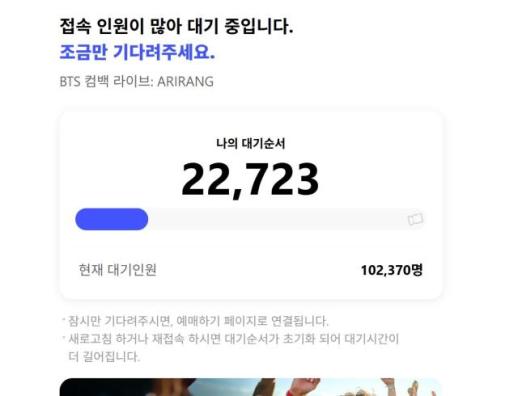 BTS Comeback D-10 South Korea flags 1,800 resale listings for BTS concerts SEOUL, March 11 (AJP) - Korea’s culture ministry said Wednesday it had referred four suspected ticket-scalping cases involving 105 BTS concert tickets to police after identifying more than 1,800 resale listings online. The Ministry of Culture, Sports and Tourism said it found 1,868 online posts offering BTS concert tickets for resale, including duplicate listings, while monitoring major Korean secondhand trading platforms such as Joonggonara, Ticketbay, Karrot Market and Bunjang. Authorities said the suspected scalping cases involved sellers who allegedly secured multiple tickets for the same show and attempted to resell them at steep premiums. The listings were linked to BTS’s comeback performance scheduled for March 21 at Gwanghwamun Square in central Seoul and BTS' world tour set to take place in Goyang from April 9 to 12. Officials said resold tickets are unlikely to grant entry because strict identity verification procedures will be enforced at the events. According to organizers, the Gwanghwamun concert will use a mobile QR code system that blocks screenshots and prevents codes from being reused once scanned. Attendees will also undergo identity verification with designated identification and receive non-transferable wristbands upon entry. Random identity checks will continue inside the venue, and anyone found using a transferred ticket will be removed immediately, authorities said. The ministry warned that ticket resale posts and related scams could surge around 8 p.m (1100 GMT). Thursday when an additional round of ticket sales for the Gwanghwamun concert is scheduled to open. Korea has recently tightened regulations to combat ticket scalping. Amendments for the Performance Act and the National Sports Promotion Act, promulgated on Feb. 27 and set to take effect Aug. 28, will prohibit illegal ticket resale regardless of whether automated purchasing programs, or macros, were used. The revised laws will also allow authorities to impose surcharges of up to 50 times the resale amount and introduce reporting reward systems for illegal ticket sales. The ministry launched a public-private task force on March 5 to strengthen cooperation with ticket vendors and online trading platforms in tackling ticket scalping. Culture Minister Choi Hwi-young said scalping disrupts the fair distribution of tickets and exploits fans’ enthusiasm for popular culture. “Starting with this investigation request, we will continue firm and consistent measures until ticket scalping is eradicated and a fair ticketing culture is established,” Choi said. He also warned fans against purchasing resale tickets, noting that strict identity checks make ticket transfers virtually impossible and could expose buyers to fraud if sellers disappear after the transaction. 2026-03-11 17:48:36
 -
 Korean stocks rise on chip gains as Taiwan leads Asian rally SEOUL, March 11 (AJP) - Asian stocks were mostly higher Wednesday, with Taiwan leading regional gains as semiconductor shares rallied across the region, while Korean equities advanced on institutional buying and corporate shareholder-return announcements. Taiwan’s benchmark TAIEX surged 4.1 percent to 34,114.2, marking the strongest performance among major Asian markets. The rally was driven by chipmaker TSMC, which climbed 4.86 percent to 1,940 TWD ($ 61.1) in active trading as global semiconductor stocks extended gains following a technology-led rebound on Wall Street. In Seoul, the benchmark KOSPI rose 1.4 percent to 5,609.95, after briefly climbing to an intraday high of 5,746.36 before paring gains late in the session. Institutional investors bought 781.4 billion won ($532 million) worth of shares, while individual investors sold 508.1 billion won and foreign investors offloaded 255.6 billion won. Technology shares supported the market, with Samsung Electronics rising 1.12 percent to 190,000 won and SK hynix gaining 1.81 percent to 955,000 won. Among other heavyweight stocks, Samsung Biologics jumped 4.1 percent to 1,657,000 won, while Hyundai Motor advanced 1 percent to 530,000 won. Battery maker LG Energy Solution added 0.7 percent to 369,500 won, and internet platform giant Naver rose 0.7 percent to 222,000 won. Investor sentiment toward Korean equities was also buoyed by shareholder-return announcements after Samsung Electronics and SK Group unveiled large-scale treasury share cancellations. However, gains faded toward the close as investors grew cautious ahead of the quarterly derivatives expiration known as “quadruple witching day” and the release of the U.S. consumer price index (CPI) later in the day. The tech-heavy KOSDAQ slipped 0.1 percent to close at 1,136.83. Individual investors purchased 254.3 billion won, while foreign investors around 81.2 billion won and institutions offloaded 126.7 billion won. Meanwhile, several telecom equipment makers surged on the secondary board, defying the broader decline in the KOSDAQ market. Shares of Daehan Optical Communication jumped 29.95 percent, while HFR, Solid, Inno Instrument and KMW all hit the daily upper limit. The rally came amid expectations of stronger global investment in telecommunications infrastructure, as demand for high-speed networks grows alongside the expansion of AI and robotics technologies. Moreover, U.S. pressuring to curb the use of Chinese telecom equipment could benefit Korean suppliers with strong export exposure. In other parts of Asia, Japan’s Nikkei 225 rose 1.4 percent to 55,025.37, while the broader TOPIX gained 0.9 percent to 3,698.9, supported by technology and auto shares. Automaker Toyota climbed 1.1 percent, while electronics giant Sony added 1.3 percent. Mainland Chinese markets posted modest gains. The Shanghai Composite edged up 0.3 percent to 4,133.71, while the CSI 300 rose 0.6 percent to 4,704.5, as investors remained cautious amid persistent geopolitical uncertainty. Elsewhere in the region, Australia’s S&P/ASX 200 advanced 0.6 percent to 8,743.5, while India’s Nifty 50 slipped 1.1 percent in afternoon trading. Global risk sentiment remained fragile despite the regional rebound. Brent crude climbed to $89.56 a barrel, while WTI crude rose to $85.4, reflecting continued concerns over potential supply disruptions tied to tensions around the Strait of Hormuz. In currency markets, the Korean won traded at around 1,469.4 per dollar, slightly firmer on the day. The Japanese yen hovered near 158.1 per dollar, while the Chinese yuan stood at about 6.87 per dollar. Meanwhile, the U.S. 10-year Treasury yield stood at 4.143 percent, while the dollar index slipped slightly to 98.8. Wall Street futures pointed modestly higher during Asian trading, with S&P 500 futures up 0.2 percent and Nasdaq futures gaining 0.1 percent. In Seoul, shipbuilding stocks rallied on expectations that longer energy transport routes could boost demand for LNG carriers and oil tankers amid heightened tensions in the Middle East. Hanwha Ocean surged 7.4 percent, while Samsung Heavy Industries gained about 3 percent and HD Hyundai Heavy Industries also moved higher. 2026-03-11 17:47:34
 -
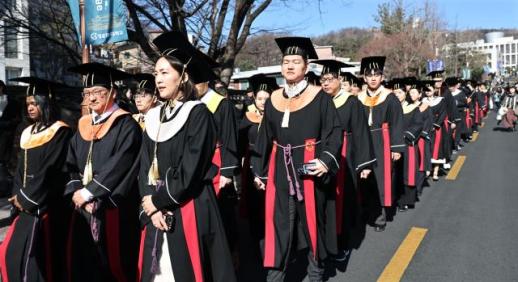 AI reshapes entry-level jobs as Korea nears '20,000 Ph.D. era' SEOUL, March 11 (AJP) - As artificial intelligence reshapes white-collar work, more South Koreans are staying in school longer — and earning Ph.D.s in record numbers. Universities awarded 19,831 doctoral degrees in 2025, according to data released Tuesday by the Korean Educational Development Institute, the highest since records began in 1999 and a 51.6 percent increase over the past decade. The milestone places the country on the brink of what policymakers call the “20,000 Ph.D. era.” The surge reflects a rapidly changing labor market in which AI is increasingly automating entry-level analytical and research tasks — from finance and legal work to data analysis — pushing many young professionals to pursue deeper specialization to remain competitive. Yet the rise also highlights a growing paradox: while more South Koreans are earning the highest academic credential available, many struggle to find jobs that match their qualifications. Among 7,005 doctoral graduates employed last year, 10.4 percent reported earning less than 20 million won annually, roughly $15,000 — up from 6.3 percent in 2011. When the national statistics series began in 1999, only 5,586 people earned doctoral degrees nationwide, and a Ph.D. was widely seen as a rare credential reserved mainly for future academics. The numbers climbed steadily as universities expanded graduate programs and competition in the labor market intensified. By 2010 the annual number of Ph.D. graduates surpassed 10,000, marking the rapid expansion of doctoral education. With nearly 20,000 new doctorates last year, the figure has almost quadrupled over a quarter century. The latest data also highlight a major shift in gender balance. In 2025, 8,629 women received doctoral degrees, the first time the number of female Ph.D. graduates exceeded 8,000 in a single year. Women accounted for 43.5 percent of all doctoral recipients, the highest proportion since records began. The change is striking compared with the late 1990s. In 1999, only 1,144 women earned Ph.D.s, representing 20.5 percent of the total. The motivations behind doctoral study have also evolved. In a survey of 10,498 recent doctoral graduates conducted by the Korea Research Institute for Vocational Education and Training, the most common reason for pursuing a Ph.D. was to improve professional expertise, cited by 37.5 percent of respondents. The share slightly exceeded the 35.5 percent who said they aimed to become professors or researchers. That represents a shift from earlier years. When the survey began in 2011, 43.2 percent cited academic careers as their primary goal. Analysts say the shift reflects growing uncertainty about academic career paths as well as broader changes in the labor market. Even as doctoral graduates increase, evidence suggests the labor market has struggled to absorb them. A report by the vocational education institute found that 31 percent of South Korean workers are overeducated for their jobs, significantly higher than the 23 percent average among countries in the Organization for Economic Co-operation and Development. At the same time, 49 percent of college graduates work in jobs unrelated to their majors, compared with the OECD average of 38 percent. “The high level of overeducation indicates a strong inflow of highly educated workers into relatively simple positions,” the report said. Researcher Lee Soo-hyun, who led the study, warned that such mismatches could have long-term economic costs. “A double mismatch — being both overeducated and working outside one’s field — can prevent individuals from fully utilizing their capabilities,” she said. Economists say the surge in doctoral degrees ultimately reflects structural pressures in South Korea’s labor market. “The high level of overeducation in Korea is largely due to insufficient demand for high-quality jobs,” said Kwon Sang-uk, a professor at Kyungpook National University. “When there are far more job seekers than desirable positions, workers naturally try to differentiate themselves by accumulating more qualifications.” He contrasted the situation with the United States, where academic credentials more closely align with labor market segmentation. “In Korea, a university diploma no longer guarantees employment,” Kwon said. “That pushes people to build increasingly stronger credentials.” External factors may also be contributing to the rise in domestic Ph.D. programs. A weaker Korean won has made studying abroad more expensive, while stricter immigration policies in the United States have discouraged some Korean students from pursuing doctoral programs overseas. Those shifts may be pushing more students to remain in Korea for graduate education or for some to stay competitive against AI competition. “The Ph.D. represents deep expertise in a specific field,” Kwon said. “While artificial intelligence makes general knowledge widely accessible, understanding complex systems and applying advanced research methods still requires intensive training.” Demand for such expertise is likely to grow in sectors such as robotics, advanced manufacturing and cutting-edge technologies, he added — even as competition intensifies in traditional academic careers. 2026-03-11 17:46:19