


Universities awarded 19,831 doctoral degrees in 2025, according to data released Tuesday by the Korean Educational Development Institute, the highest since records began in 1999 and a 51.6 percent increase over the past decade.
The milestone places the country on the brink of what policymakers call the “20,000 Ph.D. era.”
The surge reflects a rapidly changing labor market in which AI is increasingly automating entry-level analytical and research tasks — from finance and legal work to data analysis — pushing many young professionals to pursue deeper specialization to remain competitive.
Yet the rise also highlights a growing paradox: while more South Koreans are earning the highest academic credential available, many struggle to find jobs that match their qualifications.
Among 7,005 doctoral graduates employed last year, 10.4 percent reported earning less than 20 million won annually, roughly $15,000 — up from 6.3 percent in 2011.
When the national statistics series began in 1999, only 5,586 people earned doctoral degrees nationwide, and a Ph.D. was widely seen as a rare credential reserved mainly for future academics.

By 2010 the annual number of Ph.D. graduates surpassed 10,000, marking the rapid expansion of doctoral education. With nearly 20,000 new doctorates last year, the figure has almost quadrupled over a quarter century.
The latest data also highlight a major shift in gender balance.
In 2025, 8,629 women received doctoral degrees, the first time the number of female Ph.D. graduates exceeded 8,000 in a single year. Women accounted for 43.5 percent of all doctoral recipients, the highest proportion since records began.
The change is striking compared with the late 1990s. In 1999, only 1,144 women earned Ph.D.s, representing 20.5 percent of the total.
The motivations behind doctoral study have also evolved.
In a survey of 10,498 recent doctoral graduates conducted by the Korea Research Institute for Vocational Education and Training, the most common reason for pursuing a Ph.D. was to improve professional expertise, cited by 37.5 percent of respondents.
The share slightly exceeded the 35.5 percent who said they aimed to become professors or researchers.
That represents a shift from earlier years. When the survey began in 2011, 43.2 percent cited academic careers as their primary goal.
Analysts say the shift reflects growing uncertainty about academic career paths as well as broader changes in the labor market.
Even as doctoral graduates increase, evidence suggests the labor market has struggled to absorb them.
A report by the vocational education institute found that 31 percent of South Korean workers are overeducated for their jobs, significantly higher than the 23 percent average among countries in the Organization for Economic Co-operation and Development.
At the same time, 49 percent of college graduates work in jobs unrelated to their majors, compared with the OECD average of 38 percent.
“The high level of overeducation indicates a strong inflow of highly educated workers into relatively simple positions,” the report said.
Researcher Lee Soo-hyun, who led the study, warned that such mismatches could have long-term economic costs.
“A double mismatch — being both overeducated and working outside one’s field — can prevent individuals from fully utilizing their capabilities,” she said.

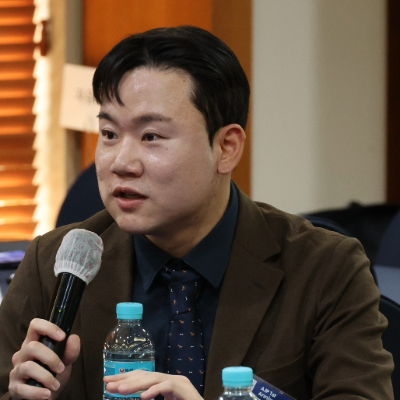
“The high level of overeducation in Korea is largely due to insufficient demand for high-quality jobs,” said Kwon Sang-uk, a professor at Kyungpook National University.
“When there are far more job seekers than desirable positions, workers naturally try to differentiate themselves by accumulating more qualifications.”
He contrasted the situation with the United States, where academic credentials more closely align with labor market segmentation.
“In Korea, a university diploma no longer guarantees employment,” Kwon said. “That pushes people to build increasingly stronger credentials.”
External factors may also be contributing to the rise in domestic Ph.D. programs.
A weaker Korean won has made studying abroad more expensive, while stricter immigration policies in the United States have discouraged some Korean students from pursuing doctoral programs overseas.
Those shifts may be pushing more students to remain in Korea for graduate education or for some to stay competitive against AI competition.
“The Ph.D. represents deep expertise in a specific field,” Kwon said. “While artificial intelligence makes general knowledge widely accessible, understanding complex systems and applying advanced research methods still requires intensive training.”
Demand for such expertise is likely to grow in sectors such as robotics, advanced manufacturing and cutting-edge technologies, he added — even as competition intensifies in traditional academic careers.
Copyright ⓒ Aju Press All rights reserved.
