

Journalist

CGTN
-
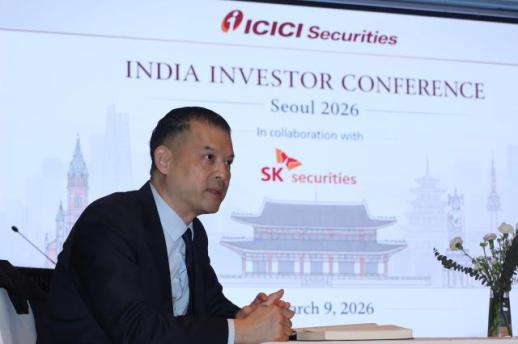 Korea and India beef up institutional financing to prepare for expanding business ties SEOUL, March 09 (AJP) - Institutional financing links between South Korea and India are gaining traction as the world's most populous nation accelerates economic expansion and seeks advanced manufacturing capabilities in sectors ranging from small modular nuclear reactors to defense and shipbuilding. A closed-door investor relations conference jointly hosted by SK Securities and India's ICICI Group in Seoul on Monday underscored the growing momentum. The event drew major Korean institutional investors including Korea Investment & Securities, Mirae Asset Securities and the National Pension Service, alongside prominent Indian conglomerates such as the Adani Group. "There is a lot of complementarity between the two countries' industries," said Patrick Han, head of global business at SK Securities. "Financial institutions can play a key role in facilitating foreign direct investment and industrial cooperation." India, now the world's fifth-largest economy with a gross domestic product of roughly $4.1 trillion, has emerged as an increasingly attractive destination for Korean capital. The United Nations projects the country's economy will expand about 6.6 percent in 2026, maintaining its position as the fastest-growing major economy. Despite the momentum, economic ties remain relatively underdeveloped compared with their potential. Trade between the two countries reached about $26.9 billion in the 2024–25 fiscal year, according to combined data from Seoul and New Delhi. For India, South Korea ranks as a mid-tier trading partner. For Korea, however, the Indian market still accounts for only around 3 percent of total exports — far behind its major destinations such as China, the United States and Vietnam. Similarly, Korean investment in India remains modest. According to India's Ministry of External Affairs and the India Brand Equity Foundation, cumulative Korean foreign direct investment in India has totaled roughly $6.7 billion since 2000, placing Korea around the 13th-largest investor. A broader estimate by the Indian government suggests cumulative investment may be closer to $10 billion, with about $929 million flowing into India in 2024 alone. Market participants say the relatively low base leaves significant room for expansion as both economies seek to diversify supply chains and investment partnerships. Nuclear sector opens new opportunities One area drawing particular interest from investors is India's newly liberalized nuclear energy sector. India's parliament passed legislation in December 2025 allowing private companies for the first time to participate in the country's nuclear power industry, opening the door for foreign investors and technology providers. Frederick Peter Jones, co-founder of Fairwood Nuclear and a veteran energy executive who previously served as a strategic adviser to the president of the Organization of the Petroleum Exporting Countries, attended the conference specifically to explore investment opportunities related to small modular reactors. "India is very interested in SMRs and all forms of energy, including green energy like solar and wind," Jones said. "Energy demand is enormous, and the country is looking at every possible option." India has allocated 20,000 crore rupees, or about $2.16 billion, for SMR research and development under a new Nuclear Energy Mission. The government aims to deploy at least five domestically developed SMRs by 2033. Defense cooperation deepens The conference also highlighted expanding opportunities in the defense sector, where Korean technology has gained increasing attention following renewed tensions along the India-Pakistan border. India is preparing to induct an additional 100 K9 Vajra-T self-propelled howitzers manufactured by Hanwha Aerospace, reflecting deepening defense ties between the two countries. Korean companies have also demonstrated the viability of the Indian capital market through successful listings. Shares of LG Electronics India surged about 50 percent on their market debut in October 2025 after the initial public offering attracted the strongest investor demand for an Indian listing since 2008. Hyundai Motor India had earlier raised about $3.3 billion in October 2024 in what was then India's largest-ever IPO. Shipbuilding emerges as another pillar Shipbuilding is emerging as another promising area for bilateral industrial cooperation. Korean shipbuilders are exploring potential technology transfers for conventional vessels such as tankers and bulk carriers to Indian partners, potentially providing an alternative to China's dominance in the segment. In an interview with AJP earlier this year, Indian Ambassador to South Korea Gourangalal Das said New Delhi is actively seeking Korean expertise to build up its domestic shipbuilding industry. "There is huge demand for ships in India," Das said. "Korea brings a lot of value in terms of technology and competence, and it is a trusted partner." India is backing that ambition with one of its most comprehensive industrial policy drives in decades. Under the country's Union Budget announced last year, New Delhi unveiled a large-scale shipbuilding support program combining financing assistance, cost subsidies and cluster-based industrial development. The initiative is aligned with the government's long-term road maps — Maritime India Vision 2030 and Amrit Kaal Vision 2047 — which aim to position India among the world's top 10 shipbuilding nations by 2030 and among the top five by 2047. Infrastructure hurdles remain Despite growing financial and industrial cooperation, logistical barriers remain. One persistent obstacle is the lack of direct air connections between the two countries' major business centers. There are currently no direct flights between Mumbai and Seoul, forcing travelers to transit through hubs such as Hong Kong, Singapore or Bangkok. Industry officials say improving connectivity could significantly boost financial and business exchanges. The partnership between SK Securities and ICICI Group is expected to extend beyond financial services. Follow-up meetings scheduled this week will involve major Korean conglomerates in industries including automobiles, shipbuilding, semiconductors and batteries as both sides explore new investment and technology partnerships. The discussions also come ahead of a state visit to India that New Delhi is organizing for later this year, according to Ambassador Das. 2026-03-09 17:37:41
 -
 S&P Global inspectors arrive in Seoul to conduct annual review SEOUL, March 9 (AJP) - American credit rating agency S&P Global is set to conduct its annual review of South Korea's sovereign credit rating. A delegation led by Kim Eng Tan and Andrew Wood, executive directors responsible for the agency's Asia Pacific region, arrived in Seoul on Monday for a three-day consultation ahead of the upcoming review, the Ministry of Economy and Finance said. They are scheduled to talk with key financial and economic officials including those from the Bank of Korea (BOK) and the Financial Services Commission (FSC). They will also meet with researchers and other staff from state-run think tanks such as the Korea Institute for International Economic Policy (KIEP) and the Korea Development Institute (KDI). According to the ministry, their evaluation is expected to primarily focus on monetary and fiscal policies in order to assess the country's capacity to manage internal and external uncertainties and economic variables. In particular, S&P Global is expected to assess how South Korea will respond to the fallout from the Middle East conflict following U.S.-led airstrikes on Iran earlier this month and possible disruptions from the closure of the Strait of Hormuz, which have further weakened the already declining Korean won amid heightened financial market volatility that began in the second half of last year. The agency's annual review is typically released in April after completing these evaluations. South Korea's sovereign rating has remained unchanged at "AA" for the past nine years, one notch below a top-tier triple-A, following its last upgrade from "AA−" in 2016. The ministry, led by Deputy Prime Minister and Finance Minister Koo Yun-cheol, plans to coordinate with other relevant ministries to stress the resilience of the South Korean economy. 2026-03-09 17:31:12
 -
 Oil surge causes brutal Black Monday in Seoul SEOUL, March 09 (AJP) - The global energy market plunged into turmoil Monday as fears of a prolonged Middle East conflict sent crude prices soaring. Brent crude had surged 25 percent from the previous session to $116 per barrel, while U.S. benchmark West Texas Intermediate (WTI) jumped 27 percent to $115. Dubai crude — the benchmark most relevant for Asian importers — also breached the $100 mark after the March 6 close, marking its sharpest rise in more than two and a half years since the early months of the Russia-Ukraine war in 2022. The shockwave quickly reached Seoul, where financial markets and daily life began absorbing the impact. The main bourse was repeatedly interrupted as the sell-off gathered pace. South Korea’s benchmark KOSPI closed at 5,251.9, down 6 percent, after plunging more than 8 percent during the session and briefly touching 5,096.2. The plunge triggered a Level-1 circuit breaker, halting trading for 20 minutes. Foreign selling of over 3 trillion won ($2 billion) on the main bourse fanned the won's weakening, pushing the Korean currency value against the U.S. dollar to its lowest since the global financial crisis wake in March 2009, hovering close to 1,500 won, a level largely deemed as a government defense line. Drivers grappled with sudden spike in gasoline prices over the weekend. As of Sunday, the average gasoline price reached 1,945.73 won ($1.35) per liter, while diesel climbed to 1,967.19 won. Since Feb. 28, gasoline prices have risen about 11 percent and diesel roughly 18 percent. The surge in marine fuel costs and demand for maritime logistics pushed diesel prices above gasoline — the first such reversal since February 2023, when sanctions on Russian refined oil disrupted global fuel markets. Authorities moved quickly to stabilize markets. The Bank of Korea convened an emergency Middle East Situation Task Force chaired by Senior Deputy Governor Ryoo Sang-dai. Verbal intervention from the central bank helped trim some of the currency’s losses, pulling the won back toward the 1,495 level. Still, the measures struggled to anchor sentiment as market anxiety continued to dominate trading. 2026-03-09 17:29:33
 -
 Korea Drugmakers Warn Proposed Price Cuts Could Hit R&D; Rate Set to Be Key South Korea’s push to cut drug prices to reduce national health insurance spending is sharpening anxiety across the pharmaceutical industry. Companies say a government-driven cut could weaken incentives to invest in research and development for new medicines, and leave smaller firms weighing survival options. With the government and industry still far apart on how deep the cuts should be, attention is turning to upcoming talks at the Health Insurance Policy Deliberation Committee, known as Geonjeongsim. Industry officials said Monday the government plans to submit a drug-pricing system overhaul to a Geonjeongsim subcommittee meeting Wednesday. The session is expected to reveal the basic framework, including revised pricing formulas for generics and off-patent medicines. The government previously said it would lower the pricing benchmark for generics from 53.55% of the original drug’s price to the “40% range,” aiming to implement the change in July. But after strong industry opposition, Geonjeongsim in February held off on formally taking up the agenda. With both sides now locked in a tug-of-war over what “40% range” means, the subcommittee discussion is expected to shape a more detailed outline for a Geonjeongsim plenary meeting later this month. Drugmakers warn that if the rate is set in the low 40% range, it could upend domestic profit structures and reshape investment in new drug development. An industry group, the Emergency Countermeasures Committee on the Drug Price Reform Plan, estimates that applying such a cut to all domestically made prescription drugs last year would result in annual industry losses of up to 3.6 trillion won. One pharmaceutical executive said that if the government pushes through cuts without social consensus, small and mid-sized companies could be left with few options beyond restructuring or mergers and acquisitions. Some in the industry also fear the gap with global drugmakers will widen. According to the Korea Health Industry Development Institute, the 10 largest global pharmaceutical companies spent a combined $127 billion on R&D in 2023. U.S. drugmaker Merck alone invested $31 billion, accounting for more than half of its annual sales. By contrast, South Korean sales leaders Yuhan Corp. and GC 녹십자 each invested about 190 billion won in R&D in 2023, roughly 10% of their sales. Compared with Merck’s spending, that is about a 230-fold difference. An industry official said further price cuts would make it “inevitable” that the new-drug development market would collapse. The market is focused on the size of the cut as the biggest variable. The government is targeting the low 40% range, while many drugmakers are pressing for a softer approach in the high 40% range. An industry official said even a difference of a few percentage points could significantly shake companies’ profit structures, adding that unilateral cuts would make R&D investment impossible. The Korea Pharmaceutical and Bio-Pharma Manufacturers Association plans an emergency briefing Tuesday to present the industry’s position. The briefing will be led by association Chairman Noh Yeon-hong and board Chairman Kwon Ki-beom, who is also chairman of Dongkook Pharmaceutical. Some observers say the issue is less the direction of policy than the pace. Jeong Yun-taek, head of the Pharmaceutical Industry Strategy Research Institute, said it is necessary to closely watch the fallout from the Middle East war, and advised adjusting the timeline — including a one-year delay — given instability such as potential disruptions in medicine supplies.* This article has been translated by AI. 2026-03-09 17:24:33
 -
 South Korea watchdog to tighten checks on banks’ sales of high-risk products The Financial Supervisory Service said it will strengthen oversight of banks’ sales of complex, high-risk financial products and will deploy a separate financial consumer protection inspection team during regular examinations. The move is aimed at tightening controls on the sale of high-risk products at bank counters after a mis-selling scandal involving equity-linked securities tied to Hong Kong’s H Index. The FSS announced the plan on 9 at its “2026 banking sector financial supervision briefing,” outlining its supervision and inspection priorities. The watchdog said it will step up monitoring of sales of complex investment products. It will review how banks are operating a system that limits in-person sales of high-risk products to designated hub branches, and will closely examine sales volumes, excessive promotions, and consumer complaints and dispute cases. During regular inspections, it will form a dedicated consumer protection team to comprehensively review safeguards across the full process of product design, screening and sales. The FSS also said it will strengthen protection of consumer rights by checking business practices that hinder customers from exercising rights, including delays in handling requests for interest-rate reductions and cancellations. It said inspections will also cover whether banks properly provide guidance on debt restructuring under the Personal Debtor Protection Act and whether procedures for managing delinquent loans are appropriate. To support financial system stability, the FSS said it will encourage banks to calculate and manage debt service ratio, or DSR, for internal control purposes and will guide them to set DSR management standards by loan type. It also plans to review quarterly provisioning levels and liquidity management, and to analyze how a high exchange-rate environment and inclusion in the World Government Bond Index, or WGBI, could affect the foreign exchange market. Governance and internal controls at banks will also be reviewed. The FSS said it will check progress and implementation of reforms focused on board independence, fairness and transparency in selecting chief executives, and the reasonableness of performance-based pay. * This article has been translated by AI. 2026-03-09 17:24:00
 -
 Asian stocks tumble as oil surge rattles markets; Korea triggers circuit breaker SEOUL, March 09 (AJP) - Asian stock markets fell sharply Monday as surging oil prices and escalating tensions in the Middle East triggered a broad risk selloff across the region, with Korea and Japan among the hardest hit. Korea’s benchmark KOSPI closed at 5,251.9, down 6 percent, after plunging more than 8 percent throughout the trading session and briefly falling to 5,096.2. The sharp drop triggered a Level-1 circuit breaker, temporarily halting trading for 20 minutes. Japan’s Nikkei 225 fell 5.2 percent to 52,728.72, while Hong Kong’s Hang Seng Index declined 1.84 percent to 25,282.5. China’s Shanghai Composite slipped 0.7 percent to 4,096.02, reflecting broader risk aversion across regional markets. Circuit breaker and sidecar triggered in Korea Market safeguards were activated as selling pressure intensified in Seoul. The Korea Exchange triggered a sell-side sidecar at 9:06 a.m. (0006 GMT) after program-driven selling accelerated in both the KOSPI and KOSDAQ markets. Later at 10:31 a.m., a Level-1 circuit breaker was triggered on the KOSPI, halting all trading for 20 minutes after the index fell more than 8 percent throughout the session for over one minute. It marked the second circuit breaker in just three trading sessions, underscoring the extreme volatility gripping Korean equities. The tech-heavy KOSDAQ closed 4.5 percent lower at 1,102.3, after hitting a low of 1,067.24. Foreign investors lead heavy selling Foreign and institutional investors drove the sell-off in South Korea. Foreign investors sold 3.18 trillion won ($2.3 billion) worth of shares on the KOSPI, as institutions followed by dumping 1.53 trillion won. Retail investors stepped in as bargain hunters, buying 4.62 trillion won, helping the index recover from its session lows. On the KOSDAQ market, foreigners sold 544.1 billion won, while individuals bought 517 billion won and institutions added 49.5 billion won. Market heavyweights tumble Major market heavyweights ended sharply lower. Samsung Electronics fell 7.8 percent to 173,500 won, while SK hynix dropped 9.5 percent to 836,000 won. Automakers also declined, with Hyundai Motor sliding 8.3 percent to 507,000 won. Battery and biotech shares weakened as well. LG Energy Solution fell 4.8 percent to 359,500 won, while Samsung Biologics dropped 4 percent to 1,579,000 won. Oil surge fuels market volatility The market turmoil followed a sharp surge in oil prices amid fears of supply disruptions linked to escalating tensions in the Middle East. West Texas Intermediate crude rose to $103.8 per barrel, up 13.8 percent, while Brent crude climbed to $107.5, gaining 16.1 percent. The spike raised concerns that global inflation pressures could reaccelerate just as central banks were preparing to ease monetary policy. Won weakens and bond yields surge Currency and bond markets also reflected rising risk aversion. The Korean won closed at 1,493.3 per dollar, up 8.3 won from the previous session and approaching the psychologically important 1,500 level. The sell-off extended to the bond market. The three-year Korean government bond yield rose 19.3 basis points to 3.420 percent, while the 10-year yield climbed 12.3 basis points to 3.739 percent. Korea’s market hit harder than regional peers Analysts said Korean equities tend to react more sharply to geopolitical shocks due to the country’s heavy dependence on Middle Eastern energy imports and the semiconductor-heavy structure of its stock market. The surge in oil prices and renewed geopolitical uncertainty have heightened concerns about volatility across global financial markets. 2026-03-09 17:12:18
 -
 Korean Film 'The Owner of the World' Invited to Beijing International Film Festival The film 'The Owner of the World' has been officially invited to the Panorama section of the 16th Beijing International Film Festival. According to the film’s representatives, it was selected for the Panorama lineup of the festival, which runs from April 16 to 25. Launched in 2011, the Beijing International Film Festival is one of China’s leading international film events, along with the Shanghai International Film Festival. The festival praised the film, saying it “densely portrays girls’ inner lives through director Yoon Ga-eun’s delicate, feminine perspective,” and that it “gently yet powerfully captures their choice to become the owners of their own lives when the world tries to define them.” The invitation follows confirmation of a Chinese distributor, a notable step as Korean films have faced headwinds entering China since the so-called Korean cultural ban. With interest from local audiences and the industry continuing, expectations for a China release are rising. The film won two awards at last year’s 9th Pingyao International Film Festival — the Roberto Rossellini Award jury prize and the audience award — and posted a 9.0 rating on China’s Douban platform, drawing strong local response. It also opened in Hong Kong in January and received a 4.6 out of 5 rating on major local review sites. Audience comments included: “A film that offers small comfort and courage to everyone living with wounds,” and “Seo Su-bin’s acting is truly outstanding. She perfectly expressed complex emotions.” 'The Owner of the World' centers on an 18-year-old high school girl, Ju-in, whose motives are hard to read. After she alone refuses to join a schoolwide signature campaign, she begins receiving mysterious notes. The film has continued a long run at the box office, surpassing 200,000 admissions.* This article has been translated by AI. 2026-03-09 17:03:27
 -
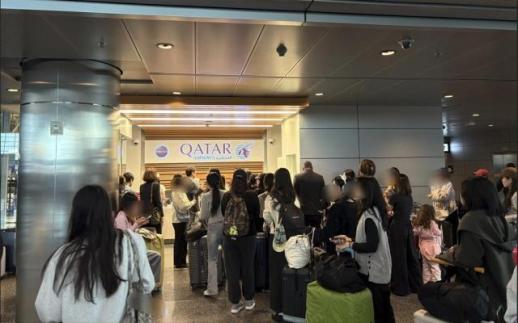 Qatar government organizes emergency flight for South Koreans stranded in Doha SEOUL, March 09 (AJP) - An emergency direct flight carrying South Koreans departed Doha on Monday following negotiations between the South Korean Embassy in Qatar and the Qatari government. The Qatar Airways flight, carrying some 300 South Korean nationals, took off at approximately 3:45 p.m. (0645 GMT). According to the Ministry of Foreign Affairs (MOFA), the aircraft is scheduled to land at Incheon International Airport at 12:21 a.m. on Tuesday. The flight was arranged as the regional airspace remains under heavy restrictions due to the ongoing war involving Iran. Qatari airspace has been operating under a limited-opening policy, primarily allowing select emergency flights to Europe. MOFA stated that the South Korean Embassy in Qatar requested the resumption of flights to facilitate the return of its citizens. The Qatari government accepted the request, leading to the organization of this emergency departure. The evacuation follows a similar operation in the United Arab Emirates, where both commercial and chartered flights were used to transport South Koreans who had been stranded by the sudden closure of flight paths. South Koreans in neighboring countries, including Jordan, Kuwait, and Bahrain, have also sought assistance as commercial travel remains highly volatile throughout the Persian Gulf. South Korea has been coordinating with local governments across the Middle East to secure safe passage for its nationals since the escalation of hostilities in Iran led to widespread flight cancellations. Regional authorities have maintained that while most commercial corridors remain closed, humanitarian and evacuation flights are being reviewed on a case-by-case basis. 2026-03-09 16:55:38
 -
 Mug shots of alleged serial killer released SEOUL, March 9 (AJP) - Prosecutors on Monday released the mug shots of a suspect arrested for allegedly committing a series of killings. The Seoul Northern District Prosecutors' Office released the suspect's photos along with personal information including her name and age, which will be made public until April 7. Kim So-young is accused of giving drinks containing benzodiazepine-class drugs to three men on separate occasions between mid-December and early February, causing two of them to die and one to lose consciousness but recover after treatment. Prosecutors also suspect she may have committed other crimes with laced drugs and that there could be more victims. During questioning, the 20-year-old admitted, "It's true that I mixed prescribed psychiatric medication into a hangover remedy and gave it to them," but added, "I didn't know they would die." Amid a sharp rise in a series of shocking crimes, such a disclosure becomes possible under relevant laws revised in 2010, which allow the publication of suspects' pictures in grave crimes such as homicide, serial killings, and the abduction or sexual abuse of children, but only when there are reasonable grounds to believe the suspect is the perpetrator and when it is deemed necessary for the public good. 2026-03-09 16:45:02
 -
 South Korea’s Cheongung-II Air Defense Missile Gains Combat Credibility in UAE Modern warfare is shifting toward unmanned systems such as drones and missiles, increasing the importance of missile-based air defenses. As conflicts increasingly begin with missile launches — a so-called “button war” — competition is intensifying to counter missiles with missiles. ◆Cheongung-II said to have intercepted Iranian missiles, proving capability in the Middle East Industry officials said Monday that South Korea’s Cheongung-II, a medium-range surface-to-air missile deployed in the United Arab Emirates, has demonstrated interception capability in combat following the outbreak of war in the region. Rep. Yoo Yong-won, a member of the National Assembly Defense Committee, and others said the Cheongung-II deployed in the UAE hit Iranian missiles earlier this month with a 96% success rate. A Cheongung battery is reported to have fired about 60 interceptors at incoming targets. The reported rate is comparable to the U.S. Patriot, widely regarded as among the world’s top air defense systems. The UAE has recently asked the South Korean government for early delivery of interceptors, according to reports. Often described as a Korean version of the Patriot, the Cheongung-II is produced by LIG Nex1, Hanwha Systems and Hanwha Aerospace. It uses a cold-launch method, ejecting the missile vertically before igniting its engine in the air. The system includes a multifunction radar for tracking targets, an operations control center, launchers and vehicles, and is designed to strike targets at speeds of Mach 4 to 5. The Cheongung-II has a maximum range of 40 kilometers (25 miles) and is designed to destroy enemy missiles below 15 kilometers (9 miles) in altitude using a hit-to-kill direct-impact method. Mass production began in 2024, and two batteries are currently deployed in the UAE. LIG Nex1, the lead contractor, has secured about $9.5 billion (10.2 trillion won) in Middle East orders through contracts with the UAE (about $3.5 billion in January 2022), Saudi Arabia (about $3.5 billion in November 2023) and Iraq (about $2.5 billion in September 2024). Deliveries to Saudi Arabia and Iraq are expected soon. The system’s price — reported to be about half that of the Patriot — is also fueling expectations for additional orders. ◆Rising Middle East tensions expand the missile market As military tensions rise in the Middle East, demand for air defenses is growing quickly. Iran’s Islamic Revolutionary Guard Corps is confirmed to operate missiles including the Khorramshahr 4, with a range of more than 2,000 kilometers (1,243 miles), as well as the Shahab-3B medium-range ballistic missile and short-range ballistic missiles such as the Fateh-110 and Zolfaghar for precision strikes. The missiles can reach not only Iran’s territory but also Israel, Saudi Arabia, Turkey and southeastern Europe, making stronger air defenses a priority for neighboring countries. Last month, Israeli newspaper Yedioth Ahronoth warned that Iran continues to expand missile production and could possess at least 5,000 ballistic missiles by the end of 2027. With the Russia-Ukraine war followed by war involving the United States, Israel and Iran, missile demand is spreading beyond the Middle East and the Caucasus to parts of Europe. Hanwha Aerospace’s Chunmoo multiple rocket launcher has gained traction in those regions. The system can fire up to 12 rockets and can use guided munitions of varying ranges, offering precision-strike capability. It has signed contracts with Poland, Estonia and Norway, and is also reported to have been delivered to some Middle Eastern countries. The broader push for missile capabilities is also feeding competition to develop hypersonic missiles. The Agency for Defense Development recently said it is working with Hyundai Rotem to field a hypersonic missile by 2034 that can fly at six times the speed of sound. Hyundai Rotem began developing a hypersonic vehicle called “Hycore” in 2018 and said a 2024 test launch maintained stable propulsion at speeds above Mach 6. Russia’s Zircon is a hypersonic cruise missile with a top speed of Mach 9 and a range of about 1,000 kilometers (621 miles). The United States is developing the AGM-183 ARRW hypersonic missile, and China has entered the competition with the DF-17. Hypersonic missile development is limited to a small number of countries because it requires advanced technology. Choi Ki-il, a professor of military studies at Sangji University, said modern warfare is increasingly defined by precision strikes using unmanned systems such as missiles and drones rather than traditional wars involving large troop formations. He said the battlespace is expanding beyond land, sea and air to include digital and space domains, and demand for missile weapons is likely to keep rising.* This article has been translated by AI. 2026-03-09 16:39:24