

Journalist

CGTN
-
 Director Jang Hang-jun Walks Back 10 Million-Viewer Pledge for ‘A Man Living With the King’ Film director Jang Hang-jun has scrapped the pledge he made if his movie ‘A Man Living With the King’ reaches 10 million viewers. Jang appeared as a guest on ‘Bae Seong-jae’s Ten Wednesday Live,’ released March 4 on the YouTube channel ‘SBS Radio Erao.’ The appearance drew attention because it marked his return after making the pledge in January. In January, Jang said, “If it somehow becomes a 10 million-viewer film, I’ll change my phone number, change my name, and get plastic surgery so no one can recognize me.” He also said he was “considering naturalization,” adding that he did not want people looking for him and that he would have to throw a party on a boat. The remarks were made as a joke at the time, as he hoped the film would at least break even. But the movie has surpassed 9 million viewers, putting 10 million within reach. Jang reversed course, saying, “I’m grateful for the attention, but I didn’t think this would become news.” He added that he never expected the film to hit 10 million and that he made the comments while worrying whether it could even pass the break-even point. Looking back, he said he was relieved he had not pledged to give away half his assets, and asked, “How can you live while keeping every pledge?” Instead, he said he would hold a coffee-truck event in about two weeks. 2026-03-05 08:00:38
 -
 Korea Golf Course Management Association Unveils Official Mascots The Korea Golf Course Management Association has unveiled its official mascots, “Pilttu” and “Seonggong-i,” as part of an effort to symbolize the future of the golf industry and communicate more closely with golfers. The main character, Pilttu, was introduced on March 4. Its name combines “field” with a Korean term meaning “leader.” Seonggong-i was introduced alongside Pilttu and reflects the message that success is about direction, not speed. The association said it will use the characters’ shared storyline to strengthen golfers’ offline experiences. Using Pilttu’s image, it plans campaigns on ESG (environmental, social and governance), safety and etiquette. Pilttu will also be used as an industry messenger on social media, and the association plans to produce KakaoTalk emoticons using 3D motion to broaden everyday communication. The association also plans to feature 3D versions of the characters in educational guide videos for golf course managers and golfers to make information easier to absorb. It said it will also produce branded goods reflecting the characters’ symbolism to help promote a sustainable golf course culture. Choi Dong-ho, the association’s chairman, said Pilttu and Seonggong-i will be “kind and dependable friends” who bring golfers “a pleasant smile.” He said he hopes the characters will help make golf courses feel more accessible and serve as messengers of a golf culture that people of all ages can enjoy together.* This article has been translated by AI. 2026-03-05 07:58:08
 -
 Seoul may send charter or military planes to bring home Koreans from Middle East SEOUL, March 05 (AJP) -Seoul is mulling to send chartered planes and military transport aircraft to bring home South Korean nationals stranded across the Middle East as commercial flights remain disrupted by the escalating conflict between the United States and Iran, government officials said Wednesday. Second Vice Foreign Minister Kim Jina said the government is reviewing multiple options, including dispatching aircraft and additional rapid-response teams, to assist citizens attempting to leave the region. “The government is considering deploying chartered planes and military transport aircraft, as well as dispatching additional joint rapid-response teams,” Kim said during a joint briefing after an interagency meeting chaired by Prime Minister Kim Min-seok to assess the evolving Middle East situation. Authorities are continuing to track the status of South Korean nationals stranded in the United Arab Emirates and other countries while coordinating with relevant ministries to secure safe and swift returns. About 17,000 South Koreans are estimated to be stranded across roughly 10 Middle Eastern countries affected by the conflict, according to the foreign ministry. The figure excludes short-term travelers. Officials warned that the crisis could prolong or escalate and assured to prioritize the safety of nationals. Earlier this week, around 140 South Koreans and their foreign family members were evacuated from Iran, Israel and Bahrain and relocated to neighboring countries. On Tuesday, 24 South Koreans in Iran were moved to Turkmenistan, while 66 in Israel were evacuated to Egypt. “The foreign ministry will mobilize all available resources and assets to ensure that no South Korean nationals are harmed amid the situation in the Middle East,” Kim said. Prime Minister Kim Min-seok instructed ministries to draw up detailed contingency plans to address the widening fallout from the conflict, including ensuring the safety of Korean citizens and closely monitoring financial and currency markets. He also urged officials to respond proactively to difficulties faced by Korean companies operating in the region. The foreign ministry later held a separate meeting with embassy officials from 14 countries across the Middle East and surrounding areas, including Iran, Israel, Turkmenistan, Egypt and the United Arab Emirates, to discuss ways to facilitate departures, particularly for short-term travelers, as airline operations remain unstable. Meanwhile, travel agencies have begun arranging alternative routes for stranded tourists. About 40 customers of Hana Tour departed Dubai on Wednesday morning and arrived in Taipei the same day, where they will stay overnight before returning to Incheon on a Korean Air flight Thursday. Of roughly 540 customers from Hana Tour and Mode Tour currently in the Middle East, about 240 are in Dubai. Travel firms are coordinating with airlines to secure additional connecting flights from Thursday, while monitoring whether scheduled direct flights from Dubai to Incheon resume without disruption. Industry officials said Cairo’s airport remains fully operational, allowing travelers evacuated there to return home through rerouted commercial flights. 2026-03-05 07:27:50
 -
 Comedian Park Mi-seon Says She Is Gradually Returning to Work After Cancer Treatment Comedian Park Mi-seon has shared an update on her health and work. In a post on social media on Tuesday, Park wrote, “Back on set for the first time in a while. People keep telling me not to work yet, and they’re worried, so I’m going to return to the field little by little.” She added, “Since it’s something I’ll have to fight for the rest of my life, living my everyday life is important, right? I’m going to take it slow without rushing,” and said she especially enjoyed the shoot because she worked with her close friend, actress Kim Jeongnan. In the photo she shared, Park and Kim smile brightly at the camera. Park previously appeared on tvN’s variety show “You Quiz on the Block” in November last year and said breast cancer was found during a comprehensive health screening. She said that when doctors began surgery, they discovered the cancer had spread to her lymph nodes. “When it spreads, chemotherapy is essential,” Park said, adding that she underwent 16 rounds of radiation treatment and is currently receiving medication.* This article has been translated by AI. 2026-03-05 07:24:17
 -
 Oil Prices Jump on U.S.-Israel-Iran War, Boosting Interest in Hybrids and EVs The war involving the United States, Israel and Iran has sent international oil prices sharply higher, fueling consumer anxiety. If volatility persists, demand is likely to shift from internal-combustion vehicles to hybrids and electric vehicles. Some in the industry say eco-friendly models could account for more than half of Hyundai Motor Group’s domestic sales this year. According to industry officials on Tuesday, Dubai crude futures traded on the New York Mercantile Exchange closed at $80.39 a barrel the previous day, up 5.04% from the prior session. That was a 12.7% jump in three trading days from Feb. 27, just before the war began, when it was $71.81 a barrel. After holding a steady $66 to $68 a barrel on average in February, prices have surged more than 5% a day since the Strait of Hormuz was blocked following U.S. airstrikes on Iran, the report said. Experts said a prolonged conflict could push oil to around $130 a barrel. JPMorgan forecast that if Iran’s blockade of the Strait of Hormuz drags on and disrupts maritime transport for three to four weeks, oil would rise above $100 a barrel. In that case, gasoline now priced at about 1,739 won per liter would climb to 1,850 to 1,900 won, an increase of 6.3% to 9.4%. If high oil prices persist, demand is likely to grow for hybrids, plug-in hybrids and EVs. An auto industry official said it is difficult to predict a broad shift in the market based on short-term oil forecasts because vehicle replacement cycles typically run five to 10 years. Still, the official said, if high prices continue amid a rise in localized conflicts globally, consumers facing higher living costs will gravitate toward fuel-efficient hybrids or EVs. Sales data already show a strong shift. Hyundai sold 97,216 vehicles in South Korea in January and February, including 35,897 hybrids and EVs, or 36.9% of the total, up 20% from a year earlier. Kia sold 85,107 vehicles domestically over the same period, with eco-friendly models totaling 48,416 — 30,300 hybrids and 18,166 EVs — for a 56.9% share, a 42.1% increase from a year earlier. If the trend holds, the share of eco-friendly vehicles — now about 30% to 40% of new registrations — is expected to top 50% within the year. The high upfront cost, often cited as the main drawback of eco-friendly vehicles, is also easing as battery prices fall. To compete with internal-combustion vehicles on price, EV battery costs need to drop to around $100 per kilowatt-hour. Germany’s electrive.com reported that EV battery prices fell from $115 per kWh at the end of last year to $100 this year, and are projected to reach $69 by 2030. Tesla, BMW, Hyundai Motor Group and Volvo have cut prices on major EV models by about 13% to 20% this year as battery-pack costs declined. * This article has been translated by AI. 2026-03-05 05:04:04
 -
 Hyeri’s Agency Denies Report She Listed Samseong-dong Building for 14.5 Billion Won Hyeri, an actress and former member of the group Girl’s Day, has denied a report that she put her building in Seoul’s Samseong-dong neighborhood up for sale for 14.5 billion won. Her agency, Sublime, said on March 4 that the report about a real estate sale was “completely untrue.” It said there was no fact that the property had been listed and that it had not even heard of the price cited in the article. The agency also expressed “deep regret” that unverified claims were spreading as if they were true, and asked that speculative reporting and the distribution of false information stop. Earlier that day, Korea Economic TV reported exclusively that Hyeri had listed the Samseong-dong building last month for 14.5 billion won. The outlet said that if a deal were completed at that asking price, it would amount to an estimated 4 billion won gain, based on a simple calculation, about four years after the purchase.* This article has been translated by AI. 2026-03-04 18:21:18
 -
 War Risk Insurance for Hormuz Shipping Seen Surging as U.S.-Iran Tensions Rise U.S. strikes on Iran have heightened tensions in the Middle East, fueling expectations that war risk insurance for ships transiting the Strait of Hormuz could rise sharply. The market is discussing a jump from about 0.01% of a vessel’s value to as high as 2% to 3%. If that happens, costs would spread beyond shipping lines to cargo owners, weighing on South Korean industry more broadly. According to the shipping industry on Tuesday, global reinsurers are reviewing whether to raise reinsurance rates for war risk coverage on vessels passing through the strait. Some observers had speculated that global marine insurers were pulling war risk coverage and halting related reinsurance. Industry sources said the issue is not a suspension but potential increases in reinsurance rates. War risk insurance is an add-on policy, separate from standard liability coverage, that ships typically buy when entering areas where conflict is possible. Premiums are generally calculated as a percentage of a ship’s value. While rates vary by vessel, they are typically about 0.01% in normal times, but can surge when military tensions rise. During last year’s Red Sea crisis, war risk premiums climbed to about 1% of ship value, nearly 100 times the usual level. For ships transiting the Strait of Hormuz, war risk reinsurance rates are currently said to be about 1% of vessel value. Depending on the risk level by port of call, rates could rise to 2% to 3%. For a ship valued at 100 billion won, that would mean up to 3 billion won in additional premiums. Industry officials said the burden would largely fall on shipping companies. While marine insurance contracts are signed directly between carriers and insurers, the terms are heavily influenced by reinsurers’ decisions. The industry expects higher premiums to push up ocean freight costs and, over time, raise crude oil import costs and add to energy price uncertainty. Analysts said countries like South Korea, which rely heavily on imported crude, are especially exposed to swings in transport costs on Middle East routes. President Trump early Tuesday mentioned providing military protection for tankers passing through the Strait of Hormuz and raised the possibility of insurance and guarantee support for energy transport vessels in the Gulf region through the U.S. International Development Finance Corp. Industry officials said the remarks appeared largely political and were unlikely to translate into policy. South Korea’s government is also monitoring the situation and preparing responses. The Ministry of Oceans and Fisheries and other agencies are checking in real time the locations and safety conditions of South Korean-flagged ships operating in Middle Eastern waters, according to industry officials. About 40 South Korean-flagged vessels are believed to be operating near waters around the Strait of Hormuz. They have moved to nearby safer waters as a precaution. Still, anxiety among crews remains significant, sources said. While most sailors are continuing their duties calmly, they are reporting heavy psychological stress amid uncertainty over how long the situation will last. “Given the limits on food and supply replenishment due to the nature of shipping, swift government action and support are needed to relocate vessels in the area,” one industry official said. “If tensions around the Strait of Hormuz drag on, we cannot rule out risks to ship safety and possible disruptions to crude oil transport.” 2026-03-04 18:05:02
 -
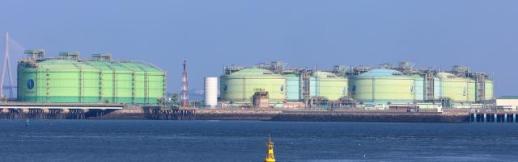 LNG Price Spike Threatens Power-Rate Relief for Steel, Petrochemical Sectors Ahead of K-Steel Law A surge in liquefied natural gas prices following the outbreak of war involving the United States and Israel and Iran is expected to deepen concerns in South Korea’s electricity-intensive steel and petrochemical industries, which are highly sensitive to power costs. The jump in fuel costs could strengthen the government’s reluctance to expand electricity-rate relief, potentially disrupting steelmakers’ carbon-neutral plans and the petrochemical sector’s efforts to consolidate naphtha cracking capacity. Industry officials said on the 4th that the Ministry of Trade, Industry and Energy and the Ministry of Climate, Energy and Environment began consultations this month to draft an enforcement decree for the Special Act to Strengthen Steel Industry Competitiveness and Support the Transition to Carbon Neutrality, known as the K-Steel law, which takes effect in June. A key issue is whether the decree will include provisions to cut electricity rates. As domestic steelmakers accelerate a shift from coal-fired blast furnaces to lower-carbon electric arc furnaces in line with the government’s 2030 carbon-neutral policy and the European Union’s Carbon Border Adjustment Mechanism, electricity prices have become a major driver of production costs. The National Assembly and the industry ministry are said to be supportive of rate relief through the decree. But the climate ministry, which holds authority over electricity pricing, is negative. Experts cite Korea Electric Power Corp.’s heavy debt burden as a major reason. KEPCO had total debt of 206 trillion won and borrowings of 130 trillion won as of last year, leaving its finances under strain. KEPCO posted operating profit of 13.5248 trillion won last year, helped by four years of increases in industrial electricity rates to 181.9 won per kilowatt-hour and lower fuel costs as global LNG prices fell. However, with LNG prices rising sharply since the start of the year due to the Iran war, it is unclear whether strong results will continue this year. Industry officials expect that, amid firm opposition from the climate ministry, electricity-rate relief is likely to be excluded from the K-Steel law decree. If the anticipated relief does not materialize, major steelmakers such as POSCO and Hyundai Steel would likely have to revise their carbon-neutral road maps. The industry is expected to recalibrate domestic investment in electric arc furnaces and speed up plans to build an integrated electric arc furnace steel mill in Louisiana, where electricity costs are said to be 30% to 40% lower than in South Korea. The petrochemical industry says conditions are even tougher. Higher LNG prices threaten to blunt the impact of previously announced power-support measures, while prices for Middle Eastern crude oil and naphtha — key feedstocks for petrochemical products — have continued to rise. On Feb. 25, the government announced a support package for petrochemical integration, including financial, tax and cost measures, in exchange for cuts in commodity petrochemical output such as ethylene through the consolidation of naphtha cracking centers. HD Hyundai Chemical and Lotte Chemical at the Daesan industrial complex were named as the first beneficiaries. The package includes a plan to designate the Daesan complex as a distributed energy special zone, allowing companies to buy electricity directly from private power producers instead of KEPCO, addressing the difficulty of providing direct rate cuts to the petrochemical sector given KEPCO’s accumulated losses. The aim is to reduce distribution steps and transmission costs so petrochemical firms can use electricity at prices 4% to 5% lower than the general grid. But because most private generators rely on LNG, their power prices are highly sensitive to fuel costs. Unlike the general grid, where KEPCO can partially absorb fuel-cost shocks through measures such as freezing rates, companies worry that LNG price increases would translate directly into higher electricity bills on private networks. A petrochemical industry official said the spike in raw material prices tied to the Iran war was a severe blow for companies that had been getting some relief from higher commodity product prices. The official warned that if the war drags on, more firms may be unable to withstand mounting losses and could halt plant operations.* This article has been translated by AI. 2026-03-04 18:03:24
 -
 Hair-Loss Drug Market Grows as Companies Race to Develop Longer-Lasting Treatments The hair-loss treatment market is expanding rapidly, and drugmakers are stepping up efforts to develop new medicines that address the limits of existing therapies. With options narrowed by the burden of long-term daily use, side-effect concerns and restrictions by sex, demand is rising for safer, more sustainable treatments. According to global research firm Research Nester, the hair-loss drug market is projected to grow from $11.44 billion in 2025 to $33.07 billion in 2035. Population aging and greater interest in appearance are cited as key drivers. Even so, treatment choices in clinics remain limited. The most widely used therapies are oral finasteride and dutasteride and topical minoxidil. Finasteride and dutasteride work by suppressing DHT, a male hormone linked to hair loss, but their use is restricted for women of childbearing age. Patients also face the burden of taking the drugs daily. To overcome those constraints, companies are pursuing drugs that target new pathways beyond hormone suppression, as well as long-acting formulations designed to sharply reduce dosing frequency. JW Pharmaceutical is developing JW0061, a first-in-class candidate involved in the proliferation of hair follicle cells. Because it does not directly suppress hormones, it could also be used for women. Development of injectable treatments aimed at improving convenience is also accelerating. Chong Kun Dang is developing CKD-843, an improved drug that converts oral dutasteride into an intramuscular injection given once every three months. Daewoong Pharmaceutical and Inventage Lab are jointly developing IVL3001, a long-acting injectable based on oral finasteride, designed for monthly dosing with effects lasting up to three months. Expectations have also risen after discussions resurfaced on reviewing national health insurance coverage for hair-loss drugs, following an instruction by President Lee Jae-myung. Still, analysts say the market outlook should distinguish between conditions: receding-hairline and crown hair loss are hormone-related cosmetic conditions, while alopecia areata stems from immune-system abnormalities and requires a different approach. Alopecia areata patients worldwide are estimated at about 147 million. With more young patients, surveys show 40% of men experience some level of hair loss by age 35. In South Korea, Eli Lilly’s Olumiant (baricitinib) is approved, but patients face heavy costs because it is not covered under the special reimbursement program. Kim Hyun-jung, a dermatology professor at Gachon University Gil Medical Center, said severe alopecia areata is a condition in which immune cells attack hair follicles, making Janus kinase, or JAK, inhibitors essential. She added that studies have also reported benefits from a JAK inhibitor with a different mechanism, upadacitinib, in patients who did not respond to existing treatments. “It should not stop at a single drug,” she said, calling for the entry of more follow-on medicines alongside reimbursement discussions."* This article has been translated by AI. 2026-03-04 17:57:00
 -
 Boryung Licenses Blood Cancer Drug Xpovio; Dong-A, Daewoong and GC Wellbeing Updates Boryung signs license-in deal for blood cancer drug Xpovio Boryung said Tuesday it has signed a license-in agreement with Antengene, a China-based oncology drug developer, for the blood cancer drug Xpovio (selinexor). Under the deal, Boryung secured exclusive rights in South Korea, including sales, distribution and regulatory approval. The company began full-scale domestic supply in February. Xpovio, developed by Antengene, is a treatment for multiple myeloma and diffuse large B-cell lymphoma. It is described as the world’s first-in-class selective inhibitor of XPO1, a nuclear export protein. By inhibiting nuclear export, tumor suppressor and growth-regulating proteins are retained in the cell nucleus, where they accumulate and activate, inducing cancer cell death. Multiple myeloma often becomes resistant to existing drugs as treatment continues, creating demand for therapies with different mechanisms. Boryung said Xpovio is drawing attention as an additional option for patients with relapsed or refractory multiple myeloma who have limited choices. It is an oral formulation, not an injection, which can improve convenience for long-term treatment. Xpovio is reimbursed for combination therapy with dexamethasone for fifth-line or later treatment. Starting March 1, reimbursement was also expanded to combination therapy with bortezomib and dexamethasone for second-line or later treatment. Dong-A Pharm launches Panpyrin Time powder cold medicine that dissolves without water Dong-A Pharm said Tuesday it has launched Panpyrin Time powder, a cold medicine designed to dissolve in the mouth without water. The powder can be taken anytime and anywhere when cold symptoms appear, the company said. It contains acetaminophen, chlorpheniramine, riboflavin, tipepidine and DL-methylephedrine, which it said may help relieve runny nose, sore throat, fever, cough and muscle aches. Dong-A Pharm said it does not add sugar, coloring, caffeine or preservatives, and includes vitamin B2 to help support recovery from cold symptoms. The product applies the company’s patented OD!FS formulation technology, designed to dissolve quickly with a small amount of saliva. Dong-A Pharm said it uses a fine-particle structure and special surface treatment to minimize bitterness, and adds a lemon flavor. The stick-type powder is designed for portability and can be taken by people ages 2 and older, including seniors, the company said. Daewoong says Phase 3 results for CleanCol tablets published in SCI-indexed journal Daewoong Pharmaceutical said Tuesday that Phase 3 results for its next-generation tablet bowel preparation, CleanCol, were published in the SCI-indexed World Journal of Gastroenterology. Daewoong said CleanCol reduces sulfate ingredients by 25% compared with existing products and cuts the number of tablets to 20 to ease the burden of dosing. It also adds picosulfate, an ingredient that helps promote bowel movements. In the study, CleanCol maintained a similar level of bowel-cleansing efficacy compared with an existing bowel preparation, the company said. The overall rate of adverse drug reactions was significantly lower at 18.10% for CleanCol, compared with 33.02% for the existing bowel preparation. The paper was based on a multicenter, randomized Phase 3 trial involving 215 adults at seven university hospitals in South Korea. Principal investigator Park Dong-il, a professor at Kangbuk Samsung Hospital, said, “It will help reduce the burden patients experience during colonoscopy preparation and improve medication adherence.” GC Wellbeing receives Chungcheongbuk-do governor’s citation for fire response GC Wellbeing said Tuesday it received a citation from the governor of Chungcheongbuk-do for helping prevent the spread of a fire and supporting firefighting efforts. The award was presented at a ceremony held Monday at the provincial government complex. The company said the citation formally recognizes its disaster-response efforts during a fire at the Hybaro plant. Chungcheongbuk-do Gov. Kim Young-hwan presented the award to Park Dong-hwan, head of production at GC Wellbeing, according to the company. GC Wellbeing said it did not suffer direct facility damage from the fire, but incurred losses from suspended operations, lost workdays, and disposal costs for raw and subsidiary materials. The province highly evaluated the company’s proactive response to help protect community safety and its close cooperation with the public response system, it said.* This article has been translated by AI. 2026-03-04 17:48:00