

Journalist

Chang SeongWon
-
 BTS Places Six Songs on Billboard Hot 100 for Third Straight Week BTS extended its run on Billboard’s main singles chart, placing six songs on the Hot 100 for a third consecutive week. The group also appeared on Rolling Stone’s May special cover, underscoring its global profile. According to Billboard’s latest charts released April 14, “SWIM,” the title track from BTS’ fifth full-length album “ARIRANG,” ranked No. 5 on the April 18 Hot 100. Five other tracks from the album also charted: “Body to Body” at No. 52, “2.0” at No. 67, “Hooligan” at No. 72, “NORMAL” at No. 82 and “FYA” at No. 90. All six have now remained on the Hot 100 for three straight weeks. The album’s momentum continued across Billboard’s global rankings. “SWIM” held No. 1 for a third week on both the Global 200 and Global Excl. U.S. charts. All 13 vocal tracks from “ARIRANG” were also positioned within the top 50 of the Global 200 and within the top 40 of Global Excl. U.S., Billboard said. BTS also stayed atop the Billboard 200, Artist 100, Digital Song Sales and Top Album Sales charts for a third consecutive week. Billboard said the group’s three-week run at No. 1 on the Billboard 200 was the first such achievement by a K-pop act — and by a group overall — since 2012. BTS additionally ranked No. 1 on Vinyl Albums, No. 4 on Top Streaming Albums and No. 9 on Streaming Songs. In Japan, “ARIRANG” remained No. 1 for a second straight week on Oricon’s Weekly Streaming Ranking with about 8.55 million weekly plays. Oricon said it was the first time since November 2024 that an overseas artist led the chart for two consecutive weeks. Rolling Stone on April 14 released a group cover and an interview video tied to its May special issue. The project is being published simultaneously across 16 countries and regions, including the United States, the United Kingdom, France and Germany, with one group cover and seven individual member covers. In the interview, members spoke about their reflections and changes as they returned as a full group after a hiatus. RM said the album’s 14 tracks are “the answer to the question, ‘What is BTS in 2026?’” adding, “If we no longer challenge ourselves, there’s no reason to keep the team going.” Jin said, “I’ve always thought there’s no reason to continue if I’m not with the group.” J-Hope said, “As we filled in each other’s shortcomings, we realized again why we have to be seven.” Suga said he wanted to focus less on results and more on staying healthy and enjoying activities together. Jimin said he would push himself further to raise the team’s standing. V said he used his military service to reset physically and mentally while planning the next step. Jung Kook said his hunger for the stage grew during the break. BTS also completed the opening shows of its “BTS WORLD TOUR ‘ARIRANG’” on April 9 and April 11-12 at the main stadium of Goyang Sports Complex in Gyeonggi Province. About 132,000 people attended across three concerts, and fans in 194 countries and regions joined through live viewings and Weverse online streaming. The fifth full-length album “ARIRANG” is BTS’ first new release in three years and nine months. The album centers on universal emotions, and “SWIM” conveys determination to keep moving forward through life’s hardships. RM participated broadly in writing lyrics, reflecting the group’s current concerns and stories.* This article has been translated by AI. 2026-04-15 08:57:21
 -
 NH NongHyup Bank CEO Kang Tae-young Pledges More On-Site Support in South Gyeongsang Kang Tae-young, CEO of NH NongHyup Bank, visited key industrial sites in South Gyeongsang Province to review business strategy and discuss ways to expand what the bank called “productive finance.” NH NongHyup Bank said April 15 that Kang toured the region for two days, from April 13 to 14, to inspect major local industries and consider financial support measures. The bank said the trip aimed to strengthen support for the province’s core marine, aerospace and defense sectors and to improve customer-focused service through communication with frontline staff. On April 13, Kang attended the opening ceremony at the bank’s South Gyeongsang headquarters for the “Southeast NongHyup Financial Comprehensive Support Center for Marine, Aerospace and Defense Industries.” The center will provide tailored financial consulting and specialized products for companies in shipbuilding and marine industries, aerospace, and defense in the region. On April 14, Kang visited Samsung Heavy Industries’ Geoje shipyard and Hanwha Aerospace’s plant in Changwon. He met with company officials to discuss financial support and cooperation measures aimed at expanding exports and shifting toward higher value-added industries. “South Gyeongsang is a key hub of Korea’s manufacturing base, and sustained growth in marine, aerospace and defense industries will strengthen the nation’s economic competitiveness,” Kang said. “We will continue to expand NongHyup Bank’s productive finance by providing on-site, field-centered support and growing together with local communities.” 2026-04-15 08:54:00
 -
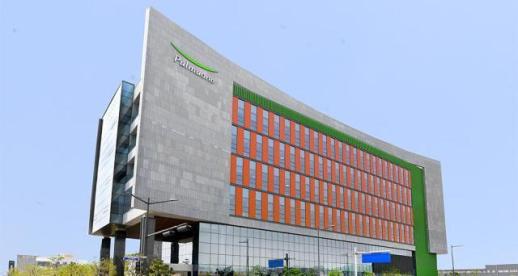 Pulmuone climbs to 3rd among global food firms in S&P sustainability ranking SEOUL, April 15 (AJP) - South Korean food maker Pulmuone announced it achieved its highest-ever ranking in S&P Global's Corporate Sustainability Assessment, climbing to third place among global food companies from fourth a year earlier. The result, based on the 2025 CSA and reflected in S&P Global's Sustainability Yearbook 2026 published in February, marks the third consecutive year Pulmuone has placed in the top five of the food products category. The assessment evaluated about 9,200 companies across 59 industries worldwide, with only 848 earning a place in the yearbook. In the food products segment, 241 companies underwent review. Pulmuone said it was the top-ranked South Korean food company among them, few points ahead of its domestic competitor CJ Cheiljedang, earning recognition for strengthened board independence, tighter environmental management and upgraded food safety systems. The company attributed the improvement to gains across all three ESG pillars. In governance, it bolstered independent oversight by raising the mandatory ratio of outside directors to one-third from one-quarter and linking board evaluations to executive compensation. On the environmental front, Pulmuone built a carbon footprint tracking system under the ISO 14067 standard and completed third-party verification for key products including tofu and udon noodles. Pulmuone has also pushed into food technology, entering the commercial verification stage for land-based seaweed aquaculture and developing a CRISPR-Cas-based diagnostic platform for pathogen detection, for which it has secured patents. "This result is an objective, global-level recognition of the sustainability efforts Pulmuone has pursued since its founding, rooted in our philosophy of love for neighbors and respect for life," said Lee Jung-eon, the company's head of sustainability management. "We will continue to advance Pulmuone's unique values into ESG management that meets global standards, under our mission of 'Creating a Healthy Tomorrow for People and the Earth through Wholesome Food,' and build an ever-stronger foundation for sustainable growth." 2026-04-15 08:37:09
 -
 Toss Signs MOU With Korea Franchise Association to Expand FacePay Viva Republica, the operator of Toss, is moving to expand use of its FacePay service. Toss said on 15일 it signed a strategic memorandum of understanding with the Korea Franchise Industry Association. Under the agreement, the two sides plan to roll out Toss’ facial-recognition payment service, FacePay, across franchise stores. The association will support adoption among its member companies, while Toss will provide the payment infrastructure and technology. FacePay is a simple payment service that allows customers to pay using facial authentication. It can be used without a separate card or smartphone and can reduce repetitive tasks caused by store staff operating point-of-sale systems. “FacePay is not just a convenient payment method, but an innovative tool that makes franchise owners’ daily lives easier,” Toss Vice President Kim Gyu-ha said. “Through cooperation with the Korea Franchise Association, we will work together so more small business owners can improve the payment experience.” Na Myeong-seok, chairman of the Korea Franchise Industry Association, said the agreement will make it easier for member companies to adopt new payment technology. He said the association will actively support franchise owners so they can run stores more easily and conveniently.* This article has been translated by AI. 2026-04-15 08:36:25
 -
 Korean Drugmakers Reshape R&D as Price Cuts and Commercial Law Changes Loom Korean drugmakers are reorganizing research and development around their headquarters and speeding up outside hiring and internal reshuffles as policy changes such as drug price cuts and revisions to the Commercial Act take shape. The moves are aimed at concentrating new-drug development and commercialization capabilities as profitability is expected to come under pressure. According to the industry on the 14th, Ildong Pharmaceutical decided the previous day to merge its R&D subsidiary Unovia into the parent company. Ildong cited a changing business environment and rising uncertainty, the need to strengthen competitiveness and the goal of operational stability. The company said it will integrate R&D functions into headquarters to improve management efficiency in line with institutional changes, including implementation of a revamped drug-pricing system. Unovia has led development of Ildong Pharmaceutical’s key pipeline. It has secured Phase 1 topline data for a GLP-1RA obesity drug candidate, and its P-CAB peptic ulcer treatment fadoprazan is in Phase 3 trials. Ildong said the reintegration will help speed technology licensing deals and commercialization. Industry officials view the decision as more than routine restructuring, describing it as a strategic response to pricing pressure and a broader push to overhaul corporate governance. The government is pursuing a plan to lower the pricing formula for generic drugs from 53.55% to about 45%, increasing downside pressure on earnings. At the same time, revisions to the Commercial Act are expected to add burdens related to treasury shares and governance responses. Across the pharmaceutical and biotech sector, companies are moving quickly on steps such as disposing of treasury shares, revising articles of incorporation and expanding independent directors. The revised Commercial Act includes a principle of mandatory cancellation of treasury shares, stronger board independence and changes to the structure for appointing audit committee members, affecting management strategies across the industry. Recruitment of outside specialists is also increasing. Ildong Pharmaceutical this month appointed Dr. Park Jae-hong as its new head of the R&D division. The company said Park will oversee Ildong’s overall R&D, including new-drug research and development, and that the hire will strengthen pipeline competitiveness and further raise R&D capabilities. SK Bioscience also hired Ma Sang-ho, a vice president and an infectious-disease research project management specialist, as head of the Research Support Office within its Bio Research Division. The company said it plans to strengthen R&D project management and open innovation, and to build a support system covering the full cycle from research planning to regulatory responses and operation of nonclinical and clinical sample analysis (GCLP). Yuyu Pharma hired Ryu Hyun-gi as head of its Development Division. Ryu has experience in development planning and business development after working at Kwangdong Pharmaceutical, Kyungnam Pharmaceutical, Korea Pharmbio and Hanwha Pharmaceutical. Yuyu said it aims to accelerate development of next-generation improved drugs and specialized formulations through the hire. The market expects the trend to continue for the time being. “Reorganizations centered on talent that understands clinical trials, regulatory approvals and business development are now in full swing,” a pharmaceutical company official said. “For companies seeking a breakthrough through R&D investment and securing specialized talent, it could instead become an opportunity to reset strategy.” Meanwhile, R&D spending in South Korea’s biohealth industry has continued to rise. According to the Korea Health Industry Development Institute’s “2025 Biohealth Industry Statistical Yearbook,” corporate R&D spending in the domestic biohealth industry increased from 3.4293 trillion won in 2020 to 4.4743 trillion won in 2024. * This article has been translated by AI. 2026-04-14 19:03:00
 -
 KBO Hits Leader Son Ah-seop Traded to Doosan for Lee Gyo-hoon, Cash KBO League career hits leader Son Ah-seop is leaving the Hanwha Eagles and joining the Doosan Bears in a trade. Hanwha announced on the 14th that it will send Son to Doosan in exchange for left-hander Lee Gyo-hoon and 150 million won in cash. Son, a veteran outfielder, was acquired by Hanwha in a trade from the NC Dinos in July last year. After about eight months with the Eagles, he will now wear a Doosan uniform. Since debuting in 2007, Son has played 20 seasons and owns a .319 career batting average in 2,170 games, with 2,618 hits, 182 home runs, 1,086 RBIs and a .842 OPS. Last year, he hit .288 in 111 games with one home run, 50 RBIs and 39 runs scored. A Doosan official said the club made the deal to strengthen its lineup, calling Son “a veteran hitter with experience among the best in the league.” The official added that the team believes Son still has “plenty of competitiveness” and expects both his precision at the plate and his role as a clubhouse leader. Lee, who will join Hanwha, is a left-handed pitcher drafted by Doosan in the third round of the second phase of the 2019 rookie draft. He is 2-1 with a 7.28 ERA in 59 career games. Last year, he posted a 1.17 ERA in 10 appearances. A Hanwha official said the team acquired Lee to bolster the depth of its left-handed bullpen. The official added that Lee has completed military service and is expected to help cover gaps created by left-handed pitchers on the roster fulfilling their service obligations.* This article has been translated by AI. 2026-04-14 18:06:00
 -
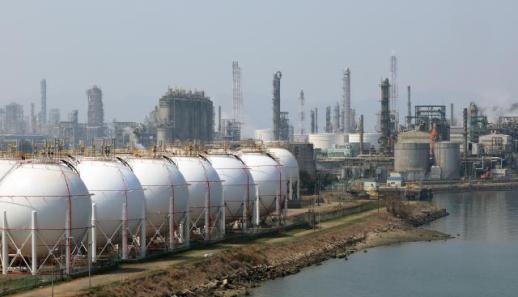 Korean refiners activate 'Plan B' as Hormuz risks complicate crude diversification SEOUL, April 14 (AJP) - South Korea’s refiners are activating contingency plans to diversify crude imports from North America as tensions around the Strait of Hormuz escalate, though analysts warn that hidden costs could limit the effectiveness of such moves. At first glance, alternative sourcing appears feasible. But industry officials say higher freight rates, refinery compatibility issues, and premiums on substitute crude could significantly raise costs. According to the Korea Petroleum Association and the Korea International Trade Association, the Middle East accounted for 70.7 percent of South Korea’s crude oil imports last year, followed by the Americas at 22.8 percent and the Asia-Pacific region at 4.3 percent — underscoring the country’s structural reliance on the region now at the center of geopolitical risk. Crude oil is far from uniform. It varies by density — light versus heavy — and sulfur content — sweet versus sour. Middle Eastern grades such as Dubai and Saudi crude are typically heavier and more sulfur-rich, while U.S. West Texas Intermediate (WTI) and shale output tend to be lighter and sweeter. Korean refiners have long optimized their facilities to process heavier Middle Eastern crude, making any abrupt pivot toward lighter alternatives far more complex than headline diversification suggests. With the country importing roughly 3 million barrels per day, largely via maritime routes, refiners are now reviewing alternative sourcing scenarios spanning North America, Australia and UAE benchmarks such as Dubai and Murban. Technically, these sources offer sufficient variation in quality to allow blending and substitution. The economics however are not straightforward. Compared with the Middle East–East Asia route via the Strait of Hormuz, shipments from the United States can take nearly twice as long, raising overall transport costs even when freight rates themselves appear favorable. Freight dynamics are already tightening. Daily charter rates for Very Large Crude Carriers (VLCCs) from the Middle East have surged to $150,000–$170,000 — the highest in six years — and analysts warn that diversified sourcing could further strain vessel availability and push up costs across routes. Refinery efficiency poses another constraint. Facilities calibrated for heavier Middle Eastern crude risk lower yields and compressed margins if forced to process lighter North American or Australian grades. “Switching crude types affects not only purchase prices but also refining conditions, catalyst use and maintenance cycles,” an oil industry official said. “In the short term, diversification may effectively mean paying an insurance premium.” Still, some refiners have moved faster than others to hedge against concentration risk. SK Innovation, long known for its aggressive diversification strategy, has expanded its North American exposure through the Trans Mountain Expansion (TMX) pipeline in Canada, which began full operations in mid-2024. By securing stable volumes of Canadian crude alongside frequent spot purchases of U.S. WTI, the company has materially reduced its reliance on Middle Eastern supply. At the GS Caltex complex in Yeosu — the world’s fourth-largest single refinery with a capacity of 800,000 barrels per day — diversification efforts are also visible. Last week, the company imported roughly 1 million barrels of Kazakhstan’s Caspian Pipeline Consortium (CPC) crude via the tanker Nantucket from the Russian port of Novorossiysk, equivalent to fueling about one million passenger vehicles. By contrast, S-Oil remains among the most exposed to Middle Eastern supply due to its long-term contracts with Saudi Aramco, its largest shareholder. While such arrangements provide stability, they also constrain flexibility. The company is expected to maintain core Saudi and UAE supply while gradually increasing imports of lighter grades and condensates linked to its Shaheen Project, a major petrochemical expansion underway in Ulsan. HD Hyundai Oilbank continues to lead in diversification, with Middle Eastern dependence at roughly 40 percent as of 2025 — the lowest in the industry. The company has broadened its sourcing footprint to include South American producers such as Guyana and Brazil, while incorporating North Sea grades from Europe. It was also the first Korean refiner to introduce Canadian crude, underscoring a long-standing strategy of supply flexibility. “In the medium to long term, demand for petroleum is expected to decline. For example, gasoline demand will likely fall as electric and hydrogen vehicles become more widespread. Refiners are already moving beyond oil and looking to diversify their business portfolios,” an official from the Korea Petroleum Association said. “If refiners need to modify their facilities to diversify crude supply beyond Middle Eastern sources, government-level support will also be necessary,” the official added. 2026-04-14 17:58:39
 -
 KOSPI rises on easing Middle East tensions, but falls short of 6,000 threshold SEOUL, April 14 (AJP) - The South Korean stock market closed higher on Tuesday, lifted by easing oil prices and signs of diplomatic progress between the U.S. and Iran, though tensions in the Strait of Hormuz kept investors cautious. The country's benchmark KOSPI rose 2.7 percent to close at 5,967.8 after briefly breaking above the 6,000 level in early morning trade. The index repeatedly hovered around the threshold throughout the session but failed to sustain its gains, losing momentum to finish below the psychologically important level. Elsewhere in Asia, markets also closed higher in line with the improved global sentiment. Japan's Nikkei 225 rose 2.4 percent to 57,877.4, while China's Shanghai Composite gained 0.7 percent to 4,016.7. Hong Kong’s Hang Seng Index advanced 0.7 percent to 25,827.9. Investor sentiment was supported by signs of continued talks between Washington and Tehran. While the first set of negotiation over Iran's uranium enrichment program remain unresolved, disagreemtns between the two sides appeared to narrow, with the U.S. proposing a 20-year suspension and Iran countering with a five-year halt. Oil prices declined despite heightened supply risks. Brent crude fell 1.2 percent to US$98.19 a barrel and West Texas Intermediate dropped 3 percent to $96.1, even as U.S. naval forces enforced a blockade in the Strait of Hormuz, forcing at least two China-bound oil tankers to turn back. The divergence suggests markets are pricing in a contained conflict scenario rather than an immediate supply disruption. Volatility indicators also pointed to stabilizing risk conditions. The Volatility Index (VIX) edged down 0.6 percent to 19.12, while the dollar index slipped 0.2 percent to 98.2. The Philadelphia Semiconductor Index (SOX) rose 1.7 percent, reinforcing strength in technology shares globally. Institutional and foreign investors drove the rally on the KOSPI, buying a combined 2.08 trillion won ($1.41 billion) worth of shares, while retail investors sold 2.39 trillion won, suggesting profit-taking into strength and contributing to the late-session fade. Among large-cap stocks, Samsung Electronics rose 2.7 percent to 206,500 won, while SK hynix surged 6.1 percent to 1,103,000 won, extending gains on expectations for strong earnings and continued AI-driven demand. Hyundai Motor gained 2.7 percent to 491,500 won, and Kia rose 1.2 percent to 149,200 won. In contrast, battery and defensive shares lagged. LG Energy Solution fell 0.4 percent to 400,000 won, while Samsung Biologics and Hanwha Aerospace declined 0.9 percent to 1,536,000 won and 0.5 percent to 1,523,000 won, respectively. The junior KOSDAQ rose 2.0 percent to 1,121.9, though gains were driven primarily by retail investors, who bought 116.5 billion won, while institutions and foreigners were heavy sellers, offloading 128.9 billion won and 6.7 billion won, respectively, suggesting a more speculative tone. The Korean won strengthened modestly to 1,478.9 per dollar. Overnight, U.S. equities closed higher, with the Dow Jones Industrial Average rising 0.6 percent, the S&P 500 gaining 1.0 percent and the Nasdaq advancing 1.2 percent, as markets continued to price in the possibility of further diplomatic progress despite the absence of a formal agreement. 2026-04-14 17:58:06
 -
 War resilience draws Korean retail money home, but sustainability in question SEOUL, April 14 (AJP) -South Korean equities have shown surprising resilience so far against the backdrop of escalating geopolitical tensions, helping to bring home retail capital previously deployed in U.S. markets. Yet how durable — and how deep — this reshoring trend will prove remains uncertain. “Tax incentives can act as a supporting factor, but not the primary driver,” said Shin Hyun-han, a finance professor at Yonsei University’s School of Business. “Funds tend to return when domestic equities become more attractive, not simply because of policy benefits.” He added that the long-term trajectory hinges more on corporate competitiveness than on the Reshoring Investment Account (RIA) scheme itself. According to Shinhan Investment & Securities on Tuesday, proceeds from overseas stock sales within RIA accounts are being funneled primarily into large-cap Korean equities and index-tracking exchange-traded funds (ETFs). As of April 3, Nvidia accounted for the largest share of overseas withdrawals at 19.1 percent, followed by Apple (7.8 percent), Tesla (7.4 percent), Alphabet Inc. Class A (6.8 percent) and Palantir Technologies (5.4 percent) — pointing to profit-taking in global AI and big tech leaders. On the domestic side, SK hynix led purchases with a 15.7 percent share, closely followed by Samsung Electronics (15.4 percent). Benchmark ETFs such as KODEX 200 ETF (4.1 percent) and TIGER 200 ETF (2.5 percent), along with Hyundai Motor (3.6 percent), also ranked among the top destinations — underscoring a rotation into semiconductor heavyweights and broad market exposure. The RIA framework allows investors to reinvest proceeds from overseas stock sales into domestic equities or hold them in won, with phased tax relief on capital gains depending on the timing of liquidation. Shinhan Investment & Securities said the program applies to overseas holdings acquired before Dec. 23, 2025. The government has positioned the scheme as part of a broader strategy to encourage the repatriation of overseas investment gains, offering targeted tax incentives. Participation data suggest the trend is being driven less by short-term trading than by profit realization among seasoned investors. The average amount transferred into RIA accounts stood at around 30 million won — about 60 percent of the 50 million won cap. Among participants, 43.7 percent liquidated overseas holdings, booking an average gain of roughly 13 million won per person. Demographically, men accounted for 65.3 percent of participants, compared with 34.7 percent for women. Investors in their 40s made up the largest cohort at 31.4 percent, followed by those in their 50s (26.2 percent) and 30s (23.4 percent), while those aged 60 and above — and under 30 — comprised smaller shares. The data point to a structural shift led by middle-aged investors with accumulated gains, rather than momentum-driven retail flows. Importantly, the movement does not signal a wholesale exit from U.S. technology stocks, but rather a reallocation within the same AI-driven investment theme — locking in profits from earlier winners and redeploying capital domestically. Expectations for Korea’s semiconductor sector are reinforcing this rotation. Samsung Electronics reported record preliminary first-quarter results on April 7, with revenue of 133 trillion won and operating profit of 57.2 trillion won. SK hynix, ahead of its earnings release later this month, has also seen rising expectations, with its shares trading around 1.115 million won on Tuesday. Brokerages say surging demand for high-bandwidth memory (HBM) and server DRAM — fueled by the rapid buildout of AI data centers — is positioning the two firms as key beneficiaries of the U.S.-led AI value chain. Analysts have been steadily raising target prices for SK hynix, citing sustained long-term demand from global tech firms securing memory supply. The growing share of ETF allocations further underscores a shift in strategy. The prominence of KODEX 200 and TIGER 200 among top buys suggests investors are not simply chasing individual winners, but increasingly diversifying across benchmark KOSPI constituents to manage risk. Given that a portion of the flows is being channeled through the Reshoring Investment Account (RIA), tax incentives appear to be playing a facilitating role rather than acting as the primary catalyst. Whether these inflows translate into sustained, long-term allocations to Korean equities once the program expires remains an open question. “The key variable is corporate fundamentals. Without sustained earnings growth and competitiveness, such flows are unlikely to persist,” said Shin Hyun-han of Yonsei University. He added that investors could readily pivot back to overseas assets once the policy window closes. Shin also cautioned against overinterpreting the current movement, characterizing it as cyclical rather than structural, and underscoring the importance of maintaining diversified portfolios. “From an asset allocation perspective, maintaining exposure to global markets remains important, particularly for institutional investors,” he said. The recent shift, in this view, reflects a confluence of factors — stretched valuations in U.S. AI stocks, currency dynamics and improving expectations for Korea’s semiconductor cycle — rather than a decisive turning point.Distinguishing between temporary rebalancing and a structural reallocation will ultimately hinge on whether Korea’s equity market can sustain earnings momentum and close its longstanding competitiveness gap. 2026-04-14 17:50:43
 -
 Streamers Gwajuseyeon and BJ K confirm relationship in live broadcast Streamer Gwajuseyeon and BJ K have drawn attention after publicly confirming they are dating. On the 13th, K hosted a live broadcast titled “K’s major announcement” on his SOOP channel. Gwajuseyeon appeared alongside him during the stream. “We’re dating,” K said, making their relationship official. K said they first met at an after-party following an acquaintance’s wedding in July last year. He said they stayed in touch, spent about a month in an early stage of getting to know each other, and began dating in August. Throughout the broadcast, the two held hands and kissed, openly showing affection. Gwajuseyeon, born in 2000, is a popular BJ with about 350,000 YouTube subscribers. In 2024, she drew attention after being spotted with HYBE Chairman Bang Si-hyuk on a street in Beverly Hills, Los Angeles. K, born in 1989, is considered a first-generation BJ who began internet broadcasting in 2012. He has about 690,000 subscribers and has built a sizable fan base over years of activity. Their public announcement has drawn added interest because both have large followings, and because they disclosed the relationship directly on air while showing affection naturally. 2026-04-14 17:42:18