

Journalist

Chang SeongWon
-
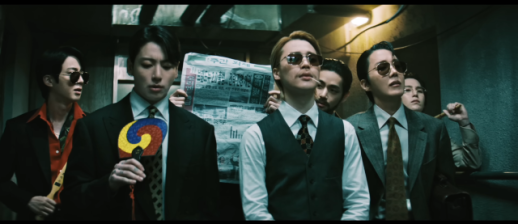 BTS '2.0' MV channels Oldboy noir as cinematic callbacks spark global buzz SEOUL, April 03 (AJP) - A few Korean films have left a deeper imprint on global cinema than Oldboy (2003), the brutal, operatic noir that propelled director Park Chan-wook onto the world stage — with a Cannes Grand Prix and admiration from filmmakers including Quentin Tarantino. Its side-scrolling corridor fight, shot in a single take, has since become one of the most imitated sequences in modern cinema. Now, that visual language has found an unlikely new interpreter: BTS. The music video for “2.0,” from the group’s comeback album Arirang, has surged across global platforms, drawing immediate attention for its striking parallels to Park’s signature style. Released Tuesday via Hybe Labels’ YouTube channel, the video surpassed 16 million views within 24 hours and topped YouTube’s trending music chart. The album’s title track “Swim” posted around 30 million views on its first day. The video opens with RM, Jin, Suga, J-Hope, Jimin, Jungkook and V stepping into a stylized past — retro hair, vintage tailoring, mustaches and beards — before moving into a dimly lit corridor staged for confrontation. What follows is a clear visual homage. In Oldboy, Choi Min-sik’s protagonist battles waves of attackers in a claustrophobic hallway, captured in a lateral tracking shot that has since become iconic. BTS mirrors the composition: the members advance in formation as the camera glides sideways, flanked by opponents, blending choreography with cinematic tension. The sequence adopts a one-take structure, placing multiple figures within a compressed horizontal frame. Everyday objects — from newspapers to back scratchers — are used as props, injecting a note of absurdity into an otherwise controlled, high-stakes setting, a tonal contrast long associated with Park’s direction. The references extend further. Later scenes unfold in an office setting closely resembling a key location from the film, while visible newspaper headlines — including “Brand New 2.0 Launch” and “Hidden Code Discovered” — fold the narrative back into the track’s thematic frame. Released in 2003, Oldboy drew more than 3 million viewers in South Korea and went on to win the Grand Prix at the 2004 Cannes Film Festival. Its corridor sequence, staged in a confined space and executed in a lateral one-take composition, remains one of the most recognizable images in Korean noir. Online, the parallels have not gone unnoticed. Social media users have circulated side-by-side comparisons, with one post on X reading, “This is literally the Oldboy hallway scene but BTS version,” while another described it as “not an ‘Old’ boy — brand new Oldboy,” underscoring how viewers are decoding the visual references in real time. The track itself debuted at No. 50 on the Billboard Hot 100, adding commercial weight to the artistic conversation. More broadly, the video reflects a shift in K-pop production, where music videos increasingly draw on established cinematic language — particularly from Korean film — to construct globally legible narratives beyond performance-driven formats. In a separate development, BTS also announced a new single, “Come Over,” set for release as part of a deluxe vinyl edition of Arirang, extending the group’s promotional cycle following their return after nearly four years. 2026-04-03 17:31:44
 -
 Korea's credit market shows crunch signs as demand dries up SEOUL, April 3 (AJP) — Spring has arrived, but South Korea’s debt market remains stuck in a winter chill, especially for sub-investment-grade issuers, as surging bond yields, weak demand and a cheapened won erode the appeal of Korean assets. Government bond yields have climbed back to levels last seen in November 2023, when the benchmark rate stood at 3.50 percent during the post-pandemic tightening cycle — even as the current policy rate has been held at 2.50 percent for nearly a year. The three-year government bond yield on Friday approached 3.5 percent, up more than 50 basis points this year, while the 10-year yield rose to around 3.8 percent, gaining over 60 basis points. The increase is roughly twice that of Japanese government bonds and more than triple the rise in U.S. 10-year Treasury yields, which have climbed about 15 basis points. Some relief came as South Korean sovereign bonds began their inclusion in the World Government Bond Index (WGBI) on April 1, but yields quickly resumed their upward march as initial optimism faded. The strain is more acute further down the credit curve. Corporate bond issuance totaled 21 trillion won ($14.2 billion) in the first quarter, down 30 percent from a year earlier, according to the Korea Financial Investment Association. Yields on lower-rated debt have risen even faster. The three-year AA- yield has jumped more than 70 basis points to above 4 percent, while BBB- yields are nearing 10 percent. Demand has narrowed sharply to top-tier borrowers. The share of demand for AA-rated corporate bonds rose to 93 percent in January 2026 from 81 percent a year earlier, underscoring an increasingly selective market. Hanwha Aerospace, rated AA, drew 3.23 trillion won in bids for its Jan. 14 offering — nearly 13 times its initial 250 billion won target — prompting the company to double issuance to 500 billion won. Similarly, AA- rated E-Mart attracted 1.94 trillion won in orders against a 300 billion won target. The retailer’s improved earnings outlook, including a 585 percent surge in operating profit in 2025, helped offset concerns over intensifying competition with Coupang. The flight to quality is deepening refinancing pressure for lower-rated firms. Lotte Engineering & Construction (A) and CJ CGV (A-) have repeatedly withdrawn bond sales due to weak demand. Geopolitical risks are compounding the stress. The ongoing disruption of the Strait of Hormuz — a critical artery for global energy flows — has driven up oil prices and dampened investor appetite for riskier credit. At the same time, financial institutions are ramping up issuance to shore up balance sheets against rising delinquencies. Financial bond issuance surged 17.5 percent on-year to 76.4 trillion won in the first quarter. Liquidity remains ample but is adding to market distortions. Broad money (M2) reached 4,560.6 trillion won as of January, up 8.5 percent from a year earlier. Even under a narrower classification, it rose 5.8 percent to 4,108.9 trillion won — still outpacing major economies. With excess liquidity weighing on the won and energy-driven inflation risks mounting, the Bank of Korea has already shifted its stance. It removed references to rate cuts from its January policy statement, even before the Middle East conflict escalated. “As uncertainty grows, demand concentrates in top-rated bonds, including financial debt,” said Daeil Ahn, head of Korea debt capital markets at Citi. Ultimately, both the surge in financial issuance and the concentration of demand reflect deepening market anxiety. “The strengthening preference for safe assets is pushing flows into high-grade bonds,” said Kim Ki-myung, an analyst at Korea Investment & Securities, noting that the tilt toward AA-rated paper reflects heightened risk aversion. Lee Jae-hyung, a researcher at Yuanta Securities, added: “The widening of credit spreads is a direct reflection of investors’ increasing risk-avoidance.” 2026-04-03 17:24:35
 -
 National Dance Company Premieres 'Gwi-hyang,' a Dance Drama on a Mother's Love Mother, I’m back/After passing dark, damp cliffs/I ran through the long night/As wind returns to the wind’s home to rest/I ran with only one heart. (From Kim Seong-ok’s poem “Gwi-hyang”) The National Dance Company of Korea will present “Gwi-hyang” as its first new production of the year. The dance drama blends the lyricism of Korean dance with a theatrical narrative, drawing on Kim Seong-ok’s poem “Gwi-hyang” to stage the inner memories and emotions between a mother and her son. Artistic Director and company head Kim Jong-deok said at a news conference on April 3 at the National Theater of Korea in Seoul that “Gwi-hyang” is a work he created to connect and communicate with audiences, built from a story he felt most deeply. He said he drew inspiration from his mother and his hometown. Kim has often addressed social phenomena and broad themes, but said he came to feel limits in working that way. For this piece, he chose what remained most vivid in his heart: parents, family and home. Centered on family and longing that many can relate to, the production adds modern stage design to the restrained aesthetics of Korean dance. Company member Jang Hyun-su, who plays the mother, portrays a devoted love for her child with small, detailed gestures. She hums the song “Spring Days Pass,” and speaks into empty air as if her son were beside her, expressing a mother living with dementia. During the news conference, Jang Hyun-su became emotional while speaking about her mother. “I like the song lyric, ‘A pale pink skirt fluttered in the spring breeze.’ When I sing that song thinking of my mother, it makes my heart ache,” she said. “I think, my mother must have suffered so much. A mother is also a woman.” Company member Jang Yoon-na, who plays the mother in her younger years, said she also immersed herself in the role. “I play the mother as she moves from her brilliant 20s and 30s through her 40s and 50s,” she said. “I’m also a mother in my mid-40s with two children, and I’m trying to express the sorrow by imagining what it would feel like to lose the son who was my whole world.” The work has three chapters: the mother’s present at the end of her life; the story of mother and son; and a process of looking back on the mother’s life. The stage traces passing years, love and separation, memory and reconciliation, wounds and longing, and a journey toward recovery and comfort. For Kim, a mother’s love is like a gardenia. “Gardenias are simple, but their fragrance is strong,” he said. “When I think of my mother, I think of a gardenia — not flashy, but with a gentle scent that carries far. It’s a kind of medium for expressing the memories and love in my heart.” “Gwi-hyang” runs April 23-26 at the Haeoreum Grand Theater at the National Theater of Korea. * This article has been translated by AI. 2026-04-03 17:24:15
 -
 Learning to plant green on Arbor Day SEOUL, April 03 (AJP) -Arbor Day may have faded from public attention, but in pockets of Seoul it still lives on — especially for children discovering the simple joy of planting a tree. In Gangnam, that spirit took root along Yangjaecheon on Friday. To mark the 81st Arbor Day on April 5, Gangnam-gu hosted the “Our Neighborhood Green Donation Challenge – Garden Forest of Participation” at Gaepo-dong Neighborhood Park, drawing some 500 participants — from local residents and donors to children, Saemaul members and volunteer gardeners. Together, they transformed a stretch of parkland into a shared green space. Participants planted 94 trees, including kousa dogwoods and maples, alongside some 1,000 shrubs such as azaleas and euonymus. Flower beds were laid out and benches installed, turning the site into a community-built garden. More than a one-day event, the initiative reflects a shift toward participatory urban greening — where residents do not just use public spaces, but help create and care for them. For many of the children, it was also a rare, hands-on reminder of a holiday that once held a firm place in the national calendar — now quietly kept alive, one sapling at a time. 2026-04-03 17:11:13
 -
 Go Woori of Rainbow Announces Pregnancy, Due in October Go Woori of the group Rainbow is expecting her first child. On April 2, Go posted a video titled “Go Woori is pregnant! A tearful pregnancy announcement” on her YouTube channel, “Go Woori” (Go Woori). In the video, she said she is 10 weeks pregnant and has largely stayed home for three to four weeks because of morning sickness. She said she invited the production crew to her home for that reason. “I had both constant hunger and physical fatigue,” she said, describing it as feeling like a 24-hour hangover. “My stomach keeps feeling uncomfortable, and it’s hard like I’m full of gas.” Go also said she and her husband underwent in vitro fertilization and succeeded on the first attempt. “The first try is like winning the lottery, so I didn’t expect it,” she said. She shared Rainbow members’ reactions, saying she revealed the pregnancy at a birthday gathering and posted video from the moment. Members offered congratulations, saying things like, “That’s amazing,” “Congratulations,” and “That’s so great.” Born in February 1988, Go debuted with Rainbow in 2009. She married a businessman five years older than her on Oct. 2022, and her due date is Oct. 20. * This article has been translated by AI. 2026-04-03 16:45:19
 -
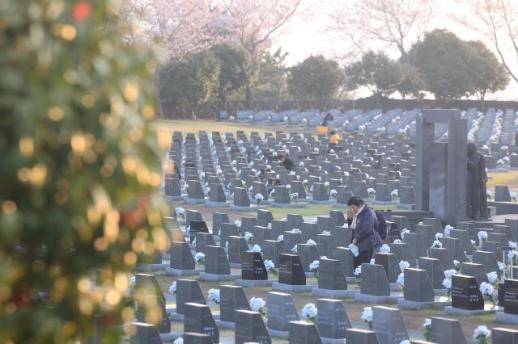 Remembering Jeju April 3 for the 78th time SEOUL, April 03 (AJP) -The Jeju April 3 Incident refers to a period of armed uprising and state suppression on Jeju Island between 1948 and 1954, during which tens of thousands of civilians were killed. The violence began with an uprising on April 3, 1948, rooted in unrest that had been building since March 1, 1947, and continued for years amid a broader ideological conflict in the early Cold War period. Voices of remembrance echoed across the nation on Thursday as South Korea marked the 78th anniversary of the tragedy, paying tribute to victims and renewing calls to uncover the full truth behind one of the country’s darkest chapters. Participants honored the victims through flower offerings, moments of silence and grave cleanings, expressing their condolences with quiet solemnity. 2026-04-03 16:07:44
 -
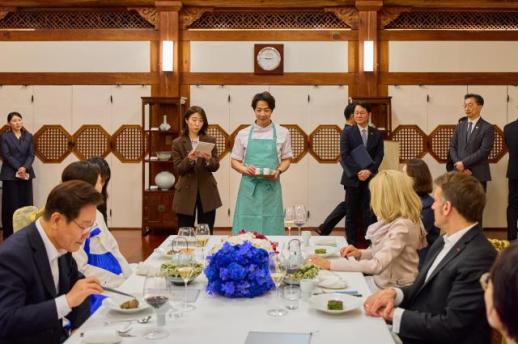 Korean-French fusion and K-pop flair greet Macron couple in Seoul SEOUL, April 03 (AJP) - Winning over a French palate is no small task — even more so when the guests are the president of France and his wife. South Korea answered with a carefully staged blend of Korean tradition and French culinary technique at a state dinner hosted by President Lee Jae Myung for President Emmanuel Macron and Brigitte Macron on Thursday. Chef Son Jong-won, known for “Culinary Class Wars 2,” was brought in for the occasion, crafting a menu that followed a classic French course structure while reinterpreting Korean ingredients and forms. The opening course reimagined Korea’s ssam (wrap) culture into refined, bite-sized dishes — including three-color wheat wraps, Jeju sweet shrimp wraps and East Sea scallops with truffle. The trio subtly echoed the French national motto of liberty, equality and fraternity. A grilled Jeju pomfret, made with premium deokja, was paired with kumquat-infused doenjang sauce, maitake mushrooms, clams and sansho pepper, offering a balance of depth and delicacy. Samgyetang followed, transformed into a French-style chicken roulade while retaining its identity as Korea’s signature ginseng chicken soup. The main course featured layered Korean beef sirloin in a mille-feuille style, served with abalone — a pairing that combined richness with restraint. Dessert came as a buckwheat crepe filled with sweet potato mousse, inspired by Korea’s roasted sweet potatoes, presented in a traditional mother-of-pearl lacquer box. It was accompanied by camellia mistletoe tea made from locally sourced ingredients. The meal was paired with two French wines and a Korean traditional liquor, underscoring the evening’s theme of balance between the two culinary traditions. Chef Son personally served the main course, explaining the concept behind the dishes. Attention to detail extended beyond the table. Guests were welcomed with Eiffel Tower-shaped bread displays, while macarons were prepared by Korea’s national team — winners of the Coupe du Monde de la Boulangerie. K-pop, naturally, had a part. Brigitte Macron received signed albums by BTS, Stray Kids and G-Dragon, along with traditional Korean ceramic tableware. The visit marks the 140th anniversary of diplomatic ties between South Korea and France. It is Macron’s first visit to Korea since taking office in 2017, and the first by a French president in 11 years. 2026-04-03 15:59:02
 -
 SK Biopharm, Lotte Biologics, LG Chem, AriBio and GI Innovation Announce New Deals and Updates SK Biopharm signs pact with Seoul BioHub to mentor drug-development startups SK Biopharm said Thursday it selected two promising central nervous system startups through an open-innovation program with Seoul BioHub and held a signing ceremony. The program is designed to strengthen the R&D capabilities of Korean startups by sharing SK Biopharm’s experience across the full cycle of global new-drug development. The company said it is the first concrete outcome of an agreement the two sides signed in November. The selected companies are Novorex and ThreeBrooks Therapeutics, which are developing treatments for degenerative brain diseases including Parkinson’s and Alzheimer’s, SK Biopharm said. Over the next year, the startups will receive support from SK Biopharm researchers on proof-of-concept work, clinical-entry strategy and responses to global regulatory requirements, among other steps in drug development. The partners also plan to open a collaboration center inside Seoul BioHub to deepen day-to-day cooperation and to look for additional startups for potential partnerships. SK Biopharm said it will expand support so domestic biotech startups can build competitiveness that meets global standards, drawing on experience gained developing the epilepsy drug cenobamate, sold in the U.S. as Xcopri. Lotte Biologics, Yeonsu District hold tree-planting and wildfire-prevention campaign Lotte Biologics said Thursday it held a joint campaign with Incheon’s Yeonsu District Office ahead of Tree-Planting Day on April 5, planting 250 trees and promoting spring wildfire prevention to address the climate crisis and help preserve local ecosystems. The company said about 400 people participated, including district officials, residents and its employee volunteer group, LB:Heart, as part of its ESG vision to build a “sustainable bio ecosystem.” Participants planted about 250 cherry trees around a neighborhood park in the Yeonsu Advanced Industrial Cluster. They also promoted wildfire-prevention awareness among residents and carried out a cleanup around the park, the company said. A Lotte Biologics official said the company will continue environmentally friendly activities to respond to climate change, expand community-focused social contributions and work to foster a healthy industrial ecosystem where talented domestic bio workers can thrive. LG Chem signs exclusive deal to sell Mochida’s endometriosis drug Dinagest in Korea, Thailand LG Chem said Thursday it signed an exclusive sales agreement with Japan’s Mochida Pharmaceutical for Dinagest, an endometriosis treatment, covering South Korea and Thailand. Dinagest is an oral progestin containing dienogest and is widely used as a key drug for hormone-dependent women’s diseases, including endometriosis, the company said. LG Chem said Dinagest is the only product in Japan’s market for the same ingredient to have shown treatment benefits in clinical trials not only for endometriosis but also for adenomyosis and dysmenorrhea. It currently holds more than 80% market share in Japan, the company said. Based on the collaboration, LG Chem said it plans to apply next year for domestic sales approval and aims to improve access to treatment for women’s diseases by expanding the drug’s use. “This introduction of Dinagest is an important starting point for expanding our existing infertility business into a women’s health business,” said Kim Seong-ho, head of LG Chem’s Specialty-Care business division. He said the company will continue to identify and develop products that provide practical help for women’s health management across life stages. AriBio names Seong Su-hyeon as co-CEO AriBio said Wednesday it appointed Vice Chairman Seong Su-hyeon as its new co-CEO. The company said CEO Jeong Jae-jun will continue to oversee R&D, global clinical trials and commercialization, and completion of new-drug development and scientific results, while Seong will lead overall management, business strategy and fundraising. The company is approaching key milestones, including the end of global Phase 3 trials for its oral dementia treatment candidate AR1001 and the release of topline results, AriBio said. The company said the co-leadership structure will help create a more stable and stronger foundation for growth by closely linking research and management. Seong is a co-founder of AriBio. He served as CEO from 2010 to 2019 and later, as vice chairman, led fundraising and the buildout of research infrastructure, the company said. AriBio said he also led development of the dementia electroceutical “Herzion” based on research data on degenerative brain diseases including AR1001, and played a key role in launching business lines such as the hair-loss solution “Teloact,” functional cosmetics and health supplements. “I will do my best until the final moment to deliver the world’s first oral dementia treatment,” Seong said. GI Innovation to present Phase 1 data on immuno-oncology drug at ASCO GI Innovation said Thursday it will present Phase 1 data for its investigational immuno-oncology drug at an international conference. The company said Phase 1 data for GI-101A was selected for a rapid oral abstract presentation at ASCO 2026, the annual meeting of the American Society of Clinical Oncology. ASCO is a major forum for sharing the latest clinical data in oncology, where new drugs are assessed based on real patient data. The meeting will be held in Chicago from May 29 to June 3, local time, the company said. GI Innovation said it plans to present the Phase 1 results for GI-101A. “The selection of GI-101A for an oral presentation at ASCO reflects recognition of its clinical potential and academic value at a prestigious conference,” CEO Jang Myeong-ho said. He said the presentation will clearly lay out the clinical significance of GI-101A and its strategic value as a combination therapy.* This article has been translated by AI. 2026-04-03 15:33:00
 -
 Cheap drones reshape Iran war, raising risk of North Korea copycat SEOUL, April 03 (AJP) - Low-cost drones are rapidly redefining modern warfare in the Iran conflict, exposing a growing cost imbalance that could have direct implications for the Korean Peninsula. U.S. President Donald Trump has claimed Washington achieved most of its strategic objectives in the war, likening the 32-day campaign to major 20th-century conflicts. Yet the fighting has dragged on longer than expected, far from the swift outcome suggested in the early hours of the U.S.-Israeli strikes that killed Iran’s supreme leader, Ayatollah Ali Khamenei, on Feb. 28. What has sustained Iran’s resistance is not its nuclear capability, but drones — inexpensive, scalable and increasingly effective. Military analysts now describe the conflict as a “cost war,” in which cheap weapons are used to exhaust far more expensive defense systems. Iran’s Shahed drones, costing under $50,000, are forcing the U.S. and its allies to deploy interceptor missiles priced in the millions. Patriot interceptors cost roughly $4 million per unit, while Tomahawk cruise missiles exceed $2 million, underscoring the widening economic asymmetry. The trend has already been demonstrated in Ukraine, where low-cost interceptor drones have evolved rapidly — from speeds of 100 mph to over 220 mph within a year — and are now produced at scale, with output reaching as many as 2,000 units per day. One system, the “Sting” drone, costs around $2,000, a fraction of the estimated $20,000 price tag of the attack drones it targets. This widening cost gap raises a fundamental concern: even technologically superior forces risk being overwhelmed by sustained waves of inexpensive unmanned systems. The implications are particularly acute in the Strait of Hormuz, where tensions remain high. Analysts warn that the primary threat to oil tankers is not large naval engagements, but land-based anti-ship missiles and drone strikes. Securing maritime routes — and reopening the strait — has become central to any de-escalation scenario. Washington is already adapting. According to a Wall Street Journal report, the U.S. military has deployed a low-cost attack drone dubbed “Lucas,” developed by reverse-engineering Iran’s Shahed design. Costing between $10,000 and $55,000, the system marks a shift toward cheaper, mass-deployable strike capabilities. The drones were used in attacks on Iranian military targets, including drone production facilities and air defense nodes, contributing to an 83 percent drop in Iranian drone activity in the early phase of the war, according to U.S. officials. The deployment also marked the first use of one-way attack drones by the U.S. in this conflict. Originally designed for a potential confrontation with China, the Lucas system had been slated for Indo-Pacific deployment, with about 6,000 units ordered by the U.S. Marine Corps. The Iran war accelerated its operational debut. North Korea seen as potential beneficiary The spread of low-cost drone warfare is also raising concerns about North Korea, which could benefit from the evolving battlefield dynamics. Pyongyang has deepened military cooperation with Russia during the Ukraine war, gaining exposure to modern drone tactics. Analysts warn that as U.S. strikes degrade Iran’s domestic drone production, Tehran may seek offshore partners — with North Korea viewed as a plausible candidate. “The development and production of Shahed-type long-endurance suicide drones by North Korea appear highly likely,” said Jeon Kyung-joo and Kim Hong-seok of the Korea Institute for Defense Analyses. They added that North Korean forces have improved operational capabilities through battlefield experience alongside Russian troops. A Ukrainian field commander also warned that adversaries are using ongoing conflicts as testing grounds. “North Koreans are advancing with the knowledge and experience they are acquiring here,” said Captain Oleh Shyriaiev, noting that such lessons could later be applied on the Korean Peninsula. North Korea’s drone program dates back decades but remained limited to outdated reconnaissance systems. Its recent deployment to Russia, however, is seen as a turning point, potentially enabling it to absorb production know-how and scale up its capabilities. Implications for South Korea For South Korea, the rise of low-cost drone warfare exposes a structural vulnerability. Seoul’s air defense architecture is built around high-end systems such as PAC-3, Cheongung-II, THAAD and the forthcoming L-SAM. While effective against ballistic missiles, these systems are ill-suited to counter low-flying drones. “THAAD is optimized for high-altitude ballistic missile interception and is not designed to engage low-flying drones or cruise missiles,” said Jeong Kyung-woon of the Korea Association of Military Studies. If North Korea deploys drones at scale, South Korea could face the same cost dilemma seen in the Middle East — using multimillion-dollar interceptors against threats that cost a fraction of that amount. Analysts say this underscores the urgency for Seoul to expand counter-drone capabilities, including electronic warfare, directed-energy weapons and low-cost interception systems. As the Iran conflict demonstrates, the future of warfare may be defined less by technological superiority than by cost efficiency — a shift that could reshape security dynamics far beyond the Middle East. 2026-04-03 15:19:45
 -
 U.S. sets 15% tariff on Korean drugs, keeps biosimilars duty-free The Donald Trump administration has decided to impose a 100% tariff on pharmaceuticals not produced in the United States, while applying a separate 15% rate to South Korea. Biosimilars, a key Korean export, will remain duty-free. South Korea’s pharmaceutical and biotech industry said the decision eases uncertainty, but warned that companies still need global strategies as supply chains shift. President Donald Trump signed a proclamation on April 2 (local time) imposing a 100% tariff on pharmaceuticals not made in the United States. However, South Korea, Japan and Europe — which have separate trade agreements with the United States — will face a 15% rate, while the United Kingdom will be subject to 10%. Trump has repeatedly raised the prospect of drug tariffs since early this year, pressuring the industry. In August last year, he said rates could rise as high as 250%. Two months later, in October, he cited a 100% tariff, fueling uncertainty. The latest decision is seen in the industry as removing that tariff risk. Companies said generics and biosimilars were excluded from the tariff, and that Korean pharmaceuticals will receive treatment close to most-favored-nation status, giving them an edge over products from countries facing the full 100% rate. The Bioeconomy Research Center at the Korea Bio Association said the measure will impose a 15% tariff on Korean patented drugs that previously entered the U.S. duty-free, but the impact should be limited because biosimilars — a major export — will remain duty-free for at least one year. It added that contract development and manufacturing (CDMO) volumes produced in South Korea at the request of U.S. clients may be recognized as U.S.-made and potentially qualify for duty-free treatment, though final confirmation from the U.S. government is needed. Over the medium to long term, it said, diversification will be essential, including reshaping production and supply chains in the United States and expanding into non-U.S. markets. The U.S. government’s plan to reassess in one year the exclusions for generics, biosimilars and related raw materials could remain a burden, the industry said. A biotech industry official said companies were relieved after Trump’s tariff threats continued from last year, but added that firms must prepare thoroughly for the review in a year and pursue diversification as global supply chains are reorganized.* This article has been translated by AI. 2026-04-03 15:06:00