

Journalist

Chang SeongWon
-
 Culture Minister Choi Hwi-young Sends Condolences on Death of North Korea’s Chang Ung Choi Hwi-young, South Korea’s minister of culture, sports and tourism, expressed condolences over the death of Chang Ung, a former honorary member of the International Olympic Committee. In a condolence message issued Tuesday, Choi said he was “deeply saddened” by the news and credited Chang with dedicating his life to advancing the Olympic movement and promoting sport, making “meaningful contributions” to international sports. Choi added that Chang’s efforts to build friendship and mutual understanding through sport — and to spread the value of peace on the Korean Peninsula — would be long remembered. The ministry said it plans to deliver the message to the North Korean Olympic Committee via the IOC. According to the IOC, Chang died March 29 at age 87. The IOC said it would fly the Olympic flag at half-staff for three days at Olympic House in Lausanne, Switzerland. Chang was elected an IOC member at the 1996 IOC session and for more than 20 years served as a key international sports diplomat representing North Korea. He also played a role in improving inter-Korean relations through sport. Chang took a leading role in inter-Korean sports talks in 1986, and at the 1991 World Table Tennis Championships in Chiba, Japan, he served as the North’s chair of the working-level committee that helped form a unified Korean team. He also played an important role in the joint North-South march at the opening ceremonies of the 2000 Sydney Summer Olympics and the 2018 PyeongChang Winter Olympics.* This article has been translated by AI. 2026-04-01 18:00:00
 -
 South Korea Expands ‘Culture Day’ to Weekly, but Movie Discounts Draw Backlash South Korea’s monthly “Culture Day,” previously held on the last Wednesday of each month, expanded in April to a weekly Wednesday program called “Culture Wednesday.” The change follows the Culture, Sports and Tourism Ministry’s approval on March 3 of a revision to the enforcement decree of the Framework Act on Culture. The ministry said the revision broadens benefits such as discounted movie tickets and free or discounted admission to national heritage sites and sports events. But online communities have questioned whether the movie-ticket benefit has effectively been reduced rather than expanded. Under the previous program, movie tickets cost 7,000 won on Culture Day. Under the revised decree, the discount applies twice a month, but ticket prices rise to 10,000 won for adults and 8,000 won for youths. While theaters may offer discounts more often, viewers who do not go at least twice a month would pay more per discounted visit — a 3,000-won increase for adults compared with the previous 7,000-won price. The article said theaters had borne the cost of the discount without government subsidies. It said theaters, after consultations with the ministry, agreed to join the expanded program by increasing discount days to twice a month while raising the discounted price. After the change became known, comments on portal news sites, online communities and social media largely argued that cultural benefits had been cut, saying it would be better to keep a once-a-month 7,000-won movie ticket. Because the previous Culture Day was credited with boosting attendance, some have voiced concern that higher discounted prices under Culture Wednesday could weaken the draw and ultimately reduce theatergoers. 2026-04-01 17:57:16
 -
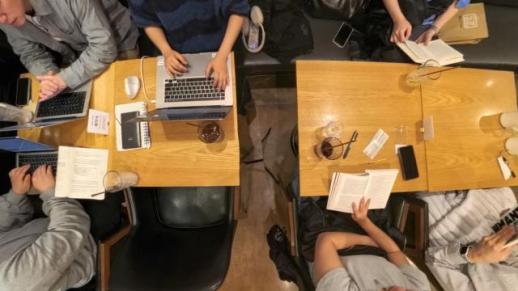 Alone but together: inside Korea's burgeoning "admin night" culture SEOUL, April 1 (AJP) — “Roasted sweet potato.” “Yes.” “Hamster Prince!” “Yes.” “Homebody.” “Yes.” It’s 8pm Tuesday and organizers in a café in the Gwanak district of southern Seoul have started a roll call of participants, using their nicknames. One by one, people share what they plan to accomplish that day. “I’ll finish the book I started last week.” “I’ll wrap up a blog post.” “I’ll revise my thesis.” Then comes the rule. “No talking for the next two hours,” says Choi Kyong-won, 28, one of the organizers. Within seconds, the room has fallen silent. The only sounds are keyboards tapping and pages turning. Some use laptops, others tablets. A few put on lectures, while others pull out journals. Choi says the habit of simply declaring a goal creates the pressure needed to follow through. “Once you say what you’ll do, you feel accountable. It helps you focus,” she says. The concept, also known in the United States and the United Kingdom as “Admin Night” and “Life Admin Party,” has gained traction as a practical way to tackle everyday responsibilities. Originally, the concept referred to setting aside time to complete routine administrative tasks, such as managing emails, organizing schedules, and handling paperwork. More recently, it has evolved into a broader format where participants work on self-development or personal projects. The approach is closely linked to the psychological concept of “body doubling,” a behavioral strategy in which the mere presence of others enhances focus and task execution. The subtle sense of being observed creates a form of accountability, discouraging distractions and encouraging sustained concentration. Kwak Keum-joo, a professor of psychology at Seoul National University, says this reflects a broader psychological mechanism similar to social facilitation, where the presence of others enhances performance, even among strangers. “Even unfamiliar others can motivate us,” she says. “It’s a form of voluntary solitude, being alone but not entirely disconnected.” For many in their 20s and 30s, Admin Night represents a shift in lifestyle. Instead of after-work social drinking, participants choose structured time to complete tasks. What began as early-morning “miracle routines” has extended into the evening, reflecting a broader “productive living” trend. At its core, the appeal lies in a balance: being together with other people but without interference. Participants in the café say they turned to Admin Night for its efficiency. Unlike traditional study groups or book clubs, the format minimizes personal interaction and is designed to keep individuals focused on their own tasks within a fixed time frame. The sessions operate on a nickname basis, with limited interaction aside from the brief sharing of goals at the start and equally brief post- mortem at the end. While some participants are regulars, the atmosphere remains centered on individual work rather than relationship-building. Co-organizer Cho Hyun-jun, 32, a YouTuber and freelancer, says the idea grew out of his own experience working alone after graduating during the pandemic. “Working independently, I often found myself in environments that weren’t conducive to focus,” he says. “I started gathering people in similar situations about four years ago, initially as a study group.” The shift to fully online interactions during COVID-19 reinforced the need for offline spaces, he says. Having spent most of his junior and senior years at university engaged in remote study, he says the lack of in-person interaction has shaped how his generation approaches relationships. Choi says young people tend to prefer clear boundaries between work and personal life. They favor purpose-driven interactions, and prioritizing individual goals over group dynamics. “In many groups, socializing can blur the original purpose,” she says. “As casual conversation grows, focus fades. We aimed to stay true to the group’s function.” The sessions are held on Tuesdays and Thursdays, and have run for more than eight rounds to date. Participants include office workers, students and freelancers in their 20s and 30s, with the community now exceeding 100 members. “A sense of being watched” drives productivity Participants often describe the experience in simple terms: a feeling of being “watched.” They bring tasks from travel planning and video editing to academic writing and job applications that share a common thread of work that is personal and has been out off for too long. Cho says the most notable moments are when participants stay fully focused throughout the session. “Seeing people remain focused for two straight hours without leaving their seats show we have tapped into a real need,” he says. “Not alone, but not about relationships” The appeal of the gathering extends beyond productivity to its emotional impact. “When I come here, I feel reassured seeing others living just as diligently,” says Cho, adding that many participants report a boost in self-esteem. Choi says many young people feel fatigued by relationships and instead find comfort in interactions that remain brief and low commitment. “There’s no need to impress anyone or expend emotional energy, which makes it less burdensome,” she says. Experts say the shift reflects broader changes in how younger generations approach relationships. Kwak says the tendency to avoid emotionally demanding interactions predates the pandemic but was significantly reinforced by it. “There was already a tendency to avoid emotionally draining relationships,” she says. “But COVID-19 strengthened it, as people had fewer chances to meet and became more used to limited, controlled interactions.” She notes that many students spent their university years almost entirely online, shaping a preference for more structured and less demanding forms of connection. At the same time, she says, young people are not rejecting relationships altogether, but redefining them. They seek connection, but without the burden of deep emotional investment. A global shift toward low-commitment connections The trend is not unique to South Korea. Similar formats, including coworking sessions, silent study clubs and “deep work” meetups, have been gaining traction in the United States and Europe, particularly as remote work reshapes daily routines and highlights the limits of working alone. According to the OECD, face-to-face interactions have declined since the COVID-19 pandemic, particularly among younger people. At the same time, the rise of remote work has intensified both flexibility and isolation. A 2025 report by Gallup found that about 25% of remote workers experience daily loneliness, significantly higher than those working on-site. This has coincided with rapid growth in shared work formats. Globally, there are now around 42,000 coworking spaces serving more than 5 million users, reflecting rising demand for flexible, low-commitment work environments. Digital alternatives have also emerged. Platforms such as Focusmate and Flow Club now offer “virtual body doubling,” where users keep their cameras on while working alongside others online to maintain focus. Global coworking reports suggest such spaces can help reduce isolation, providing a sense of community without requiring deep social ties. Kwak says that young South Koreans may be at the forefront of this shift. “They are practical and selective, maintaining boundaries while still seeking connection,” she says. “It’s a more efficient and, in many ways, a more mature and wise approach.” Two hours, loosely connected “It’s 9:50 p.m. The session is over. Let’s go around and share how it went.” As the alarm rings, participants briefly reflect. “I finished half the book I had planned to read over eight weeks,” says Lee Seung-hyun, 27. “Seeing others focus motivated me.” “I think I’ll keep going when I get home,” says Jang Hye-lee, 26. As the sharing ends, people quietly pack up their bags and step out into the night, heading off in different directions. 2026-04-01 17:55:04
 -
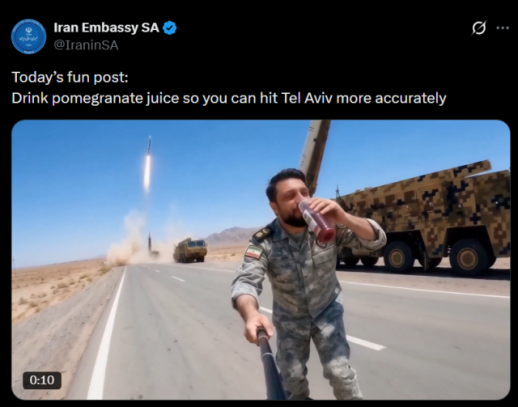 April Fools' jokes turn serious as U.S., Iran trade memes alongside war SEOUL, April 01 (AJP) -The joke on this year’s April Fools’ Day was no joke for the United States and Iran, as they wage a parallel war of memes and parodies online alongside the real conflict. What was once confined to humor and internet culture is increasingly emerging as a tool of influence, signaling a shift in how states communicate and compete in times of conflict. A meme circulating on X on April 1 depicted U.S. President Donald Trump in a cartoonish, childlike form, dressed in a stylized outfit and playing with toy aircraft and submarines inside a mock White House setting. Framed as a jab at his handling of the war, the post drew around 76,000 views, 1,900 likes and more than 800 reposts within hours. Another widely shared post, uploaded by an Iranian embassy-affiliated account, showed an AI-generated figure skateboarding past military vehicles while casually drinking pomegranate juice as missiles launched in the background. Captioned, “Drink pomegranate juice so you can hit Tel Aviv more accurately,” the content amassed more than 2.8 million views, 51,000 likes and 7,600 shares. Analysts say such content reflects the “gamification” of conflict, particularly in digital environments where visual simplicity and emotional resonance drive engagement. The examples align with a broader pattern seen in recent exchanges among Iran, the United States and Israel, where messaging increasingly incorporates satire, pop culture references and rhetorical mimicry — blurring the line between propaganda and entertainment. Iranian officials have echoed phrases associated with Trump, including his well-known “You’re fired” remark, while adopting his communication style to dismiss criticism as “fake news.” References to films and gaming imagery have similarly been used to frame opposing narratives in a more derisive light, suggesting a deliberate effort to communicate through culturally recognizable formats rather than conventional political language. Unlike past conflicts, where psychological operations were largely conducted through radio broadcasts, printed leaflets and tightly controlled media narratives, the rise of digital platforms has shifted influence from centralized messaging to decentralized, rapidly replicating content. “Short-form videos can now be generated within minutes and distributed automatically,” said Billy Choi, a collaboration professor at Korea University’s Human-Inspired AI Research Institute. Choi noted that large volumes of content can be produced with minimal human intervention and said algorithms further amplify this process by repeatedly surfacing similar content based on user behavior. This combination of automation and algorithmic amplification allows for what analysts describe as volume-driven dissemination, where repeated exposure becomes a more effective mechanism of influence than factual accuracy. Military analysts interpret the trend as part of an evolving information warfare landscape. “Mobilizing all available platforms to influence public sentiment is becoming a central feature of modern conflict,” said Choi Ki-il, a professor in Sangji University’s Department of Military Studies. Such tactics reflect a long-standing strategic principle. “Winning without fighting has long been considered the highest form of strategy, and these developments can be seen as its extension in the digital domain,” he said. As digital platforms continue to evolve, analysts expect such forms of communication to become more sophisticated, further blurring the boundary between satire, influence and strategy. 2026-04-01 17:44:39
 -
 Asian markets rally on ceasefire hopes, Seoul stocks surge over 8% SEOUL, April 1 (AJP) - Asian markets rose as ceasefire hopes strengthened after U.S. President Donald Trump signaled a potential de-escalation within weeks, while Iran indicated willingness to end the conflict provided attacks do not resume. Japan’s Nikkei 225 jumped 5.24 percent to trade at 53,739.68, marking its biggest gain of the year and the fourth-largest on record, as overseas investors bought on easing Middle East tensions. Semiconductor stocks led the rally, with Kioxia jumping 7.10 percent, Advantest rising 10.67 percent, and Tokyo Electron gaining 5.51 percent. Shares of SoftBank Group and Fujikura also rose more than 5 percent and 9 percent intraday, respectively. Hong Kong’s Hang Seng Index rose 2.22 percent to 25,339.45. China’s Shanghai Composite Index rose 1.46 percent to 3,948.55, and Taiwan’s TAIEX rose 4.58 percent to 33,174.82. South Korea’s benchmark KOSPI opened more than 5 percent higher, quickly reclaiming the 5,300 level and triggering a buy-side sidecar in early trade. Gains accelerated through the session, with the index closing at 5,478.70, up 8.44 percent — marking its strongest daily rise since last month. The rally was driven largely by a rebound in semiconductor shares, which had underperformed in recent sessions. Samsung Electronics jumped 13.4 percent, while SK hynix climbed 10.66 percent, lifting the broader index. The tech-heavy KOSDAQ also rose sharply, gaining 6.06 percent, to close at 1,116.18, reclaiming the 1,100 level in a single session. Buy-side sidecars were triggered in both markets during intraday trading. The Korean won strengthened sharply, with the dollar-won exchange rate falling 28.8 won to trade at 1,501.3. U.S. Treasury yields and the dollar fell, and risk assets including equities, gold and cryptocurrencies rose. Verbal intervention by authorities also helped strengthen the won. Oil prices retreated on rising ceasefire expectations, with West Texas Intermediate dropping more than 4 percent intraday to briefly break below $97 per barrel ahead of U.S. President Donald Trump’s scheduled address at 10 a.m. Thursday Korea time, fueling hopes of a breakthrough in negotiations. Domestic factors also supported the rally. South Korea’s inclusion in the FTSE World Government Bond Index (WGBI), effective Wednesday, raised expectations of $50 billion to $60 billion in inflows, putting downward pressure on yields and the currency. Autos and mobility stocks surged, with Hyundai Motor rising 9.54 percent to close at 488,000 won, Kia adding 6.96 percent and closing at 155,300 won, and Hyundai Mobis climbing 8.20 percent to 409,000 won. Financials also advanced, as KB Financial gained 4.51 percent to 148,300 won, Shinhan Financial rose 6.39 percent to 93,300 won, Mirae Asset Securities jumped 8.12 percent to 66,600 won, and Samsung Life Insurance increased 7.84 percent to 227,000 won. Industrial and defense-related stocks were strong, with Hanwha Aerospace up 6.73 percent to 1,333,000 won, Hanwha Ocean rising 5.66 percent to 127,000 won, Doosan Enerbility surging 8.50 percent to 99,600 won, and Samsung C&T gaining 7.69 percent to 273,000 won. Bio and platform shares posted moderate gains, with Samsung Biologics up 4.52 percent to 1,572,000 won, Celltrion rising 4.46 percent to 206,000 won, and Naver adding 4.22 percent to 210,000 won. Battery and electronics-related stocks also climbed, with LG Energy Solution up 3.17 percent to 407,000 won, Samsung SDI gaining 5.88 percent to 432,000 won, Samsung Electro-Mechanics jumping 9.08 percent to 444,500 won, and SK Square also advanced 7.40 percent to 501,000 won. HD Hyundai Heavy Industries was the only decliner, slipping 2.90 percent to 451,500 won. 2026-04-01 17:38:47
 -
 South Korea Requests Police Probe Into 186 Suspected KBO Ticket Scalping Posts The Ministry of Culture, Sports and Tourism said Tuesday it has asked police to investigate 186 online posts suspected of high-priced or large-volume scalping of tickets as the 2026 KBO League season opened and illegal resales increased. The ministry said its reporting and monitoring found about 16,000 posts related to scalping in recent weeks. Around the March 28-29 opening games, it detected transactions priced as high as 13 times face value. It also said it found multiple signs of organized activity, including accounts securing large blocks of seats for resale. Based on indicators such as bulk or adjacent-seat sales, excessive markups and repeated transactions by the same account, the ministry analyzed cases and referred them to the National Police Agency for investigation. The ministry said it considers scalping a serious illegal act that undermines fair access for fans. It said it is continuously monitoring online sales centered on the Korea Professional Sports Association’s “Online Ticket Scalping Report Center,” analyzing seat details, terms of sale, repeat-account activity, markup levels and duplicate postings across platforms to identify suspicious cases. To address the problem more broadly, the ministry said it is combining legal changes with on-the-ground measures. Under revisions to the National Sports Promotion Act — promulgated Feb. 27, 2026, and set to take effect Aug. 28 — all unfair ticket transactions are banned regardless of whether macros are used. The changes also allow penalties of up to 50 times the sales amount and introduce a reward system for reports, sharply increasing punishment levels. The ministry said a public-private consultative body on preventing ticket scalping for performances and sports was launched March 5 with the National Police Agency, the Fair Trade Commission, the pro sports association, the Korea Baseball Organization, ticketing services and secondhand trading platforms. It said the group is building cooperation on monitoring, information sharing and public outreach, while encouraging voluntary steps such as removing posts, restricting transactions and strengthening abnormal-transaction detection systems, alongside anti-scalping campaigns online and at stadiums. The KBO and clubs are also working with police to step up on-site crackdowns and are running ongoing messages through websites, stadium video boards and banners, the ministry said. Clubs are tightening controls by sanctioning improper use of season tickets and memberships and canceling tickets or restricting use when booking policies are violated. Culture Minister Choe Hwi-young said, “Scalping is not a simple transaction between individuals, but a clear illegal act that undermines fairness in the sports industry and infringes on the public’s right to attend.” He added, “With this revision to the National Sports Promotion Act, scalping is no longer something that is tolerated, but a serious violation subject to heavy penalties. Even before the law takes effect, we will respond proactively by mobilizing all available administrative and investigative tools.” Choe also said, “There are limits to what government enforcement alone can do, and a change in public awareness is essential,” urging the public to take part in efforts to eradicate scalping.* This article has been translated by AI. 2026-04-01 17:30:00
 -
 IVE's Jang Won-young turns heads in spring outing SEOUL, April 1 (AJP) - Jang Won-young, a member of K-pop sextet IVE, attended a promotional event for fashion brand ROLAROLA in central Seoul on Wednesday. In keeping with the French-inspired casual brand's appeal to young customers, Jang wore a white T-shirt with red embroidery, a cherry-blossom-colored cardigan tied around her waist, and a frilled lace skirt, completing her stylish look with heart-patterned fishnet stockings that awed visitors and other attendees. 2026-04-01 17:19:20
 -
 Investors are jittery, but analysts are buoyant behind Korean memory makers vs TurboQuant SEOUL, April 01 (AJP) - A new artificial intelligence data-compression technology from Google has hit Seoul’s main stock market as hard as Strait of Hormuz-related news, as it involves South Korea’s top memory chipmakers responsible for around 40 percent of not just the KOSPI but also the country’s exports. Since the unveiling of Google’s TurboQuant, a next-generation quantization algorithm, Samsung Electronics and SK hynix saw their shares tumble 4.7 percent and 6.2 percent, respectively, over a two-day period late last month. They staged a strong comeback Wednesday — Samsung Electronics up 12.5 percent and SK hynix up 10.4 percent. But Wednesday’s gains hinged on hopes for a war endgame, and any shifts in Washington or Tehran could quickly reverse sentiment. For the chipmakers, the drag came from a research paper published by Google on March 24 detailing the debut of a technology called TurboQuant. TurboQuant acts as a highly efficient “packing” mechanism for AI. Large language models (LLMs) like ChatGPT require vast amounts of temporary memory, known as the KV cache, to retain the context of long conversations. TurboQuant compresses this data without losing its core meaning, reducing the memory footprint to as little as one-sixth of conventional levels. Fearing this level of efficiency would drastically reduce the need for dynamic random-access memory (DRAM) and high-bandwidth memory (HBM) chips, investors aggressively dumped tech shares. “The impact will be massive,” said Kim Deok-kee, a professor of electronic engineering at Sejong University in Seoul. “If memory requirements are reduced to one-sixth, revenue will drop drastically. With Samsung, SK hynix, Micron and emerging Chinese players in the mix, this could quickly lead to a memory oversupply.” Kim warned that the current rush to expand capacity could backfire. “Companies are building multiple fabs based on current high demand, but in two to three years, this could result in massive oversupply and severe financial deficits,” he said. However, local brokerages strongly argue that this efficiency will actually lower the cost of running AI, thereby expanding overall usage, and are maintaining a robust outlook for South Korean chipmakers. “The technology simultaneously improves memory and computational efficiency, lowering AI utilization costs,” Jang Moon-young, an analyst at Hyundai Motor Securities, wrote in a recent note. “In the mid-to-long term, it is highly likely to lead to an expansion in memory demand through broader AI adoption and increased usage.” Kim Dong-won, head of research at KB Securities, said low-cost AI technologies like TurboQuant will “lower entry barriers and explosively expand overall AI demand.” “Despite geopolitical anxieties stemming from rising tensions in the Middle East, second-quarter memory chip orders are strengthening, exceeding previous estimates,” he said. Analysts also highlight the coming era of “physical AI,” such as robotics and autonomous driving, which will require massive data processing. In a report released Wednesday, Daol Investment & Securities analysts Koh Young-min and Kim Yeon-mi said the sell-off over TurboQuant was excessive. “The best thing this KV cache compression technology does is bring unrealistic demand down to a more realistic level,” they wrote. “The potential for future HBM demand growth remains ample.” 2026-04-01 17:13:40
 -
 Stock, FX, and debt in triple win in Seoul, but lasting strength hinges on Gulf SEOUL, April 1 (AJP) — South Korea's war-beleaguered capital markets roared back with all three assets — stocks, the won and bond prices — strengthening sharply Wednesday, helped by talk of a Gulf war endgame and a rush of foreign capital into the debt market on the first day of Korea’s inclusion in the World Government Bond Index. But since much of the rally hinges on Gulf developments, the sustainability of the gains remains in question. The dollar tumbled below 1,500 won Wednesday, a stunning retreat from above 1,530 in the previous session. Bond yields also retreated, showing a rare moment of strength, with the three-year government bond yield falling 17.7 basis points to around 3.38 percent and the 10-year yield dropping 19.1 basis points to 3.691 percent. The KOSPI ended 8.4 percent higher. While expectations of a war exit in the Gulf fueled equities, the primary boost to the currency and debt markets came from WGBI inclusion, while the passage of the "Exchange Rate Stability Act" played only a small supporting role. After a year’s delay, FTSE Russell, a subsidiary of the London Stock Exchange, finalized South Korea’s inclusion in the WGBI, with phased purchases of Korean government bonds set from April 1 to Nov. 8, 2026. Inclusion in the WGBI is often likened to a "blue-chip" certification for a country’s sovereign debt. At least 2 percent of the $2.5 trillion index — equivalent to roughly $50 billion — is expected to be allocated to Korean government bonds, triggering an influx of foreign capital. Unlike typical emerging market debt flows, WGBI-related funds are primarily "passive" capital aimed at long-term investment. While emerging market debt is often traded within months, WGBI funds tend to be held for several years, providing a stabilizing effect on the currency market. "Foreign financial institutions and primary dealers forecast an inflow of $50 billion to $60 billion following the WGBI inclusion, and we have confirmed capital inflows starting this week," wrote Goo Yun-cheol, Deputy Prime Minister and Minister of Economy and Finance, on his X account, echoing the optimistic outlook. Traders are not as optimistic. "While we saw strength today, it is still insufficient considering that bond yields have surged by 40 to 60 basis points this year alone," said a bond trader at a commercial bank on condition of anonymity. "Since the blockade of the Strait of Hormuz remains the dominant issue, we are treating the WGBI news as a short-term factor." Yoon Yeo-sam, a researcher at Meritz Securities, also noted that "macro uncertainties, such as delayed U.S. rate cuts and the exchange rate breaching the 1,500 level, are overshadowing the positive impact of the index inclusion." The so-called reshoring incentive as part of the FX Stability Act drew even more cynicism. Brokerages have been selling Reshoring Investment Accounts since March 23, offering various tax incentives for those who reinvest dollar-based assets into Korean ones. The accounts sold by 10 brokerages have so far drawn 400 billion won ($265 million), about 0.2 percent of the roughly $150 billion in U.S. stocks held by South Koreans. Investors scoffed at the limited incentives, with tax benefits capped at 50 million won. "After investing in U.S. stocks for over a decade, my balance is well into the hundreds of millions of won," said one investor. "Unless the tax benefits are significantly expanded for larger and longer-term investments, I have no reason to return." For others, there is little reason to cash out of U.S. dollar assets, as no tax benefit is enough to offset exchange losses. "I entered the U.S. market a year ago when the rate was around 1,300 won," said another investor. "With the rate now near 1,500, returning to the domestic market and then trying to re-enter U.S. stocks later would cost me more than 10 percent of my principal." Experts agree that RIAs will struggle to attract investors without addressing fundamental issues. "Asking investors to liquidate overseas assets and bring them back in won when the currency is undervalued essentially damages their expected returns," said Kang Hyun-joo, a senior research fellow at the Korea Capital Market Institute. "Unless currency stabilization comes first, the RIA will remain little more than a nominal policy." 2026-04-01 17:13:11
 -
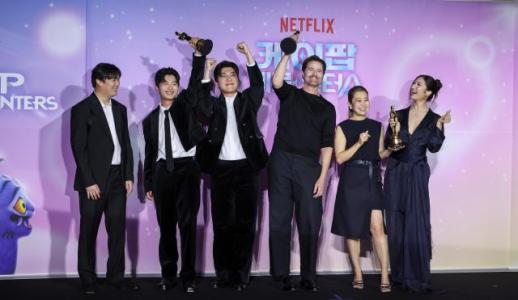 Golden homecoming for 'K-Pop Demon Hunters' creators after Oscar win SEOUL, April 01 (AJP) -Fresh off their Oscar triumph, the creators of Netflix’s animated hit K-Pop Demon Hunters returned to Seoul to a warm, almost cinematic homecoming. The press event, held at CGV Yongsan I’Park Mall, brought together director Maggie Kang, co-director Chris Appelhans, singer-songwriter EJAE and producers Lee Yoo-han, Kwak Joong-kyu and Nam Hee-dong — the team behind a film that has blurred the lines between K-pop spectacle and supernatural fantasy. On stage, the mood was part victory lap, part reflection. Clips from the film — neon-lit performances, shadowy demons and high-energy choreography — played behind the creators, echoing the hybrid world they built: one where K-pop idols double as guardians of humanity. The film has become one of Netflix’s standout global titles, drawing attention for its bold fusion of Korean pop culture and fantasy storytelling. That blend carried it through an award season sweep, culminating in wins for best animated feature and best original song at the 98th Academy Awards, alongside honors from the Annie Awards, Critics Choice Awards, Golden Globes and Grammys. Speaking at the event, Appelhans said Korean identity would remain central in a potential sequel. “The Koreanness is the soul of the film,” he said. “We will expand the story based on that.” The filmmakers also credited global audiences for contributing to the film’s success. 2026-04-01 17:11:41