

Journalist

Chang SeongWon
-
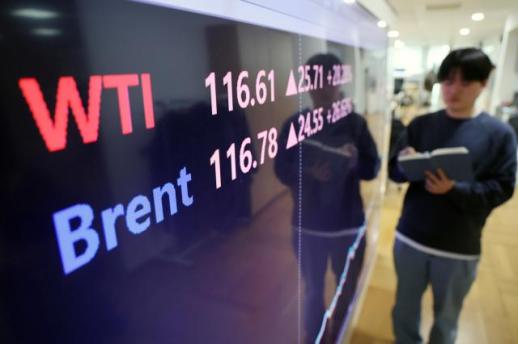 Korean banks' BIS ratio turn lower as weak won inflates FX assets SEOUL, March 31 (AJP) - South Korean banks’ capital buffers edged lower at the end of last year as the won’s sharp weakening inflated foreign-currency assets, underscoring growing pressure from exchange-rate-driven balance sheet expansion, data showed Tuesday. The common equity Tier 1 (CET1) ratio of domestic banks stood at 13.51 percent at end-2025, down 0.12 percentage point from the previous quarter, according to the Financial Supervisory Service. The decline came despite steady earnings, as a weaker won boosted the value of foreign-denominated loans and assets, increasing risk-weighted assets and diluting capital ratios. Other key capital metrics also slipped. The Tier 1 capital ratio fell 0.08 percentage point to 14.80 percent, while the total capital ratio dropped 0.09 percentage point to 15.83 percent. The leverage ratio edged down to 6.76 percent. The data highlights how currency-driven balance sheet effects — rather than credit deterioration — are emerging as a key variable for capital adequacy, particularly as Korean lenders maintain sizable foreign-currency exposure. Still, overall capital levels remained comfortably above regulatory thresholds, indicating that the banking sector retains solid loss-absorbing capacity. By bank, most major lenders maintained strong buffers, with several including KB, Woori, Citi and SC posting total capital ratios above 16 percent, reflecting ample resilience. However, the downward drift was broad-based. Thirteen banks saw their CET1 ratios decline from the previous quarter, while only a handful posted gains. Supervisors warned that risks could intensify as geopolitical tensions and a prolonged strong dollar environment lift both funding costs and credit risks. Authorities said they would step up monitoring of capital adequacy and encourage banks to bolster loss-absorbing buffers to navigate potential shocks from high oil prices and currency volatility. 2026-03-31 07:58:19
 -
 BTS’ ‘SWIM’ Debuts at No. 1 on Billboard Hot 100 as ‘ARIRANG’ Tops Billboard 200 BTS swept Billboard’s two main charts, with its fifth full-length album, ‘ARIRANG,’ reaching No. 1 on the Billboard 200 and its title track, ‘SWIM,’ debuting atop the Hot 100. Billboard said in a chart preview posted on its website on March 31 that ‘SWIM’ is No. 1 on the April 4-dated Hot 100. It is the group’s seventh Hot 100 leader, following ‘Dynamite,’ ‘Savage Love (Laxed - Siren Beat) (BTS Remix),’ ‘Life Goes On,’ ‘Butter,’ ‘Permission to Dance’ and ‘My Universe.’ Billboard said ‘SWIM’ is the 1,190th No. 1 song in Hot 100 history and the 89th to debut at No. 1. The outlet also said BTS ranks fifth among groups for the most Hot 100 No. 1 hits. The Beatles lead with 20, followed by the Supremes with 12, the Bee Gees with nine and the Rolling Stones with eight. Released on March 20, ‘SWIM’ logged 15.3 million streams, 25.8 million radio audience impressions and 154,000 in combined digital and physical single sales in tracking through March 26. The song entered Billboard’s Streaming Songs chart at No. 2, a new best for the group, and debuted at No. 18 on Radio Songs. It topped Digital Song Sales, becoming BTS’ 13th No. 1 on that chart. Billboard previously reported in a March 30 chart preview that ‘ARIRANG’ is No. 1 on the April 4-dated Billboard 200. The album debuted with 641,000 album units, the best weekly total for a group album since Billboard began tracking units in December 2014. Pure album sales were 532,000, and streaming equivalent album units totaled 95,000. The results give BTS another week leading both the Billboard 200 and Hot 100, after doing so in 2020 with ‘BE’ and ‘Life Goes On.’ With ‘ARIRANG,’ BTS has seven No. 1 albums on the Billboard 200, following ‘LOVE YOURSELF 轉 ‘Tear’,’ ‘LOVE YOURSELF 結 ‘Answer’,’ ‘MAP OF THE SOUL : PERSONA,’ ‘MAP OF THE SOUL : 7,’ ‘BE’ and ‘Proof.’ In a statement released through BigHit Music, BTS said it was “a great honor” to earn a Billboard No. 1 with an album released after “a long wait of three years and nine months.” The group thanked ARMY and “everyone who listened to our music and shared their feelings with us.” BTS said it worked to capture “universal emotions” that many people could relate to while preparing the new release, adding that it hoped ‘SWIM’ would offer “a small measure of courage and comfort” to listeners beyond borders. ‘ARIRANG’ is BTS’ fifth full-length album and was executive produced by HYBE Chairman Bang Si-hyuk. BigHit Music said the album reflects the group’s identity and shared emotions, while ‘SWIM’ sings of pressing forward without stopping amid life’s waves.* This article has been translated by AI. 2026-03-31 07:54:39
 -
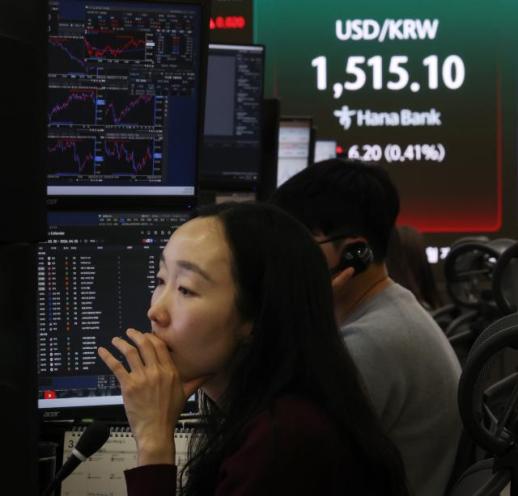 Korea's postwar securities issues rise modestly on frontload demand amid rising yields SEOUL, March 31 (AJP) -South Korea’s corporate direct financing rose in February, with stock and bond issuance climbing 8.5 percent from a month earlier, buoyed by a pre-war equity rally and a rush to secure funding ahead of further rate increases, data showed Tuesday. Total public offerings of stocks and corporate bonds reached 19.25 trillion won ($14.2 billion), up 1.5 trillion won from January, according to the Financial Supervisory Service. Equity financing led the increase, surging 215.6 percent on-month to 341.5 billion won, driven by a rebound in initial public offerings and rights issues. IPOs totaled three deals, with proceeds jumping 265.8 percent to 290.8 billion won, while rights offerings rose 76.7 percent to 50.7 billion won. Debt issuance remained robust, rising 7.2 percent to 18.9 trillion won. The increase was led by financial bonds, which jumped 37.6 percent, signaling a flurry of preemptive borrowing as issuers moved to lock in funding before yields climb further. By contrast, general corporate bonds and asset-backed securities declined 28.7 percent and 42.6 percent, respectively, pointing to a more selective risk appetite. Issuance was heavily skewed toward high-grade borrowers. Investment-grade bonds accounted for 65.6 percent of total issuance, while lower-rated bonds below BBB made up just 3.6 percent, underscoring a clear market bias toward safer credits. Refinancing dominated funding activity. About 76 percent of bond issuance was used to roll over existing debt, reflecting expectations that borrowing conditions will tighten further. Short-term funding markets showed mixed trends. Combined issuance of commercial paper and short-term bonds rose 3.1 percent to 159.6 trillion won. Commercial paper issuance fell 19.3 percent to 37.9 trillion won, while short-term bonds rose 12.9 percent to 121.7 trillion won, suggesting a shift toward more structured and flexible instruments. Outstanding corporate bonds stood at 748.4 trillion won at end-February, down 0.6 percent from the previous month, as net redemptions extended for a second straight month. The cautious funding stance is likely to harden further, with the Middle East conflict in March jolting markets and pushing yields back toward levels seen during the post-pandemic tightening cycle. 2026-03-31 07:47:07
 -
 BTS’ ‘SWIM’ Debuts at No. 1 on Billboard Hot 100, Marking Group’s Seventh Top Spot BTS has taken the top spot on Billboard’s main singles chart, the Hot 100, following its No. 1 showing on the Billboard 200 with its fifth album, “ARIRANG.” Billboard said in a chart preview article on March 30 (local time) that the album’s title track, “SWIM,” rose to No. 1 on the Hot 100, beating Ella Langley’s “Choosin’ Texas” and Olivia Dean’s “Man I Need,” among others. It is BTS’ seventh time at No. 1 on the Hot 100. The group first topped the chart in 2020 with “Dynamite,” the first K-pop song to reach No. 1. BTS later returned to the top with “Savage Love,” “Life Goes On,” “Butter,” “Permission to Dance” and “My Universe.” So far, the only Korean artists to reach No. 1 on the Hot 100 are BTS and members Jimin and Jungkook. In K-pop, another No. 1 came last year when “Golden,” from the original soundtrack of the Netflix animated series “K-pop Demon Hunters,” topped the Hot 100. 2026-03-31 06:03:17
 -
 Hana Bank Partners With Public Delivery App Meokkabi, Plans Card and Low-Rate Loans Hana Bank is entering the food delivery app market through a partnership with the public delivery app Meokkabi. According to the financial industry on the 30th, Hana Bank signed a strategic alliance with Meokkabi and agreed to pursue joint projects. Meokkabi promotes what it calls the industry’s lowest commission rate, about 1.5%. It charges no advertising, exposure or fixed fees. Some delivery apps charge brokerage commissions of about 9% to 10% and add advertising fees. Rather than operating its own delivery app like Shinhan Bank’s Ttaenggyeoyo, Hana Bank plans to expand market share by supporting Meokkabi. To boost usage, Hana Bank plans to launch a Meokkabi-branded Hana Card in the first half of the year. It will also promote and market Meokkabi through Hana Financial Group platforms such as Hana 1Q. As part of efforts to strengthen inclusive finance, Hana Bank will provide low-interest loans to Meokkabi merchants through contributions to the Incheon Credit Guarantee Foundation.* This article has been translated by AI. 2026-03-30 18:30:00
 -
 GC Pharma Earns MSCI ESG Rating Upgrade to AA for Third Straight Year GC Pharma said Monday it received an "AA" rating in the latest environmental, social and governance assessment released by Morgan Stanley Capital International, or MSCI. MSCI has evaluated key ESG issues for about 8,500 listed companies worldwide each year since 1999, assigning ratings on a seven-step scale from AAA to CCC. In this year’s review, GC Pharma was rated above industry peers in environmental impact management, corporate ethics, and product quality and safety management, lifting its score by one notch from the previous assessment. The company’s rating has risen for three consecutive years, from B in 2023 to A in 2024 and AA this year. The company said the upgrade reflected steps including building an environmental risk management system and cutting air pollutant emissions, strengthening anti-corruption training for employees, establishing a response system to stabilize pharmaceutical supplies, and adopting a responsible marketing policy. Kim Seong-yeol, head of GC Pharma’s management administration office, said the AA rating "shows our ESG capabilities have been recognized externally," adding that the company will "continue building a sustainable management system that meets global standards."* This article has been translated by AI. 2026-03-30 18:24:26
 -
 Korea University Medical Center Plans 700-Bed AI-Driven Hospital in Dongtan by 2035 “Once a patient is admitted, artificial intelligence immediately matches and assigns a room and medical staff.” That is the vision Korea University Medical Center laid out for its planned “Dongtan Fourth Korea University Hospital,” which it aims to open in 2035. The center said the new facility will build on strengths of its hospitals in Anam, Guro and Ansan while moving beyond limits in integration and expansion, creating a new model: a smart, future hospital powered by autonomous AI. Yoon Eul-sik, vice president for medical affairs at Korea University and head of Korea University Medical Center, held a news briefing Monday at the Four Seasons Hotel Seoul and said the Dongtan hospital would become “a medical hub covering the southern Seoul metropolitan area and a key institution that protects the regional medical delivery system.” He said it would present “a next-generation medical model as an advanced, smart AI-based future hospital.” The hospital is planned as a 700-bed facility, with a target opening in 2035. The center said the AI-based smart hospital will concentrate future medical technologies and infrastructure, including digital pathology, an imaging center, a genetics center and cell therapy center, and a digital-twin preventive management center. It aims to build an optimized, patient-centered precision-medicine workflow and free medical staff from more than 80% of existing administrative work so they can spend more time with patients. Hospital operations are to include an “agentic AI” digital command center. The system would analyze admissions and discharges, bed and operating room utilization, and staffing in real time to allocate resources. The medical center said it expects a seamless patient experience from appointments to care, tests, admission and discharge, while sharply reducing administrative burdens on clinicians. Yoon also emphasized flexibility in design. “Given the pace of technological development, we are separating logistics and clinical routes and designing adaptable spaces that can be quickly reconfigured depending on circumstances,” he said. The Dongtan hospital is also planned as a “life-cycle medical platform” that extends beyond acute care to rehabilitation and long-term support. A convalescent rehabilitation hospital and senior welfare housing would be linked to the main hospital so patients can move from treatment to rehabilitation and return to daily life. The rehabilitation hospital is expected to combine advanced rehabilitation equipment with research, the medical center said. Yoon said the goal is to serve as the “final treatment institution” for southern Gyeonggi Province. He said the medical center aims to move away from a system in which patients with serious illnesses such as cancer and cardiovascular disease are sent to Seoul, and instead build a structure in which treatment is completed within the region. * This article has been translated by AI. 2026-03-30 18:21:09
 -
 Callaway Golf Korea Launches X Forged 26 Irons and Wedges Callaway Golf Korea said Monday it is officially launching its X Forged 26 (X Forged 26) iron and wedge lineup in South Korea, aiming to boost the performance of traditional forged clubs through new materials and refined design. The company said the new lineup targets skilled golfers seeking improved feel, control and consistency. The X Forged 26 irons are Callaway’s first irons made with S15C forged mild steel. Callaway said the lower carbon content compared with the S20C used in the X Forged 24 delivers a softer, more precise feel at impact. The irons feature a compact head, thin topline and minimal offset for a stable look at address and stronger control. Blade length is proportioned across the set to reduce visual differences from long irons to short irons, supporting consistent setup and shotmaking. Callaway also revised the back-face structure, moving the center of gravity closer to the head’s centerline to improve stability at impact. The company kept its Tri-Sole design while further refining the trailing-edge relief to reduce turf interaction. The X Forged 26 wedges use the same S15C forged mild steel to better match the irons’ feel. Callaway said the model is its newest forged wedge since the Jaws Forged line, with a softer impact sensation. The wedges include Spin Gen 2.0 face technology. Callaway said 17-degree grooves and a cross-hatch laser pattern — a groove-in-groove structure — are designed to produce consistent spin and reliable control from a range of lies. The company said the optimized head size and heel-height design help maintain a stable address even with the face opened, while adjusted leading-edge curvature supports a more natural setup. The X Forged 26 iron set includes seven clubs: 4-iron through 9-iron plus a pitching wedge (PW). Shaft options are Dynamic Gold 105 S200 and 120 S200. The X Forged 26 wedges come in seven lofts from 48 degrees to 60 degrees in 2-degree increments. Shaft options are N.S.PRO 950 NEO STF and Dynamic Gold S200 STF. Callaway applies an S grind on 48- to 52-degree wedges for stable shots and a C grind on 54- to 60-degree wedges for a wider range of shotmaking. A Callaway Golf Korea official said the irons and wedges were refined “in every element, from materials to design,” to meet the performance demands of advanced golfers, adding that the lineup aims to set a new benchmark for forged feel and control.* This article has been translated by AI. 2026-03-30 18:00:00
 -
 BABYMONSTER to drop third mini album 'CHOOM' on May 4 SEOUL, March 30 (AJP) - K-pop girl band BABYMONSTER will release its third mini album "CHOOM" next month, marking its latest comeback as the group continues to expand its global presence, said the seven-member group's agency on Monday. BABYMONSTER, a hip-hop-based pop-dance group under South Korea's entertainment powerhouse YG Entertainment, is a multinational band launched in 2024, seven years after BLACKPINK. BABYMONSTER consists of seven members — Ruka, Pharita, Asa, Ahyeon, Rami, Rora and Chiquita — from South Korea, Thailand, and Japan, attracting fans from around the world. The agency unveiled a teaser poster titled BABYMONSTER 3rd mini album CHOOM on its official blog on March 29, confirming that the upcoming album will be released at 6 p.m. (0900 GMT) on May 4. Ahead of the comeback, the group will hold a weeklong fan event, “MONSTIEZ DAY,” from Monday to Saturday at "The Same" stores, popular among K-pop fans for its idol-related merchandise, located in Seoul's hipster districts including Hapjeong, Myeongdong, and Insadong. The fan event will feature interactive programs and offer special gifts prepared by the members. 2026-03-30 17:53:04
 -
 Little sign of relief for the Korean won and bonds amid capital flight SEOUL, March 30 (AJP) - South Korean stocks are holding up — still more than 20 percent above year-end — but the won and bonds are taking a far heavier hit as capital flees amid the Middle East crisis, with little relief in sight unless Gulf shipping routes reopen. Seoul markets opened the week under pressure as the war in the Persian Gulf dragged into a second month with widening fronts and no clear resolution. Both the KOSPI and KOSDAQ fell about 3 percent Monday after Yemen’s Houthi rebels joined the Iranian-led front with attacks on Israel, prolonging disruptions in the Strait of Hormuz — a critical artery for global energy flows. The KOSPI has now shed nearly 6 percent over the past week, as shipments of Korea-bound crude — accounting for roughly 70 percent of imports — remain stranded. Still, equities have fared better than other key financial assets. The Korean won has weakened to its lowest level since March 2009, during the global financial crisis. The dollar has gained about 5 percent against the won this year, compared with just 2.3 percent versus the yen. On Monday, the dollar closed at 1,515.7 won, up 5.3 percent from end-February when the U.S. military campaign in Iran began — roughly double the 2.6 percent rise in the dollar index over the same period. The average exchange rate for March approached 1,490 won per dollar, dealing as the fourth-steepest monthly depreciation on record for the won. With the top three occurring during the 1997–98 Asian financial crisis, the current slide ranks as the second-most severe in practical terms. Capital flight has been a key driver. Foreign investors sold a net 36.4 trillion won worth of local equities in March alone, bringing total outflows for the first quarter to a record 65 trillion won. Bond markets are also flashing stress signals. The three-year government bond yield rose to 3.542 percent on Monday, up 50 basis points from a month earlier and nearly 60 basis points from year-end. The 10-year yield eased slightly to 3.89 percent after breaching 3.9 percent — levels last seen during the peak of the post-pandemic tightening cycle in late 2023. Expectations that Korea’s inclusion in the World Government Bond Index (WGBI) from April would help stabilize markets have largely faded amid the twin shocks of war and supply disruptions. “WGBI inclusion is a process that unfolds over several months, not something that delivers immediate impact,” said Lee Seok-jin, a manager at Hana Bank’s FX Platform Division. “In a wartime scenario like the current one, it is difficult to expect meaningful short-term effects.” Moon Hong-cheol, a researcher at DB Financial Investment, said the benefits of WGBI inclusion had already been priced in, with external shocks now dominating market movements. Even policy efforts are struggling to shift sentiment. Brokerages have rolled out Reshoring Investment Accounts (RIA) ahead of the expected passage of the government’s “Three FX Stability Acts” on March 31, but analysts remain skeptical. “The RIA is merely a temporary incentive,” Moon said. “The instability in the Korean market and the won ultimately stems from structural fundamentals, including demographic decline and weakening confidence in the currency.” “Stopgap measures risk undermining trust rather than restoring it.” 2026-03-30 17:49:44