

Journalist

Chang SeongWon
-
 Actor Lee Dong-hwi on 'Method Acting' and Moving Beyond a Comedy Image 코미디로 사랑받았지만 더 이상 '웃기는 배우'로만 남고 싶지 않은 인물. 영화 '메소드연기'는 그 욕망과 불안을 메타 코미디의 방식으로 비튼 작품이다. 실제 이름을 그대로 가져온 캐릭터 '이동휘'를 연기한 배우 이동휘는 웃음과 자의식, 과몰입이 뒤섞인 낯선 얼굴을 꺼내 보인다. 영화 '메소드연기'(감독 이기혁)로 돌아온 이동휘를 만났다. "Director Lee Gi-hyeok was preparing a feature based on a different story, but it was halted for various reasons. Then he thought about which of his shorts could be expanded for a wider audience, and 'Method Acting' came to mind. Since the short was introduced mainly on the festival circuit, we brought in the more universal keyword of family and expanded it so audiences could relate," Lee said. '메소드연기'는 이기혁 감독의 동명 단편에서 출발한 작품이다. 장편으로 확장되는 과정에서 영화는 보다 보편적인 정서로 넓어졌고, Lee participated closely in that process as both an actor and a producer. Working with Lee Gi-hyeok, a longtime friend, he said he watched up close as a short film grew into a story meant to meet a broader audience. 무엇보다 흥미로운 건 영화 속 '이동휘'가 실제 배우 Lee Dong-hwi와 떼어놓고 보기 어려운 인물이라는 점이다. In the film, the character is also loved for comedy but does not want to be trapped by that image. Lee said the premise did not feel unfamiliar. "Whether it's a villain role or comedy, the public knows you for what they've seen. Once an image sticks, scripts tend to come in along those lines," he said. "There are seniors who broke out of those images over a long time and proved it through experience. I'm quietly following that path. I think it's arrogant to feel I have to solve it quickly. In an actor's life, I'm grateful for each opportunity. If there's a use for me, if there's value, I'm just thankful." He said he draws inspiration from athletes and musicians who train daily, pushing through boredom and fatigue, and tries to bring that discipline to his work. "I love comedy as a genre, and I have expectations about language and expression," he said. Lee also spoke about the gap between his friendly public image and what he described as a more sensitive private temperament, saying it once weighed on him but has eased with age. "Now that I'm 40, I think I'm becoming more rounded," he said. "The sharp parts and those worries soften, and I accept what I need to accept. I think I'm in the process of becoming an adult. If it were back when I was more hot-blooded, I might have been a bit prickly, but now I have chronic fatigue. Ha ha." On the surface, the project can look like a vehicle built for Lee: He uses his real name and plays a character that overlaps with his public persona. Lee said that made it harder, not easier, because he had to manage the distance between reality and fiction in every scene. "I vaguely thought it would be easier if I played 'me,' but once we started shooting, every day was homework," he said. "It shouldn't look like a documentary, and it's not a reality observation show, so you have to keep building layers." He cited a scene in which the character watches his mother from behind as she crosses a crosswalk. Seeing actress Kim Geum-soon from behind reminded him of his own mother, he said, and the emotion surged. "I thought, 'If the role gets too close to my life, it will be hard,'" he said, adding that he decided family material needed a more fictional approach to avoid taking a mental toll. The film also includes moments that recall a less mature period in the actor's life, including how the character treats juniors and approaches the set. Lee said the project prompted him to reflect on his earlier self, when he was focused on doing well but had not yet learned how to help carry a production as part of a team. "Looking back, I think I was only obsessed with running forward," he said. "My focus was only on 'I have to do well,' and I thought only, 'I have to be intense.'" He said he was struck by an acceptance-speech remark by actor Tony Leung, who wondered whether he could have worked with more smiles, and said he related to it. Lee said he learned by watching veteran actor Choi Min-sik on the set of 'Casino,' describing how Choi embraced the whole set and treated people warmly. "If there's a set I return to someday, I should approach it with more growth and maturity, shouldn't I?" he said. "It's a process of telling myself that." Lee said he was cautious about audiences overlapping the character with him as a person. He said he hoped it would be received as one person's story, but not reduced to only his private hardships. "I've kept challenging myself, but I still don't think I've achieved something," he said. "On set there are cries that don't remain as records, and inside that we're always chasing something. I wanted it to be received not just as results, but as a person's story. But I didn't want it to be limited to Lee Dong-hwi's personal struggle or difficulty, either." He added that some viewers may find parts of the finished film lacking in communication, but said he hoped his effort came through. He said he confronted family issues and other emotional matters during filming and came to see himself in difficult moments, which he believed could shape how the work is received. Still, Lee said he felt he had little choice but to put more of himself forward in this project, believing a purely fictional character would not bring audiences close enough. Even so, he said he ultimately hopes the film is received as fiction. "I hope this film is ultimately accepted as a fictional character," he said. "In this project, I had to find the courage, and I didn't think I could get close to the audience by only playing a made-up person. So I thought I had to put some of myself out front, and I challenged myself with that mindset. How it looks is up to the audience."* This article has been translated by AI. 2026-03-29 14:57:20
 -
 S.Korea sets 2030 target for 6G rollout, unveils digital blueprint to become top-three AI power SEOUL, March 29 (AJP) - South Korea's government has finalized a sweeping digital strategy aimed at propelling the country into the ranks of the world's three leading artificial intelligence powers by 2028, anchored by a push to commercialize 6G networks by 2030. The plan, approved at the 18th Information Communications Strategy Committee meeting on March 27 and announced Sunday, lays out a three-year roadmap covering network upgrades, cybersecurity, data infrastructure and talent development from 2026 through 2028. Under the blueprint, the government will convert the nationwide 5G network to standalone mode and fast-track next-generation 6G technology development. It will also overhaul its information security management framework and build a national integrated data platform to cultivate a high-quality data ecosystem. To shore up its digital workforce, Seoul plans to channel resources into core technologies including AI, semiconductors and quantum computing, with a structured support pipeline stretching from high school students through doctoral candidates. The government will also embed AI across manufacturing, healthcare, agriculture and disaster response systems. On the consumer side, authorities will introduce a "data relief option" guaranteeing access to basic services such as messaging even after users exhaust their mobile data allowances, a move designed to ensure universal connectivity. The strategy committee, chaired by the prime minister, comprises 25 members including cabinet ministers and civilian experts. The session marked the first meeting for the sixth cohort of civilian members, appointed on March 10. 2026-03-29 14:07:21
 -
 South Korea may impose mandatory civilian car rationing if oil hits $120-$130 a barrel SEOUL, March 29 (AJP) - South Korea's finance chief said the government could impose mandatory vehicle rationing on civilians if international oil prices climb to $120-$130 per barrel, signaling a potential escalation in the country's crisis response to the Middle East conflict's economic fallout. Deputy Prime Minister and Minister of Finance and Economy Koo Yun-cheol said Sunday the government would elevate its energy crisis alert to Stage 3 if prices breach that threshold. The country currently asks civilians to voluntarily observe an odd-even license plate driving system, but Koo indicated that compliance could become compulsory. "If the situation deteriorates further, we will need to move to Stage 3, and at that point we may have to ask the public to cooperate with a mandatory vehicle rationing system," Koo said. Oil prices currently hover between $100 and $110 per barrel. Koo said the government would assess a range of factors beyond crude prices alone before raising the alert level, adding that further fuel tax cuts remain on the table to cushion the burden on households. To address a naphtha shortage disrupting petrochemical and consumer goods production, Koo said Seoul is securing alternative supply sources and prioritizing allocation across industries. The government is also accelerating its shift toward nuclear and renewable energy to reduce dependence on imported fossil fuels. On the fiscal front, Koo outlined a supplementary budget of about 25 trillion won ($16.5 billion) targeting four areas: high oil price countermeasures, support for small business owners and young workers, industrial relief, and supply chain stabilization. He stressed the spending would be financed by projected surplus tax revenue rather than new debt. Koo also sought to calm nerves over the won's slide past the 1,500-per-dollar mark, citing South Korea's foreign reserves of more than $420 billion and net external assets of about $900 billion. He pointed to the country's upcoming inclusion in the World Government Bond Index in April, which is expected to attract $50 billion to $60 billion in foreign capital inflows. The deputy prime minister additionally previewed a "new deal" package for youth due in April to tackle rising youth unemployment, and said the government's first investment project in the United States under a recent bilateral investment law would likely focus on the energy sector. 2026-03-29 11:41:01
 -
 Comedian Lee Hwi-jae’s TV Return on KBS Draws Chilly Online Reaction Entertainer Lee Hwi-jae’s return to television has drawn a cool response from some online commenters, according to reactions shared after his appearance. Lee appeared on the March 28 broadcast of KBS2’s ‘Immortal Songs’ for a special titled ‘2026 Entertainment King of Kings.’ After performing Choi Ho-seop’s ‘As Time Goes By,’ Lee spoke about his recent life. Asked whether his twin sons, Seo Eon and Seo Jun, are now in middle school, Lee replied they are first-year students. When asked if they knew he was appearing on TV, Lee said they are now old enough to understand what he does. “When they were younger, they didn’t really know. They said they thought I was a dad who kept going to work out,” he said. “But as four years passed, and I ended up taking a break because of my mistake, they came to understand.” Lee became tearful as he said his sons did not say it directly but wrote him letters. Host Shin Dong-yup asked whether the letters comforted him and urged him to stay strong. Lee nodded, holding back tears, and added that they said they wanted him to work again. After the episode aired, many online commenters reacted skeptically. Comments included: “Why does he have to be on TV — can’t he do manual labor?” “Do we have to give him a job because his kids cried? Emotional manipulation,” and “Bringing up his kids, really? Producers will decide. If he’s on, you can just not watch.” Others wrote, “It’s not like he suffered extreme hardship or was sick — why cry on TV?” and “Not a crime, but it’s rare to be this disliked.” Lee debuted in 1992 on MBC’s variety program ‘Sunday Night.’ He later appeared on a range of entertainment shows. He faced controversy, including disputes with neighbors over apartment noise, and stopped broadcasting in 2022. He also spent time in Canada with his family. More recently, speculation about a comeback surfaced after his wife, Moon Jeong-won, resumed activity on social media.* This article has been translated by AI. 2026-03-29 11:03:16
 -
 Pentagon prepares for weeks of ground operations inside Iran, reports say SEOUL, March 29 (AJP) - The Pentagon is preparing for weeks of ground operations inside Iran that could thrust the month-old war into a perilous new phase, the Washington Post reported on Sunday, citing U.S. officials familiar with the planning. The operations would fall well short of a full-scale invasion but could involve a mix of special operations forces and conventional infantry carrying out raids on Iranian soil, the officials said on condition of anonymity. Discussions within the administration over the past month have included plans to seize Kharg Island, Iran's vital oil-export hub, and to strike coastal sites near the Strait of Hormuz where Iranian forces can target commercial and military vessels, according to the Post. One official said the operations would take "weeks, not months" to accomplish their objectives, though another told the newspaper the timeline could stretch to several months. White House press secretary Karoline Leavitt said the Defense Department's mission is to provide the commander-in-chief with the widest range of options, adding that the planning does not mean the president has made a decision. The United States has been massing ground-capable forces in the region as Operation Epic Fury enters its fifth week. About 5,000 Marines and 2,000 paratroopers from the 82nd Airborne Division are being repositioned to the Middle East, and U.S. Central Command said about 2,200 Marines of the 31st Marine Expeditionary Unit aboard the assault ship USS Tripoli completed their deployment to the theater on March 27. U.S. media have also reported that the Pentagon is considering sending up to 10,000 additional troops, including infantry and armored units, to the region — a buildup that would represent the largest American ground presence in the Middle East since the Iraq War. Whether President Donald Trump will authorize a ground campaign remains uncertain, but the scale of the preparations signals that military planners are assembling executable options rather than theoretical contingencies, defense analysts said. 2026-03-29 11:03:13
 -
 BTS Releases 'SWIM' Live Clip Filmed at Seonhyewon BTS has released a live clip for “SWIM.” The group posted the video at midnight on the 29th on its official YouTube channel. It was filmed at Seonhyewon, pairing a traditional setting with the modern choreography of “SWIM.” Instead of elaborate stage effects, the clip relies on lighting to highlight the group’s dance lines and the space itself. Lighting designed to evoke flowing water adds to the sense of immersion, and the members’ live vocals — down to audible breathing — are captured clearly. BTS released its fifth full-length album, “ARIRANG,” on the 20th. Using “Arirang,” a song widely associated with Korea, as the title, the group said the album expresses its roots and the emotions felt by the seven members in 2026. The album also reflects a hope that, like the folk song that has endured across generations, the new release will resonate widely and be remembered for a long time. “ARIRANG” has gained traction on major charts worldwide. On Hanteo Chart, it set a new BTS record with first-week sales of 4,169,464 copies. The title track, “SWIM,” held No. 1 for eight straight days (20-27) on Spotify’s Daily Top Songs Global chart. On the U.K. Official Charts, “ARIRANG” debuted at No. 1 on the Official Albums Top 100 (March 27-April 3), and “SWIM” reached No. 2 on the Official Singles Top 100, setting another group record. BTS is continuing promotions with appearances on YouTube channels including “Insaeng 84” (Jin), “Hot Issue Ji” (Jimin), “Finding Kani” (j-hope), “Epic Kase” (RM, Suga) and “Ppadeoneoseu” (RM, V). At 5 p.m. on the 29th, an episode of “Fairy Table” featuring V will be released. * This article has been translated by AI. 2026-03-29 10:48:22
 -
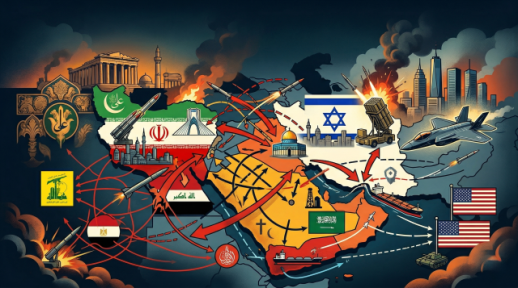 OPINION: The essence of the Iran war — beyond the wounds of religion and ethnicity, toward an order of coexistence SEOUL, March 29 (AJP) - When examining the war in the Middle East, the first instinct to resist is oversimplification. The ongoing Iran conflict may appear on the surface as a clash between Israel and Iran, but in reality it is a multi-layered war entangling U.S. military and diplomatic intervention, the strategic interests of Gulf states, the involvement of pro-Iranian proxies such as the Houthis and Hezbollah, and the mounting pressure surrounding the Strait of Hormuz and the global energy order. Recent developments alone paint a vivid picture. Gulf states have conveyed to Washington that a ceasefire is insufficient, demanding instead the degradation of Iran's military capabilities. Yemen's Houthis have formalized their offensive against Israel within the broader war effort. This is no longer a bilateral conflict. It is a simultaneous eruption of fissures that have long fractured the Middle East. Yet to view this war solely through the prism of missiles, airstrikes, crude oil and exchange rates is to see only half the picture. Beneath the surface lie deep geological strata of history and religion, ethnicity and collective memory. Iran, which claims the mantle of Shia leadership, has long competed with the Sunni-dominated regional order. Israel's security doctrine clashes with the broader Islamic world's grievances. Western historical intervention and the lingering memory of empire have together fueled today's volatility. The Sunni-Shia divide transcends doctrinal differences. It functions as a political axis along which Iran and Saudi Arabia contest leadership of the Muslim world. Religion serves as a banner, but what moves that banner is power, fear, memory, and mobilization. The medieval Crusades cast a historical shadow that persists to this day. They were military expeditions launched by Western Christendom under the banner of reclaiming the Holy Land and containing Islamic power. It would be reductive to frame today's Middle Eastern conflict as a mere repetition of the Crusades — nation-states have since emerged, oil and nuclear weapons have entered the equation, and international law and global finance now shape the landscape. Yet the ancient template of "politics waged in God's name" remains very much alive. Faith does not inherently breed violence. But when political power absolutizes faith, religion becomes the most potent language of mobilization. The tragedy of the Middle East has been repeated at precisely that juncture. To understand this war, one must confront a fundamental truth: Judaism, Christianity, and Islam all revere Abraham as a common ancestor of faith. They are Abrahamic religions. In other words, the faiths now training their weapons on one another are, at their core, siblings born from a single root. That they share the same origin yet exclude and deny one another represents, from the standpoint of universal human values, a painful paradox. The moment belief ceases to be a path for saving human lives and becomes an instrument of division, faith loses its original meaning and degenerates into the language of power. This paradox manifests with particular intensity in the Middle East, and nowhere more acutely than in Iran. Today's Iran is known as a Shia Islamic state, but its historical roots run far deeper. The ancient land of Persia was the heartland of Zoroastrianism — a faith widely assessed as having influenced the later development of Judaism, Christianity, and Islam. Moreover, Iran is a nation uniquely situated within the Middle East, using Persian rather than Arabic as its official language. Within this complex entanglement of religion, ethnicity, and language, conflict transcends territorial disputes and resource competition, escalating into a collision of identities. The Iran war is simultaneously a contest of "who is stronger" and a clash over "who we are." The Sunni-Shia rift is not, at its core, merely a theological matter. The schism that began with the seventh-century succession dispute within the Islamic community has solidified over the centuries into a foundation for state alliances, military networks, and identity politics. Iran has expanded its influence through Shia networks stretching across Lebanon, Iraq, and Yemen. Sunni-majority states have perceived this as a challenge to their own security and regional hegemony. This is why Gulf nations, even while not fully aligning with Israel, quietly hope for the diminishment of Iran's capabilities — revealing an ambivalence that lays bare a critical truth: though this war wears the garb of religion, its actual operating mechanism is the politics of the balance of power. Yet religion should not be dismissed lightly. The ambitions and prejudices of political leaders invariably exploit a people's collective memory and wounds. Religion ought to restrain the human impulse, but when fused with power, it readily becomes a tool of absolutism. Phrases such as "God's will," "the mission of a chosen people," and "the revenge of history" are among the most potent rallying cries for mobilizing the masses. In that moment, the adversary ceases to be a negotiating partner and becomes a target for elimination. War is no longer a border dispute but an existential struggle. This is precisely why the Middle East stands at such a dangerous precipice today. When one side defines the other not as an agent of flawed policy but as the very embodiment of evil, peace is no longer a strategic question — it becomes an act of betrayal. Ending the Iran war, therefore, cannot be achieved through military ceasefire alone. A ceasefire silences the guns but does not silence the narrative of enmity. Genuine resolution requires a simultaneous approach across three dimensions. The first is national security. Tangible safeguards must be established to halt strait blockades, missile strikes, and the deployment of proxy forces. The second is politics. The multilateral negotiating framework — entangling Iran, the Gulf states, Israel, its neighbors, the United States, and Europe — must be restructured. The third is the dimension of civilization and religion. Unless the mentality that views the adversary as a target for annihilation is dismantled, war will return in altered form. The Middle East's true affliction is that memories outlast weapons. Thus, the philosophical and religious language that addresses memory must re-enter the discourse. It is here that South Korea's experience offers food for thought. The Republic of Korea is among the rare nations where Buddhism, Protestantism, Catholicism, Won Buddhism, Confucian traditions, and folk beliefs have coexisted within a single society. The Korean Constitution guarantees freedom of religion and prohibits discrimination on religious grounds. Relevant studies have noted that Korean society exhibits comparatively high support for religious freedom and interfaith coexistence. This is not to suggest an absence of conflict. But the fact that the state has not absolutized any single religion, and that multiple faiths have accumulated an experience of competing yet coexisting within institutional frameworks, constitutes a tangible asset. At the deeper root of this Korean asset, the spirit of Hongik Ingan — "to broadly benefit humanity" — and the ideal of Jaesaei-hwa — "to harmoniously govern the world" — are frequently invoked. These ancient principles do not proclaim the supremacy of any single religion. They are closer to ethical maxims for sustaining both the individual and the community. To revere the heavens without harming nature, to value the community without abandoning human dignity — this is the soil in which religious coexistence can take root. Translated into today's language, it amounts to this: no one may trample another in the name of God, and neither state nor civilization may stand above human dignity. This is not a technique of interfaith compromise. It is the final principle that civilization must uphold. In this context, the thought of Daseok Ryu Young-mo also merits renewed attention. Rather than insisting on the absolutism of any single religion, Daseok sought conscience, life, and the will of heaven within the diverse traditions of human spirituality. What the Middle East has lost today is precisely this: the recognition that though beliefs may differ, human suffering is the same; that though the names of God may differ, the lives that must be saved are the same. The force that ends conflict does not lie in making the other entirely the same. It lies in recovering a shared humanity while acknowledging difference. Finally, it is worth recalling the words of the Bible, the Quran, and the Jewish scriptures together. The Bible says, "Blessed are the peacemakers" — that the practice of peace is the true mark of faith. The Quran says God created diverse peoples "so that you may know one another" — that difference is not a pretext for domination and extermination but a starting point for mutual recognition and respect. The Psalms sing, "How good and pleasant it is when brothers dwell in unity." These brief passages from different scriptures converge upon a single truth: God did not command humanity to sanctify hatred. He asked us to know one another, to live together, and to build peace. The essence of the Iran war can therefore be distilled into a single proposition. This is a war of guns and missiles, and simultaneously a war of memory and faith, ethnicity and power. That is why it is harder, and why it endures longer. But precisely because of this, the solution must also be multi-layered. Military deterrence and diplomatic compromise, economic interests and religious reflection, national security and human dignity — all must advance in concert. Elevating any single dimension collapses the rest. The Middle East's history has for too long attempted "the peace of the victor." The time has come to pivot toward "the peace of those who must live together." The question South Korea must ask itself while witnessing this tragedy is clear. Do we truly possess the wisdom befitting a nation where religions coexist? Are we prepared to present Hongik Ingan not as a textbook phrase but as a universal ethic for the world? Do we possess the spiritual depth to find a single truth within different faiths, as Daseok once sought? And can we look upon the world anew through the ancient intuition that heaven, earth, and humanity must walk together — Injungcheonji-il, the recognition that the will of heaven and nature dwells within the human being? The conclusion is at once simple and difficult. To end the era in which Abraham's descendants train their weapons upon one another, humanity must now move beyond "the politics of difference" and recover "the ethics of sameness." Ethnicities differ, but suffering is the same. Religions differ, but life is the same. Nations differ, yet human dignity cannot be divided. When we believe that the will of heaven and nature lives within the human being — when we awaken to the truth that humanity is not a separate master standing over nature but an existence bridging heaven and earth — only then do restraint, coexistence, and peace become possible. War is not ultimately won by those who seize the land, but ended by those who sever the inheritance of hatred. Truth, justice, and freedom are not the banner of any single camp. They are the last fence that keeps human beings human. Our gaze upon the Iran war must begin there. To ensure that politics which discards humanity — under the pretext of religion, ethnicity, or the state — can no longer prevail: that is the task of 21st-century civilization, and the path that the Republic of Korea can quietly yet decisively present to the world. *The author is a columnist of AJP. 2026-03-29 10:36:00
 -
 North Korea unveils upgraded solid-fuel ICBM engine, signaling push toward multiple-warhead capability SEOUL, March 29 (AJP) - North Korea disclosed a ground test of a new carbon-fiber solid-fuel engine designed for an intercontinental ballistic missile, showcasing a 26 percent leap in thrust as Pyongyang seeks to sharpen its nuclear deterrent amid widening U.S. military operations in the Middle East. The engine revealed Sunday generated a maximum thrust of 2,500 kilonewtons (kN), up from 1,971 kN recorded in a September 2024 test, the Korean Central News Agency reported. The upgraded powerplant is widely believed to be destined for the Hwasong-20, a new solid-fuel ICBM Pyongyang has been developing. Analysts say the thrust increase points less toward extending range — the North is already assessed to field ICBMs capable of reaching the U.S. mainland — and more toward enabling a multiple independently targetable reentry vehicle (MIRV) warhead configuration. A MIRVed ICBM can strike several targets simultaneously, making interception far more difficult. The test came about a month into the U.S.-Israeli war against Iran, whose own multi-warhead ballistic missiles have penetrated allied missile defense shields to hit targets. With Washington also having moved against Venezuelan President Nicolás Maduro earlier this year, Pyongyang appears intent on reminding the United States that it possesses strategic weapons capable of striking the American homeland. North Korea has not launched an ICBM since the Hwasong-19 flight on Oct. 31, 2024, and has refrained from direct criticism of U.S. President Donald Trump, leaving a narrow diplomatic channel open. South Korea's Joint Chiefs of Staff said U.S. and South Korean intelligence agencies are "closely monitoring" the North's weapons development activities. 2026-03-29 09:56:05
 -
 South Korea routed 4-0 by Ivory Coast in World Cup-year friendly, hits post three times Hong Myung-bo’s South Korea opened the 2026 FIFA World Cup year with a lopsided loss, falling 4-0 to Ivory Coast in a friendly at Stadium MK in Milton Keynes, England, on March 28 (Korea time). South Korea, ranked 22nd by FIFA, had won three straight friendlies last year — beating Paraguay 2-0 in October, then Bolivia 2-0 and Ghana 1-0 in November — but struggled throughout against Ivory Coast’s pressure and conceded four times. Ivory Coast is ranked 37th. The all-time series between the teams is now 1-1. The match was also South Korea’s 1,000th men’s A international. The first came in August 1948, a 5-3 win over Mexico in the London Olympics round of 16. South Korea’s overall record stands at 542 wins, 245 draws and 213 losses. Using a three-back system, South Korea hit the post three times. In the 19th minute of the first half, Oh Hyeon-gyu (Besiktas) fired a left-footed shot off a forward pass from Seol Young-woo (Crvena zvezda), but the ball struck the frame. South Korea fell behind in the 35th minute after Cho Yu-min (Sharjah), playing as the right-sided defender, was beaten by Marcial Godo (Strasbourg). The move ended with a goal by Evan Guessand (Crystal Palace). Seol then hit the right post with a long-range attempt in the 43rd minute, and South Korea conceded again three minutes later when Simon Adingra (AS Monaco) dribbled past defenders and scored with a right-footed shot from inside the penalty area. In the 17th minute of the second half, Yang Hyeon-jun (Celtic) headed a ball toward South Korea’s goal area on a corner, but it went to an Ivory Coast player and Godo scored to make it 3-0. South Korea’s Lee Kang-in (Paris Saint-Germain), on as a substitute, struck the right post with a sharp left-footed shot in the 31st minute as South Korea pushed for a response. South Korea conceded a fourth in stoppage time on a counterattack, with Wilfried Singo (Galatasaray) finishing after a pass from Amad Diallo (Manchester United). South Korea will travel to Vienna to play Austria at 3:45 a.m. April 1 in its second March A-match friendly.* This article has been translated by AI. 2026-03-29 01:42:00
 -
 Fire Near Gyeongbokgung’s Sambimun Gate Put Out in 15 Minutes; Minor Damage Reported A small fire near Jaseondang Hall at Gyeongbokgung Palace damaged parts of a nearby doorway, including a pillar and door, but did not spread further. The Korea Heritage Service said the fire started around 5:35 a.m. March 28 at a side door near Sambimun Gate in front of Jaseondang Hall. A safety officer on patrol spotted smoke and used a fire extinguisher and a hydrant to put out the flames in about 15 minutes. No injuries were reported. Officials said the fire was contained before it could spread, but one auxiliary pillar of the side door and part of a crossbeam were burned or scorched. In a text alert, the agency said a joint review with the fire department and other authorities indicated the blaze was believed to have started spontaneously. It said no suspicious activity was detected nearby, and no cigarette butts or flammable materials were found. The exact ignition point and how the fire began have not been confirmed. 2026-03-28 19:33:13