

Journalist

Chang SeongWon
-
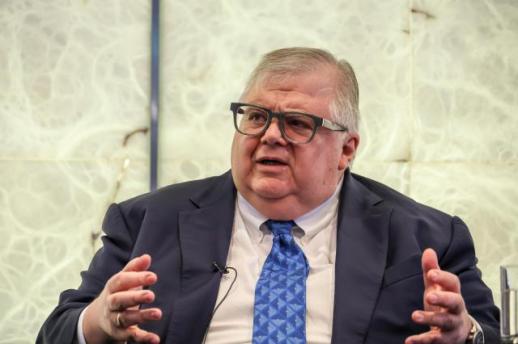 INTERVIEW: AI may turn Korea's inward finance into strategic edge: Carstens SEOUL, March 27 (AJP) - Unlike globally recognized industrial giants such as Samsung, LG and Hyundai, South Korea’s financial sector remains relatively underexposed overseas — yet its domestic orientation could become a strategic advantage in the era of artificial intelligence, a former top central banker said. Artificial intelligence is set to fundamentally reshape financial intermediation, from payments to supervision, according to Agustín Carstens, former general manager of the Bank for International Settlements. “AI will facilitate what we call ‘agentic payments,’ but, more importantly, it will significantly enhance the efficiency of transaction settlement,” Carstens said in an interview with AJP. He added that AI-enabled transparency could materially lower compliance costs by allowing regulators to monitor financial institutions in real time. “If regulators have continuous access to banks’ balance sheets and can assess them rapidly using AI, the need for heavy and costly reporting frameworks diminishes considerably,” he said. Carstens also pointed to growing momentum behind South Korea’s digital currency initiatives, particularly the Bank of Korea’s won-based stablecoin project, under incoming governor Shin Hyun-song — a former BIS colleague. Shin’s appointment comes at a critical juncture for financial innovation. Carstens underscored his expertise in tokenization, central bank digital currencies and AI-driven financial systems. “Through the BIS, we have undertaken extensive work on tokenization, central bank digital currencies and the broader impact of AI on the economy,” he said. “He is a leading expert in these areas and is well positioned to sustain the Bank of Korea’s momentum in advancing the digitalization of the financial system.” Carstens was in Seoul to speak at the 19th Asia-Pacific Financial Forum (APFF) 2026, hosted by Aju Business Daily, which this year examined why Korea’s financial sector has lagged its industrial base in global reach. However, longer-term digital ambitions remain contingent on near-term macro risks. South Korea’s energy-dependent economy is highly exposed to disruptions in the Middle East, particularly via the Strait of Hormuz, a critical artery for global oil and gas flows. “Korea depends significantly on energy supplies that transit the Strait of Hormuz,” Carstens cautioned. “Any disruption there could have immediate and material consequences for key sectors of the economy.” Such geopolitical shocks, he added, could weigh on the manufacturing and digital backbone of the economy — even as AI opens a pathway for structural upgrading in finance. 2026-03-27 08:53:57
 -
 Samsung SDI to acquire stake in precursor maker Fino to secure battery supply chain SEOUL, March 27 (AJP) - Samsung SDI is set to invest about 30 billion won ($19.8 million) in Fino, a South Korea-listed subsidiary of China's CNGR Advanced Material, as part of efforts to strengthen its battery materials supply chain. Fino released regulatory filing Thursday it had approved a rights issue of about 14.29 million new shares through a board resolution. Samsung SDI will subscribe to about 6.13 million shares, or about 40 percent of the offering, at an issue price of 4,897 won per share to secure an estimated 7.5 percent stake in the company. The investment is aimed at securing supply chain stability from the precursor stage of battery production, a critical upstream material used in manufacturing cathodes. Precursors account for 70 to 80 percent of cathode production costs. Fino is building domestic production facilities through CNP New Material Technology, a joint venture with POSCO Future M, with production lines for both nickel-cobalt-manganese and lithium iron phosphate cathode materials. Samsung SDI is ramping up its energy storage system business in the United States through StarPlus Energy, a joint venture with Stellantis in Indiana. The company has secured more than 3.5 trillion won in ESS battery supply contracts with U.S. energy firms since late last year. The move comes as Washington tightens restrictions on Chinese-origin materials in ESS batteries, pushing Korean battery makers to reduce their reliance on Chinese suppliers to meet subsidy requirements under U.S. energy legislation. 2026-03-27 08:48:03
 -
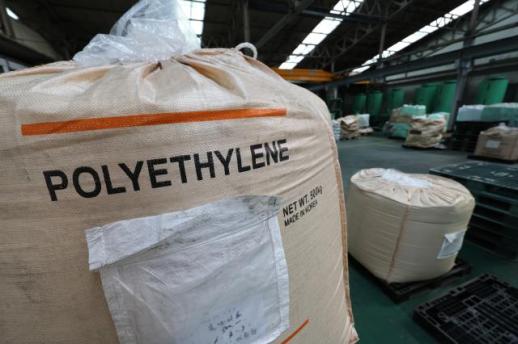 Seoul enforces ban on naphtha exports for 5 months amid supply crunch SEOUL, March 27 (AJP) -South Korea will keep domestic naphtha at home after its shortage from the widened conflicts in the Middle East has crippled a cracking facility, sending downstream ripples across factory floors to plastic delivery bags and cartons. The Ministry of Trade, Industry and Energy on midnight Friday issued a gazette enforcing ban on naphtha exports immediately for five months as a part of a package of "wartime" measures that included deeper and longer cuts to fuel tax and supplementary budget. Naphtha is an essential feedstock for producing petrochemical materials used by industries including semiconductors and autos. South Korea relies on imports for 45 percent of domestic demand, and supplies from the Middle East — which account for 77 percent of imports — have been disrupted by the war, the ministry said. The government previously supported efforts to secure alternative import sources, including those from Russia after Washington lifted some sanctions, and designated naphtha as an economic security item, making it eligible for low-interest financing through a supply chain fund. As the situation dragged on, it moved to stronger steps, including shifting restricted export volumes to the domestic market and banning hoarding. Under the notice, exports of all naphtha are restricted in principle, with exceptions allowed only with approval from the industry minister. Naphtha businesses (refiners) and users (petrochemical companies) must report daily to the ministry on production, imports, use, sales and inventories. Hoarding is prohibited. If a naphtha business’ weekly shipment ratio drops by more than 20 percent from 2025 without a reasonable explanation, the minister can order steps such as adjusting sales and inventories. The government can also order refiners to produce naphtha and take supply-adjustment measures to ensure naphtha produced domestically or brought in from overseas is supplied to specific petrochemical companies. According to industry minister Kim Jung-kwan, “Because naphtha is a basic raw material that supports South Korea’s industry, the government will secure as much volume as possible through support for overseas procurement.” He urged cooperation so that naphtha and related petrochemical products are distributed and managed in line with the purpose of the new notice. “The government will supply naphtha as a top priority so there is no impact on health care, key industries and the production of essential goods,” Kim added. The emergency step comes as supply disruptions have already begun to hit production lines. One of the country’s largest naphtha cracking centers has been forced to halt operations due to feedstock shortages, according to industry sources, amplifying concerns over a broader shutdown across the petrochemical chain. The shock is cascading into everyday goods. Plastic processors and packaging firms are reporting delays in securing raw materials, while distributors warn of tightening supplies of garbage bags and industrial films, echoing early signs of hoarding in retail channels. Seoul is also weighing more controversial options to plug the supply gap. Officials said the government is in talks with industry players over the possibility of resuming imports of Russian crude oil and naphtha, a move that would require easing sanctions imposed after Moscow’s invasion of Ukraine. South Korea halted Russian crude imports in December 2022, though the country previously relied on Russia for about 5.6 percent of its crude supply. Since then, dependence on the Middle East has deepened, leaving the economy more exposed to disruptions around the Strait of Hormuz — a chokepoint through which roughly 70 percent of the country’s crude and about half of its naphtha imports pass. Finance Minister Koo Yun-cheol earlier signaled the shift toward more interventionist policy, describing the export curb and stockpiling controls as necessary to stabilize supply chains under what the government views as wartime conditions. Whether the measures can fully contain the fallout remains uncertain. Without a de-escalation in the Middle East, industry officials warn that shortages could persist, raising the risk of prolonged disruptions not only in petrochemicals but across manufacturing sectors that rely on plastic and synthetic materials as foundational inputs. 2026-03-27 07:29:30
 -
 Korea Golf Course Managers Association Holds Annual Meeting on Tax, Labor Changes The Korea Golf Course Managers Association said Thursday it held its 2026 annual general meeting over two days, March 25-26, at Maison Glad Jeju and Golfzon County Ora CC. Advisers, an honorary chair, auditors and CEOs from member companies attended. The group reviewed last year’s projects and approved its financial statements, while discussing responses to fast-changing conditions in the golf course industry. The association shared the outcome of an appeals court ruling in a lawsuit over an agreement fee involving law firm Cheonjiiin, in which the plaintiff’s claims were dismissed and the defendant golf course prevailed. It said the decision is expected to serve as a key precedent for the same case involving more than 90 member companies, and it plans to respond actively if the case goes to the Supreme Court. Members also discussed tax changes aimed at easing management burdens. The association reported it is forming a consultative body on property tax and the individual consumption tax, and said it will pursue petitions and other government outreach to seek an end to higher property tax rates and the abolition of the individual consumption tax. Labor issues were another main agenda item. The association said it analyzed the impact of the “Yellow Envelope Act,” a revision to the Trade Union and Labor Relations Adjustment Act that took effect March 10, including expanded bargaining rights for caddie unions. It said it will hold briefings for members and distribute response guidelines. It also released a simulation estimating that adopting a “worker presumption system,” which shifts the burden of proof to employers, would add about 16.2 billion won in annual costs for an 18-hole course. It said it has set five response strategies, including policy recommendations. The association also discussed switching its membership fee calculation from a system based on the number of visitors to a flat fee based on the number of holes, citing fairness among members and administrative efficiency. Choi Dong-ho, the association’s chairman, said the meeting brought the association and its members together to seek proactive responses to issues that could “shake the foundation” of the golf industry, including the Yellow Envelope Act and the proposed worker presumption system. He said the association will continue to work to protect members’ interests and support the industry’s sustainable development.* This article has been translated by AI. 2026-03-26 18:21:00
 -
 Asian stocks fall on oil surge; Korea slides as "wartime" response fails to convince SEOUL, March 26 (AJP) — Asian equities fell across the board Thursday as oil prices hovered near the $100-per-barrel threshold and geopolitical tensions deepened, with Seoul markets brushing off the government’s so-called “wartime” response. Despite tentative talk of an endgame to the Middle East conflict, markets showed little conviction. Risk aversion held firm across the region. Japan’s Nikkei 225 slipped 0.3 percent to 53,603.7, China’s Shanghai Composite fell 1.1 percent to 3,889.1, Hong Kong’s Hang Seng dropped 2.1 percent to 24,804.8 and Taiwan’s TAIEX edged down 0.3 percent to 33,337.6. But the heaviest selling pressure landed in Seoul — a clear vote of no confidence in the government’s emergency package. The benchmark KOSPI plunged 3.2 percent to close at 5,460.5, after swinging between an intraday high of 5,598.4 and a low of 5,448.1, reflecting a familiar pattern of institutional and foreign selling met by retail dip-buying. Foreign investors dumped 3.09 trillion won ($2.10 billion), with institutions offloading an additional 339 billion won. Retail investors stepped in as the sole net buyers, purchasing 3.05 trillion won. The tech-heavy KOSDAQ fell 2.0 percent to 1,136.64, with foreigners selling 301.6 billion won and institutions shedding 134.1 billion won, while retail investors bought 484.9 billion won. Heavyweight tech names led the decline. Samsung Electronics dropped 4.7 percent to 180,100 won and SK hynix slid 6.2 percent to 933,000 won, as concerns mount over a slowdown in AI-driven investment. Hyundai Motor fell 2.2 percent and LG Energy Solution lost 2.4 percent. The government said it had deployed “all possible policy means and mix,” ranging from deeper fuel tax cuts to supplementary budgeting and bond market stabilization measures. Markets, however, were unconvinced — reading the package less as decisive intervention than as a sign policymakers are running short on options beyond short-term fixes. That skepticism was most visible in the bond market. The buyback offered only a modest lift to short-dated debt while triggering a selloff at the long end, effectively flipping the policy signal on its head. The two-year government bond yield fell 2.2 basis points to 3.489 percent, with the three-year largely unchanged at 3.552 percent. Further out the curve, yields surged: the 20-year rose 3.9 basis points to 3.880 percent and the 30-year climbed 4.6 basis points to 3.762 percent — a steepening move that signals investors are demanding higher long-term risk premiums despite near-term liquidity support. In effect, the market is pricing in persistent inflation and supply-side risks tied to the oil shock, even as authorities attempt to contain immediate volatility. The Korean won weakened to 1,507 per dollar, reinforcing the broader risk-off mood. 2026-03-26 18:14:36
 -
 BTS comeback detonates across screens, streets and systems within a week SEOUL, March 26 (AJP) — It has been barely a week since BTS dropped its first full-member studio album in six years and staged a comeback performance in downtown Seoul livestreamed to nearly 20 million viewers on Netflix — and the aftershock is already everywhere. The group has not paused for breath. Fans across the world are flooding platforms with dance challenges to the title track “SWIM,” its hypnotic hook now echoing from smartphones to city streets. What would normally take weeks to build has unfolded in days. Within that span, BTS cycled through a tightly orchestrated global rollout — a fan event in New York, real-time engagement on YouTube and a late-night television appearance — compressing what used to be a promotional arc into a continuous surge. Following their appearance on The Tonight Show Starring Jimmy Fallon, clips spread at viral velocity. The interview alone drew a combined 750,000 views within two hours, while performance videos surpassed 320,000 views and 90,000 likes in the same narrow window. The March 21 performance at Gwanghwamun Square entered Netflix’s weekly Top 10 in 80 countries, ranking No. 1 in 24, while generating 2.62 billion impressions across social media — a scale that underscores not just reach, but saturation. The numbers reveal something more structural beneath the frenzy. On music platforms, the album Arirang surpassed 4.06 million in sales within days. Streaming patterns show the lead track “SWIM” topping 68 million plays, while multiple B-sides followed closely, each pulling between roughly 29 million and 38 million streams — a distribution that suggests engagement is spreading across the album rather than concentrating on a single hit. Video platforms show a parallel dynamic. The official “SWIM” music video crossed 68 million views within six days, while a performance clip uploaded midweek added another 7 million in rapid succession. Together, the data points to a dual-track ecosystem — one driven by passive viewing, the other by active participation. That shift is already visible on the ground. “The choreography is everywhere right now. As soon as the performance video dropped, people started copying it,” said Kang Na-eun, a 29-year-old elementary school teacher in Seoul’s Mapo district. “I’ve never seen it spread this fast.” “Usually it takes time for something like this to circulate, but this time it feels instant. It’s not just something you watch — it’s something you feel pulled into,” she added. Even machines have joined the wave. AI-generated dance clips — from animated dogs to stylized avatars — are circulating alongside fan covers, some drawing over 1.5 million views within days. What began as imitation has quickly morphed into reinterpretation, with algorithms now reproducing and remixing choreography at a speed comparable to human fandom. The boundary between audience and creator is dissolving in real time. Geographically, the comeback has expanded just as rapidly. Less than 24 hours after the Gwanghwamun performance, BTS was airborne to the United States — moving from a public square in Seoul to a Spotify-hosted event in New York, and then to American late-night television. The sequence reads less like a tour and more like a synchronized relay across platforms and continents. Taken together, the rollout illustrates how K-pop releases are no longer singular events but engineered continuums — designed to sustain momentum across formats, time zones and modes of engagement. But the scale has also invited scrutiny. “From the moment the album took the name ‘Arirang,’ it carried expectations beyond music,” said critic Jang Jun-hwan. “Attention was focused as much on what it represents as on what it sounds like.” He added that while the production is expansive, cohesion is less certain. “The album is highly refined, but many tracks feel individually polished rather than fully integrated.” Music critic Kim Do-heon framed the shift more bluntly. “What this comeback shows is that the phenomenon surrounding the music — performance, scale, context — is becoming as important as the music itself,” he said. That phenomenon has spilled into the physical city. In central Seoul, the Gwanghwamun performance triggered traffic controls, safety installations and large-scale crowd management — temporarily reshaping how the capital functions. “When a cultural event begins to alter the operation of a city, it raises questions about public space itself,” Kim noted. In the span of a single week, BTS’s comeback has moved across screens, systems and streets — unfolding not as a moment, but as a rolling event that continues to expand even after the stage lights dim. 2026-03-26 18:14:28
 -
 SK Chemicals, J2H Biotech sign MOU on drug development; Dongkook launches skincare brand SK Chemicals, J2H Biotech sign MOU to expand joint new-drug development SK Chemicals said March 26 it signed a memorandum of understanding with J2H Biotech to strengthen cooperation on joint development of new drugs. The agreement is aimed at exploring collaboration on J2H pipelines for metabolic dysfunction-associated steatohepatitis, or MASH, and idiopathic pulmonary fibrosis, or IPF. J2H will share results from ongoing research with SK Chemicals, and the two companies plan to discuss development strategy and specific cooperation options. Founded in 2014, J2H is a biotech company developing drug candidates focused on metabolic diseases and cancer. Its MASH candidate, J2H-1702, has completed a Phase 2a trial and confirmed treatment effects, and the company is preparing to enter a global Phase 2b trial to further verify efficacy in a broader patient group. Its IPF candidate is in preclinical research. SK Chemicals said it will review the candidates’ development potential and commercial viability based on available data and then define whether to proceed with joint development and the scope of cooperation. Dongkook Pharmaceutical launches “LUONCELL” derma-science cosmetics brand Dongkook Pharmaceutical said March 26 it launched LUONCELL, a functional cosmetics brand whose name combines “LUX,” “ON” and “CELL.” The company said the products apply two proprietary complexes: “Happy Cell Complex” and “TECA Bioheal Complex.” Happy Cell Complex combines alpine skullcap, GABA and Spanish licorice root extract, which the company said helps protect irritated skin and support recovery of skin condition. TECA Bioheal Complex combines six bio ingredients, including TECA extracted from centella asiatica and PDRN, the company said. Among five LUONCELL products, the “High Lift Gel Mask,” a silicone gel mask, is billed as the first in South Korea to feature 1,300 vacuum suction plates. The company said the patented plates create vacuum tunnels to help active ingredients absorb more effectively and can also help reduce swelling. Osstem Implant says Ukrainian health delegation visited Seoul headquarters Osstem Implant said March 26 that Ukrainian government health officials, representatives of local medical equipment companies and international development and relief organizations visited its Twin Tower headquarters in Seoul’s Gangseo district on March 20. The delegation, led by Yevhen Honchar, deputy minister of health of Ukraine, toured key facilities including Osstem Implant’s central research institute and product showroom, the company said. Ukraine is pursuing its “Health Strategy 2030,” aimed at building a system that guarantees all citizens access to needed medical services, according to the company. The delegation also held cooperation talks earlier that day at a Korea-Ukraine business roundtable hosted by the Korea Health Industry Development Institute. Osstem Implant said it sees potential cooperation in areas including dental prosthetics and facial trauma reconstruction to help restore quality of life for war veterans, as well as in establishing dental implant policy. GC Biopharma’s varicella vaccine wins marketing approval in Guatemala GC Biopharma said March 26 that its varicella vaccine, Varicella Joo, received marketing approval from Guatemala’s Ministry of Public Health and Social Assistance. The company said it is the first time the vaccine has been approved in a Latin American country. It plans to accelerate expansion into individual countries in the region while continuing supply through the Pan American Health Organization, or PAHO. Varicella Joo is a live vaccine using GC Biopharma’s in-house MAV/06 strain. The company said it is the world’s first varicella vaccine made without any antibiotics in the manufacturing process, eliminating the risk of adverse reactions from residual antibiotics such as kanamycin, neomycin and erythromycin and maximizing product safety. In long-term follow-up clinical results, the neutralizing antibody rate after vaccination was 99% to 100%, and antibody persistence was shown to be comparable to leading global products, the company said. The company also said that after being listed in a World Health Organization position paper, the vaccine has received international evaluation comparable to global vaccines based on the Oka strain, and cross-prescribing has become possible. It said it plans to broaden the vaccine’s use in global markets. Kwangdong Pharmaceutical holds annual shareholders meeting Kwangdong Pharmaceutical said March 26 it held its 53rd annual shareholders meeting at Kwangdong Gwacheon Tower in Gwacheon, south of Seoul. Results disclosed at the meeting showed the company posted consolidated revenue of 1.6595 trillion won last year, maintaining a growth trend. On a separate basis, revenue totaled 1.0110 trillion won, marking the first time the company entered the “1 trillion won club” on a standalone basis. Separate operating profit was about 30.6 billion won, a slight improvement in profitability. Shareholders approved all agenda items as proposed, including approval of the 53rd financial statements and consolidated financial statements, partial amendments to the articles of incorporation, appointment of inside director Park Sang-young, appointment of outside director Lee Jae-won as an audit committee member, and approval of the cap on directors’ compensation. The company said the articles amendments codified an independent director system and advanced plans to establish new committees as part of ESG management to strengthen transparent governance.* This article has been translated by AI. 2026-03-26 18:06:00
 -
 Nearly 800 cadets commissioned in Iksan Iksan, March 26 (AJP) - About 788 cadets were commissioned as non-commissioned officers (NCOs) at a ceremony at a military academy in Iksan, North Jeolla Province on Thursday, after completing about 12 weeks of training. According to the army, it was the largest class in the past five years. Of the 788 newly commissioned NCOs, 579 were selected through a civilian recruitment program including 232 women, while 209 were former enlisted soldiers. The Army attributed the increase to improved service conditions along with stronger efforts to recruit more cadets. They will undergo training tailored to their duties and responsibilities before being assigned to military units across the country including front-line positions. 2026-03-26 17:59:16
 -
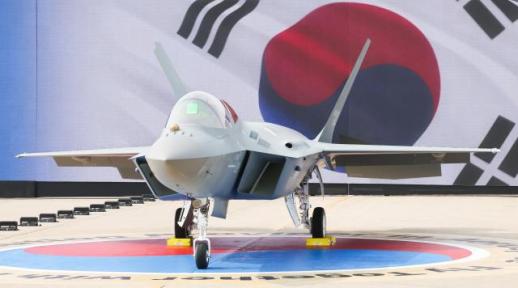 Hot Stock: KAI defies market rout as KF-21 rollout fuels defense rally SEOUL, March 26 (AJP) -Shares of Korea Aerospace Industries (KAI) bucked a broad market selloff Thursday, riding a surge of investor optimism tied to the rollout of South Korea’s first mass-produced KF-21 fighter jet and rising expectations for arms demand amid expanding Middle East conflicts. While the wider market reeled, KAI climbed. The stock extended its recent rally, gaining for a second straight session and closing at 188,000 won, up 1.6 percent on the day — a stark contrast to the KOSPI’s 3 percent slide. The divergence underscores how defense names are increasingly trading as geopolitical proxies rather than cyclical industrial plays. At the center of the momentum is the KF-21 Boramae — South Korea’s first indigenous fighter jet and a flagship outcome of the KF-X (Korea Fighter eXperimental) program led by KAI in collaboration with the Air Force and the Agency for Defense Development. The program, backed by 7.48 trillion won ($5 billion) in investment and involving some 64,500 researchers and engineers, is now transitioning from development to mass production, with 120 aircraft scheduled for deployment by 2032 — a shift that marks the beginning of a long-cycle revenue stream. But the real upside lies beyond Korea. The KF-21 is gaining traction across a widening arc of potential buyers. Indonesia has already joined as a development partner, while the United Arab Emirates, Saudi Arabia, the Philippines and Poland have all expressed interest, according to government and industry sources. The UAE, in particular, has emerged as a pivotal node. A $15 billion comprehensive defense cooperation framework agreed last November includes discussions on procurement, joint production and technology transfer — pointing to a deeper strategic alignment rather than a one-off sale. Saudi Arabia is also weighing the KF-21 as part of its broader air force modernization push. South Korea’s entry into the club of advanced fighter jet producers — now the eighth globally to field a 4.5-generation or higher supersonic fighter, alongside the United States, China, Russia, Japan, France, Sweden and a European consortium — is beginning to translate into market value. Analysts see the inflection point approaching. “The KF-21 will become a core pillar of KAI’s earnings as mass production ramps up,” said Chae Un-saem of Hana Securities. “From here, the duration of the upcycle will increasingly depend on export execution.” Brokerages are also turning more constructive on the broader defense sector, viewing the current geopolitical environment as a structural tailwind rather than a temporary spike. Yuanta Securities maintained its “overweight” call, noting that “the KF-21 is not just a development milestone — it anchors a long-duration growth story spanning production, exports and next-generation capabilities such as manned-unmanned teaming.” 2026-03-26 17:58:47
 -
 North Korea, Belarus seal closer axis in Pyongyang summit SEOUL, March 26 (AJP) -North Korea has drawn Belarus further into its orbit, formalizing ties along a likeminded axis of sanctioned states aligned with Russia. Belarusian President Alexander Lukashenko received an enthusiastic welcome from North Korean leader Kim Jong-un during his first two-day visit to Pyongyang, according to state media from both countries, as the two leaders moved to upgrade relations into what they called a “new stage.” The two strongmen — both long isolated from the West — are bound by their support for Russia’s war in Ukraine and shared pariah status under international sanctions and human rights scrutiny. “The friendly relations between our states, born during the era of the Soviet Union, have never been interrupted,” Lukashenko said, according to Belarusian state news agency Belta. “Today, thanks to comprehensive and steady development, we are entering a fundamentally new phase.” He added that “independent countries must cooperate more closely” to safeguard sovereignty — language widely seen as a rebuke to Western pressure. The Korean Central News Agency (KCNA) reported that Lukashenko arrived in Pyongyang on Wednesday aboard a special aircraft and paid tribute at the Kumsusan Palace of the Sun, laying bouquets for North Korea’s former leaders, including one on behalf of Russian President Vladimir Putin — underscoring the triangular alignment among Pyongyang, Minsk and Moscow. The visit follows growing engagement between the two countries, with Lukashenko turning more openly toward North Korea after Pyongyang dispatched troops to support Russia Kim and Lukashenko first met in September in Beijing on the sidelines of a military parade, where the North Korean leader extended an invitation for the visit. In a letter earlier this month, Kim said he was “willing to expand and develop” bilateral ties “to a new, higher stage in line with the demands of the new era,” KCNA said. Lukashenko was accompanied by a senior delegation including Deputy Prime Minister Yuri Shuleiko and ministers overseeing foreign affairs, health, education and industry, signaling broad-based cooperation. North Korean Premier Kim Tok-hun and Vice Foreign Minister Kim Jong-gyu were among officials who greeted him at the airport. The two sides signed a friendship and cooperation treaty, marking what they described as a “fundamental” shift in relations — a move that cements an emerging axis among U.S.-sanctioned states as geopolitical divisions deepen. 2026-03-26 17:46:16