

Journalist

Chang SeongWon
-
 Dongkook Pharmaceutical Promotes Founder’s Grandson Kwon Byung-hoon to Executive Role Dongkook Pharmaceutical is expected to accelerate its shift toward a third-generation management structure under the company’s founding family. The company said on the 20th that it carried out executive appointments for eight people, including promoting Kwon Byung-hoon, head of a unit and the eldest son of Chairman Kwon Ki-beom, to director (treatment) effective April 1. Born in 1995, Kwon double-majored in policy analysis & management and economics at Cornell University in the United States. He previously worked at Boston Consulting Group, Mirae Asset Venture Investment and Magna Investment, and joined Dongkook Pharmaceutical’s financial planning office in April 2024. Dongkook Pharmaceutical posted record consolidated revenue of 926.9 billion won last year. Operating profit rose 20.1% to 96.6 billion won over the same period, and the market views the company as likely to reach 1 trillion won in annual sales this year. The following is the list of executive promotions. ◇ Executive promotions (effective April 1) △ Yeom Seon-ho, vice president, Health Functional Foods Business Division △ Lee Jae-wook, vice president, Production Headquarters △ Heo Jeong-moo, vice president, Communications Headquarters △ Kang Seong-oh, executive director, ETC Business Headquarters △ Kwon Byung-hoon, director (treatment), Financial Planning Office △ Myeong Chang-hoon, director (treatment), ETC Business Headquarters △ Yoo Ho-myeong, director (treatment), Production Headquarters △ Choi Moon-seok, director (treatment), Sales Management Department* This article has been translated by AI. 2026-03-20 17:45:00
 -
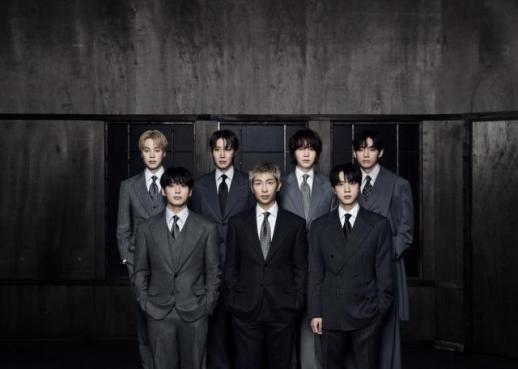 BTS returns with 'ARIRANG,' draws mixed early response despite global hype SEOUL, March 20 (AJP) — BTS’ long-awaited fifth studio album ARIRANG landed Friday to a more muted-than-expected reception, as early listeners welcomed the group’s full-member return but questioned the album’s restrained tone and artistic direction. Released at 1 p.m., the music video for the title track “Swim” surpassed 5 million views within 50 minutes, while the song quickly topped domestic charts including Melon and Bugs, followed by “Body to Body.” Global chart performance has yet to fully materialize and BTS not visible in top rankings across major Asian and global charts. Despite months of anticipation — fueled in part by the group’s high-profile comeback performance at Gwanghwamun scheduled for Saturday — initial reactions suggest a gap between hype and immediate impact. “I heard all 14 tracks. Nothing stuck,” one user wrote on the Bugs Music platform, reflecting a broader sentiment among some domestic listeners. Others pointed to a perceived mismatch between the album’s title and its content, expressing disappointment over the absence of Korean-language tracks or overt references to traditional themes implied by ARIRANG. International fans, by contrast, struck a more enthusiastic tone. “Bighit really dropped a 10/10 masterpiece and told me to #KEEPSWIMMING but I’m actually drowning in my own tears,” one fan wrote on X. According to BigHit Music, the album reflects the emotions and messages the members seek to convey at this stage of their careers, blending Korean and English lyrics to expand global accessibility while drawing from their cultural roots. Critics suggest the subdued reception may be partly intentional. Pop culture critic Ha Jae-geun described “Swim” as “relatively restrained and subdued,” noting that its departure from BTS’ traditionally performance-driven, high-energy sound may feel unfamiliar to longtime listeners. “That sense of flatness could be deliberate,” he said, pointing to the group’s evolving artistic direction and maturity. The shift marks a notable turn in BTS’ 13-year trajectory. Since debuting in 2013 with hip-hop-driven tracks grounded in youth and social commentary, the group expanded its narrative through The Most Beautiful Moment in Life series and WINGS, before cementing global dominance with the Love Yourself era. It later broke into mainstream Western pop with English-language hits such as “Dynamite” and “Butter.” ARIRANG, however, signals less an extension of that outward expansion than a recalibration — a pivot inward toward identity and introspection. The album follows nearly four years of staggered military service, during which each member developed a distinct artistic identity. Jin reinforced the group’s emotional core through vocal-driven releases, Suga broadened his reach as a producer, and J-Hope sharpened his role as a performance leader. RM deepened the group’s narrative direction through introspective work, while Jimin, V and Jungkook each carved out distinct sonic and stylistic lanes. Those individual trajectories now converge in ARIRANG, forming a more layered group identity. Music critic Kim Do-heon urged caution in early assessments, noting that “it has only been a few hours since release, making a full album-level evaluation difficult.” Still, he characterized the album’s tone as notably different. “Rather than simply soft, it conveys fatigue, exhaustion and a desire to escape,” he said. “If you look at ‘Swim,’ it’s less about moving forward and more about wanting to sink.” Kim added that the album presents “a different way of showing Korea,” reflecting a more contemporary emotional landscape shaped by pressure rather than the group’s earlier themes of unity and identity. The comeback will continue with a large-scale performance at Gwanghwamun on Saturday, to be streamed globally via Netflix to more than 190 countries — an event Ha described as “a global-scale spectacle rather than a conventional concert.” 2026-03-20 17:41:27
 -
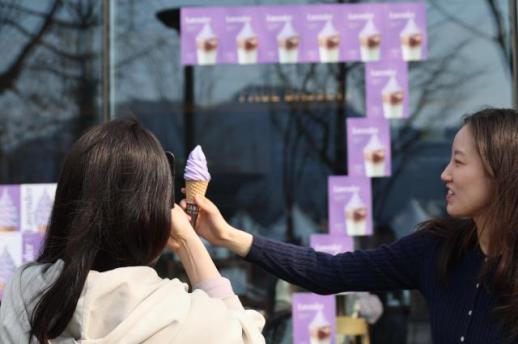 BTS Live D-1: Gwanghwamun already bustling with crowds and excitement SEOUL, March 20 (AJP) -Gwanghwamun in downtown Seoul has gone all purple to match BTS signature color from signboards to ice cream as it receives a swarm of guests for the blowout street-stage BTS comeback show that is expected to draw nearly 300,000 crowds and livestreamed for global audience. According to the Seoul Metropolitan Government, an estimated 46,000 to 48,000 people had gathered around Gwanghwamun and Deoksugung as of 2 p.m., marking a 26.7 percent increase from the four-week average for the same time slot. The swelling crowd brought a mix of reactions: some voiced discomfort over barricades and heavy police presence, while others embraced the charged atmosphere, capturing the moment as anticipation built toward the evening’s spectacle. 2026-03-20 17:40:57
 -
 Last tanker to clear Hormuz before closure arrives in Korea SEOUL, March 20 (AJP) - A crude oil tanker that narrowly passed through the Strait of Hormuz before Iran’s closure has arrived in South Korea on Friday, raising concerns over potential supply disruptions. The government and the refining industry are bracing for a worsening supply situation, viewing the vessel as the last shipment to clear the strait before the blockade took effect. According to industry sources, the tanker Eagle Vellore arrived at the Port of Daesan in Seosan, South Chungcheong Province, between 5 p.m. and 7 p.m. on Friday. The Malaysia-flagged very large crude carrier (VLCC) departed from Iraq’s southern port of Al-Basra in late February, carrying crude oil for HD Hyundai Oilbank, and managed to escape the Strait of Hormuz just before Iran imposed its blockade. The vessel left Al-Basra on Feb. 26 and was transiting the strait two days later, when U.S. and Israeli airstrikes on Iran took place. Despite warnings from Iran’s Islamic Revolutionary Guard Corps that passage through the strait would not be allowed, the crew accelerated to full speed and managed to exit the waterway shortly before it was effectively sealed off. With the strait now closed, the Eagle Vellore is believed to be the last crude carrier to have passed through the route. The tanker is carrying about 2 million barrels of crude oil, roughly equivalent to South Korea’s daily oil consumption. The shipment, contracted by HD Hyundai Oilbank, will be unloaded and stored in tanks before being refined at the Daesan petrochemical complex. With around 70 percent of South Korea’s crude imports passing through the Strait of Hormuz, prolonged disruption is expected to significantly affect supply. Domestic refiners are already facing a near halt in tanker arrivals from April, leaving them little choice but to rely on existing inventories for the time being. The government has secured 24 million barrels of crude oil from the United Arab Emirates, but it is expected to take considerable time before the shipments arrive in Korea. In response, Seoul is also exploring the possibility of resuming imports of Russian crude oil for the first time in nearly four years since April 2022. The government is additionally weighing the release of 22.46 million barrels of strategic reserves in coordination with the International Energy Agency, though it remains cautious about taking that step. 2026-03-20 17:18:09
 -
 KOSDAQ shines alone; Nikkei suffers "Black Friday" on Gulf crisis, hawkish BOJ SEOUL, March 20 (AJP) — Asian equity markets showed mixed results with limited volatility on Friday, yet a sharp divide emerged between Seoul and Tokyo. While the tech-heavy KOSDAQ rallied by over 1 percent, Japanese stocks suffered a bruising "Black Friday" as monetary tightening fears gripped the Nikkei. The South Korean won showed no signs of recovery amidst the prolonged blockade of the Strait of Hormuz and the U.S. Federal Reserve’s hawkish stance on interest rates. Although the won rose to the 1,480 level during intraday trading, it surrendered all gains to close at 1,500 per dollar, unchanged from the previous session. Signals from the Bank of Japan (BOJ) regarding a potential rate hike on Thursday - right after the rate freeze - also weighed heavily on regional currency markets. With both the Fed and the BOJ maintaining hawkish leanings, as the impact of the Strait of Hormuz blockade on the South Korean economy began to materialize, the yield gap between South Korea’s long-term and short-term bonds narrowed further.The 10-year treasury yield fell 4.3 basis points to 3.736 percent, while the 3-year yield jumped 8.1 basis points to 3.410 percent. The benchmark KOSPI closed at 5,781.20, up 0.31 percent. Despite a mountain of external risks, the index managed a slight gain, led by a rally in alternative energy stocks. Retail investors net purchased 2.23 trillion won ($1.50 billion) and institutional investors bought 403.4 billion won, while foreign investors offloaded 2.67 trillion won in flight to safety and profit-taking moves. Alternative energy stocks, including nuclear and solar power, surged as the Middle East conflict continued to choke petroleum supply chains. Doosan Enerbility, a leader in domestic gas turbines, rose 3.1 percent to 109,600 won ($73.68). SK Innovation also climbed 3.26 percent to 113,900 won after its subsidiary, TerraPower, received a construction permit for an advanced nuclear reactor from the U.S. Nuclear Regulatory Commission (NRC). Daewoo E&C, which declared its entry into the nuclear sector last year, posted the largest gain, soaring 18.18 percent to 19,110 won. Hanwha Solutions, the nation’s top solar module maker, recovered previous losses to close at 51,700 won, up 3.92 percent. In contrast, heavyweights Samsung Electronics and SK Hynix weakened, falling 0.55 percent and 0.6 percent, respectively. The KOSDAQ index experienced a solitary surge, largely driven by the biotech sector ahead of the American Association for Cancer Research (AACR) annual meeting in April. Samchundang Pharm reclaimed the top spot in market capitalization, jumping 14 percent to 112,000 won following its success in developing a biosimilar for Eylea. Peptron, specializing in peptides, also soared 9 percent to 28,500 won. The Nikkei 225 plummeted 3.38 percent to close at 53,372.53. Beyond the Middle East risk and the Fed’s rate freeze, remarks from BOJ Governor Kazuo Ueda acted as a major headwind. Ueda signaled a potential rate hike, noting that "the view to prioritize upside risks to inflation is prevailing." Export-driven stocks, which have long benefited from low rates, took a hit. Market leader Toyota fell 2.32 percent to 3,325 yen ($21.84), and Honda dropped 3.2 percent. Semiconductor-related stocks also suffered, with Advantest and Tokyo Electron falling 4.58 percent and 2.38 percent, respectively. Notably, SoftBank Group Corp. plunged 5.12 percent to 3,558 yen on concerns over rising interest expenses as the "weak yen" era nears its end. Taiwan’s TAIEX edged down 0.43 percent to 33,543.88. While TSMC fell 0.54 percent to 1,840 TWD ($58.12) and Foxconn lost 1 percent, MediaTek rose 1.2 percent to 1,700 TWD, buoyed by its partnership with Nvidia and the success of the Dimensity 9500 chip. In Mainland China, sentiment remained subdued. The Shanghai Composite Index fell 1.24 percent to 3,957.05 on recession fears linked to the Hormuz blockade, while the SZSE Component remained relatively flat, dipping only 0.25 percent to 13,866.20. 2026-03-20 17:13:01
 -
 National Museum sound of Silla-era bell used in BTS album track, merch The National Museum of Korea said March 20 that the sound recording and decorative motifs of the “King Seongdeok Bell,” a cultural heritage item held by the Gyeongju National Museum, were used in a BTS full-length album and related collaboration merchandise. The museum said the project stems from a memorandum of understanding signed in October last year by the National Museum of Korea, the National Museum Foundation of Korea and HYBE to help expand Korean cultural heritage and K-culture. At HYBE’s request after the agreement, the museum provided a high-quality bell-sound recording of the King Seongdeok Bell that is available as a public-use work. The recording was used in the BTS track “No.29” on the group’s new album, “ARIRANG.” After the MOU was signed, museum director Yu Hong-jun guided HYBE Chairman Bang Si-hyuk through the museum’s third-floor sensory exhibition gallery, where they listened to and discussed the bell’s resonance, the museum said. The King Seongdeok Bell is a major Korean bronze bell made in 771 during the Unified Silla period. It stands 3.6 meters tall and weighs 18.9 tons, and is known for its imposing sound and design. The museum said the collaboration offers a new way to experience the bell’s distinctive “beating” effect, in which the sound swells and fades repeatedly and lingers softly. The bell is displayed outdoors at the Gyeongju National Museum. Visitors can experience its sound and vibrations at the National Museum of Korea’s third-floor sensory gallery, “Space_Between,” and hear the original recording at the Gyeongju National Museum’s digital video hall, the museum said. Separately, the National Museum Foundation of Korea and HYBE developed graphics based on the bell’s donor figure and surrounding cloud patterns for a five-item “2026 BTS X MU:DS Collaboration Merch.” line: a shoulder bag, card holder, hair clip, hairpin and layered skirt. The National Museum of Korea said it will continue interpreting and expanding the historical value and appeal of Korean cultural heritage in modern ways, and strengthen its role as a cultural platform linking tradition and the present, museums and popular culture.* This article has been translated by AI. 2026-03-20 17:12:20
 -
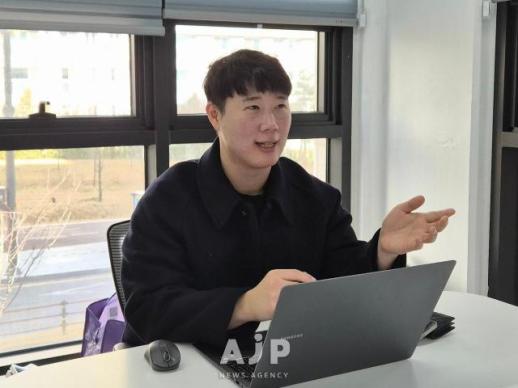 Samsung union chief: 'No. 1 means nothing without first-class treatment' PYEONGTAEK, March 20 (AJP) - Riding a two-year windfall from the global AI boom, Samsung Electronics is ramping up investment and shareholder returns at an unprecedented scale — but one stakeholder feels left out of the bounty: its employees. The company is pouring more than 110 trillion won ($74.6 billion) into semiconductors and has pledged to return 50 percent of its free cash flow to shareholders. Yet workers say the rewards of the AI-driven surge are not being shared on the ground. “We aren’t asking for the impossible,” said Choi Seung-ho, chairman of the Samsung Electronics Union Joint Action Committee, in an interview with AJP near the company’s Pyeongtaek fabs. “We are asking the company to act like the world-class leader it claims to be.” “Profit-hoarding days must end.” The rhetoric marks a shift from wage negotiations to a broader challenge of Samsung’s corporate identity, as the union escalates pressure following a 93.1 percent vote in favor of industrial action. Plans are now underway for a mass rally in April and a potential general strike in May. At the core of the dispute is compensation — and a widening gap with rival SK hynix that the union warns is fueling a “talent exodus.” While Samsung employees are widely perceived as elite earners, Choi pointed to a different reality for mid-level staff. A manager earning a base salary of around 76 million won ($57,000) often struggles to reach 100 million won in total compensation after taxes and relatively modest bonuses — a level increasingly out of step with the industry’s AI-driven gains. The contrast with SK hynix is stark. In 2025, its employees received average performance bonuses of 120 million to 130 million won under a transparent profit-sharing model. Comparable roles at Samsung, the union says, received roughly 37 million won — less than a third. “That gap creates a profound sense of deprivation,” Choi said. The union is demanding the removal of Samsung’s “Economic Value Added” (EVA) bonus cap, which limits payouts to 50 percent of salary and is based on a complex internal formula widely criticized by employees as a “black box.” By contrast, SK hynix shares 10 percent of operating profit directly with employees and removed its bonus cap last year. Tensions have been further aggravated by what the union calls a “divide-and-conquer” approach. Management recently proposed conditional bonuses tied to 100 trillion won in operating profit — but only for the Memory division, excluding Foundry and System LSI workers. “We were hired on the promise of equal treatment across the semiconductor pillar,” Choi said. “Excluding certain divisions now is nothing short of employment fraud.” The internal conflict comes as Samsung accelerates investment to maintain its lead in AI chips and high-bandwidth memory. Under its latest value-up plan, the company will boost facility and R&D spending to 110 trillion won this year, including a 37.7 trillion won R&D budget. At the same time, it reaffirmed its shareholder return policy, maintaining a payout ratio of 50 percent of free cash flow and planning to distribute 9.8 trillion won in dividends this year. For the union, the contrast is stark. “The company says it cannot afford to improve compensation, yet it commits over 100 trillion won to capital and generous shareholder returns,” Choi said. “There is no equivalent concept of ‘employee return.’” The stakes are rising quickly. Samsung’s Pyeongtaek production lines are estimated to generate up to 10 billion won per hour, meaning an extended strike could inflict losses exceeding 5 trillion won. “We are preparing,” Choi said, noting plans for large-scale mobilization ahead of April’s rally. He dismissed criticism that the dispute reflects excessive demands from high-paid engineers, framing it instead as a structural issue behind the so-called “Korea discount.” “If Samsung wants to maintain leadership in the HBM race, it must choose coexistence over disruption,” he said. “Without fair rewards, we cannot stop the outflow of talent.” Choi added that feedback from engineers who have already moved to SK hynix has been telling. “They report extremely high satisfaction,” he said. “When a company provides what employees feel they deserve, the result is obvious.” His final warning was blunt. “If this continues, the union may end up helping people leave,” Choi said. “We will support each other in finding opportunities elsewhere. 2026-03-20 16:36:44
 -
 Kakao Mobility launches recruitment drive for end-to-end autonomous driving engineers SEOUL, March 20 (AJP) - Kakao Mobility announced it has launched a recruitment drive targeting engineers in four autonomous driving specialties as the South Korean mobility platform accelerates its push to develop in-house end-to-end self-driving technology. The company said Friday it has created a dedicated "Physical AI" tab on its hiring page and will recruit experienced engineers in autonomous driving AI, SLAM (Simultaneous Localization and Mapping), hardware, and electrical and electronic systems. Candidates are required to have at least five years of relevant experience, and the company said it has set no cap on the number of hires or the duration of recruitment, though it has designated March 29 as the end of an intensive intake period. The hiring push is part of a broader strategic pivot toward what Chief Executive Ryu Geung-sun has described as a "Physical AI-based future mobility company." Kakao Mobility said it has been refining its AI Planner — the core decision-making system of its autonomous vehicles — using complex urban driving data gathered from areas including Pangyo and Gangnam in Seoul. "Those who join now, at a moment when technological maturity, urban infrastructure and market demand converge, will directly write a new chapter in South Korean mobility," said Kim Jin-gyu, head of the Physical AI division. The four roles being recruited cover the full stack of autonomous vehicle development: AI engineers to build the integrated end-to-end neural system using Vision-Language-Action models; SLAM engineers for precision localization; hardware engineers for sensor packaging and control systems; and E/E engineers for high-speed in-vehicle data networks. Kakao Mobility said the recruitment drive is intended to further internalize core autonomous driving capabilities and accelerate its ambition to become a leading Physical AI company with global competitiveness. 2026-03-20 16:12:26
 -
 BTS Live D-1: Leader RM injured ahead of landmark Seoul comeback SEOUL, March 20 (AJP) - K-pop sensation BTS' leader and rapper RM has injured his ankle during a rehearsal for the seven-member band's comeback performance scheduled on Saturday, the agency said. The injury means fans will be unable to witness a full-scale choreography by the rapper or the group as a whole during their highly anticipated return. This setback occurred just as the ensemble concluded a nearly four-year hiatus necessitated by mandatory military service. The performance, titled "BTS THE COMEBACK LIVE | ARIRANG," was intended to be a complete demonstration of the septet's reunited power at one of the nation's most symbolic landmarks. Big Hit Music announced on Friday that the incident took place on Thursday during a practice session for the free concert at Gwanghwamun Square. Medical examinations revealed an accessory navicular sprain, a partial ligament tear, and a talus contusion. Following the diagnosis, physicians fitted the performer with a cast and mandated a minimum of two weeks of restricted physical activity to facilitate recovery. Consequently, the agency confirmed that his participation in the complex choreography will be strictly curtailed for the duration of the show. Big Hit noted that while the leader maintained a strong desire to deliver a full performance at the historic venue, the health of the artist remained the primary concern. "RM's will to create a high-quality performance in such a symbolic space as Gwanghwamun was very strong," the agency said in a statement. However, management opted to minimize his movements on stage to prevent further aggravation of the injured area. The remaining members will proceed with the original production routines while the rapper performs from a stationary position. The live event is scheduled to begin at 8 p.m. (1100 GMT) on March 21 at the central Seoul landmark. This comeback marks the first major public appearance for the group since their last collective activity nearly four years ago. The agency pledged to provide all necessary support to ensure the artist returns to full health for future activities. The performance will be broadcast live to a global audience as the group transitions back to active status. 2026-03-20 16:07:26
 -
 Korea Music Copyright Association backs BTS comeback, eyes renewed “BTSnomics” boost After a wait of three years and nine months, BTS is set to return as a full group on March 21 with a comeback live show at Seoul’s Gwanghwamun Square, with a global broadcast reaching 190 countries. The Korea Music Copyright Association, led by Chairman Lee Si-ha, said it is moving to support copyright-related work tied to the group’s return, citing the expected cultural and economic ripple effects. The association said March 20 that it has received and processed album-approval applications for 14 tracks, including the title song “SWIM,” ahead of the release of BTS’ fifth full-length album, “ARIRANG.” It said it will also proceed with settlements for performance-use fees related to the Gwanghwamun live show and plans close cooperation to help ensure the event runs smoothly. The concert is expected to draw hundreds of thousands of people and, combined with the global live broadcast, is projected to be one of the largest events of its kind. The market is already focusing on the so-called “BTSnomics” effect. Analysts expect spillover across albums, concerts, merchandise, tourism and platform spending, with a direct lift for the music copyright market. According to the association, total music copyright collections continued to rise in 2025, but the reproduction-fee category fell 2.7% from a year earlier, reflecting reduced reproduction-based use such as album purchases after the pandemic. It said the success of “ARIRANG,” which has surpassed 4 million in preorders, could help physical albums and the digital reproduction market rebound. An 82-show world tour is also seen as a key factor for expanding performance-use fees. The association said performance-use fees, including stage performances, totaled 60 billion won last year, showing steady growth. With the tour expected to draw more than 4 million people at stadium-scale venues worldwide, it said the domestic and overseas performance copyright markets could gain strong upward momentum. The association also highlighted that all BTS members are its members and write music as creators. It said the group has built extensive music copyright intellectual property, including RM’s leading role in writing lyrics for “SWIM,” underscoring that they are rights holders whose work must be protected. “BTS singing ‘Arirang,’ which carries the emotions of our people, at Gwanghwamun is a symbolic scene that shows the expansion of creation,” Lee said. He added that the association will “stand firmly” to ensure the results of the members’ creative work are fairly compensated worldwide.* This article has been translated by AI. 2026-03-20 16:03:22