

Journalist

Chang SeongWon
-
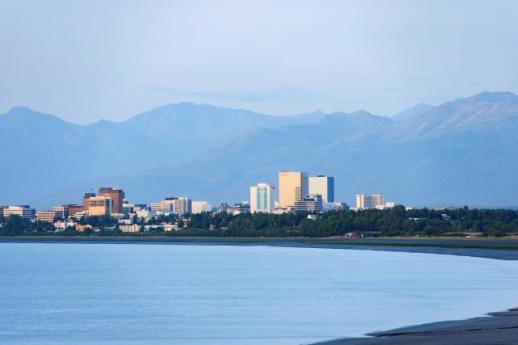 US pitches Alaska to South Korea and Japan as Gulf substitute for energy import SEOUL, March 20 (AJP) -While pressuring allies to help reopen the Strait of Hormuz, Washington is also selling them an alternative — Alaska. The pitch is becoming increasingly explicit: if South Korea and Japan are unwilling or unable to shoulder more of the military burden in the Gulf, they can instead buy into a U.S.-controlled energy system that bypasses it. That strategy gained a timely boost on Wednesday, when the United States showcased investor appetite for its Arctic resources. A federal oil and gas lease sale in the National Petroleum Reserve–Alaska (NPR-A) drew a record $163.7 million in bids, with 11 companies competing for more than 1.3 million acres. Major bidders included ConocoPhillips, ExxonMobil and a joint effort involving Repsol and Shell. The result — the strongest in the reserve’s history — is already being framed by U.S. officials as proof that Alaska can anchor a new energy order. “This is the strongest sale we have ever had,” said Kevin Pendergast of the Bureau of Land Management, while Interior Secretary Doug Burgum called it central to “America’s energy security.” But the timing also raises a more pointed question: whether Washington is leveraging a geopolitical crisis to accelerate a commercial realignment in its favor. A meeting between U.S. President Donald Trump and Japanese Prime Minister Sanae Takaichi on Thursday, expected to reinforce alliance coordination, instead turned strained. Trump openly pressed Japan to do more in securing Gulf shipping routes, while mocking references to Pearl Harbor underscored the asymmetry in expectations. Japan, constrained by its pacifist constitution and still nearly 90 percent dependent on Middle Eastern energy, is responding less with warships than with checkbooks. Tokyo is finalizing investments in Alaska oil, U.S. natural gas and small modular reactors as part of a broader $550 billion package pledged last year. An initial $36 billion tranche is already in motion. South Korea is likely to face a similar proposition. Seoul has pledged up to $350 billion in U.S. investments, with $150 billion set aside for shipbuilding, and energy is emerging as a central channel through which that capital can be directed. In that context, Alaska begins to look less like an option and more like a curated solution. South Korean firms have already been on the move. POSCO International has taken a stake in Glenfarne Alaska Partners, the lead developer of a $44 billion LNG project designed to ship gas directly across the Pacific. If completed, it would lock in long-term supply relationships centered on U.S. infrastructure. Nearly all of South Korea’s and Japan’s energy imports pass through the Strait of Hormuz, a chokepoint now exposed to prolonged disruption. The recent shock has already pushed currencies and markets toward crisis territory. Alaska, by contrast, offers a route that is politically aligned, geographically direct and — crucially — under U.S. control. “Energy security isn’t just about price. It’s about reliability,” Alaska Governor Mike Dunleavy wrote, framing the state as a supplier “from one stable democracy to another.” By steering allies toward U.S.-based supply, Washington is effectively internalizing parts of their energy security — converting geopolitical risk into investment inflows and long-term commercial ties. For Japan, this aligns with its traditional model of securing stable procurement. For South Korea, whose firms are deeply embedded in trading, infrastructure and industrial ecosystems, the implications are broader. Participation in projects like Alaska LNG is not just about supply — it is about being integrated into a U.S.-led energy architecture. That creates both opportunity and constraint. “In practice, that could mean competition as well as cooperation,” said Marc Muendler of UC San Diego, noting that U.S. policy is likely to favor allied capital — on its own terms. Investment in U.S. oil, gas and critical minerals is increasingly tied to trade discussions, tariff relief and broader supply-chain alignment. A parallel U.S.-Japan initiative on rare earths and lithium is expected, with South Korea likely to be drawn in. What emerges is a pattern: allies are being asked not only to share security burdens, but to reallocate capital into U.S. strategic sectors. Washington’s message is no longer limited to securing sea lanes. It is also selling an alternative system — one that reduces exposure to Middle Eastern risk while deepening reliance on U.S. energy. 2026-03-20 14:10:39
 -
 T.O.P to Return With First Full-Length Solo Album, “Another Dimension” Singer T.O.P is returning with a solo album. TOPSPOT PICTURES said on the 20th that T.O.P will release his first full-length album, ‘Multi-Perspective (ANOTHER DIMENSION),’ on April 3 through major online music platforms. Along with the announcement, T.O.P has been rolling out teaser videos on his official social media channels highlighting the new release’s mood. The first teaser, ‘I’m Totally Crazy! (Studio54),’ used distinctive typography and sound to signal the start of his comeback. A second teaser, ‘DESPERADO,’ set in a film-like scene, spotlighted T.O.P’s signature presence and raised anticipation for a musical shift on the album. The album is T.O.P’s first full-length project as a solo artist. The agency said he led overall production and prepared the record over a long period. ‘Multi-Perspective’ will be released at 6 p.m. on April 3, and preorders begin at 3 p.m. on the 20th through online album retailers.* This article has been translated by AI. 2026-03-20 14:09:17
 -
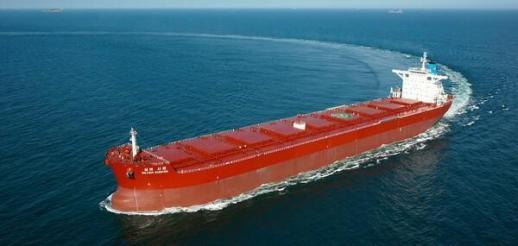 Janggeum Maritime to Hand Over 50% Stake to MSC, Reshaping VLCC Tanker Market Janggeum Maritime is moving to set up a joint management structure with MSC, the world’s largest shipping company. According to the shipping industry on the 20th, Janggeum Maritime recently signed a preliminary investment agreement to transfer more than 50% of its stake to MSC and begin joint management. Under the structure, MSC and Janggeum Shipping will each hold 50%, and the two sides will jointly run the company. Led by Vice Chairman Jeong Ga-hyeon, the son of Janggeum Shipping Chairman Jeong Tae-soon, Janggeum Maritime is a key affiliate responsible for the group’s tanker business. It has rapidly expanded its presence in the VLCC market through aggressive vessel purchases. The industry estimates Janggeum Shipping owns one out of every four VLCCs worldwide, and some analyses say it operates about 40% of the world’s VLCCs that are available for service. MSC’s move is widely seen as a strategic push to expand beyond its container-focused business into crude oil transport. MSC ranks No. 1 in the container ship market with about a 21% share by capacity. Industry officials said the transaction could go beyond a simple equity investment. With the top container carrier moving more directly into tankers, they expect shifts in freight-rate bargaining power and supply coordination in the VLCC market. The deal still requires approvals from regulators in multiple countries. Authorities in Greece and Cyprus have begun reviews, and the transaction must also clear competition scrutiny in major jurisdictions, including South Korea. Whether the deal could raise monopoly concerns as market power grows is expected to be a central issue.* This article has been translated by AI. 2026-03-20 14:03:10
 -
 New Look at Kim Si-seup, Early Korean Travel Writer Linked to King Danjong □ A book to read alongside the film ‘The Man Who Lives With the King’ The film ‘The Man Who Lives With the King’ is drawing strong interest, and many viewers have been moved by the death of the ill-fated King Danjong. Not shown in the movie, however, Kim Si-seup (pen name Maewoldang) is a key figure in the Danjong story. Kim’s decision to set out on wide-ranging travels, described as “tangyu,” grew out of anger over Grand Prince Suyang’s seizure of the throne. According to Yi Geung-ik’s , Kim collected the bodies of five of the Six Martyred Ministers — including Seong Sam-mun and Bak Paeng-nyeon — buried them at Noryangjin and marked the graves with small stones. Kim also held a “chohonje,” a rite to summon Danjong’s spirit, at Donghaksa temple in Gongju, South Chungcheong Province. The article also recounts an episode involving Han Myeong-hoe. After seeing Han’s writing at a pavilion at Apgujeong — “靑春扶社稷(young, he supports the state) 白首臥江湖(old, he rests by rivers and lakes)” — Kim rewrote it as “靑春危社稷(young, he endangers the state) 白首汚江湖(old, he sullies rivers and lakes).” The book introduced here traces Kim’s life from birth to death in chronological, accessible prose. On-site photographs throughout aim to bring him closer to readers as a vivid, present figure. Kim is described as a prodigy who wrote classical Chinese poetry at age 3 and read the Confucian classics from age 5. The book says his early promise was blunted by personal loss — the deaths of his mother, maternal grandmother and King Sejong in succession. His father took a stepmother, and the word “father” does not appear even once in Kim’s writings, the book says. The coup known as the Gyeyu Jeongnan, in which Suyang seized the throne, pushed Kim’s life in a direction opposite what those around him expected. Studying at Jungheungsa temple on Bukhansan, Kim heard the news and burned all the books he had. After three days in seclusion with his door locked, he chose “tangyu” — traveling across Joseon to see the land firsthand and feel the hardships of ordinary people. The book follows where he went, what he saw and thought, and what he wrote. It says he ultimately relied on Buddhist temples and died at Muryangsa temple in Buyeo, South Chungcheong Province. □ Recasting Kim as Korea’s first travel writer and first novelist The book also seeks to reposition Kim as Korea’s first travel writer and first novelist. He is widely known as a figure of principle, but his role as the author of , described here as Korea’s first novel, is less recognized. The five stories in are all set in Korea, with characters and settings tied to historical events such as the Red Turban Rebellion and Japanese pirate raids, the book says. It also notes the work’s imaginative use of folk motifs — ghosts, an undersea dragon palace, the king of the underworld and a wager with the Buddha. The book says Kim was also the first to travel widely across the country, from Sinuiju in the far north to the southern coast, a feat requiring unusual resolve in the early Joseon period. As he traveled, he recorded cultural heritage in verse, and his journeys became a creative process of empathizing with people’s lives and documenting historical sites. It adds that much of his life on the road took place in his 20s and 30s. □ Temples, shrines, stone steles and portraits: Tracking Kim’s traces nationwide The book’s other feature is its detailed mapping of sites linked to Kim across the country. It records, and shows in current photographs, where to find Muryangsa in Buyeo, which has a stupa said to hold his relics; 13 shrines housing his spirit tablet; 11 stone monuments engraved with his poems; and six locations with portraits of him. The author says such detail was possible through field visits, and the material is aimed at readers who want to follow Kim’s footsteps. So Jong-seop was born in 1966 at Muryangsa temple in Buyeo, South Chungcheong Province. He served as editor-in-chief at Sisa Journal and at Asia Economy. He is currently political desk chief at Asia Economy and hosts the YouTube channel ‘So Jong-seop’s Current Affairs Show.’ In 2011, he founded the Maewoldang Kim Si-seup Memorial Association and serves as its president, and he has led 60 ‘Kim Si-seup field trips’ to date. He also runs the YouTube channel ‘So Jong-seop’s Common Sense School.’ He has written several books, including , , and . * This article has been translated by AI. 2026-03-20 13:58:38
 -
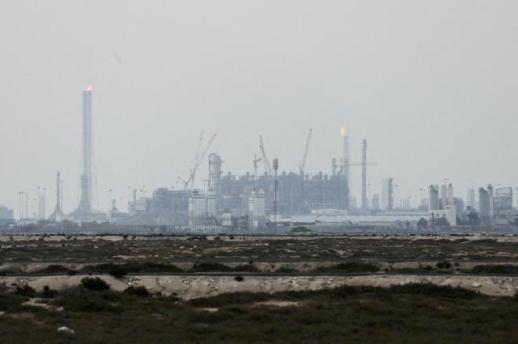 Seoul readies contingency as Qatar LNG force majeure looms SEOUL, March 20 (AJP) - South Korea has prepared a contingency plan for a worst-case scenario in which liquefied natural gas (LNG) imports from Qatar are completely halted as missile strikes on the Gulf state’s key energy infrastructure raise the risk of prolonged supply disruption, according to government officials in Seoul Friday. The move underscores how the escalating Iran war is beginning to hit global energy supply chains directly, with retaliatory attacks now extending beyond oil routes into core LNG production facilities. According to government officials, the contingency plan — drawn up shortly after the outbreak of hostilities — assumes a “zero-import” scenario for Qatari LNG and outlines response measures including stockpile management and alternative sourcing. “We have already secured sufficient volumes to last through the end of this year,” a senior official at the Ministry of Trade, Industry and Energy said. “Even if imports from Qatar fall to zero, there will be no immediate issue in managing domestic supply.” Concerns intensified after Iran launched missile strikes on Qatar’s Ras Laffan industrial complex, the world’s largest LNG export hub, in retaliation for an Israeli attack on Iran’s South Pars gas field earlier this week. QatarEnergy said the strikes damaged facilities accounting for about 17 percent of its LNG export capacity and warned that repairs could take three to five years. The company’s chief executive also signaled the possibility of declaring force majeure on long-term supply contracts for up to five years, potentially affecting key buyers including South Korea. The prospect has rattled global markets, though industry officials in Seoul said a full-scale, long-term force majeure declaration remains unlikely given the massive financial losses it would entail. South Korea imported 6.97 million tons of LNG from Qatar last year, accounting for 14.9 percent of total imports, making it the third-largest supplier after Australia and Malaysia. Dependence on Qatari LNG has been declining as Seoul diversifies its import portfolio. That trend is expected to accelerate. A 2.1 million-ton long-term contract with Qatar is set to expire at the end of this year, reducing the country’s reliance on Qatari LNG to around 8 percent from next year. Officials said the government is pursuing a two-track strategy — securing short-term spot cargoes while identifying medium-term replacement contracts — to prepare for prolonged disruptions of up to five years. South Korea’s LNG system remains heavily centralized, with Korea Gas Corp. importing about 75 percent of total volumes, allowing for coordinated supply management. Strategic reserves, officially set at around nine days of mandatory stockpiles, are currently above required levels. Industry officials said that even if shipments from Qatar are delayed, adjustments can be made within annual delivery plans. The more immediate concern lies in prices. Qatar accounts for roughly one-fifth of global LNG exports, and any sustained disruption could shift the market balance sharply in favor of suppliers, reversing expectations of a looser supply environment in the coming years. The broader energy shock is already building. Oil prices have surged following attacks on Gulf infrastructure, with some projections suggesting crude could climb as high as $150 to $180 per barrel if disruptions persist into April. Such a scenario would likely spill over into LNG markets, increasing power generation costs and putting upward pressure on household gas and electricity prices in South Korea. 2026-03-20 13:57:05
 -
 BTS Live D-1: Music video for SWIM surpasses four million views in thirty minutes SEOUL, March 20 (AJP) - The official music video for SWIM, the lead single from the fifth full-length album by the musical group BTS, amassed more than four million views on YouTube within thirty minutes of its 1:00 p.m. (0400 GMT) release today. This rapid digital consumption follows a nearly four-year hiatus during which the seven members completed their mandatory military service. The unprecedented interest serves as a primary indicator of the global anticipation for the album, titled Arirang, which is the first collective project from the ensemble since their return to civilian life. While these digital metrics escalate, the physical landscape of South Korea is transforming to accommodate the first live performance of the new material. Authorities in Seoul have reported that 22,000 ticketed spectators will be permitted into Gwanghwamun Square on Saturday, though officials estimate that 260,000 people will congregate in the surrounding district. The site remains restricted to specialized personnel as technicians finalize the installation of the stage, lighting, and audio systems required for the production. To mitigate the risk of overcrowding and potential stampedes, a stadium-style management system has been implemented with 31 controlled entry points surrounding the square. The municipal government has mandated that subway trains bypass the Gwanghwamun, City Hall, and Gyeongbokgung stations during peak hours to maintain public safety. Traffic congestion in the central business district is projected to reach one hundred percent as the performance time approaches. Security operations and logistical restrictions are scheduled to remain in effect until the conclusion of the event on the evening of March 21. This mobilization of city resources reflects the scale of the return for the group following their period of national service. The surge in online engagement for the SWIM video coincides with the extensive measures taken by the administration to manage the crowds in the heart of the capital. 2026-03-20 13:53:11
 -
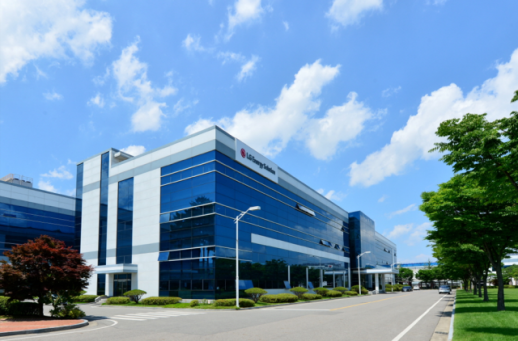 LG Energy Solution pivots to energy storage as EV battery demand slows SEOUL, March 20 (AJP) - LG Energy Solution announced it is accelerating a strategic shift toward energy storage systems as slowing electric vehicle demand reshapes the global battery industry, with the South Korean company moving to rebalance a business long anchored to the automotive sector. Chief Executive Kim Dong-myung told shareholders Friday at the company's annual general meeting in Seoul that the industry has entered a period of "value shift," in which growth is migrating away from electric vehicles and toward energy infrastructure. "We will seize new growth opportunities amid structural changes in power demand," Kim said. The remarks amounted to a formal acknowledgment that the battery sector's center of gravity is tilting from EVs to grid-scale storage, driven by rising electricity consumption from artificial intelligence data centers and the expansion of renewable energy generation worldwide. LG Energy Solution, one of Korea's largest battery maker, plans to raise ESS cell production capacity to more than 60 gigawatt-hours by the end of 2026. The company's ESS order backlog stood at 140 GWh at the end of 2025, and it is targeting an additional 90 GWh in new orders this year. North America is the centerpiece of the push. The company now operates five ESS production sites in the region, including standalone plants in Michigan and a facility run by its Canadian subsidiary NextStar Energy, as well as joint ventures with Honda in Ohio and partnerships with Ultium Cells in Tennessee. It is also converting existing EV battery lines to ESS use to minimize fresh capital spending. The North American focus carries a distinct policy advantage. Washington's Inflation Reduction Act restricts tax incentives for batteries and critical minerals sourced from Chinese supply chains, and LG Energy Solution's domestic manufacturing footprint positions it as one of the few non-Chinese suppliers of lithium iron phosphate cells in the United States. In Europe, the company is repurposing idle EV production capacity for ESS manufacturing, a strategy designed to contain investment costs while responding to regional demand. LG Energy Solution said it aims to raise the share of ESS and new businesses in its portfolio from about 20 percent at present to the mid-40 percent range, reducing its dependence on the volatile EV market. Industry analysts say companies that secure ESS production capacity and non-Chinese supply chains early are likely to gain a durable competitive edge as the battery market transitions from a single reliance on electric vehicles to a broader energy infrastructure model. 2026-03-20 13:48:40
 -
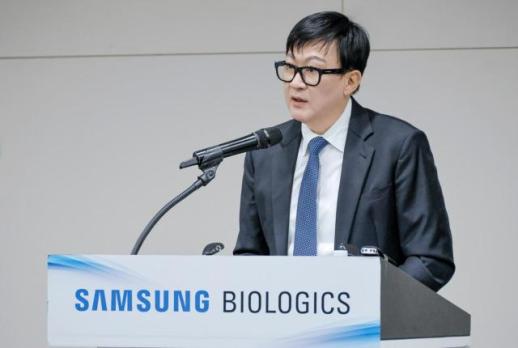 Samsung Biologics shareholders approve third term for CEO John Rim, boosting CDMO push Samsung Biologics shareholders on March 20 approved a third term for CEO John Rim, extending his leadership through March 2029 as the company accelerates its contract development and manufacturing organization, or CDMO, strategy. The company said the meeting, held at Songdo Convensia in Incheon’s Yeonsu district, passed the agenda item to reappoint Rim as an inside director as proposed. Marking Samsung Biologics’ 15th anniversary, Rim said the company would continue efforts to raise shareholder value by enhancing corporate value and to contribute to South Korea’s bio industry and economic development. He said the company carried out structural changes and strategic investments for future growth, adding that it completed a spin-off to establish a governance structure that allows greater focus on the CDMO business, improves transparency and clarifies a shift to a pure-play CDMO model. Samsung Biologics said it will speed up construction of a large-scale CDMO production hub centered on Songdo. With plants 1 through 4 and the recent completion of plant 5, it has secured capacity of 785,000 liters. It is preparing plant 6, with 180,000 liters of capacity, targeting completion in 2027. Once finished, total capacity would reach 965,000 liters. The company also plans to diversify its global supply chain through its Rockville, Maryland, plant with 60,000 liters of capacity. The expansion and increased orders have been reflected in results. Samsung Biologics said it has posted record performance for three consecutive years since 2022 and became the first company in South Korea’s pharmaceutical and biotech sector to surpass 4 trillion won in annual revenue. After operating profit exceeded 1 trillion won in 2023, the company said it nearly doubled that figure within two years, posting 2025 revenue of 4.557 trillion won and operating profit of 2.0692 trillion won. It aims to top 5 trillion won in revenue this year, the company said. Rim said that during his next three-year term the company plans to expand global production bases, diversify its business portfolio and pursue digital innovation to strengthen its position as a top-tier global bio company. Also approved at the meeting were the reappointment of Vice President Noh Gyun, head of the EPCV Center, and the appointment of Kim Jeong-yeon, a professor at Ewha Womans University Law School, as an outside director and audit committee member. Shareholders also passed amendments to the articles of incorporation reflecting revisions to the Commercial Act, including mandatory cumulative voting, and approved financial statements for fiscal 2025, the company said. Separately, Samsung Epis Holdings, which was spun off from Samsung Biologics in November and serves as a holding company leading the group’s biosimilar business, held its first shareholders meeting on March 20. At the meeting at Songdo Convensia, shareholders approved six agenda items, including approval of the company’s first financial statements, appointments of inside directors and audit committee members, and the cap on directors’ compensation, the company said. Samsung Epis Holdings also appointed Vice President Kim Hyeong-jun, who previously served as head of the management support office at Samsung Bioepis, as a new inside director. Kim Gyeong-a, president of Samsung Epis Holdings, said the company will work to enhance shareholder value by building a long-term growth foundation, including expanding its biosimilar product portfolio and broadening into new drug development. * This article has been translated by AI. 2026-03-20 13:42:00
 -
 BTS to Return After 4 Years With Netflix Live Show at Seoul’s Gwanghwamun 2026년 3월 21일, Seoul’s central Gwanghwamun area will be turned into a major stage broadcast live to more than 190 countries. Netflix will stream its first live event produced in South Korea, “BTS Comeback Live: ARIRANG,” marking the group’s first comeback performance in four years. Netflix held a media briefing Friday at Cinecube Gwanghwamun in Seoul’s Jongno district to outline the project and share production details. Attendees included Brandon Rigg, a Netflix vice president; Kim Hyun-jung, a BigHit Music vice president; Yoo Dong-ju, APAC head of HYBE Music Group; and executive producer Garrett English. Yoo said the question he heard most during preparations was, “Why Gwanghwamun?” He said the team focused on what would feel distinctly BTS, and that HYBE Chairman Bang Si-hyuk wanted the group’s return after four years to begin in “South Korea’s most symbolic space,” reflecting HYBE’s goal of expanding fan experiences. Yoo said the aim is to share a rare cultural moment — people of different ages and nationalities celebrating together at an iconic Korean site — with viewers worldwide. English said the central challenge was placing a modern pop show in a historic setting. He said the production held ongoing discussions on how to balance tradition and modernity while fully realizing BTS’ vision and showing respect for Gyeongbokgung, describing collaboration and faithful execution of the members’ creative intent as key principles. He called the physical scale “massive,” but said the goal is not only to capture the sweep from Gyeongbokgung to Seoul Plaza, but also to preserve close, intimate moments between the seven members and their fans — and to deliver that energy effectively to viewers watching live around the world. Kim said the new release’s title, “Arirang,” reflects that approach. She described it as an album that starts from the members’ roots, using both Korean and English so global fans can understand the message. She said it is intended to be enjoyed across generations, including by people who may not know BTS well. Kim added that BTS has long put its emotions and stories into its music, and that the members, Bang and staff worked closely to decide what message to deliver. For Netflix, Rigg said, the event is more than another program. He said single moments that connect the world at the same time are becoming rarer amid abundant entertainment choices, calling the BTS show the biggest live moment Netflix will present this year and a landmark partnership. Rigg said Netflix made major investments in local infrastructure and technical stability, drawing on experience from live broadcasts in extreme environments, including a Taipei skyscraper, to meet the constraints of a downtown location and expectations of hundreds of millions of simultaneous viewers. Joking, he said he was not sure what is harder — climbing a skyscraper or satisfying ARMY — but added that Netflix worked closely with local partners to prioritize reliability. He said Netflix has strong confidence in Korean content and that there was no better choice than BTS, adding the collaboration would set a new standard for Netflix live. On possible expansion into sports or other K-pop live events, he said many discussions are underway. Producers said the key viewing points are the combination of overwhelming scale and emotional closeness — capturing the size of Gwanghwamun while not losing the bond between the members and fans. Rigg also hinted at an unrevealed surprise, saying Saturday’s stage would offer a rare spectacle and become a massive global viewing party for ARMY and other viewers. “BTS Comeback Live: ARIRANG” is scheduled to be streamed live worldwide on Netflix at 8 p.m. Saturday.* This article has been translated by AI. 2026-03-20 13:03:20
 -
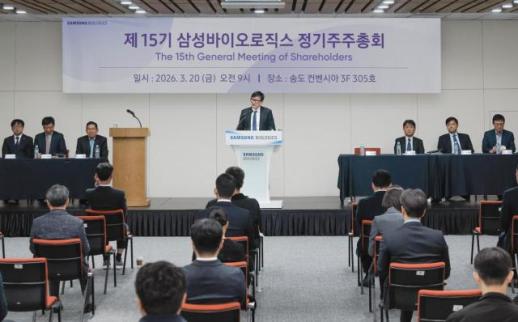 Samsung Biologics reappoints CEO John Rim as inside director SEOUL, March 20 (AJP) - Samsung Biologics said Friday that shareholders reappointed Chief Executive John Rim as an inside director at the company's 15th annual general meeting. About 1,400 shareholders participated in the meeting, which was conducted both on-site and via online livestream. All five agenda items put to a vote were approved as proposed. In addition to Rim, Executive Vice President Lo Kun, who heads the EPCV Center, was also reappointed as an inside director. Kim Jung-yeon, a professor at Ewha Womans University Law School, was newly appointed as an outside director and audit committee member. Other approved items included the adoption of financial statements, amendments to the company's articles of incorporation and a cap on executive compensation. "This year marks our meaningful 15th anniversary," Rim said. "We will continue our efforts to enhance corporate and shareholder value while contributing to the growth of South Korea's bio industry and economy." 2026-03-20 12:12:30