

Journalist

Chang SeongWon
-
 Woori Bank to Offer 200 Billion Won in Online Credit Lines for Seoul Small Businesses Woori Bank said on March 19 it signed an agreement with the Seoul Metropolitan Government and the Seoul Credit Guarantee Foundation to support 200 billion won in guaranteed overdraft loans under the “Seoul-style Small Business Relief Account No. 3” program. The program is part of Seoul’s “Small Business Support Project.” It aims to quickly provide online overdraft credit lines of up to 10 million won to small business owners facing heavier operating burdens amid high interest rates and a slowing economy. The bank said it expects the program to ease funding pressure, support business stability and expand help for very small firms with limited access to finance. Eligible applicants are Seoul-based small business owners who have operated for more than one year, whose representative has a NICE credit score of at least 600, and who posted either at least 2 million won in combined sales over the past three months or at least 10 million won in reported sales over the past year. Loans are structured as one-year, lump-sum repayment products, with extensions of up to five years available after review. For the first five days after launch, applications will be accepted under a five-day rotation based on the last digit of an applicant’s birth year. From March 26, applications will be accepted without restrictions. During the rotation period, guarantee application dates by last digit are: March 19 (1,6), March 20 (2,7), March 23 (3,8), March 24 (4,9) and March 25 (5,0). To reduce financing costs, Woori Bank will cover 50% of the first-year guarantee fee and waive fees for unused overdraft limits. “This Seoul-style Relief Account No. 3 program is designed to ease small business owners’ financial burden and support a real recovery in operations,” said Park Jun-seok, head of Woori Bank’s SOHO Business Department. He said the bank will continue working with Seoul and related agencies to strengthen inclusive finance and expand practical financial support and on-site consulting.* This article has been translated by AI. 2026-03-19 15:51:57
 -
 Open Innovation Becomes Key Model Behind South Korea’s Homegrown Drug Development Open innovation is taking hold as a strategy to improve the efficiency of new drug development, as companies seek to share risk and speed commercialization in an industry that requires heavy spending and long timelines. Industry officials said March 19 that partnerships between pharmaceutical companies and biotech firms are expanding. Drugmakers can reduce research burdens by bringing in outside technology, while biotech startups gain funding and clinical development support. A leading example is Yuhan Corp.’s lung cancer drug Lekraza. The non-small cell lung cancer targeted therapy was developed by Oscotec and licensed to Yuhan in 2015 at the preclinical stage. Yuhan later licensed it out to global drugmaker Janssen for up to 1.4 trillion won while Phase 1 trials were underway. Under the deal, Janssen holds development and commercialization rights, while Yuhan retains rights in South Korea. Of Yuhan’s 33 pipeline programs, 17 are sourced externally. Jung Yoon-taek, head of the Korea Pharmaceutical Industry Strategy Institute, said a model in which biotech ventures develop early technology, traditional drugmakers raise its value through clinical trials, and then transfer it to global companies is efficient in terms of specialization and division of labor. Open innovation is also extending beyond licensing into investment. Traditional drugmakers are joining promising biotechs as strategic investors, taking early stakes in growth potential. DongKoo Bio & Pharma recently bought 1 billion won of a 27 billion won convertible bond issued by Genome & Company. Since 2020, it has invested about 3.5 billion won in Genome & Company through equity purchases and additional buying. DongKoo Bio & Pharma is strong in manufacturing and sales of dermatology and urology prescription drugs, but antibody-drug conjugates, or ADCs, are considered technically demanding and high-risk. The investment is seen as a move to deepen its partnership by supporting Genome & Company’s ADC-focused drug development. Co-development is also being used to improve the odds of success. Canarpta Therapeutics, an ADC design specialist, has bispecific ADC technology that targets two markers at the same time. GC 녹십자 invested a total of 7 billion won in Canarpta Therapeutics in two rounds in 2020 and 2023, and the companies are jointly developing the bispecific ADC KNP-701. Lotte Biologics also joined the effort, investing 1.2 billion won in 2023 to participate in co-developing an ADC platform. Handok is also pursuing open innovation, jointly developing the bile duct cancer treatment tovesimig with ABL Bio and Compass Therapeutics. It aims to launch the drug in South Korea in 2027 as its own new medicine. Bile duct cancer is a rare cancer with few treatment options, and Handok is seeking to shift from a business centered on in-licensed products to one that holds its own new drugs. Handok signed a licensing agreement with ABL Bio, the original developer of tovesimig, securing rights in South Korea. An industry official said domestic companies have limited research and development resources compared with global drugmakers, making collaboration around technologies with higher chances of success a practical choice. With the domestic market saturated, the official added, open innovation is not merely optional but a way to survive by operating efficiently with less capital.* This article has been translated by AI. 2026-03-19 15:51:00
 -
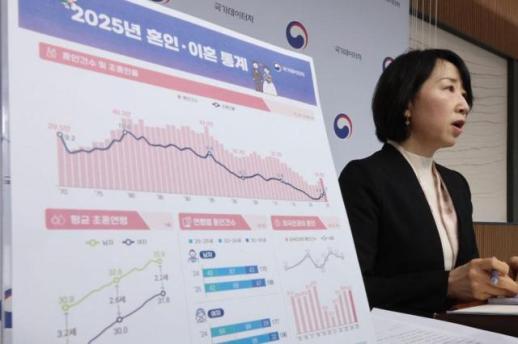 Young newlyweds drive marriage rates to rise for third straight year SEOUL, March 19 (AJP) - Some 240,000 couples tied the knot last year, up 8.1 percent or 18,000 couples from a year earlier, seeing a rise for a third straight year since 2025, the Ministry of Data and Statistics said Thursday. The figure is also the highest in seven years, up from 239,200 in 2019, recovering to pre-pandemic levels after dipping to around 200,000. Of the total 240,000 couples, some 82.6 percent were first-time marriages for both spouses, while 9 percent were remarriages for both. Among men, 87.5 percent were first-time grooms and 12.3 percent were remarrying, while among women, 85.9 percent were marrying for the first time and 13.6 percent were remarrying. The average age at first marriage was 33.9 for men and 31.6 for women, up 1.3 years and 1.7 years respectively, compared to a decade ago. Among first-marriage couples, cases in which the wife was older accounted for 20.2 percent, up 0.3 percentage points. Marriages involving a foreign spouse totaled 21,000, down 0.3 percent. Marriages with foreign women accounted for 16,000, while those with foreign men stood at 5,000. Among foreign wives, those from Japan and Laos increased, while marriages with women from Viet Nam and Thailand declined. Among foreign husbands, those from Japan and Canada rose, while marriages with men from China and the U.S. fell. With marriages rising across all regions except North Jeolla Province, Gyeonggi Province saw the highest number of marriages, followed by Seoul and Incheon. Marriages were most common in December, followed by May and July, while June and September saw the fewest. Meanwhile, divorces totaled 88,000, down by about 3,000 from 2024. Divorces were most common among couples married for 30 years or more, followed by those married for five to nine years and for four years or less. By age, divorce rates were highest among men in their late 40s and women in their early 40s. The ministry attributed the rise to a sharp increase in marriages among people in their early 30s. "The number of marriages have risen significantly, driven largely by those in their late 20s to early 40s, with the biggest surge among people in their early 30s," said Park Hyun-jung, a ministry official. 2026-03-19 15:50:01
 -
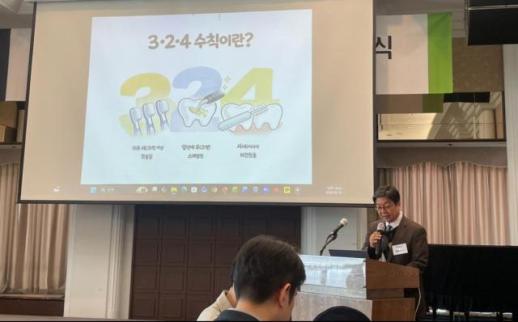 Study: Poor Gum Health May Raise Risk of Esophageal, Colorectal Cancer Periodontal disease is among South Korea’s most common conditions. National Health Insurance Service data show that, as of 2024, more than 19.5 million people received treatment for periodontal disease, with covered costs totaling about 2.3 trillion won. Against that backdrop, researchers presented findings suggesting that poorer gum health may be linked to a higher risk of certain cancers. Experts note that because the mouth is directly connected to the digestive tract, inflammation from periodontal disease can negatively affect overall health. Park Jae-yong, a professor of gastroenterology at Chung-Ang University College of Medicine, presented an analysis on March 19 at the Korea Press Center in Seoul during the 18th Gum Day event, focusing on the relationship between poor gum health and esophageal cancer. Park said the study was based on a hypothesis that swallowing saliva could repeatedly carry oral inflammation, leading to chronic inflammation and potentially esophagitis. He said the analysis found the risk was about 16% higher among people with tooth loss and about 10% higher among those with periodontal disease. Neglecting oral care, he said, may increase the risk of digestive-tract cancers due to bacteria associated with gum disease. He added that significant associations were also found between esophageal cancer and poor oral hygiene habits, including brushing fewer than three times a day, not brushing before bed, and not using interdental cleaning tools. Separately, speakers cited a 2024 study published in Nature on how gum-disease bacteria can affect the colorectal cancer environment. Kook Joong-ki, a professor in the Department of Oral Biochemistry at Chosun University’s College of Dentistry, said animal experiments showed that a specific bacterium — Fusobacterium nucleatum subspecies animalis C2 — can worsen cancer when it reaches the colon. Dongkook Pharmaceutical and the Korean Academy of Periodontology have designated March 24 as Gum Day since 2009 to raise public awareness of periodontal disease and its links to health. This year’s 18th event was held under the theme, “Thorough gum care reduces the risk of digestive-tract cancers.”* This article has been translated by AI. 2026-03-19 15:48:00
 -
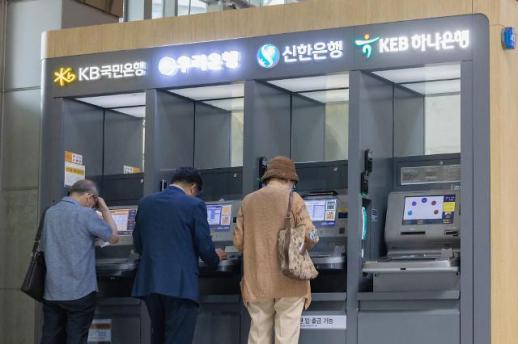 Shinhan Leads Overseas Profit as KB Improves; Woori, Hana Slide Shinhan Bank and KB Kookmin Bank posted solid results across most overseas units, while Hana Bank and Woori Bank saw weaker performance as losses widened at key subsidiaries, the financial industry said. Results diverged sharply by market — including China, Europe and Southeast Asia — shaping winners and losers among the major lenders. According to the financial sector on the 19th, Shinhan’s 10 overseas subsidiaries posted a combined net profit of 586.9 billion won last year, the highest among the four major banks. That was up 2.59% from a year earlier. Canada Shinhan Bank swung to a loss, but most other units improved. Two core overseas operations — Japan’s SBJ Bank and Shinhan Vietnam Bank — delivered results in the 100 billion won and 200 billion won ranges, respectively, on locally tailored strategies. Shinhan Bank China’s net profit jumped fourfold from a year earlier on higher gains tied to securities. Shinhan Bank America and Shinhan Bank Indonesia expanded lending to strong local companies, with net profit rising 278.65% and 34.7%, respectively. KB Kookmin sharply reduced losses at its overseas units. The bank operates five overseas subsidiaries, including Cambodia’s Prasac and Indonesia’s Bukopin. Its overseas result improved from a 2024 net loss of 202.9 billion won to 81.7 billion won last year, turning profitable. The improvement was driven largely by Bukopin, which narrowed its net loss to 102.8 billion won after posting a 360.6 billion won net loss a year earlier. Growth of 28% in low-cost deposits and 10% in settlement-related loans helped lift performance. The Myanmar unit returned to profit on expanded local business, and KB Prasac Bank earned 152 billion won as it increased low-rate deposits. Hana Bank’s global business declined. Net profit at its overseas subsidiaries fell 33% from a year earlier to 86.8 billion won last year. Hana Bank China swung to a 39.2 billion won net loss as it set aside provisions amid a prolonged downturn in China’s real estate market. Net profit at Germany’s KEB Hana Bank also plunged 66% amid factors including falling eurozone interest rates. Hana Bancorp, a U.S. bank holding company targeting Korean-American networks, posted a 253% surge. Woori Bank’s overseas slump deepened after it had ranked second globally in overseas net profit. Net profit at its 11 overseas subsidiaries fell 79% from a year earlier to 44.9 billion won last year. A major drag was Indonesia’s Woori Sodara Bank, which swung from more than 56 billion won in net profit to a 74.1 billion won loss. Woori Bank China also posted a 52.7 billion won net loss. This year, the banks plan to focus on strengthening fundamentals at overseas units as the global operating environment grows more uncertain due to the U.S.-Iran war and rising oil prices. KB Kookmin and Shinhan said they aim to expand with high-quality assets and reinforce core earnings for sustained growth. Hana said it will boost business synergies among four branches, including two opened in India in December, and seek to improve results at its German unit by attracting financing demand tied to South Korea’s defense industry exports. 2026-03-19 15:27:00
 -
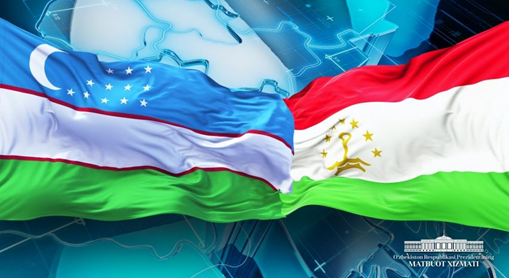 Uzbekistan and Tajikistan trade potential estimated at forty percent growth SEOUL, March 19 (AJP) - The Center for Economic Research and Reforms has determined Thursday that mutual trade between Uzbekistan and Tajikistan possesses the potential to increase by 30 to 40 percent. This assessment was presented today in Tashkent during an international conference regarding new prospects for a regional alliance. The center, an analytical body under the Administration of the President of Uzbekistan, indicates that bilateral engagement remains only partially realized despite recent growth. Asadov Khurshed, the deputy director of the organization, stated that the relationship between the two nations has reached a qualitatively new level. From 2017 to 2025, trade volume between the neighboring states expanded 3.8 times, rising from 238 million dollars to 912 million dollars. During this period, exports from Tashkent grew 3.7 times while imports from Tajikistan increased more than fourfold. The country now ranks ninth among the leading importers of Uzbek products. This growth is supported by a foundational institutional framework established through the 2024 Treaty on Allied Relations (Source: Ministry of Foreign Affairs of Uzbekistan). The potential for a 30 to 40 percent increase is linked to the substitution of Tajik imports from third countries with goods manufactured by Uzbek producers. Geographical proximity and shared transport infrastructure provide an advantage for the delivery of automobiles, household appliances, textiles, and chemicals. The deputy director emphasized that the most promising model for cooperation involves the establishment of joint processing facilities in border regions. These centers would prioritize the handling of agricultural raw materials and the development of new agrologistics networks. The ongoing development of transport infrastructure and transit opportunities is expected to serve as a primary driver for further economic integration. This shift toward a deeper investment model is a factor in strengthening connectivity across the region. The current level of allied relations provides the necessary foundation for transitioning toward shared regional infrastructure projects. The international scientific and practical conference brought together experts from government institutions and the academic community to discuss these prospects. 2026-03-19 15:26:52
 -
 Val Kilmer to Appear in New Film Using AI a Year After His Death Actor Val Kilmer is set to return to the screen in a new film, recreated through artificial intelligence technology. On March 18 (local time), The Associated Press reported that Kilmer will appear via AI in the independent film “As Deep as the Grave,” due for release this year. The report said it comes a year after his death. According to AP, the film’s producers said Kilmer had signed on before he died, but health problems prevented him from taking part. After his death, his family approved a digital replica of the actor, the producers said, and the family is being compensated for its use. In a statement, Kilmer’s daughter said her father had long viewed new technology as a tool that could expand the possibilities of storytelling, and she expressed hope that the film would respect that potential through his role. Kilmer had previously used AI assistance during his lifetime. Before dying of pneumonia, he was diagnosed with throat cancer and underwent a tracheotomy that left him without his voice. In his final film, “Top Gun: Maverick,” AI was used to recreate his voice. Still, the use of AI in Hollywood has become one of the industry’s most contentious issues. One of the main drivers of the 2023 U.S. actors union strike was concern over AI, after studios proposed digitally scanning background and minor performers and reusing those images across productions. That dispute eased after post-strike negotiations between the actors union and producers led to contract language requiring performers’ consent and appropriate compensation. The agreement, however, did not bar digital scanning itself. The prospect of seeing a globally popular star in new work even after death is now a reality. But Kilmer’s AI-assisted return is also a reminder that audiences, like the industry, are being pressed to decide how far they are willing to accept AI-generated stand-ins for human performers.* This article has been translated by AI. 2026-03-19 15:24:38
 -
 KAIST researchers identify new mechanism for forming magnetic skyrmions SEOUL, March 19 (AJP) - Researchers at the Korea Advanced Institute of Science and Technology (KAIST) have discovered a new physical principle that allows for the formation of skyrmions, tiny magnetic vortices, without the specialized conditions previously thought necessary. This finding opens new pathways for developing next-generation, ultra-low-power information storage devices that could address the rising energy demands of artificial intelligence. KAIST said Thursday that a research team led by Professor Kim Se-kwon from the Department of Physics has theoretically demonstrated that swirling magnetic structures can form naturally through the interaction between magnetism and atomic lattices. This interaction, known as magnetoelastic coupling, suggests that skyrmions can be implemented in a much wider range of magnetic materials than once believed. Skyrmions are microscopic swirls of magnetic spin that are highly stable and significantly smaller than the magnetic domains used in current hard drives. Because of these properties, they are considered a primary candidate for spintronic devices, which could offer information storage densities hundreds of times higher than existing technology while consuming minimal power. Until now, scientists believed that forming skyrmions required specific, complex environments, such as structural asymmetry in the crystal or strong spin-orbit coupling. However, the KAIST team proved that the universal phenomenon of magnetoelastic coupling—where the magnetic state and the arrangement of atoms influence each other—is sufficient to create these structures. The team's research shows that when this coupling becomes strong enough, the naturally aligned state of a magnet becomes unstable and transitions into a new ordered pattern. This process results in a "chiral spin texture" where skyrmions and antiskyrmions are arranged in a repeating array, accompanied by simultaneous lattice distortion. "This study demonstrates that magnetic structures like skyrmions can form even without specific, specialized interactions," Professor Kim Se-kwon explained. "It is particularly significant as it suggests the possibility of implementing these structures in two-dimensional magnetic materials, which are currently a major focus of global research." The study, featuring Dr. Go Kyoung-chun as the lead author, was published in the prestigious physics journal Physical Review Letters on February 11, 2026. (Reference Information) Journal/Source: Physical Review Letters Title: Magnetoelastic Coupling-Driven Chiral Spin Textures: A Skyrmion-Antiskyrmion-like Array Link/DOI: https://doi.org/10.1103/5csz-pw7x 2026-03-19 15:03:10
 -
 Kim Yong-hwan Warns Current Turmoil Resembles 2008 Crisis as Uncertainty Grows Kim Yong-hwan, who has spent more than four decades on the front lines of South Korea’s financial sector, warned that today’s conditions resemble the 2008 global financial crisis. Kim, who served as senior deputy governor of the Financial Supervisory Service in 2008, was involved in the country’s response at the time. In a telephone interview with Aju Economy on the 19th, Kim said the collapse of subprime mortgages in 2008 has “only changed form,” now appearing as troubled private lending tied to U.S. big tech companies in 2026. “Anxiety is rising that it is similar to that time,” he said, adding that uncertainty at home and abroad is unusually high. Private lending refers to companies borrowing through funds raised by nonbank financial firms, a form of private debt. As concerns grow about potential weakness centered on U.S. big tech, it has emerged as a new flashpoint in global finance. With the global private-lending market swelling to the trillions of won, rising delinquency at some firms and fears of tighter liquidity are, critics say, rapidly building “hidden risks.” Kim said that when global shocks hit, South Korea’s markets tend to swing more sharply than those of major economies. With tensions rising in the Middle East, domestic stocks have been seesawing by roughly 10%. He attributed the volatility to a narrow investment base rather than weak fundamentals. “It’s not that Korea’s fundamentals are weak, but the capital market is not broad-based, so the financial market is more exposed to volatility,” he said, arguing that a deeper direct-financing market would make Korea less sensitive to external shocks. He also voiced concern about Korea’s growth structure. “Only a very small number of conglomerates such as Samsung, SK and Hyundai are doing well, while small and mid-sized firms continue to struggle,” Kim said. He added that per capita gross national income has failed for 12 years to break through the $30,000 threshold, and said Korea should consider whether it can grow like Taiwan, which entered the $40,000 era last year. Unlike South Korea, where a handful of large companies account for most exports and investment, Taiwan is often assessed as having a more dispersed industrial base built around small and mid-sized firms. Kim said Korea needs a structure in which large companies and smaller firms grow together for stable development, underscoring the need for balanced growth. Drawing on experience with multiple financial crises and industrial shifts, Kim advised younger officials that the most important thing in policymaking is to avoid haste and keep the big picture in view. “Especially in an era like this, when people expect AI to solve everything, policymakers need judgment and balance that come from experience,” he said. Kim entered public service in 1979 through the 23rd class of the state civil service exam and held posts including director of the Welfare and Living Affairs Division at the Ministry of Finance and Economy, director general of Supervisory Policy Bureau II at the Financial Supervisory Commission, standing commissioner at the Financial Services Commission, and senior deputy governor at the Financial Supervisory Service. He later served as president of the Export-Import Bank of Korea and chairman of NH NongHyup Financial Group, and now works as an adviser at Shin &u0026 Kim. Earlier this month, he published a memoir, “Flow Like Water, Stand by Principles.” 2026-03-19 15:03:00
 -
 CRAVITY’s Hyeongjun Stars in ‘Kill the Romeo’ Interactive Short-Form Drama Trailer CRAVITY member Hyeongjun will star in Kitts’ first interactive short-form drama, “Kill the Romeo,” set to be released on the platform on the 27th. The series from global K-pop short-form platform Kitts is an interactive, multi-ending romantic comedy told in first person. It follows “me,” a top-tier assassin whose alter ego is a devoted fan, after a new target is assigned: the viewer’s favorite idol, “Hyeongjun.” The story begins when the A-list killer receives an order to eliminate him. Hyeongjun plays an idol character who shares his name, marking his first acting project. The newly released main trailer opens with tense music and the line, “All my targets are called Romeo. Codename ‘Juliet.’ I’m a killer.” It then shows the viewer-character at Hyeongjun’s fan-sign event, before the mood shifts as he is named the target and placed in danger. Under the premise of “my favorite idol becoming my target,” the trailer presents multiple choices. Near the end, Hyeongjun asks, “Noona, what do you want me to do?” teasing the directions the story may take. Kitts has been expanding its library with monthly releases, following titles including “Wind Up,” starring NCT’s Jeno and Jaemin, and “Jumpboy LIVE,” starring VERIVERY’s Kangmin. “Kill the Romeo” is expected to differentiate itself from typical romantic comedies through its first-person format and branching story points. “Kill the Romeo,” starring Hyeongjun, will be released on Kitts on the 27th.* This article has been translated by AI. 2026-03-19 14:57:39